
Oceania
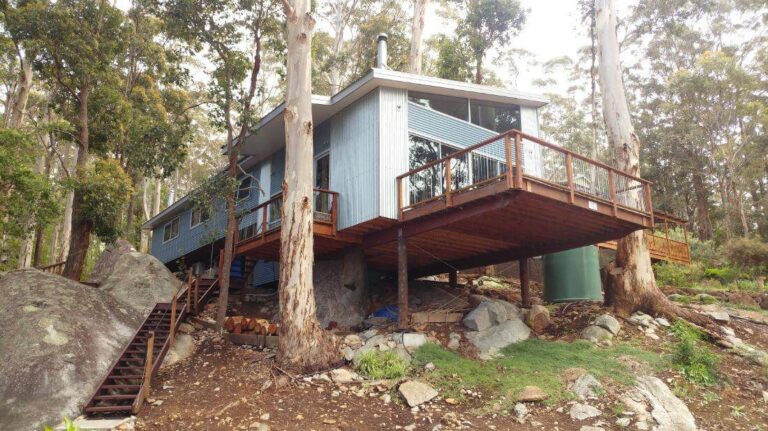
Treehouses in Oceania lift you into a different rhythm—rainforest canopies in Queensland and Fiji, fern-filled gullies in New Zealand's South Island, elevated lodges above Pacific lagoons where coral shows through clear water. You arrive by sandy track or boardwalk, climb a short flight of stairs, and the noise drops away. Days arrange themselves around snorkeling, forest trails and balcony evenings while geckos click from the rafters. Construction favours cyclone-rated stilts, locally milled hardwoods and rainwater systems built to last through storm season, with interiors designed to stay cool and let the air move through.
Explore Oceania
{{locationDetails}}
Browse sub-categories



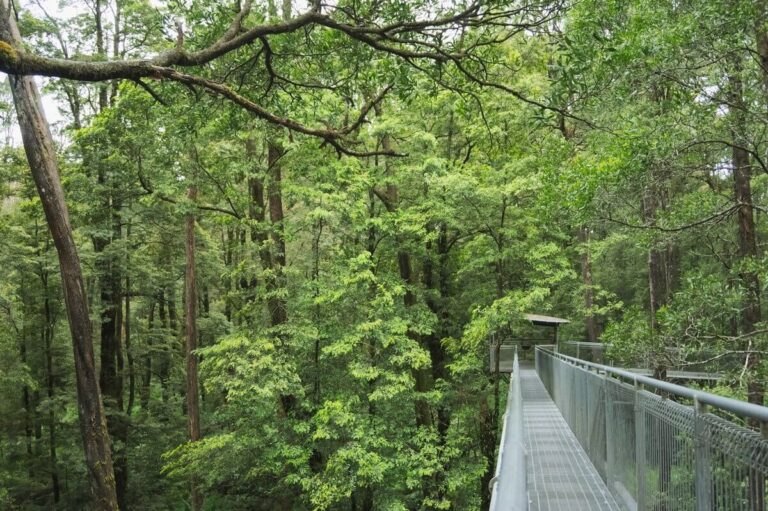
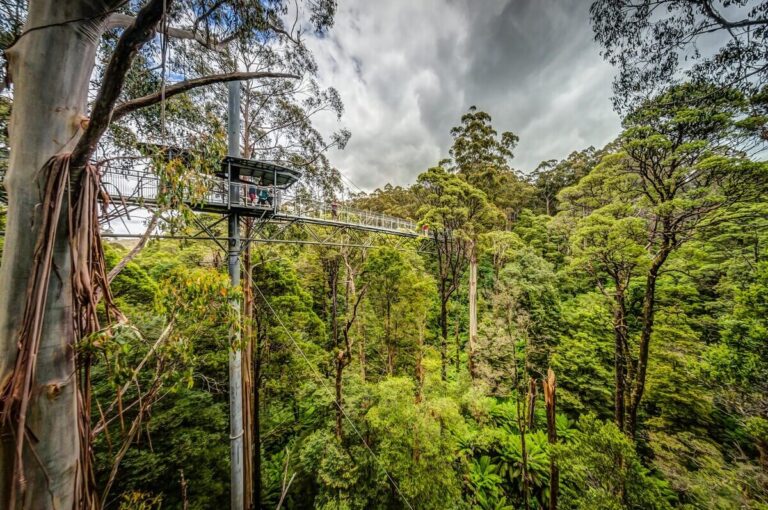
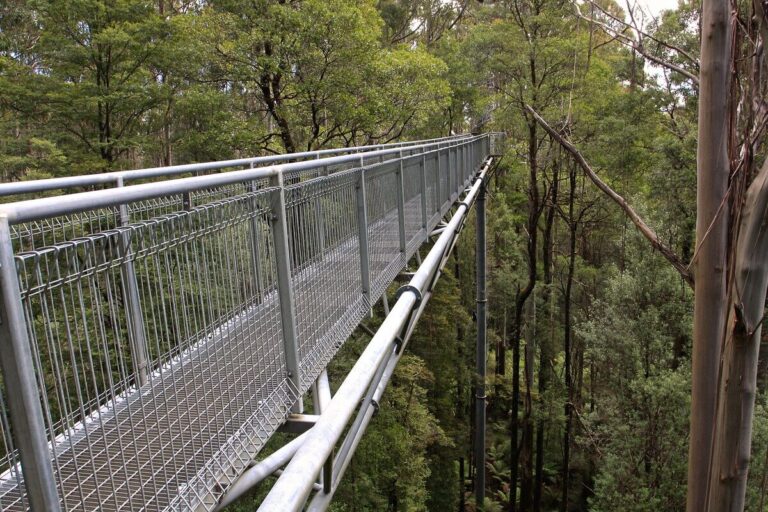
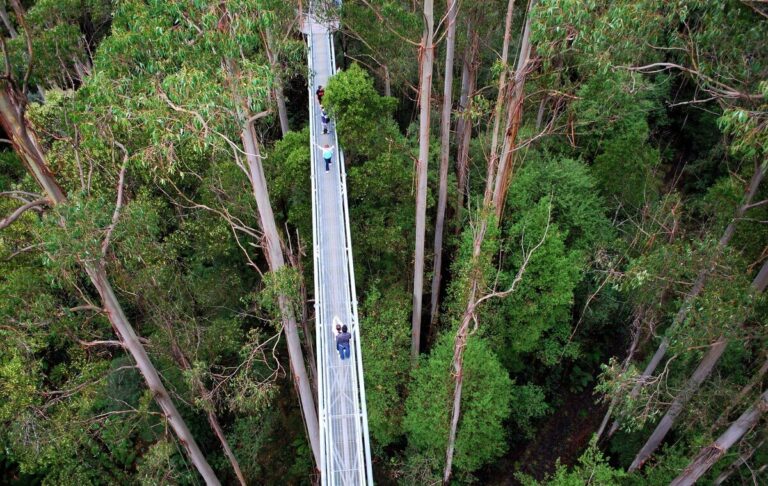
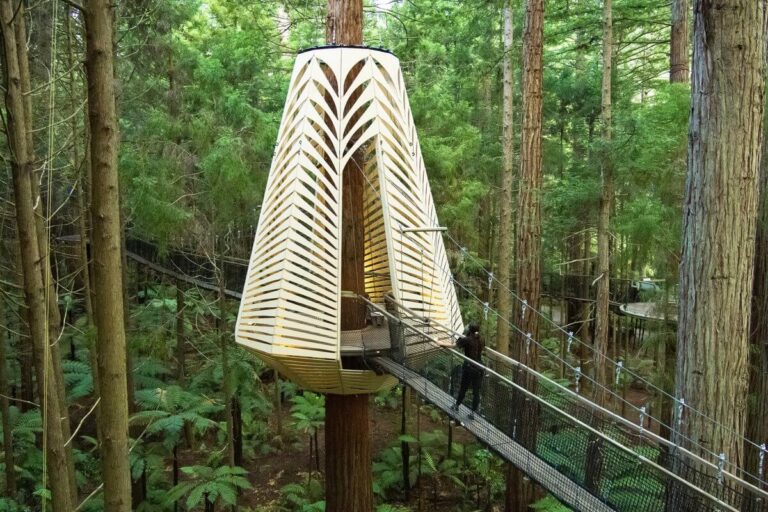
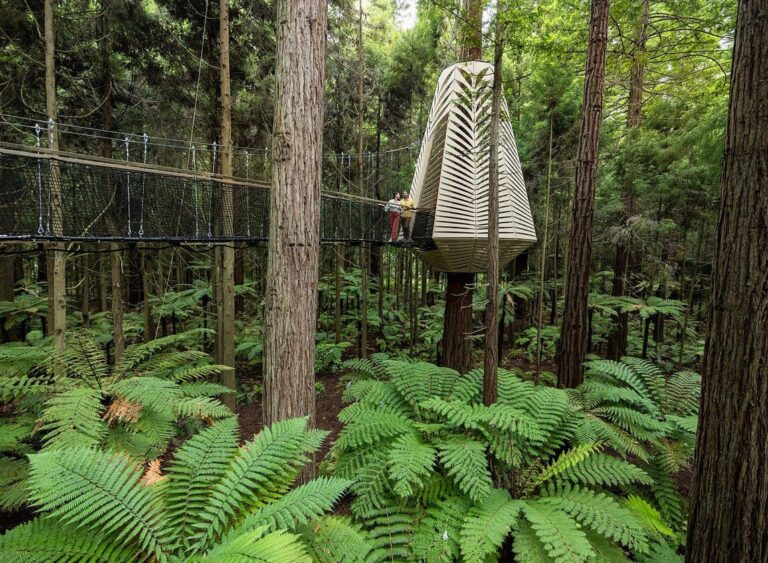
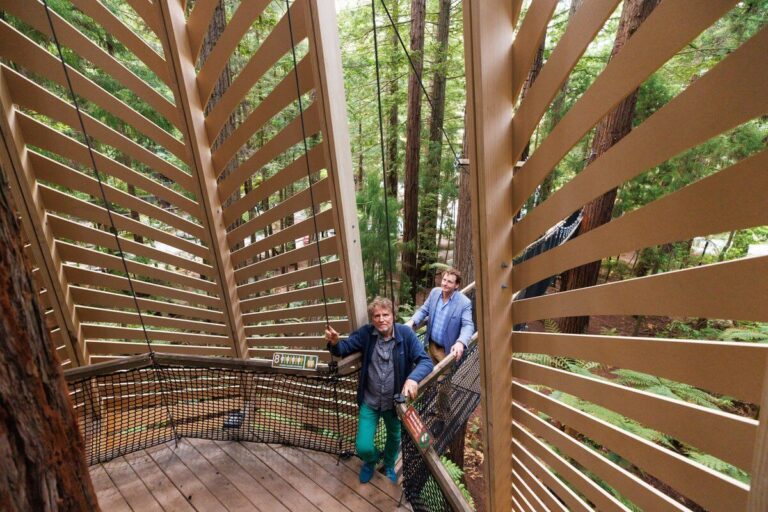
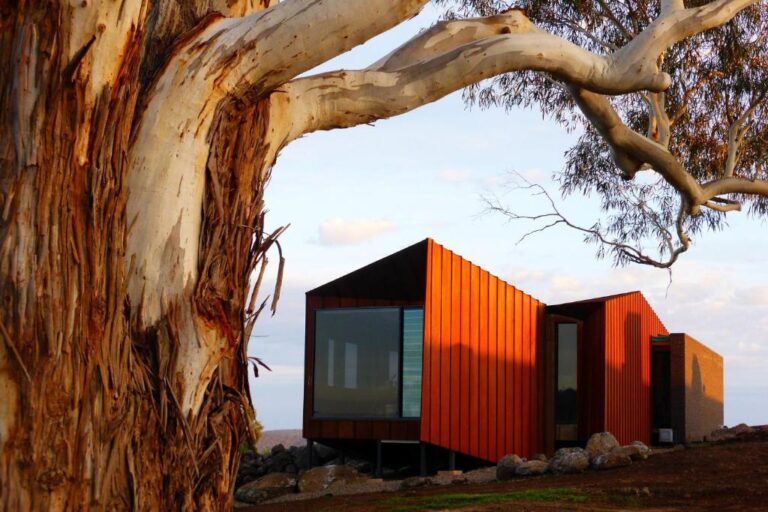
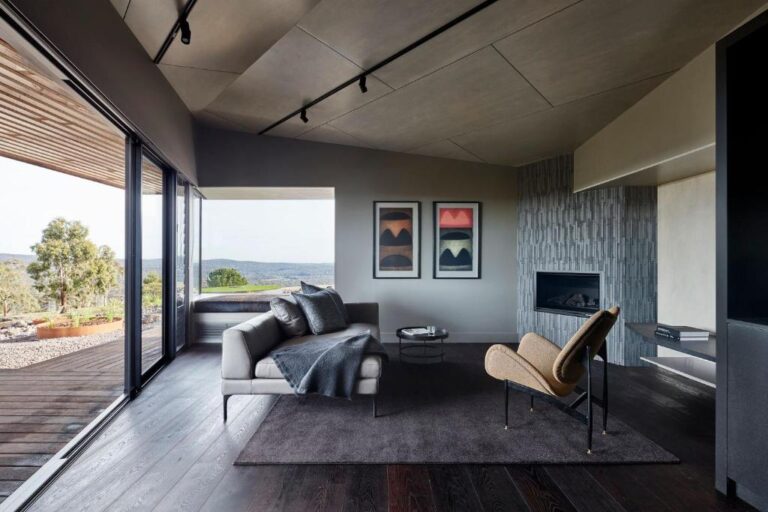
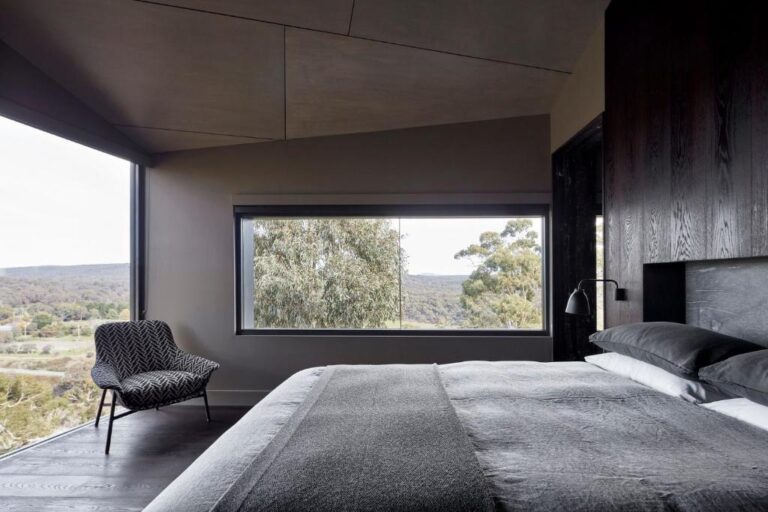


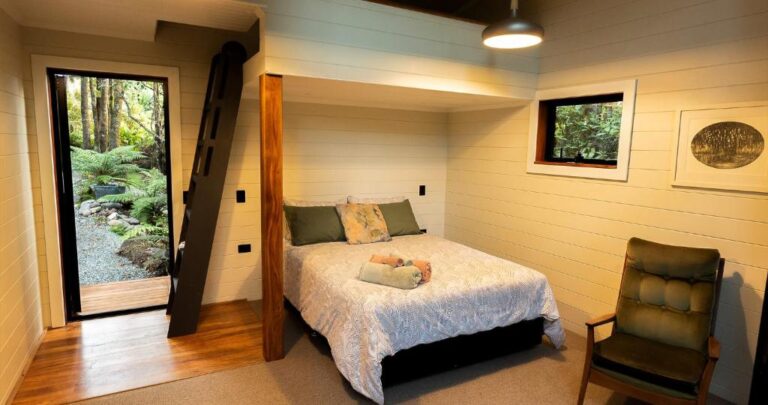
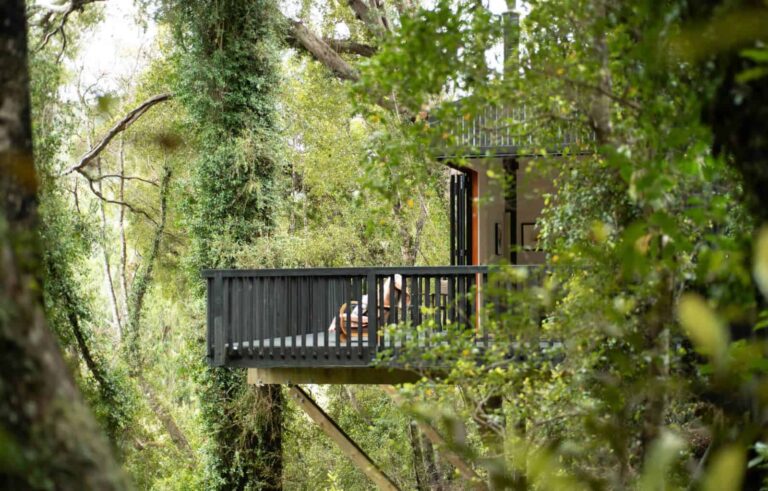
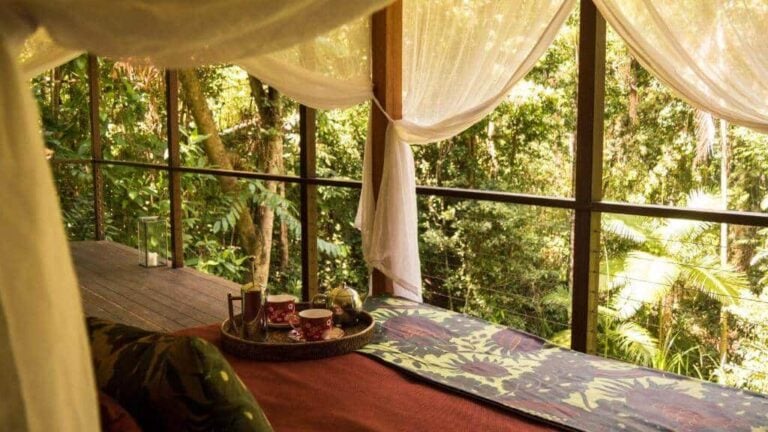
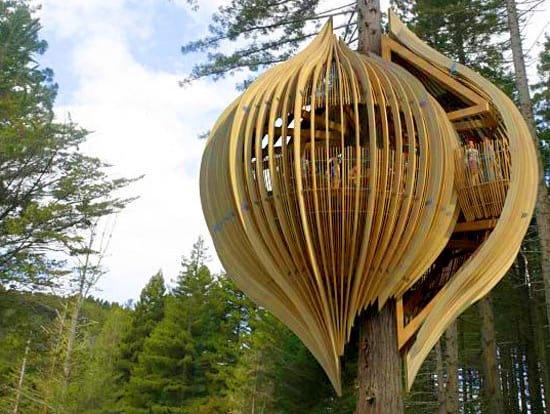
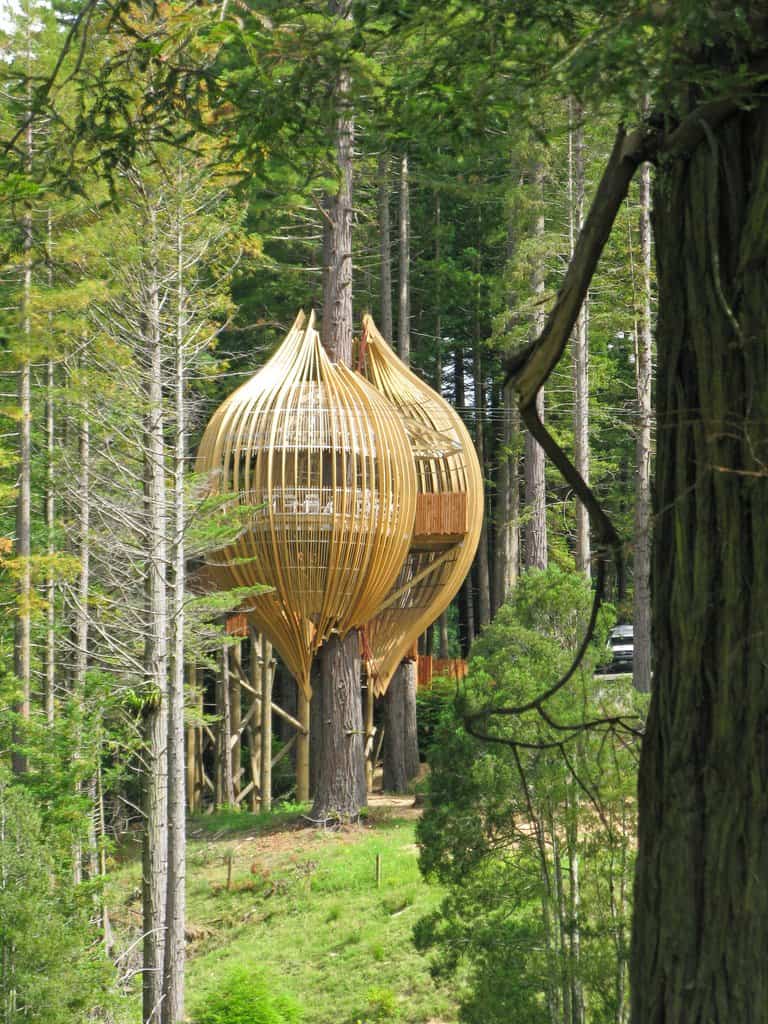
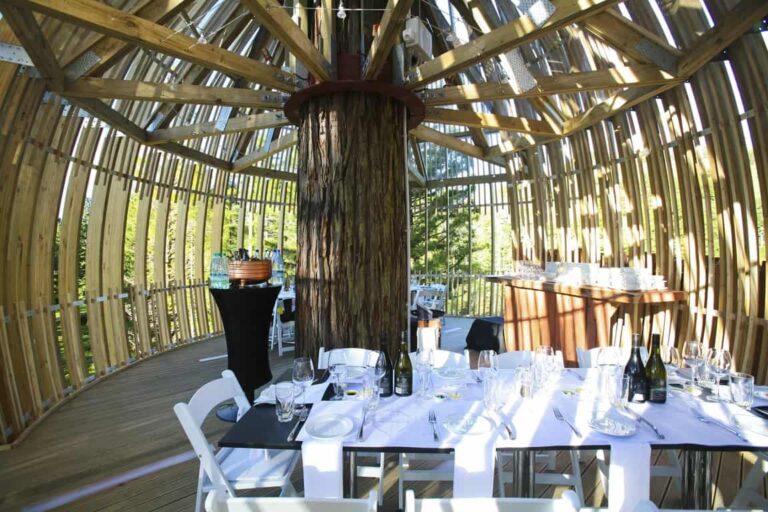


About Oceania
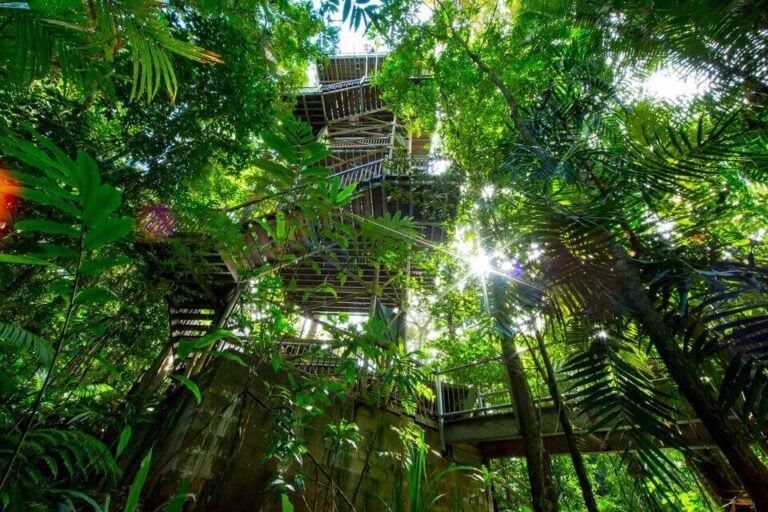
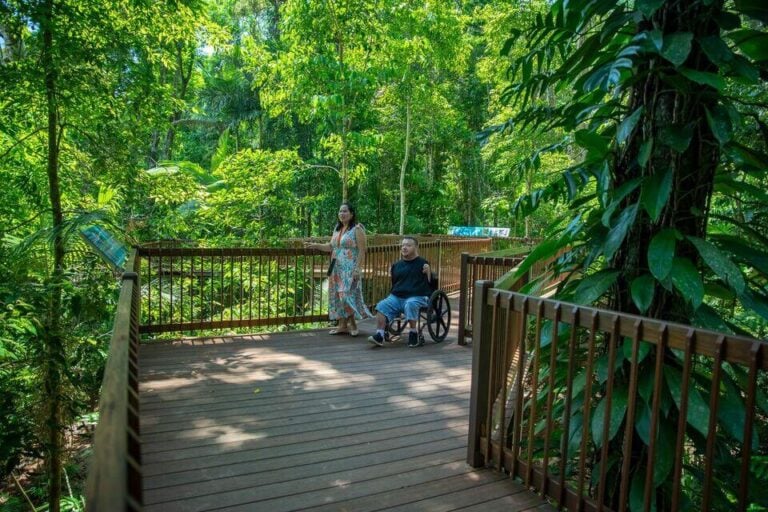
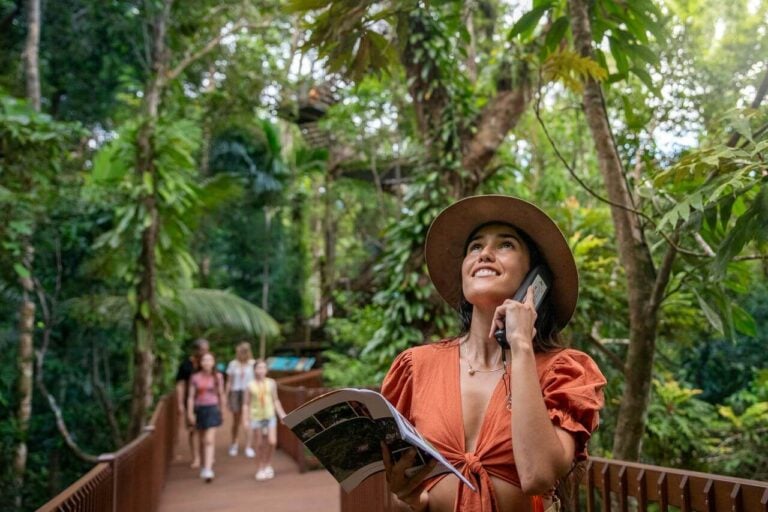
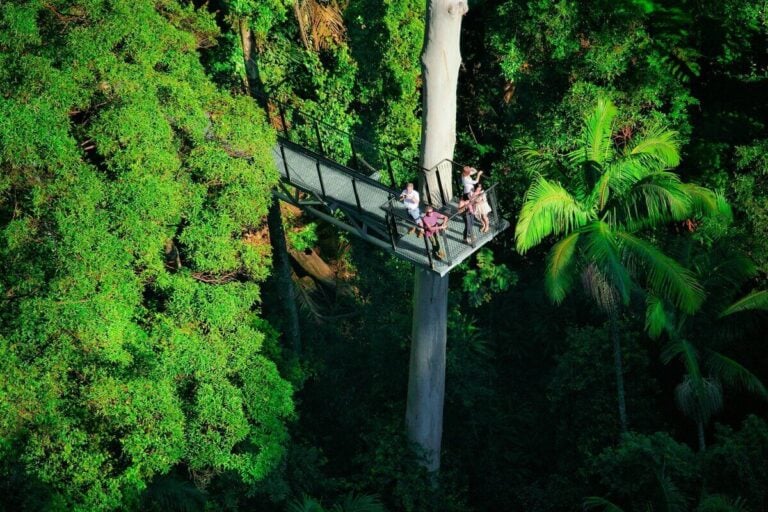
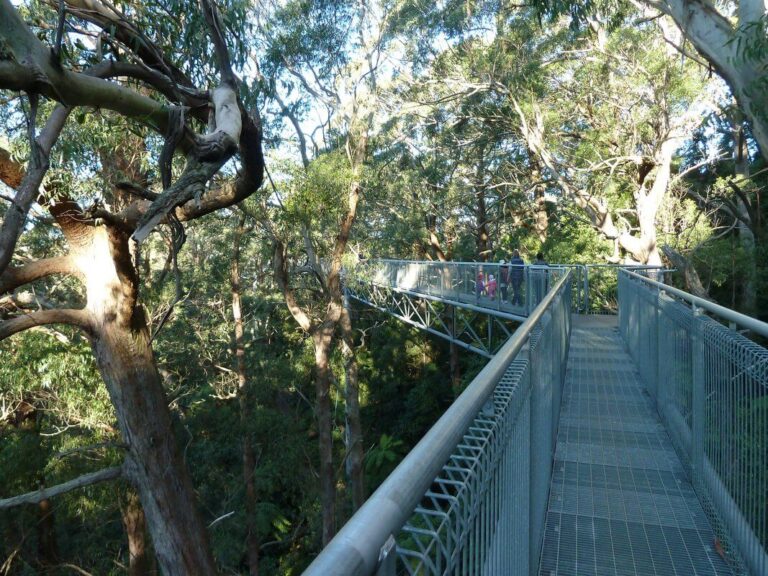
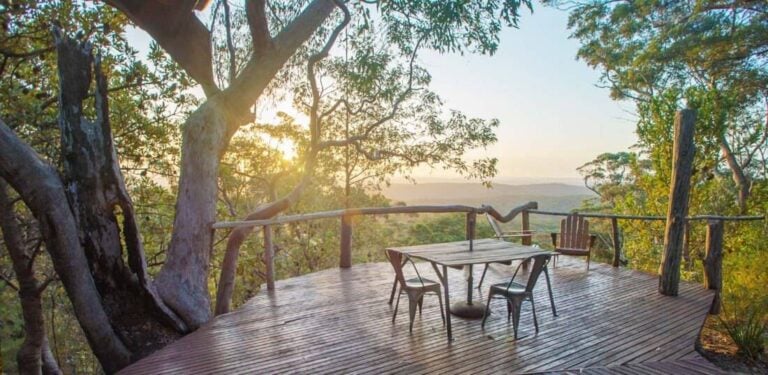
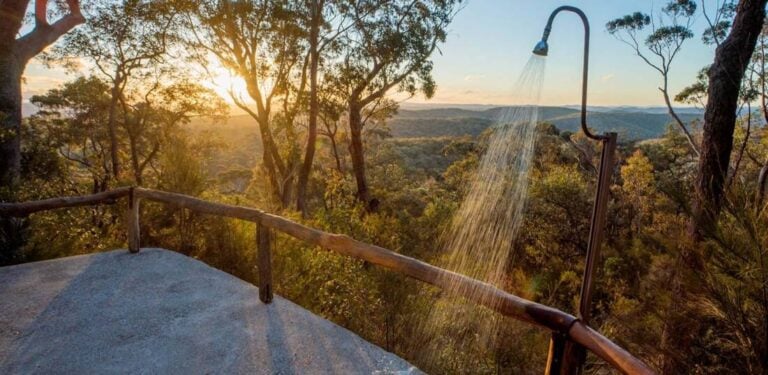
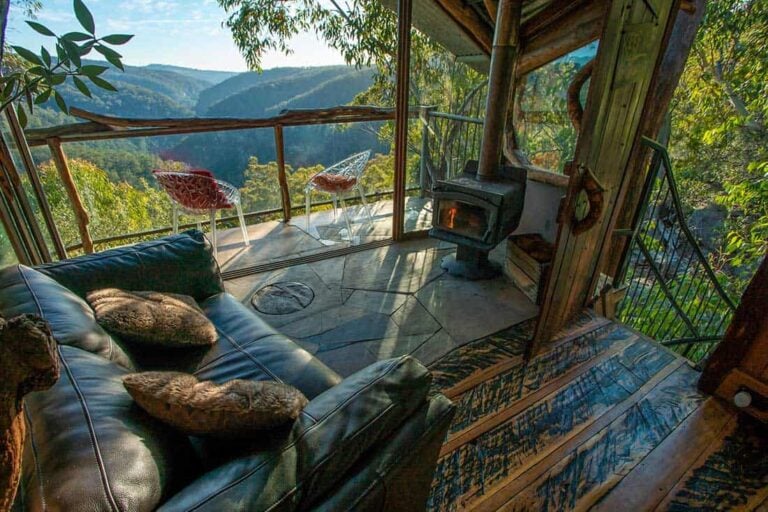
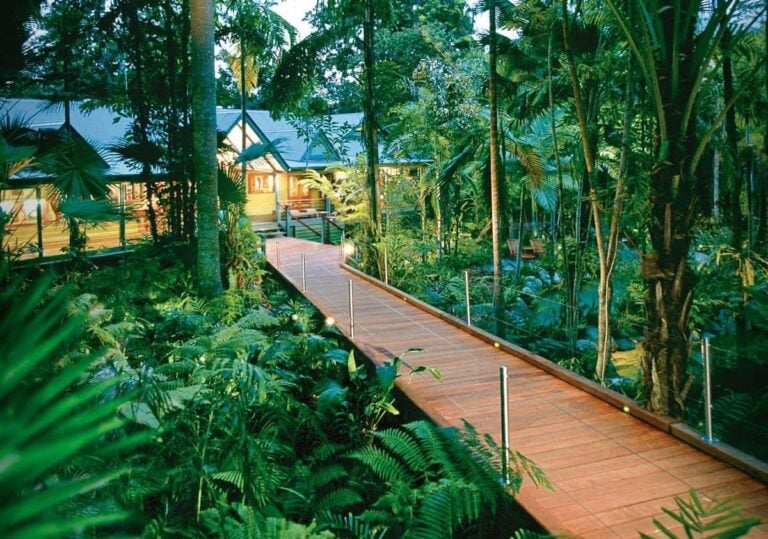
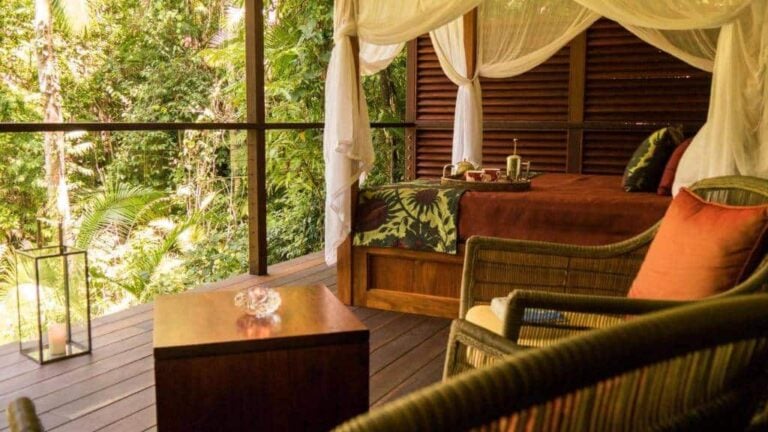
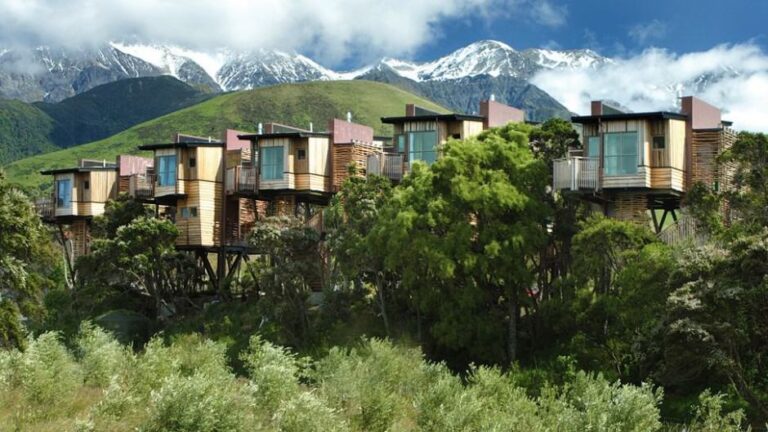
Treehouses in Oceania lift you into a different rhythm. You arrive by sandy track or rainforest boardwalk, climb a short flight of stairs, and suddenly the noise drops away—just leaves rustling, salt on the breeze, a bird call you haven't learned yet. The view isn't framed by a window so much as invited in through every opening, and the air moves through rooms built to let it pass.
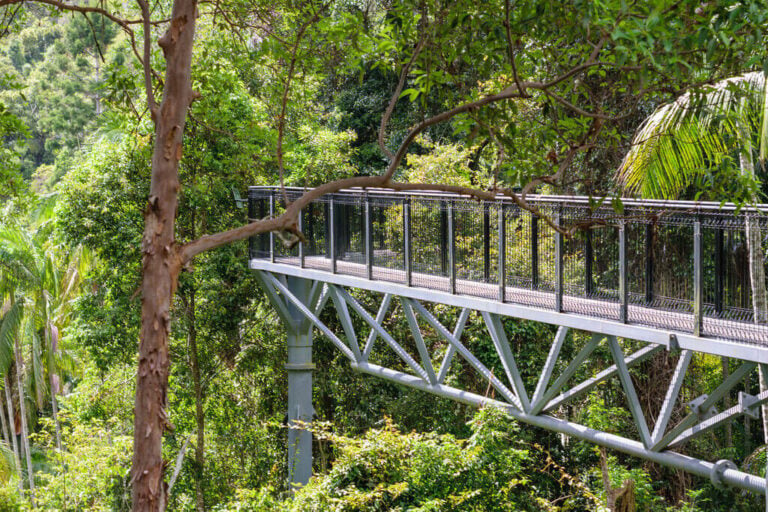
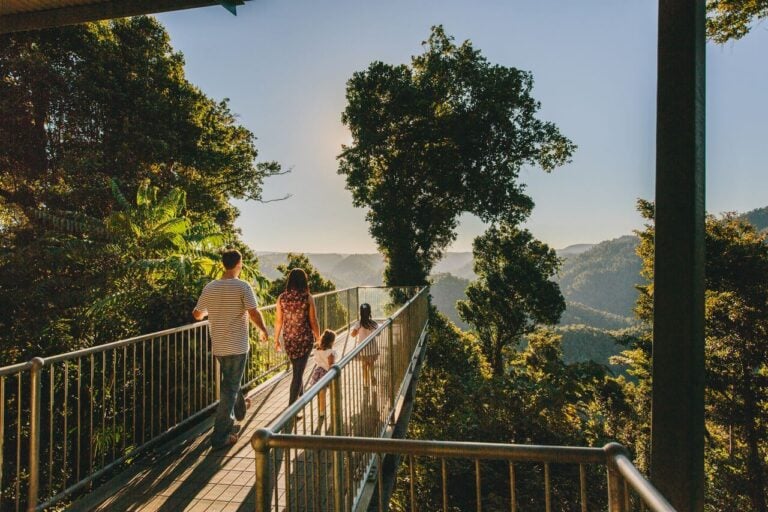
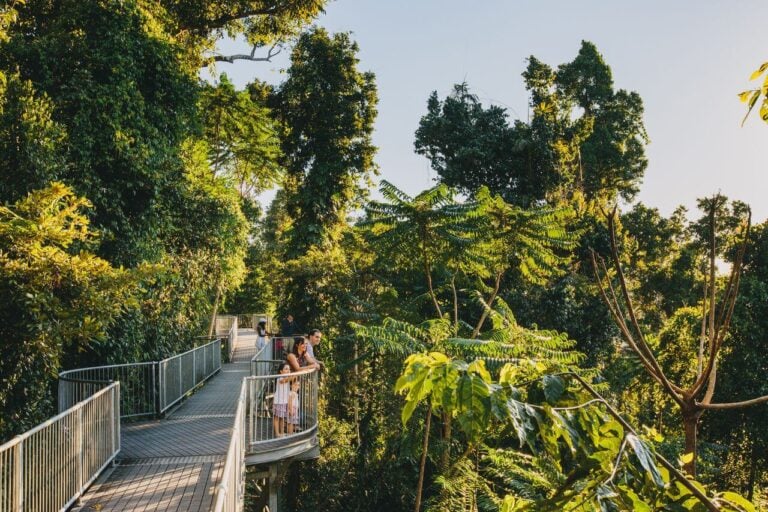
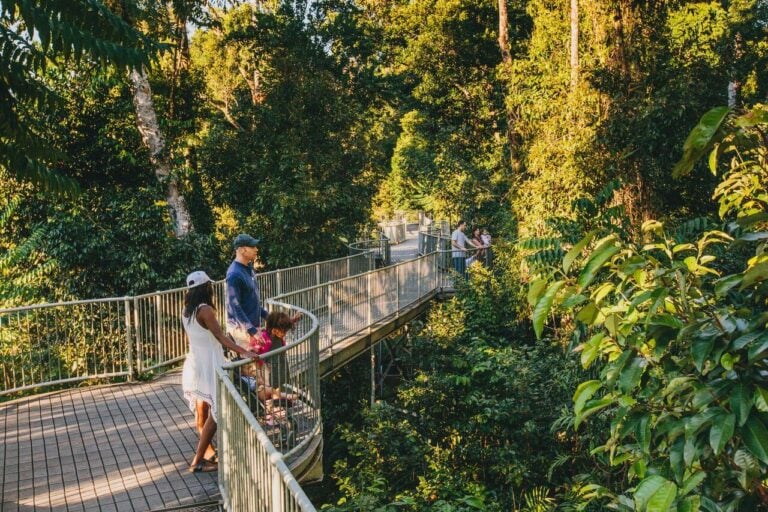
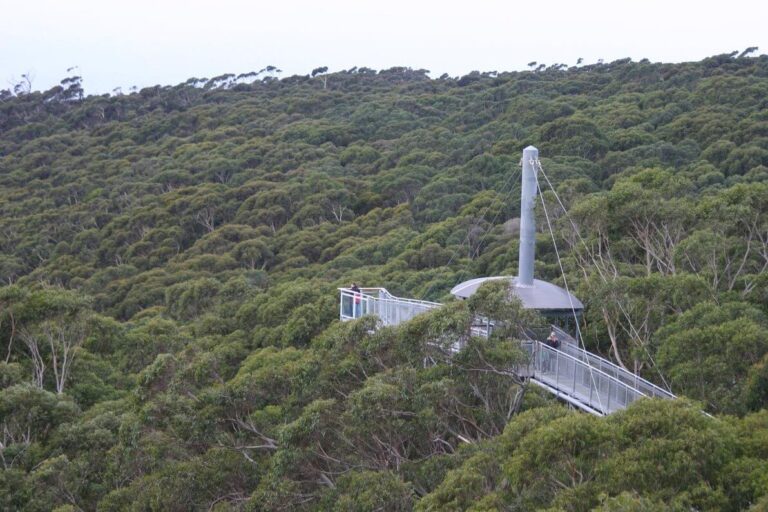
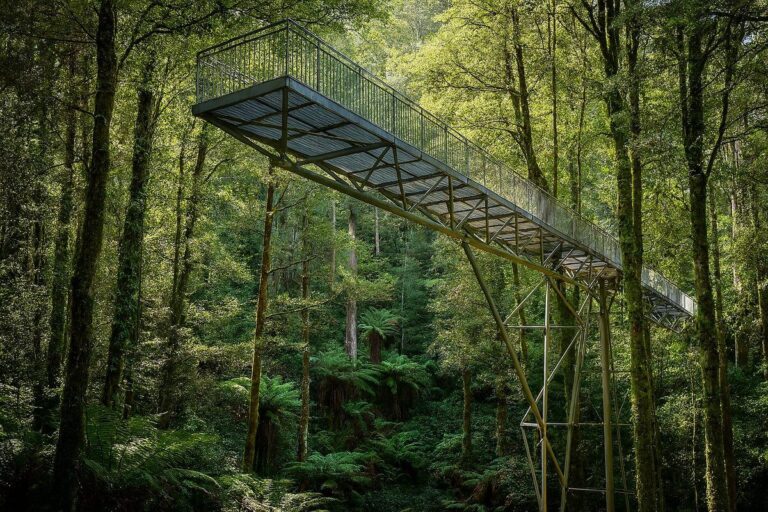
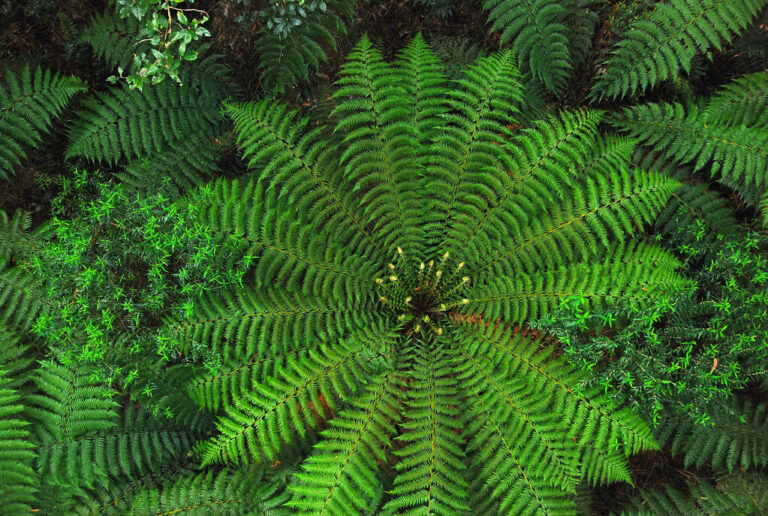
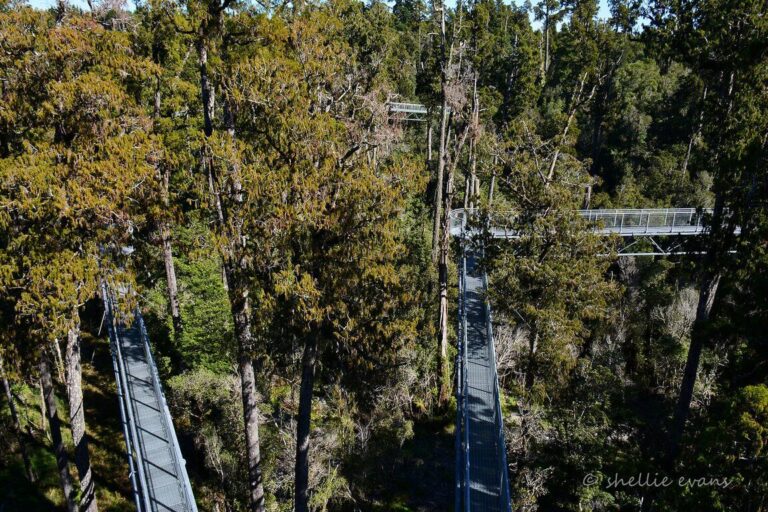
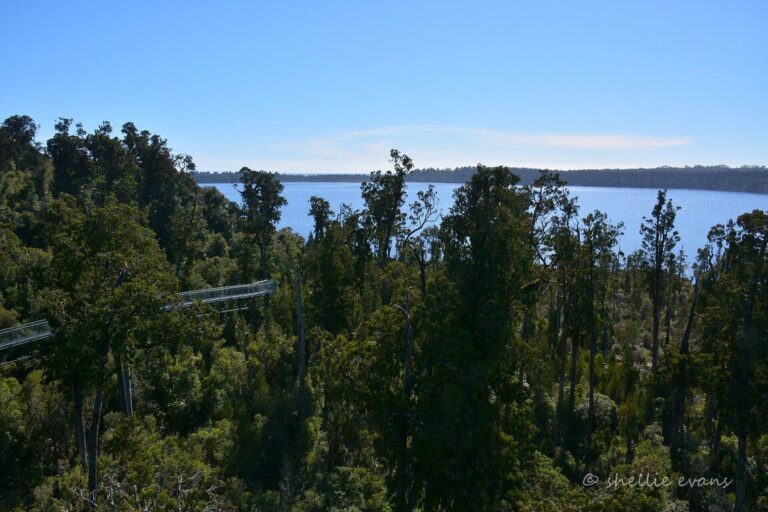
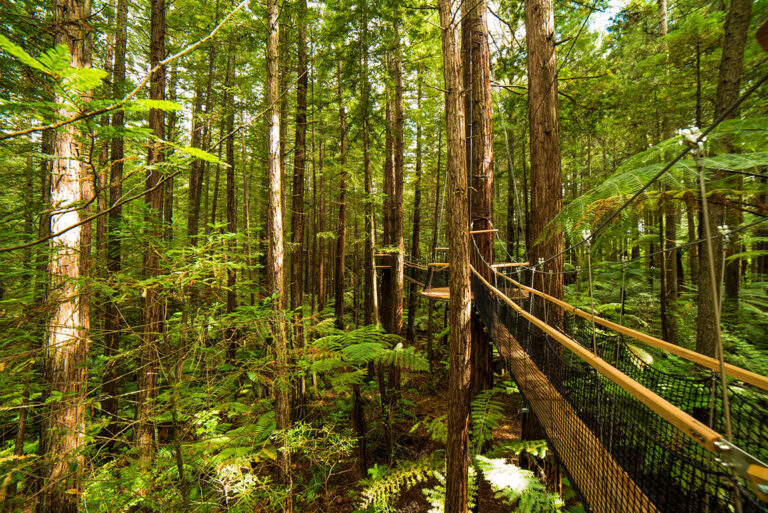
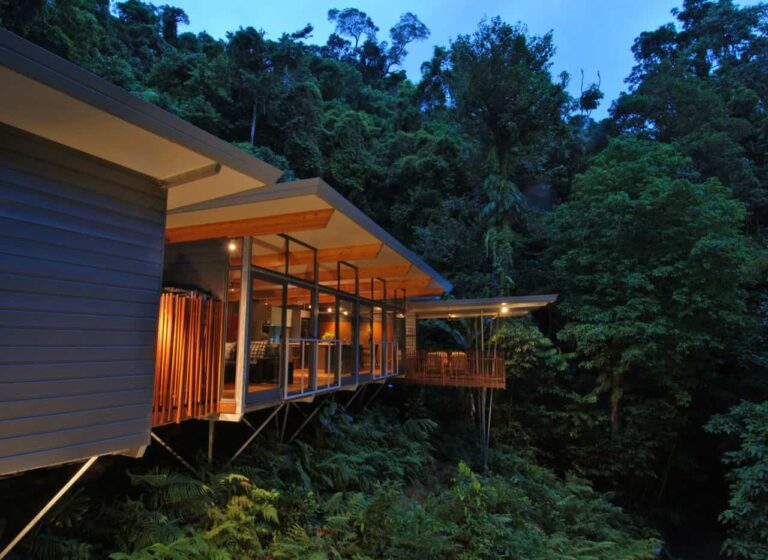
Australia brings scale and wildlife. In Queensland's Daintree and the hinterland above Byron Bay, treehouses nestle among strangler figs and hoop pines where afternoon rain drums the roof and kookaburras react loudly to the weather. Farther south in Victoria's fern gullies, the forest feels older—fronds taller than your plans, the smell of damp earth even on clear days. New Zealand trades tropical warmth for quieter drama: kauri and beech canopies, distant surf, tūī and bellbirds threading the morning with song. At night you might hear the low, repeating call of ruru—the morepork owl—like a question hanging in the dark.
The Pacific islands shift the mood again. Fiji's elevated lodges look out over lagoons so clear the coral shows through, palm shadows striping timber decks in late afternoon light. Vanuatu offers blue holes like bright coins of water in the jungle; Samoa and Tahiti bring vanilla-scented air and evenings that slow to a crawl. Papua New Guinea pushes into wilder territory—canopy perches where hornbills pass overhead and rivers work their way toward the coast through dense green.
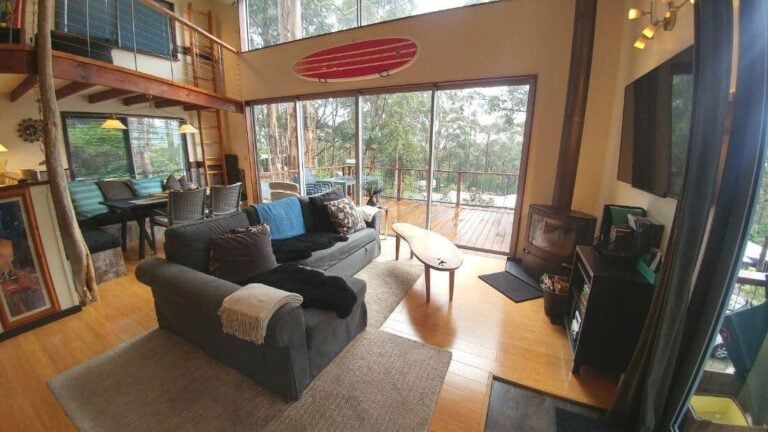
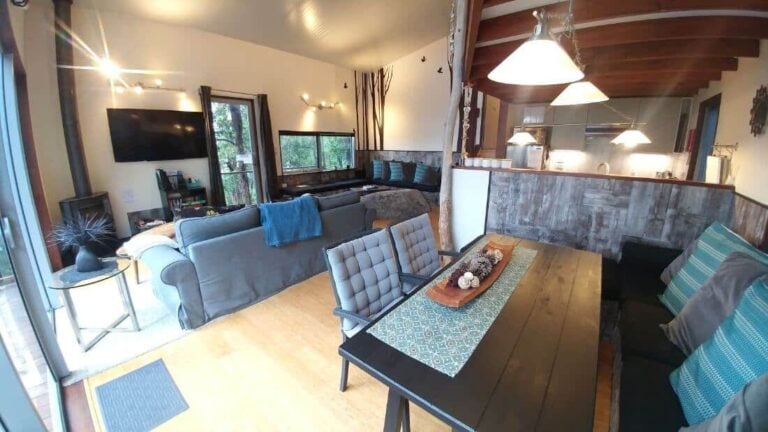
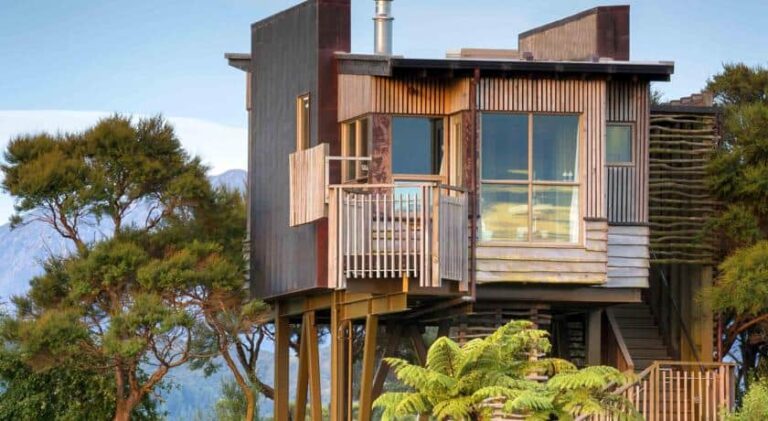
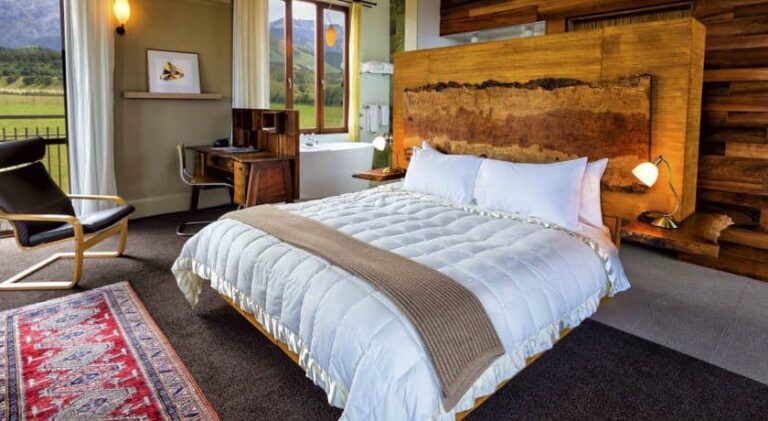
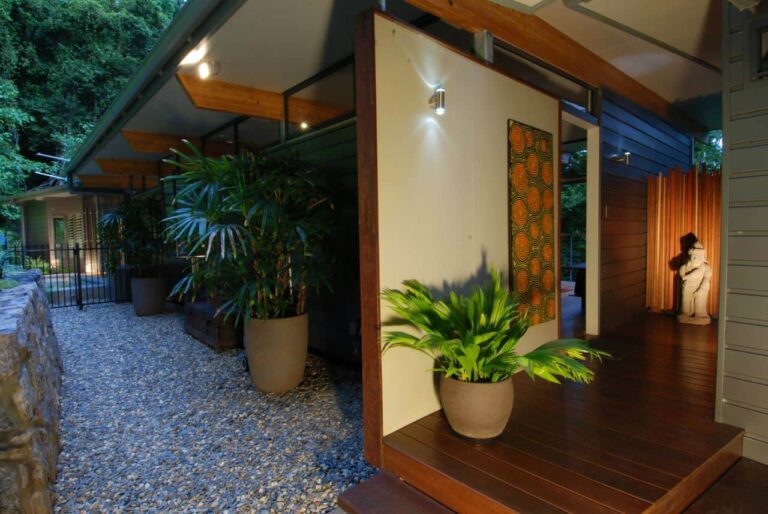
Construction here isn't casual. Many Oceania properties use cyclone-rated stilts, locally milled hardwoods, bamboo lattices and solar panels tucked out of sight, with rainwater tanks handling the daily supply. Interiors favour large windows, small footprints, ceiling fans that hum rather than roar, and the occasional handmade bowl that makes breakfast fruit feel like an occasion. The design isn't about showcasing eco-credentials—it's about staying cool, dry and standing through the next storm season.
Days arrange themselves without much effort. You can snorkel a coral garden, follow a rainforest trail until the temperature drops and the light goes green, or watch glowworms appear as dusk settles. Geckos click from the rafters while you share something cold on the balcony, and if you're quiet long enough the forest starts to ignore you. Timing helps—Australia and New Zealand are most comfortable from May through October, while the Pacific islands are driest and cyclone-free during that same stretch. November to April brings rain, humidity and the occasional property closure across the islands, though Australia's tropical north stays accessible year-round if you don't mind the wet.
What pulls people to Oceania's treehouses isn't novelty for its own sake. It's the plainness of waking up high enough that the usual ground-level distractions fall away, and the only thing competing for attention is whether the tide's in, the fruit's ripe, or the sun's about to drop behind the palms. Nature isn't background here—it's the structure holding the day together.
Frequently asked questions about Oceania
What's the best time of year to visit treehouses in Oceania?
May through October is the sweet spot for most of Oceania. Australia and New Zealand are comfortable during these southern winter and spring months, while Pacific islands like Fiji, Vanuatu and Samoa are driest and cyclone-free in the same window. November to April brings heavy rain, high humidity and occasional storm closures across the islands, though Australia's tropical north remains accessible year-round if you're prepared for wet-season downpours and thick air.
How do I choose between Australia, New Zealand and the Pacific islands for a treehouse stay?
Australia offers scale and wildlife—think kookaburras in the Daintree, fern gullies in Victoria, accessible rainforest stays with good infrastructure. New Zealand brings quieter native forest, birdwatching and a cooler, more temperate feel. The Pacific islands—Fiji, Vanuatu, Samoa—combine canopy elevation with lagoon access, slower rhythms and warm water, though some properties require boat or small plane transfers. Choose Australia or New Zealand for road-accessible variety and strong domestic tourism infrastructure; pick the islands when the goal is seclusion, coral and serious distance from the everyday.
Are Oceania treehouses built to handle storms and cyclones?
Many properties in cyclone-prone areas use cyclone-rated construction—reinforced stilts, steel brackets, storm shutters—particularly in Fiji, Vanuatu, Papua New Guinea and northern Queensland. Local building codes require it, and operators have learned through hard experience what stands and what doesn't. Designs often incorporate locally milled hardwoods and engineering details that let structures flex rather than snap. Not every treehouse in Oceania sits in a cyclone zone, but those that do are generally built with seasonal weather as a permanent design constraint rather than an afterthought.
What kind of wildlife can I expect to see from a treehouse in Oceania?
It depends sharply on location. Australian treehouses bring kookaburras, lorikeets, brush turkeys and fruit bats, with the occasional python or possum after dark. New Zealand properties offer tūī, bellbirds, ruru owls and kereru pigeons, plus glowworms in wet gullies and caves nearby. Pacific island stays tend toward geckos, tropical seabirds, hermit crabs and reef fish visible from elevated decks. Papua New Guinea pushes into hornbills, cassowaries and dense birdlife that treats the canopy as a highway. The common thread is proximity—wildlife doesn't need coaxing when your bed is already in the layer where they live.
Do I need to book far in advance for treehouse stays in Oceania?
Popular lodges in New Zealand and Australia's coastal hinterlands often book six months ahead, especially for school holidays and summer weekends. Pacific island properties can be more flexible outside peak season, though the best-located places in Fiji and Vanuatu fill early for the dry months. If you're chasing a specific property during May to October, three to four months' lead time is sensible. Shoulder season and wet-season availability opens up faster, and some smaller Australian stays keep last-minute inventory for weekday escapes.