
South Africa
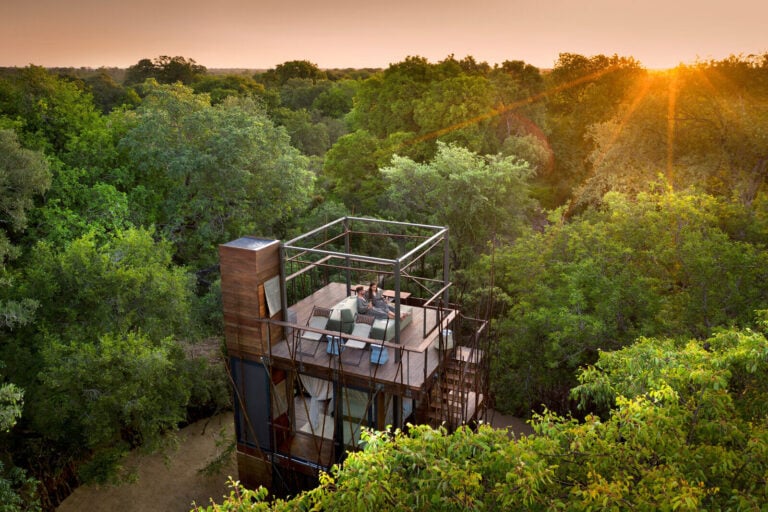
Treehouses in South Africa lift you into wild country where luxury stays quiet and the landscape sets the terms—elevated lodges tucked into Kruger's leadwood canopy, malaria-free Waterberg rock, or coastal yellowwood forest along the Garden Route. Nights arrive with lion calls drifting across dry riverbeds, mornings with leopard spoor beneath your stilts and oxpeckers already working. The rhythm is earned: patience, dust on your boots, and the slow pull of a place that refuses to be anything but itself.
{{locationDetails}}
Browse sub-categories






About South Africa
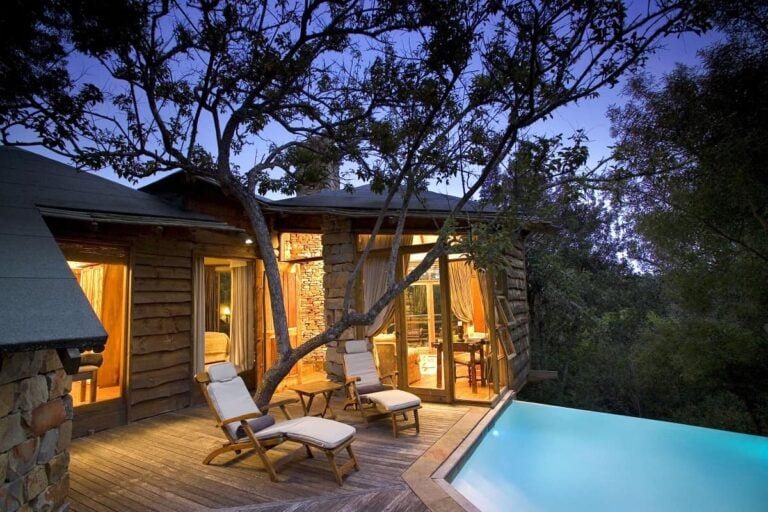
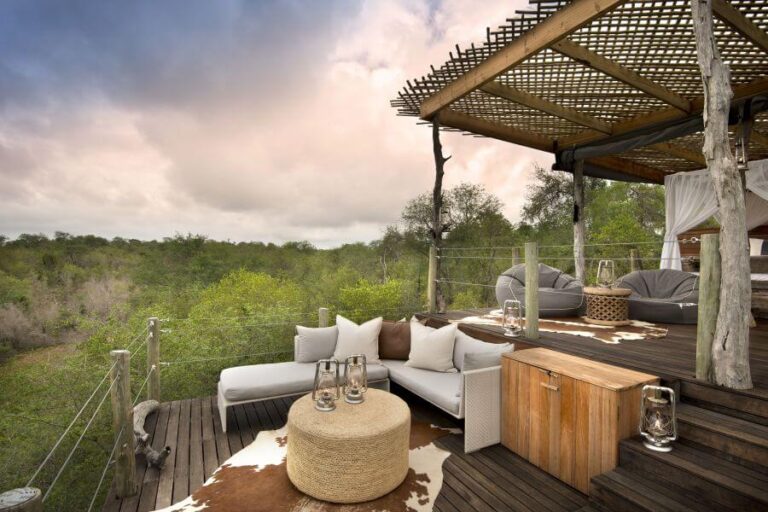
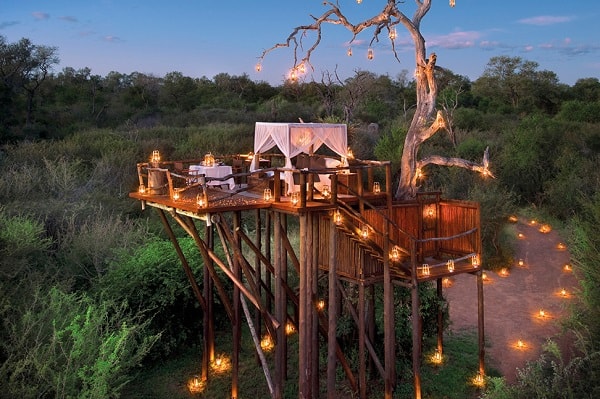
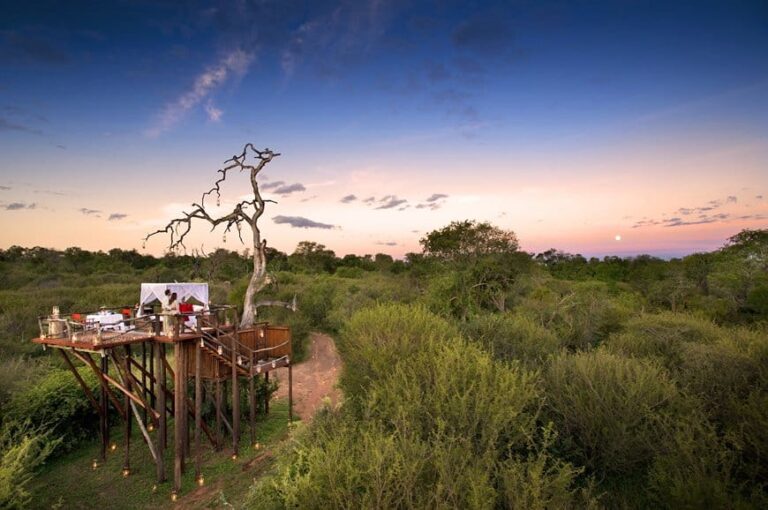
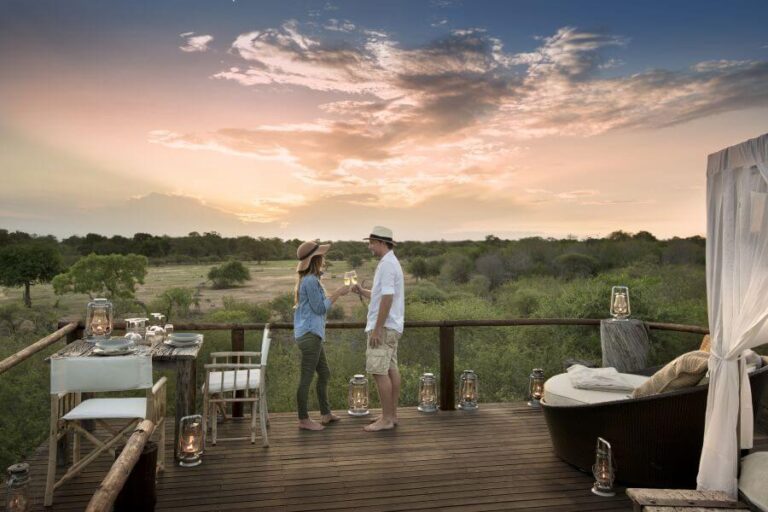
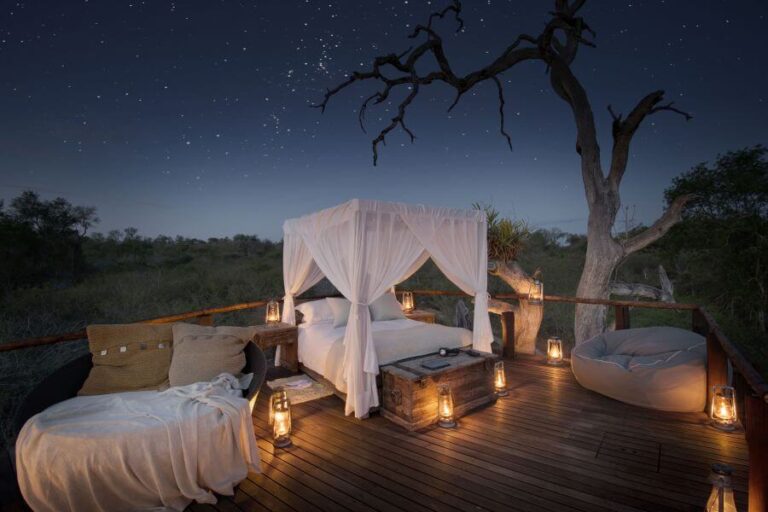
Treehouses in South Africa put you at eye level with the wild in a way that feels earned rather than arranged. You climb a timber stair into the canopy and the world reorganises itself around patience—frankincense-scented air drifting up from the scrub, a turaco's startled flash of green, something heavy shifting through grass you can sense but not quite see. These are proper elevated lodges where luxury keeps quiet and the landscape does the talking.
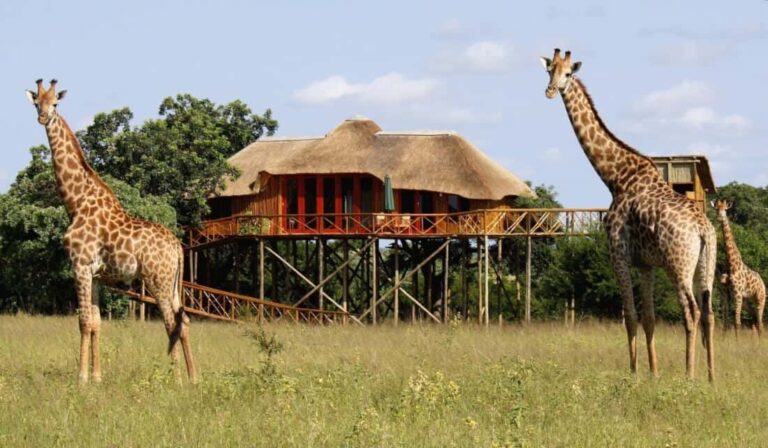
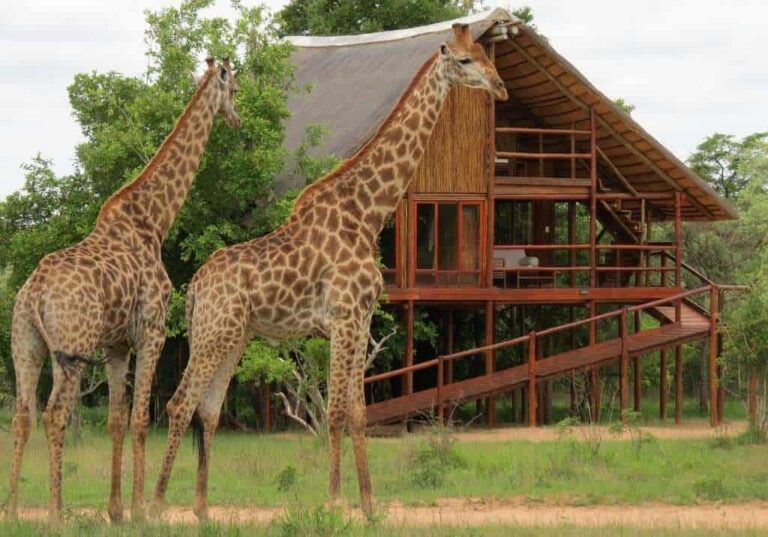
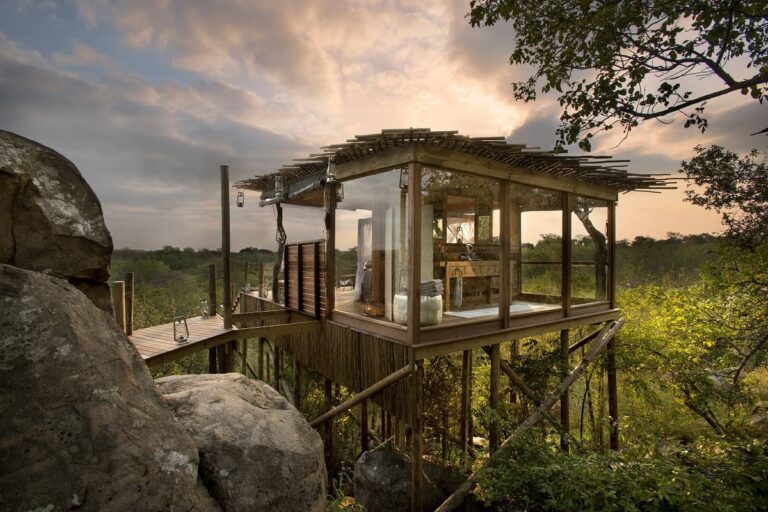
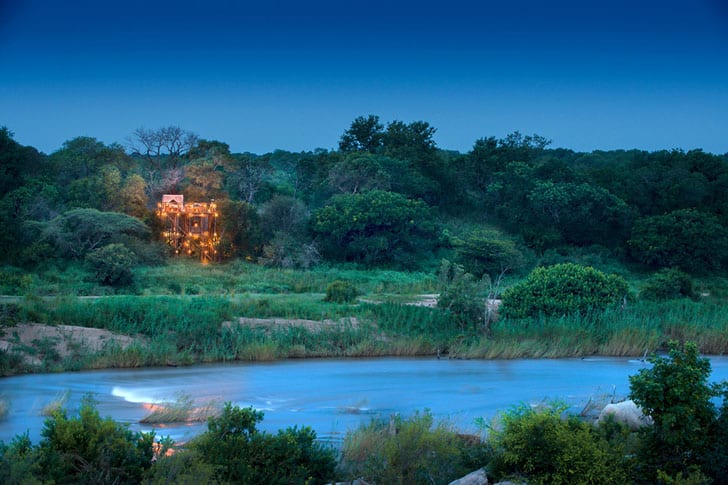
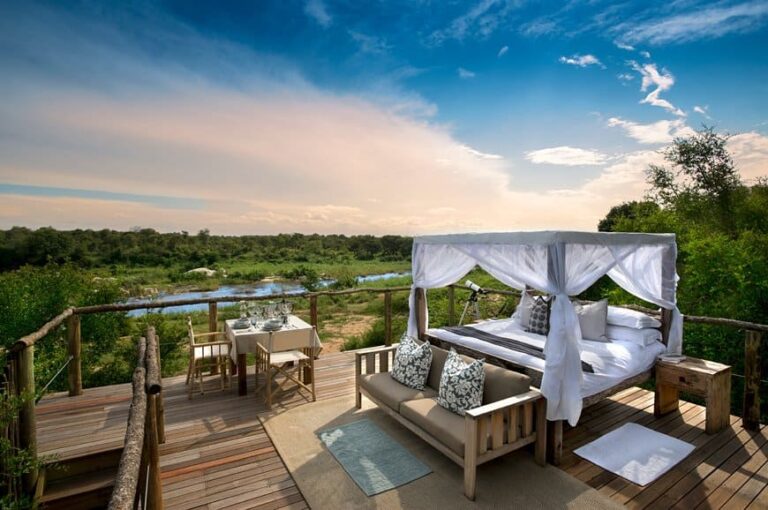
Kruger and its private neighbours write most of the script. Out on a deck cantilevered over dry riverbed, night arrives with the bass rumble of lions calling across territory and hyenas working through their repertoire. Morning coffee tastes different when there's fresh leopard spoor beneath your stilts and oxpeckers already busy on a buffalo's back. Sabi Sand and Timbavati treehouse lodges sit tucked in leadwood and knobthorn, angled toward waterholes where elephant herds redraw the banks as if the place belongs to them. It does. Limpopo's Waterberg shifts the tone—broad valleys striped with red rock, fig trees gripping cliffsides, mornings that smell faintly of dust and something green. The malaria-free angle matters here for families weighing risk against access.
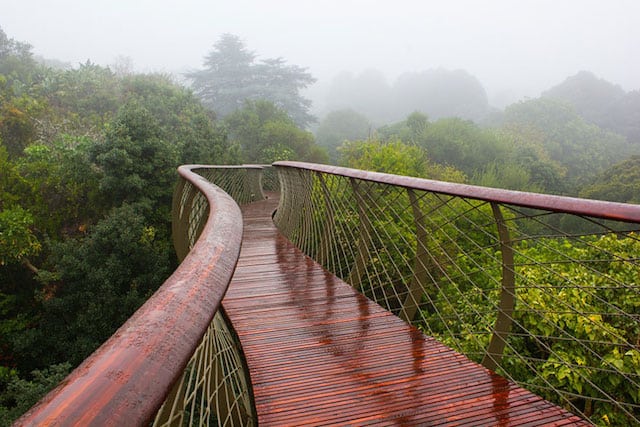
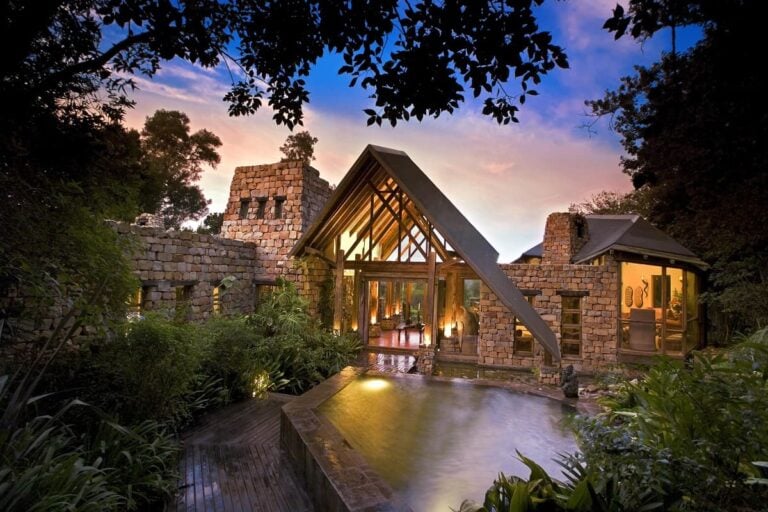
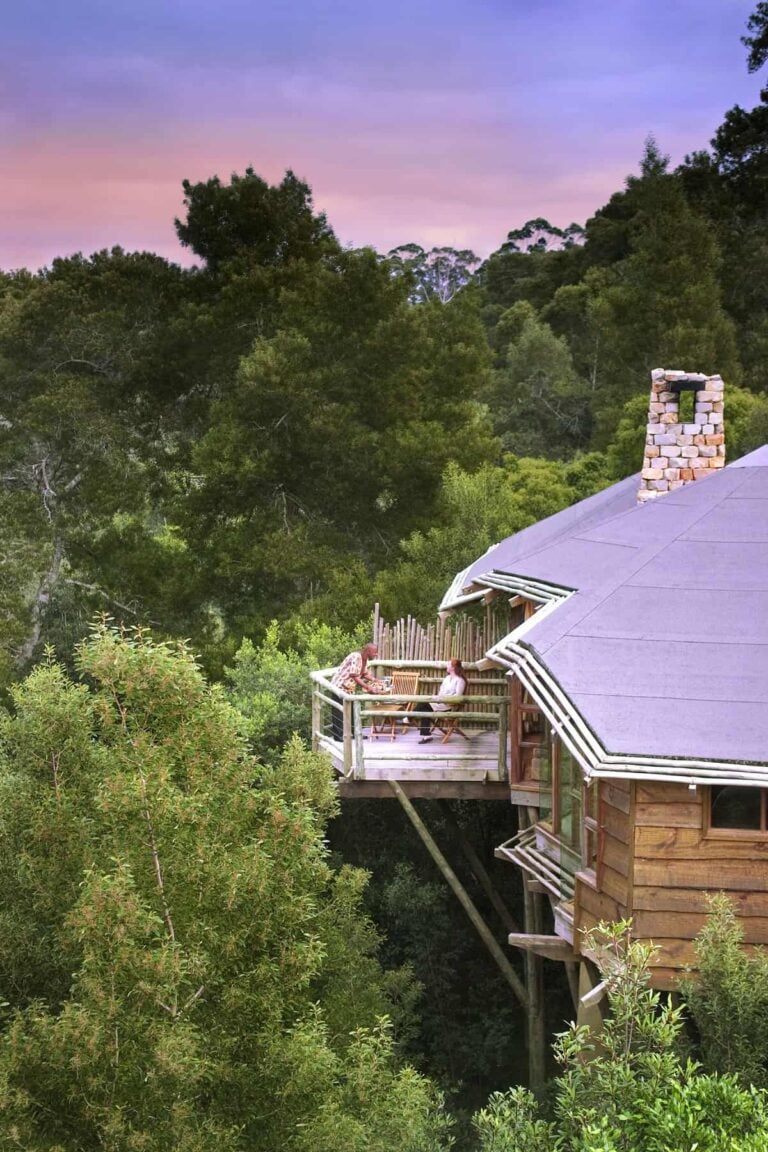
Swing south toward the coast and the Garden Route softens the whole proposition. Indigenous yellowwood forest, salt riding the breeze, decks wedged between moss-draped branches where the light turns golden-green by mid-afternoon. The Knysna turaco becomes your alarm clock. Head inland to the Cederberg and the sky opens up—sculpted sandstone, air so clear at night you stop trying to name constellations and just let them happen. KwaZulu-Natal rolls differently again: Hluhluwe-iMfolozi's warm wind and thorn country, a dawn chorus that starts early and refuses to quit.
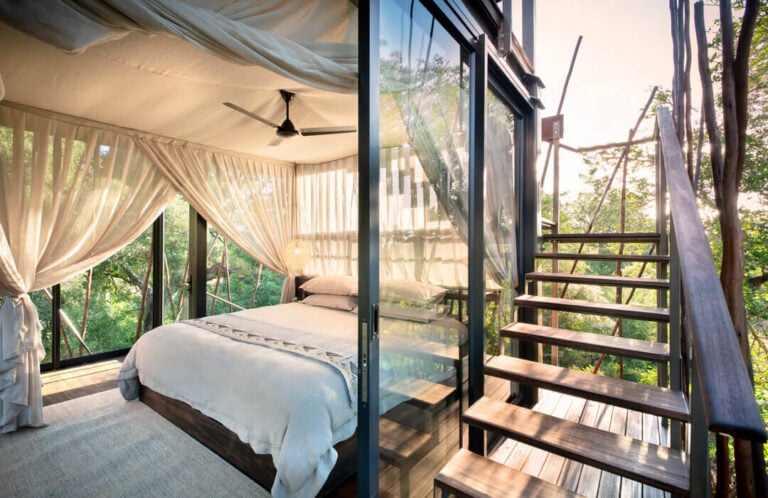
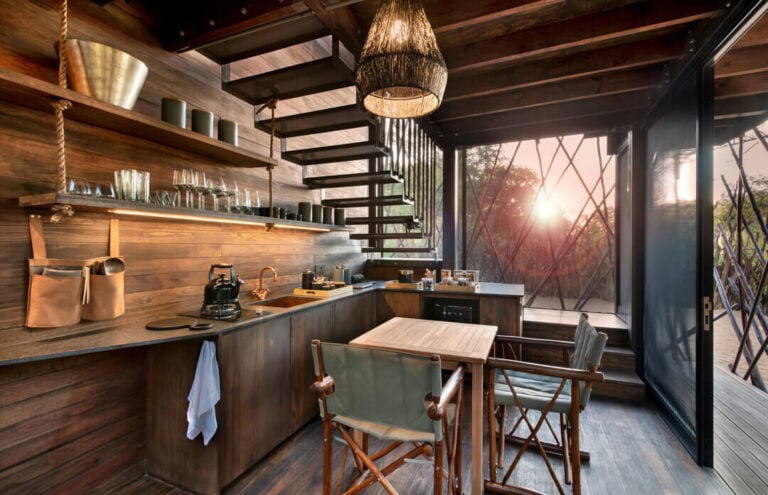
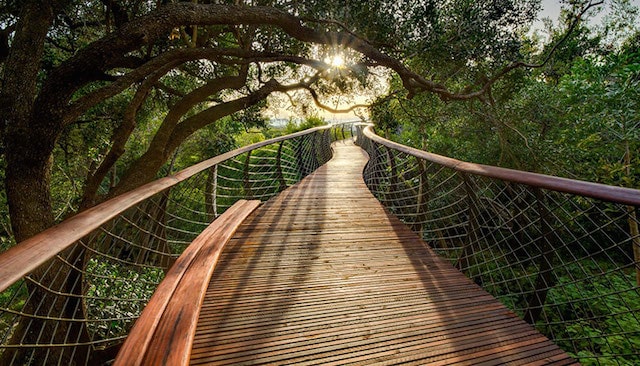
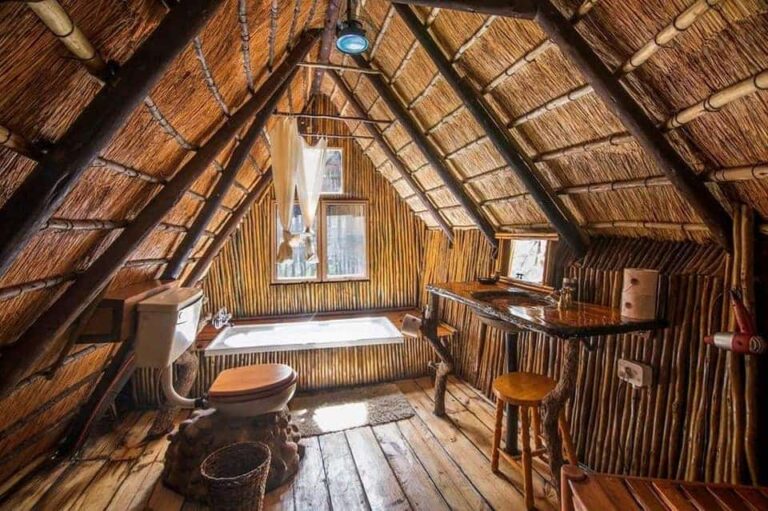
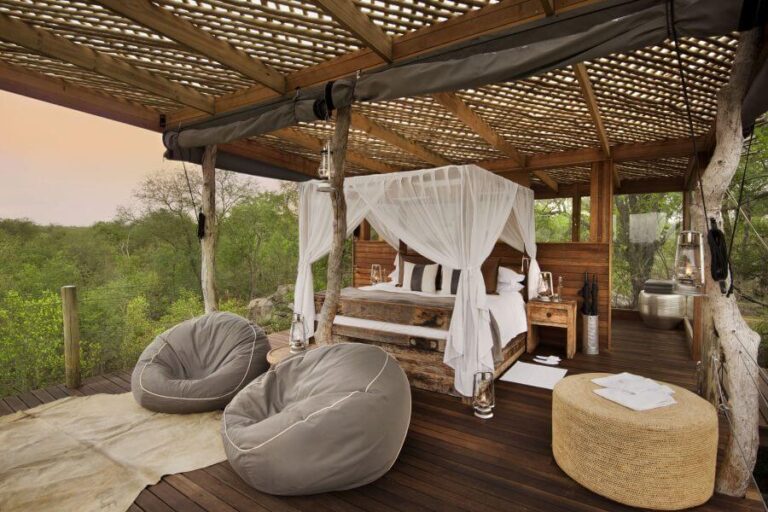
Inside, the craft shows itself quietly. Local hardwoods, mosquito nets that billow rather than smother, small plunge pools that steal entire afternoons. Rain showers turn the first drops into theatre. Solar panels tuck themselves away, greywater systems work without fanfare, and boardwalks bend around root systems instead of bulldozing through. Many lodges fund real conservation work—collared research animals, wildlife corridors, community guide programmes that turn a smudged track into a story about territory and hunger and survival.
The rhythm writes itself once you arrive. A slow game drive that becomes a lesson in waiting. A guided walk where every scraggly shrub has a Zulu name, a medicinal use, a place in someone's childhood. Sundowners while a herd of elephant rearranges the river as though architects were never consulted. That's the pull of South Africa's treehouses—elevated enough to feel the difference, grounded enough to remember the red dust in your boots long after you've shaken it loose.
Frequently asked questions about South Africa
When is the best time to stay in a South African treehouse?
May through September delivers the strongest treehouse experience in safari country. Kruger's dry-season months concentrate game around waterholes and rivers—exactly where most elevated lodges aim their decks—so morning coffee often comes with elephant herds and predators working the banks. Cooler nights make sleeping under nets more comfortable, and thinner bush improves sightings from your perch. The Garden Route works year-round, though June to November adds migrating humpback whales to the coastal soundtrack. Summer rains turn the Waterberg and KZN vivid green, but wet-season mud can complicate access to remote properties.
Do South African treehouse lodges offer Big Five viewing?
Lodges in the greater Kruger ecosystem—Sabi Sand, Timbavati, Balule and sections of the national park itself—genuinely deliver Big Five access from elevated decks. Sabi Sand in particular holds the world's densest leopard population, so sightings from your treehouse veranda are credible rather than wishful. Limpopo's Waterberg offers four of the five (leopard, elephant, buffalo, rhino) in a malaria-free setting that suits families. Garden Route and Cederberg properties trade wildlife intensity for forest birding and smaller mammals—still compelling, but a different contract entirely.
Are treehouse stays in South Africa suitable for children?
Most safari treehouses near unfenced Big Five territory set a firm minimum age, typically twelve years, because open wildlife access and elevated walkways create genuine risk. Lodges in the Waterberg and some Garden Route properties welcome younger families with fenced perimeters and easier terrain, though you sacrifice the raw exposure that makes Kruger properties so electric. If travelling with small children, confirm age policies and safety infrastructure before booking—refund terms can be strict once deposits clear.
How far in advance should I book a South African treehouse lodge?
Premium safari properties in Sabi Sand and Timbavati book six to twelve months ahead for dry-season dates, sometimes longer for school holidays and South African long weekends. Garden Route treehouses offer more flexibility outside December and Easter peaks, often accepting reservations a few months out. If your dates hinge on a specific lodge or you're coordinating a larger South African itinerary, locking in treehouse nights early prevents the tail wagging the dog.
What does a night in a South African treehouse typically cost?
Expect serious variation. Garden Route forest retreats and some Waterberg lodges start around R2,500 per night for self-catering or bed-and-breakfast setups. Kruger-adjacent luxury lodges in private reserves—where the rate includes guided game drives, meals, drinks and Big Five access—commonly run R8,000 to R20,000 per person per night, occasionally higher for exclusive-use or ultra-premium concessions. The price gap reflects not just thread count but traversing rights, guiding expertise and the density of wildlife outside your window.