

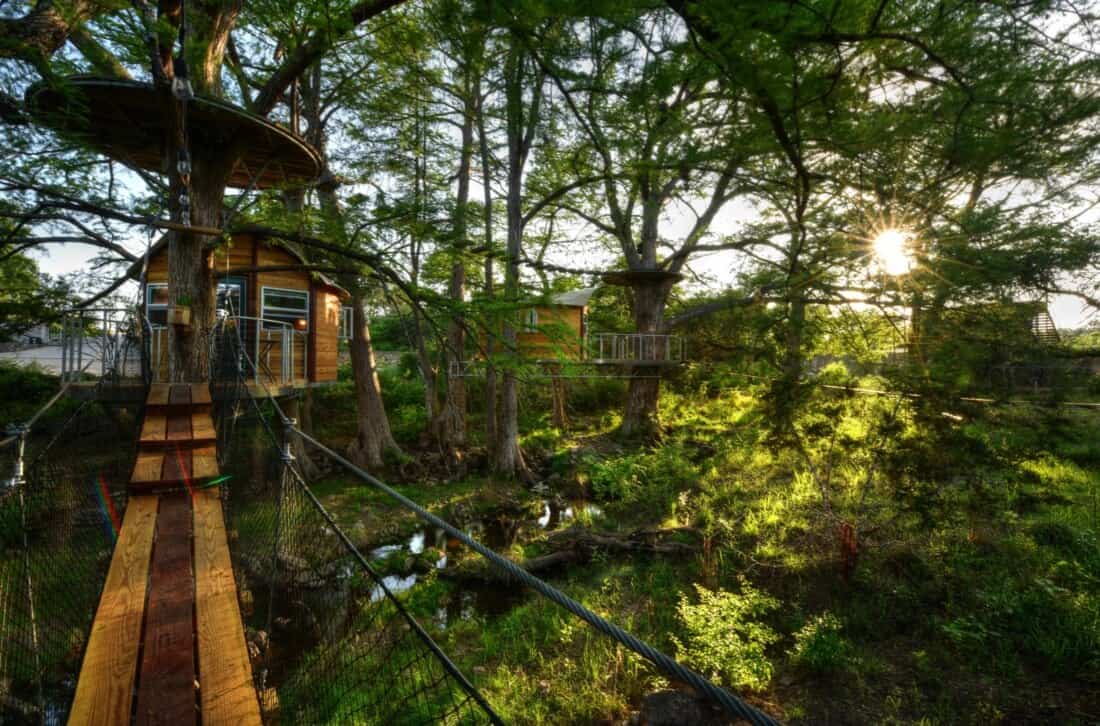
You don’t drive to Cypress Valley so much as up into it. The road west of Austin narrows, trees close in, and suddenly the air feels different—damp, green, a little electric. Down in the gorge, a creek whispers around cypress roots that have seen a century or two. Above, strung like notes on a stave, sit the Cypress Valley Canopy Treehouses.
It’s a place that takes “elevated stay” literally. By day, guests clip into zip lines that sail through treetops, canyon to canyon. By night, the same forest trades adrenaline for hush—crickets tuning up, wind threading through leaves, the slow flash of fireflies. The shift from thrill to stillness is its own kind of luxury.
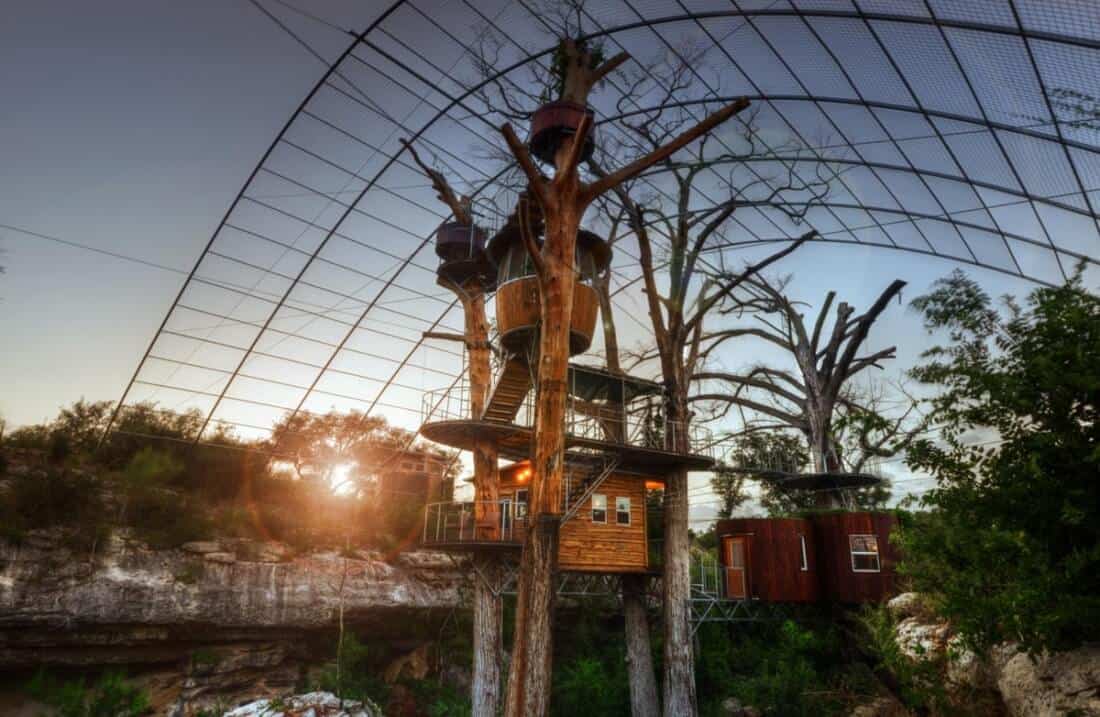
Five treehouses dot the property, each one built with a stubborn refusal to copy the others. Four are snug retreats for two—wood and glass cocooned in foliage. The fifth, a larger structure for families or small groups, sleeps six without losing the sense that the forest has the final say. Every night, the gorge amplifies its symphony: frogs, cicadas, and the steady heartbeat of water moving somewhere just out of sight. You fall asleep not to silence, but to balance.
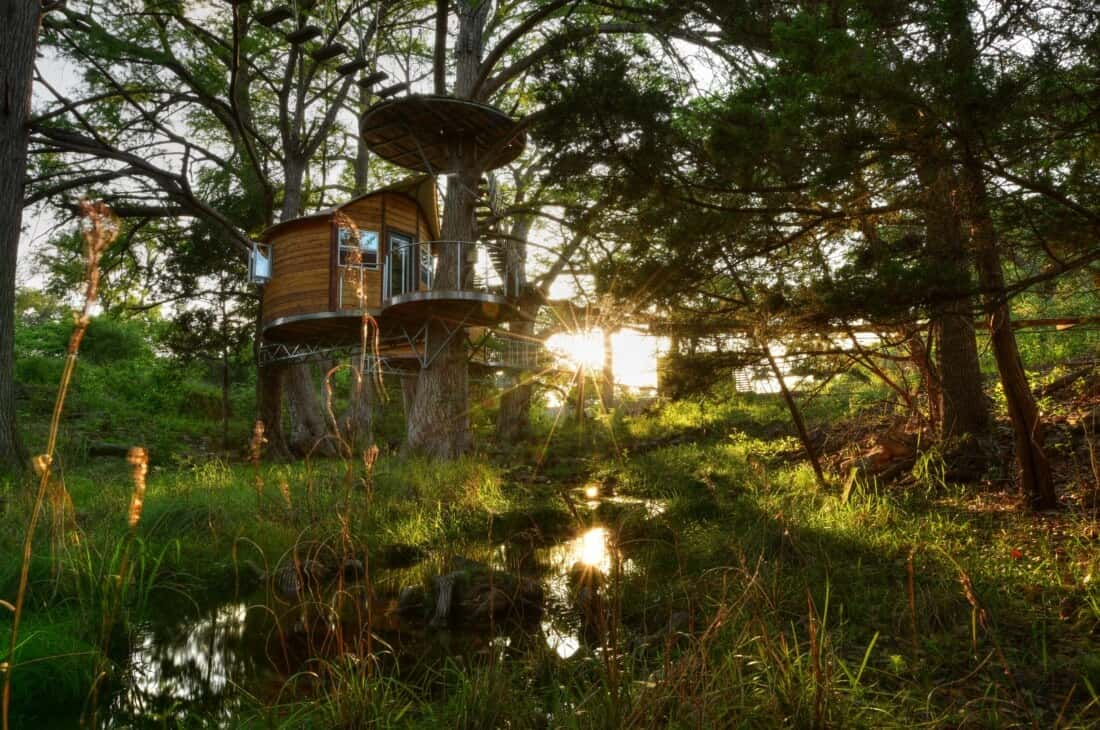
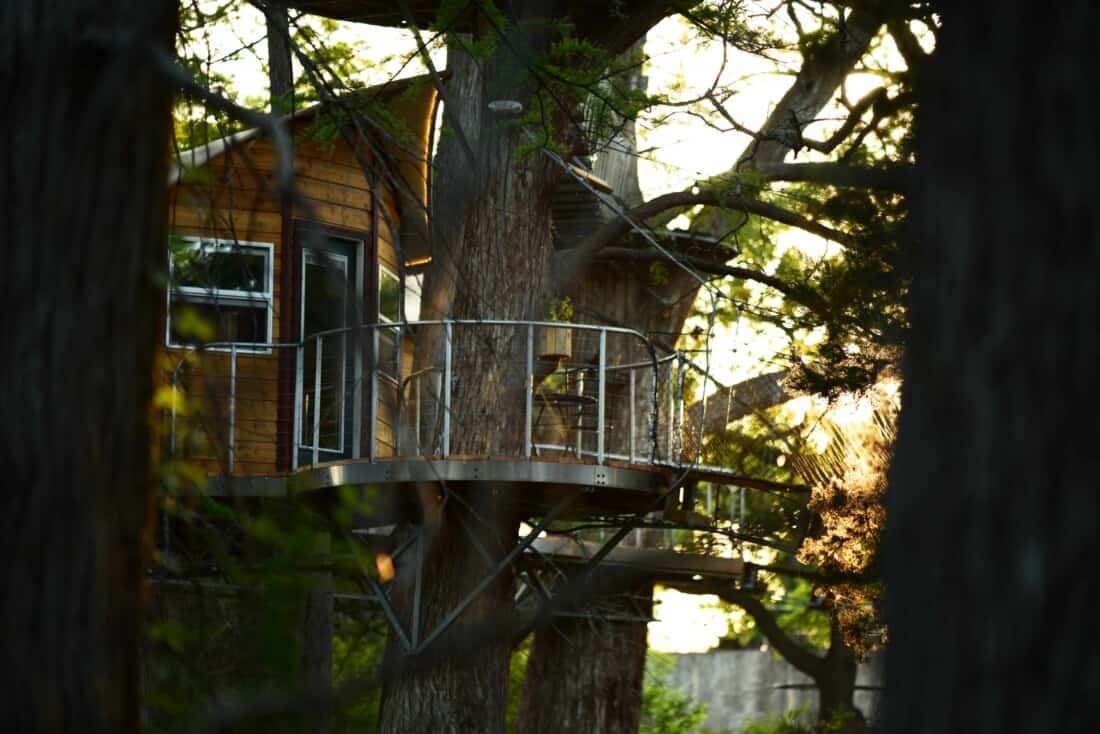
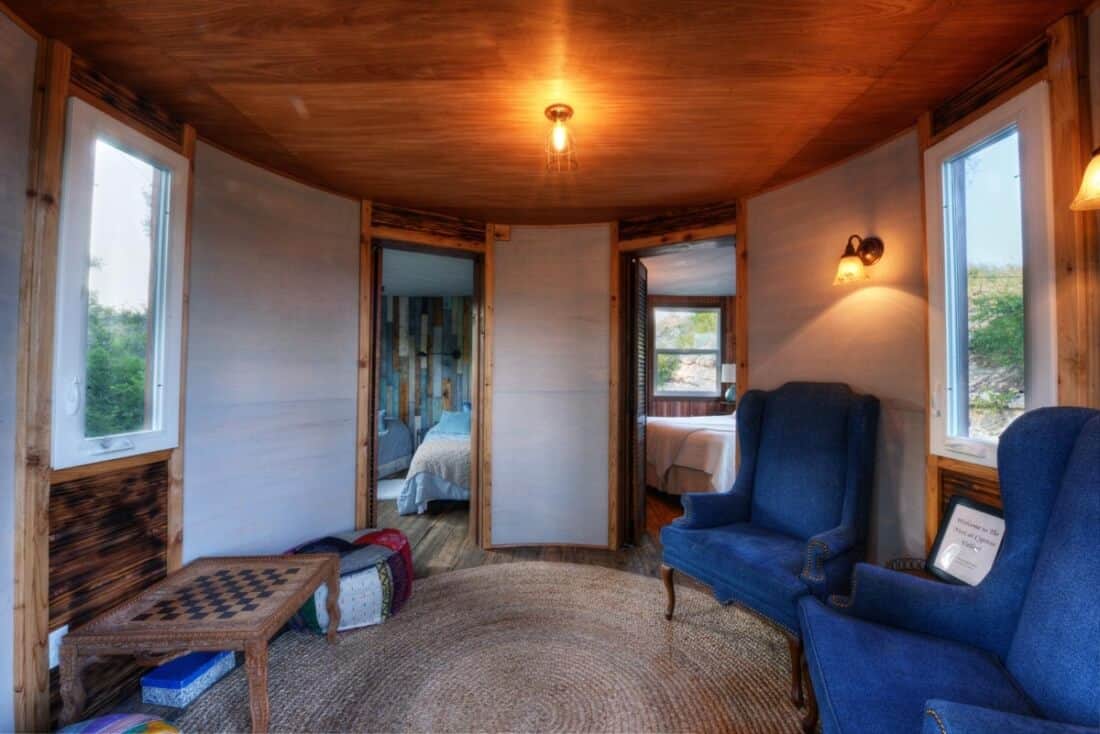
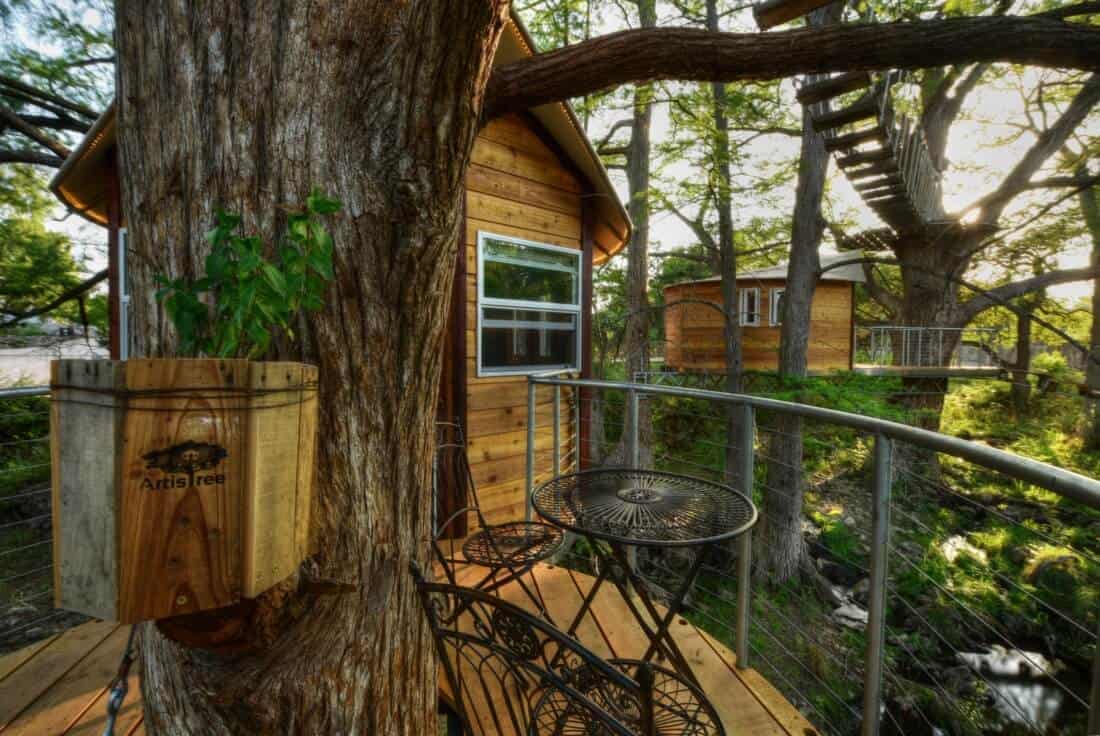
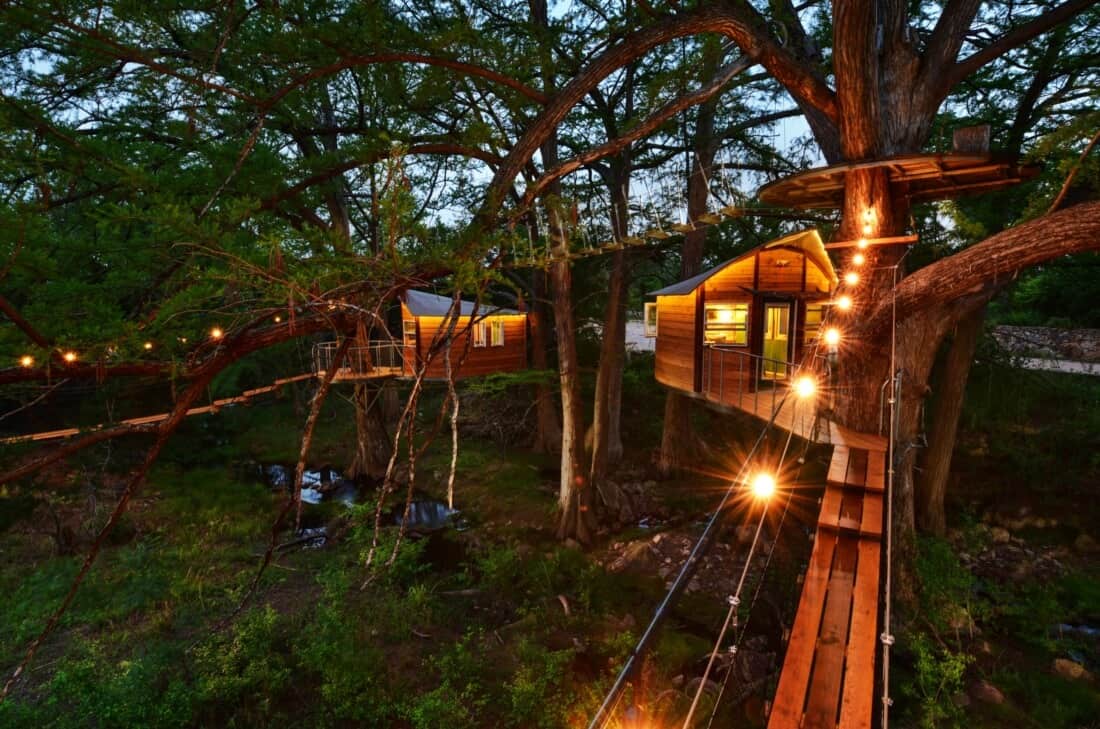
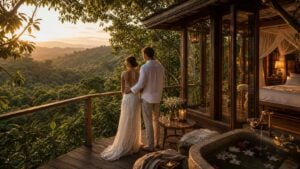
The star, though, is the Yoki Treehouse, named for the Tonkawa word for “rain.” It feels like something imagined during a thunderstorm—part cabin, part dream. A two-tiered deck wraps around ancient cypress trunks, perfect for sunrise coffee (they serve a locally roasted cuvée that smells faintly of caramel and smoke). Inside, clean modern lines meet raw timber warmth. A small kitchenette, a soft-lit living area, and the bathhouse—across a wooden bridge, where a soaking tub hovers above the gorge—make it feel less like camping and more like floating.
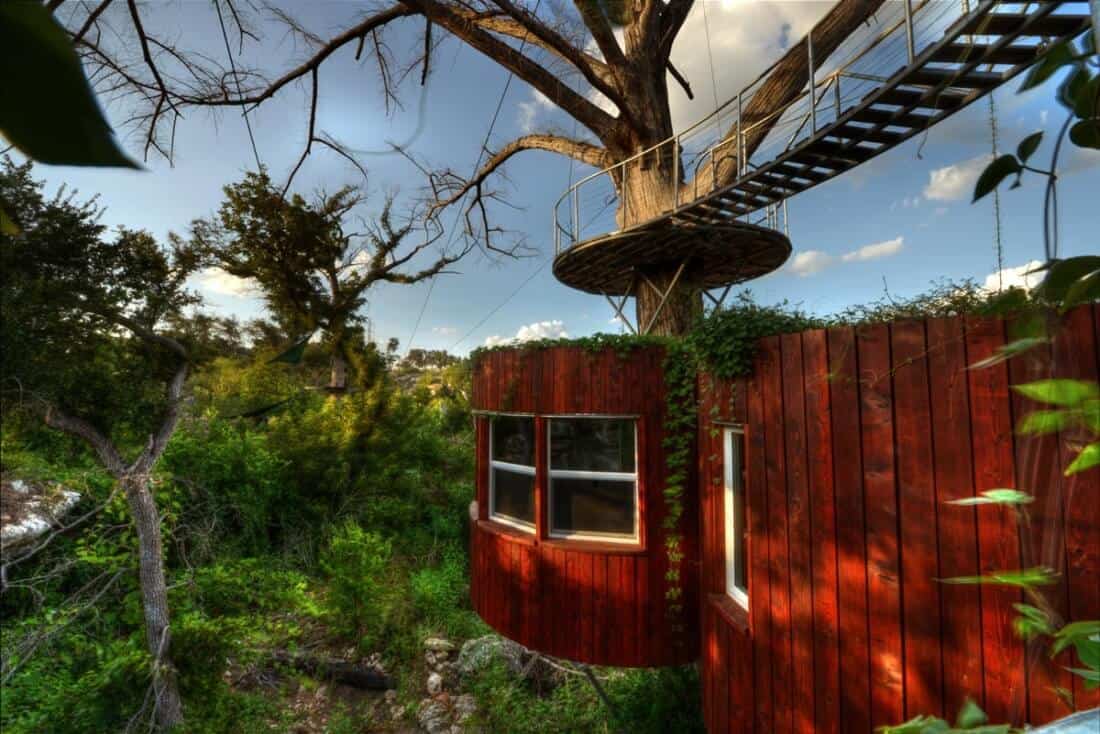
Next door in spirit, the Lofthaven takes a different approach: round, organic, a single circular bedroom built around a cypress tree that rises straight through the floor. Step outside and a narrow bridge leads you to the bathhouse—a curved structure with a waterfall tub and open view into the gorge’s green cathedral. You’ll probably lose track of time there. Everyone does.
Daylight has its own tempo: picnics by the wildlife lake, quiet trails winding under live oak and cedar, maybe a second zip-line run if you want to feel the wind again. When night comes, the fireflies appear—soft bursts of light that make the air shimmer like static. Someone always gasps. You can’t help it.
Cypress Valley feels like it’s been choreographed, but it hasn’t. The design, the adventure, the silence—they’ve just learned to keep the same rhythm.
Rates begin around €450 per night, with a two-night minimum. Pricey? Maybe. But once you’ve slept to the sound of wind moving through cypress branches and woken to sunlight trembling on water, you realise—there are far worse investments than awe.










Eric
April 14, 2025 at 01:36We stayed in Yoki and it was amazing! The treehouse was beautiful and the bathroom (seperate building you get to by a cable bridge) was like a spa on its own. The treehouse (and bathroom) are private to the guest and there are multiple levels of the treehouse with a winding staircase. It was so peaceful!! The views are amazing and you can just shut off and enjoy the company. This is a tv “less” treehouse and also does not have wifi, this is intentional. I have never received so many comments and inquiries just based of my pictures from our stay. Highly recommend.