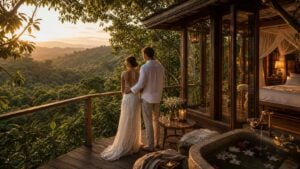
Bambu Indah occupies a hillside fold in Sayan, a quiet village on the western edge of Ubud where the land breaks into the Ayung River valley. The property sits along Jl. Baung, surrounded by mature bunut trees whose roots grip the terrain with the confidence of something that has been there for centuries. Nothing about the arrival feels resort-like. Narrow stone pathways curve between dense plantings, and the sense of having stepped into working land rather than curated grounds arrives immediately.
The gardens here do real work. Rice paddies grow alongside medicinal herb plots and edible plants. Bamboo bridges cross streams at odd angles, and frangipani trees drop flowers across paths that nobody has thought to sweep. The whole property reads as deliberately uncontrolled — shaped, yes, but never tidied into submission. It suits guests who find formal landscaping deadening.
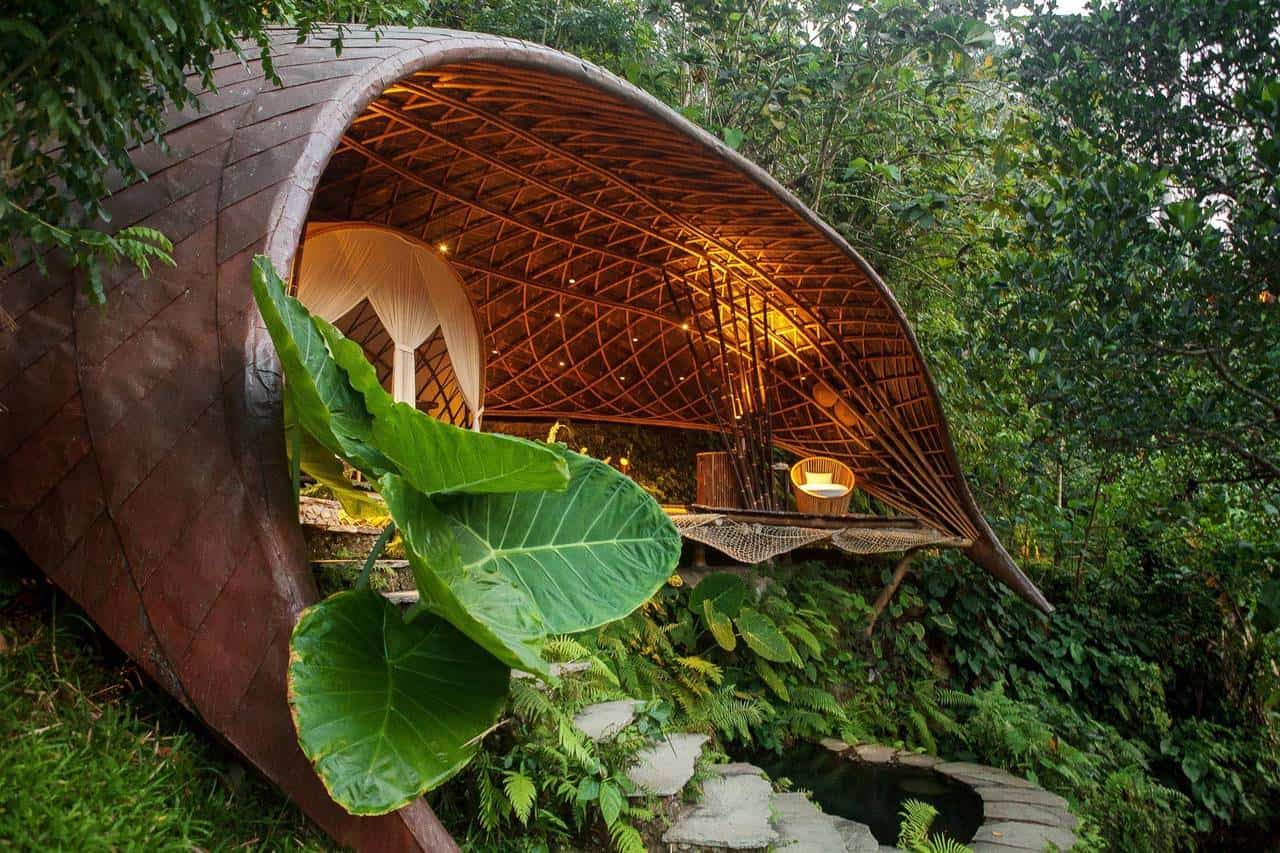
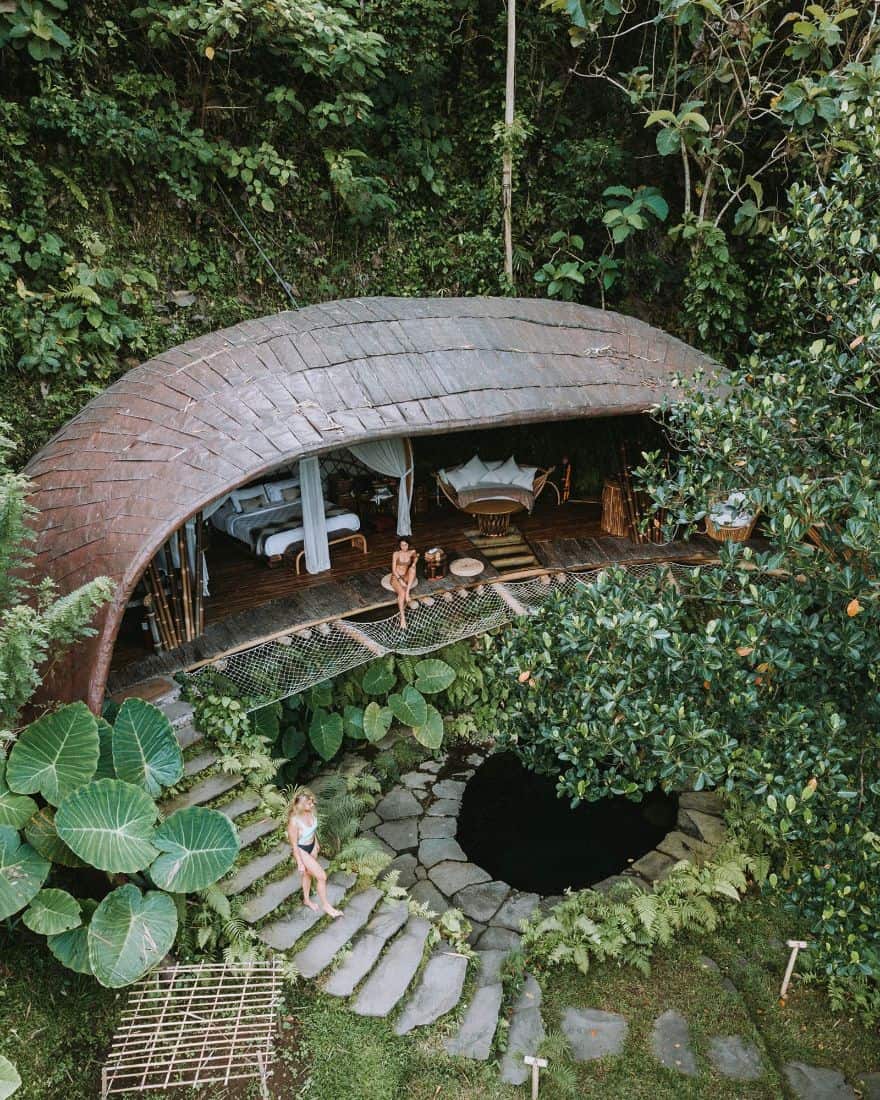
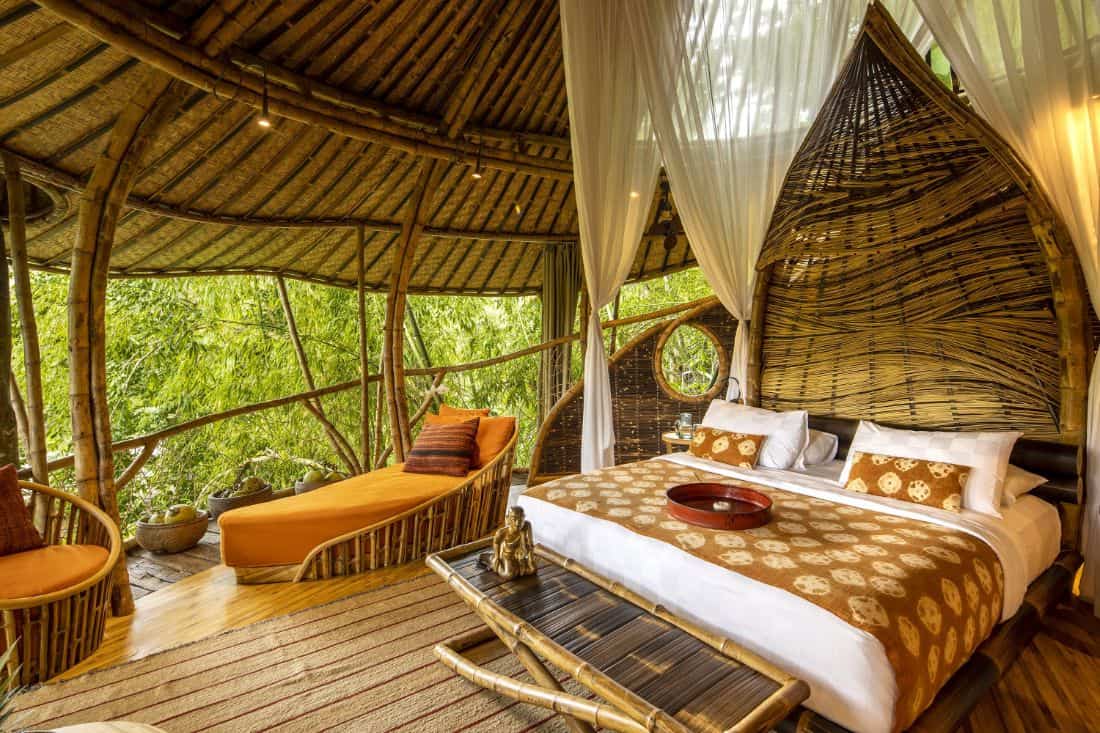
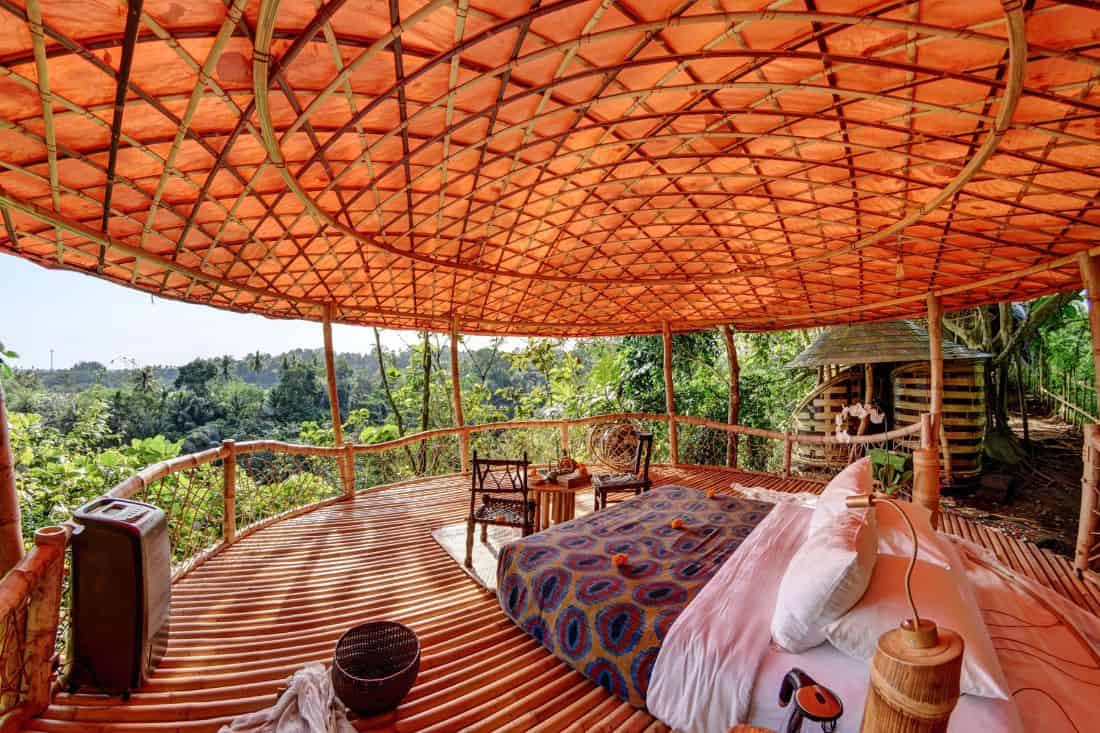
The Treehouse is the most architecturally singular of the property's accommodations. Its bamboo frame wraps around a pair of mature bunut trees in a loose basket structure, with floors that curve upward into walls and a roofline that rises into the canopy rather than against it. Inside, a queen bed fits neatly within the rounded space, and a sleeping loft sits above for anyone willing to climb. A small corner bar adds a quietly civilised note to what is otherwise a room built for jungle sound and shifting filtered light. Staying here means waking to birdsong that arrives without an alarm and falling asleep to the low percussion of insects in the trees outside.
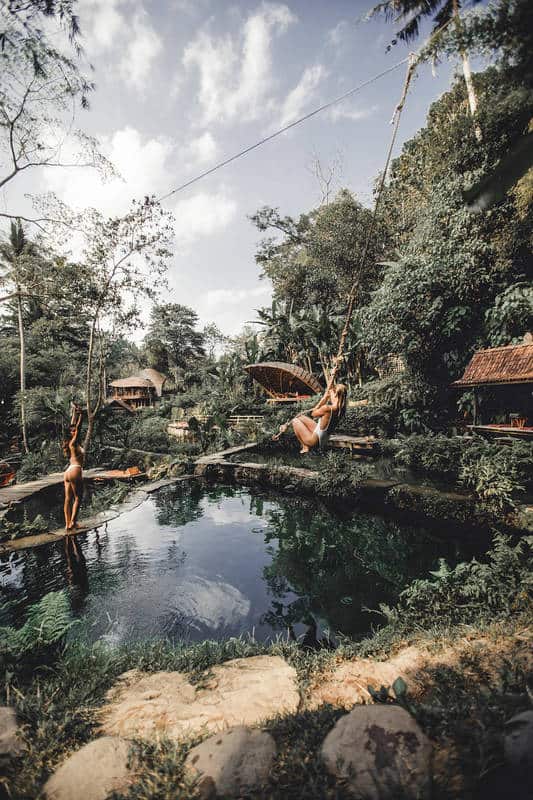
Water runs through the property in ways that feel considered rather than decorative. Spring-fed natural pools sit among the trees, and at least one comes equipped with a rope swing — a detail that signals the property's willingness to be playful rather than purely contemplative. Meditation decks and riverside seating appear at intervals, each positioned as though someone spent time deciding exactly where a person might want to pause on a given afternoon.
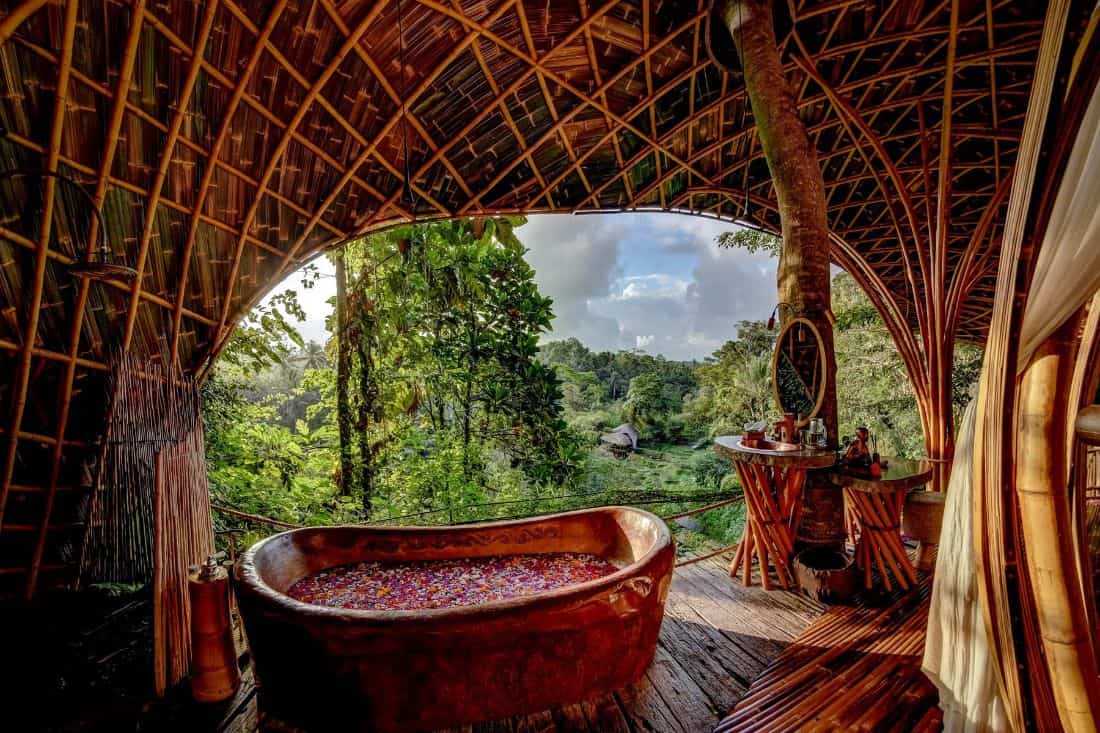
The wider design language stays consistent throughout: bamboo, reclaimed timber, antique details used without excess. Air conditioning exists, but open-air bathrooms and softly netted beds keep the experience closer to considered glamping than standard hotel comfort. The sustainability approach runs quietly through each choice. It is felt rather than announced, which makes it far more convincing.
The Sayan valley rewards a visit most between May and September, when the dry season keeps humidity manageable and the Ayung valley stays warm and bright. The shoulder months of April and October offer a good balance of lush greenery and comfortable temperatures. The wet season from November through March brings heavier rainfall and intense tropical greenery — atmospheric for guests who find a storm over the jungle genuinely appealing rather than inconvenient.
Nightly rates run from approximately 23,250 INR to 23,750 INR, placing Bambu Indah in the moderate tier for a property of this character; rates vary by season and availability.
Bambu Indah sits roughly 2.3 km from three bus stops serving central Ubud: the Kura Kura Bus stop, Ubud Terrace served by bus line 1, and Monkey Forest 1 on bus line K4B. All three are approximate straight-line distances rather than measured walking routes. Ubud has no rail or metro network, and most guests arrive by taxi, hired driver or scooter, which remains the most practical approach given the property's hillside Sayan location.
Bambu Indah suits travellers who want a Bali stay with genuine architectural substance rather than another pool villa with a rice field view. It works particularly well for couples drawn to design-led accommodation, returning Bali visitors ready to go further in than wider, and solo retreaters who want quiet that feels earned by the surroundings. The property is specific enough that it tends to self-select its guests — those who find the phrase "bamboo treehouse in a bunut tree" precise rather than poetic.
Frequently Asked Questions
Q: What makes the Treehouse accommodation different from a standard hotel room?
A: The Treehouse is built around a pair of mature bunut trees using a basket-like bamboo frame, with floors that curve into walls and a sleeping loft above the main queen bed. It has a small corner bar and open-air bathroom, and the experience is closer to considered glamping than conventional hotel comfort — jungle sound and filtered canopy light are part of the stay, not incidental to it.
Q: What are the nightly rates at Bambu Indah?
A: Rates start from around 23,250–23,750 INR per night, with variation by season and availability.
Q: When is the best time to visit Bambu Indah?
A: The dry season from May through September generally offers warm, lower-humidity days over the Ayung River valley. April and October provide a comfortable balance of greenery and sunshine with occasional showers. November through March is wetter and more atmospheric — the landscape turns intensely green, which suits guests who find tropical storms part of the appeal rather than a drawback. Check conditions closer to your travel dates.
Q: Is Bambu Indah a good fit for first-time visitors to Bali?
A: The property tends to resonate most with travellers who have visited Bali before and want to go deeper into the landscape rather than stay close to conventional amenities. That said, couples, solo retreaters and anyone drawn to architecturally distinctive, sustainability-minded accommodation will find it worthwhile regardless of previous Bali experience.
Q: How do guests typically get to the property?
A: Bambu Indah is located on Jl. Baung in Sayan, on the western edge of Ubud. Ubud has no rail or metro network, so most guests arrive by taxi, hired driver or scooter. Confirm current transfer options directly with the property when booking.