

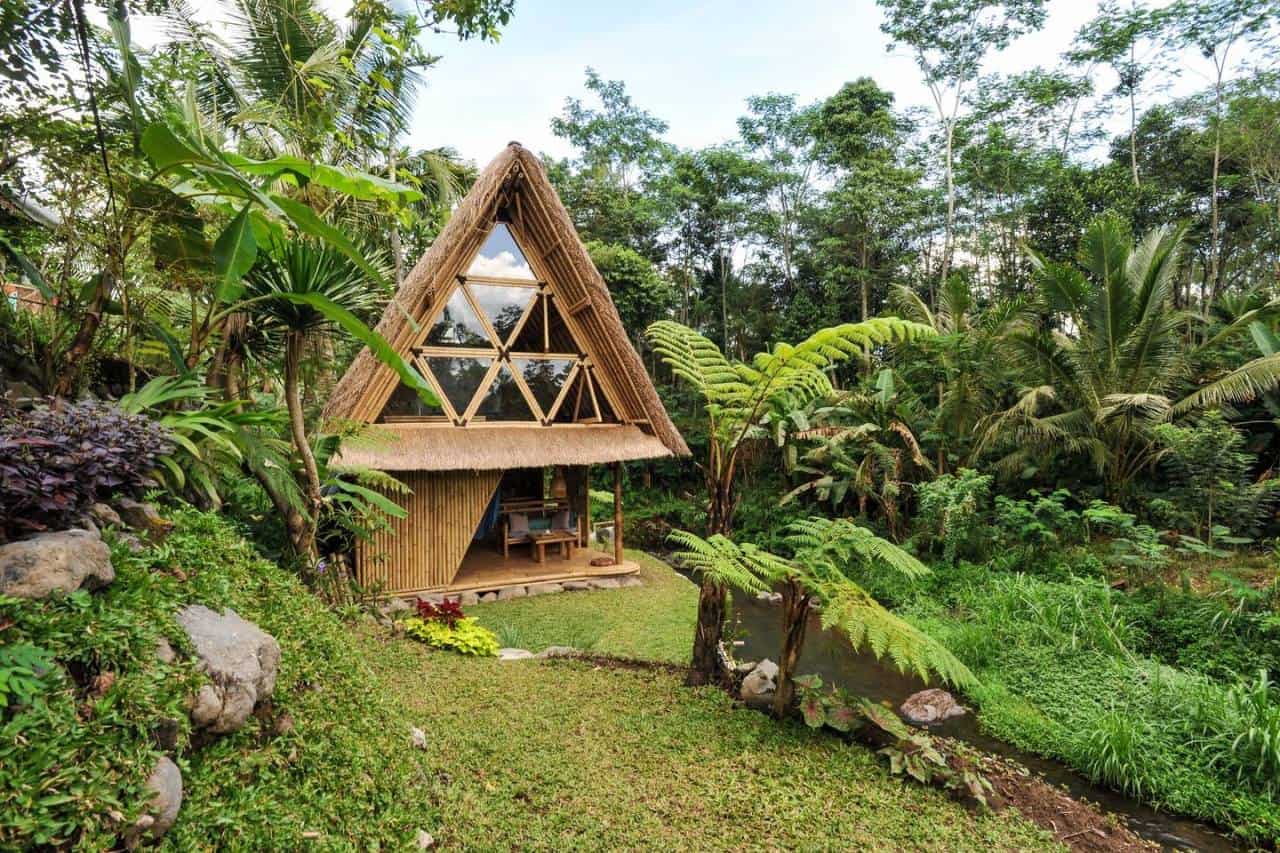
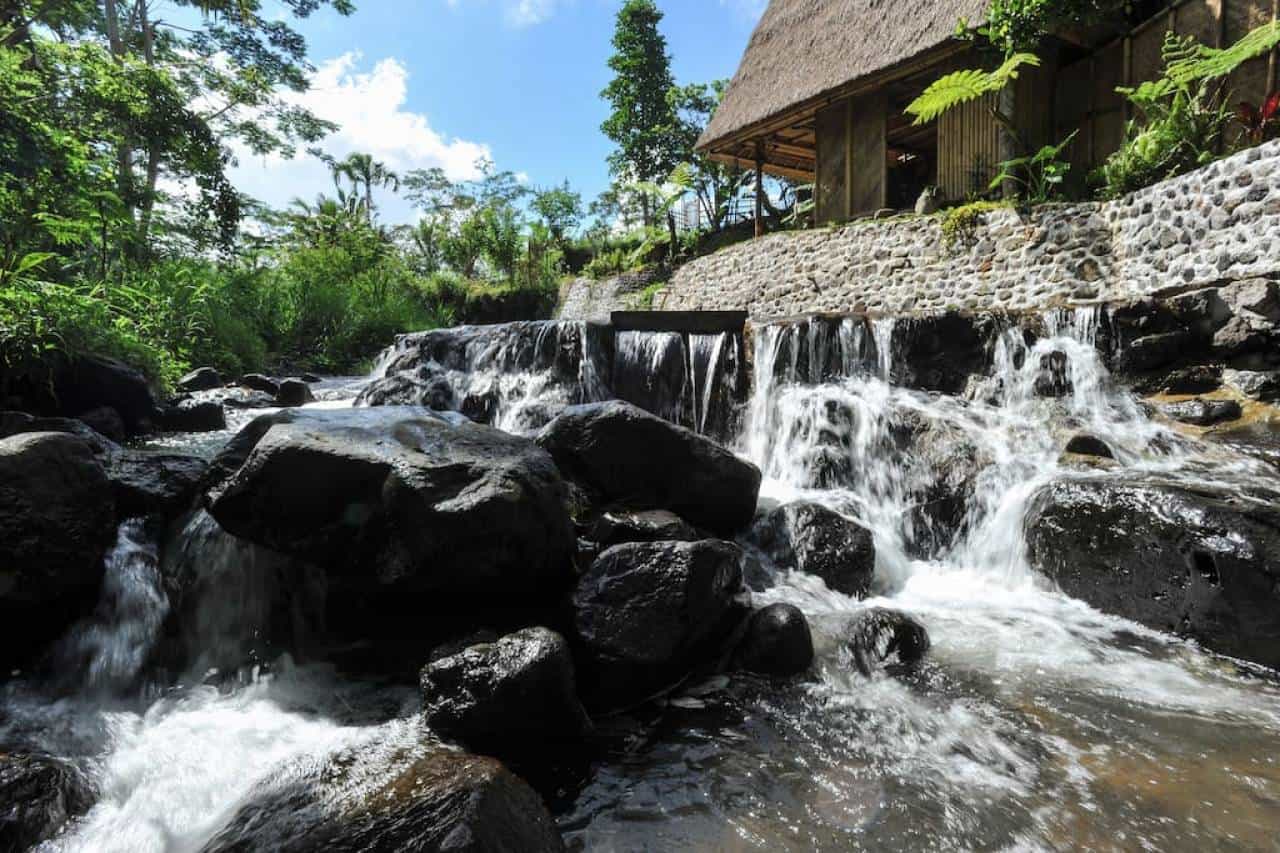
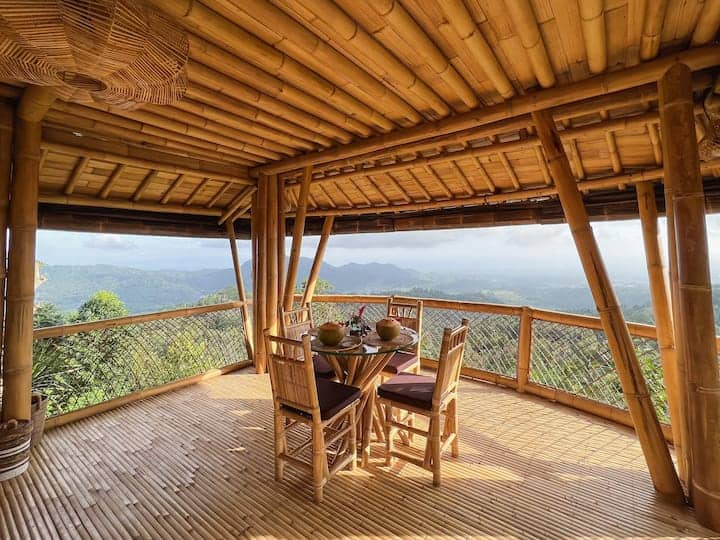
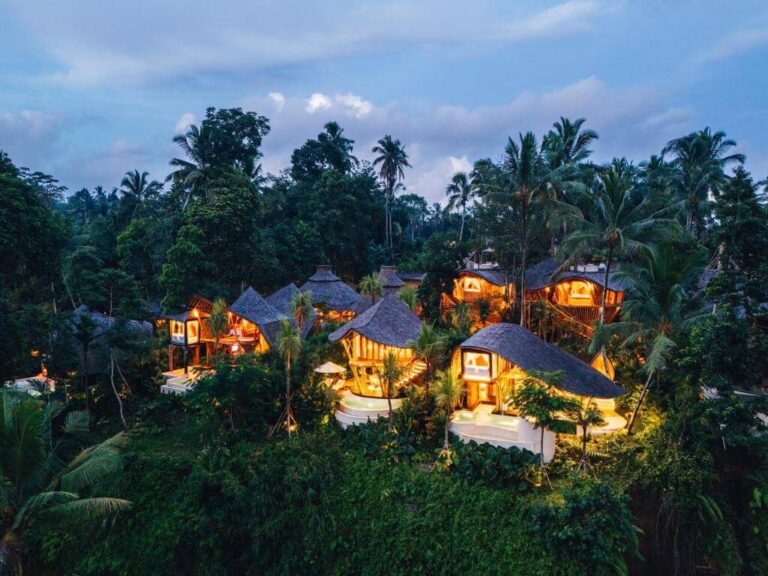
Hideout Bali sits in the Karangasem foothills of East Bali, on Jl. Jangu in the village of Duda, Selat — a part of the island that most visitors never reach. The road from Ubud takes roughly forty minutes, winding past rice paddies and forested ridgelines before it narrows to a track that ends at a riverbank. What waits there is a small collection of open-air bamboo structures built into the trees and hillside, as close to the water as architecture can get without becoming a bridge.
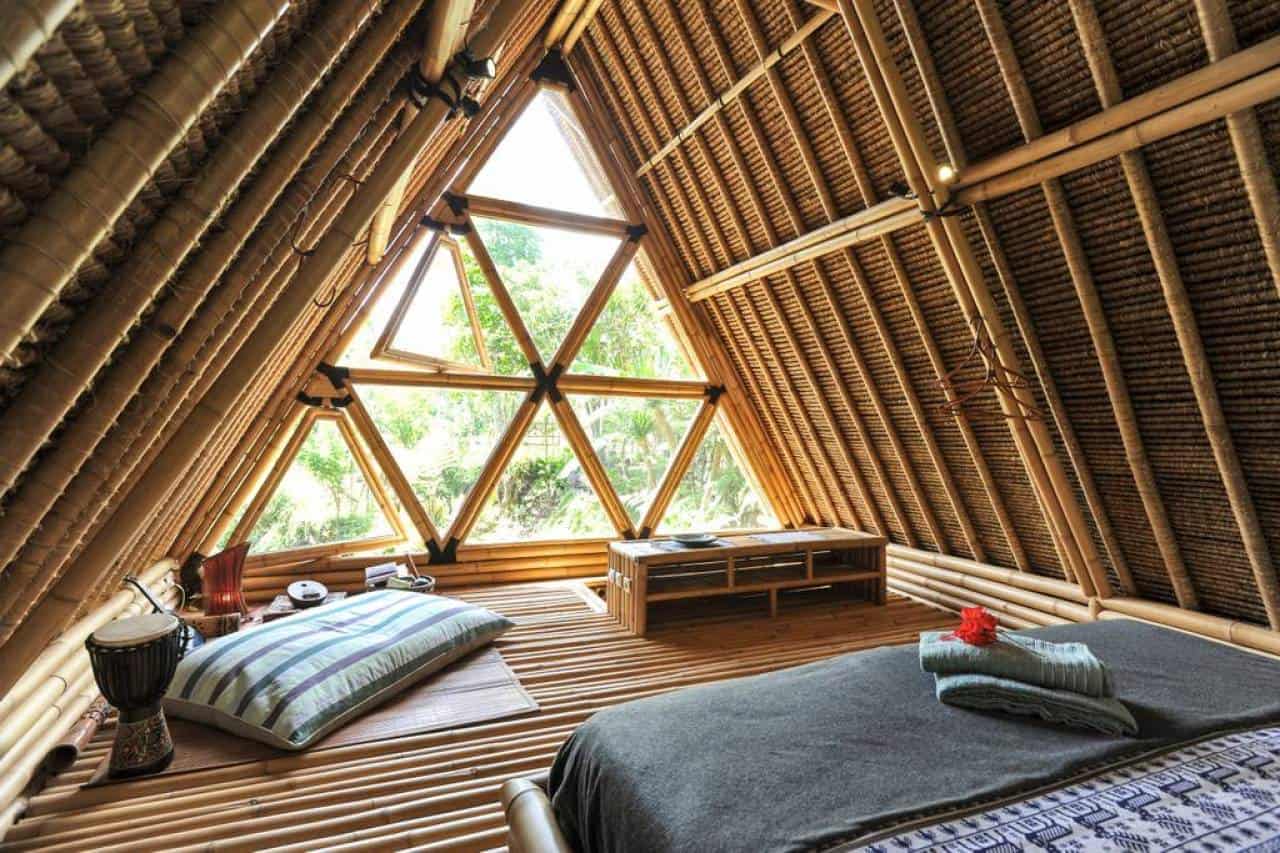
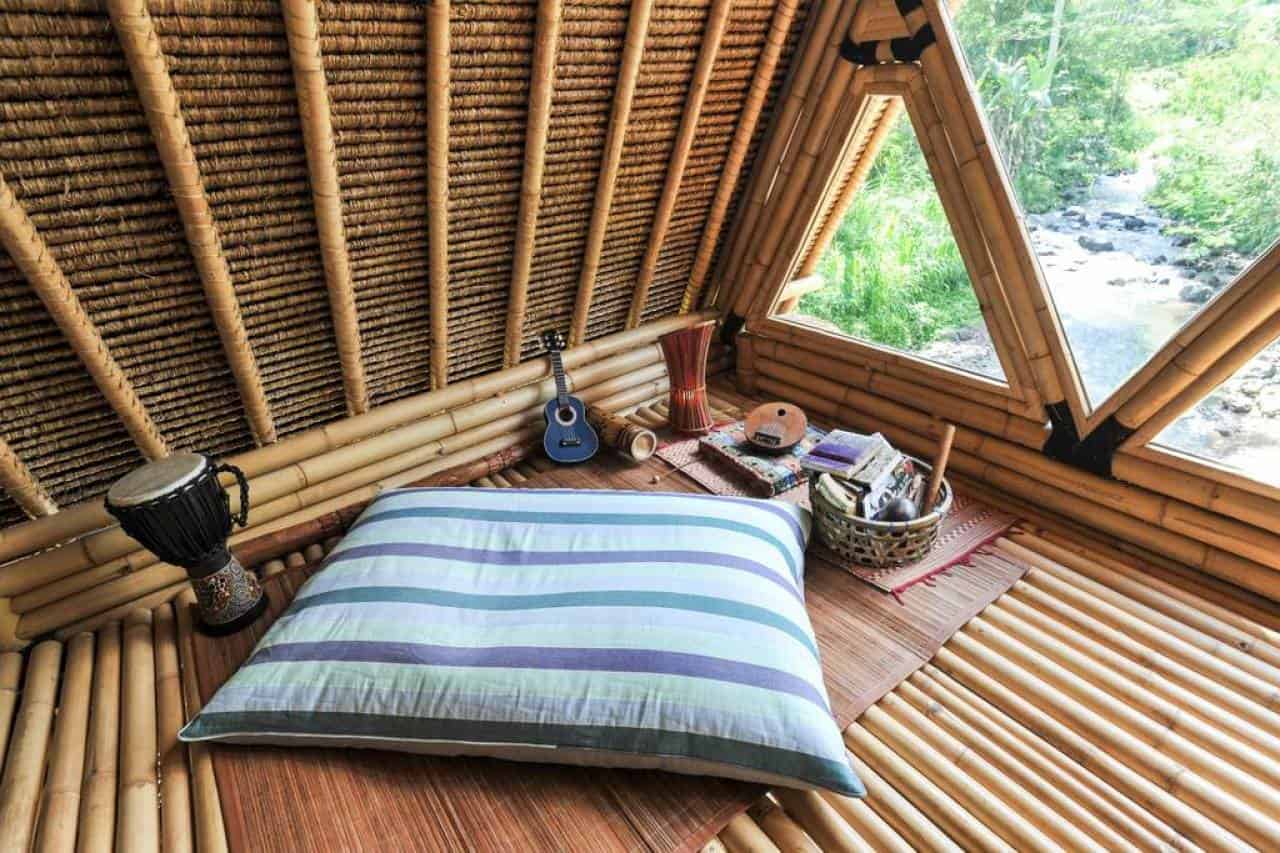
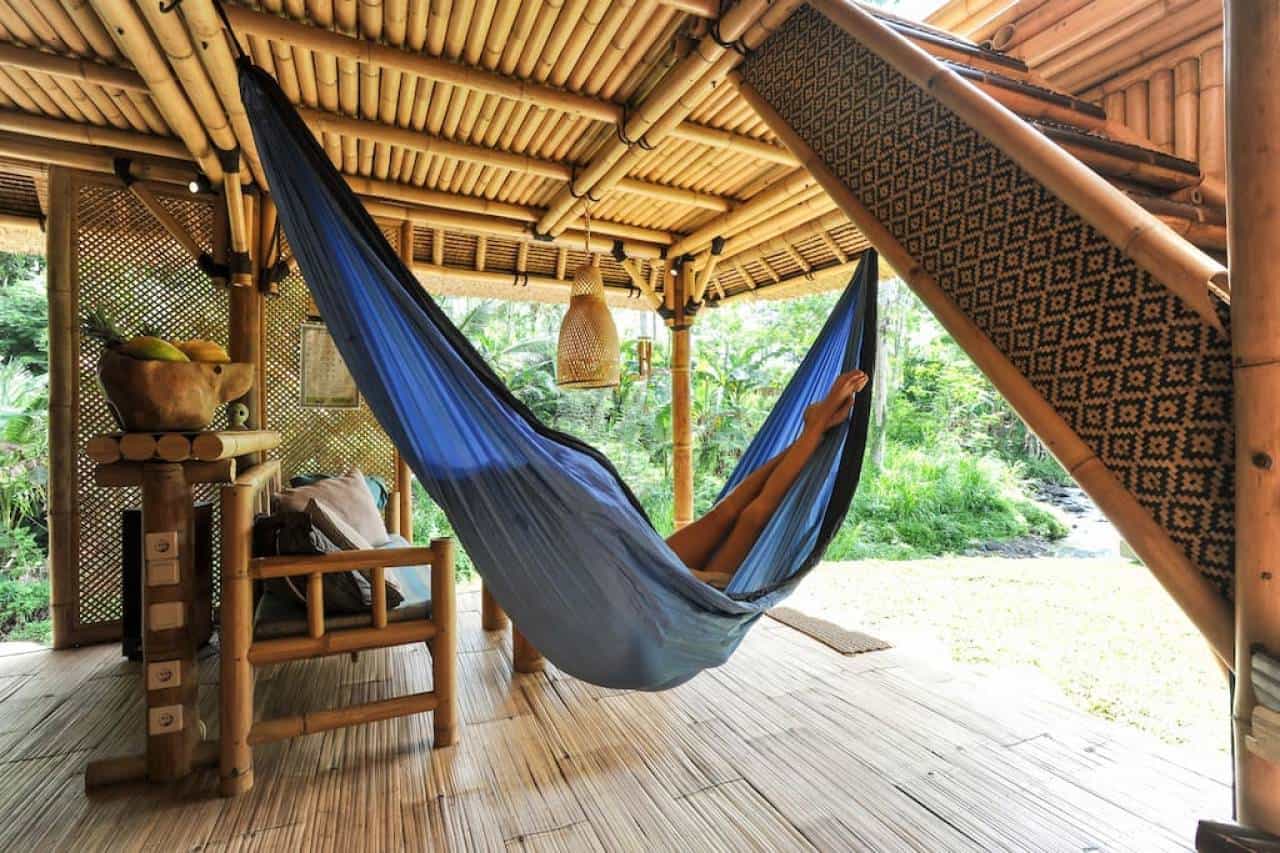
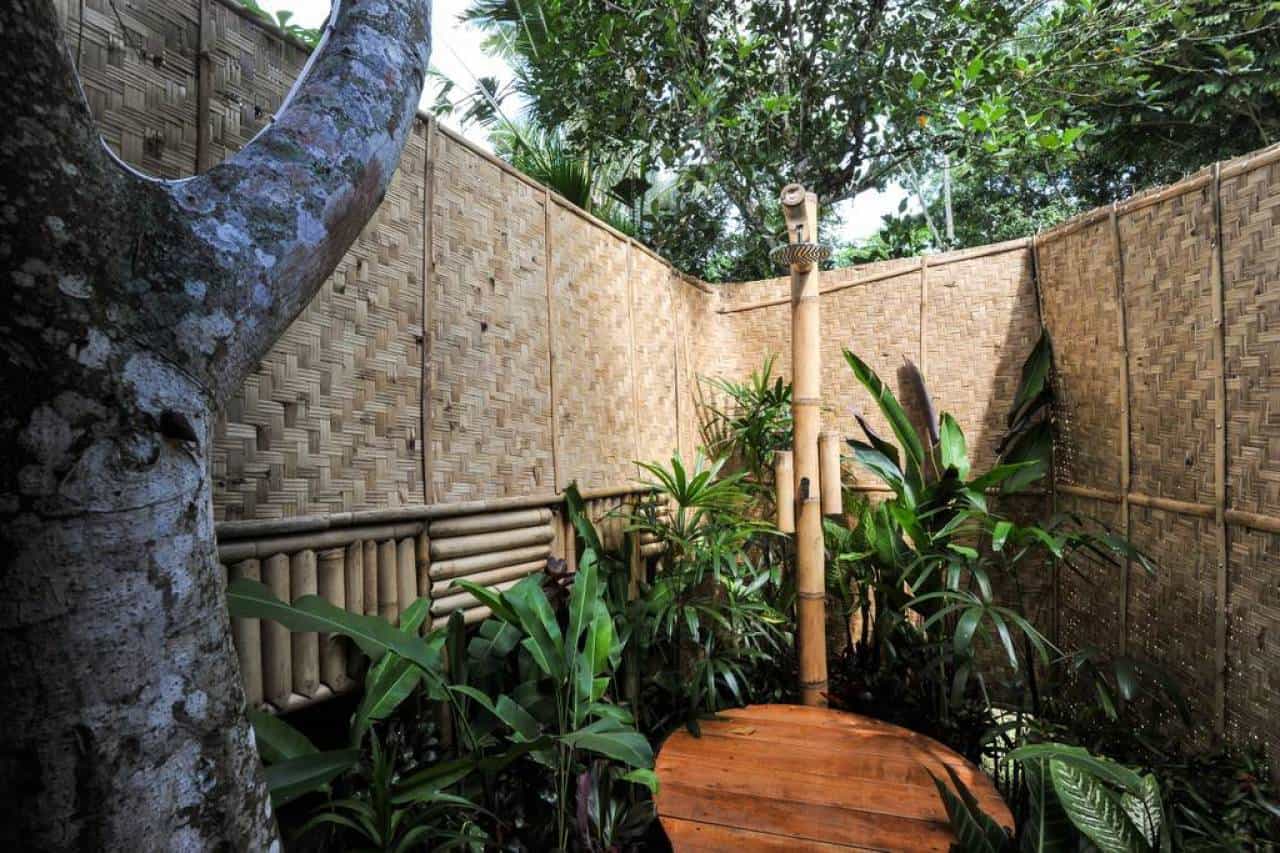
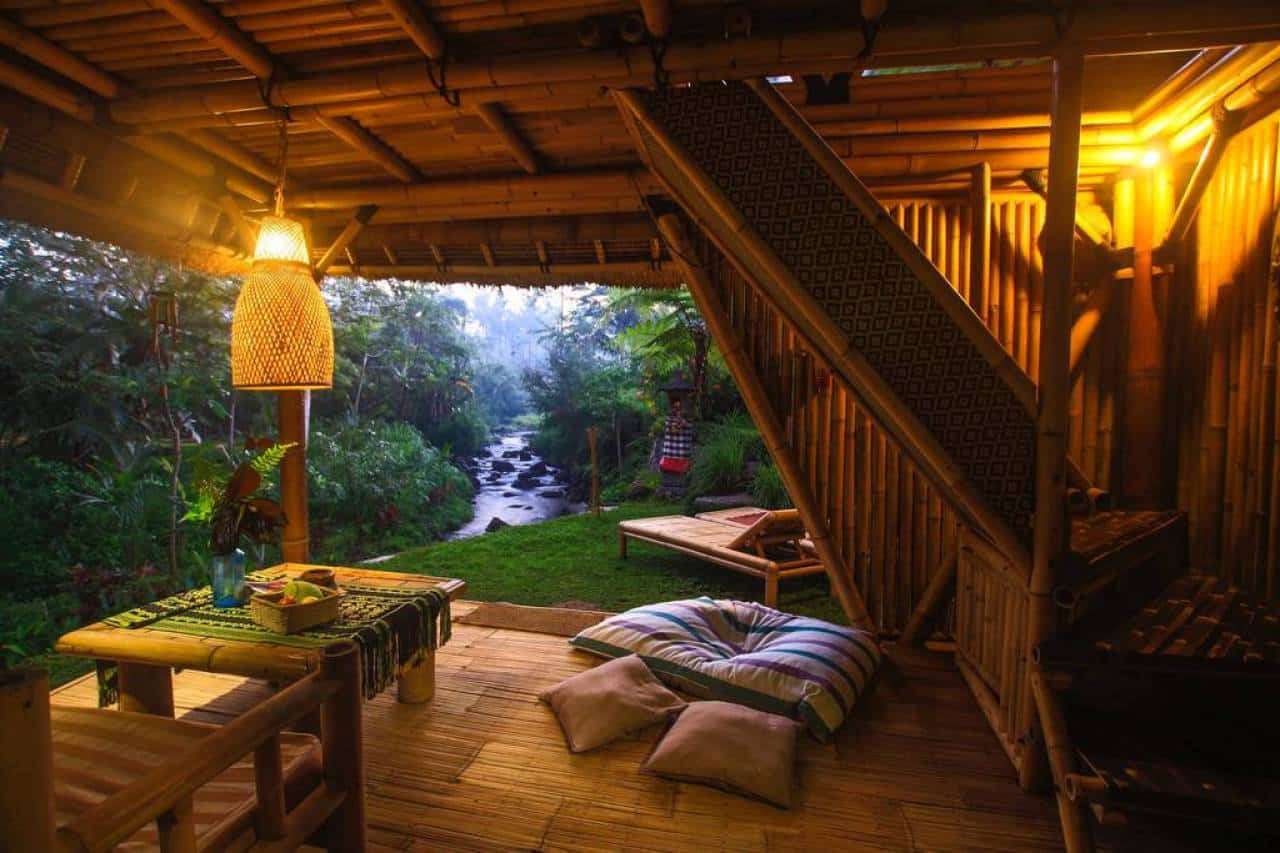
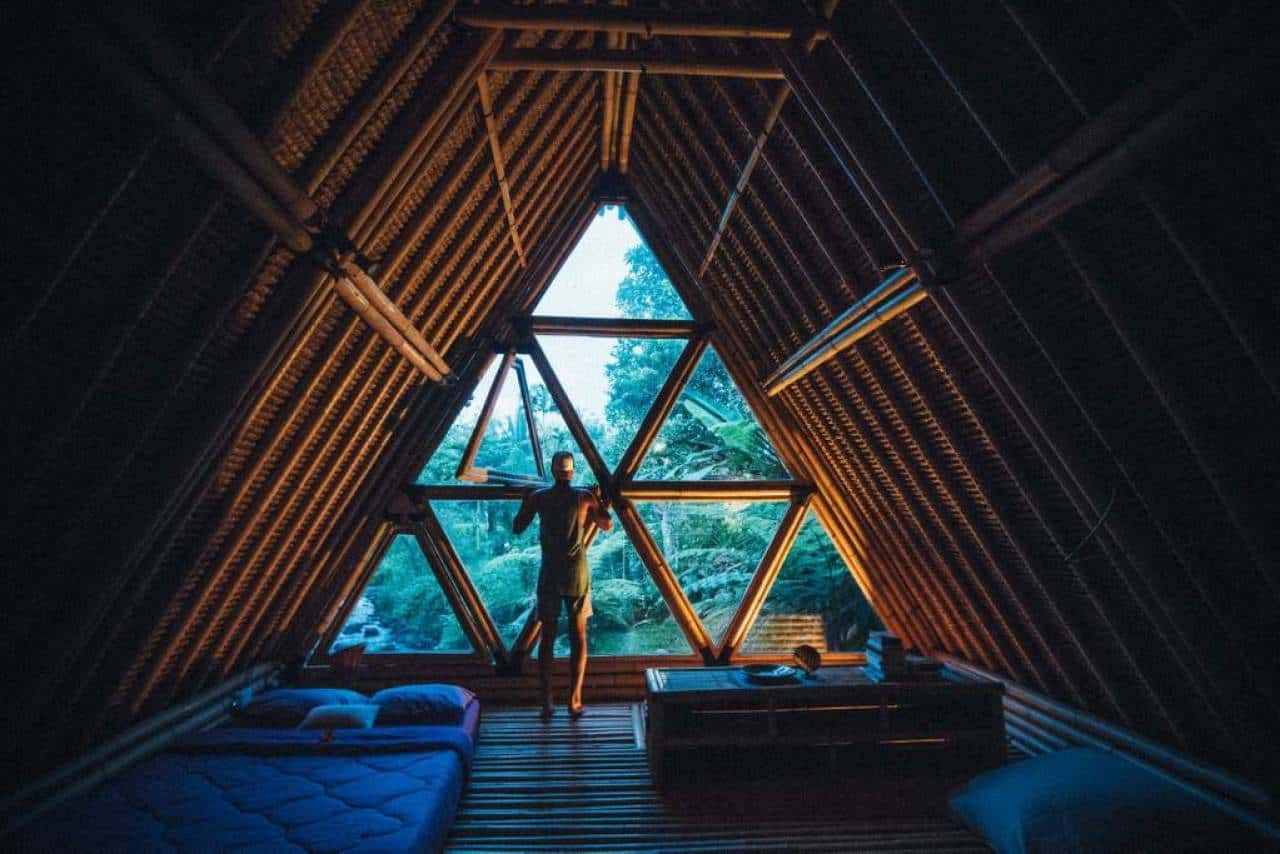
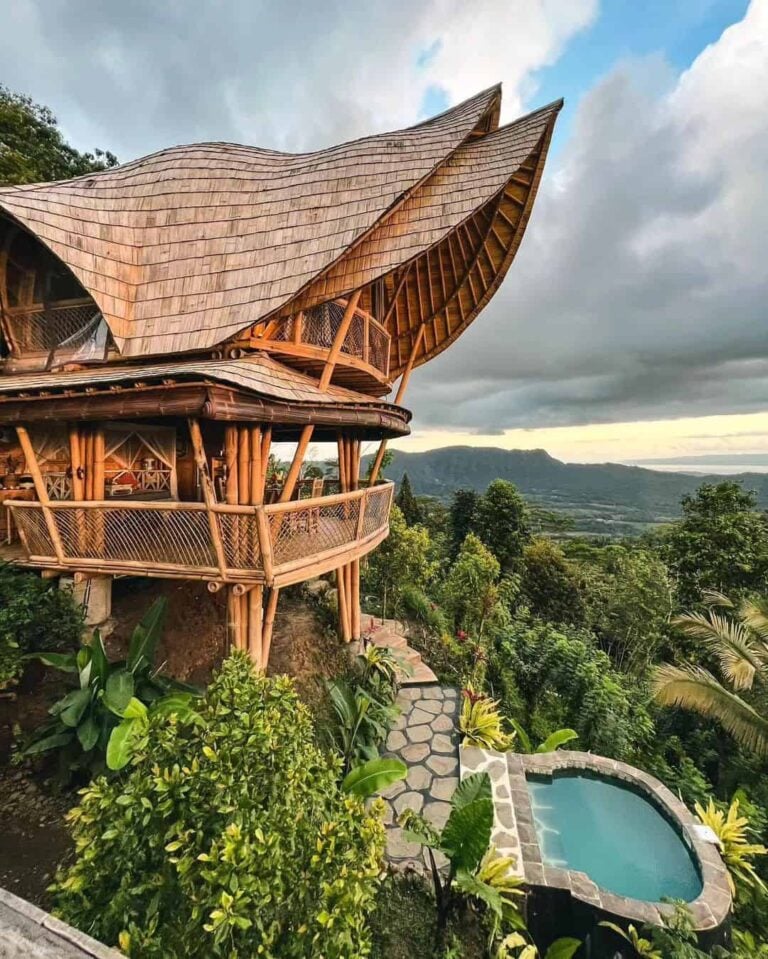
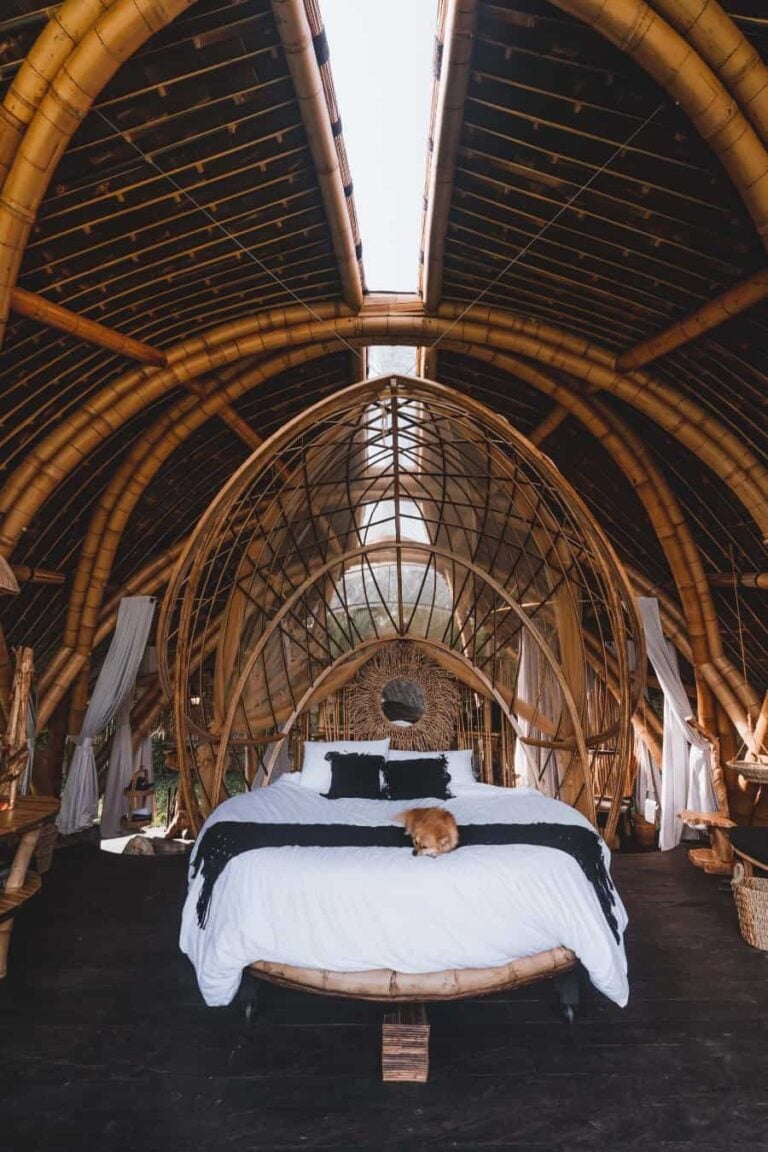
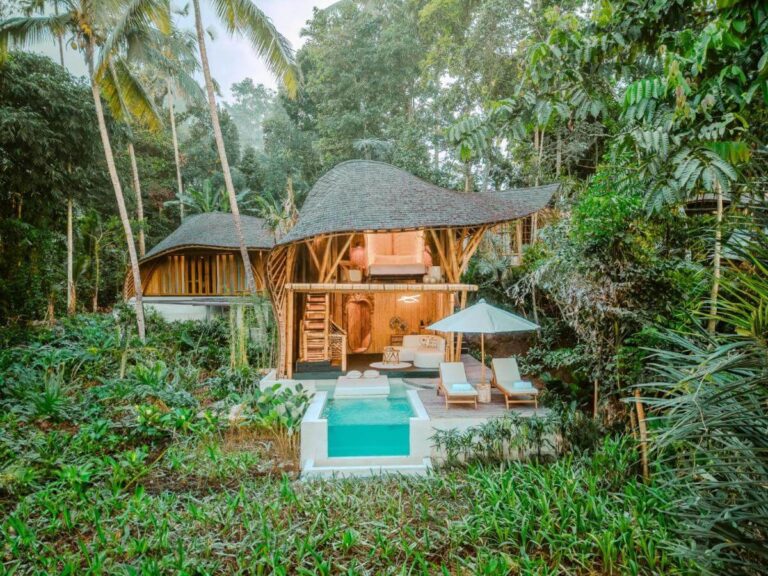
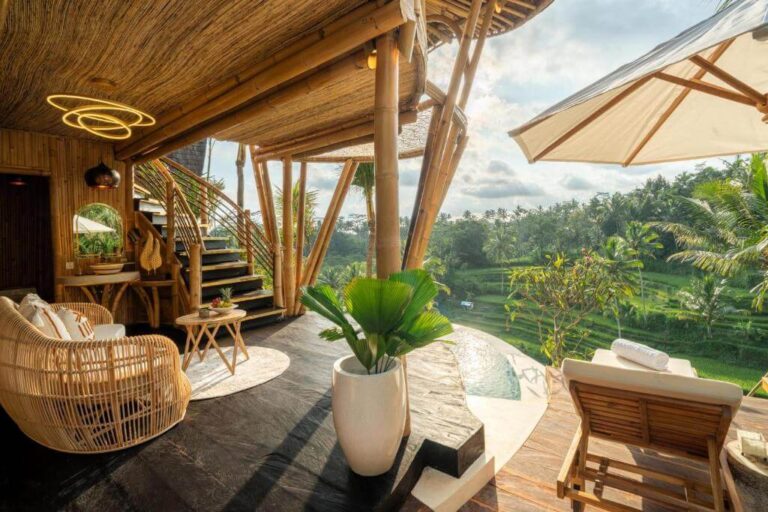
The property is built entirely from bamboo and reclaimed wood. Bamboo bridges connect the hideaways to one another, and the pathways themselves feel considered — every turn frames something: a glimpse of canopy, a flash of moving water below. One signature two-storey cabin captures the design approach well. Downstairs, a living and kitchen area opens outward, with a hammock tucked in one corner and light filtering in from multiple directions. The outdoor bathroom is open to the sky, rainforest pressing in around the edges. Climb the interior staircase and the upstairs bedroom appears — wrapped in windows, positioned directly above the river, which runs audibly below.
There is no air conditioning. Bamboo regulates temperature naturally, and at this elevation the air moves enough to keep the cabins genuinely comfortable. There is no television either. WiFi exists but runs slowly and intermittently, which here reads less as a shortcoming and more as a design decision. The property does not fill your time — it leaves your time empty on purpose. Guests tend to end up watching water move, listening for frogs after dark, and noticing fireflies earlier in the evening than they expected.
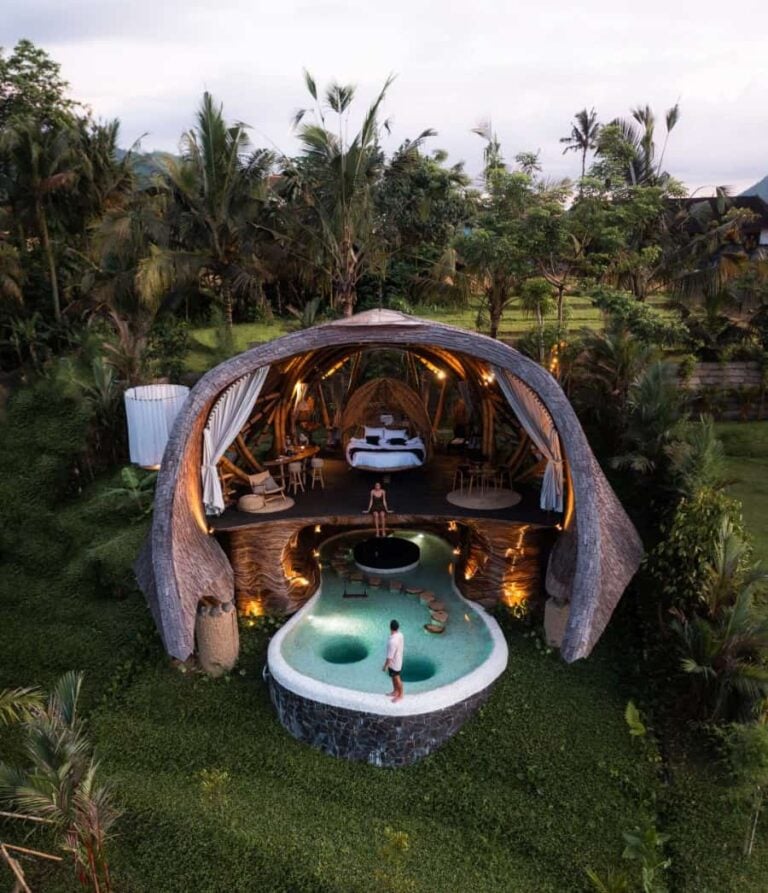
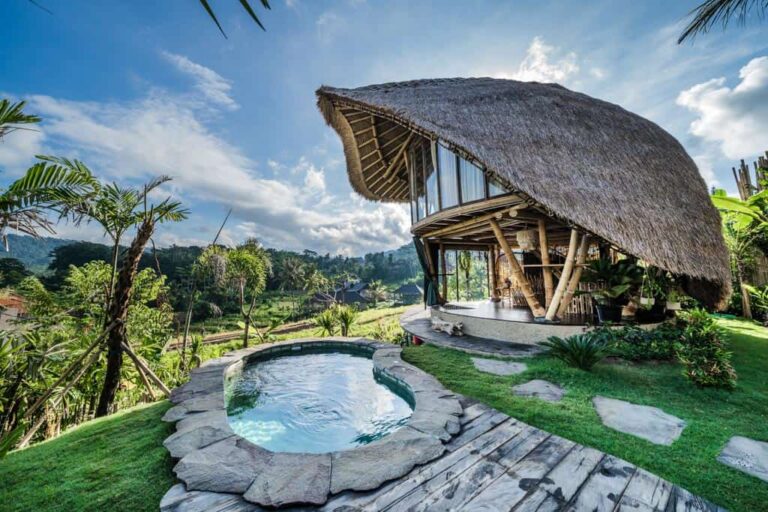
Moving through the grounds reveals more: natural stone pools thread between the structures, some fitted with rope swings above the water. A riverside deck carries hammock chairs and cushions arranged for horizontal occupation. The gardens mix edible plants with local flora and blur at their edges into the jungle. Meals from the kitchen can be delivered directly to your cabin — locally sourced, straightforwardly Balinese, and unpretentious.
The dry season, roughly May through September, brings the most reliable conditions — warm days, lower humidity, and clear skies above the bamboo canopy. April and October offer a greener, partly rainy version of the same landscape, while the wet months from November through March arrive with dramatic tropical atmosphere and noticeably lush surroundings. Each season reads differently from a riverside deck.
Nightly rates at Hideout Bali run approximately $100–$200, varying by season and availability, which places it in the moderate tier for a fully immersive eco retreat of this quality in Bali.
Getting here independently requires a private car or hired driver from Ubud or the Denpasar area — this part of Karangasem sits beyond the reach of straightforward public transit. The nearest bus services operate from around Padangbai, roughly nine kilometres away by straight-line distance, where Perama Tour & Travel and the main Padangbai bus stop also serve travellers moving between Bali and the Gili Islands. The Padang Bai fast-boat terminal is at a similar distance and useful for island-hopping arrivals. Arranging a driver from Ubud or pre-booking a transfer with the property remains the most practical first step.
Frequently Asked Questions
Q: What is the general nightly rate at Hideout Bali?
A: Nightly rates run approximately $100–$200, varying by season and availability — moderate pricing for a fully immersive bamboo eco retreat in this part of Bali.
Q: When is the best time to visit Hideout Bali?
A: The dry season from May through September offers the most comfortable conditions for an open-air bamboo stay — warm, less humid, and generally sunny. April and October bring a greener, partly rainy landscape that still works well. The wet months from November through March are atmospheric and lush but expect heat, humidity, and regular tropical rain.
Q: Is Hideout Bali suitable for guests who want to stay connected?
A: WiFi exists but runs slowly and intermittently, and there is no television. The property is designed around deliberate disconnection — it suits guests who want to step back from screens rather than those who need reliable connectivity for work or streaming.
Q: How do guests get to Hideout Bali, and is it easy to reach independently?
A: The property sits in the village of Duda, Selat, in the Karangasem foothills of East Bali — roughly forty minutes from Ubud. The road narrows considerably on approach. A private car or organised transfer is the practical way to arrive; confirm transport arrangements directly with the property before you travel.









Add a review