

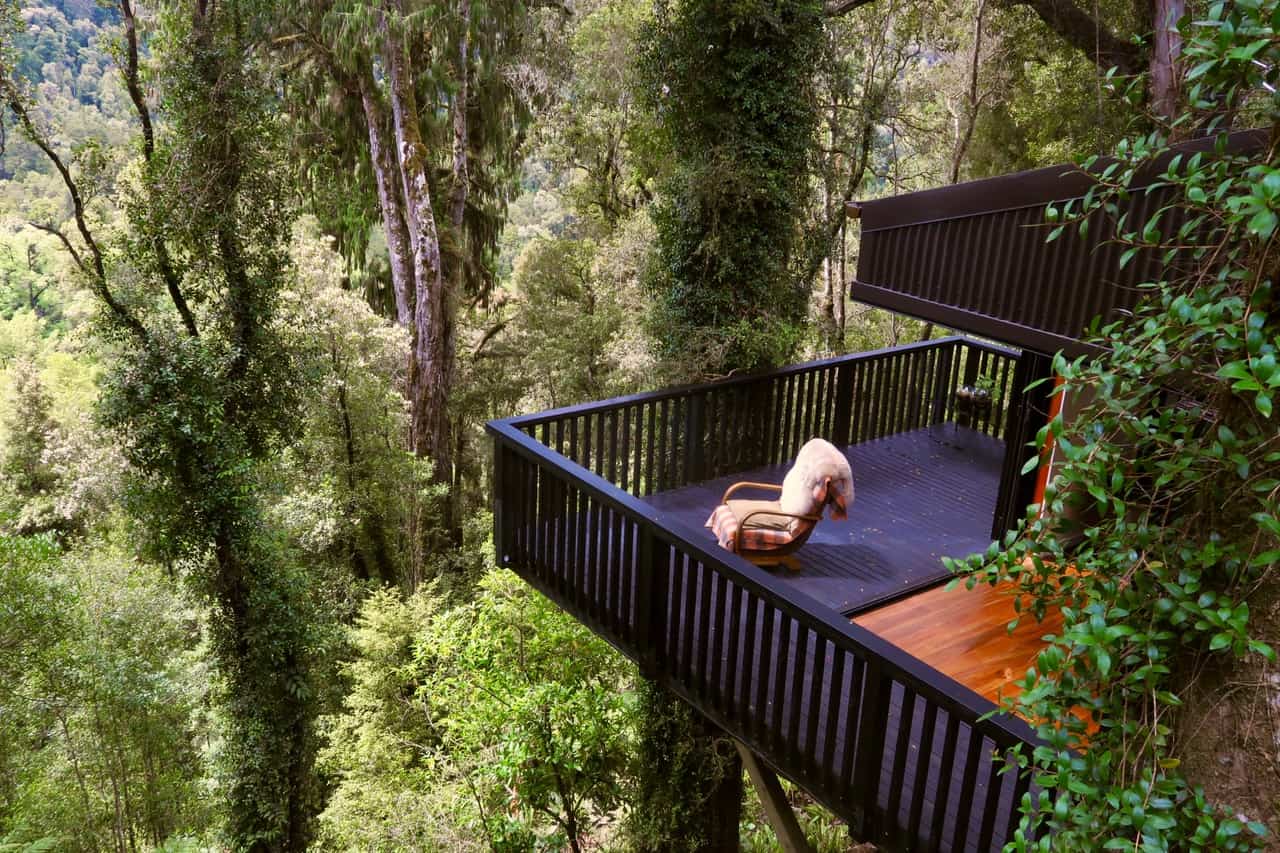
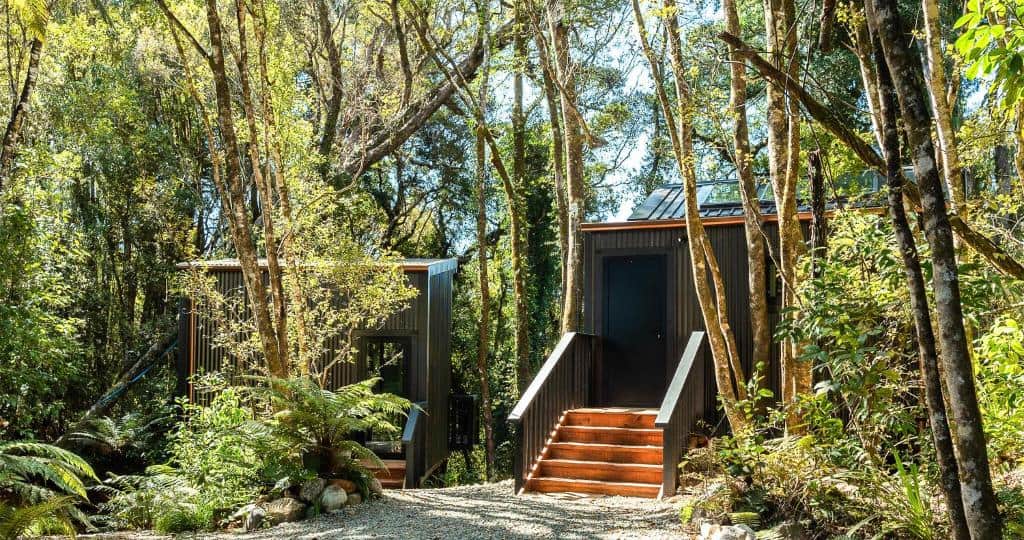
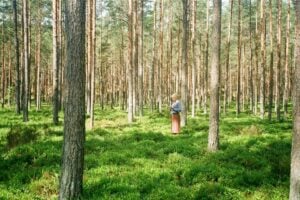
Te Aka Treehouse sits at the end of 189 Gows Creek Road, Nelson Creek, on New Zealand's West Coast — a place you reach by intent, not accident. The gravel road narrows, the forest closes in, and the ambient noise shifts to something older and greener. Bellbirds do most of the talking. Kākā interject. The rātā canopy, after which the place is named — te aka means vines in Māori — stitches itself overhead like a living ceiling.
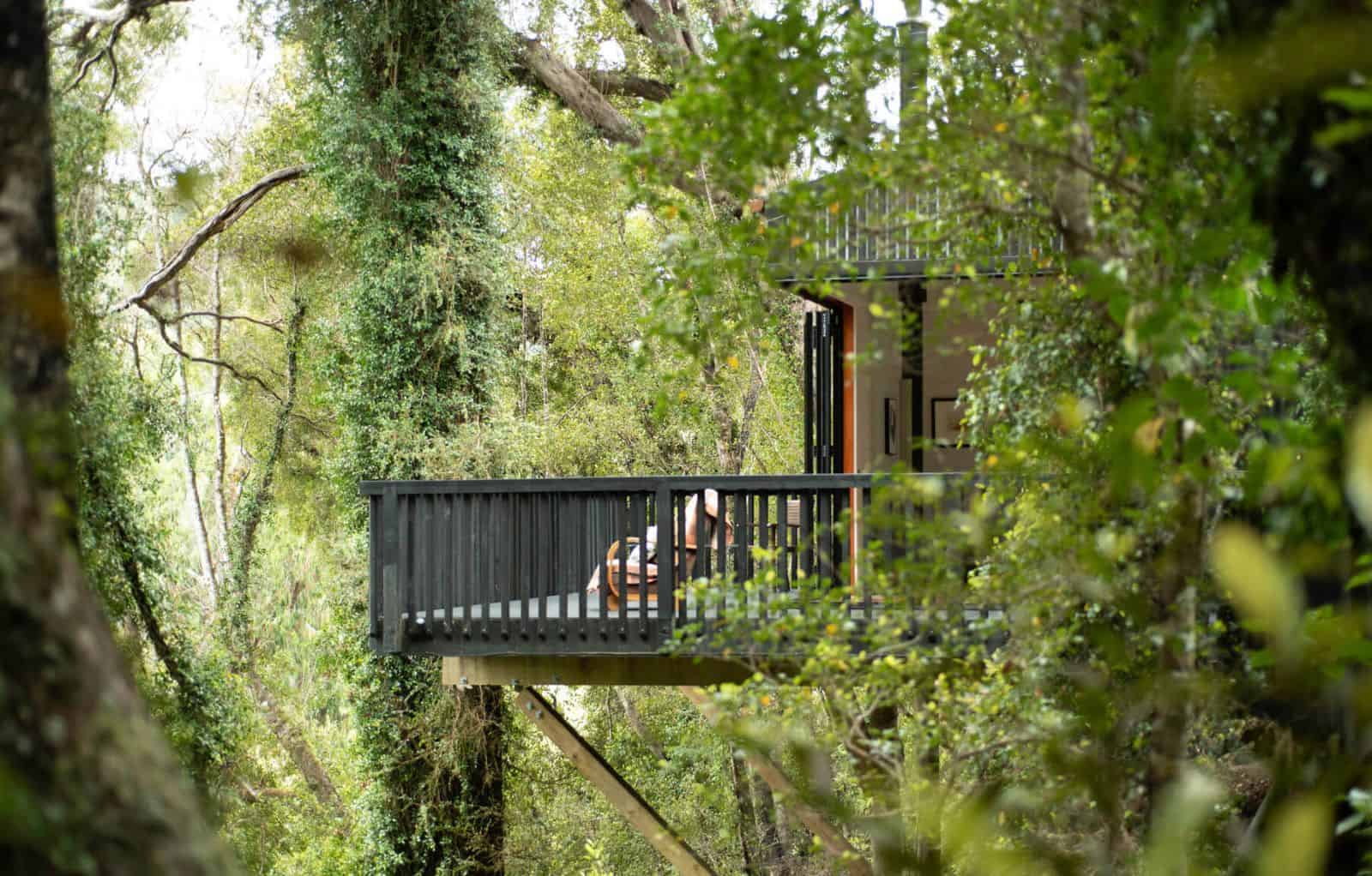
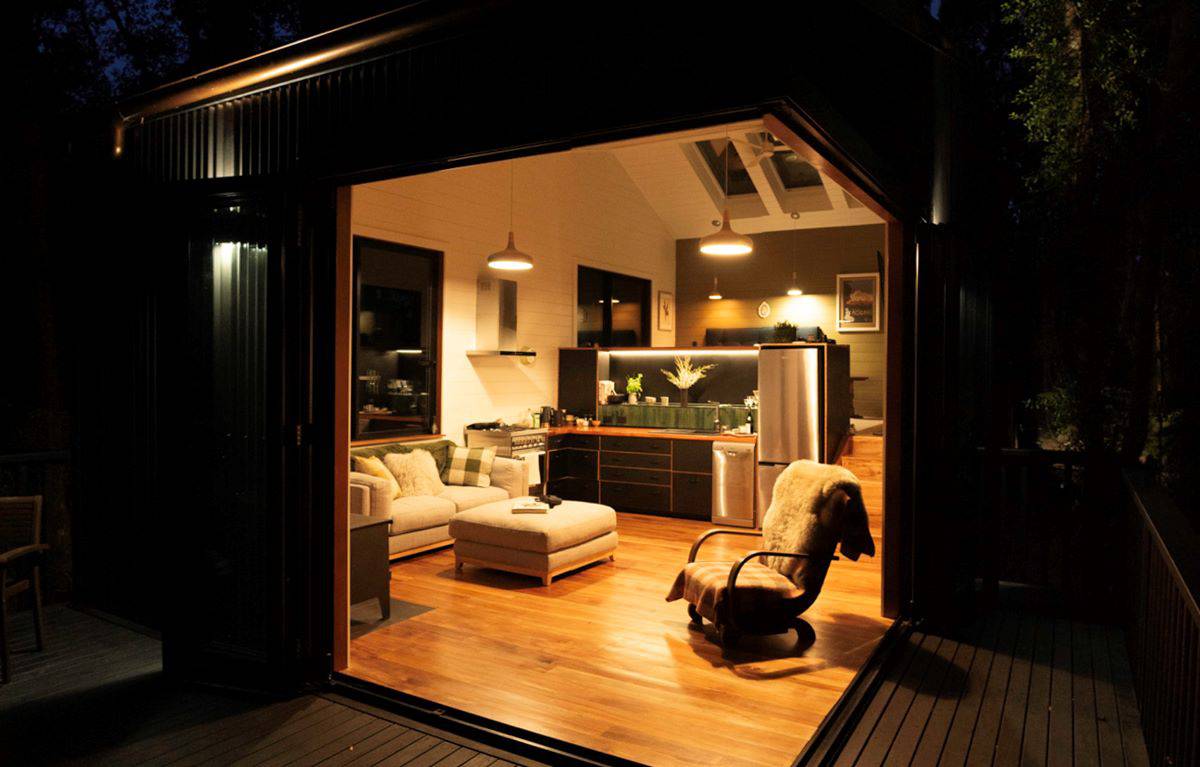
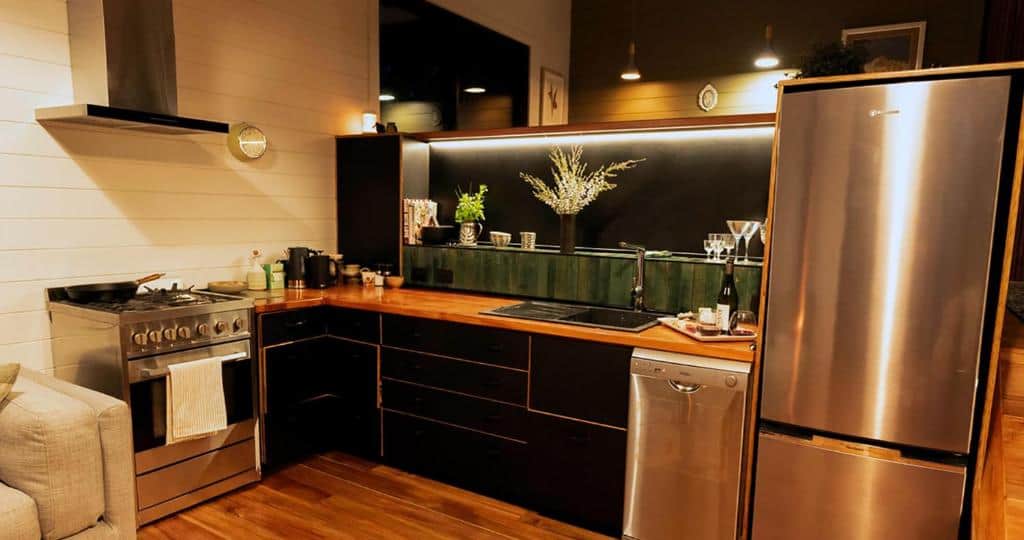
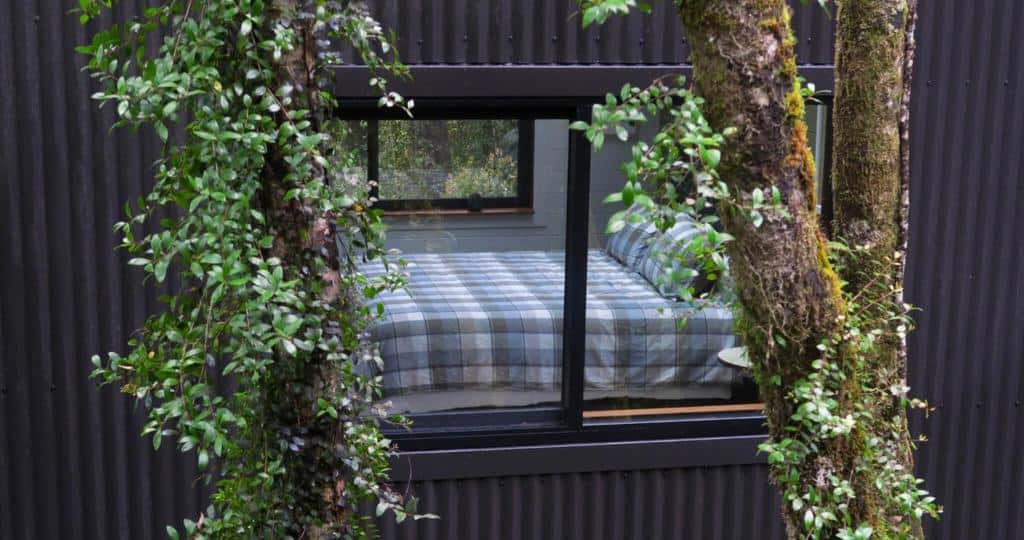
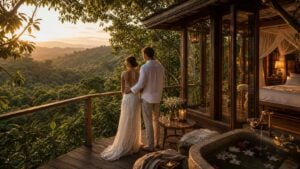
Two timber structures occupy the trees here. The main house runs to 71 square metres: a full kitchen, a proper bathroom that frames the forest like a window display, and a king bed worth lingering in. A suspension bridge — genuinely photogenic, not just functionally — connects it to a 27 m² sleeping treehouse holding a queen bed, a single loft, and blackout curtains for guests who prefer their mornings properly dark. Starlink and a Smart TV arrive without apology. Most evenings, though, the moss outside is more compelling than anything streaming.
The eco-logic here feels designed rather than declared. Solar panels carry the main load, with a generator as backup. Rainwater is collected and used carefully. Vermiculture handles waste with quiet efficiency. None of it is presented as a lecture — you notice it in the warm quality of the lighting, in the way the structures sit among the trunks without announcing themselves. Thoughtful is the right word.
Daytime belongs to the birds. Tūī scoff at subtlety; kererū move between branches with the unhurried bulk of something that has never needed to rush. Private walking tracks leave from the decks and thread through the forest, with traces of the region's mining history underfoot for those who look. Summer — roughly December through February — brings warm days ideal for outdoor exploring, with temperatures that can reach the low-to-mid twenties. Spring and autumn soften the palette and thin the crowds. Winter turns the property inward, cosy rather than bleak, with the rain on the roof doing most of the atmospheric work. The Paparoa Track is accessible from the wider region for guests who want a serious leg-stretch; Lake Brunner suits a cycling day when the weather cooperates.
Evening arrives early and softly. The skylight in the main house converts a clear night into something close to a private observatory. The morepork — ruru locally — calls from somewhere invisible and asks nothing. The kitchen is well set up for cooking properly, and the Kiwi Pub is worth the trip for a meal that matches its name: friendly, hearty, no pretension.
Practically: Te Aka is adults-only and sleeps up to five across both structures. Nightly rates run approximately 400 NZD to 600 NZD, varying by season and availability. The access road is gravel; guests who prefer a smoother arrival should check with the hosts about the shuttle option before travelling.
This is a stay for people who genuinely want to slow down — not as a concept, but as a practice. Two structures, one bridge, a forest that does not care about your schedule. Cross the bridge anyway.
Frequently Asked Questions
Q: What is the general nightly rate at Te Aka Treehouse?
A: Rates run approximately 400 NZD–600 NZD per night, varying by season and availability.
Q: When is the best time to visit Te Aka Treehouse?
A: Summer (December–February) brings warm days well suited to outdoor exploring and making the most of the forest setting. Spring and autumn offer mild temperatures and quieter conditions, while winter turns the property inward — rain on the roof, warm lighting, and a genuinely cosy atmosphere for guests who enjoy that kind of retreat.
Q: How many guests can Te Aka Treehouse accommodate, and is it suitable for children?
A: Te Aka is adults-only and sleeps up to five guests across the two structures — the main treehouse and the separate sleeping treehouse connected by a suspension bridge.
Q: What is the access road like, and what should guests know before driving in?
A: The road to Nelson Creek is gravel and narrows as you approach the property. Guests who are comfortable on unsealed rural roads will find it manageable; those uncertain about the drive should check conditions with the hosts before travelling.
Q: Is Te Aka Treehouse off-grid, and what connectivity is available?
A: The property runs primarily on solar power with a generator as backup, and uses rainwater collection and vermiculture — the eco-logic is built in rather than bolted on. Starlink satellite internet and a Smart TV are provided, so connectivity is available when you want it.










Add a review