

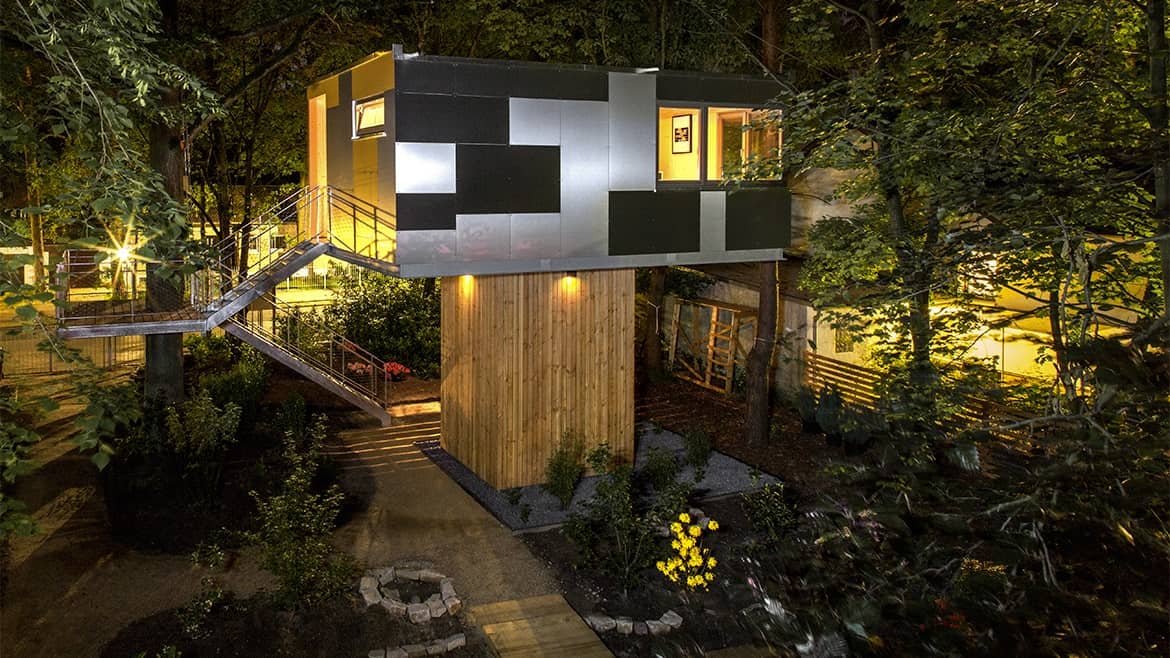
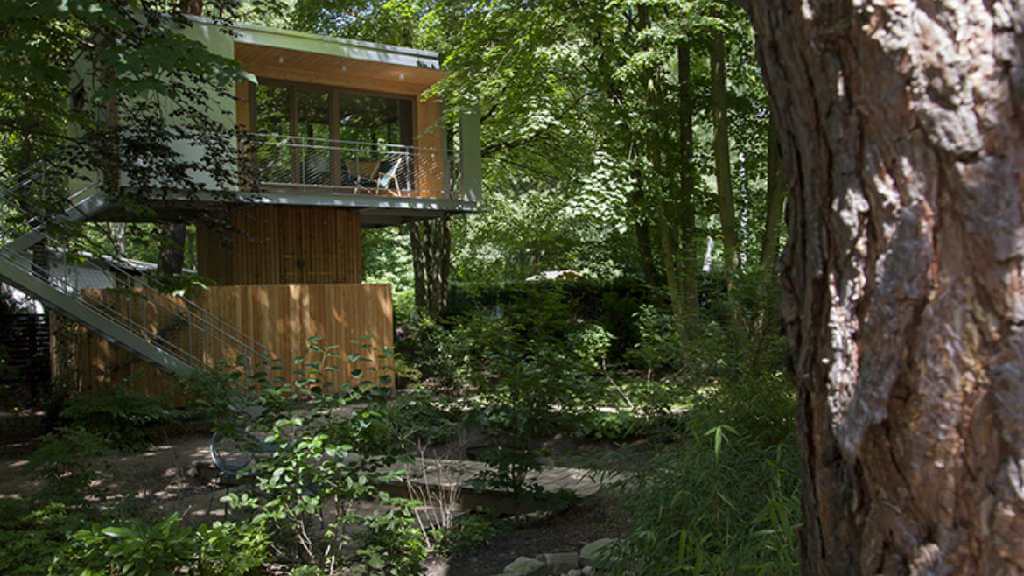
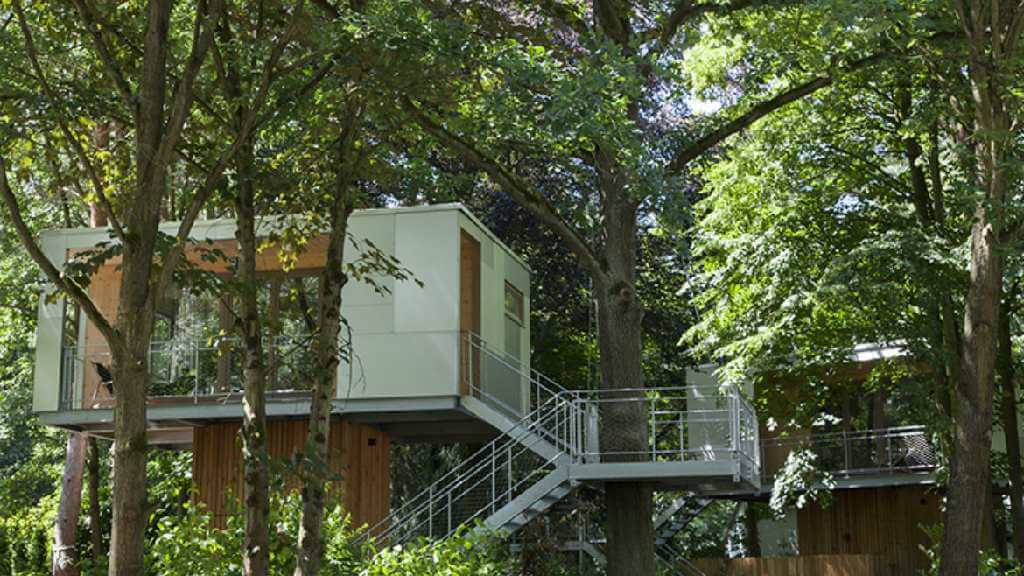
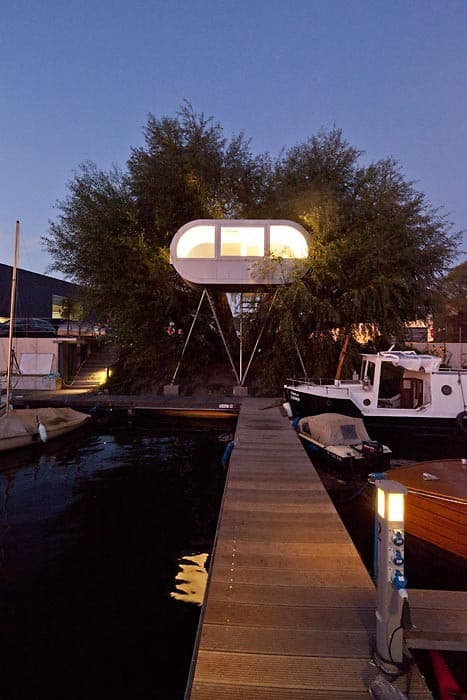
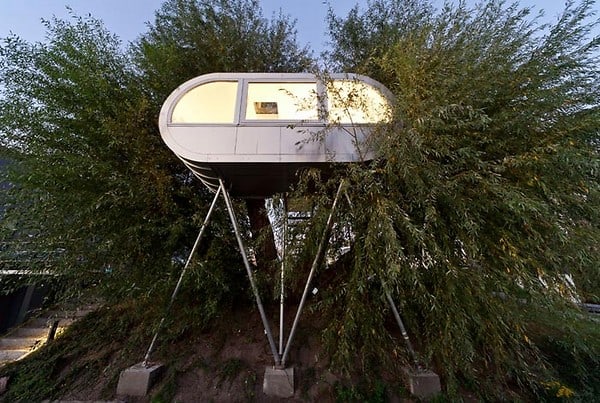
At Quermatenweg 23 in Berlin's leafy southwestern district of Zehlendorf, two architectural cubes hover four metres above a 650-square-metre garden on the edge of Grunewald. These are the treehouses designed by Andreas Wenning of the Bremen-based studio baumraum — precise, considered structures that sit at the threshold between the city and the forest without fully belonging to either.
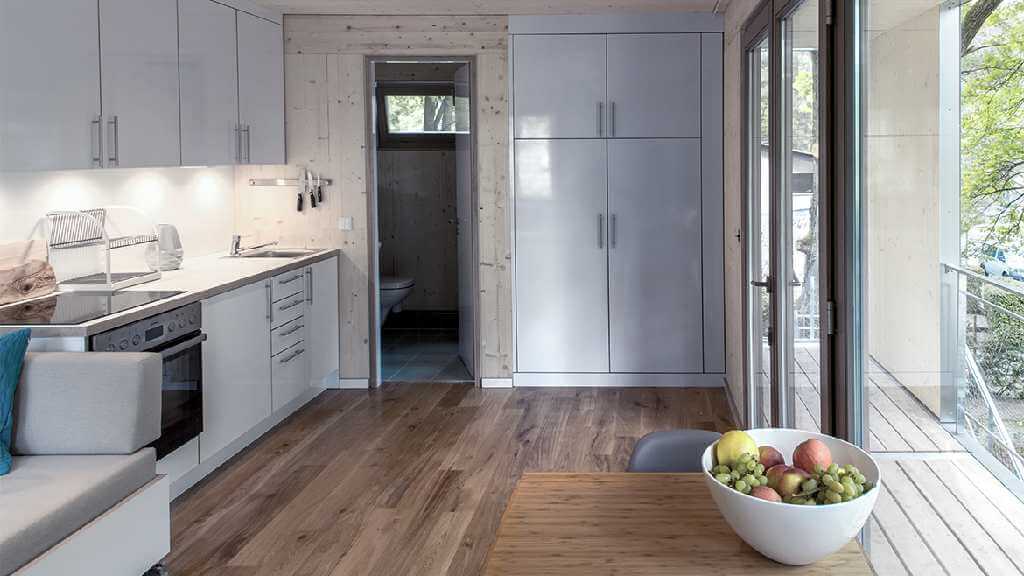
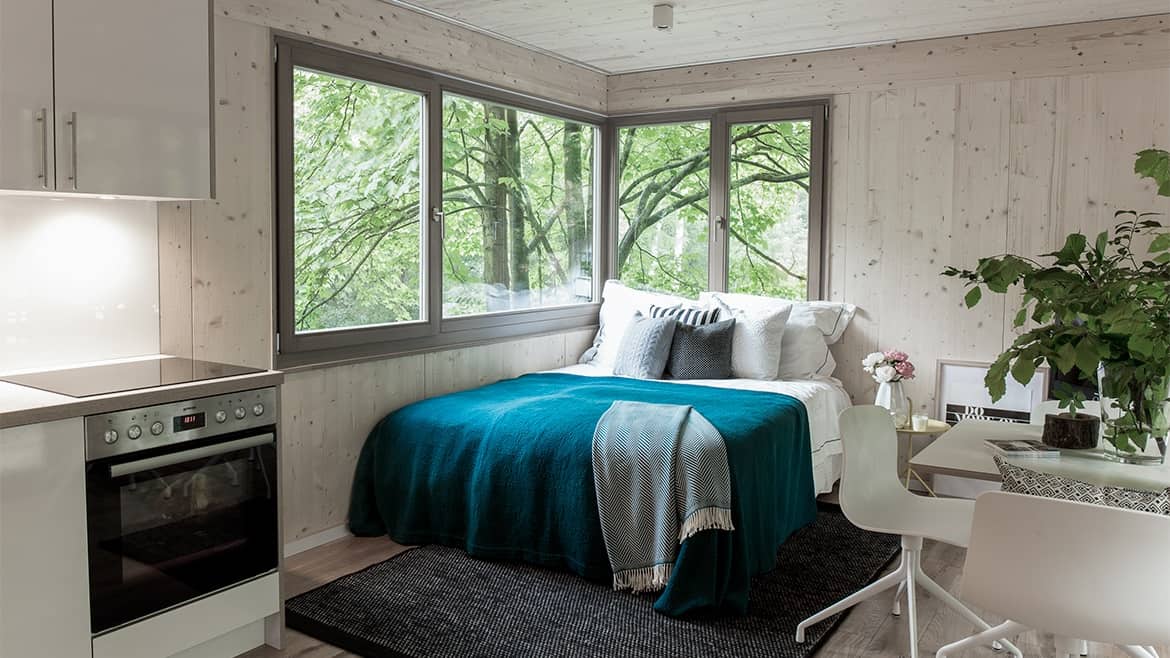
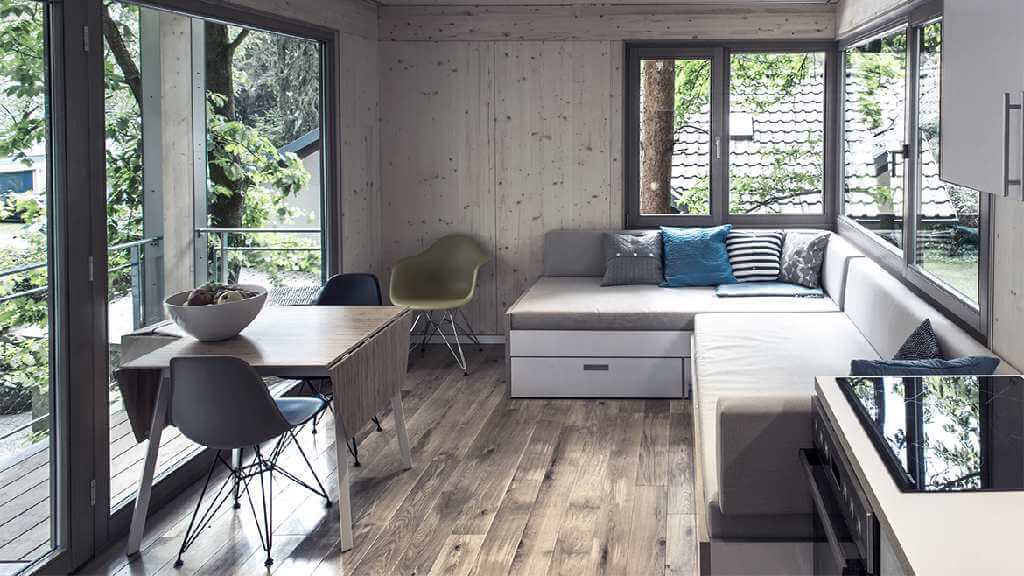
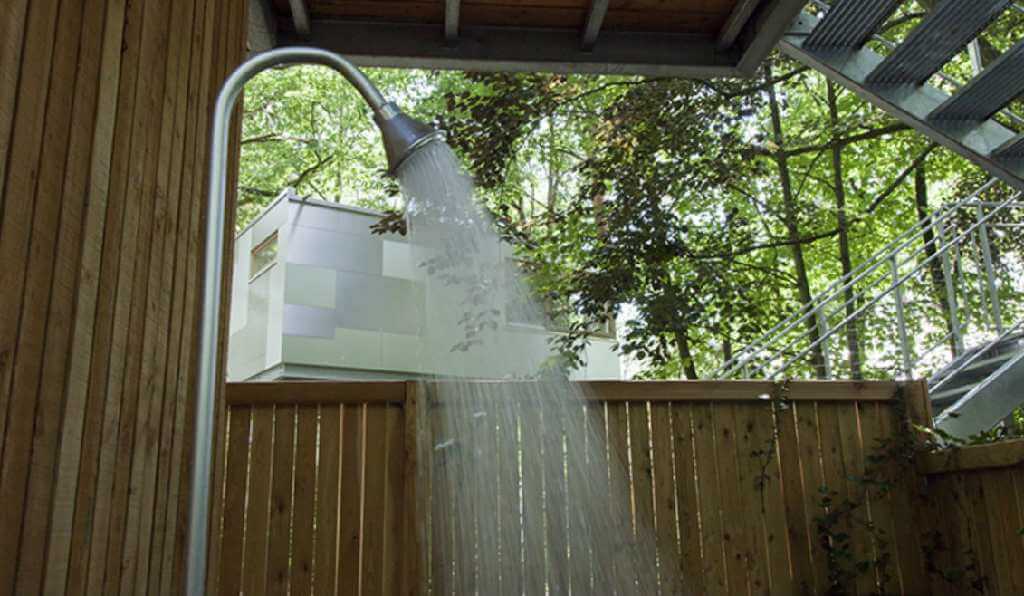
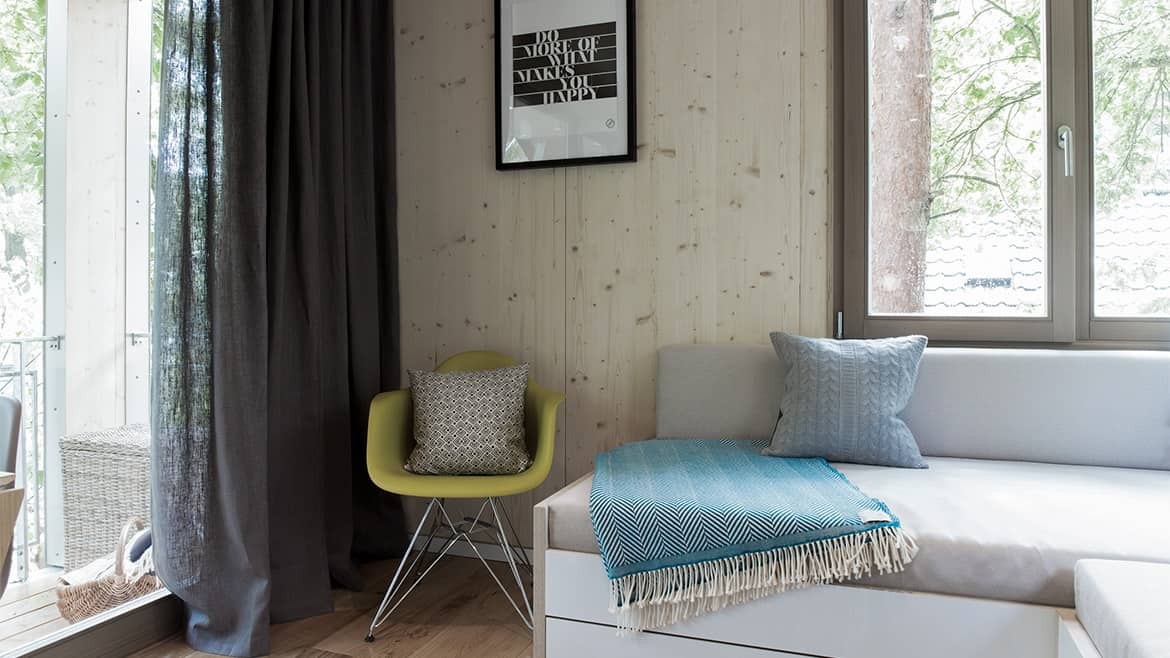
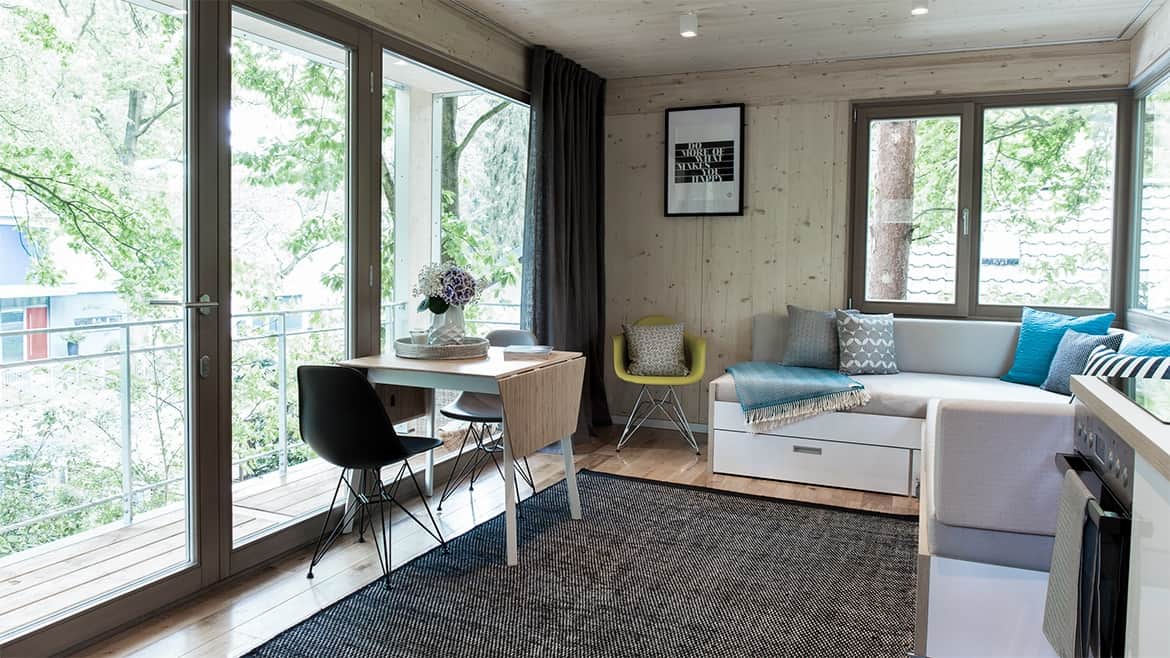
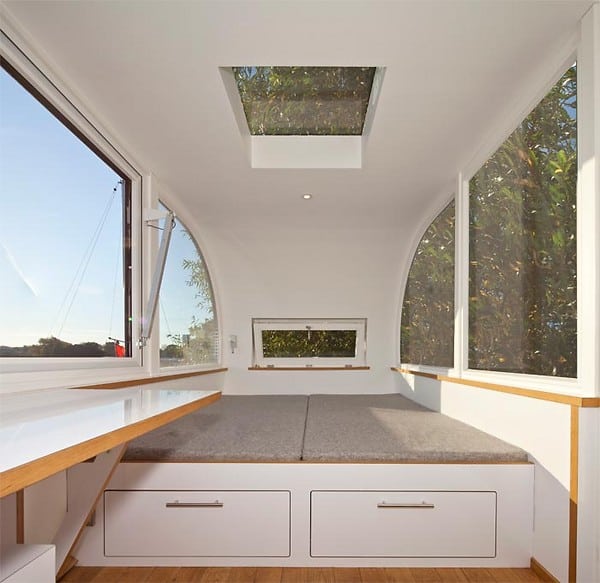
Each dwelling follows a clear logic: a solid central core handles services and storage, while a glass-forward living volume extends outward into the canopy. Light timber, matte whites and a restrained palette of deeper tones keep the interiors calm without feeling sparse. Convertible furniture — a table that shifts from work to dining mode, seating that pivots between conversation and window-gazing — makes compact space feel genuinely livable. Slimline kitchenettes and neat bathrooms with good water pressure complete the picture. The real decoration is the light itself, moving through generous glazing as branches shift outside.
The surrounding neighbourhood rewards a slow morning on foot. Krumme Lanke lake is within easy reach, as is Schlachtensee just a short distance further — both suit a swim or a quiet lap of the shoreline. A bakery nearby offers still-warm rolls in the morning, and a local beer garden does what Berlin beer gardens do well: unfussy tables, long shade and unhurried afternoon hours. When you want the city to return at full volume, galleries, restaurants and the S-Bahn are all accessible without any real effort.
Late spring through early autumn is the most generous window for a stay here. From May to September, temperatures typically reach between 10°C and 25°C, with long days that make it easy to combine a lakeside morning with an evening in the city. July and August bring the warmest conditions and a full programme of outdoor events across Berlin. April and October offer a quieter, cooler alternative with noticeably fewer visitors. Winter stays are atmospheric — a design-led hideaway in a grey Berlin season has its own appeal — but terrace use is limited and the garden is at its starkest between November and March.
The property has operated as a short-stay retreat since 2015, with a members-first booking approach through what it calls the Urban Treehouse Family. That selective access keeps the atmosphere intimate. Returning guests and their connections tend to book ahead; planning in advance is worthwhile.
For getting here by public transport, Krumme Lanke station sits approximately 800 metres away and offers U3 subway access from central Berlin, along with bus routes 118, 622, N3 and X11. Schlachtensee station, approximately 1.6 km away, connects to the wider city via the S1 S-Bahn light rail line. Both options place the property well within reach of the city centre without any complicated transfers.
Frequently Asked Questions
Q: When is the best time to stay at The Urban Treehouse?
A: Late spring through early autumn (May–September) is the most rewarding window. Days are long, temperatures are mild to warm, and it's easy to combine a lakeside morning with an evening in the city. July and August bring the warmest conditions and a full calendar of outdoor events across Berlin. April and October are quieter and cooler, with fewer visitors. Winter stays have their own atmosphere — a design-led hideaway in a grey Berlin season — but terrace use is limited and the garden is at its starkest from November to March.
Q: How do you book, and how far in advance should you plan?
A: The property operates on a members-first basis through what it calls the Urban Treehouse Family, so access tends to be selective rather than open-market. Returning guests and their connections typically book ahead. Planning well in advance is worthwhile, and it's best to check the official booking channel directly for current availability and access arrangements.
Q: How do you reach The Urban Treehouse by public transport?
A: Krumme Lanke U-Bahn station (U3) is around 800 metres away, with bus routes 118, 622, N3 and X11 also serving the area. Schlachtensee station, approximately 1.6 km away, connects to the wider city via the S1 S-Bahn line. Both options link the property to central Berlin without difficulty.
Q: Is this a good base for outdoor activities?
A: Yes — Krumme Lanke and Schlachtensee lakes are both within easy walking distance and suit a swim or a quiet shoreline loop. A bakery nearby covers morning provisions, and a local beer garden offers unhurried afternoons in the shade. The surrounding edge of Grunewald makes the property genuinely walkable into green space, not just close to it on a map.
Q: Are the treehouses suitable for working remotely during a stay?
A: The interiors are designed with that in mind — convertible furniture shifts between work and dining modes, and connectivity is available. The setting naturally pulls attention toward the windows rather than a screen, which may be the point.











Add a review