
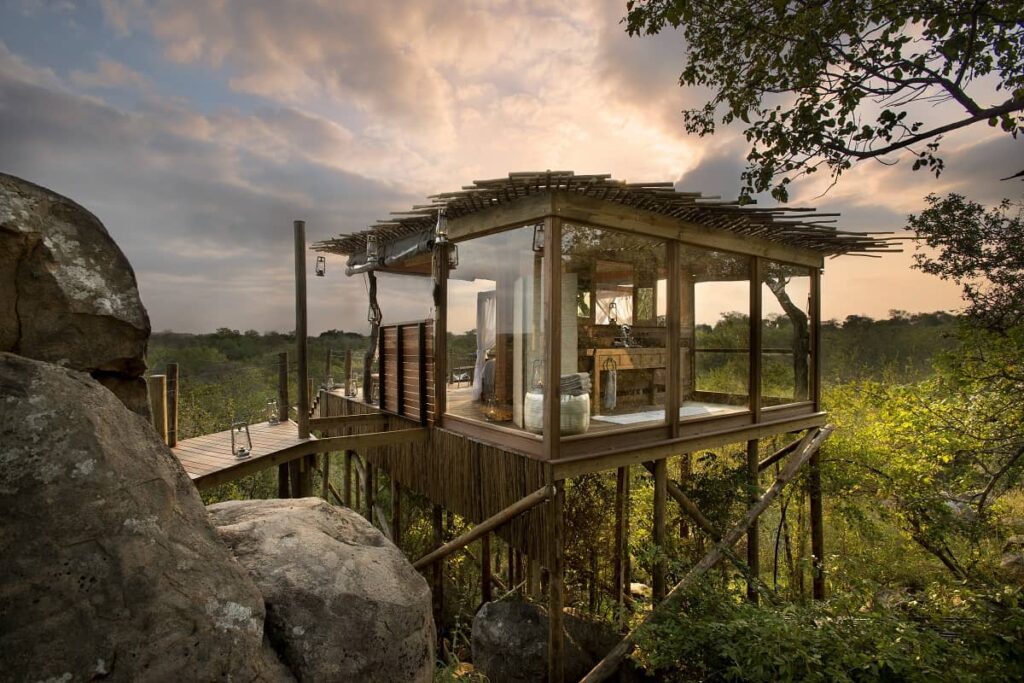
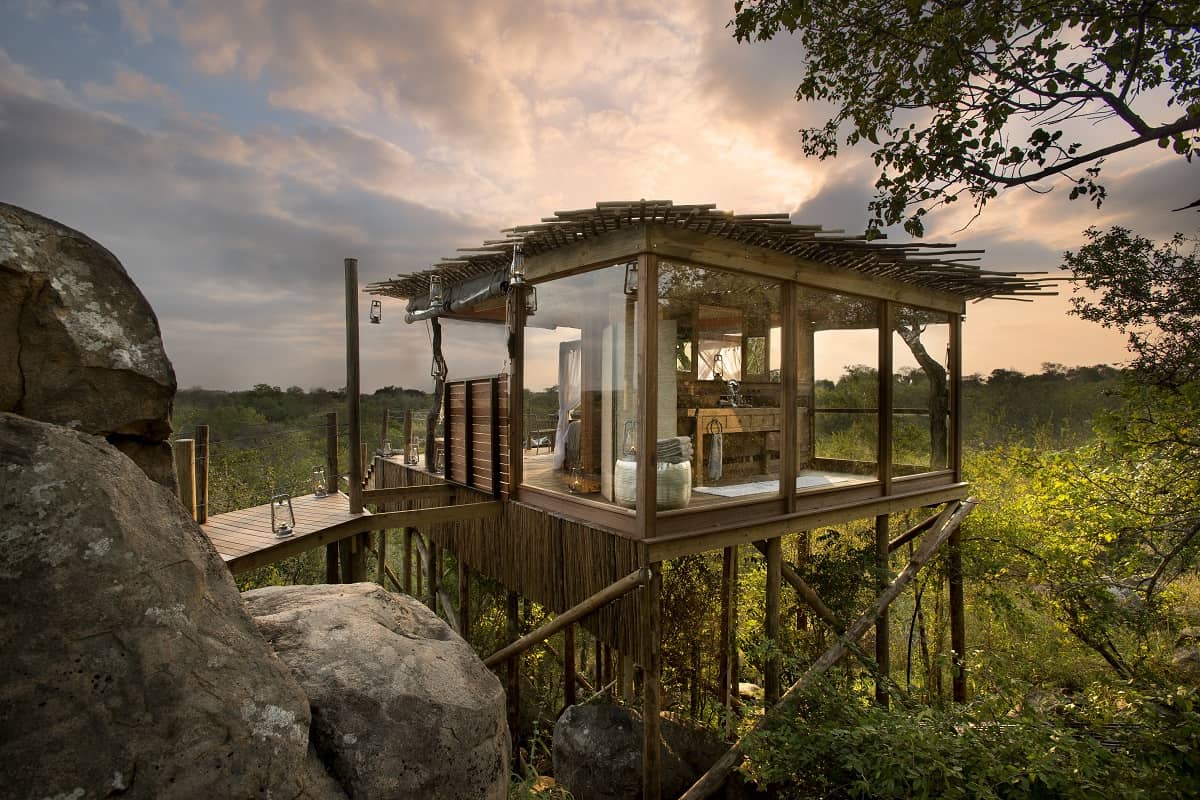
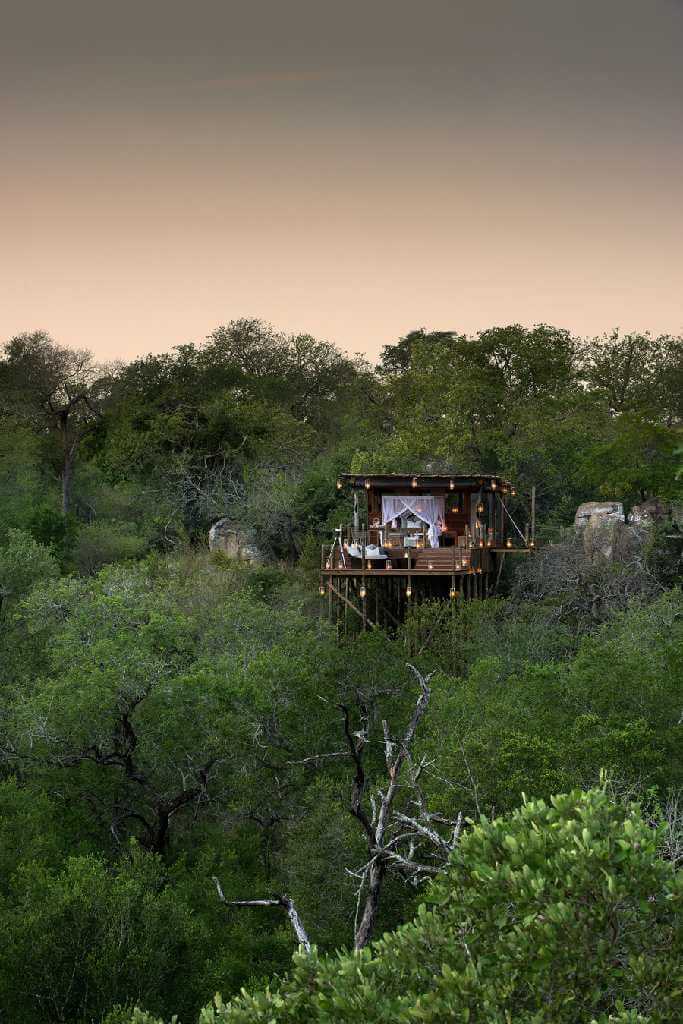
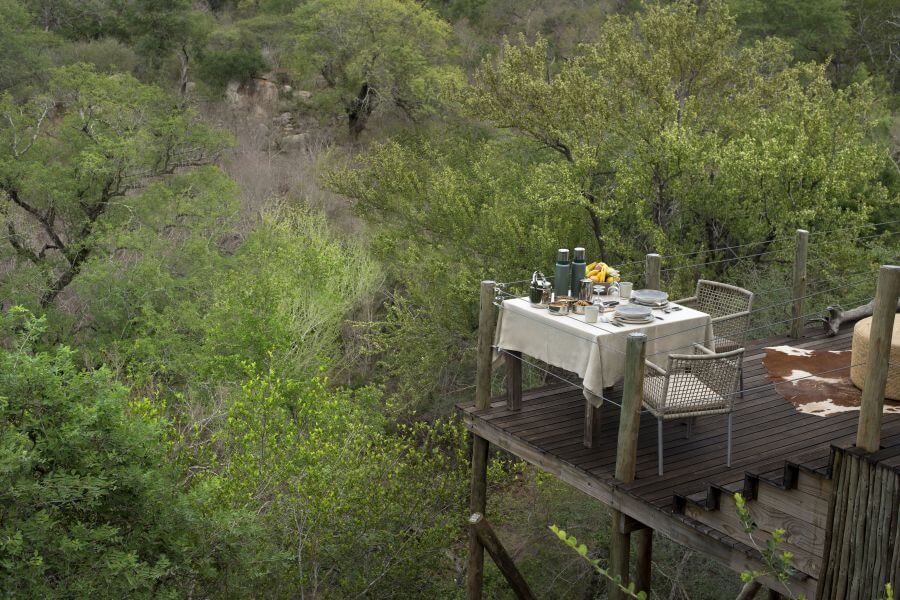
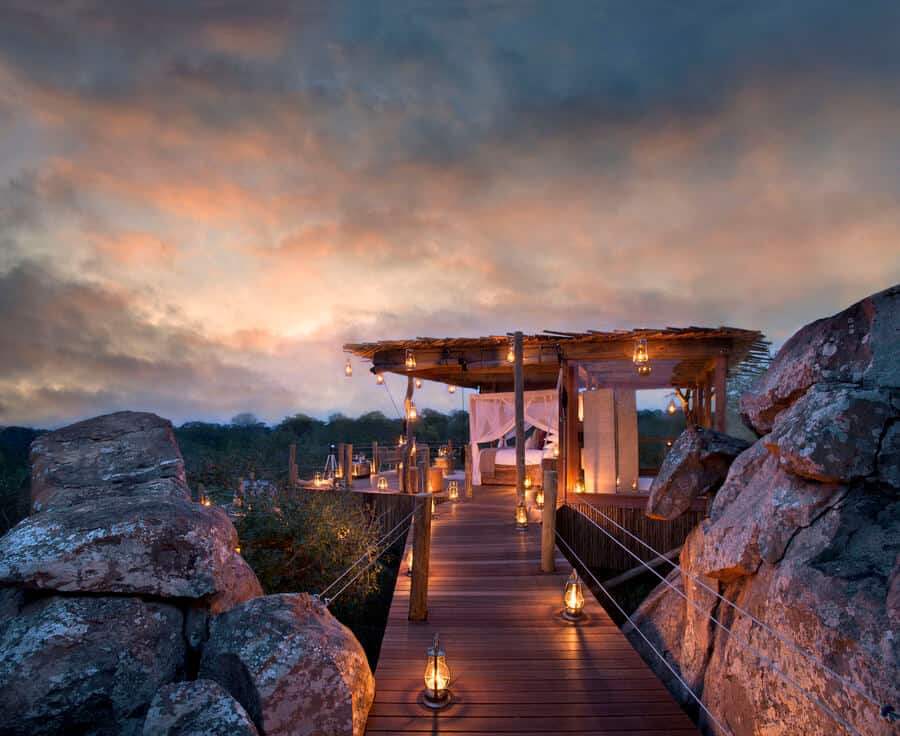
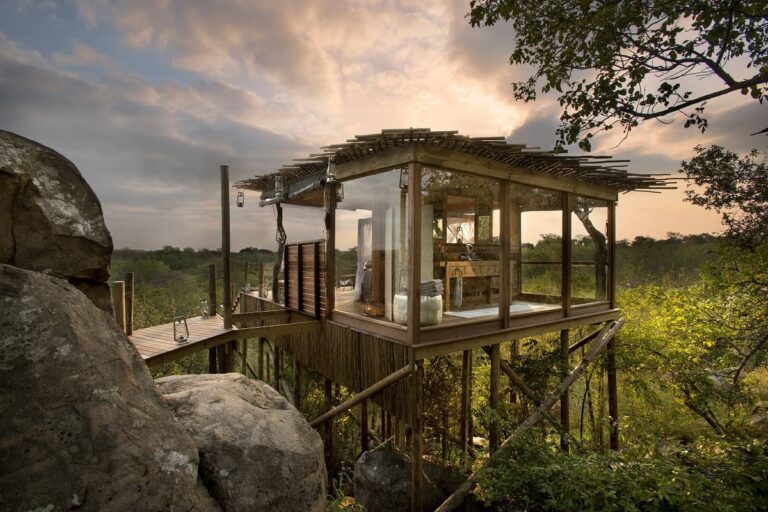
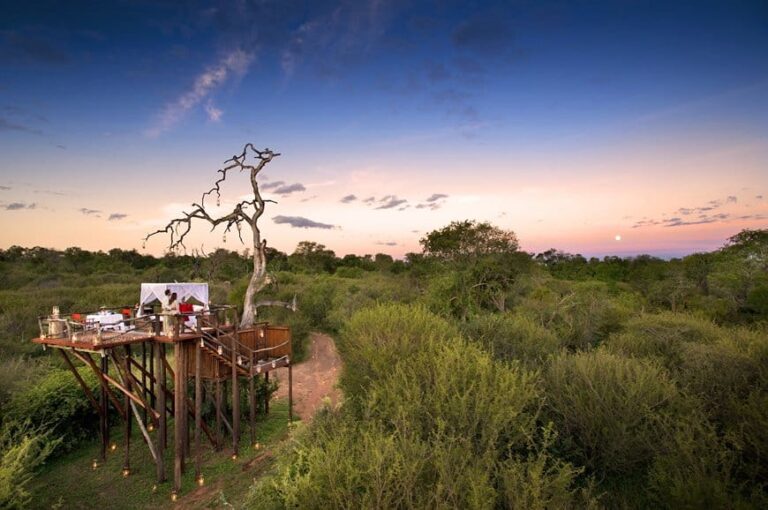
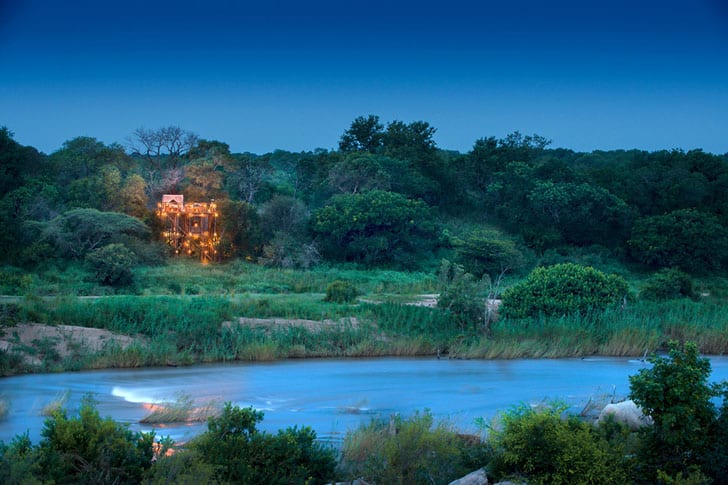
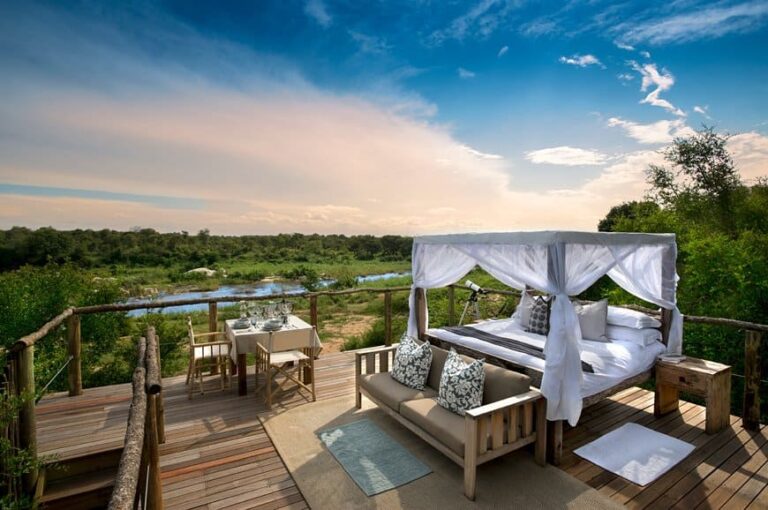
In the Sabi Sand Game Reserve, where the boundary with Greater Kruger dissolves into thornveld and dry riverbeds, Lion Sands operates a handful of remarkable sleep-out experiences. Kingston is the boldest of them. Where Chalkley sits low and intimate and Tinyeleti leans into timber warmth, Kingston pushes toward the cinematic — a suspended lantern of glass and wood that reframes the bush as something you inhabit rather than merely observe.
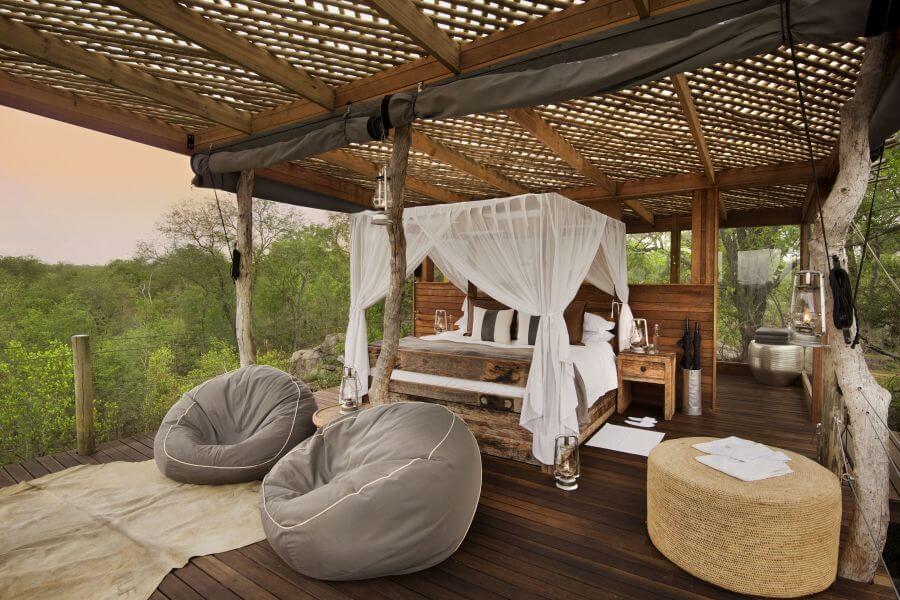
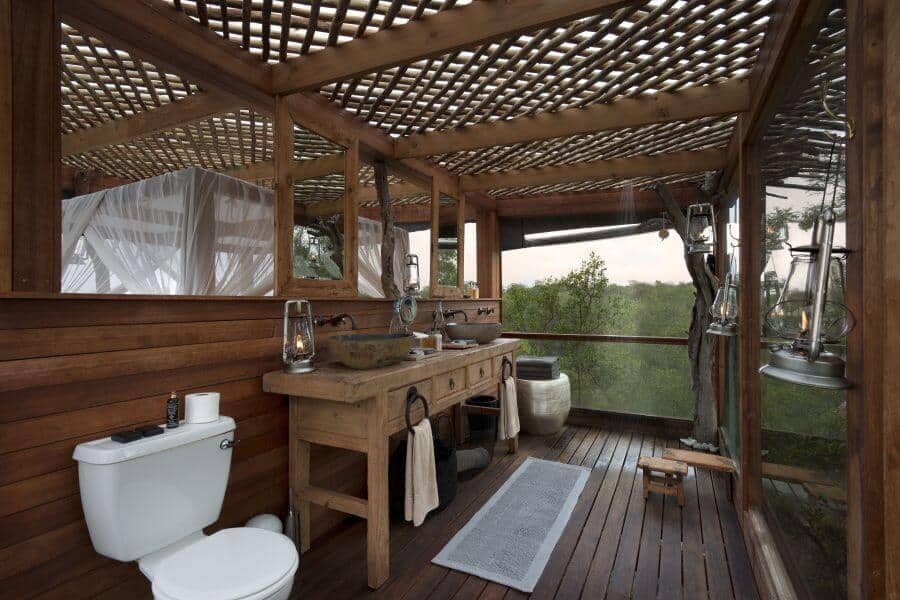
The interior palette runs to muted greys and whites, punctuated by inky blacks and a quiet thread of purple that reads like a well-cut jacket in low light. Clean-lined furniture keeps the space from competing with what's outside. The glass does most of the architectural work — floor-to-ceiling panes that collapse the boundary between room and savannah, turning the structure into something closer to a live feed than a building. You don't decorate a place like this so much as frame it.
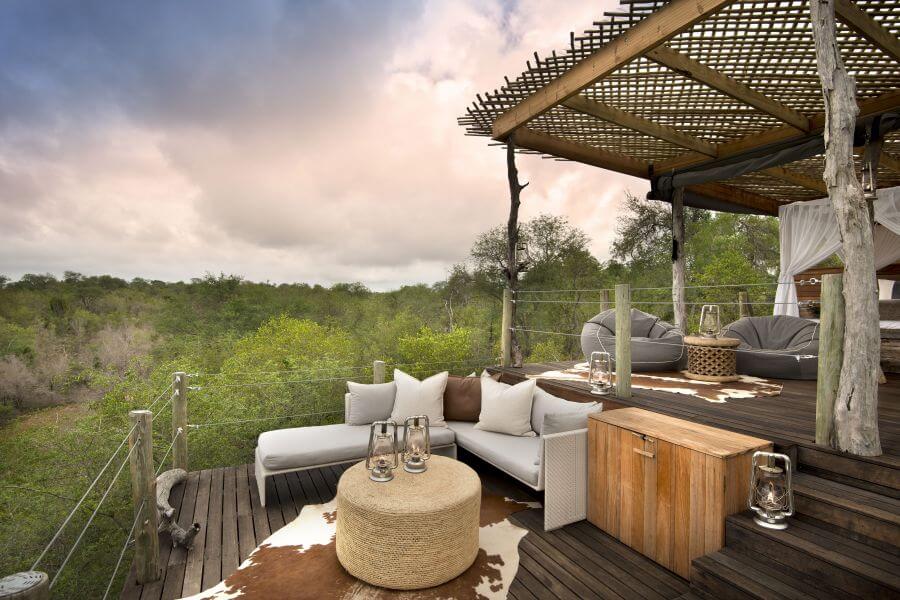
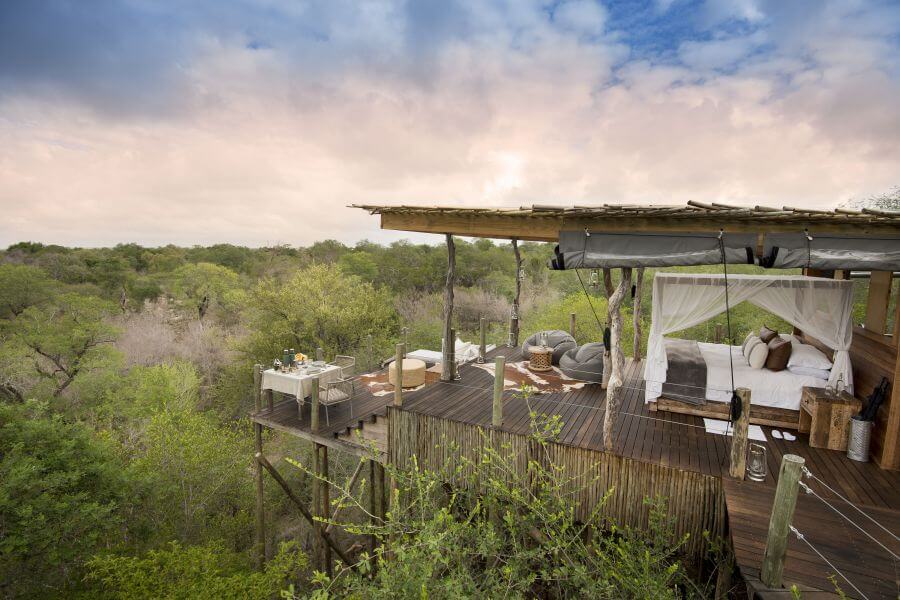
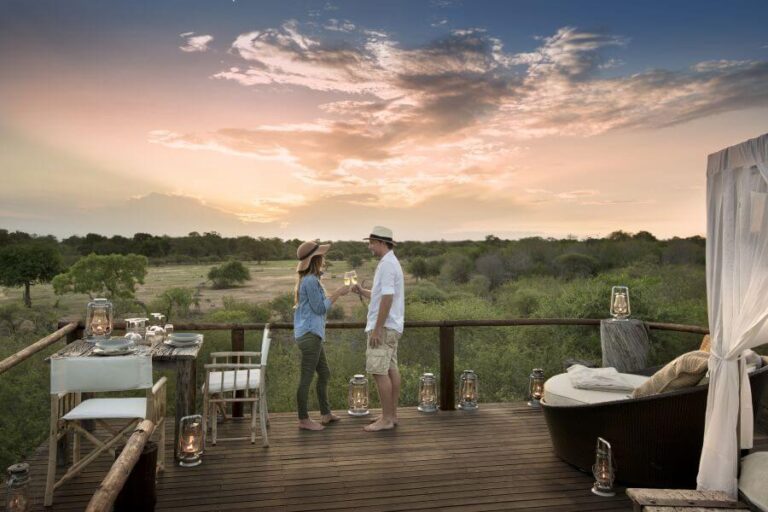
During the day, the deck becomes the main event. Giraffe move through the mid-distance like slow punctuation. Impala flicker in the heat shimmer. The dry winter months — roughly May through September — concentrate wildlife around the remaining water sources, and from Kingston's elevation you catch movement that a ground-level camp would miss entirely. April and October carry their own reward: long golden light, warm evenings, and game drives that feel unhurried.
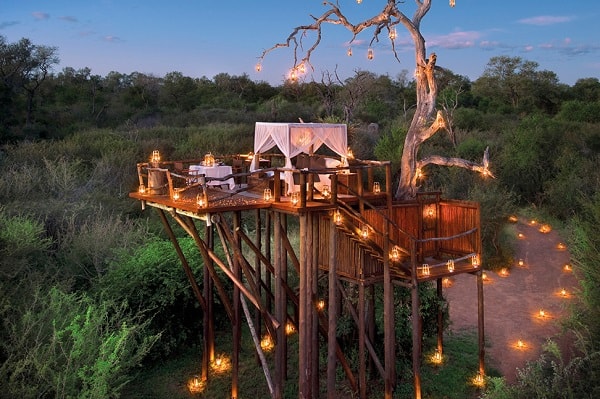
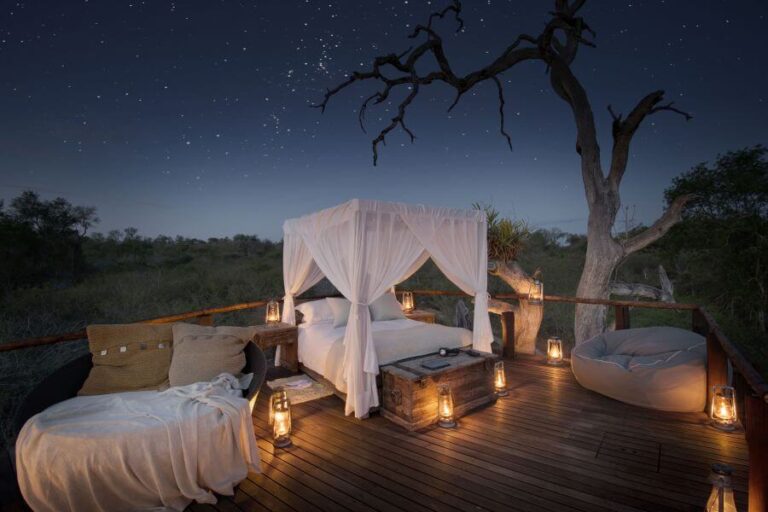
Come nightfall, the ceremony begins. Sundowners arrive as the light tips honey-gold over the boulders. Dinner follows under a sky crowded with stars — the kind of density that makes city memory feel faintly embarrassing. Frogs tune up. Hyenas gossip in the middle distance. Lions push low bass notes across the dark. If an elephant decides to pad through and inspect things at close range, you sit very still. You were going to read. You won't.
The wet season, running roughly November through March, brings intense green, rewarding birdlife and dramatic skies — though the heat and humidity demand a certain enthusiasm. Most visitors who want the full treehouse-under-stars experience find the drier months more suited to sleeping with the hatch open and the wild doing the rest.
Nightly rates at Kingston start from approximately 5,500–6,000 ZAR, with rates varying by season and availability — positioning it firmly in the premium tier of South Africa's bush accommodation landscape. That premium reflects not just the architecture but the staffing, the game drive programme and the broader Lion Sands experience that surrounds a stay here.
Wake at first light and the reserve is already mid-sentence: tracks pressed into the sand, hornbills arguing in the fever trees, the river moving with purpose somewhere below. Coffee tastes sharper up here — something about the air and the altitude of attention. Kingston's achievement is structural restraint in service of something larger. Glass, timber, open sky, and the unedited Sabi Sand doing exactly what it pleases.
Frequently Asked Questions
Q: What is the nightly rate for Kingston Treehouse?
A: Rates at Kingston Treehouse start from approximately 5,500–6,000 ZAR per night, placing it firmly in the premium tier of South African bush accommodation. Prices vary by season and availability.
Q: When is the best time to stay at Kingston Treehouse for wildlife viewing?
A: The dry winter months from May through September are the most rewarding for wildlife sightings, as animals concentrate around remaining water sources and the treehouse's elevated position gives you a real advantage spotting movement across the reserve. April and October are excellent shoulder options — warmer evenings and beautiful golden light without peak-season intensity.
Q: What is the setting and location of Kingston Treehouse?
A: Kingston Treehouse sits within the Sabi Sand Game Reserve on the western boundary of Greater Kruger, operated by Lion Sands. The elevated glass-and-timber structure looks out over thornveld, dry riverbeds and the broader savannah landscape — with no fencing between you and the wild.
Q: Is Kingston Treehouse suitable for travellers who prefer comfort alongside a genuine bush experience?
A: Yes. Kingston is designed for travellers who want full wild immersion without trading comfort for it. The interior is contemporary — floor-to-ceiling glass, clean-lined furniture, a refined palette — and the broader Lion Sands programme includes professional game drives and a level of service that stays unobtrusive throughout.
Q: What is the wet-season experience like if visiting between November and March?
A: The summer wet season brings intense greenery, exceptional birdlife and dramatic skies that reward photographers. It is noticeably hotter and more humid, so travellers sensitive to heat should factor that in. Those who embrace the conditions often find it a visually striking time to visit.







Add a review