
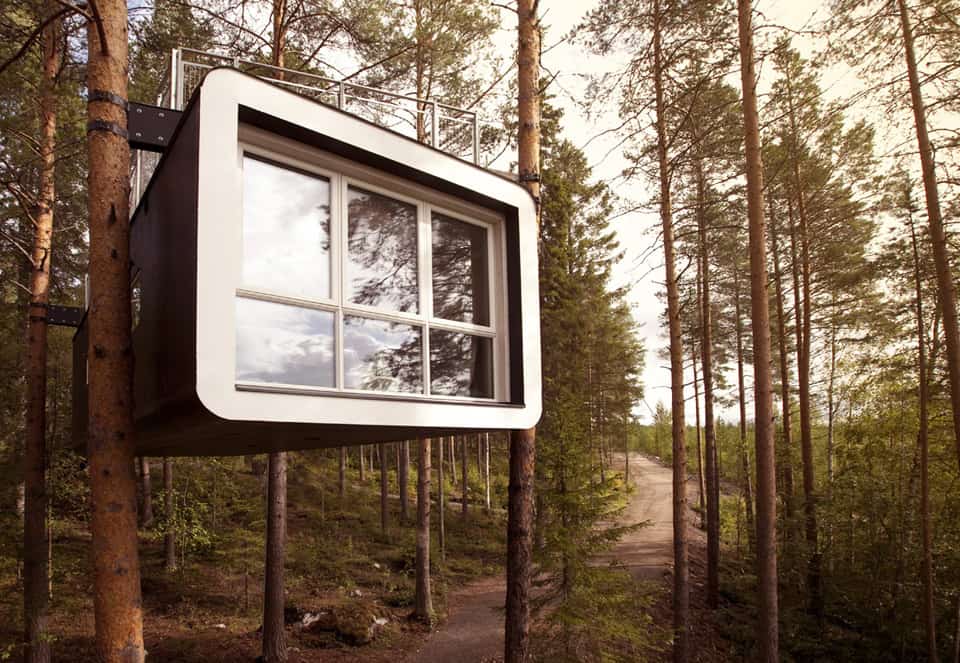
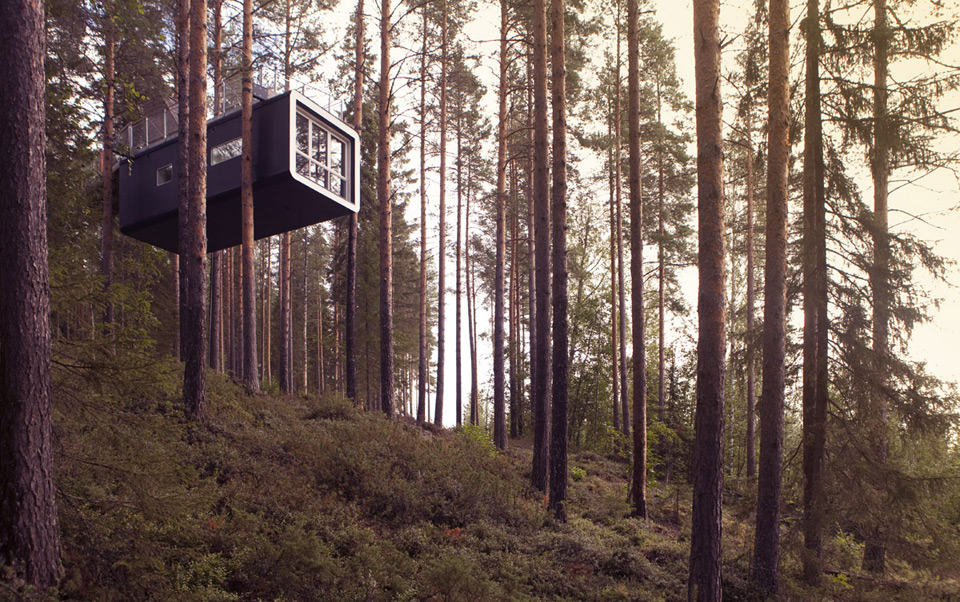
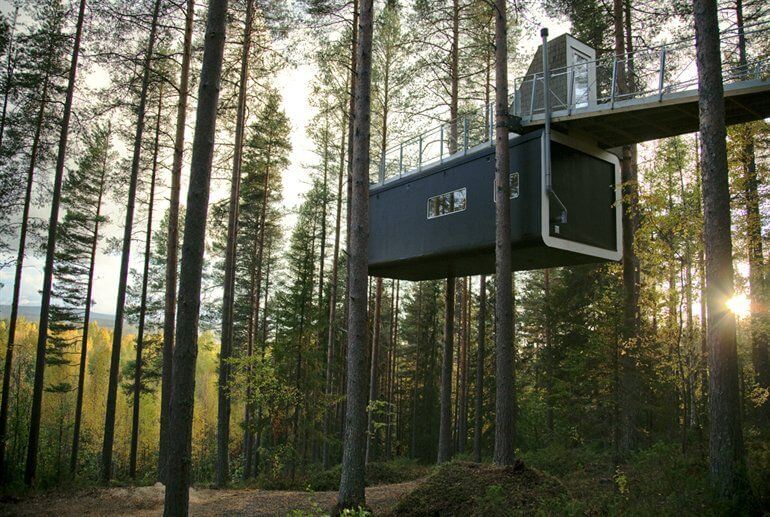
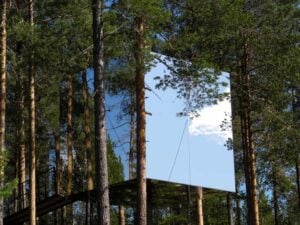
A slim timber bridge carries you out over the understory, and then you see it: a long deck hovering above the canopy, and below it, offset just enough to intrigue, a silvery cabin hanging through the branches toward the Lule River. That first sighting of The Cabin at Treehotel Harads lands quietly — no grand entrance, no lobby fanfare. Just a structure that looks as though the forest agreed to let it stay.
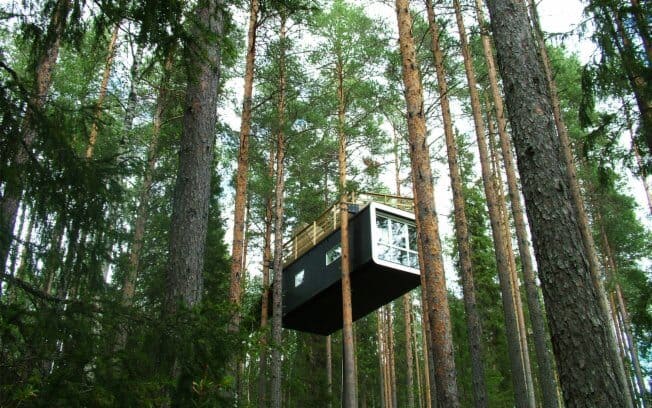
Treehotel sits in Harads, northern Sweden, roughly inside the Arctic Circle. Seven avant-garde treehouses rest four to six metres above the ground, each one a different architectural proposition. A mirror box, a bird's nest, a UFO shape — every structure pivots a distinct idea, yet none of them bullies the trees around it. Trunks pass through cutouts; supports land where roots can manage them. You feel the engineering, and then you mostly forget it.
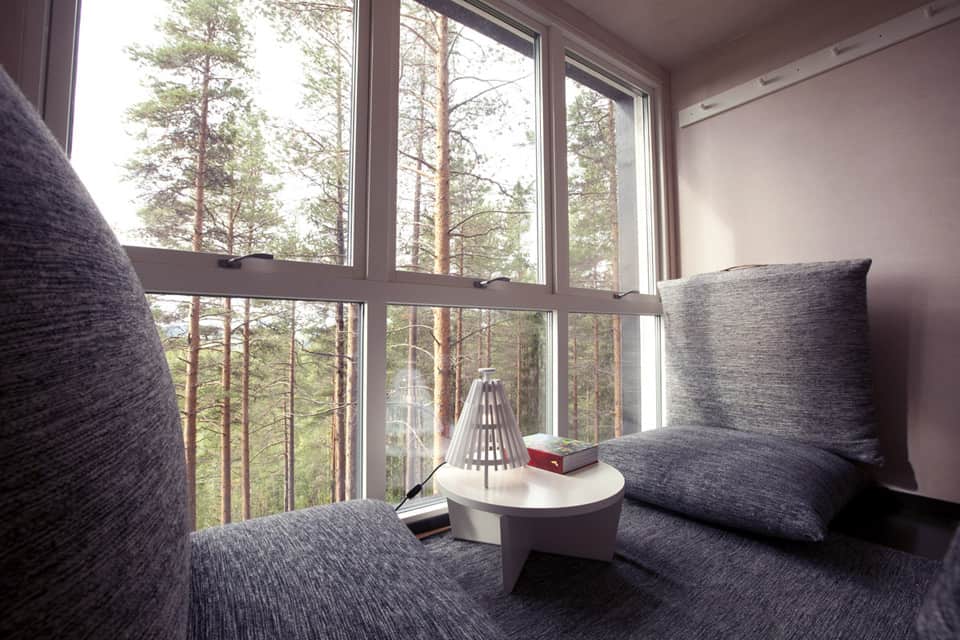
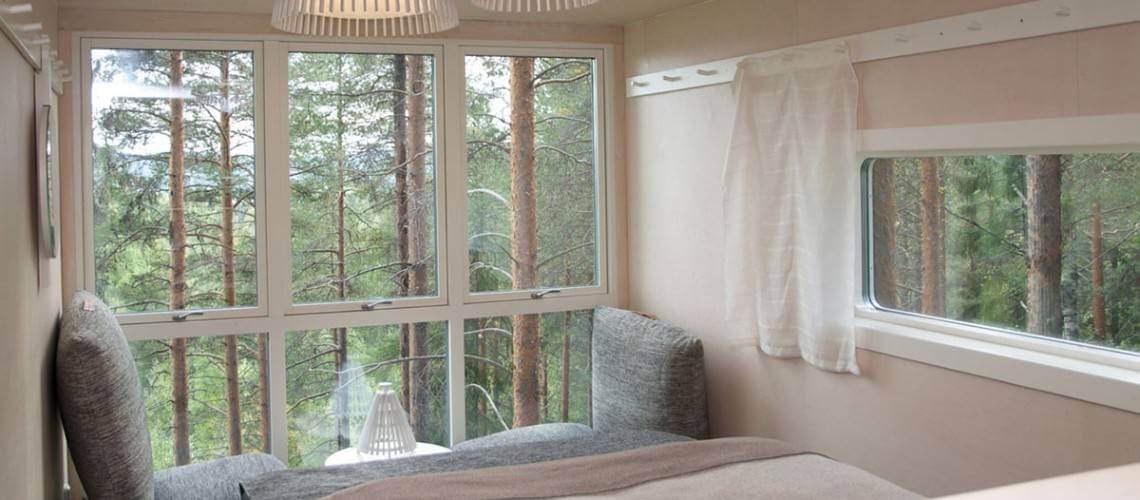
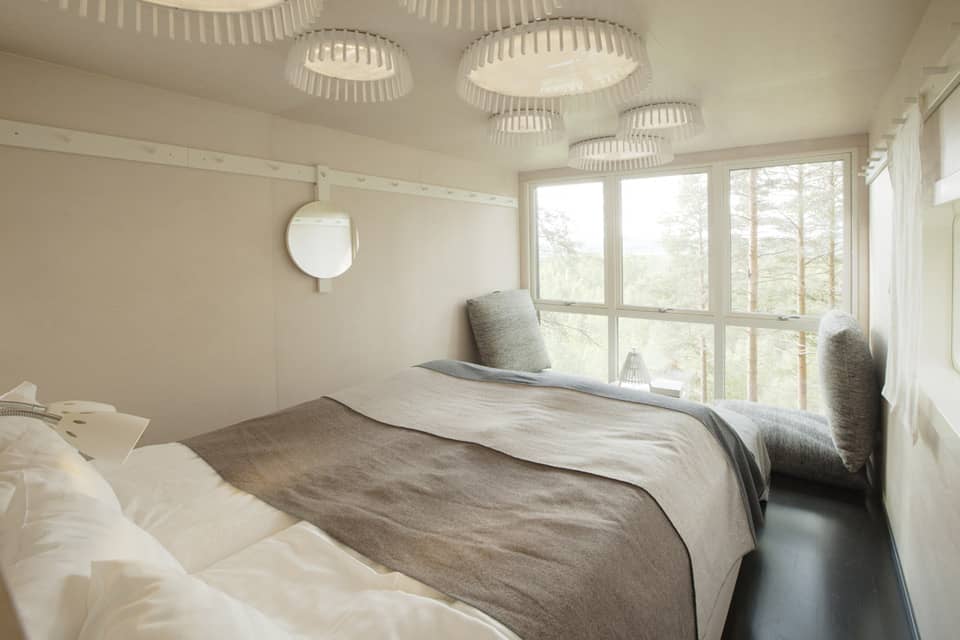
The Cabin is the one that sneaks up on you. Its silhouette stays light, even a little mysterious — not invisible, but not showy. Inside, the design narrows everything to what matters: a bed angled toward the valley, a window that frames the Lule River without trying to dominate it, pared-back materials that let pine and sky do the work. The wind has a voice up here, soft and persistent. You'll listen longer than you expect, and then, probably, you'll nap. Nightly rates run approximately 7,000–7,500 SEK, varying by season and availability — a genuine luxury tier, and one that makes sense once you're standing on that deck.
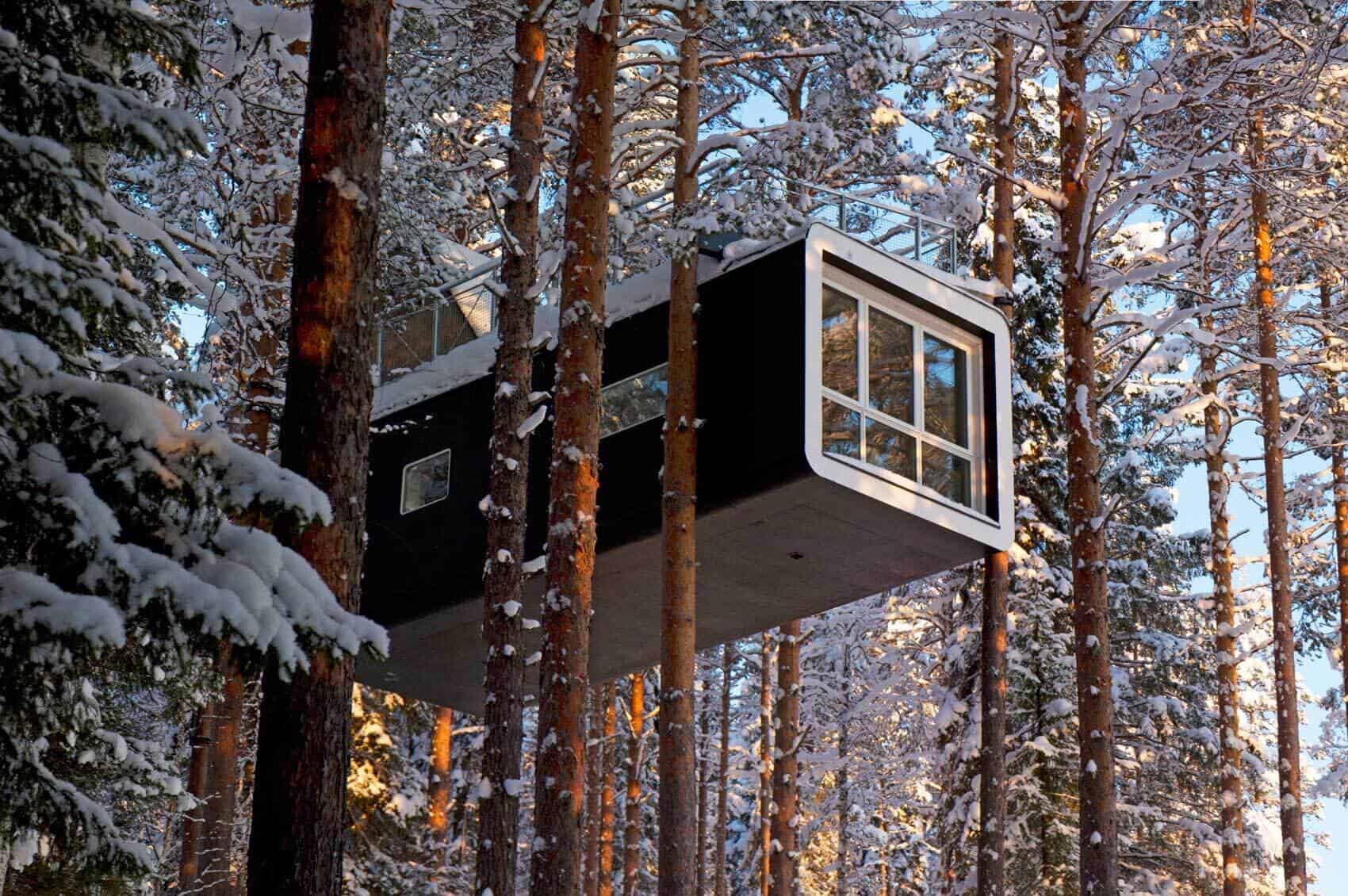
Each season brings a different version of the same landscape. Winter means snow-laden branches, temperatures that drop well below freezing, and genuine Arctic stillness outside the panoramic window — with a real chance of northern lights overhead. Summer delivers lush forest, late-night light that floods the valley past midnight, and mild air suited to hiking or paddling along the river. Autumn offers colourful canopy and cool evenings, with early aurora chances returning as the nights darken again.
Sustainability here reads less like a policy and more like the original design brief. Minimal ground disturbance, energy-minded systems, local materials used where they count most. The team treats the forest as a collaborator. Luxury comes through as clarity — space, silence, considered craft — rather than ornamentation. The communal sauna does exactly what Scandinavian saunas in the north are supposed to do, and the contrast with cold air outside remains reliably excellent.
Getting here is straightforward. Bus line 44 stops at the Harads Tree Hotel stop approximately 50 metres from the property, making it the most direct public-transport option. Alternatively, the Harads Hälsocentral Väg 97 stop — served by bus lines 44 and 266 — sits roughly 1.4 kilometres away as a secondary option. The Cabin suits travellers who want architectural ambition and genuine wilderness in the same stay: people happy to trade a hotel corridor for a walkway, and a view of the car park for one of the Lule River.
Frequently Asked Questions
Q: What does The Cabin at Treehotel typically cost per night?
A: Nightly rates run approximately 7,000–7,500 SEK, placing it firmly in the luxury tier. Rates vary by season and availability, so check the property's official page for current pricing.
Q: What is the best time of year to stay in The Cabin?
A: Winter (December–March) is the classic choice — snow-laden branches, Arctic stillness and a genuine chance of northern lights outside the panoramic window. Summer brings lush forest and late-night midnight light ideal for hiking or paddling the Lule River. Autumn offers colourful canopy and the first aurora chances of the season with milder temperatures than deep winter.
Q: How do you get to Treehotel Harads by public transport?
A: Bus line 44 stops at the Harads Tree Hotel stop approximately 50 metres from the property, making it the most direct public-transport option. An alternative stop, Harads Hälsocentral Väg 97, served by lines 44 and 266, is roughly 1.4 kilometres away. Check current timetables before you travel.
Q: Is The Cabin suitable for guests who want a genuinely immersive forest experience rather than a conventional hotel stay?
A: Yes. The structure sits four to six metres above the forest floor, reached by a timber bridge over the understory. The interior is deliberately pared back — an angled bed, a wide window framing the Lule River, minimal ornamentation — so the surrounding pine canopy and changing light remain the main event.






Add a review