

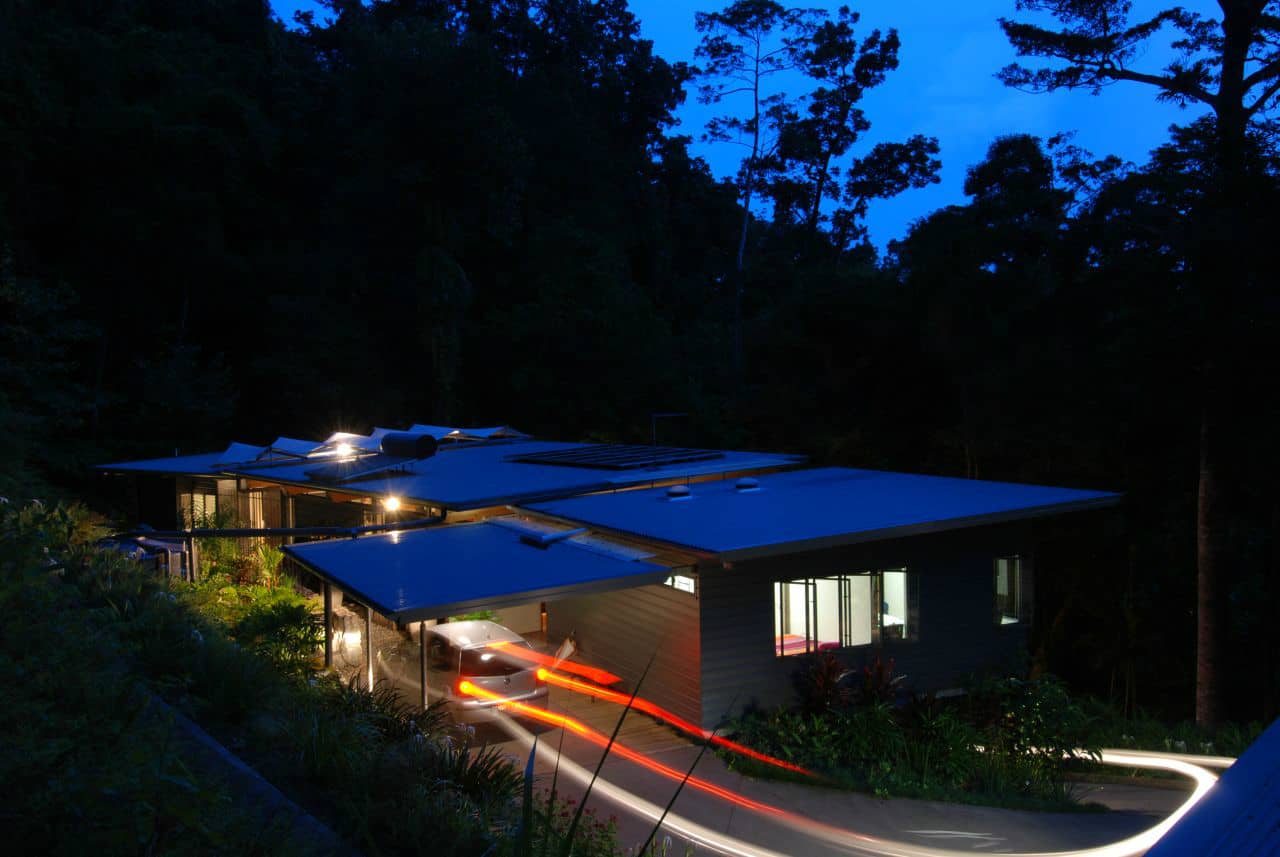
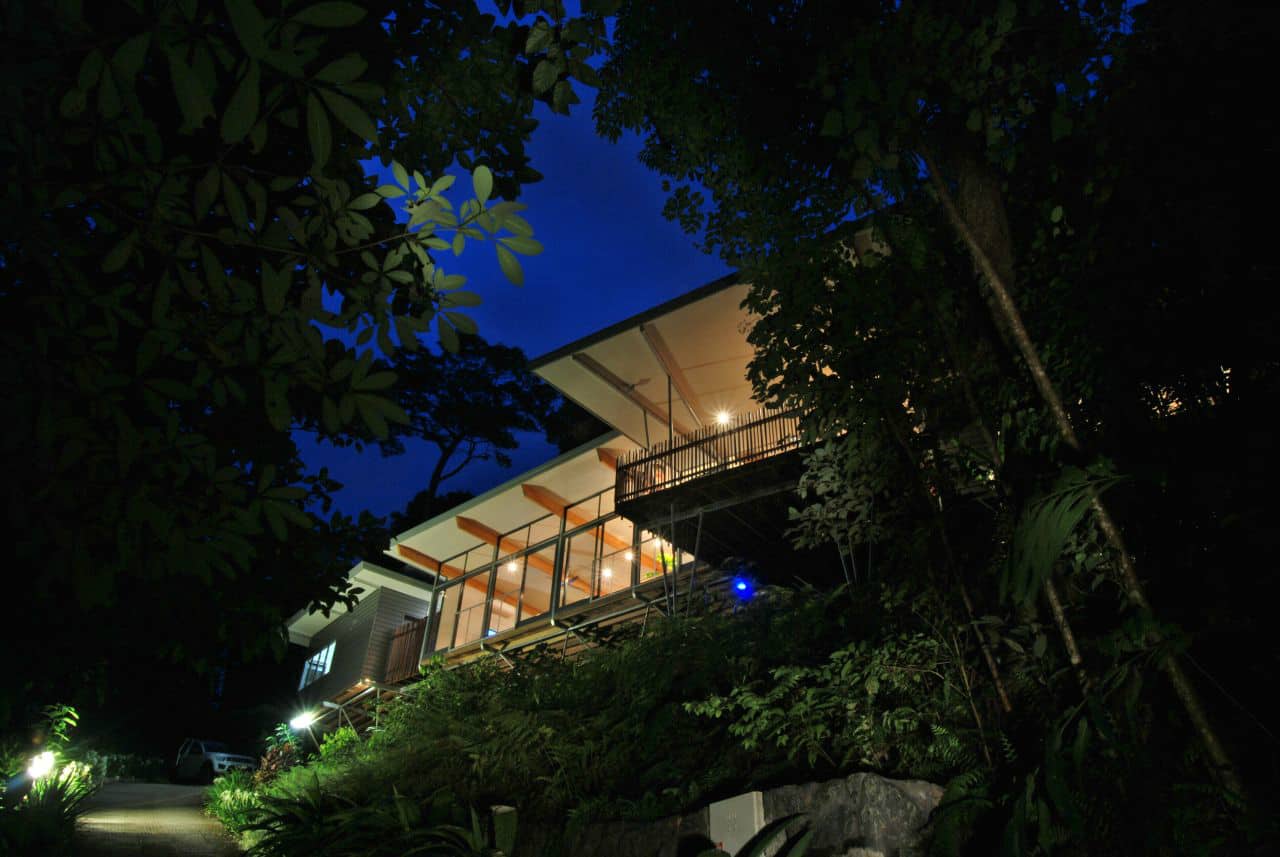
Edge Hill sits at the foot of Mt Whitfield, where Cairns begins to give way to subtropical forest. The Hp TreeHouse occupies a quiet slope here, and it announces itself through smell and sound before you see it — resin, wind, the rustle of terminalia and quandong above your head. The house is easy to miss from below. That invisibility is deliberate.
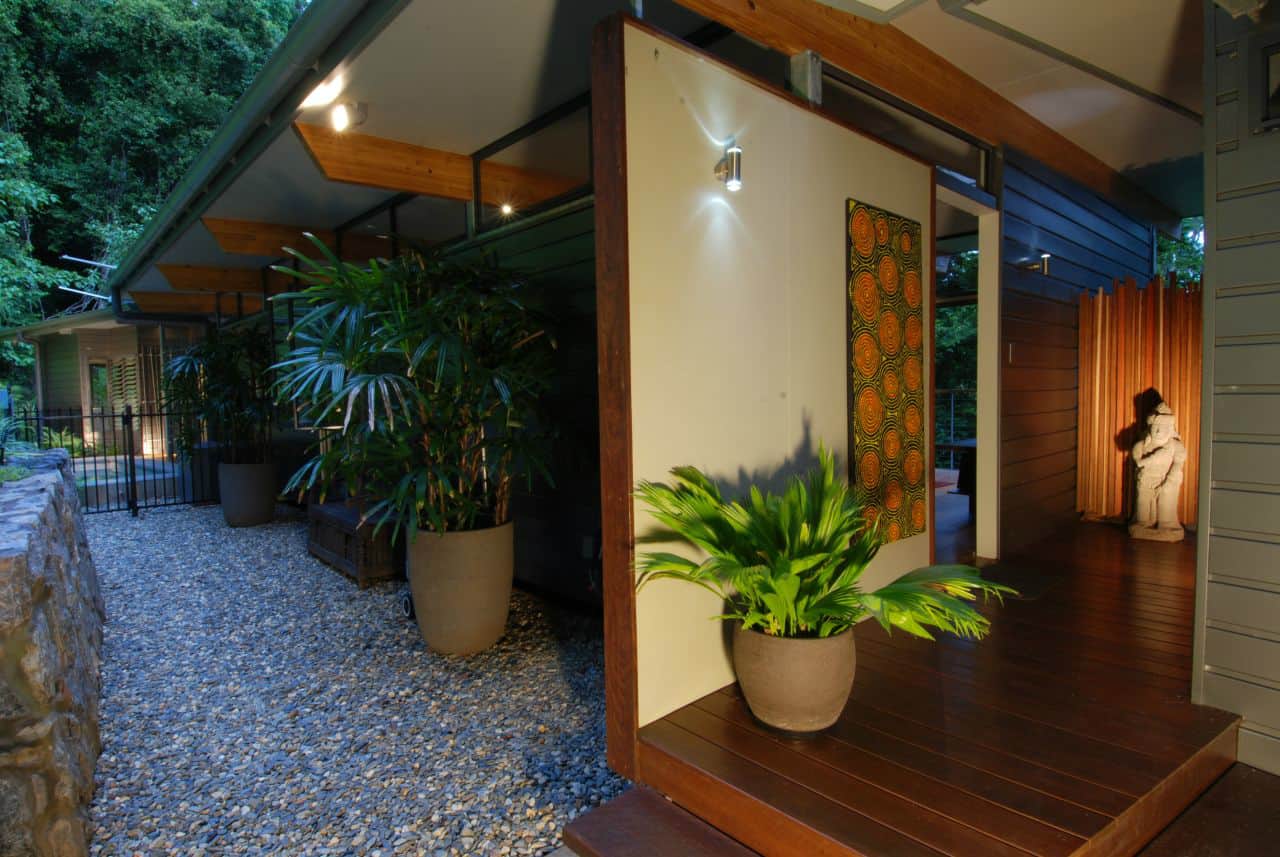
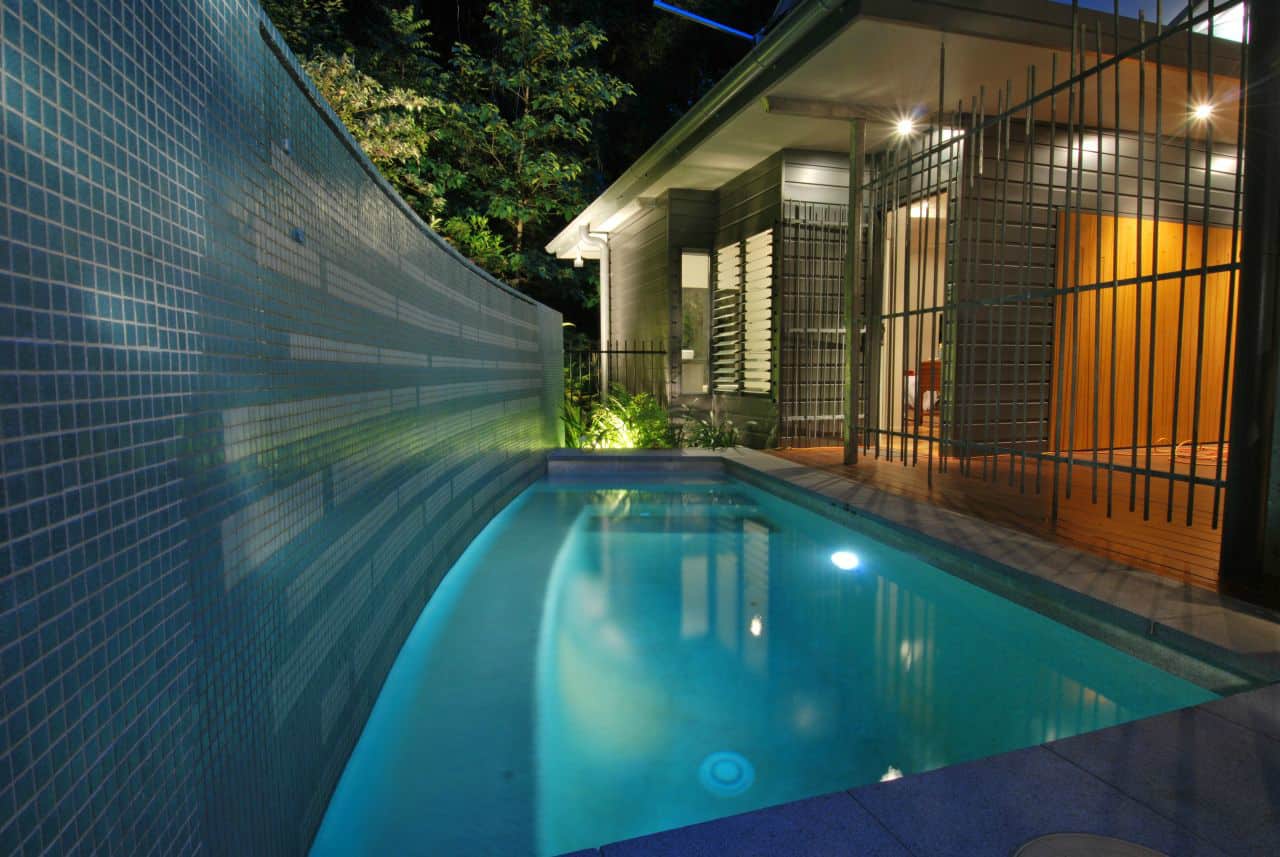
mmp Architects designed the home to hover rather than dig in. A galvanized steel frame lifts the structure clear of the ground, leaving roots and natural runoff undisturbed beneath. Three single-storey pavilions follow the site's contours and connect by open breezeways that thread between existing trees. Walking between them, you move through the canopy rather than past it.
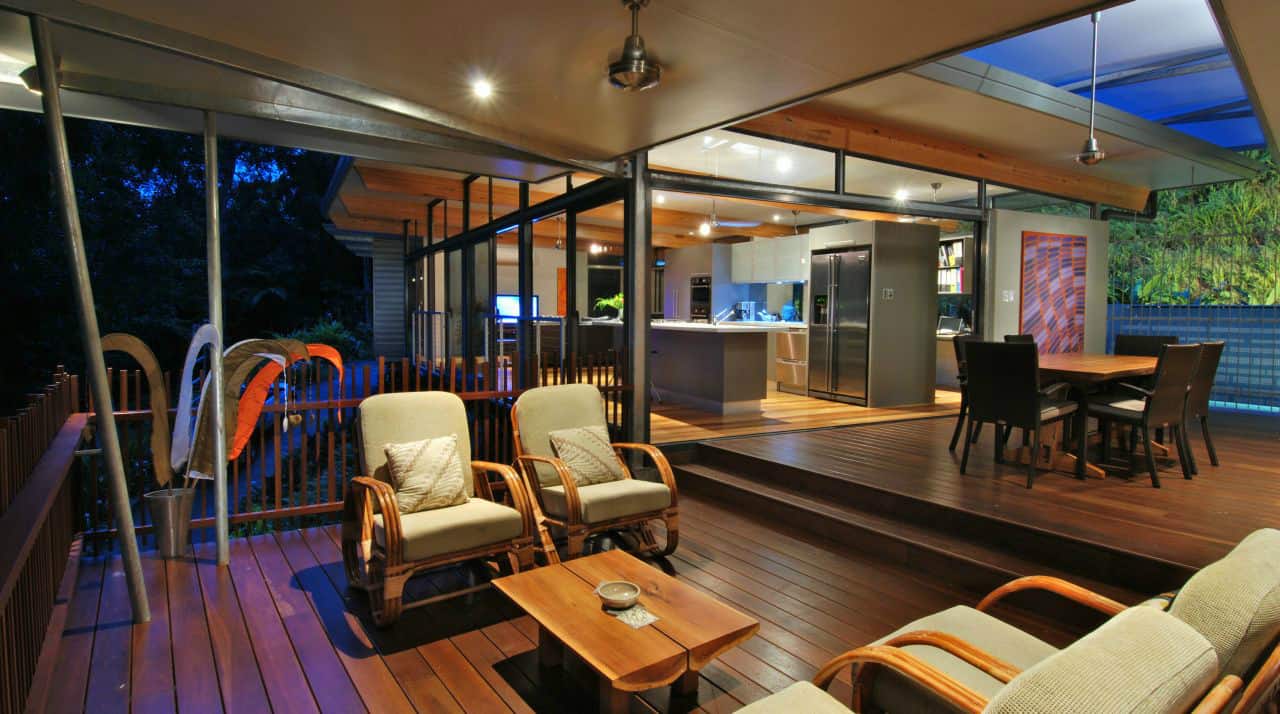
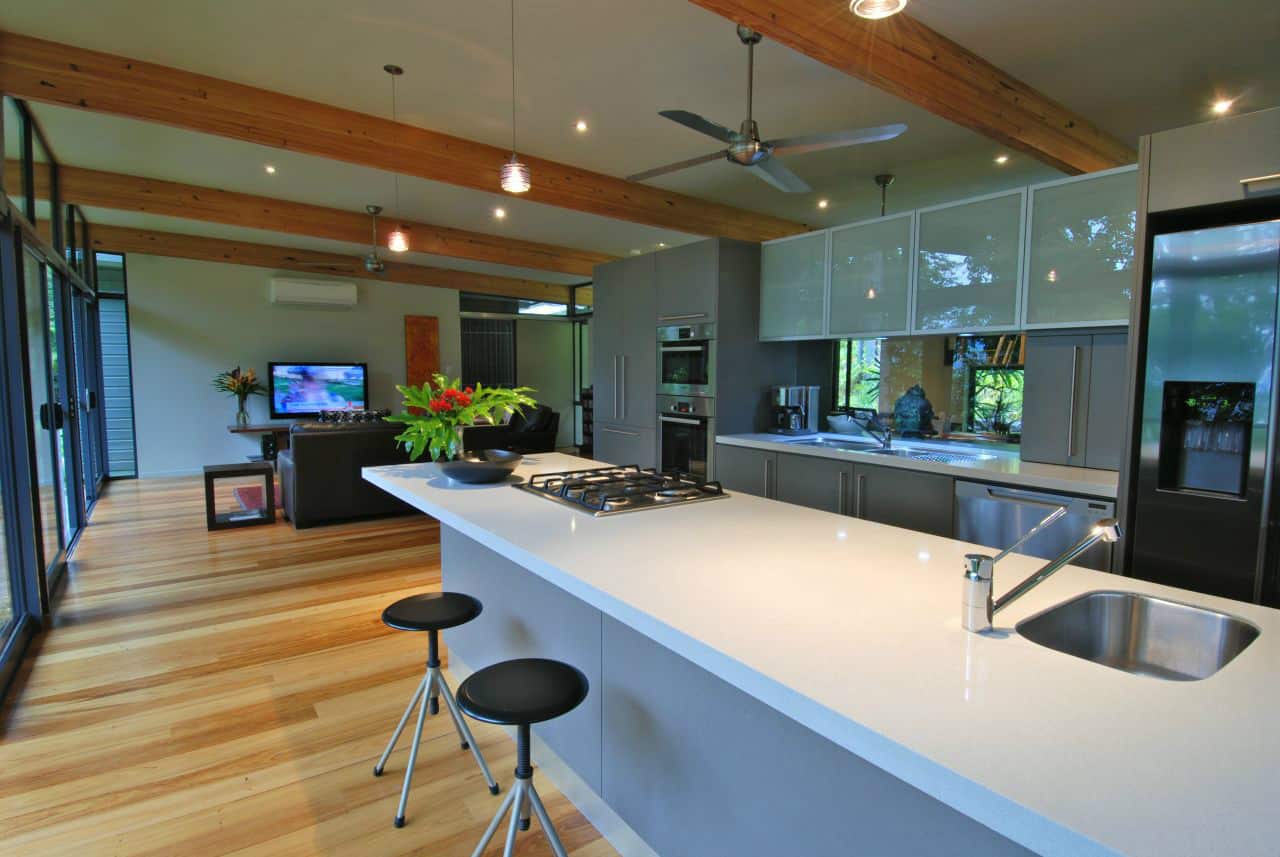
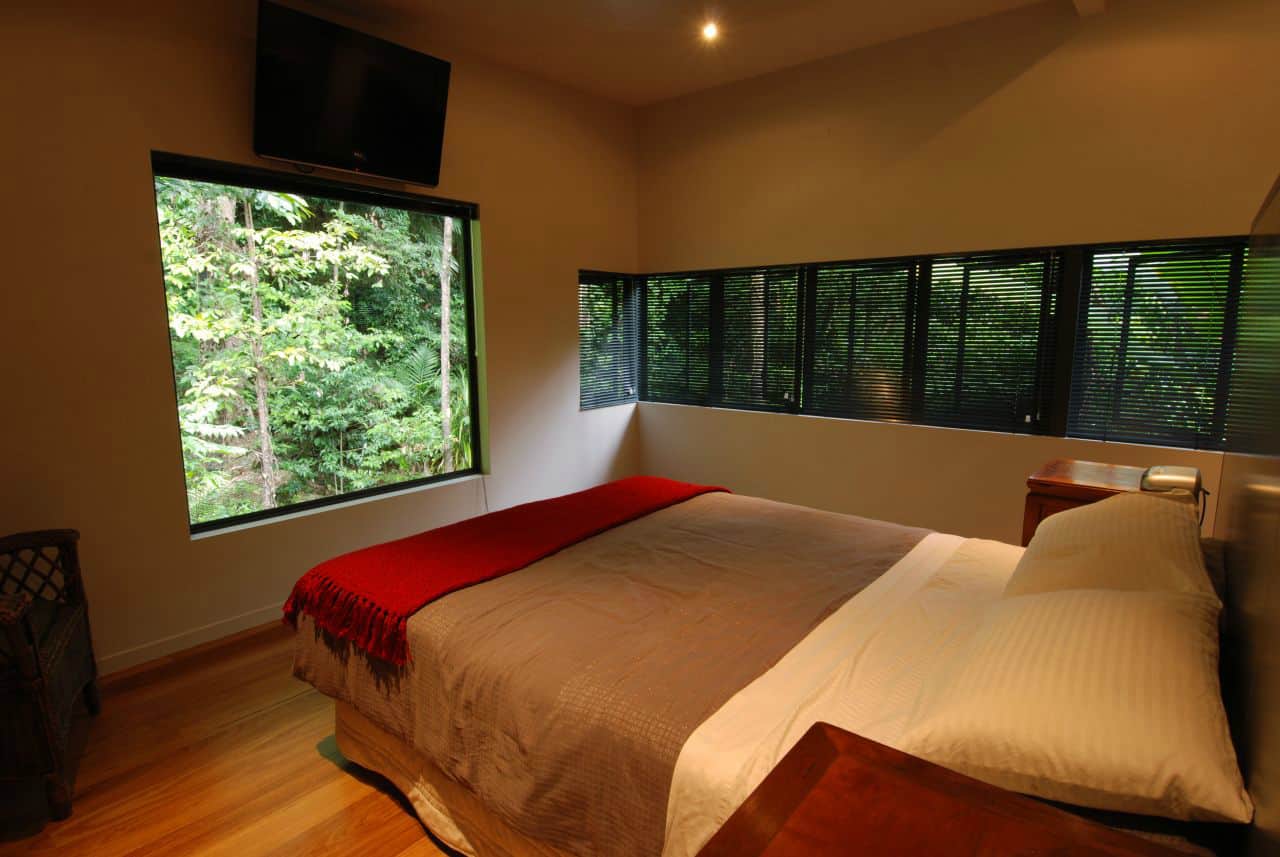
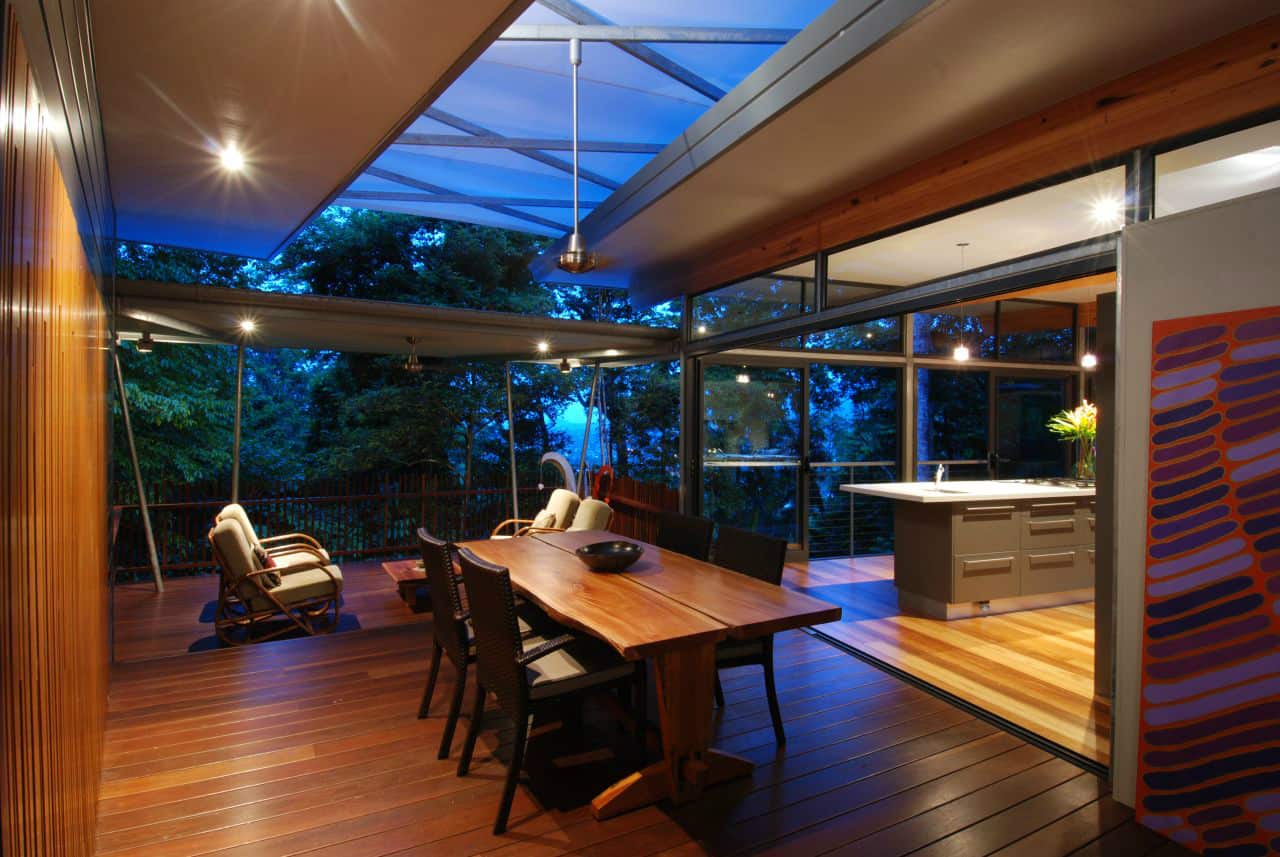
The central living pavilion faces the forest through a fully glazed wall. Inside and outside blur; the trees reflect back at you from the glass. The dining area sits under a protective canopy nearby, open enough for warm evenings and long meals. The master suite takes the most dramatic position: bed and bath face a bare rock outcrop that transforms into a private waterfall when the monsoon arrives. It stops most plans immediately.
Ventilation earns its keep. Narrow louvers align on a north–south axis and draw the prevailing breezes through each room. The house breathes without mechanical help on most days. Exposed laminated timber beams carry the roofline cleanly, and a translucent membrane over the pavilions softens direct glare to a warm, even glow.
Materials were chosen for durability and low environmental impact. Colorbond steel and aluminium windows minimise future maintenance. Low-VOC paints, locally quarried stone, and responsibly harvested timber keep the chemical footprint small. Solar PV handles hot water. The result is a house that treats sustainability as engineering rather than statement.
Timing a visit around the seasons shapes the experience. From May to October, Cairns' dry season brings lower humidity, clearer skies, and comfortable temperatures in the high twenties. Those months suit guests who want the rainforest views at their sharpest. The wet season, December to March, turns the rock outcrop into that waterfall — hot, humid, and dramatically green, with temperatures nudging thirty-one degrees and sudden afternoon downpours that make the pavilions feel genuinely sheltered.
The house sits at 6 Planchonella Close in Edge Hill, Queensland. Bus lines 131 and 131N stop at Woodward Street at Jensen Street, approximately 650 metres away by straight line, making this the most practical local transit option. Freshwater station on the Kuranda Scenic Railway sits roughly 3.2 kilometres away — useful for guests arriving from Cairns city or those planning to take the scenic rail journey into the tablelands. The Hp TreeHouse suits design-minded travellers, architecture enthusiasts, and anyone who wants genuine forest immersion without giving up considered comfort.
Frequently Asked Questions
Q: What makes The Hp TreeHouse different from a conventional house in the area?
A: mmp Architects lifted the entire structure on a galvanized steel frame so the forest floor — roots, runoff, understory — continues undisturbed beneath the building. Three single-storey pavilions follow the slope's natural contours and connect by open breezeways that thread between existing trees, meaning you move through the canopy rather than simply looking at it from inside.
Q: When is the best time to stay for comfortable conditions?
A: May to October brings Cairns' dry season — lower humidity, clearer skies, and warm days in the mid-to-upper twenties that suit guests who want the rainforest views at their sharpest. The wet season (December–March) is dramatically different: hot, very humid, with sudden downpours that turn the rock outcrop outside the master suite into a private waterfall — an experience worth the trade-off for guests comfortable with tropical heat.
Q: How does the house handle ventilation and cooling?
A: Narrow louvers aligned on a north–south axis draw the prevailing breezes through each pavilion. On most days the house breathes without mechanical assistance — a practical outcome of the design rather than a marketing claim.
Q: Is public transport a realistic option for getting there?
A: Bus lines 131 and 131N stop at Woodward Street at Jensen Street, roughly 650 metres from the property, making them the most practical local transit option. Freshwater station on the Kuranda Scenic Railway is approximately 3.2 kilometres away and useful for guests arriving from Cairns city or planning the scenic rail journey into the tablelands. Confirm current timetables before travel.







Add a review