

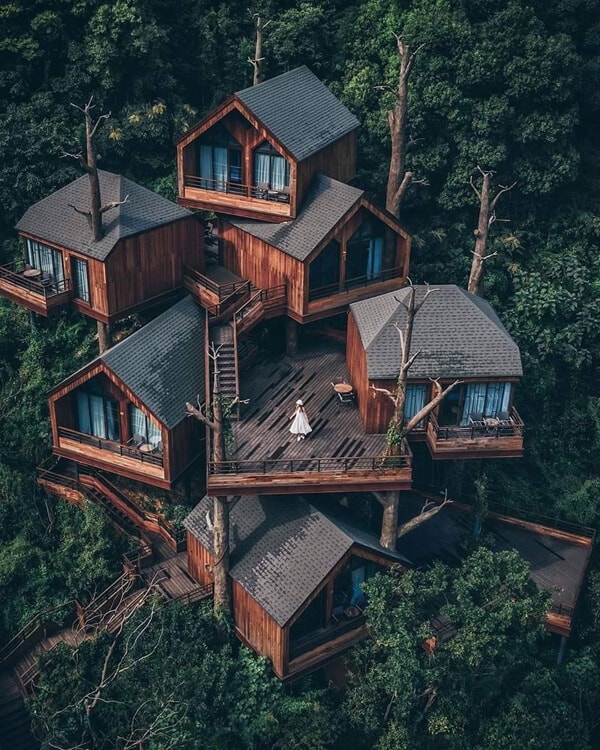
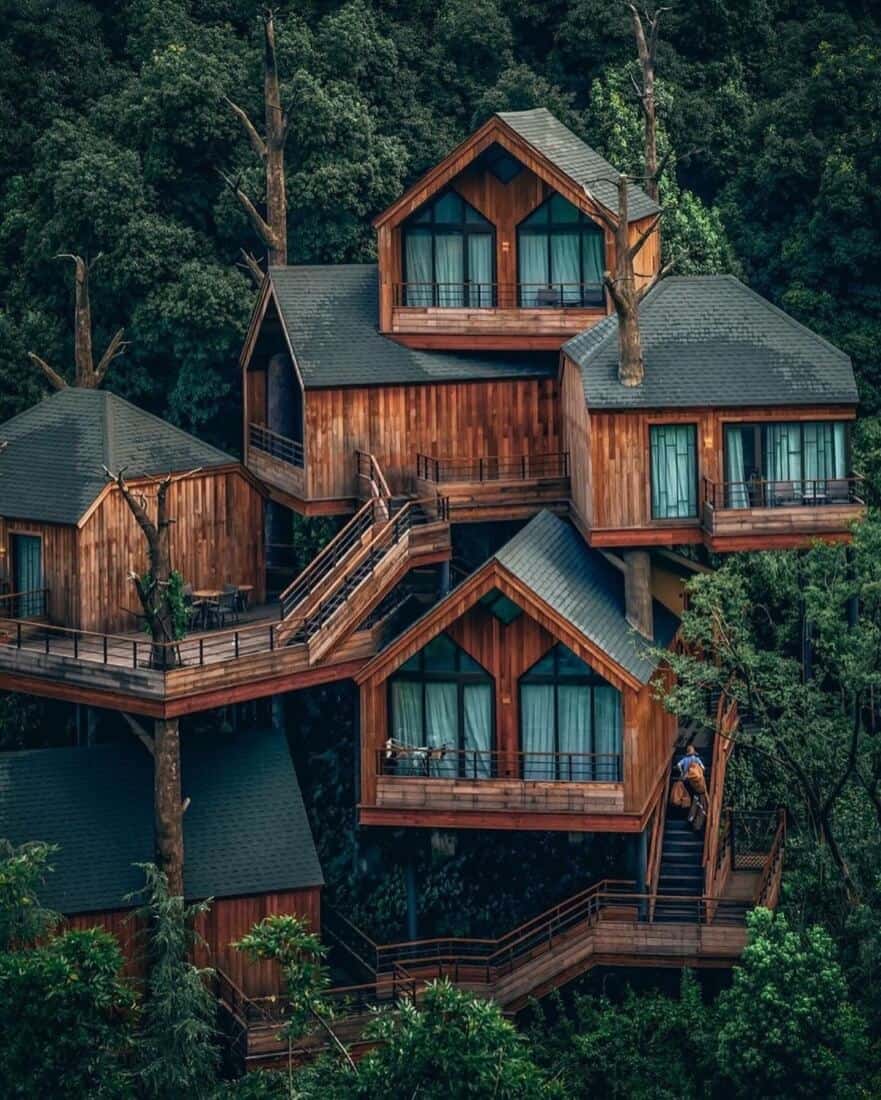
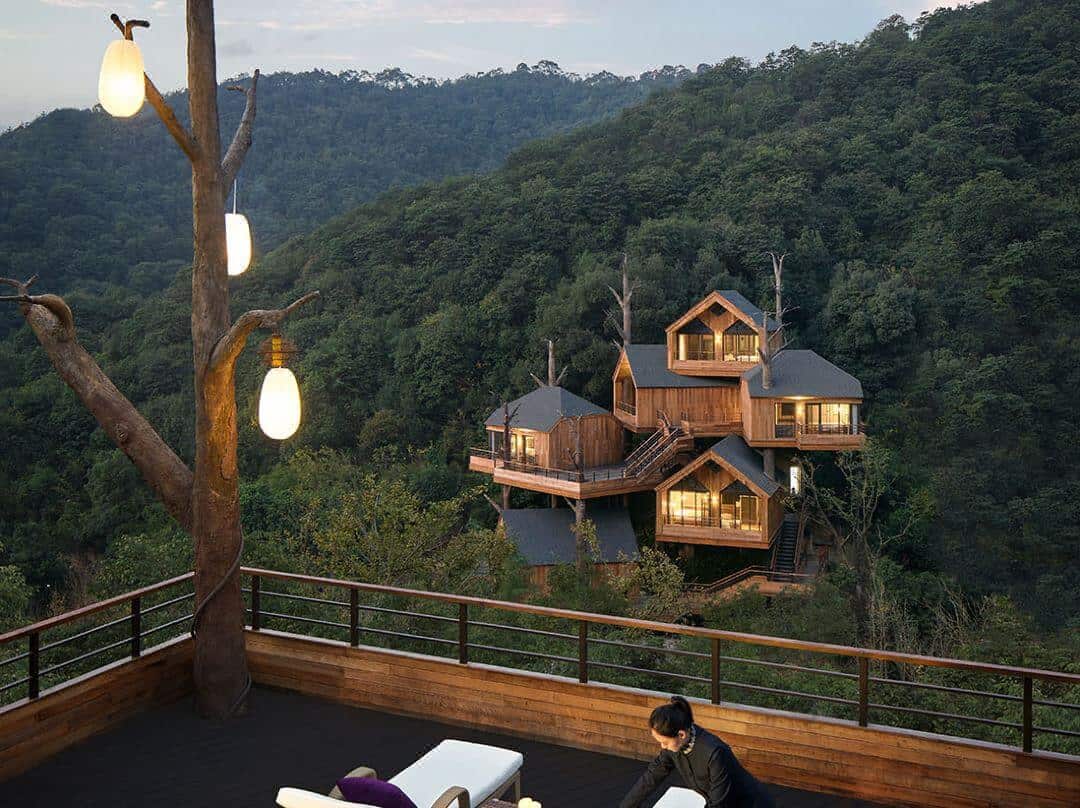
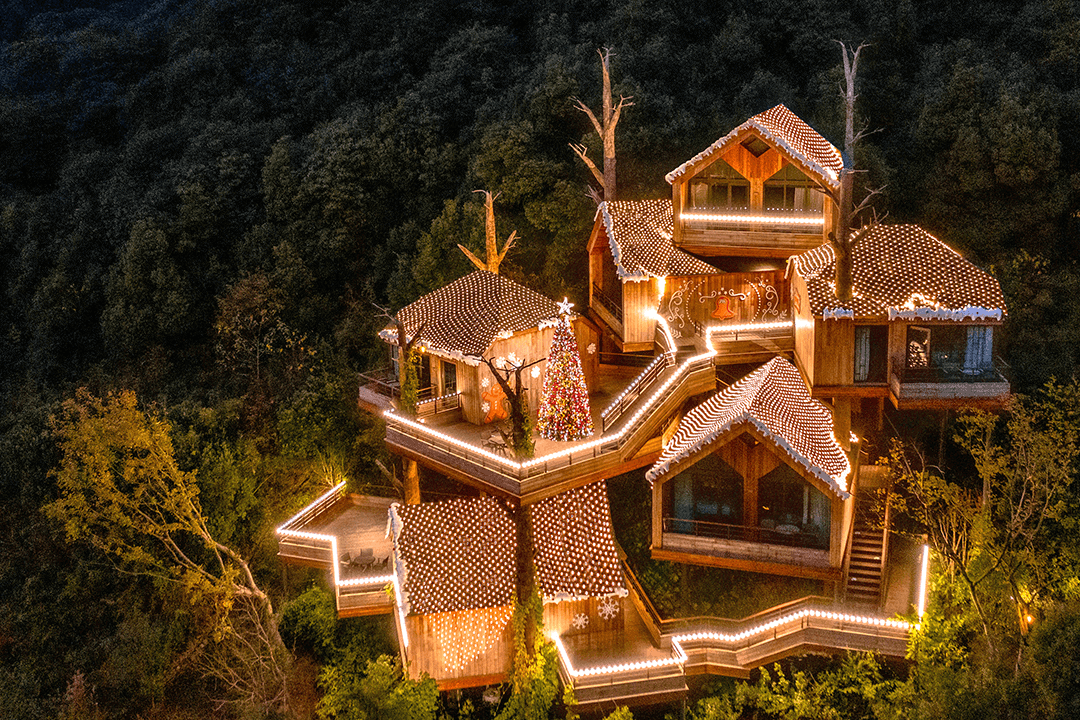
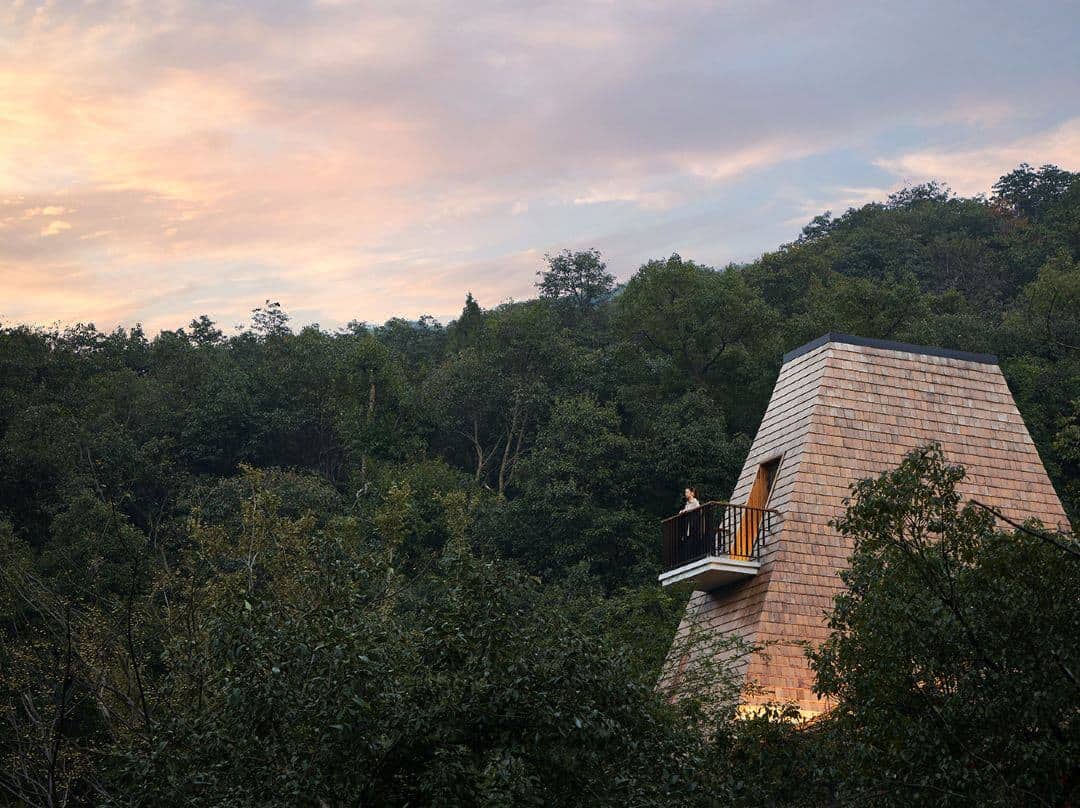
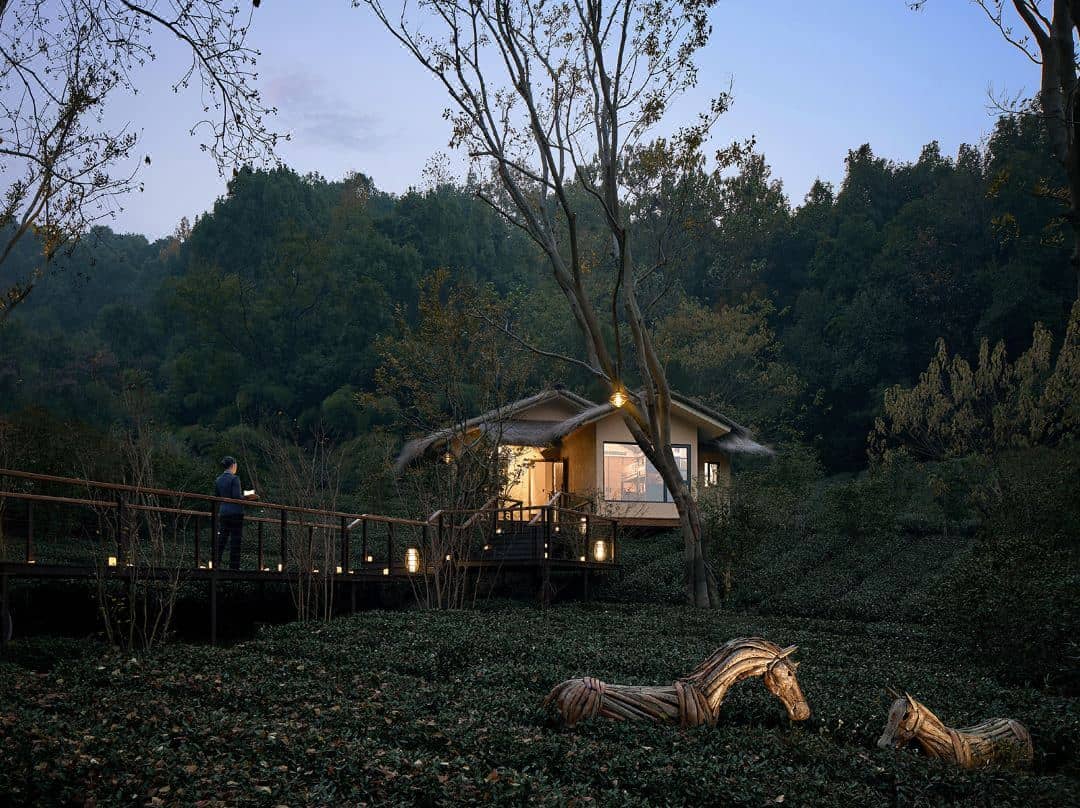
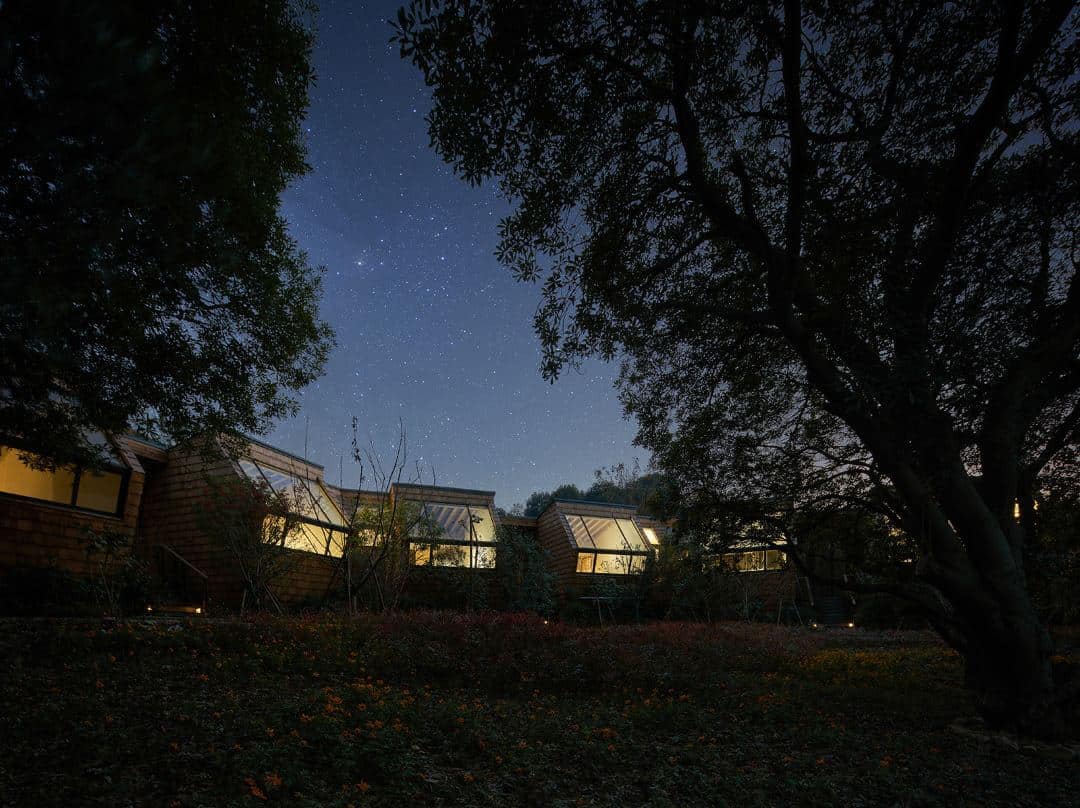
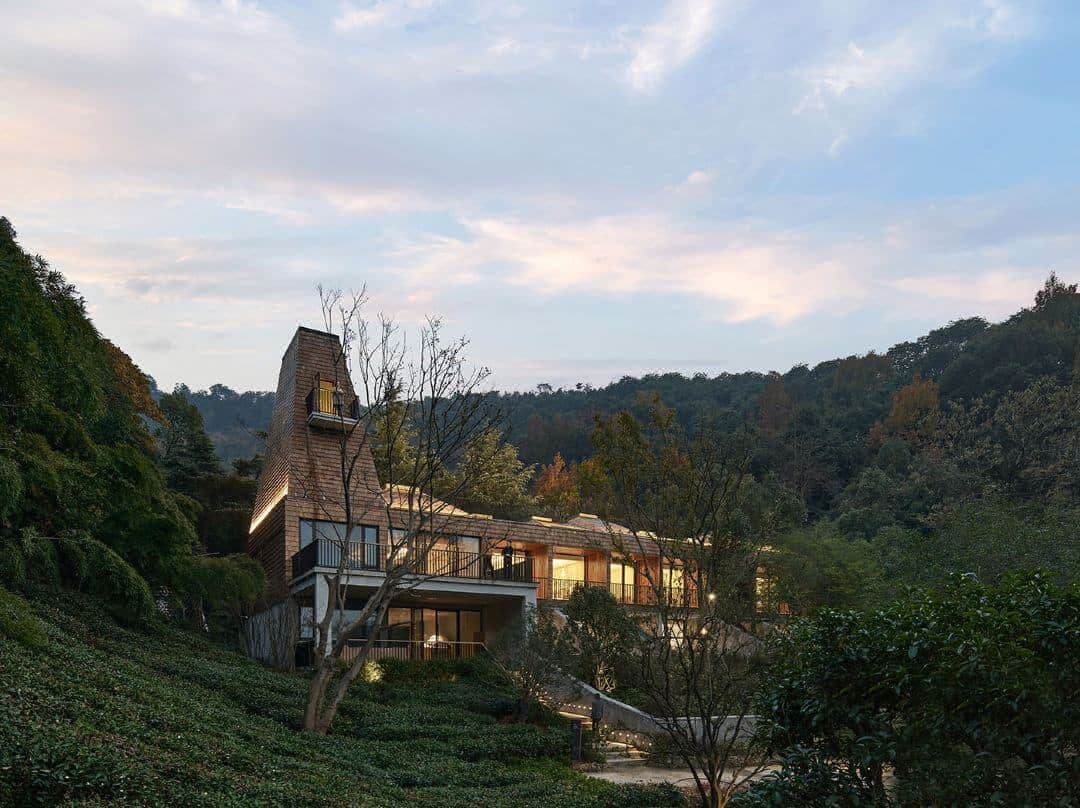
Hangzhou Kaiyuan Senbo TreeHotel sits on a wooded hillside above Xianghu Lake in Xiaoshan District. The cabins appear through the canopy in stacked clusters — layered, offset, surprisingly architectural for something built among trees. This is not a novelty stay. It is a resort that happens to have placed its finest rooms thirty feet off the ground.
The defining feature is the pod layout. Each pod groups five or six treehouses together, stacked and angled so that no two share quite the same view. At the heart of every cluster sits a shared balcony — a small treetop terrace where guests drift together without being pushed. Morning coffee, a post-hike exhale, a quiet look across the ridgeline. The communal space feels easy rather than forced.
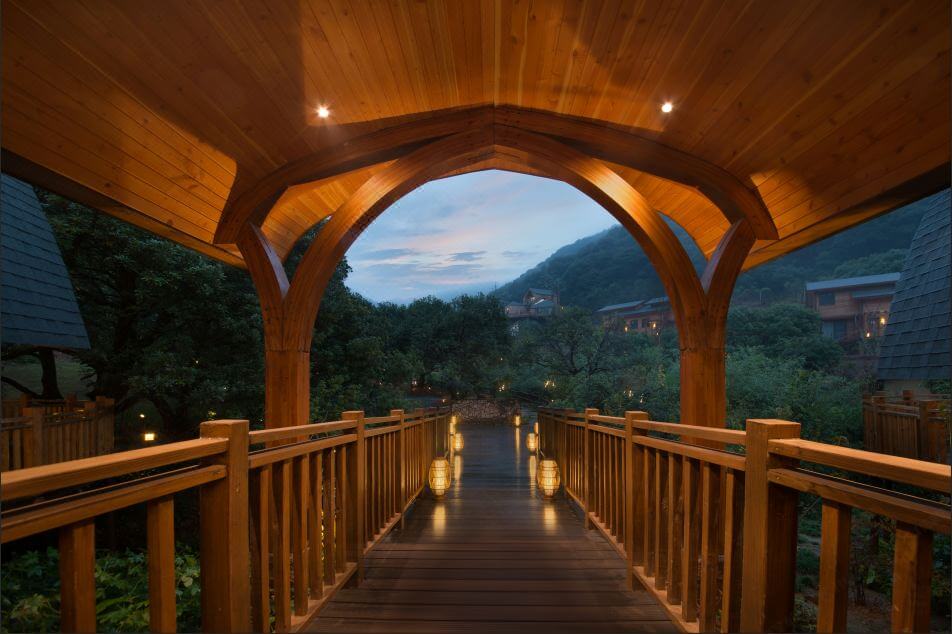
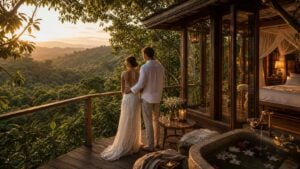
What connects the pods is a system of stairs and skywalks that turns movement around the resort into its own pleasure. The walkways crisscross between trunks and platforms. Step out of your cabin and you are already inside the forest, navigating a lattice of timber and branches. One direction opens toward layered green hills; the other frames Xianghu shimmering below. The view genuinely hijacks your schedule.
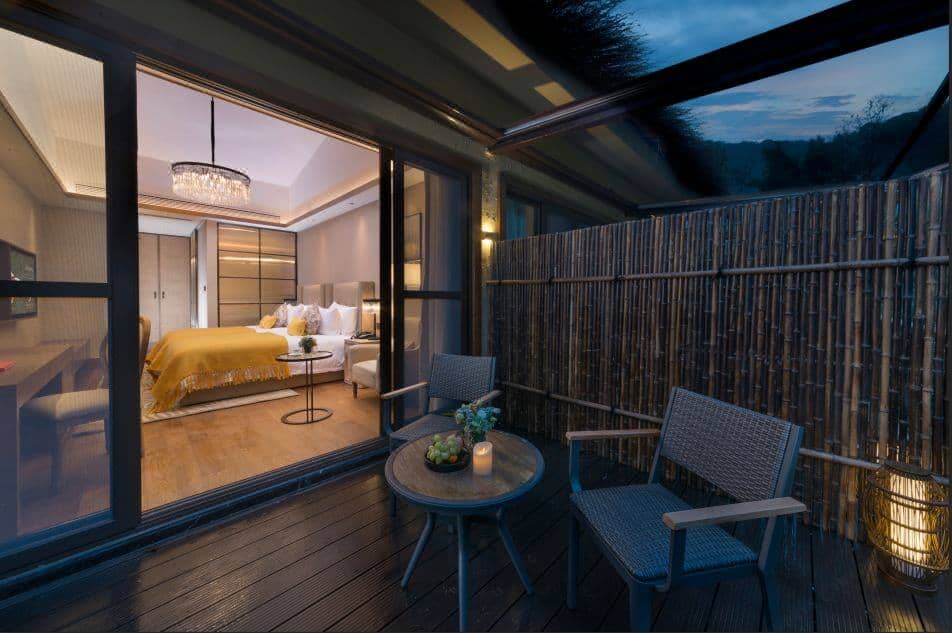
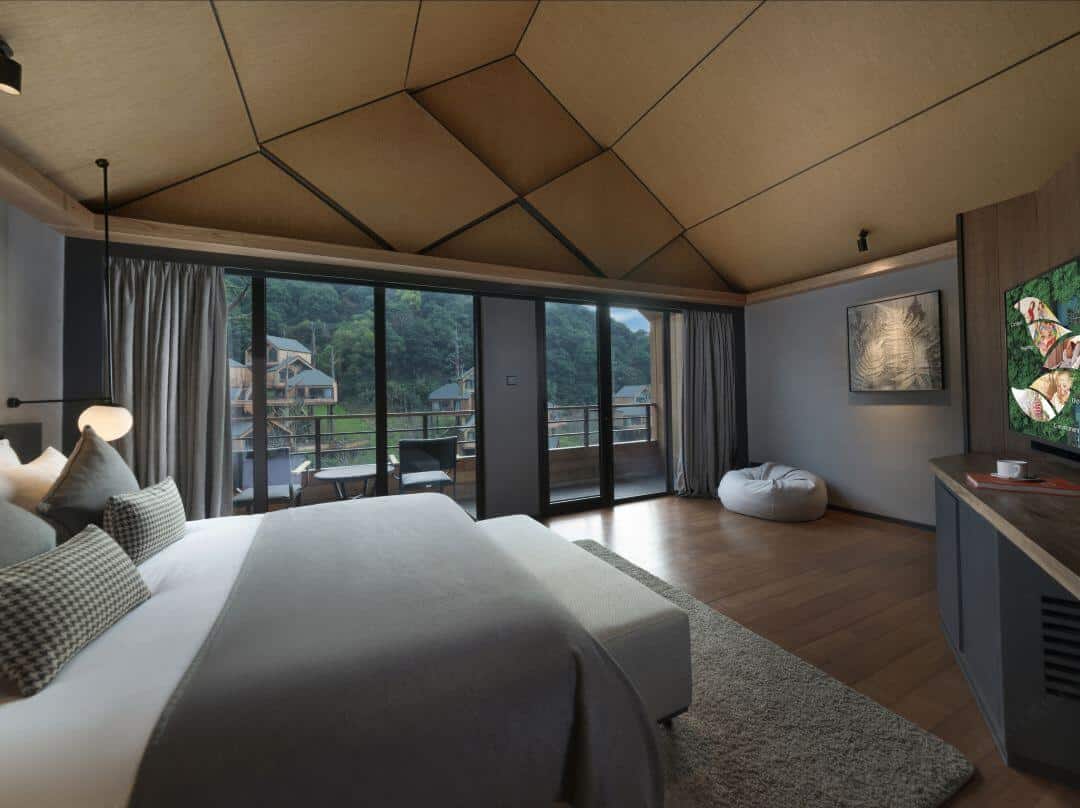
Inside, the rooms lean warm and considered. Timber panels glow softly. Textiles have texture without fuss. Bathrooms carry a spa-like calm without enforcing it. Daybeds face outward, toward the trees rather than the television. The overall effect is grown-up treehouse comfort — refined rather than rustic, and relaxed enough that you can actually feel at home in it.
This is a full resort, so the experience scales up accordingly. Breakfast folds into the rate, which gives mornings a generous, unhurried quality. A two-night minimum applies, and it suits the place: the first day disappears into exploration, the second into deliberate doing-nothing. Over 200 rooms occupy the property, but the treehouses are the draw. Book them and book enough time to use them properly.
Spring and autumn both suit Kaiyuan Senbo well. March through May brings mild temperatures and fresh greenery in the hills around the treehouses. September through November offers clear, dry days and comfortable warmth with the added pleasure of colour in the canopy. Summer arrivals should expect heat and humidity; winter stays lean quieter and colder, better suited to the indoor comforts than long hours on the balcony.
For access, the subway stop 南秀路 sits approximately 2.2 km from the property and provides a practical rail connection into Hangzhou. Train travellers arriving at 萧山西 station are roughly 4.3 km away. Bus 702 stops at 湘浦观鱼, approximately 2 km from the resort. Given the hillside location on Xianghu Road, a taxi or ride-hail from any of these points makes a sensible final leg into the resort grounds.
Frequently Asked Questions
Q: What makes the treehouse pods different from a standard resort room?
A: The treehouses are arranged in clusters of five or six cabins, stacked and offset so each has a distinct angle on the view. At the centre of each pod sits a shared balcony — a small treetop terrace that encourages an easy sociability without feeling crowded. A network of timber skywalks connects the pods, so moving around the resort means moving through the forest canopy rather than along hotel corridors.
Q: Is there a minimum stay, and does it suit the experience?
A: A two-night minimum applies to the treehouse rooms. It fits the pace of the place well — the first day tends to disappear into exploring the walkways and ridgeline views, and the second gives you time to properly slow down. Confirm current booking conditions directly with the property.
Q: When is the best time to visit?
A: Spring (March–May) and autumn (September–November) are the strongest windows. Spring brings mild temperatures and fresh greenery around the hillside cabins; autumn offers clear, dry days and comfortable warmth, with colour coming into the canopy. Summer is hot and humid, so better suited to guests who enjoy resort pools and don't mind the heat. Winter is quieter and cool, leaning toward indoor comfort rather than long hours on the balcony.
Q: How do guests reach the resort without a car?
A: The nearest subway stop, 南秀路, is approximately 2.2 km from the property. Train travellers arriving at 萧山西 station are around 4.3 km away, and bus 702 stops at 湘浦观鱼, roughly 2 km out. Because the resort sits on a wooded hillside along Xianghu Road, a taxi or ride-hail from any of these points makes a sensible final leg.











Add a review