
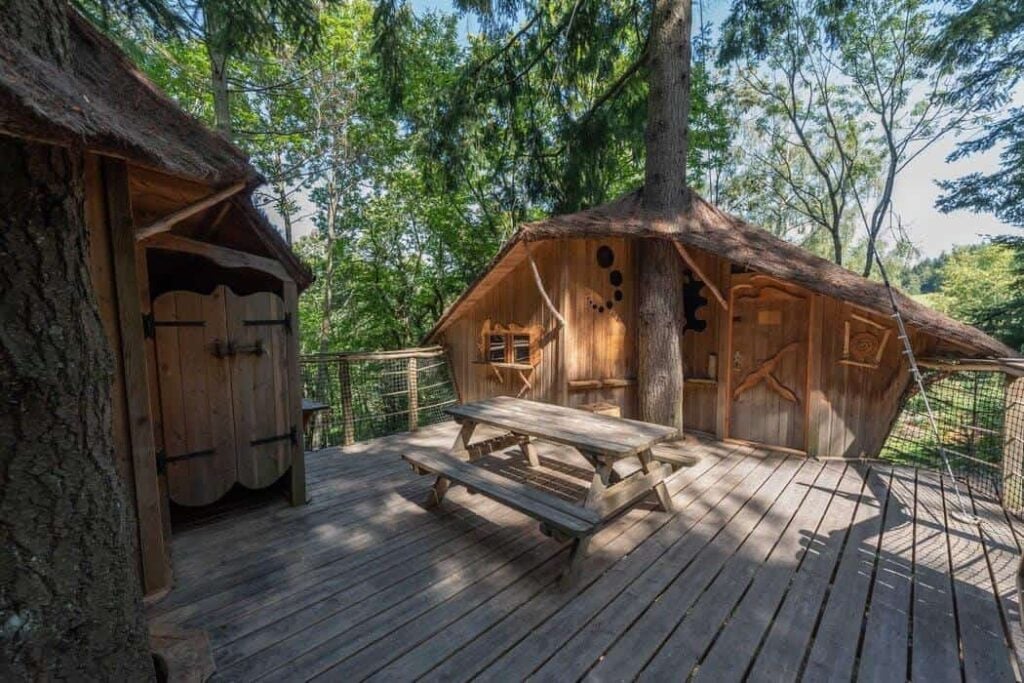
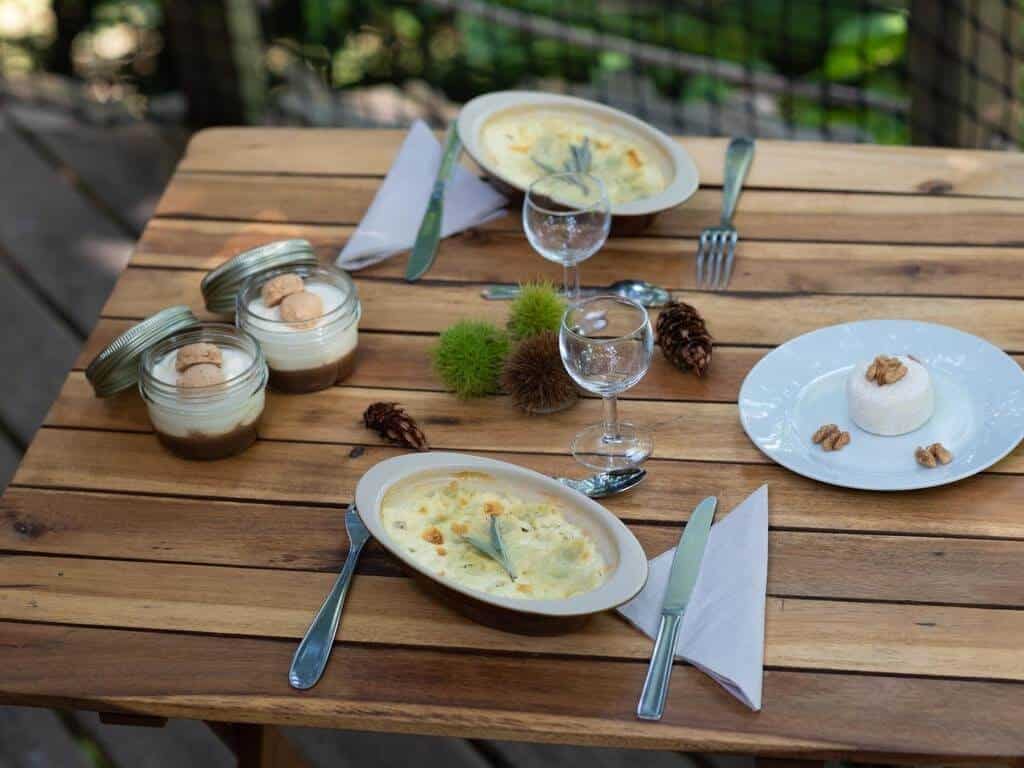
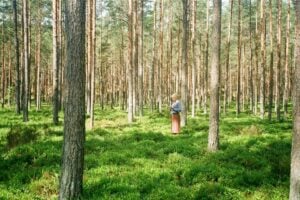
Every morning at Les Cabanes de Labrousse, breakfast arrives by mule. Soft hoof-beats on forest paths, a delivery no app can replicate — it sets the tone for a stay that is genuinely, unhurriedly different. This eight-treehouse retreat sits deep in the Ardèche woodland near Belsentes, in the southern French highlands, and it makes no apologies for its off-grid character. No electricity, no running water, no ambient digital noise. Just timber, leaves and the kind of quiet that takes a day to settle into.
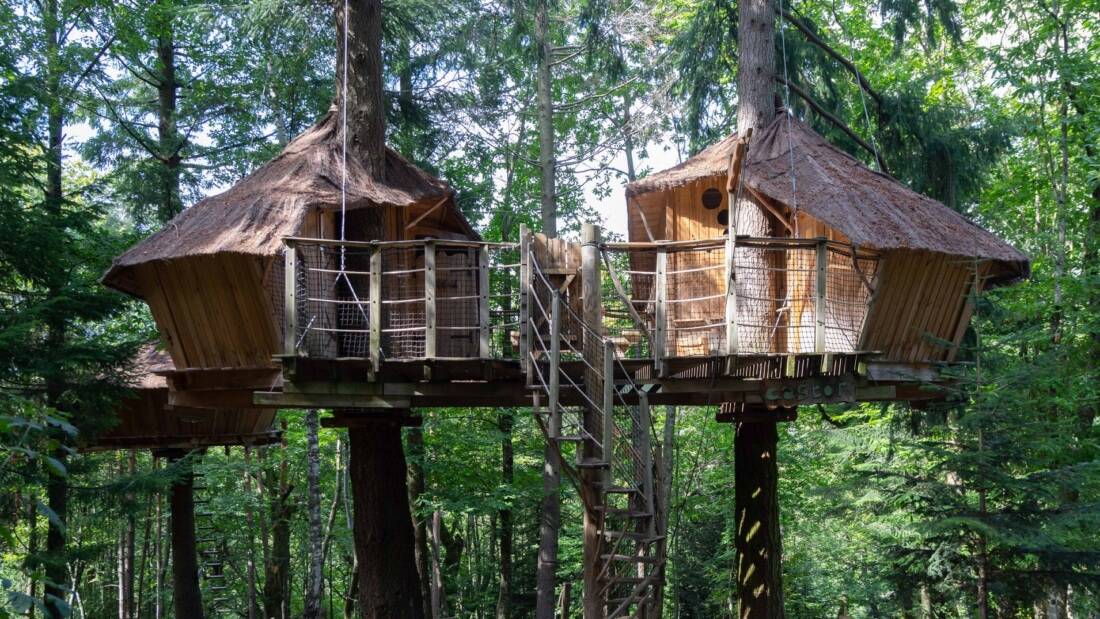
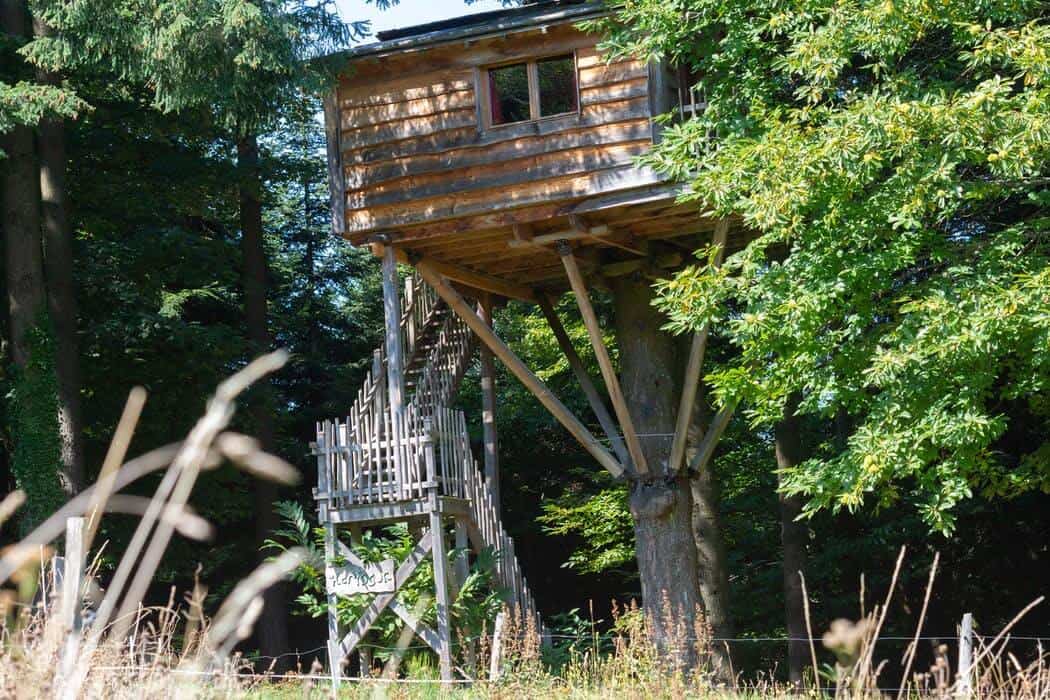
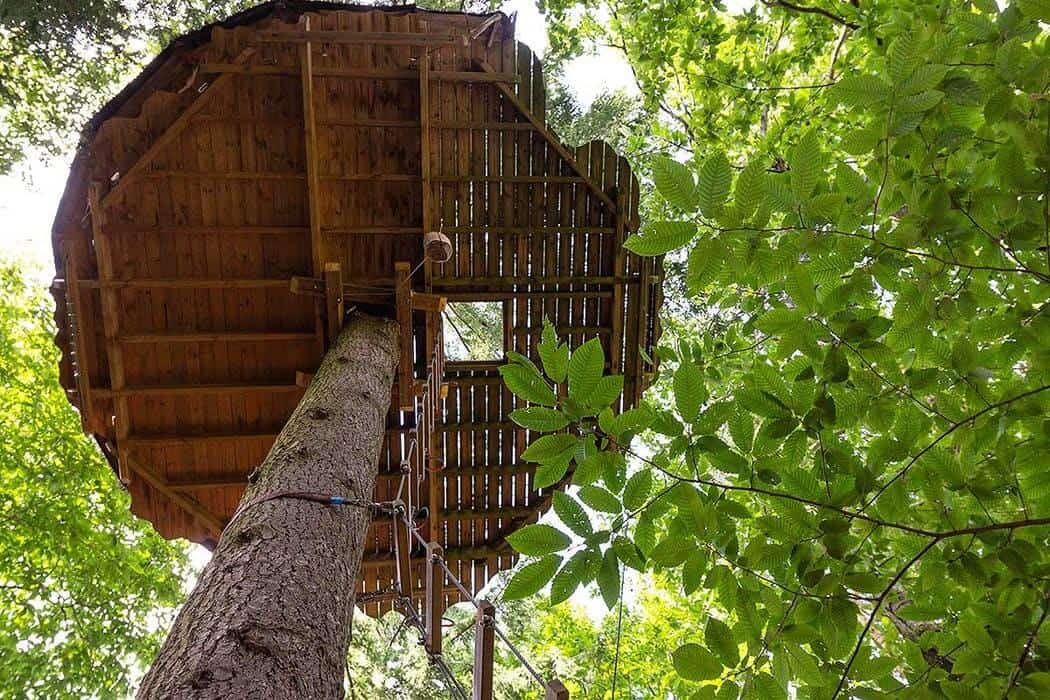
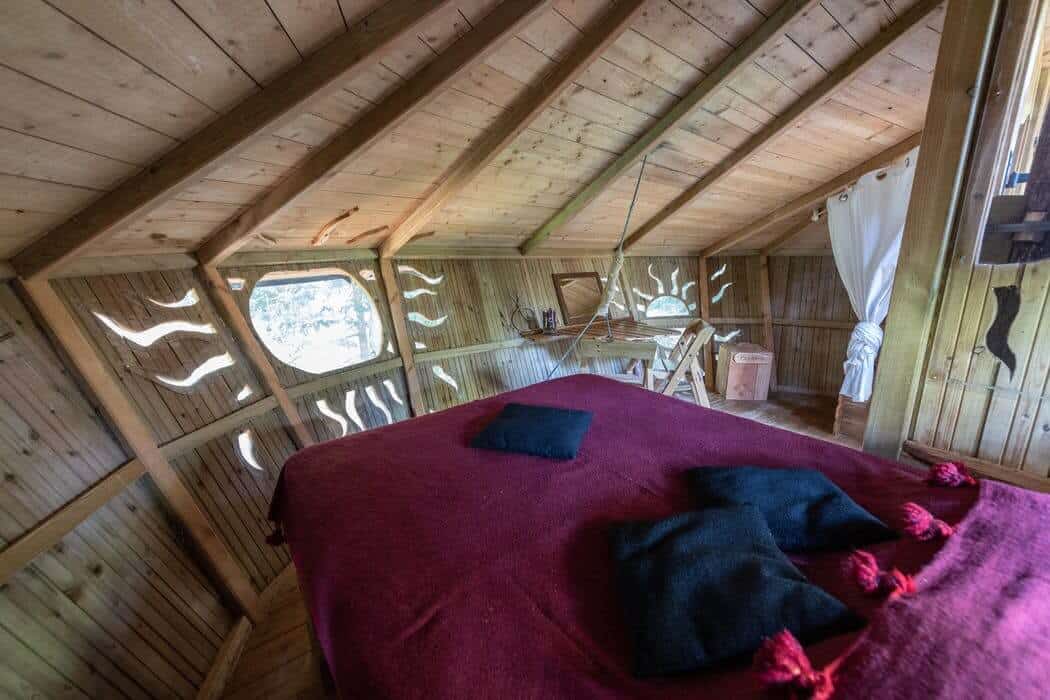
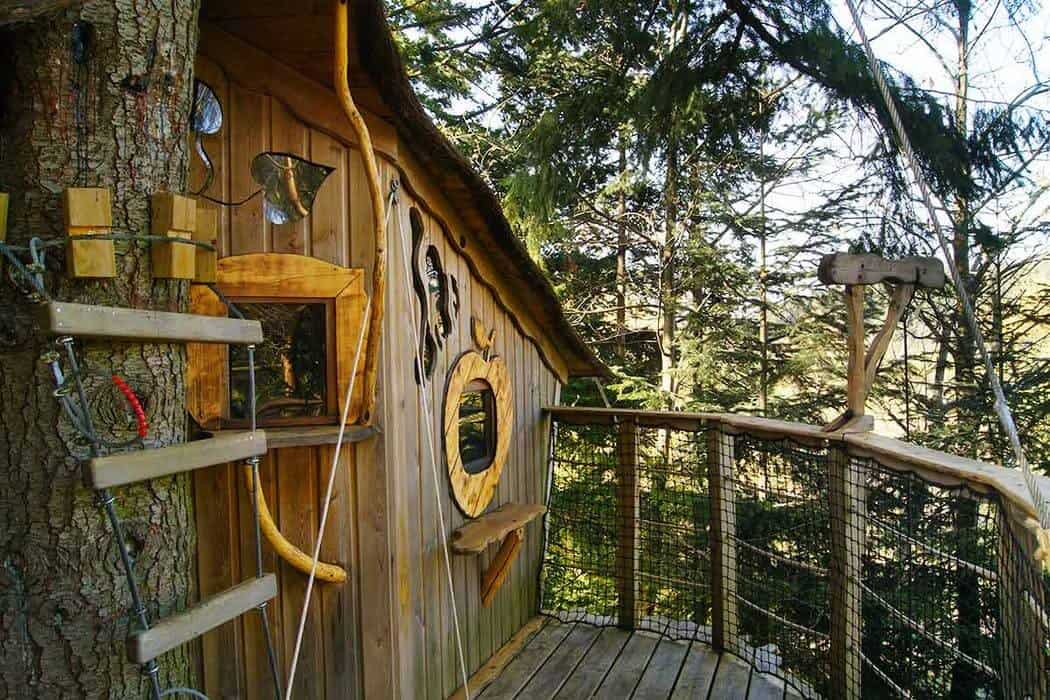
The eight huts split into two broad camps. Three — Écureuil, Hibou and Renard — demand a rope ladder to enter. That moment of climbing, heart briefly louder, hands on rough hemp, is not an obstacle; it is the arrival. Step inside and you find a proper shelter: wood-built, dim and warm, with the forest pressing gently against every wall. These huts suit couples or pairs happy to embrace the adventure without softening it. The other five huts sit a little closer to the ground, reached by conventional stairs or platforms, and include the Castor Family Hut — two cabins linked across a shared terrace. Adults take the double-bed cabin; children sleep bunk-style in the adjoining one. Several huts stretch to five guests, making the retreat genuinely useful for small families or groups who want proximity without crowding.
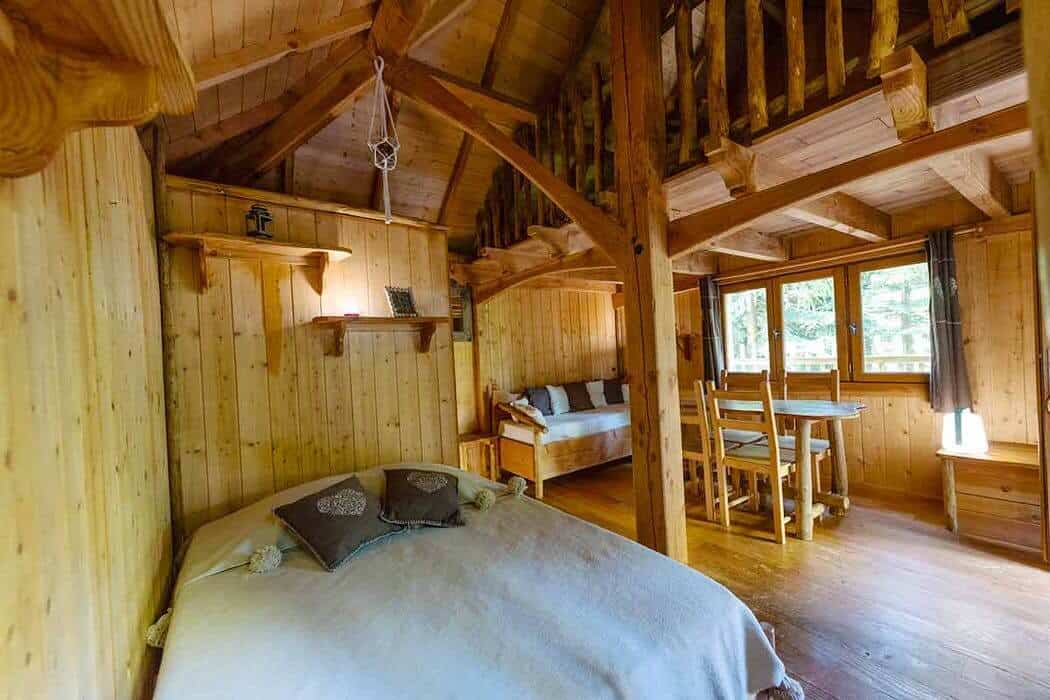
The communal rhythm here is slow by design. Rustic construction is a deliberate choice, not a budget shortcut. The absence of power sockets means evenings belong to candlelight and conversation. Waking to birdsong rather than an alarm feels less like a deprivation and more like a small recalibration.
Beyond the canopy, the Ardèche rewards exploration. The gorges are dramatic and well worth a detour. The Ray-Pic waterfall drops sixty metres into green rock pools. Rivers invite canoeing and kayaking, and a network of walking trails threads through chestnut forest and open hillside. Spring and early summer bring ideal temperatures for hiking and long terrace mornings, while autumn delivers chestnut season, golden colour and a cooler, atmospheric edge. Summer evenings are warm and long, with river swimming close at hand.
Nightly rates run at approximately €80–€100, varying by season and availability — genuinely accessible pricing for a stay that feels rare. The value sits not in luxury fittings but in what the place removes: distraction, urgency, the pull of screens.
Getting here requires a car for most visitors. Lamastre train station sits approximately 7.7 km away in a straight line, but onward transport from there is limited, and the forest roads that lead to the property are best navigated with your own vehicle. Plan the drive as part of the arrival rather than an afterthought.
Les Cabanes de Labrousse suits travellers who want off-grid genuinely understood — not glamping with the rough edges sanded off, but a considered encounter with forest living. Families willing to climb a rope ladder, couples after real quiet, anyone tired of stays that merely gesture at nature: this is the place that delivers what most retreats only promise.
Frequently Asked Questions
Q: Do all eight treehouses use rope ladders for access?
A: No — three huts (Écureuil, Hibou and Renard) are reached by rope ladder, which is part of their appeal for couples and adventure-minded guests. The other five, including the Castor Family Hut, are accessed by conventional stairs or platforms, making them the more practical choice for families or anyone who'd rather skip the climb.
Q: How much does a night at Les Cabanes de Labrousse cost?
A: Nightly rates run at approximately €80–€100, placing this firmly in the accessible rather than luxury bracket. Rates vary by season and availability, so check the property directly for current pricing.
Q: Is a car essential to reach the property?
A: For most visitors, yes. Lamastre is the nearest train station, roughly 7.7 km away in a straight line, but onward transport from there is very limited. The forest roads leading to the property are best covered in your own vehicle — factor the drive in as part of the arrival experience.
Q: When is the best time of year to stay?
A: Spring (April–June) brings fresh leaf colour and pleasant temperatures well suited to hiking and terrace breakfasts. Autumn (September–October) is equally rewarding — chestnut season, golden woodland and cooler, atmospheric air. Summer works well if you want warm evenings and river swimming nearby; winter suits guests after a quiet, slow forest escape.
Q: Are the treehouses completely off-grid?
A: Yes. There is no electricity and no running water in the huts — that's a deliberate part of the experience rather than an oversight. Evenings run on candlelight, and mornings start with birdsong and a mule-delivered breakfast on the forest paths.








Add a review