
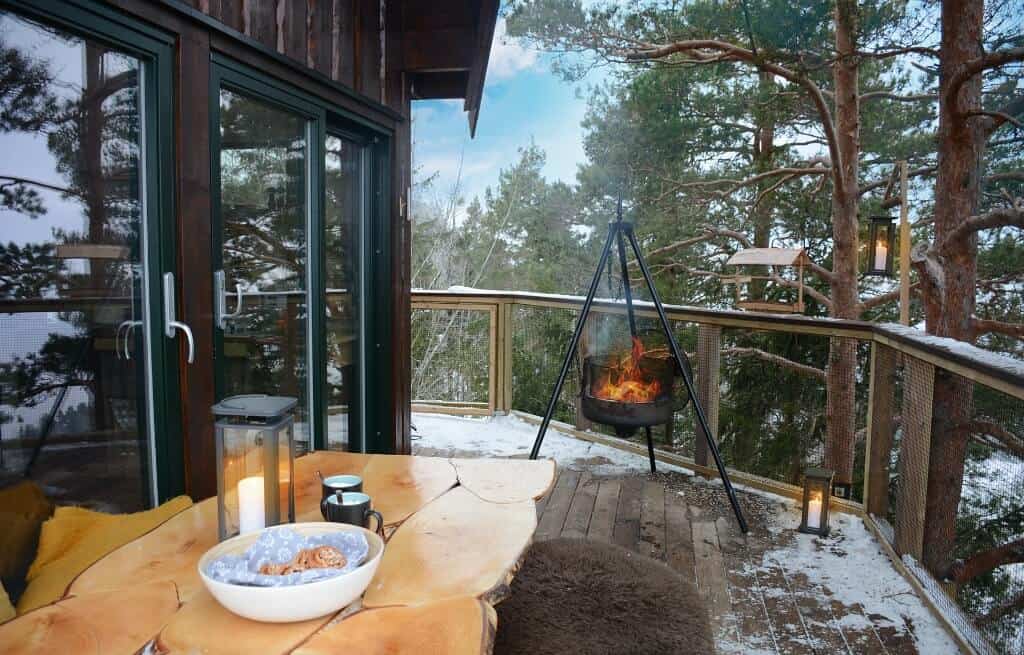
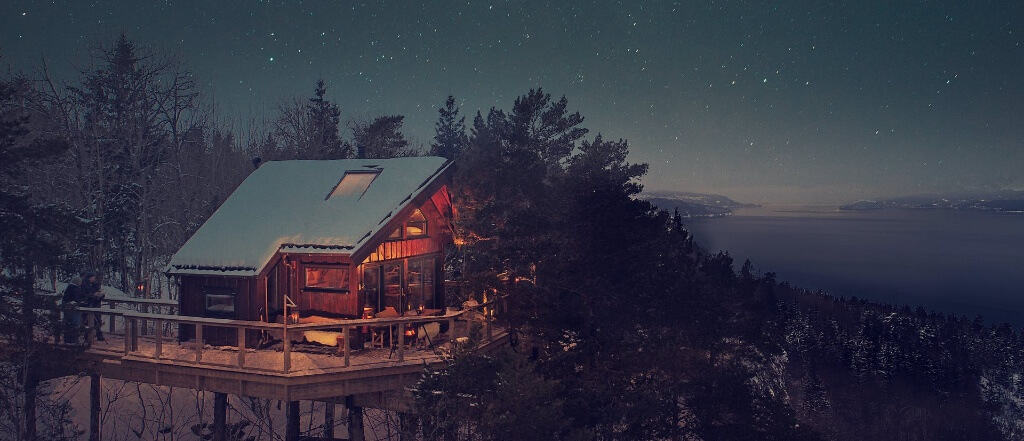
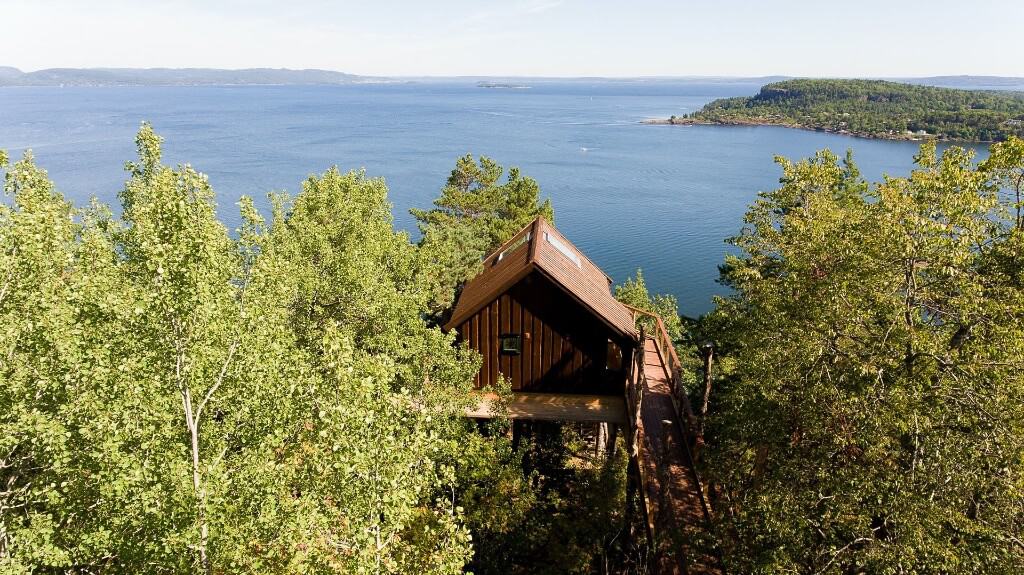
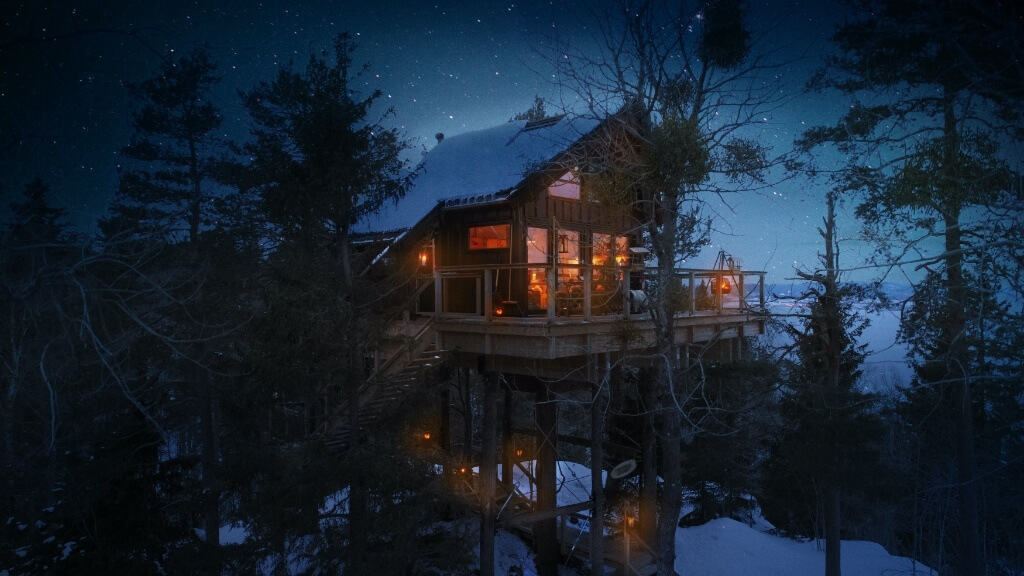
Six treehouses sit eight metres up in the Innlandet forest at Veldresagvegen 153, Brumunddal, roughly two hours north of Oslo. Tretopphytter — the name simply means Tree Top Huts — puts guests at canopy level in Ringsaker, where the light comes filtered through spruce and pine and the forest floor feels reassuringly far below.
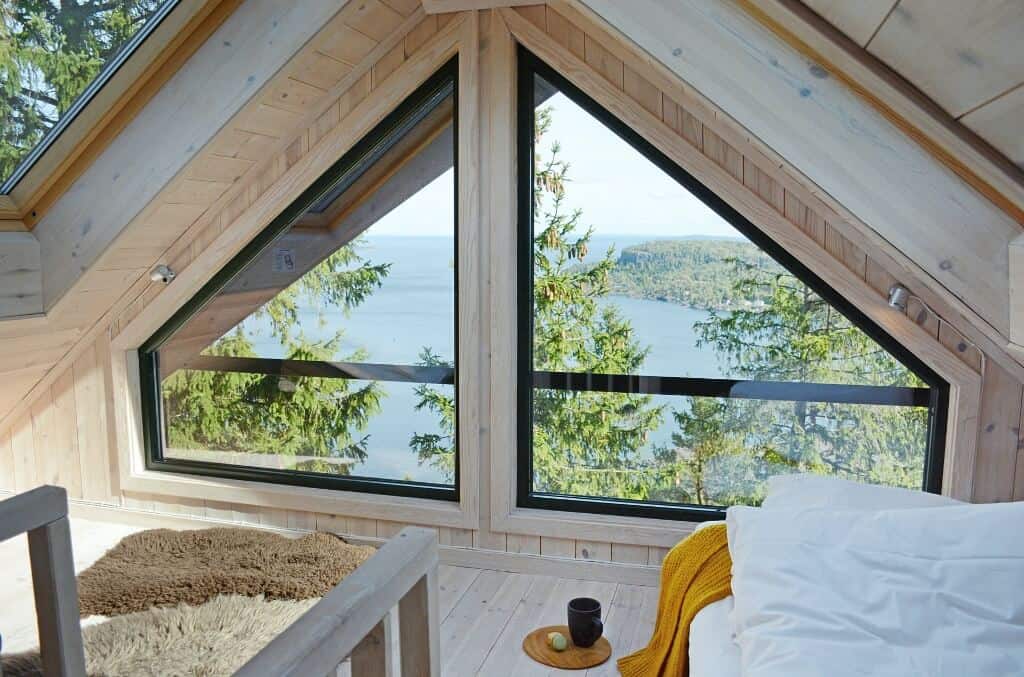
The six huts carry their own personalities. Pine, Larch and Spruce lean into the setting with warm timber interiors and evergreen views on every side. Birch, Sky and Climbing each add a large skylight directly above the bed, turning clear nights into an impromptu planetarium. Climbing Hut sits closest to Lake Mjøsa, so morning light arrives with a shimmer of water on the horizon. One hut also offers ramped access, a practical detail that opens the experience to guests with wheelchairs or pushchairs without making a performance of it.
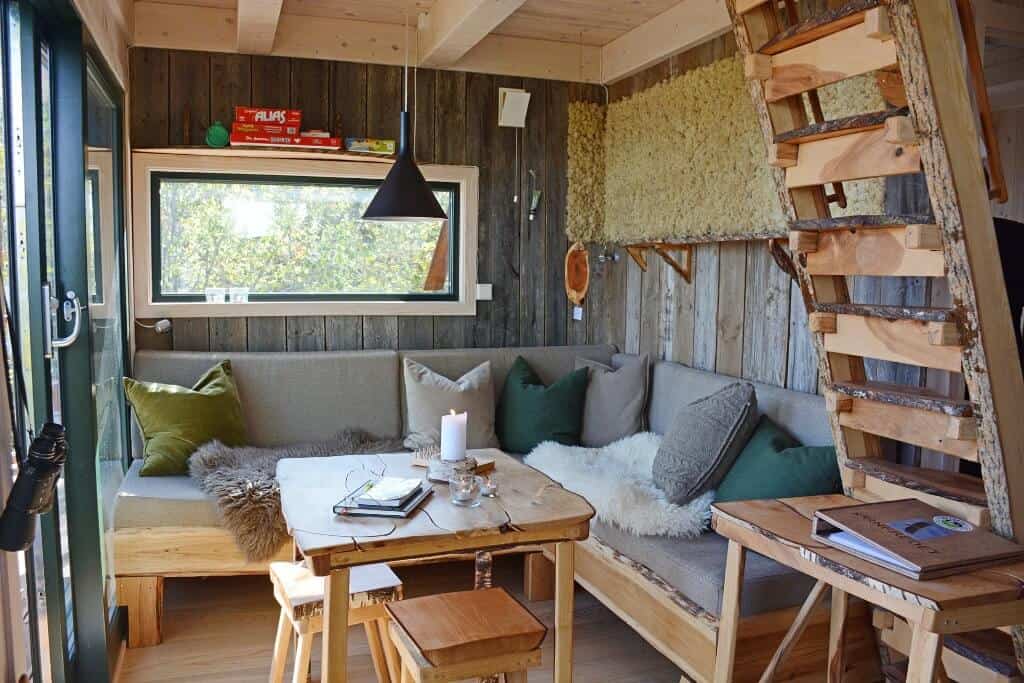
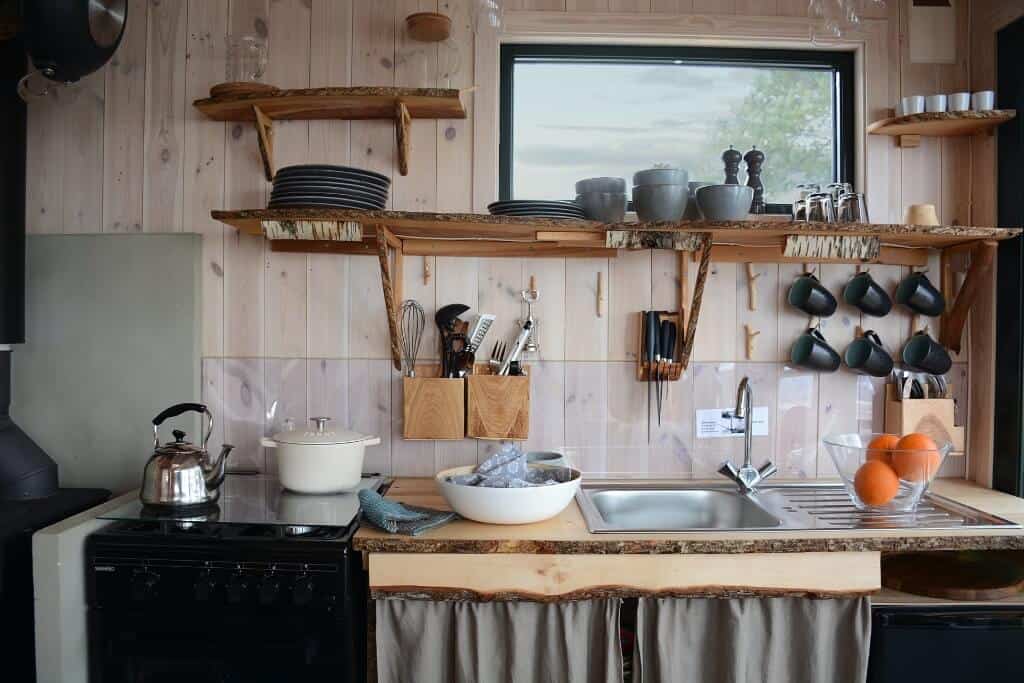
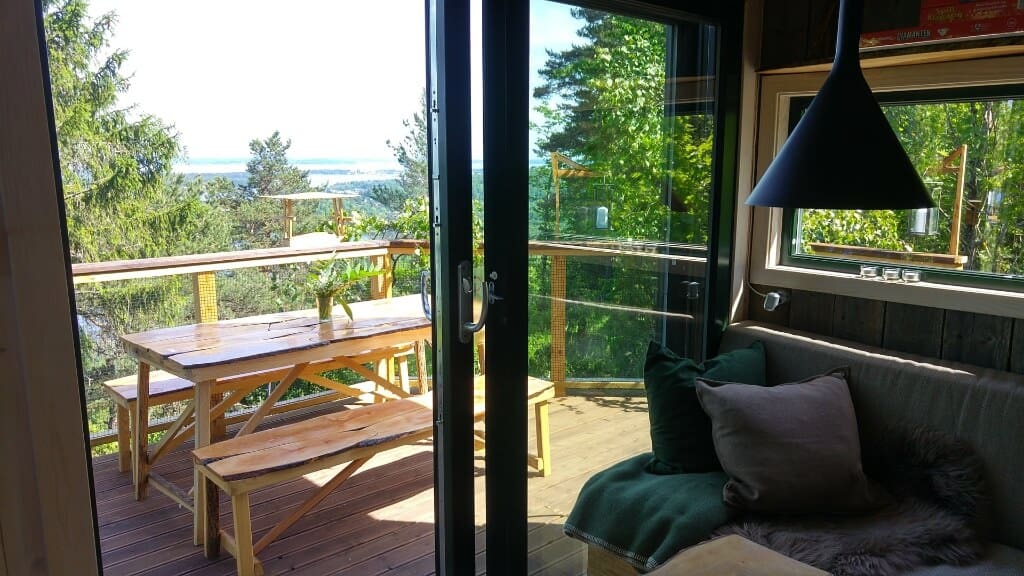
Inside, the design follows Norwegian cabin logic: sturdy, unfussy and quietly good-looking. Big windows turn the surrounding trees into living wallpaper. Compact kitchens carry enough kit for proper meals, and bunks with built-in storage make clever use of small footprints. Firewood heat and well-insulated walls keep winter stays genuinely warm, while summer's long Scandinavian days flood the same spaces with green light and easy warmth.
The property takes its environmental responsibilities seriously. Solar panels handle daytime power, compost toilets avoid unnecessary water use, and the structures are engineered to stand without bolting through living trunks. It is sustainability practised rather than advertised — the kind you notice because the air is clean and nothing feels out of place.
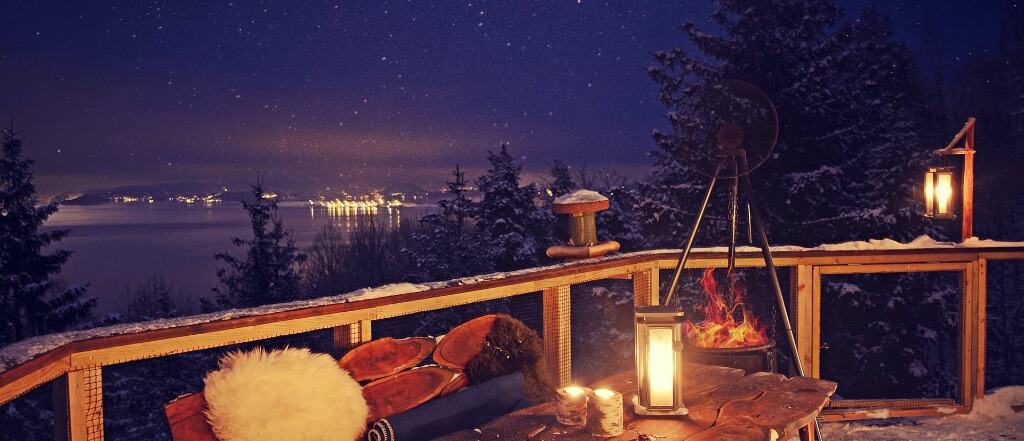
Days here tend to organise themselves. Coffee on the deck at eye level with the canopy, a trail that asks you to follow it just a little further, birdsong you could not identify but enjoy anyway. In winter, snowshoes and cross-country skis are the logical next step. Evenings contract around the woodstove, and the skylights in Birch, Sky and Climbing earn their place on clear nights. The Best Time to Visit data points to June through August for warmth and long days, while May and September offer quieter visits with blossoms or autumn colour. Winter brings snow, woodstove magic and genuinely dark skies — all worth considering if you travel for atmosphere over comfort.
Nightly rates run approximately $100–$200, with the exact figure varying by cabin, season and availability — a moderate tier that makes sense for an entire hut rather than a single room.
For access, most guests arrive by car given the rural forest address. The nearest train connection is Brumunddal station, approximately 11 km away by straight-line distance, served by train lines F6 and RE10. The Brennlien bus stop sits much closer, around 2.3 km away, and offers an alternative for visitors without a car, though a local taxi or pre-arranged transfer would likely be needed for the final stretch to the huts. Moelv station, served by train lines R20 and R21, lies approximately 13 km away as a further option.
Frequently Asked Questions
Q: How much does it cost to stay at Tretopphytter?
A: Nightly rates run approximately $100–$200, varying by cabin choice, season and availability — a moderate price point for an entire hut to yourself in the Norwegian forest.
Q: When is the best time to visit?
A: Summer (June–August) offers the warmest weather, long daylight hours and easy access to forest trails and Lake Mjøsa. Late spring and early autumn are quieter with beautiful seasonal colour. Winter brings snow, woodstove evenings and genuinely dark skies — ideal if atmosphere matters more than warmth.
Q: Which hut is best for stargazing?
A: Birch, Sky and Climbing each have a large skylight positioned directly above the bed, making them the natural choice for clear-night stargazing. Climbing Hut also sits closest to Lake Mjøsa, so it adds a shimmer of water to the morning view.
Q: Is the property accessible for guests with mobility needs?
A: One of the six huts has ramped entry, making it suitable for guests with wheelchairs or pushchairs. It is worth confirming which specific hut this is and any other access details directly with the property before booking.
Q: How do guests get to Tretopphytter?
A: Most guests arrive by car given the rural forest address at Veldresagvegen 153, Brumunddal — roughly two hours north of Oslo. The nearest train station is Brumunddal, served by lines F6 and RE10, with the property approximately 11 km away. Check current transport and transfer options before you travel.










Add a review