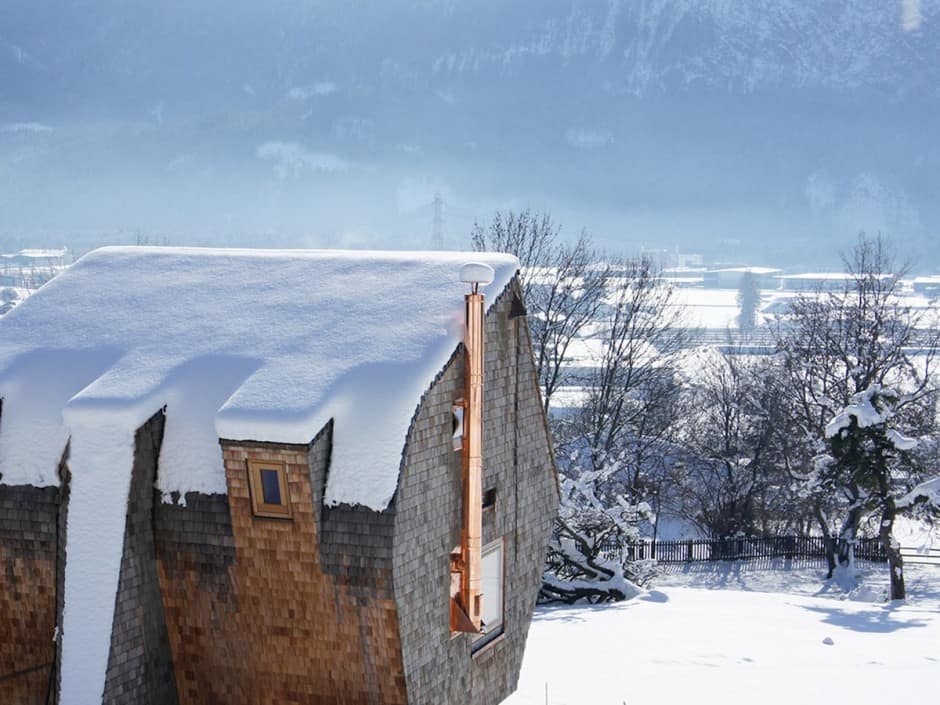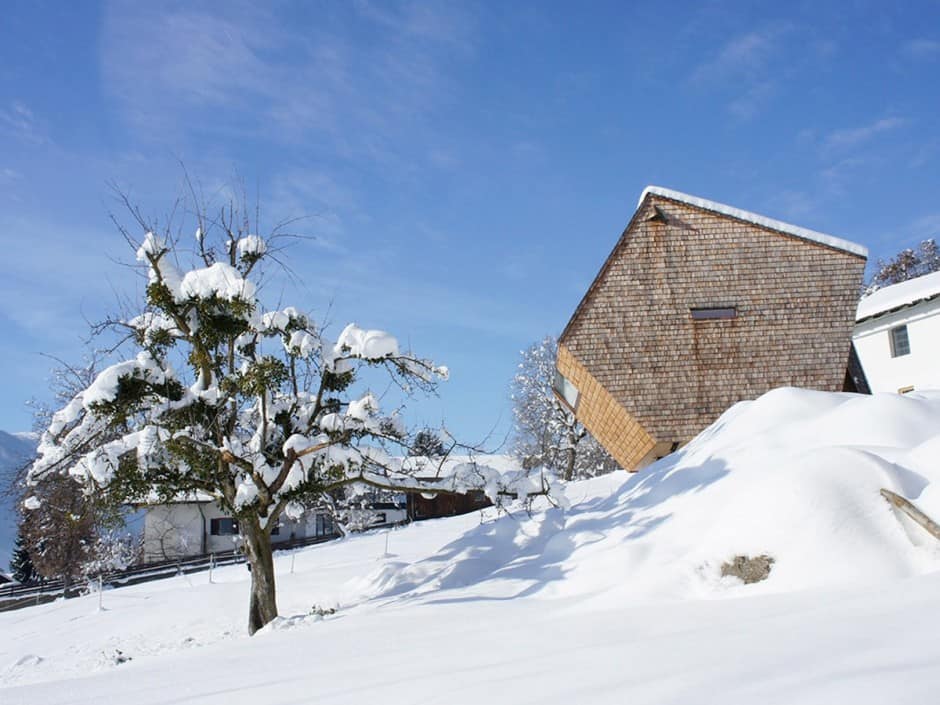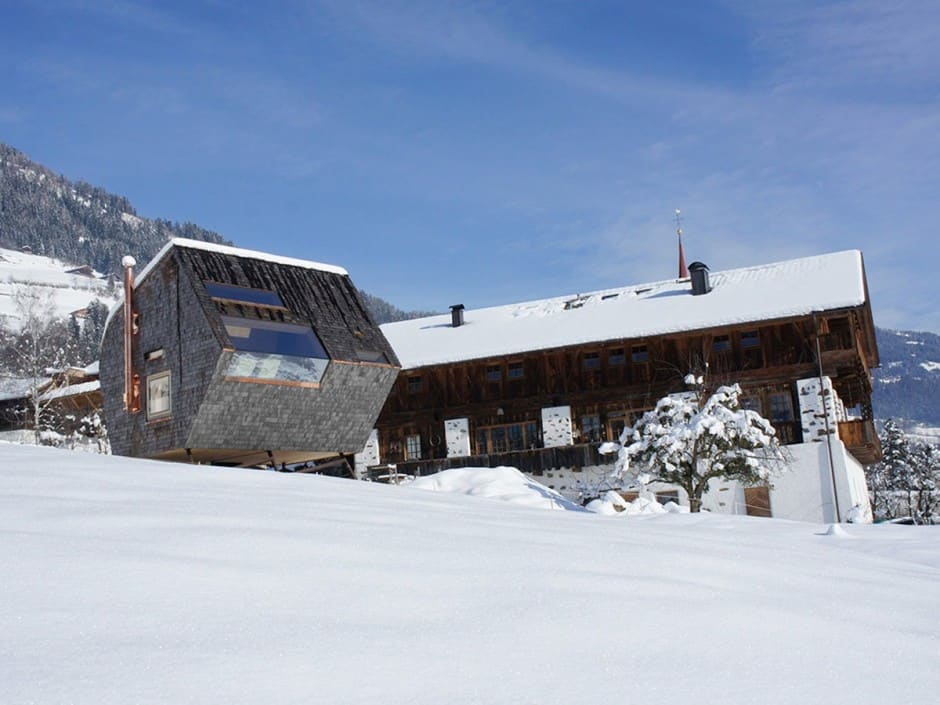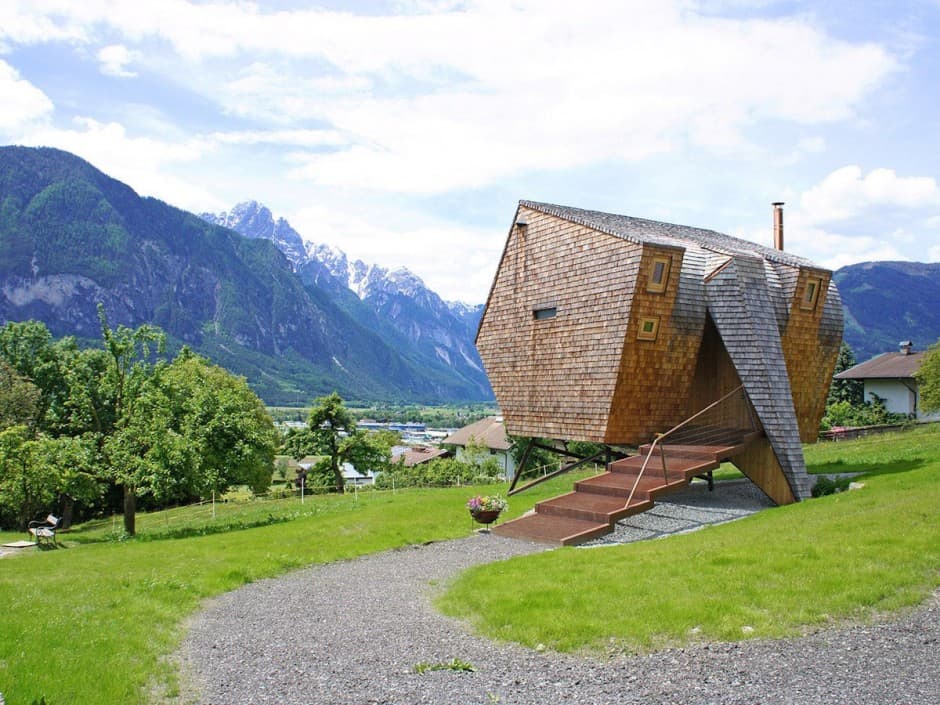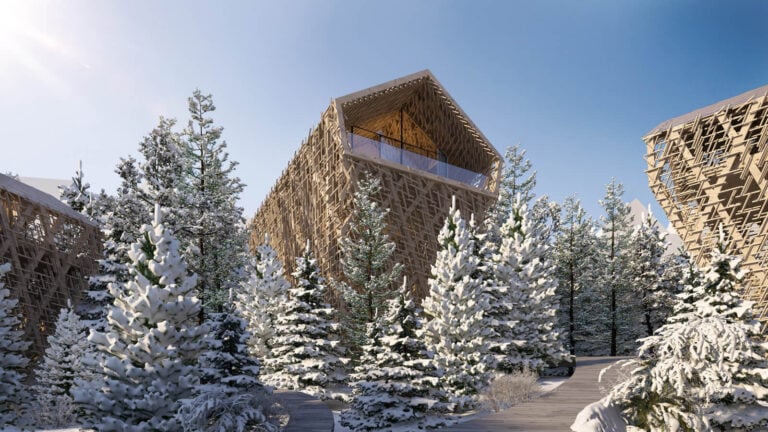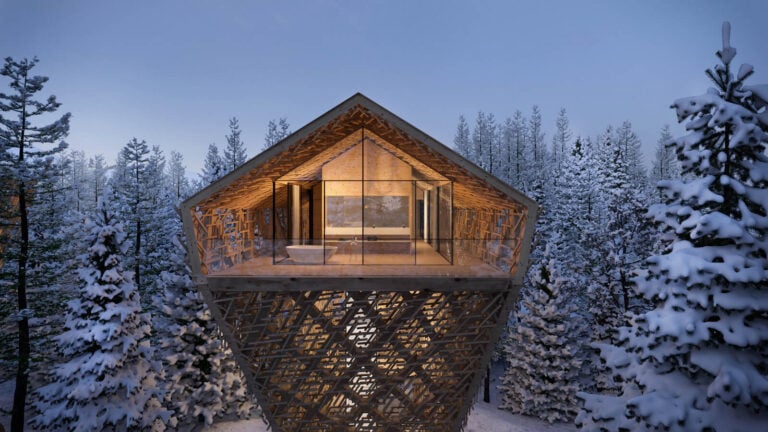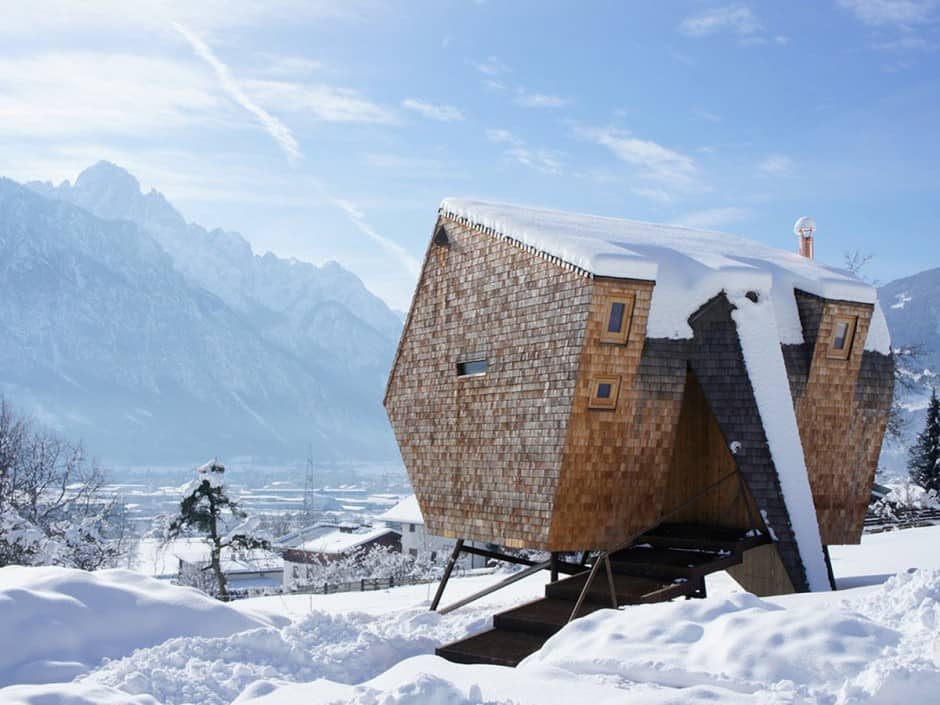
From the road below, Ufogel announces itself before you reach it. The small structure sits on a hillside above Nußdorf-Debant, tilted slightly toward the Lienz Dolomites, its curved timber silhouette doing something a conventional chalet never could: it looks like it landed there. Larch shingles — slightly uneven, distinctly handmade — cover the exterior in the same material that clothes barns throughout the East Tyrolean valley. The contrast between that tradition and the structure's unmistakably futuristic form is the first thing you feel on arrival, and it doesn't resolve so much as settle into something quietly right.
The name comes from the design concept. Architect Peter Jungmann fused two ideas: UFO and Vogel, the German word for bird. The house perches on stilts, aerodynamic in profile, yet anchored with a confidence that belies its lightness. Jungmann chose larch not as a concession to Alpine convention but because the material belongs here — in the grain of the landscape, in the smell of the air. What looks eccentric from a distance feels earned up close.
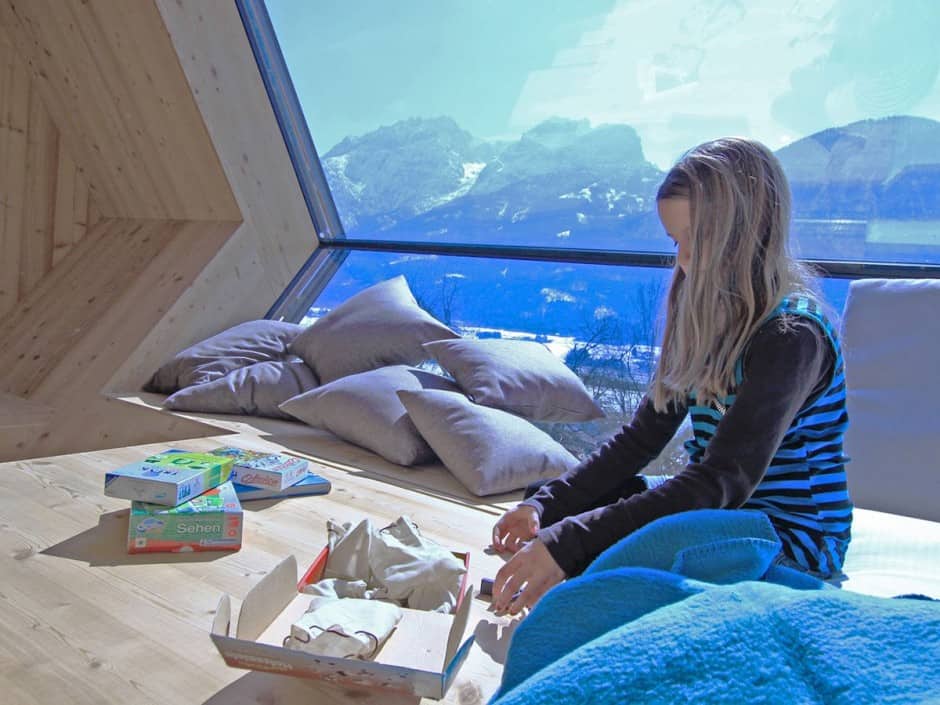
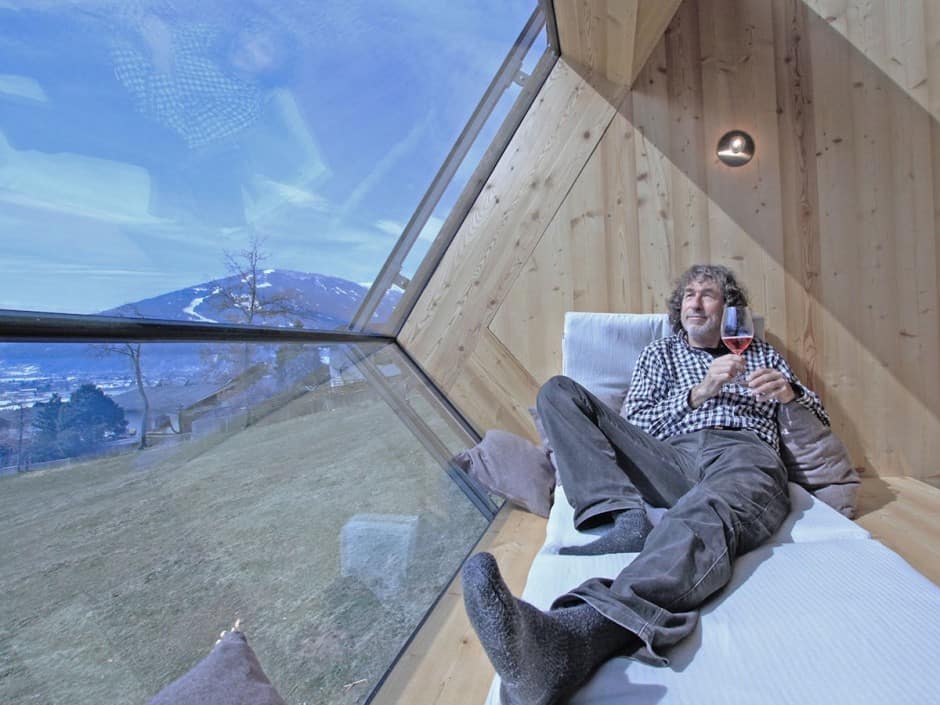
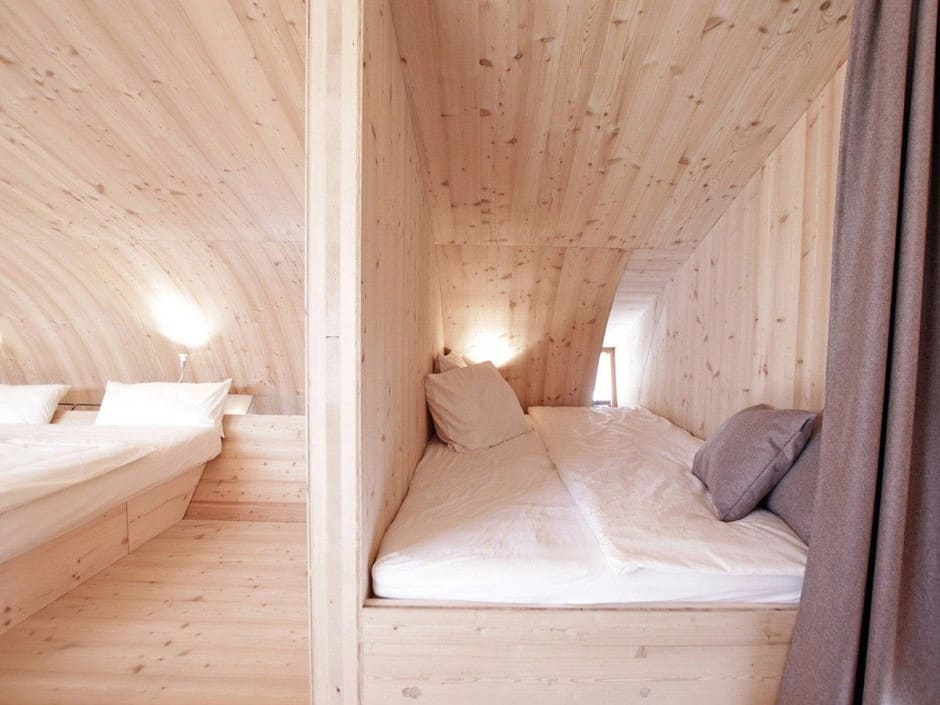
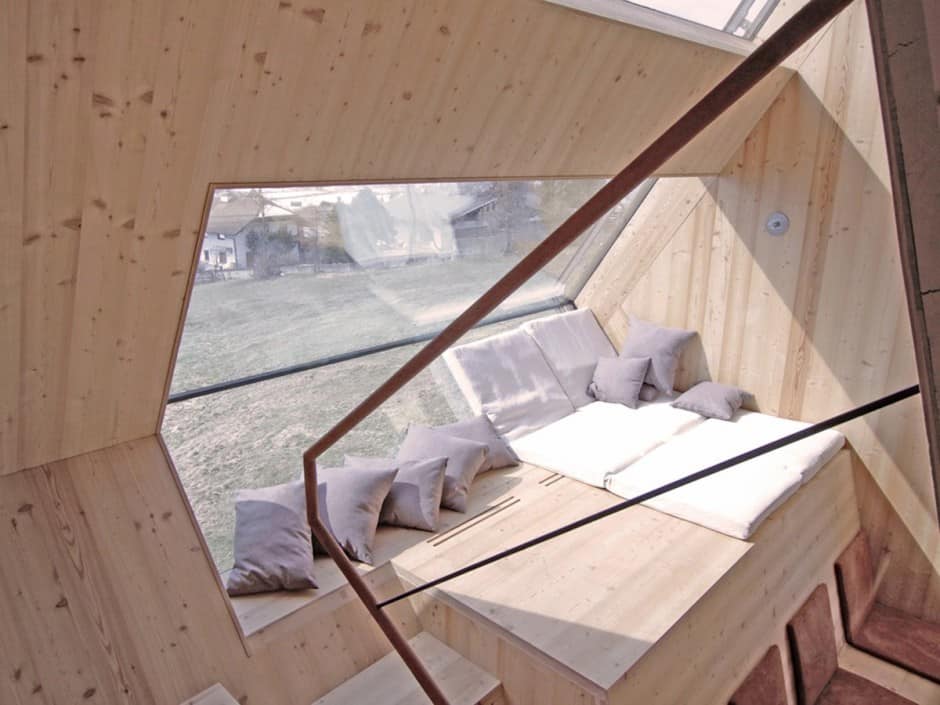
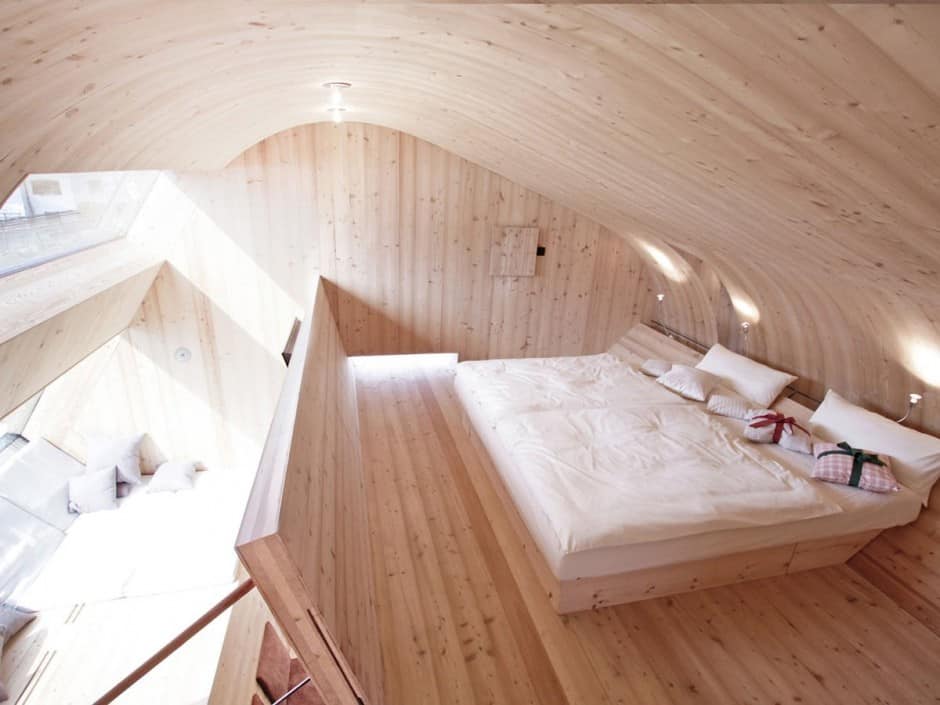
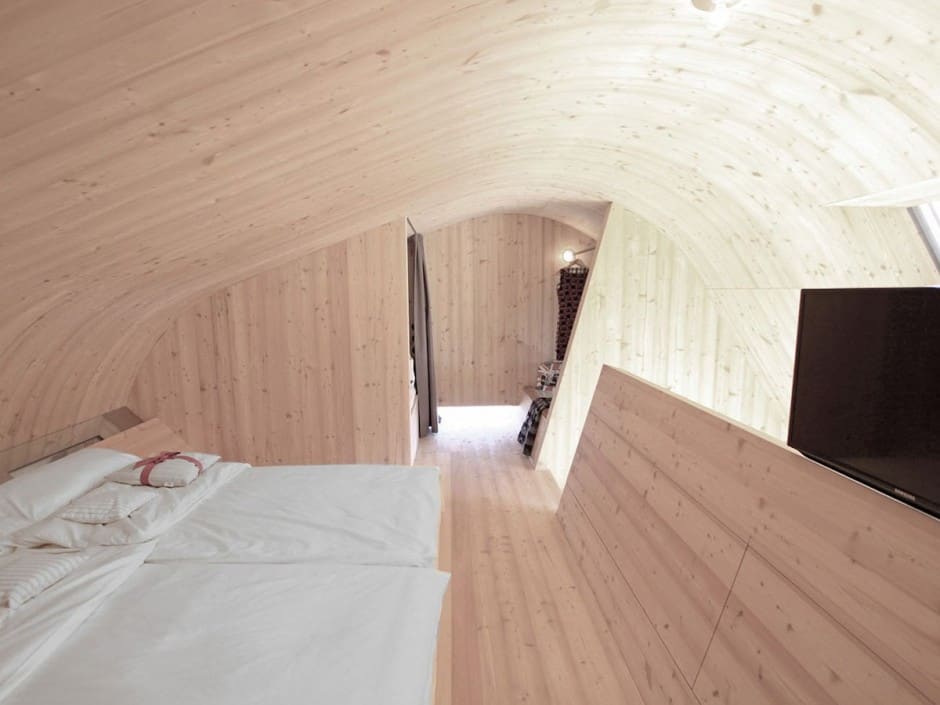
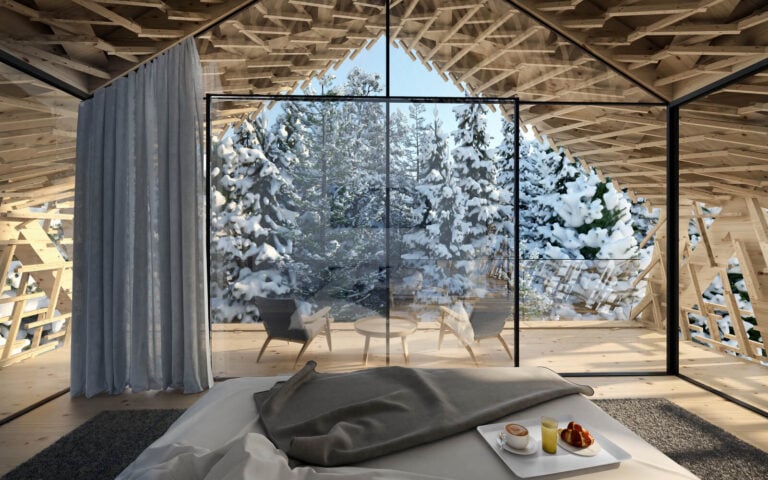
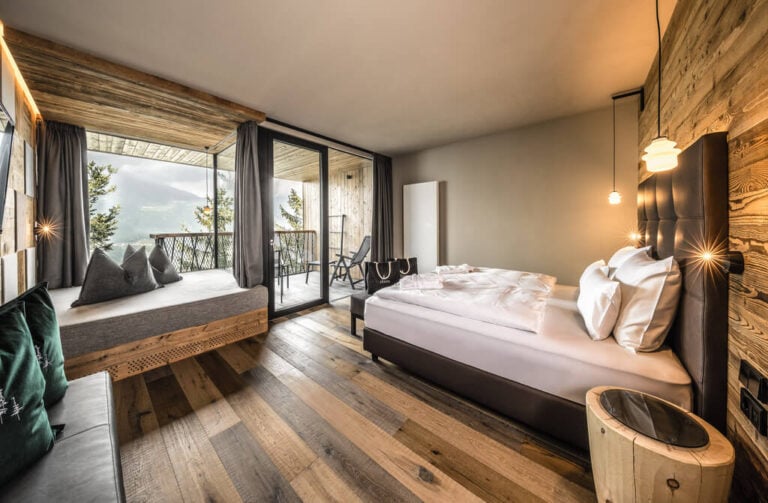
Step inside and the geometry shifts again. At roughly 45 square metres, Ufogel is compact, but the proportions never feel tight. Large windows dominate the facade and effectively dissolve one wall into a moving panorama of peaks and sky. The Lienz Dolomites sit framed like a painting that changes every hour. Light crosses the warm wood grain throughout the day, and the air carries a faint note of resin. You find yourself watching clouds rather than checking anything with a screen.
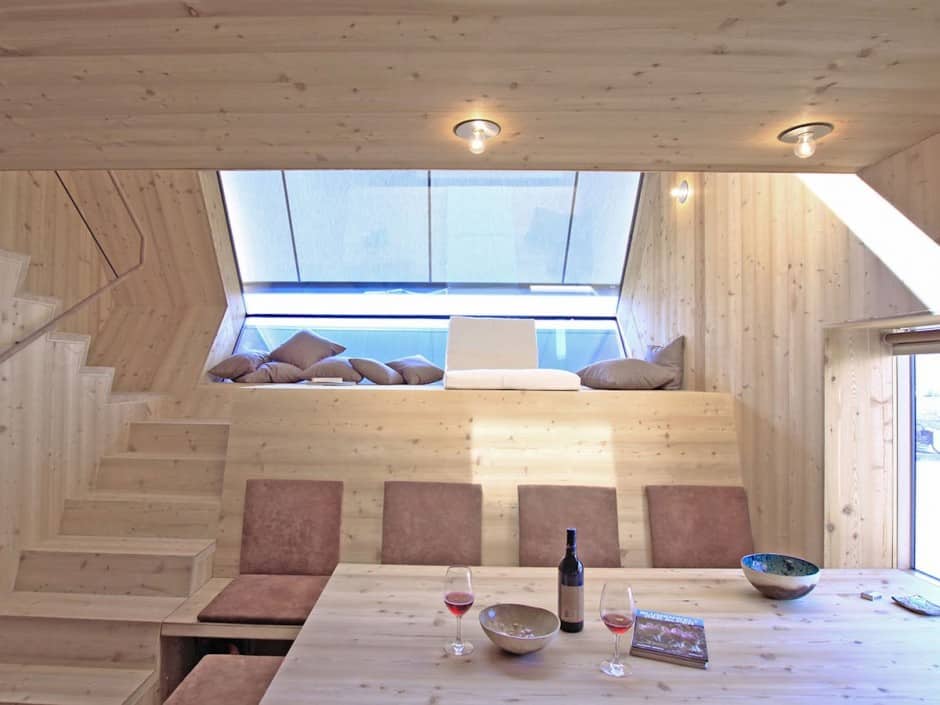
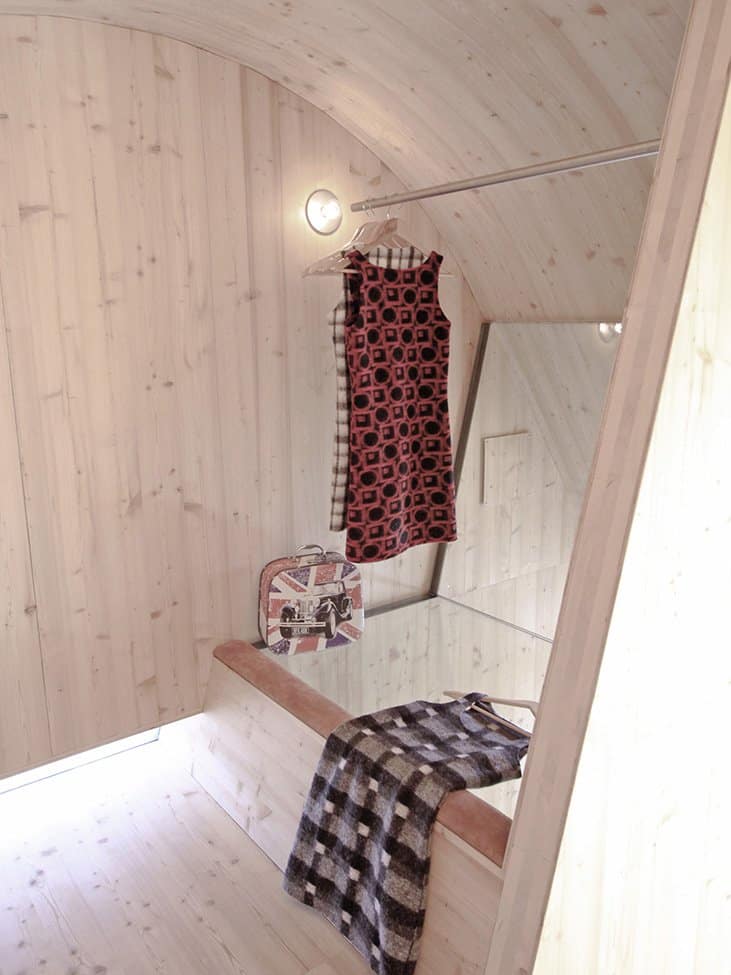
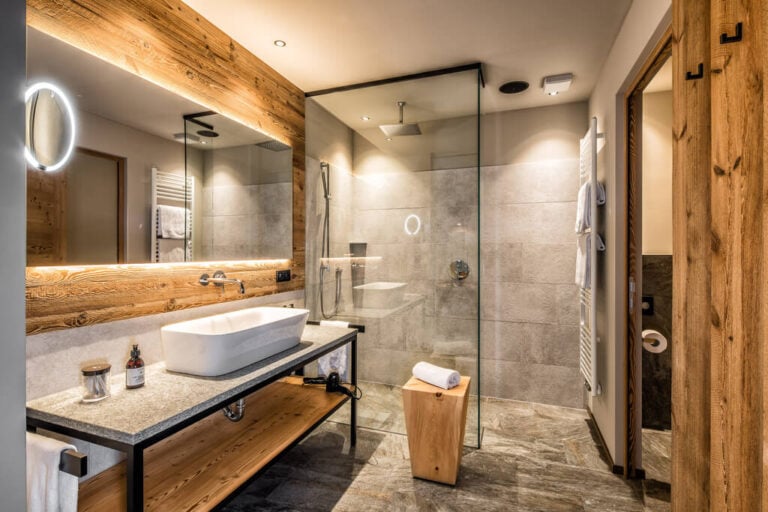
The interior is precise without being cold. A sleek kitchenette handles practical needs without demanding attention. A sculpted shower feels closer to a gallery installation than a bathroom fixture. The dining table sits at the bow of the structure, suspended above the slope, so meals arrive with a view and an unusual sense of elevation. Every sound — a cup set down, a door drawn closed — carries cleanly in the stillness.
Sustainability here is structural, not decorative. Solar panels work out of sight. Insulation tucks into the curved timber ribs. Nothing signals virtue loudly; the design simply performs. The family who commissioned Ufogel wanted a refuge rather than a statement, and Jungmann followed that lead precisely.
The terrace extends the experience outward. The valley opens below — Lienz in the distance, meadow grass and wild thyme closer. At dusk the larch exterior glows amber. After dark, the structure disappears into the hillside and the sky takes over, the kind of sky that city visitors often forget is available.
Ufogel suits travellers who arrive wanting less rather than more. Wi-Fi and heating are present, but they recede. The real offer here is subtraction: quieter mornings, unhurried meals, the specific luxury of a view that requires nothing from you. It is a place that rewards people who know, or are willing to find out, what silence actually sounds like.
By public transport, the nearest bus stop is Nußdorf Volksschule, approximately 150 metres from the property. Bus lines 940 and 941 both serve the stop. A second stop, Nußdorf Wartschensiedlung, lies around 500 metres away and is served by the same routes. Visitors travelling by car will find the mountain roads straightforward from Lienz.
Frequently Asked Questions
Q: What does the name "Ufogel" actually mean?
A: Architect Peter Jungmann coined it by fusing two words: UFO and Vogel, the German word for bird. The structure sits on stilts with a curved, aerodynamic profile that earns both halves of the name — it reads as something that might have landed on the hillside, yet perches with the lightness of a bird in rest.
Q: How large is the interior, and does it feel cramped for a couple?
A: The footprint is approximately 45 square metres. In practice it reads considerably larger, largely because panoramic windows dissolve one wall into an uninterrupted view of the Lienz Dolomites. The dining table sits at the bow of the structure, effectively suspended above the slope, which adds a strong sense of openness. Couples consistently find the proportions well-suited rather than tight.
Q: Can guests reach Ufogel without a hire car?
A: Bus lines 940 and 941 stop at Nußdorf Volksschule, approximately 150 metres from the property. A secondary stop, Nußdorf Wartschensiedlung, is around 500 metres away on the same routes. Lienz is the nearest regional arrival hub for onward rail and long-distance connections. Confirm current timetables with the regional transport authority before you travel, as alpine bus schedules vary by season.
Q: Is Ufogel suitable for travellers who want genuine seclusion rather than a resort experience?
A: It is designed specifically for that. The hillside setting above Nußdorf-Debant, the absence of on-site staff activity, and the structure's quiet self-sufficiency — solar panels, well-insulated curved timber construction — all point toward retreat rather than resort. Wi-Fi and heating are present, but the dominant experience is one of stillness, mountain views, and material simplicity done with serious architectural care.
Q: What is the exterior made from, and why does it look both traditional and futuristic?
A: The curved shell is clad in larch shingles — the same material used on barns and chalets throughout the East Tyrolean valley. Jungmann chose larch deliberately, rooting a distinctly modernist form in a material that belongs to the local landscape. The result is a structure that reads as eccentric from the road but feels quietly coherent once you are standing beside it.