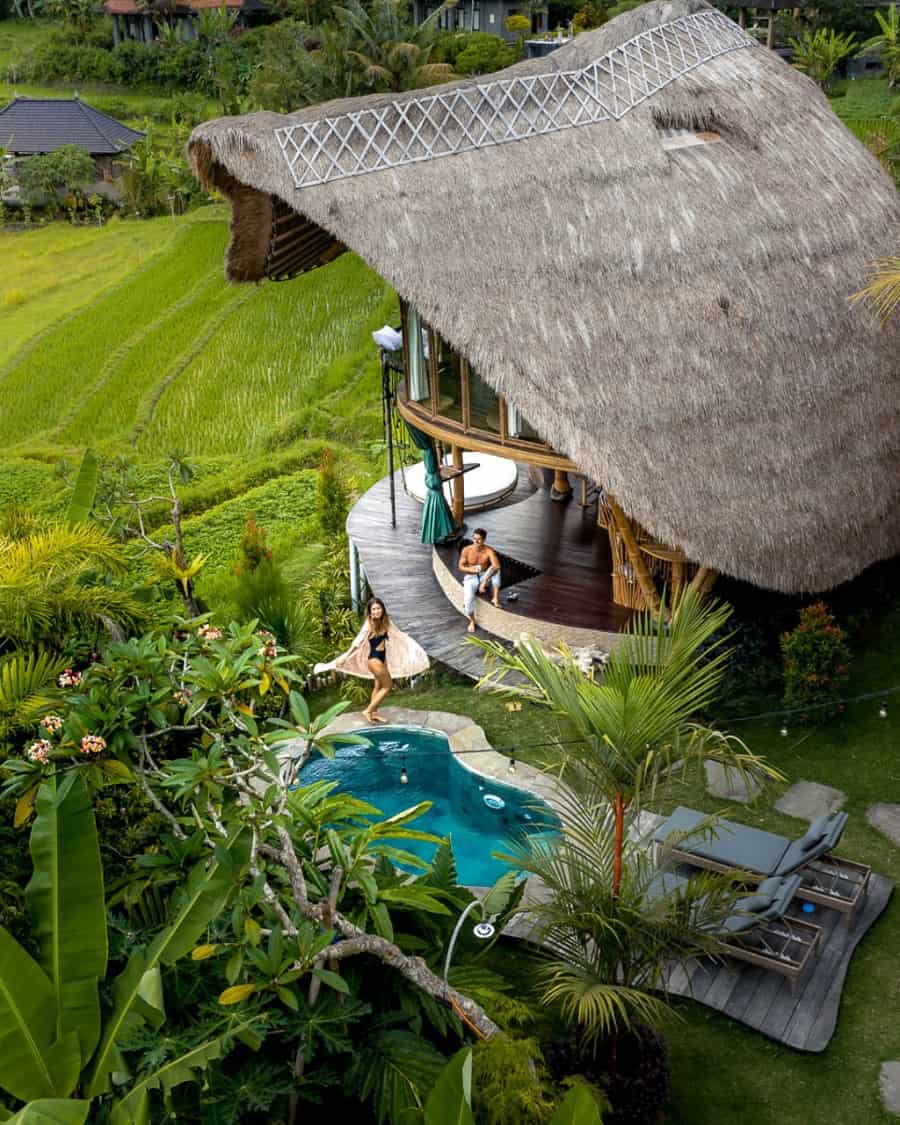
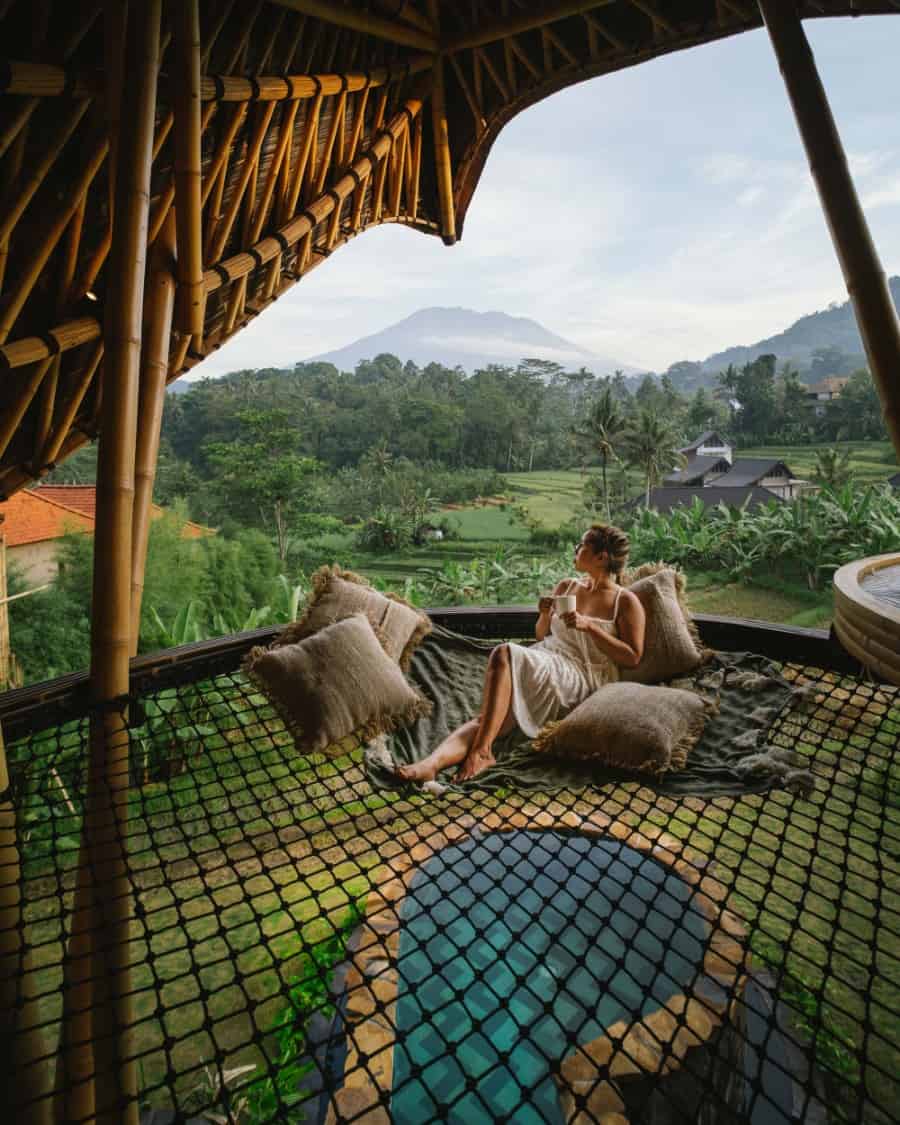
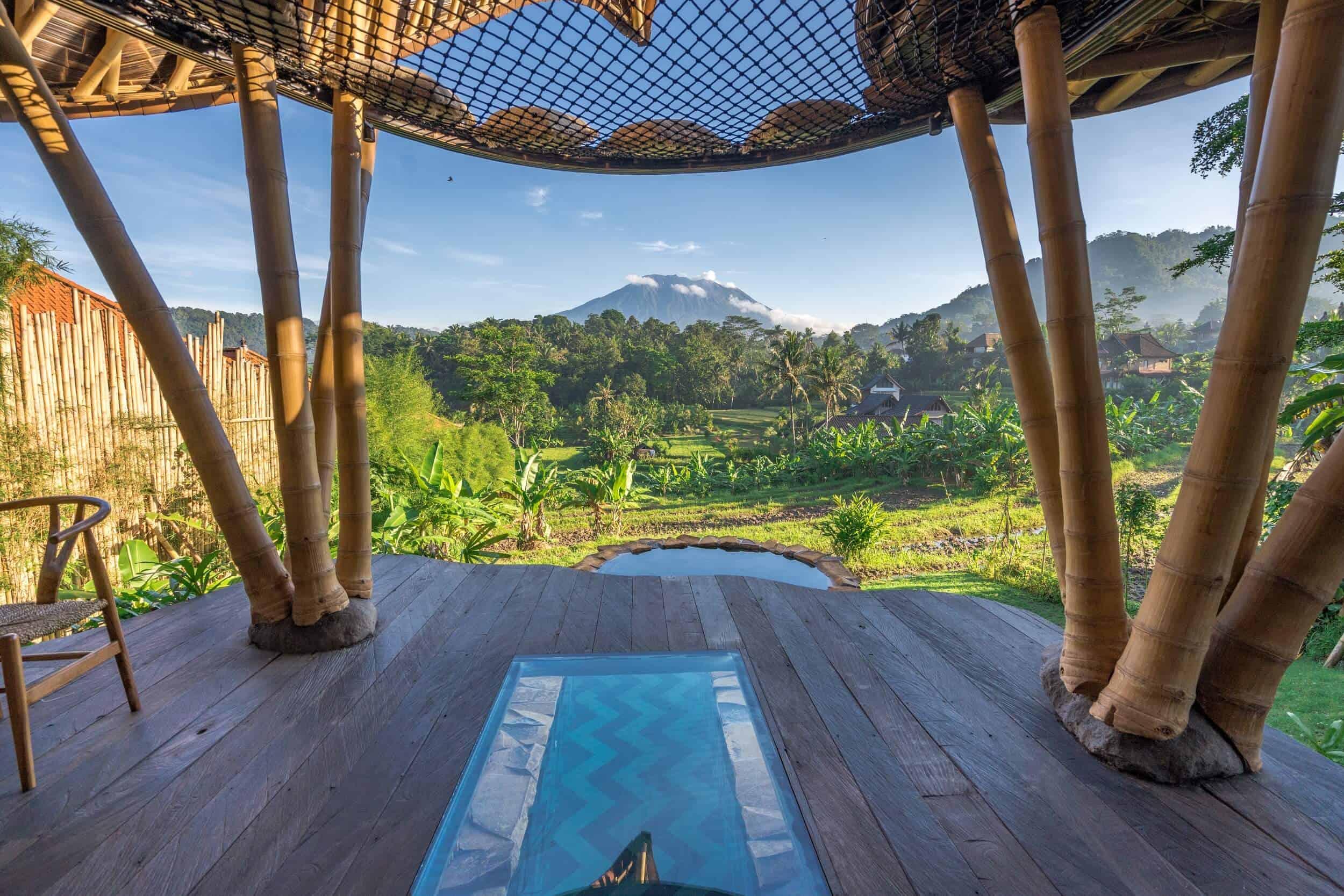
Jl. Raya Tebola cuts through the Sidemen Valley in Karangasem, one of east Bali's quieter regencies, well away from the Ubud crowd. Mount Agung fills the eastern skyline here, and the surrounding hillsides fold into terraced rice fields that catch every shift of morning light. Veluvana Treehouses sits along this rural lane — genuinely elevated above the forest canopy, not just figuratively.
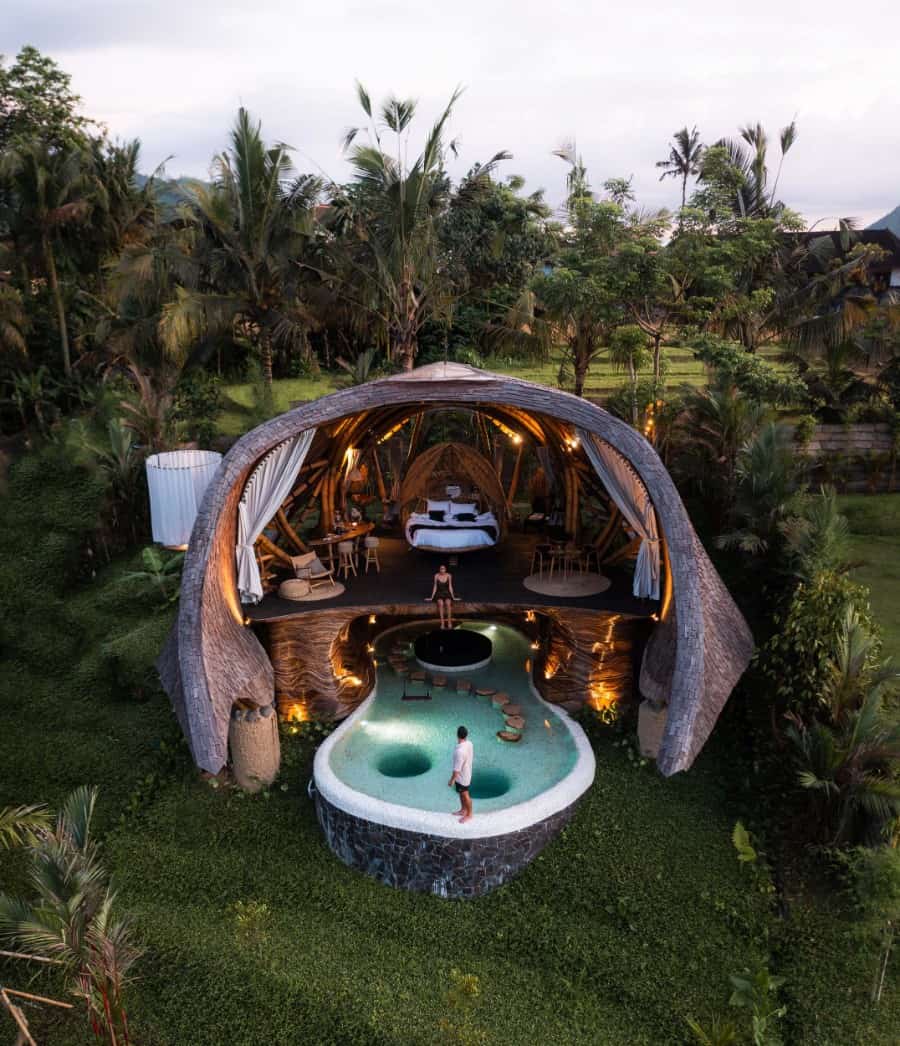
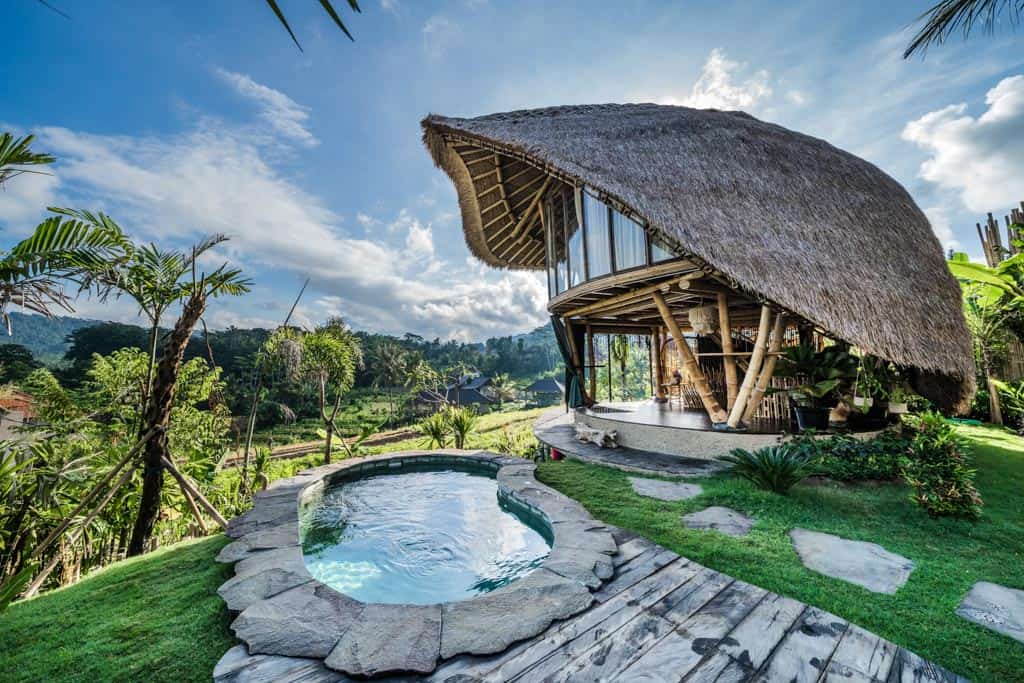
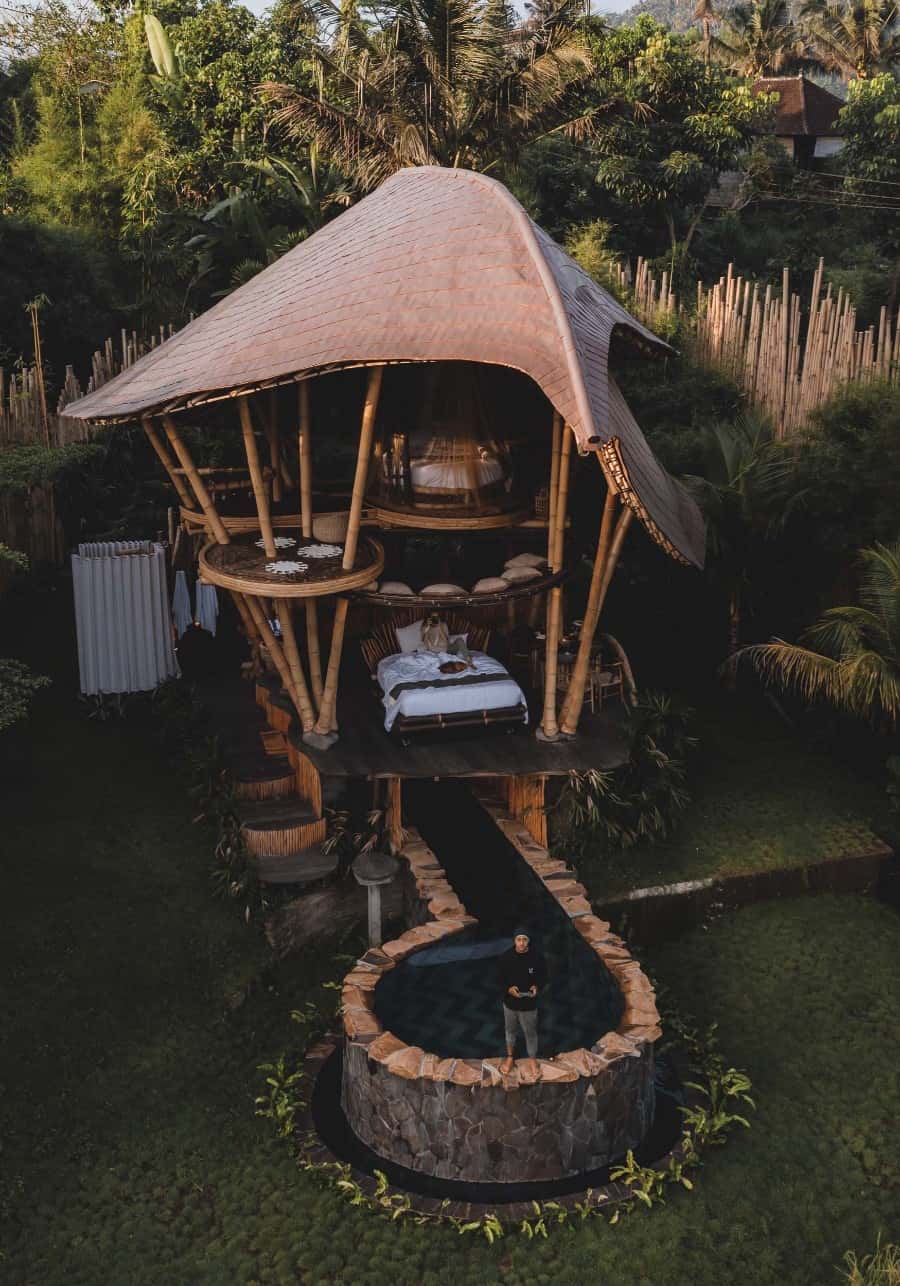
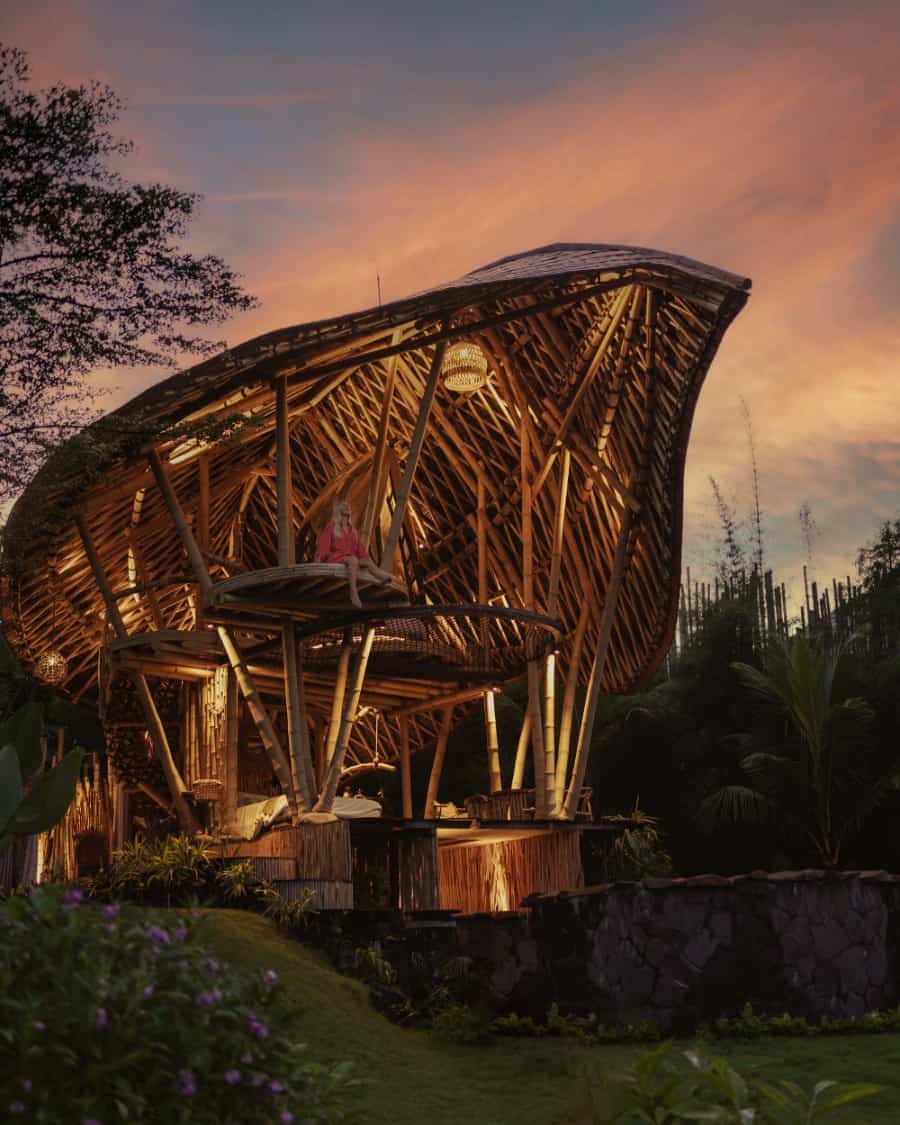
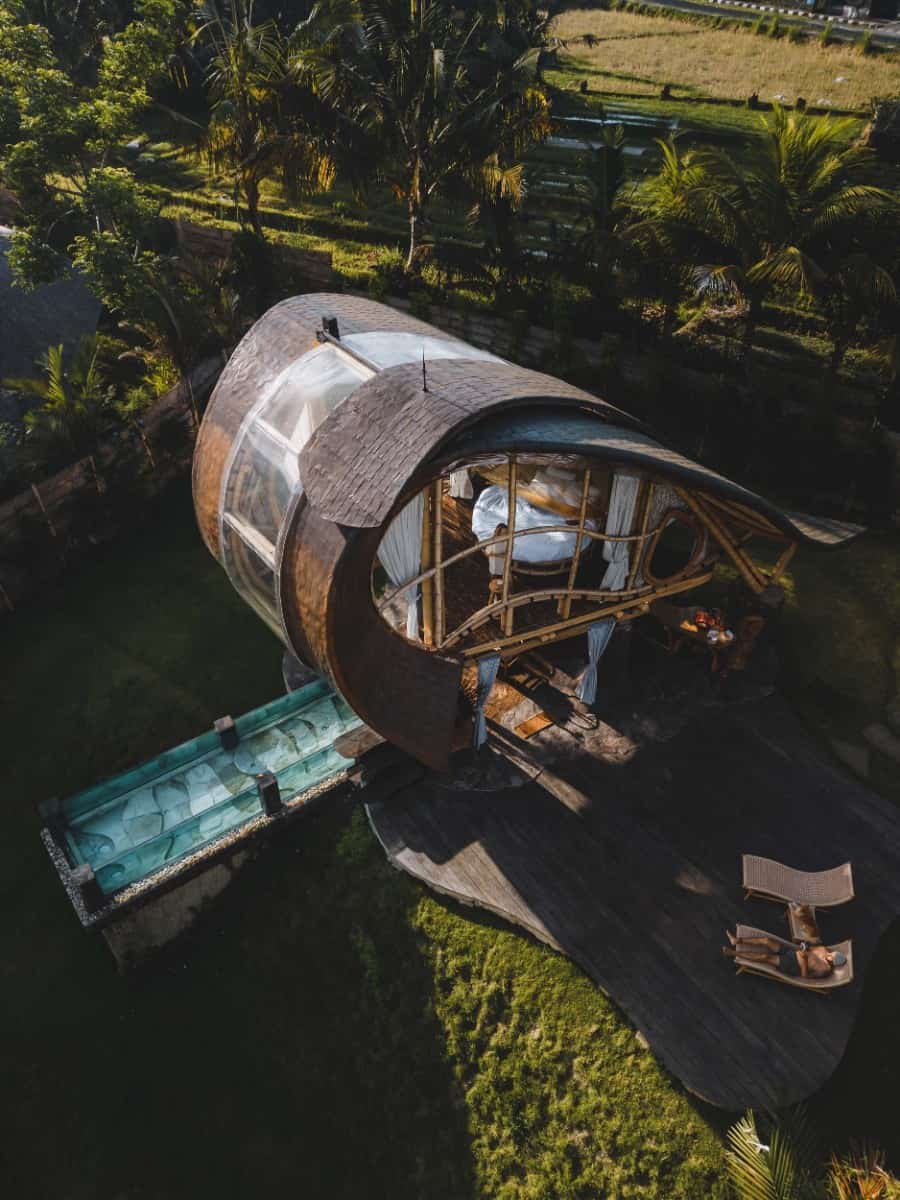
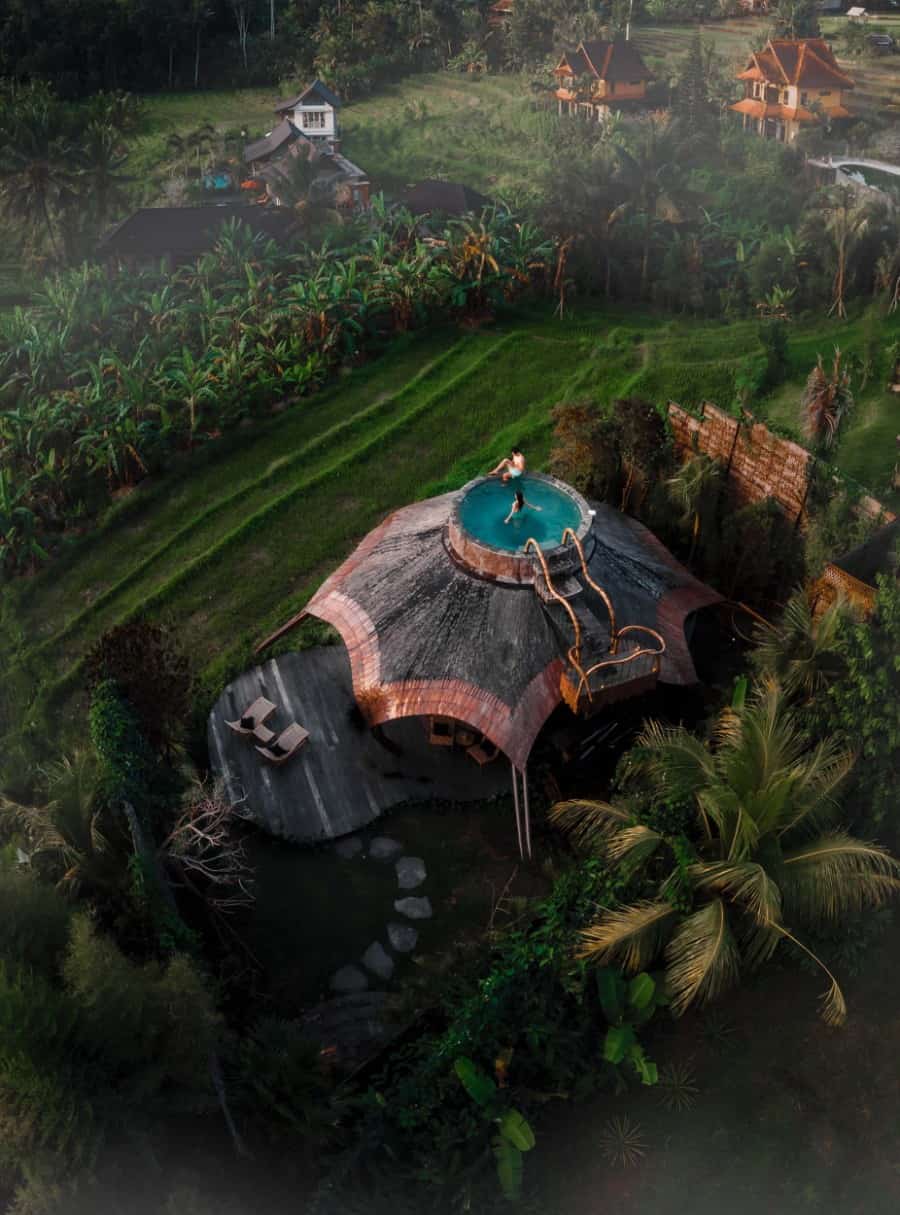
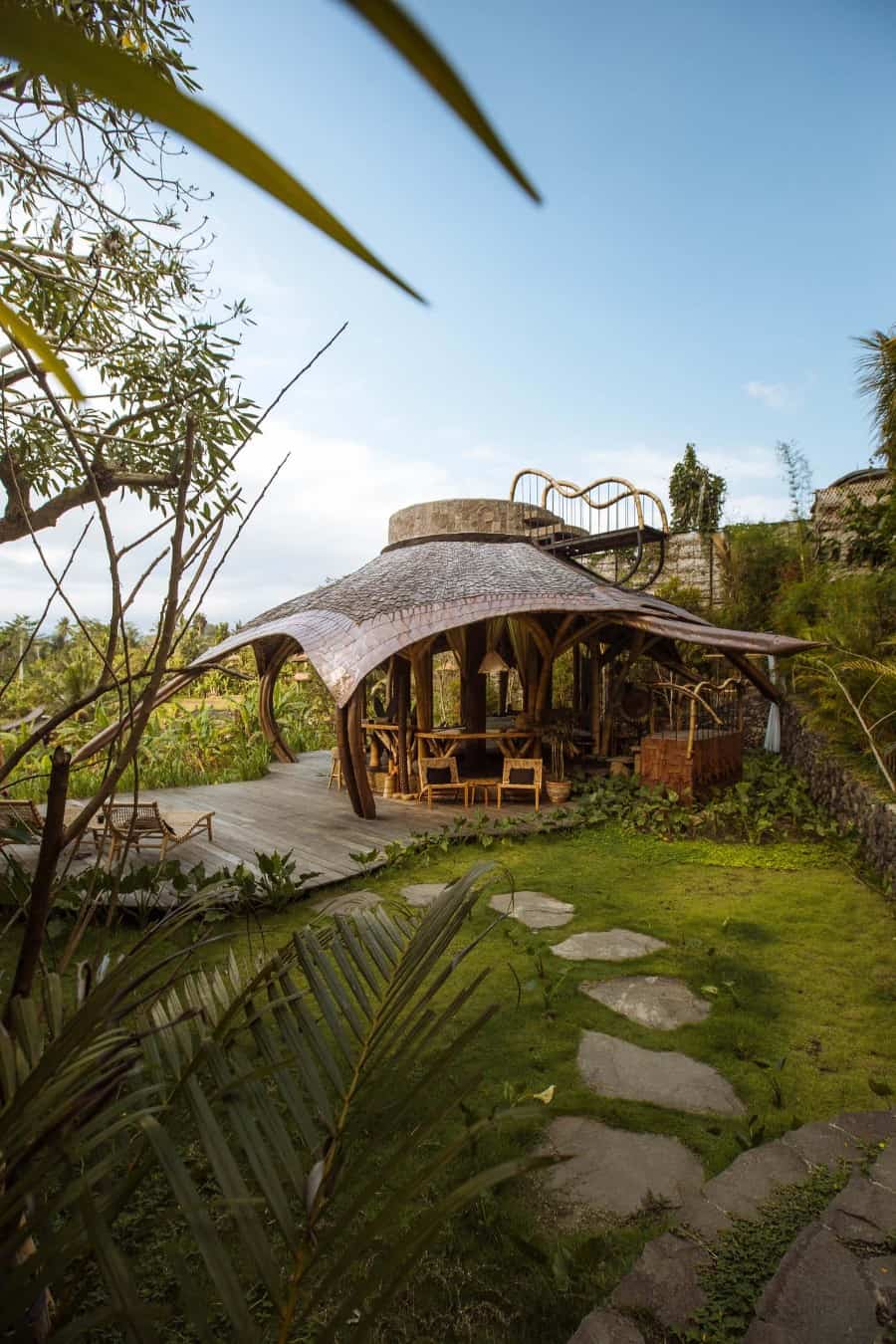
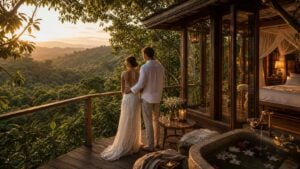
There are five tree homes, each named after a creature and each with its own architectural personality. The Scorpio unit is probably the most dramatic: a plunge pool tucks beneath the bedroom, and glazed walls make the surrounding forest feel immediate. Cobra House takes a double-deck approach, giving families or small groups more room to spread. Manta Haven opens outward with a fluid, airy layout, while Octopus Aerie leans into the theatrical — skylights, a rooftop jacuzzi, and water features that catch the last light of the afternoon. Owl Harmony rounds out the five with a calmer, nest-like character.
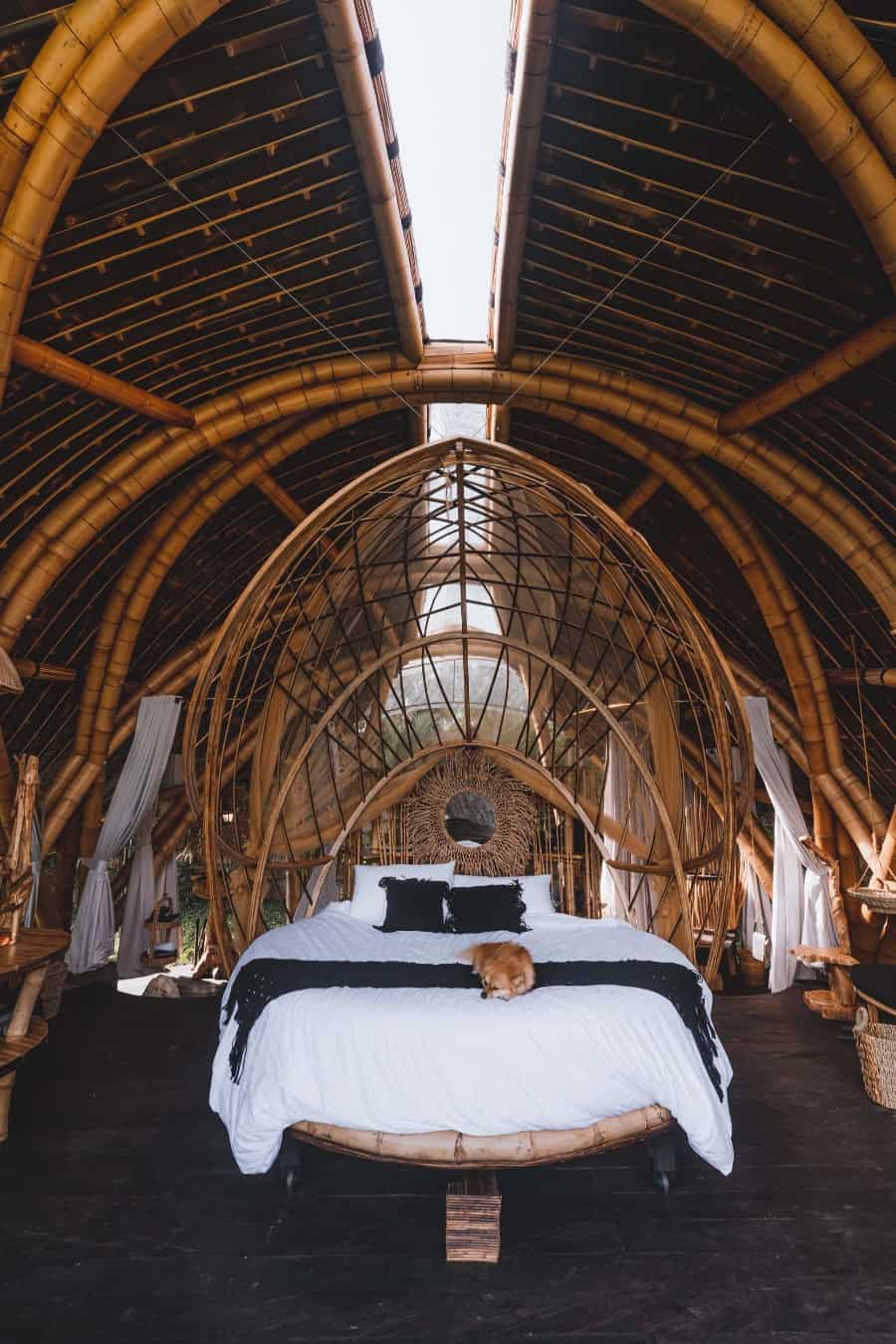
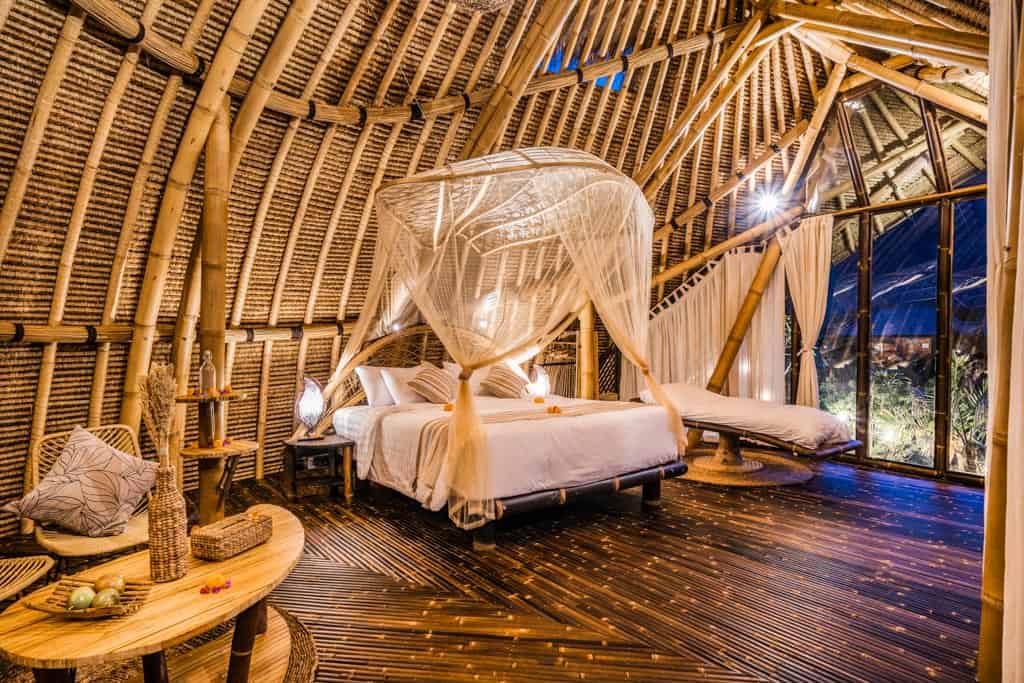
Bamboo does the heavy lifting throughout. Local artisans handcraft the structural elements, and the results lean into natural curves rather than straight lines. There are no harsh fixtures or industrial finishes here. Ventilation is natural, shadows settle warmly at midday, and the whole construction carries a lightness that feels intentional rather than decorative. The sustainability ethic isn't a marketing footnote — it shapes how every room breathes and sits in the landscape.
Rates at Veluvana run from around 4,500,000 IDR per night, which places the property in a moderate tier for a bespoke eco-treehouse experience of this kind. Prices vary by unit and season, so availability is worth checking early.
The dry season from May through September brings Sidemen's most reliable weather — warm, sunny days and lower humidity, with the terraces looking their most vivid. Shoulder months like April and October can be equally beautiful, with greener landscapes and fewer visitors. The wet season from November through March is genuinely atmospheric, with dramatic cloud cover and lush growth, though expect regular afternoon rain. Temperatures across all seasons stay comfortably warm.
Veluvana suits couples and small groups who want quiet immersion rather than poolside socialising. Sidemen remains one of Bali's less-trampled valleys, and the village paths, rice terraces and local craft workshops within easy reach make it a workable base for a few days of genuine exploration. Returning to the treehouse after a village walk feels like returning to something private — birdcalls, cicadas, and the occasional percussion of rain on bamboo.
Getting here independently takes some planning. The nearest bus connection is Perama Tour & Travel, roughly 9.6 km away in straight-line distance. Padangbai, with its bus stop and ferry services to the Gili Islands and Lombok, sits approximately 9.9 km away and could be a useful staging point for travellers arriving from the east. Most guests reach Sidemen by hired car or scooter from Denpasar or Sanur, and that flexibility suits the valley's rural character.
Veluvana is not a conventional luxury retreat — the comfort is thoughtful rather than glossy, and bamboo does hum in a strong wind. That's part of the deal, and for travellers who want something architecturally inventive, ecologically serious and genuinely rooted in east Bali, this is a rare find.
Frequently Asked Questions
Q: What are the five treehouses at Veluvana, and how do they differ?
A: Each of the five tree homes has its own character: Scorpio hides a plunge pool beneath the bedroom with glazed walls opening to the forest; Octopus Aerie features rooftop skylights and a jacuzzi; Manta Haven takes an open, flowing layout; Cobra House offers a double-deck design suited to families or small groups; and Owl Harmony has a calmer, nest-like atmosphere. Choosing between them comes down to how theatrical or restful you want your stay to feel.
Q: What is the general nightly rate at Veluvana?
A: Rates start from around 4,500,000 IDR per night, placing Veluvana in a moderate tier for a handcrafted eco-treehouse of this kind. Prices vary by unit, season and availability, so it is worth checking early.
Q: When is the best time to visit Veluvana and the Sidemen Valley?
A: The dry season from May through September brings the most reliable conditions — warm, sunny days and lower humidity with the rice terraces at their most vivid. April and October are quieter shoulder months with lush green landscapes and occasional rain, ideal for photography. The wet season from November through March is atmospheric and deeply green, though expect regular afternoon downpours and higher humidity throughout.
Q: How do most guests get to Veluvana from Denpasar, Ubud or Sanur?
A: Sidemen has minimal public transport links, and the property sits along a rural lane in Karangasem with no direct local service. Most guests arrive by private car, hired driver or ride-hailing app. It is worth arranging your transfer before you travel rather than on arrival.
Q: Is Veluvana suitable for families, or is it primarily aimed at couples?
A: The property suits both, depending on which treehouse you choose. Cobra House, with its double-deck layout, offers the most space for families or small groups. The remaining four units lean toward romantic seclusion and are a particularly good fit for couples seeking quiet immersion in the Sidemen landscape.