
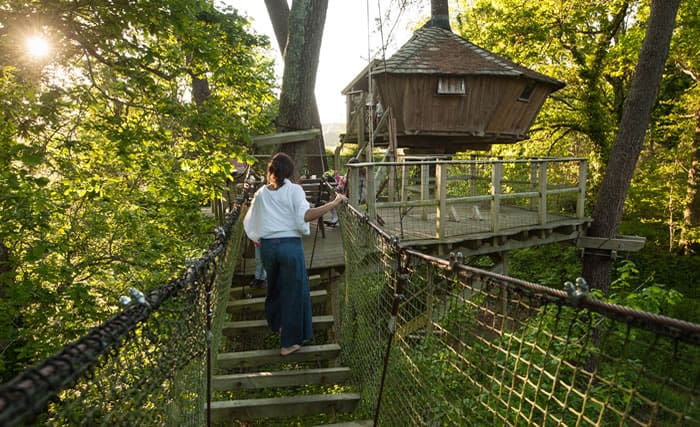
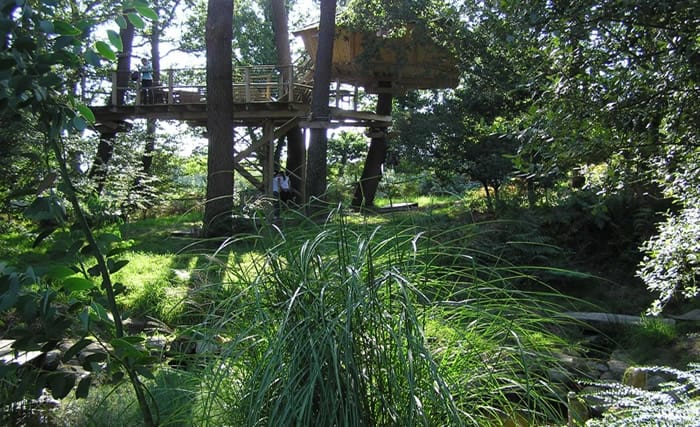
Baman takes its name from a Celtic word meaning "settle down." It's an instruction as much as a name, and the treehouse earns it. Tucked among maritime pines at Dihan Évasion in southern Brittany, Baman faces a small Celtic fountain and sits quietly in a landscape that seems to lower its own volume. Of all the sleeping perches scattered across the property, this one has the easiest approach — a kind path, a gentle arrival, the sensation of stepping somewhere that was already expecting you.
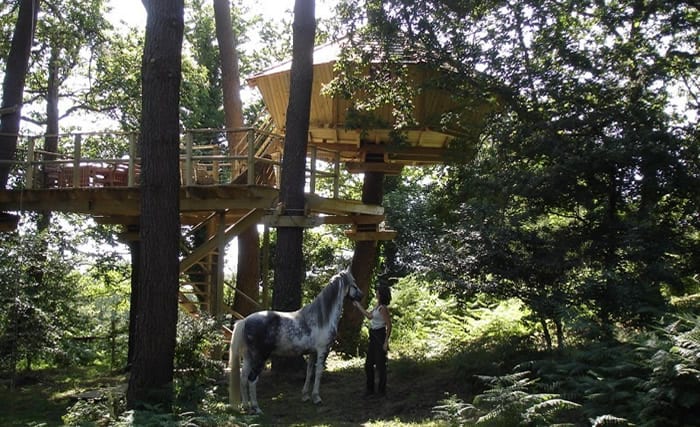
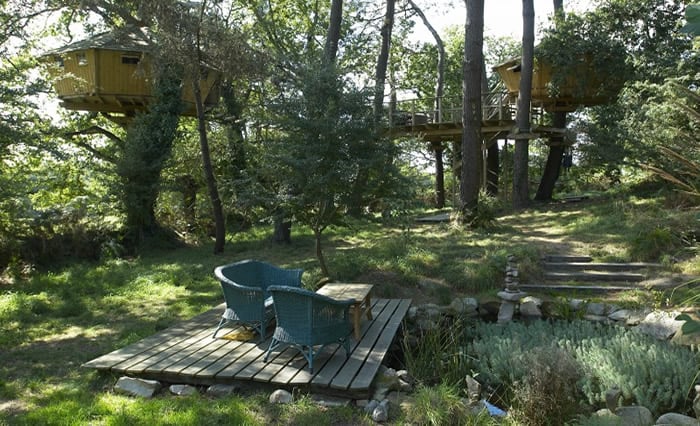
Dihan Évasion began as an ancestral farm before Myriam and Arno reshaped it into something harder to categorise. Across 25 hectares of meadow and woodland, guests can choose between a Mongolian yurt, a painted wooden caravan, bubble tents pegged wide apart under the Milky Way, a Finnish kota that carries a faint smell of smoke, and several treehouses. Baman is among them — the most approachable of the high perches, well suited to those who want altitude without the scramble.
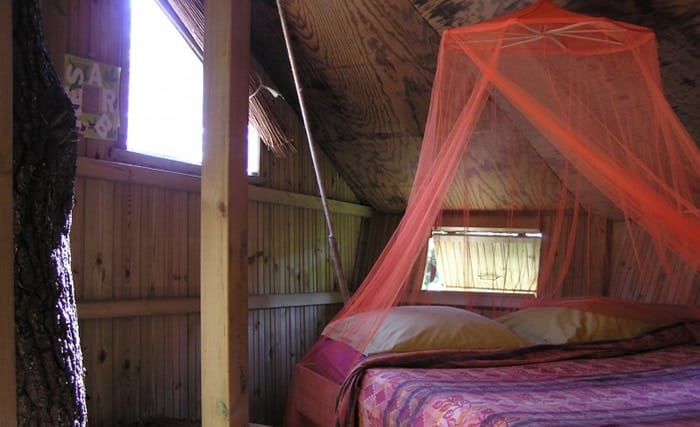
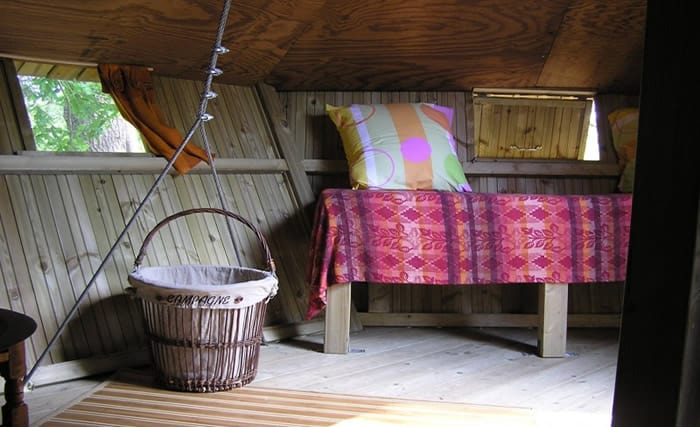
Inside, the design stays deliberately simple. Pale timber, a bed positioned to catch the first light, a corner engineered for doing nothing. The host tree passes through the structure like a quiet, anchoring column; guests tend to touch the bark on the way past, a small reflex toward something older and steadier than themselves. Outside, a wide balcony wraps the front of the treehouse and turns mornings into a particular kind of ritual. Coffee, resin in the air, birds committing to the day note by note. By afternoon, the light arrives at an angle that makes reading feel earned.
Baman connects discreetly to Pradan, the larger neighbouring treehouse, so families or small groups can share the site without surrendering the sense of being genuinely in the woods. For two people, the same connection simply stays quiet, and the surrounding pines fill in the rest.
The estate runs through May to September at its best. Late spring brings mild evenings and green canopy. July and August suit families after maximum outdoor time, with temperatures that reach the low twenties but rarely feel extreme. Shoulder months — April and October — reward guests who prefer privacy, forest walks and the kind of silence that takes a day or two to properly hear. Winter stays quieter still, mild but damp, suited to those who want the property almost entirely to themselves. Nightly rates run approximately €100–€200, varying by season and availability.
Autumn has its own particular appeal at Baman. Red squirrels work the pine cones below the balcony with cheerful persistence, and the quality of the evening light shifts toward something amber and unhurried. Some guests return each year and choose a different accommodation — treehouse this visit, yurt the next. The property seems designed to sustain that kind of habit.
For access, the Belz – Ploemel train station sits approximately 700 metres away, and a bus stop at Centre is roughly 500 metres in the opposite direction. Train line TER 32 also serves Les Sables-Blancs, around 9 kilometres distant, offering a broader regional connection. Carnac's famous stone alignments and the coastal town of Quiberon are both within easy reach by road, and the harbour town of Auray lies about seven kilometres away.
Baman suits couples who have run out of reasons to stay busy, families wanting a contained woodland adventure with a link to neighbouring space, and anyone who has decided that the view from a pine canopy is a reasonable substitute for a plan. The name said settle down. The treehouse means it.
Frequently Asked Questions
Q: What is Baman, and how does it differ from the other accommodations at Dihan Évasion?
A: Baman is a treehouse among maritime pines at Dihan Évasion, a 25-hectare property in southern Brittany. It's considered the most approachable of the property's high perches — the path is gentle and the arrival easy — which sets it apart from the more adventurous climbs elsewhere. The wider estate also offers a Mongolian yurt, a painted wooden caravan, bubble tents, a Finnish kota and additional treehouses, so Baman suits those who want a genuine woodland perch without a demanding ascent.
Q: Can Baman accommodate families or small groups?
A: Yes. Baman connects discreetly to Pradan, the larger neighbouring treehouse, so families or small groups can share the site and move between the two without losing the sense of being properly in the woods. For couples or solo travellers, that connection simply stays quiet, and the surrounding pines fill in the space.
Q: What is the general nightly price level for Baman?
A: Rates fall in a moderate range, broadly around €100–€200 per night, varying by season and availability.
Q: When is the best time to stay at Baman?
A: Late spring through early autumn — roughly May to September — is the sweet spot, with green pine canopy, mild temperatures and full access to the property's activities. April and October are quieter and more private, well suited to guests who come for forest walks and unhurried stillness. Winter is calm and mild but tends toward wet, best appreciated by those who want the property largely to themselves.








Add a review