

Set your expectations down with your shoes at the jetty. Chole Mjini isn’t trying to be a hotel, and you’ll be happier the moment you stop asking it to perform like one. This is an island daydream—baobabs and fig roots, dhows groaning softly at anchor, air weighted with salt and green. No room service hum. No air-conditioning thrum. Just wind, tide, and the long patience of trees.
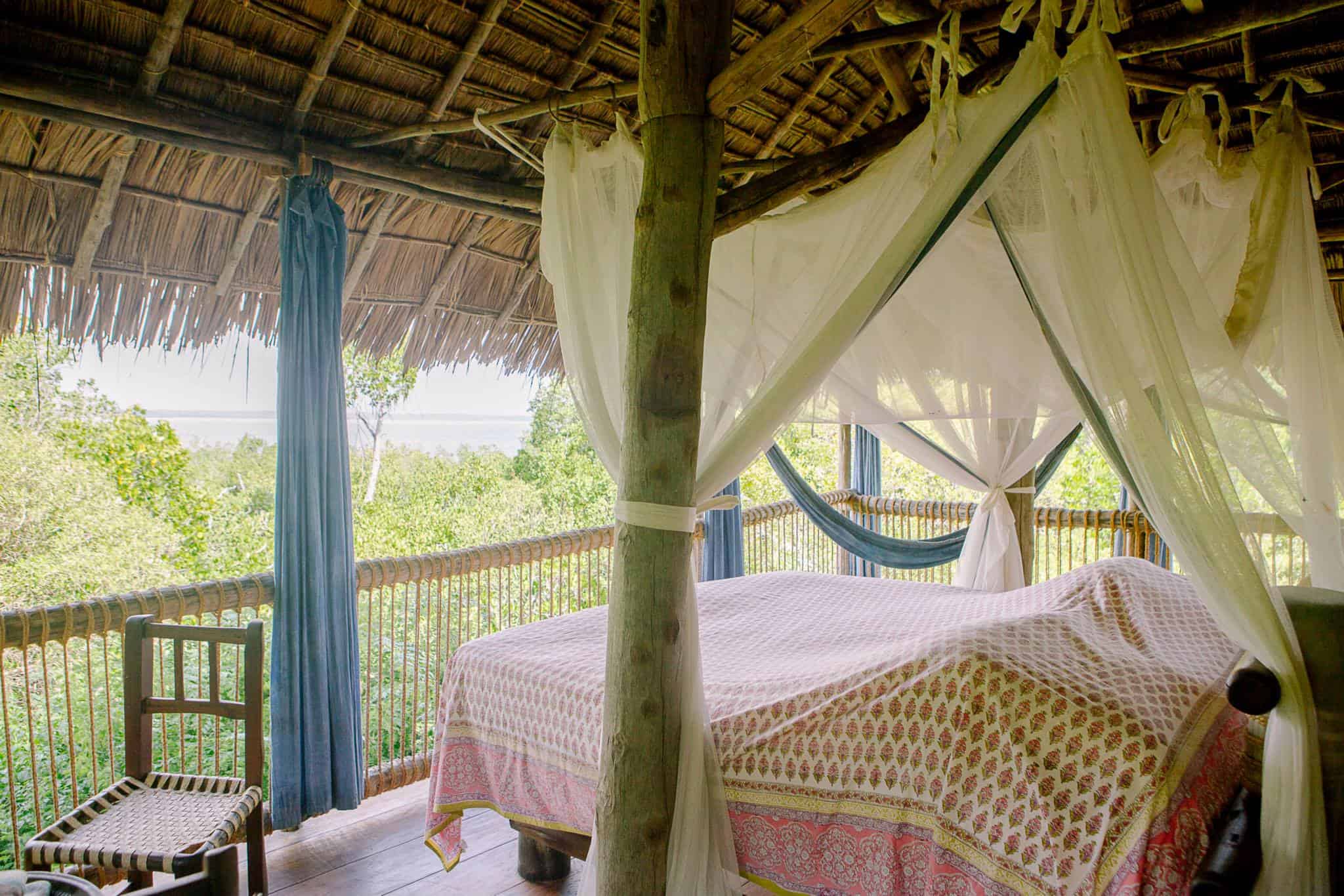
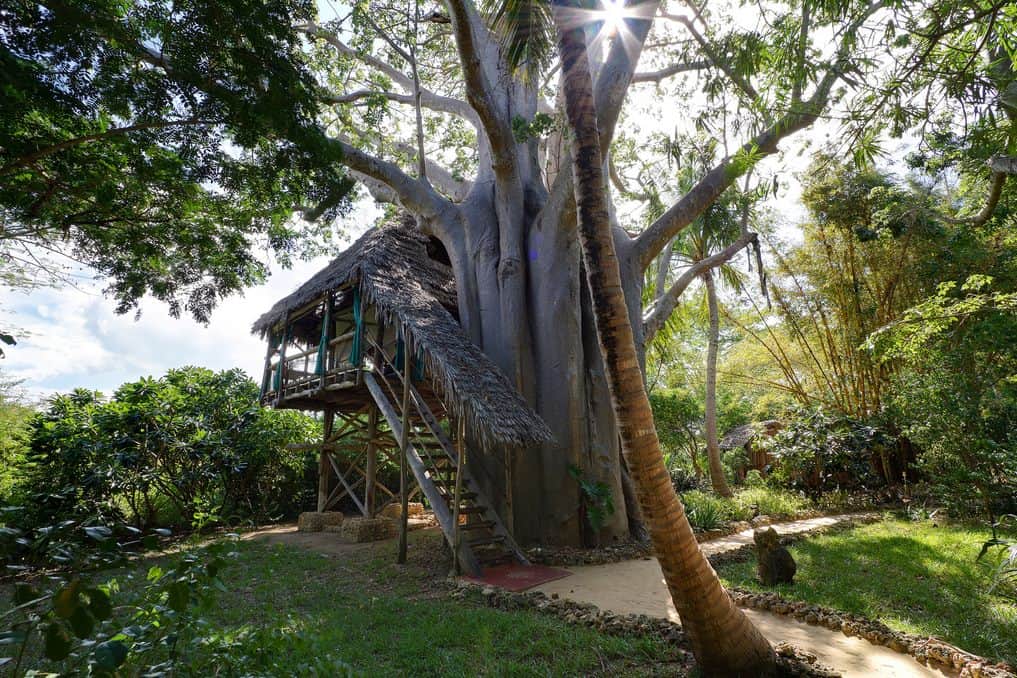
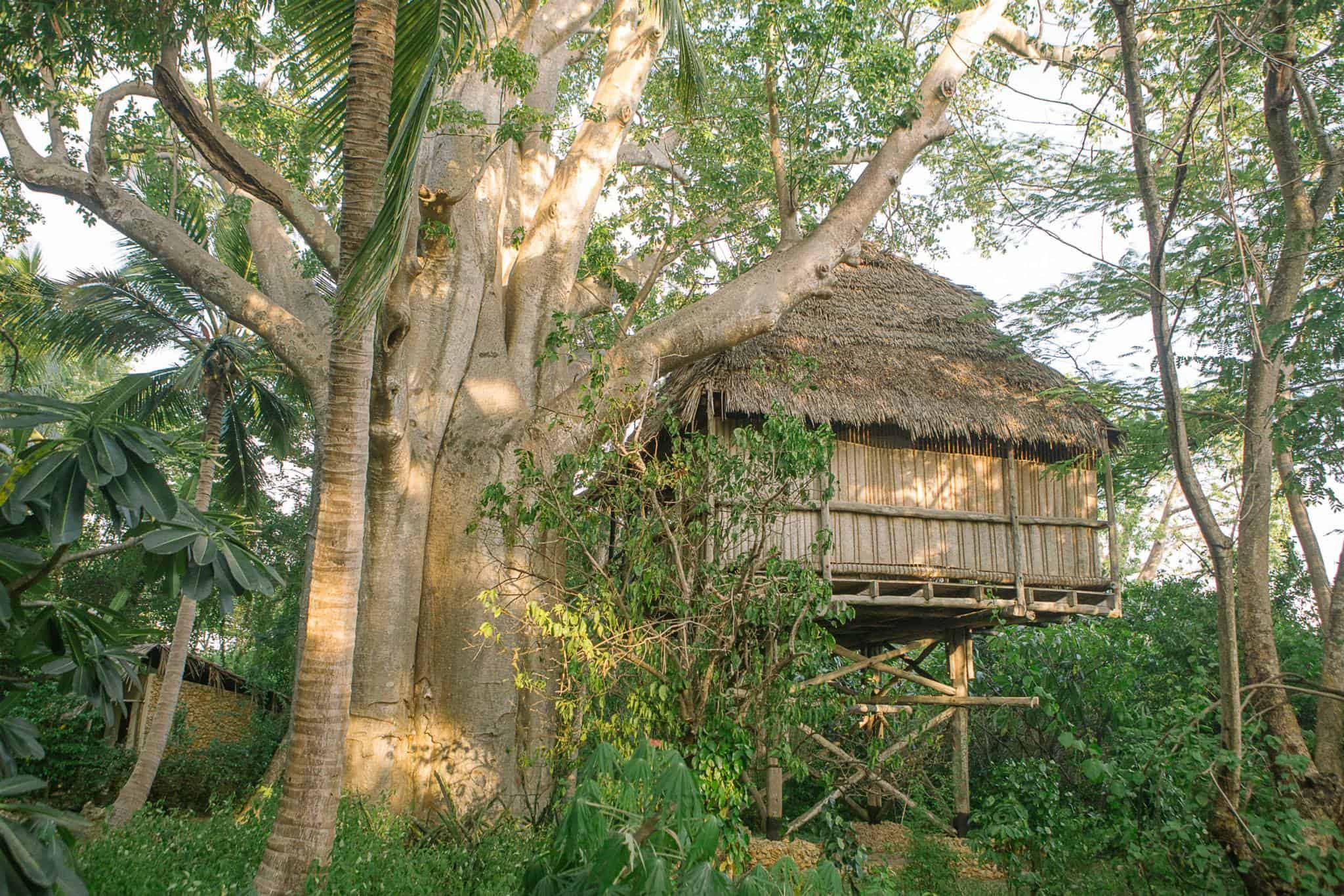
There are seven dwellings here—six in the canopy, one on the ground—but each feels hand-summoned rather than built. One or two levels, open to the elements, “throne-like” beds under gauze, hammocks that become habits, open-air showers that turn steam into perfume. The views sweep over the bay and back again, and somehow everything you thought you needed gets very quiet.
The making of these places matters. Every piece of timber came from Chole’s own traders: poles cut by hand, ferried on dhow, laid in the sun to cure, then worked into beams and boards with tools that don’t need electricity—only time. Six months, sometimes a year, for a single treehouse. If you look closely you can still see the story in the joinery: a notch that isn’t factory-perfect, a hand-rubbed edge. Imperfection as proof of touch.
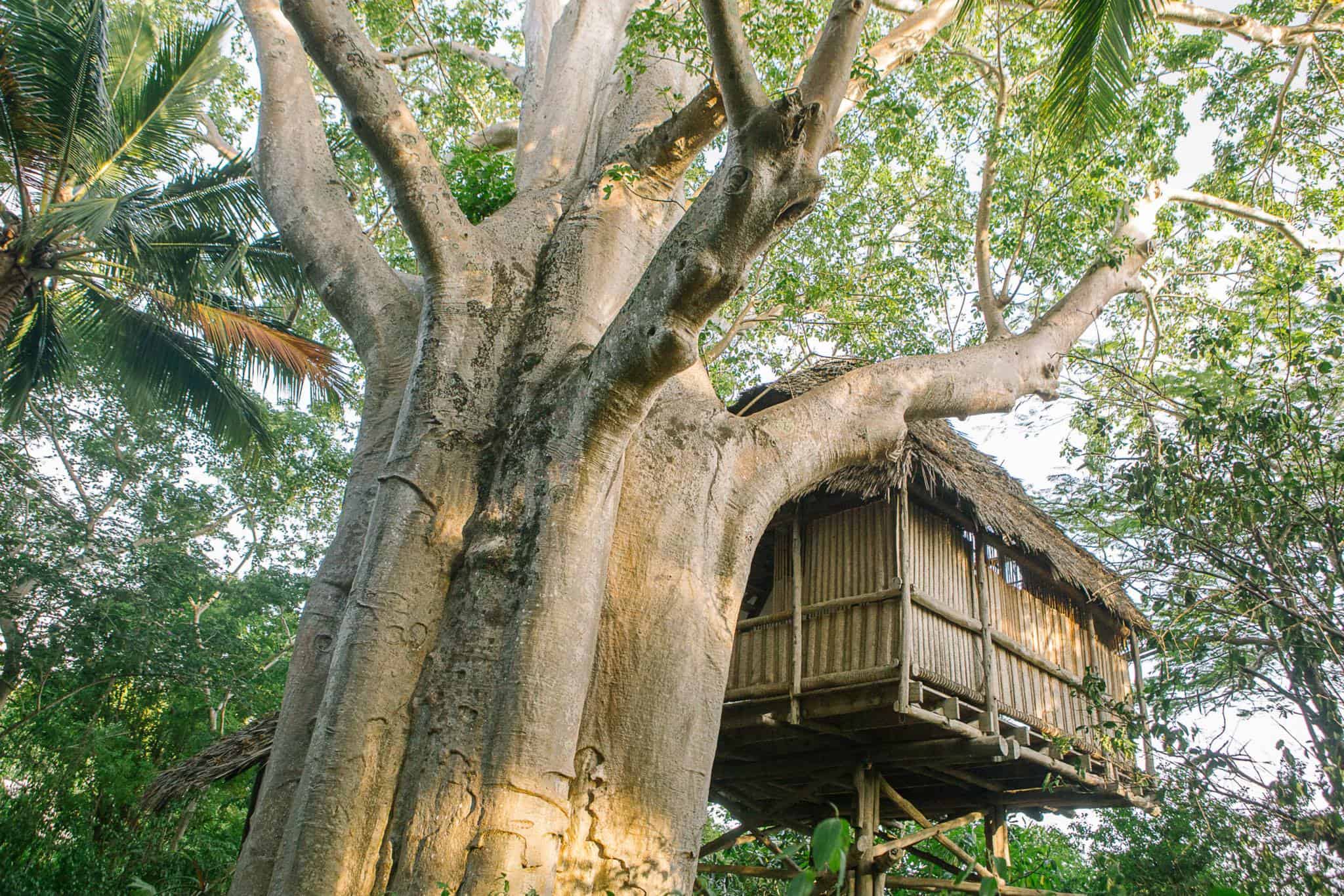
And then there’s Mbili. “Two,” yes, but first among equals—the first treehouse they raised here, the one that taught the others how to stand. It took nearly a year to coax into being, layer by patient layer. Now it rises in two soft tiers around a baobab so old the island speaks of it like a person. Two double beds—one below for shade and afternoon pages, one above for horizon and night—stairs curling between, sea air moving through like a slow tide.
From the top level, light falls in wide sheets. At low tide the channel braids sand into pale maps; at high, water slicks to silver. You’ll hear a Fish Eagle long before you see it. At dusk the first fireflies thread themselves through the branches and the baobab’s trunk warms to the colour of tea. It creaks, just barely. A friendly, “I’m here.”
Mbili’s shower lives half inside, half out—sun through leaves, water tapping shoulder blades, lizards keeping company on coral-stone. It’s less a bathroom than a clearing made for the body to remember itself. You step out rinsed of more than sweat.
People fall for this tree. One guest left and kept writing to it—actual emails, they say—waiting for an answer. Silly? Maybe. Or maybe not. When you sleep with your head at baobab height and the wind leans in with its old secrets, you begin to understand that some replies arrive without words.
Chole Mjini isn’t for collecting amenities. It’s for collecting silences: lantern light on rough timber, tide breath against mangrove roots, the soft tug of a hammock that learned your shape in an afternoon. If you come for Mbili, come ready to listen. The island speaks. The tree speaks slower. That’s fine. You’ve got time.








Add a review