
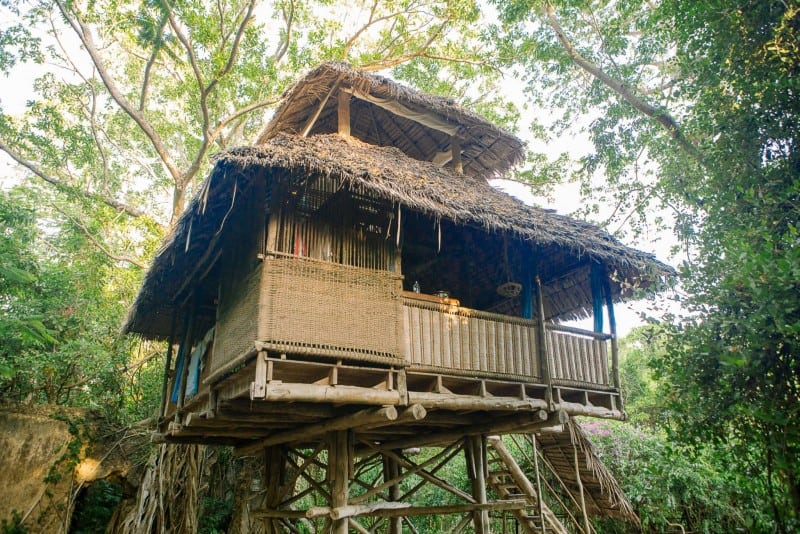
Some places whisper their magic. Chole Mjini doesn’t bother with whispering—it hums. Not loudly, but deep and steady, like the island itself has a heartbeat. On a small patch of jungle off Mafia Island, Tanzania, a handful of hand-built treehouses rise among ancient baobabs and fig roots. No glass walls. No Wi-Fi. Just air, light, and time stretching in every direction.
Here, the jungle owns the soundtrack: cicadas tuning up at dusk, the thud of fruit hitting the ground, the distant call of fishermen setting out before sunrise. And in between those sounds—silence. Real silence, the kind you can feel in your chest.
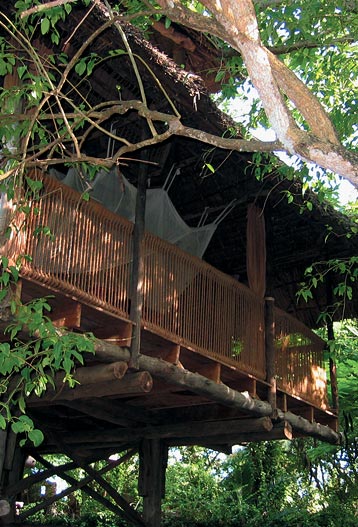
Chole Mjini began as a dream, or maybe a rebellion, by founders Anne and Jean de Villiers—people who thought “luxury” could mean being barefoot with a lantern and a sky full of stars. They built seven dwellings: six suspended in trees, one on the ground, each a small ode to craft. No two are alike. Everything, from the hand-cut timber to the coral-lime mortar, was shaped by the island’s own artisans using tools that look older than memory.
Then there’s Tano—“five” in Bantu—tucked within the mossy skeleton of a 19th-century ruin. Imagine a fig tree swallowing a stone house, its roots curling through broken windows, and inside that living embrace, a treehouse. That’s Tano. At dawn, soft light slides through the branches, painting patterns on the old walls. By evening, fruit bats (locals call them “flying foxes”) pour out from the canopy in a fluttering cloud, dark against the rose-colored sky.
Tano’s design nods to a tea house: open, layered, deliberately simple. From the upper deck, you can watch the tides of Chole Bay rise and recede like breath. Fishermen drift past in wooden ngalawas. Breezes carry the scent of salt, mango leaves, and sometimes—faintly—woodsmoke from the village. It’s strangely intimate, almost like being inside a memory that’s still happening.
The bathroom deserves its own chapter. The shower sprawls inside the ruins, huge and theatrical, open to the sky but private in spirit—a stage where you wash under sunlight filtered through vines. The toilet, by contrast, is modern and airy, a gentle reminder that even dreams need plumbing.
Chole Mjini isn’t for everyone. There’s no air-conditioning, no minibar, no “Do Not Disturb” sign—because nothing here disturbs you in the first place. But if you crave the feeling of being untethered, of hearing a fig tree creak as it grows around your room, of falling asleep to the rhythm of a breathing island—then yes, this is exactly your place.











Add a review