
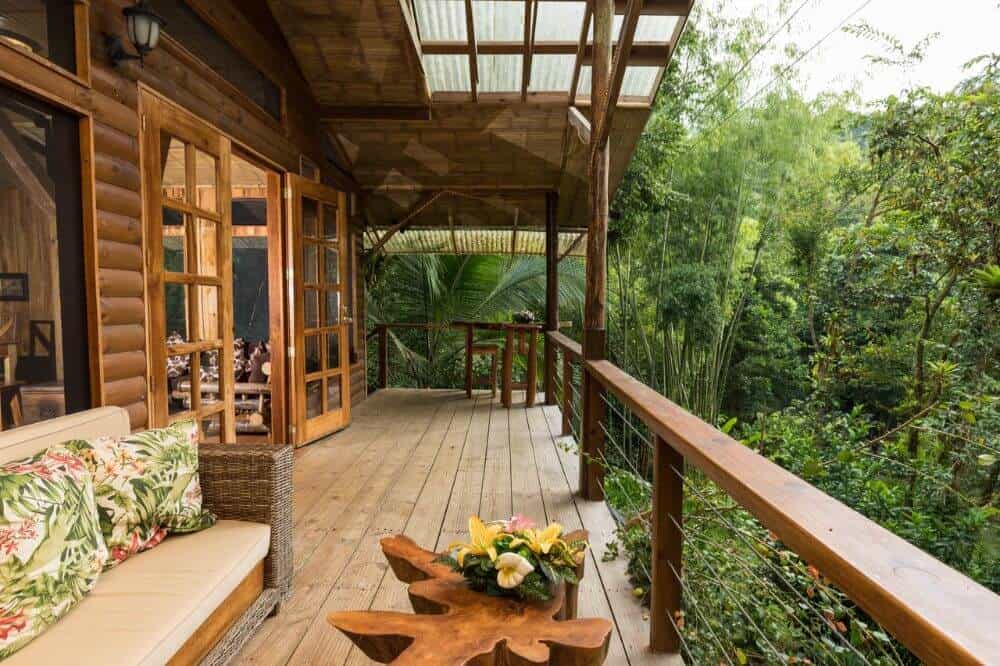
Most treehouse stays are hotels with good views. Finca Bellavista is something else entirely — a working community in the canopy of southern Costa Rica, where the founding act was less about hospitality and more about rescue.
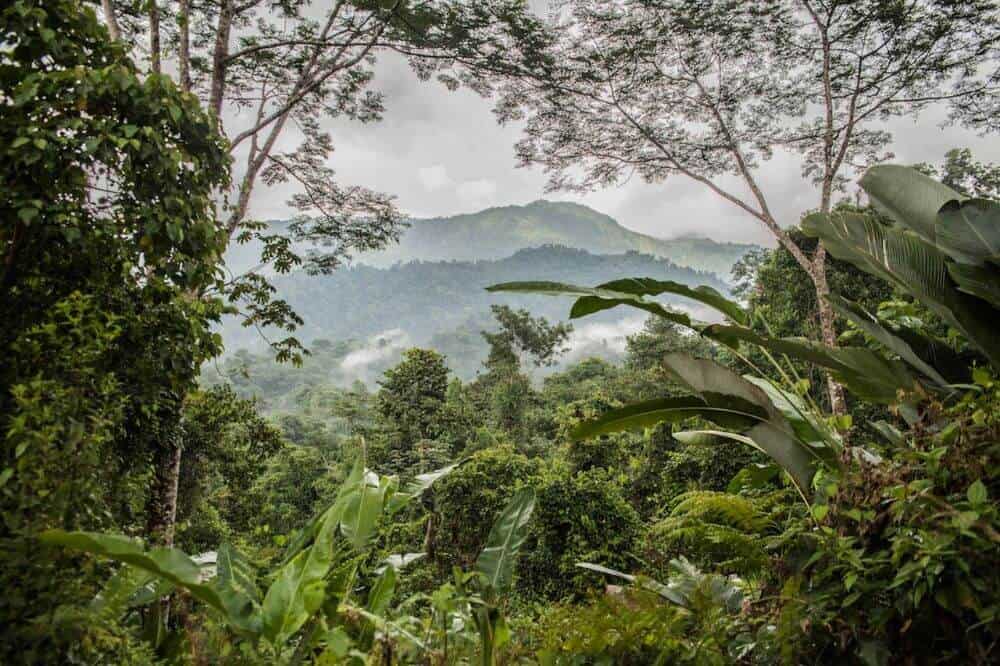
In 2006, sixty-two acres of rainforest in the Costa Rican south Pacific faced logging. A small group of founders bought the land instead. Neighbours joined, volunteers arrived, and the footpaths multiplied. What began as an act of stubbornness grew into 600 protected acres threaded with trails and the occasional whoop of someone spotting a toucan. No power lines ever arrived. That was deliberate.
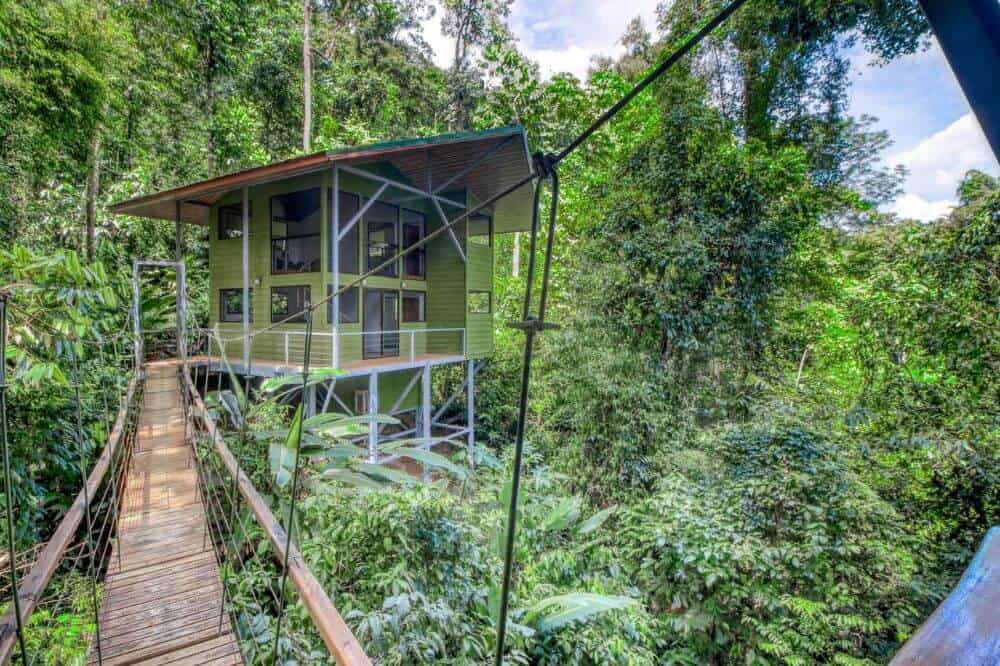
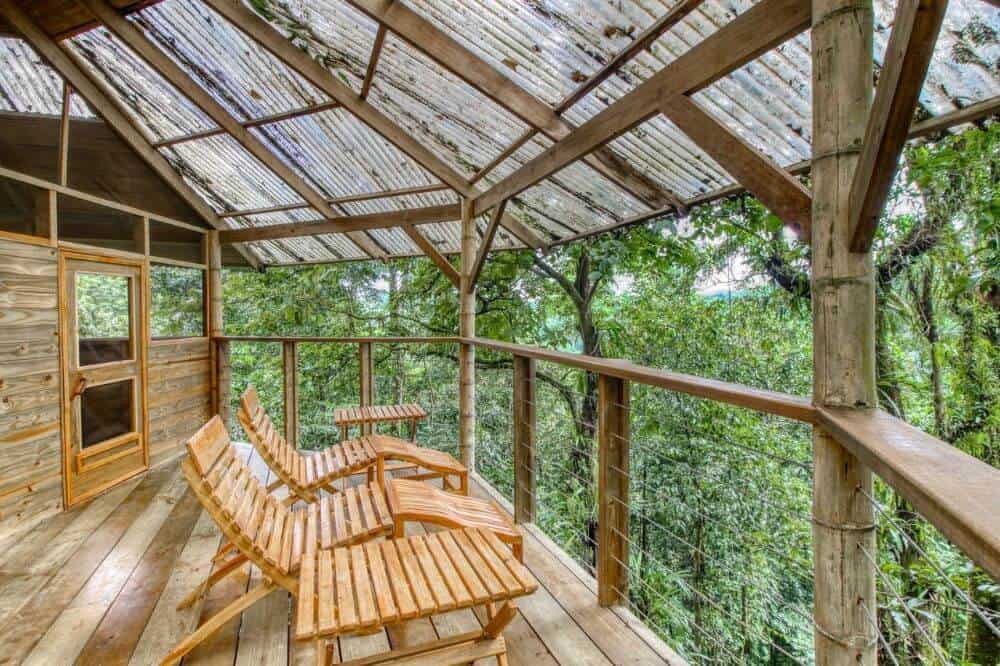
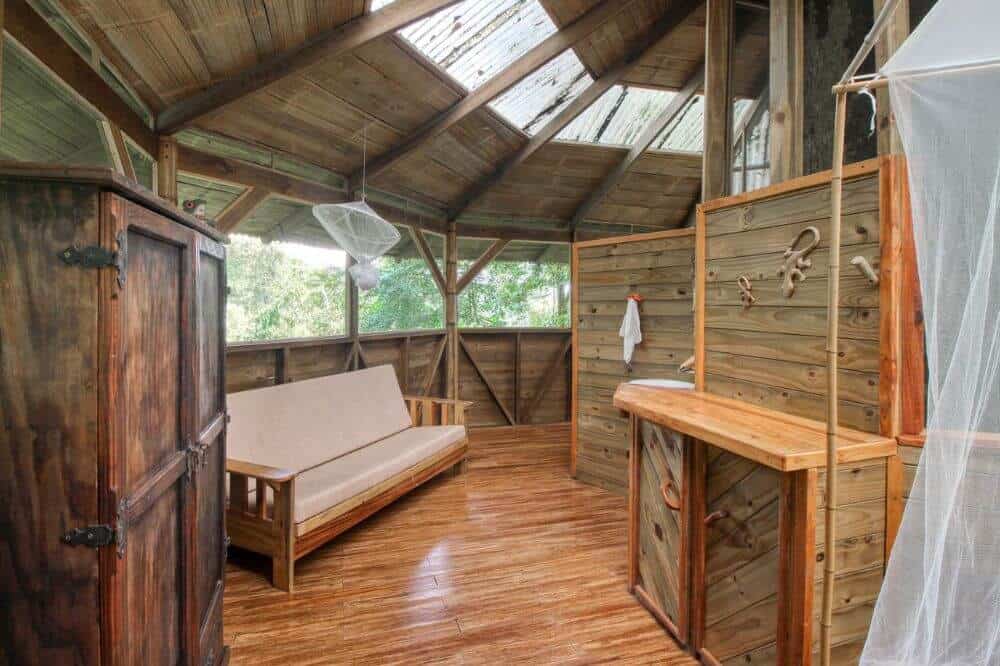
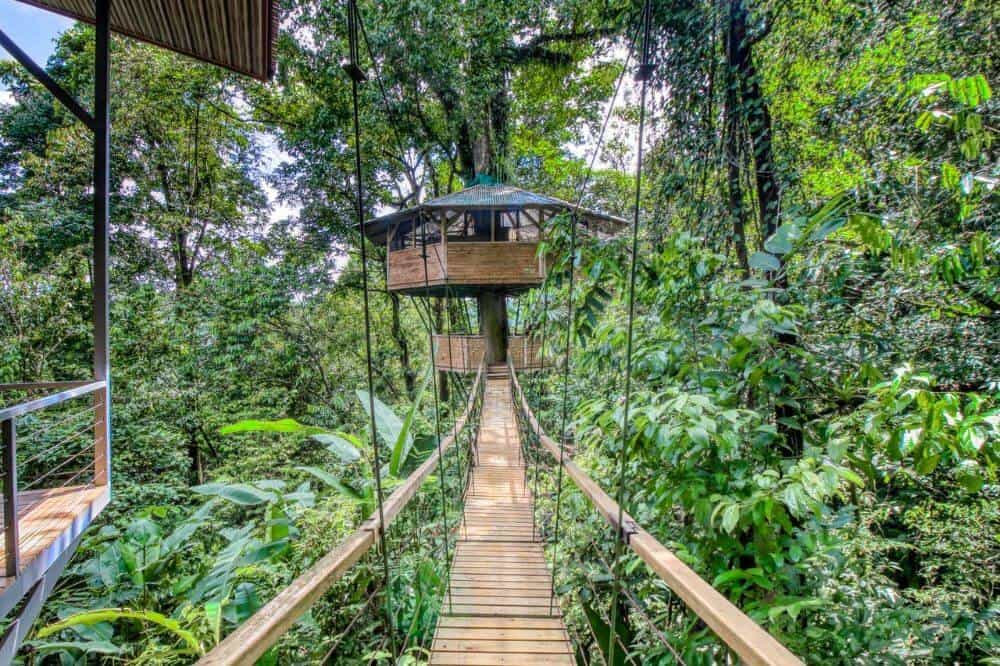
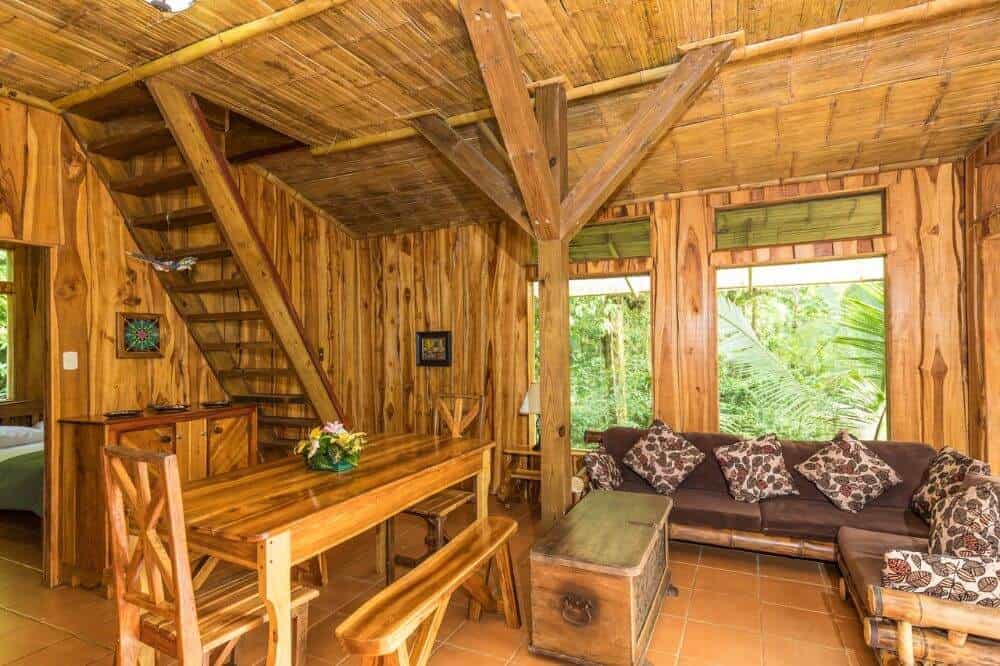
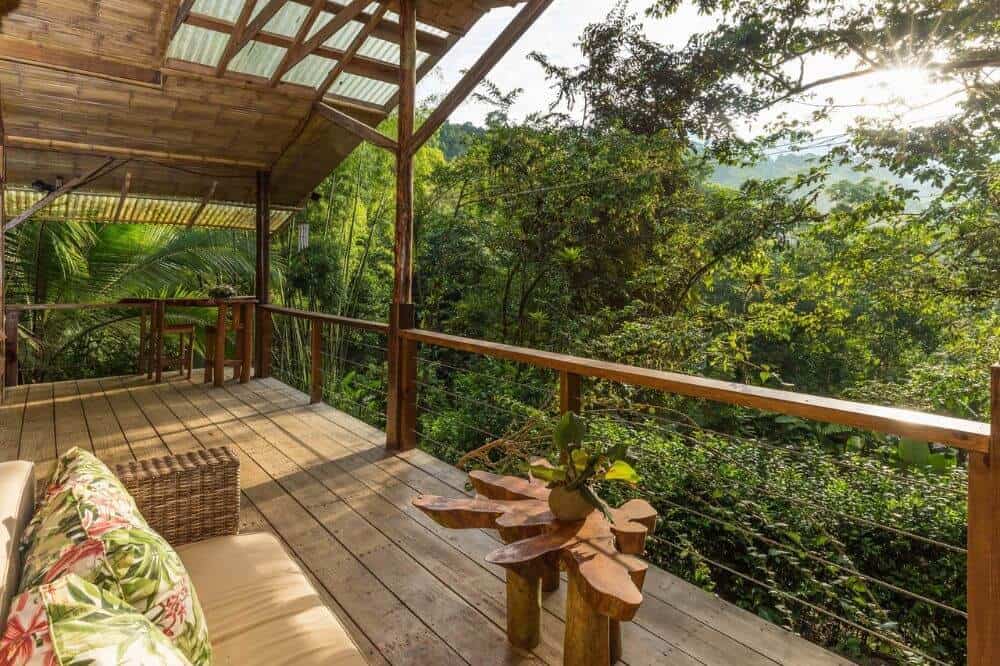
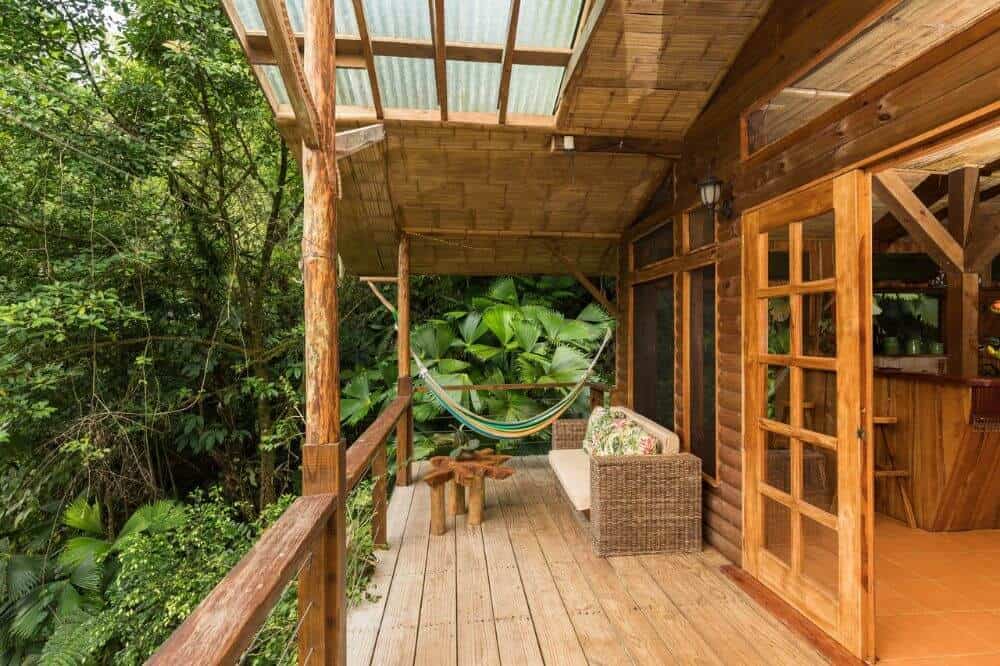
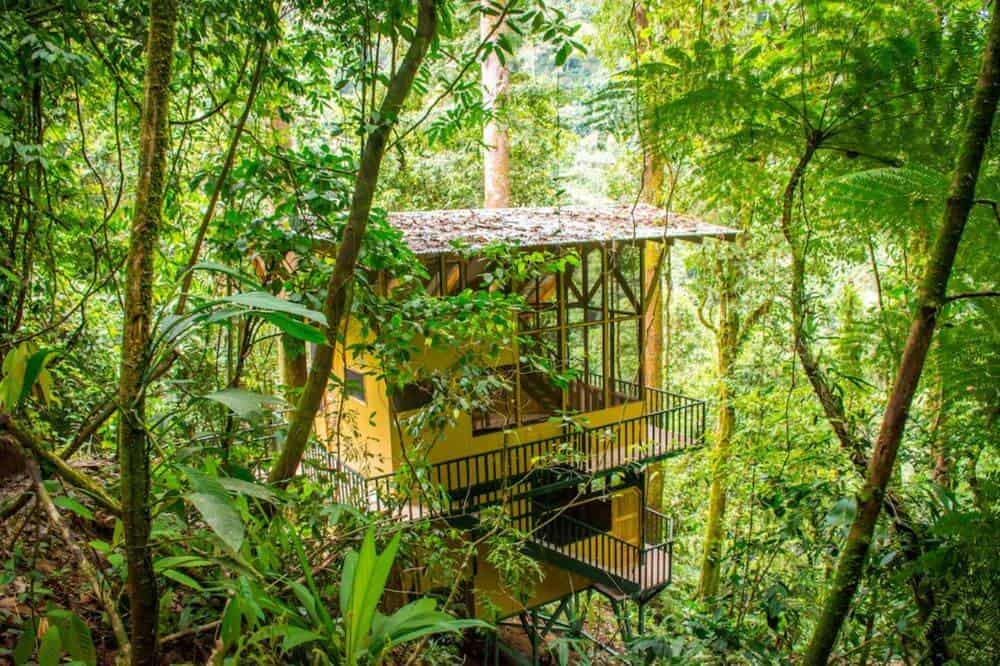
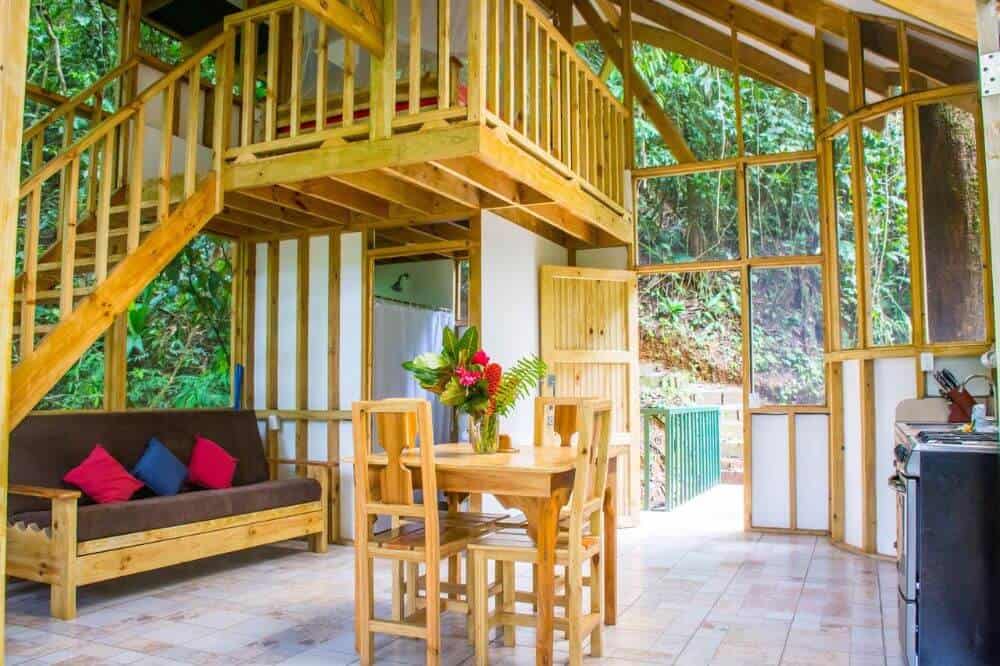
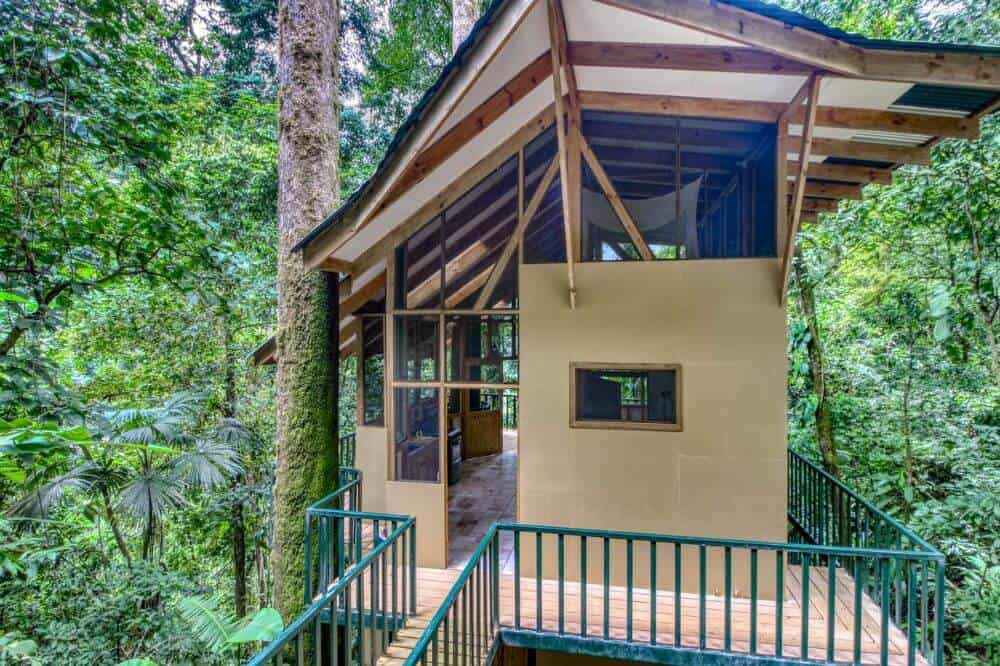
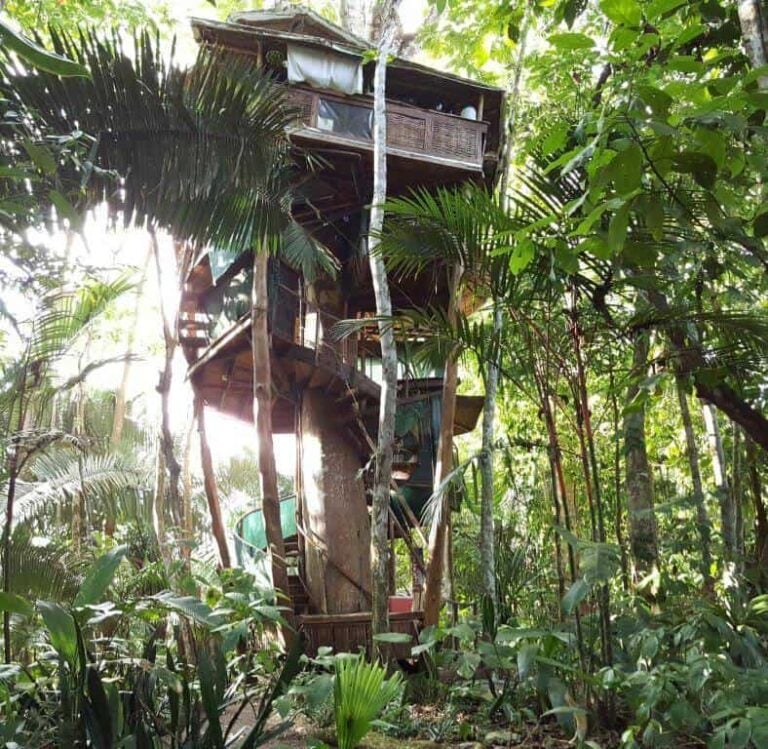
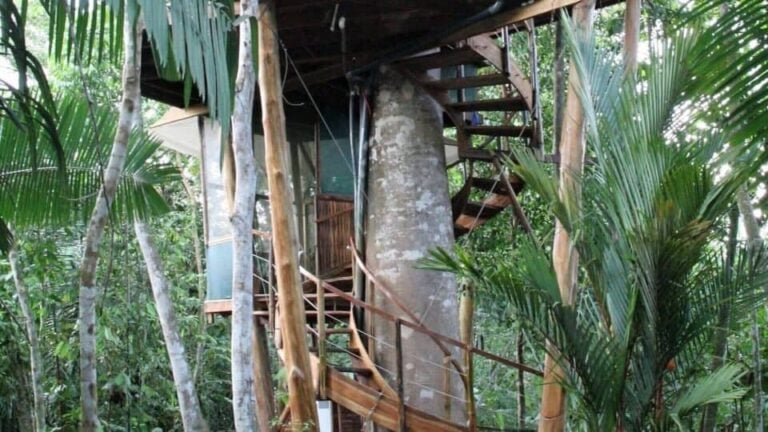
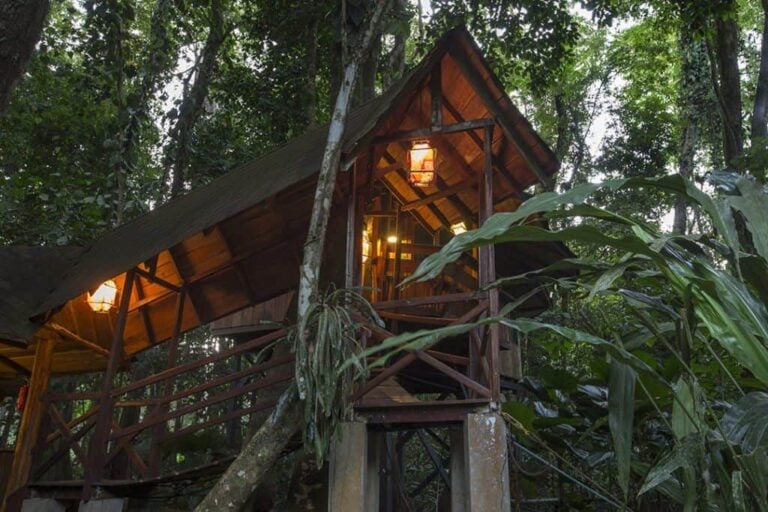
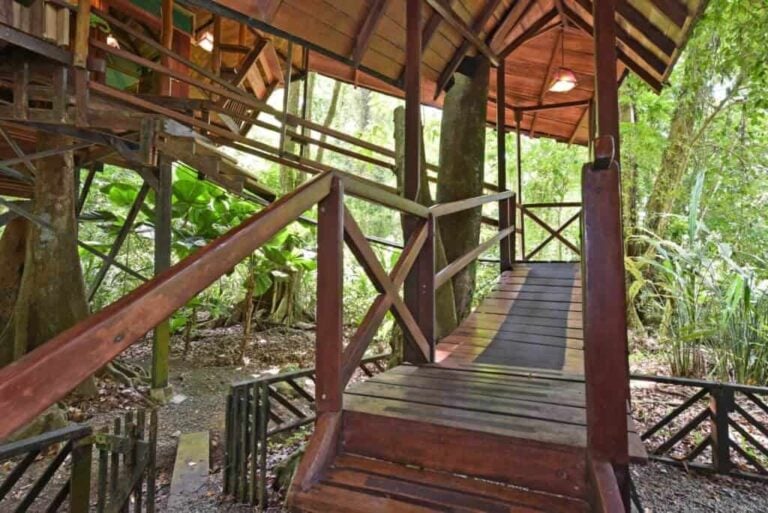
Fourteen treehouses now occupy that canopy, each shaped by a different owner with a different idea of what living in the trees should feel like. Some sit at the top of ladders that earn their views. Others are reached by rope bridges that sway just enough to remind you where you are. A few involve short jungle hikes that end with the best kind of reveal — a deck at the mid-story of a ceiba, the valley breathing at eye level. No two are identical, and that is the whole point.
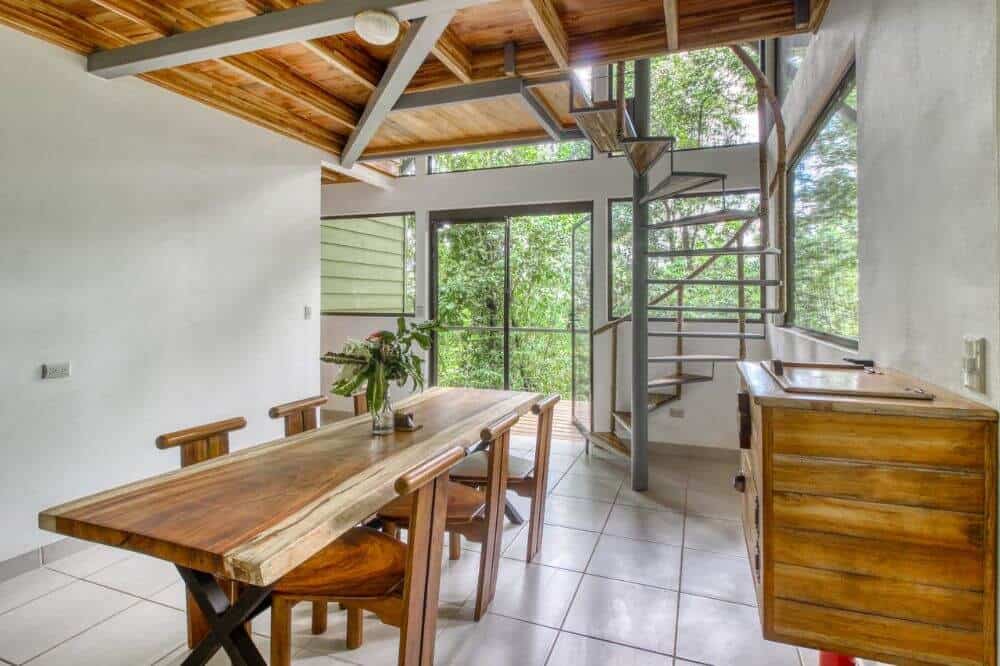
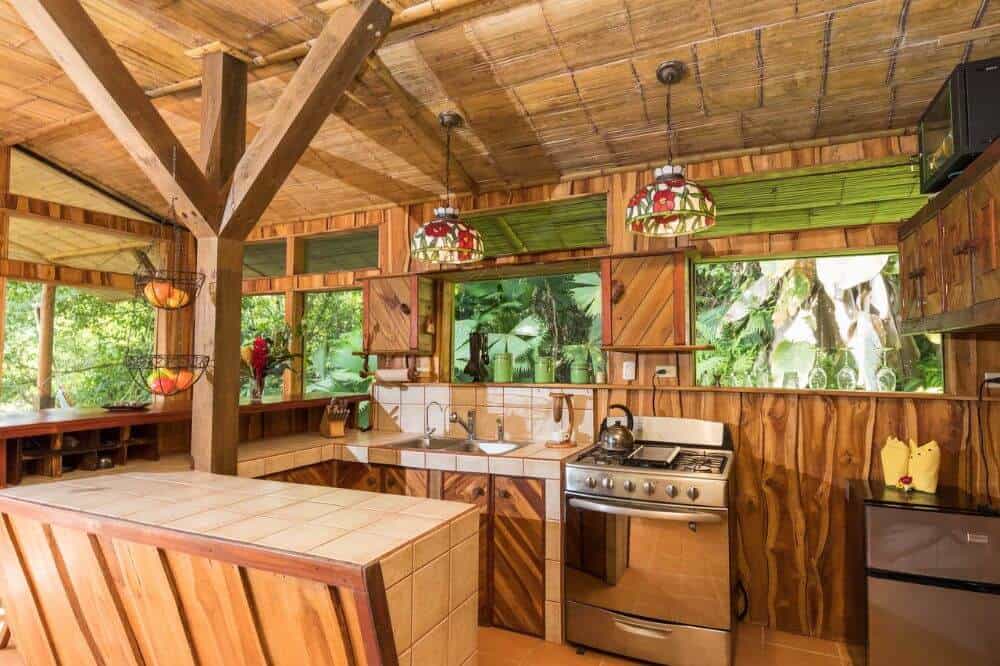
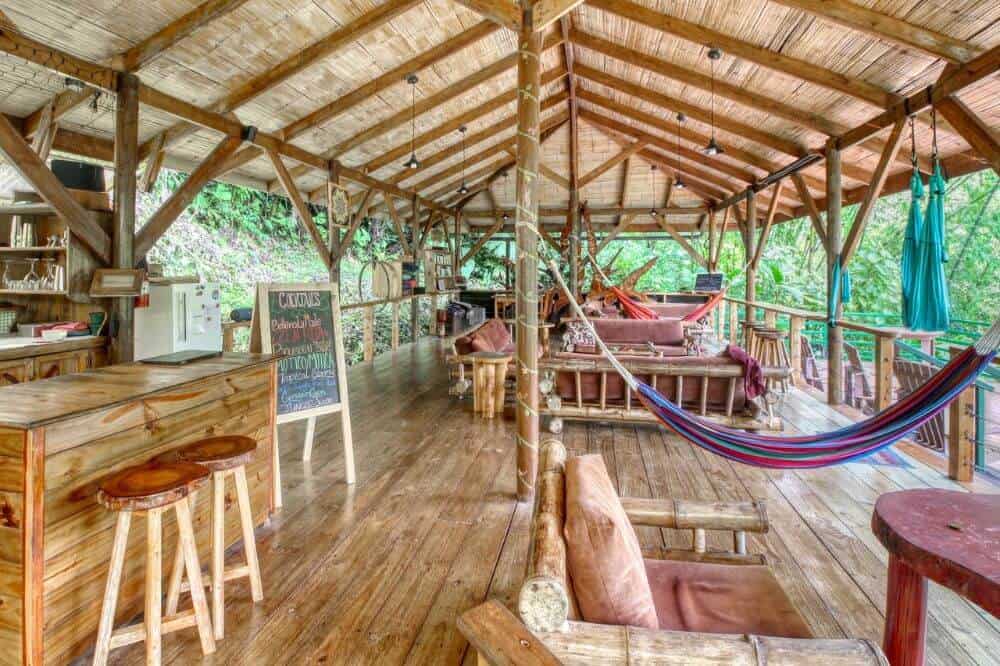
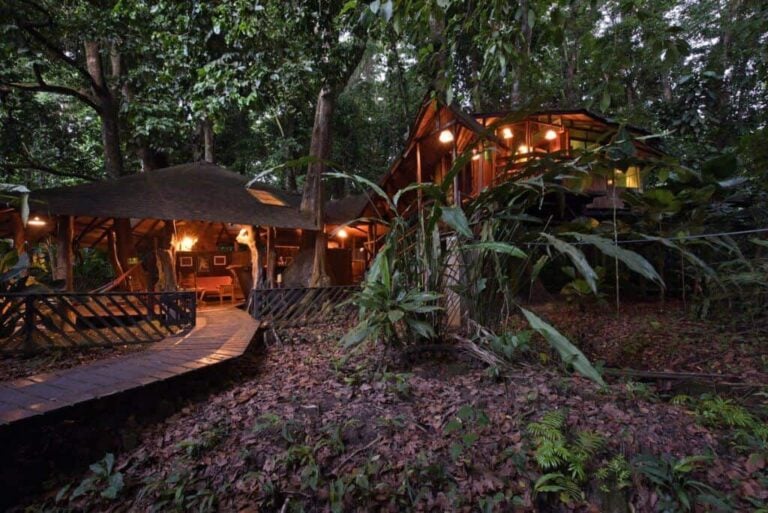
Daily life here runs on solar panels and harvested rainwater. Nights belong to headlamps and starlight. Mornings open with river mist and macaws commuting noisily overhead. Two whitewater rivers cut bright paths through the property — good for a cooling swim after a long trail. Sloths, kinkajous, and glass frogs move through the undergrowth with complete indifference to guests. Organic gardens supply much of what reaches the communal tables, and the food tastes like it crossed a short distance to get there, because it did.
Seasonal rhythms shape the experience here. The drier windows — roughly January through April and again in July and August — bring warmer, slightly clearer days better suited to hiking between treehouses. The wetter months from May through June and September through November bring intense green, roaring waterfalls and a rainforest soundscape that genuine nature travellers tend to love, if they arrive prepared to get wet.
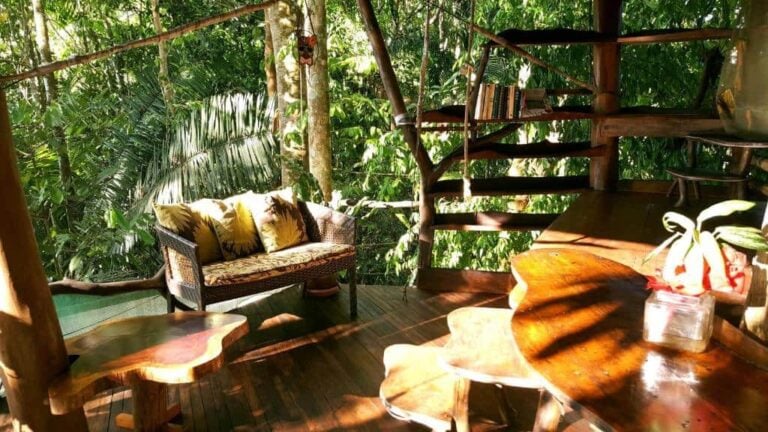
Nightly rates run approximately $50–$150, varying by treehouse and season. That range reflects a place that draws everyone from weekend escapes to open-ended stays — remote workers setting up laptops on terraces between banana leaves, long-term tenants who traded city noise for leaf shade, and volunteers folding into the rhythm of trail work and garden days. The volunteer option is not an afterthought; it is the mechanism that keeps 600 acres functioning as a community rather than a resort.
Finca Bellavista suits travellers who want participation over performance. It rewards those willing to swap convenience for something harder to come by: a working, breathing, stubbornly intact piece of rainforest, with a bed in it.
Frequently Asked Questions
Q: What are nightly rates at Finca Bellavista, and do prices vary?
A: Rates run approximately $50–$150 per night depending on the treehouse and time of year. Prices vary by season and availability, so it's worth checking current options when you're ready to book.
Q: When is the best time to visit Finca Bellavista?
A: The drier windows — roughly January through April and again in July and August — tend to offer warmer days with better conditions for hiking between treehouses and ziplining. The wetter months from May through June and September through November bring powerful waterfalls, intensely green forest, and a rich rainforest soundscape. Both seasons have genuine appeal depending on what you're after.
Q: How does the off-grid setup affect a typical stay?
A: The community runs on solar power and harvested rainwater rather than utility lines — a deliberate design choice from the start. Guests navigate evenings by headlamp, sleep to river and insect sounds, and wake to macaws overhead. It is a comfortable off-grid experience, but travellers who need consistent connectivity or standard hotel amenities should set expectations accordingly.
Q: Can visitors volunteer as part of their stay?
A: Yes. Finca Bellavista has a working volunteer programme through which guests can take part in trail maintenance, garden work, and other community tasks. Volunteering is one of the mechanisms that keeps 600 acres functioning as a community rather than a conventional resort.








Add a review