

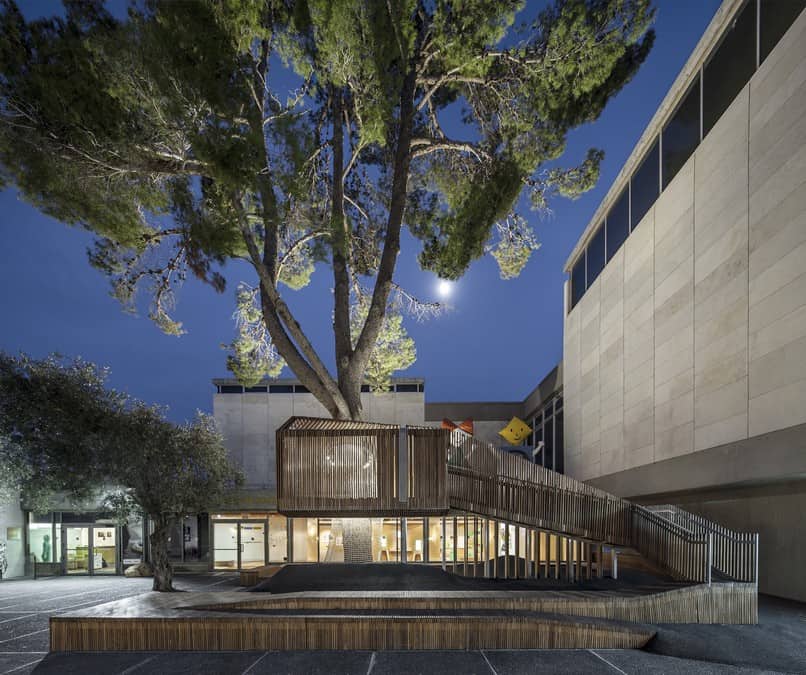
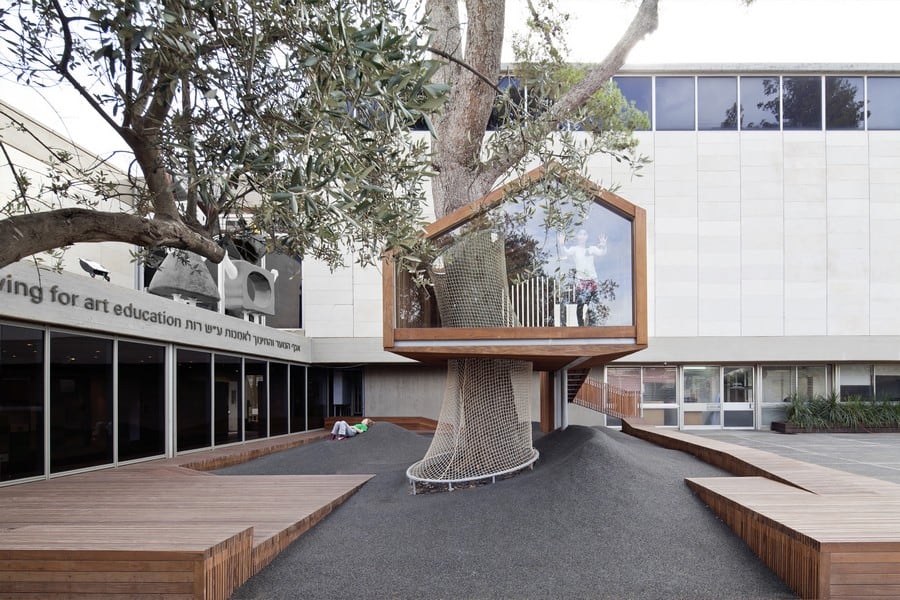
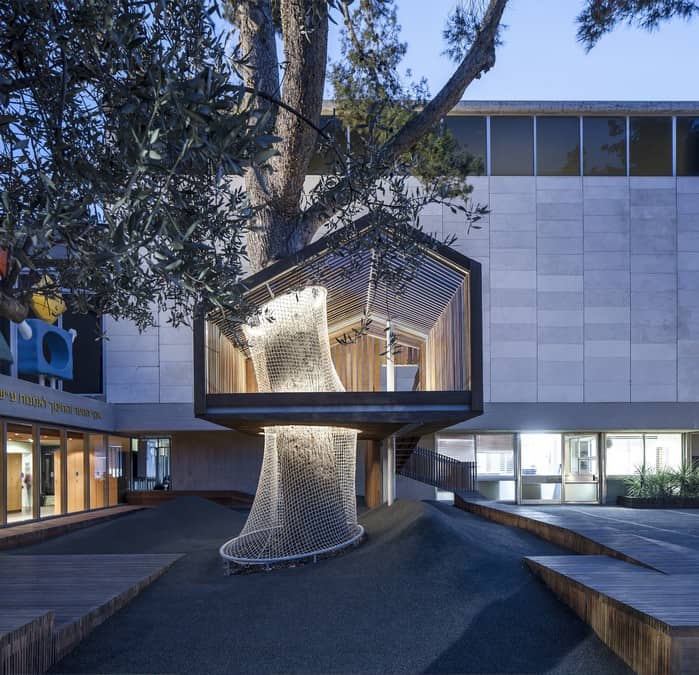
In the sunlit courtyard of the Israel Museum’s Youth Wing, a single pine tree leans slightly off-centre—as if mid-thought—and the whole design seems to orbit around it. Architects Ifat Finkelman and Deborah Warschawski took that tree as both muse and anchor, creating something that feels part sculpture, part memory: a modern treehouse drawn from the edges of childhood imagination.
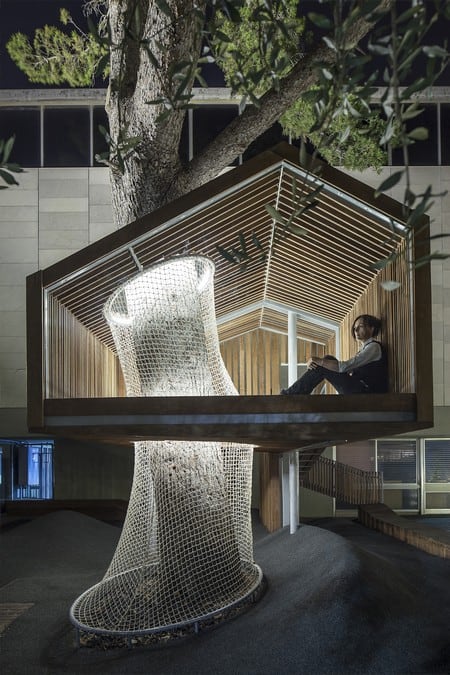
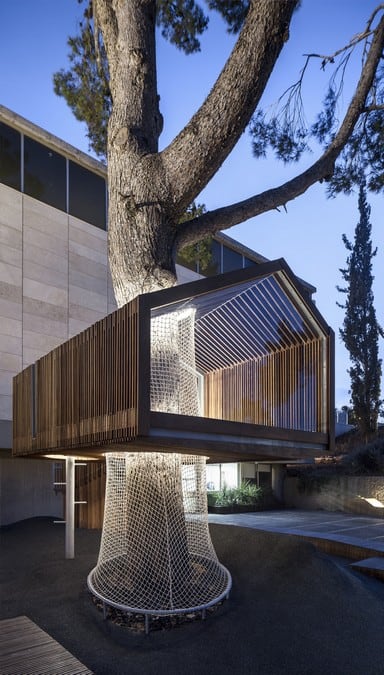
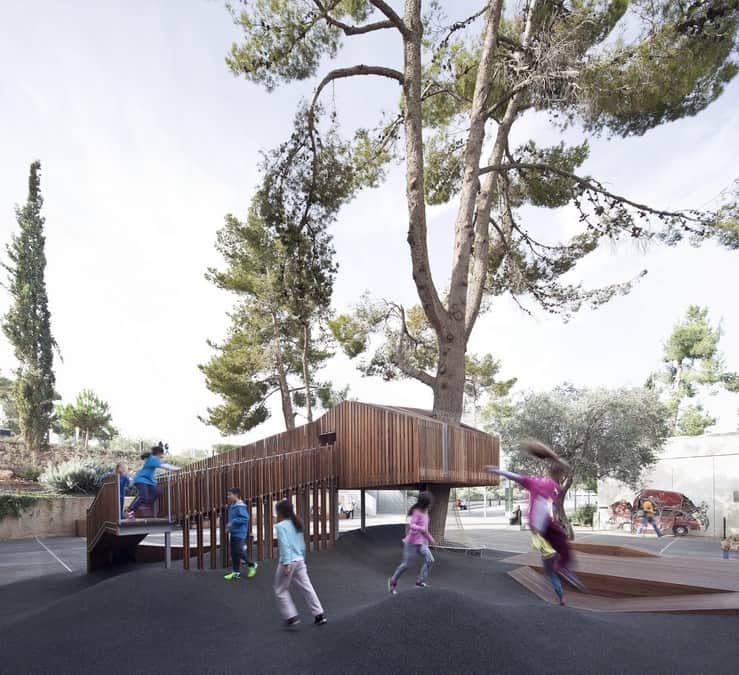
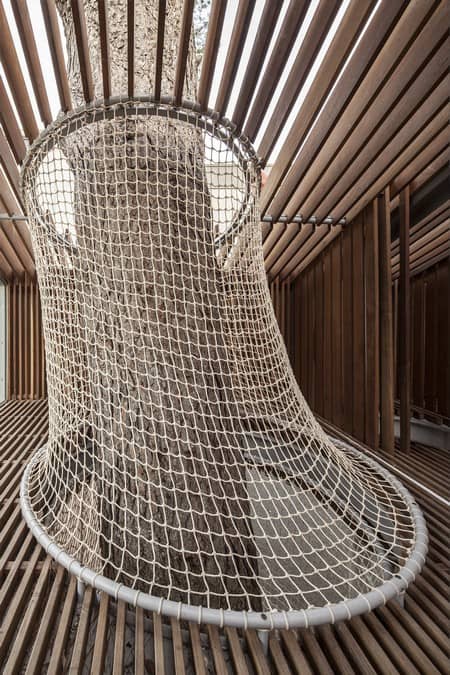
The structure doesn’t shout for attention; it just appears, folding gracefully through the courtyard in a looping ribbon of timber and steel. At one point, it presses close to the pine’s tilted trunk, where a small roofed alcove tucks in—a secret nook perfectly scaled for children. From there, they can peek out through narrow slats at the museum beyond, half-hidden, half-thrilled, like every kid who’s ever claimed a tree as their own.
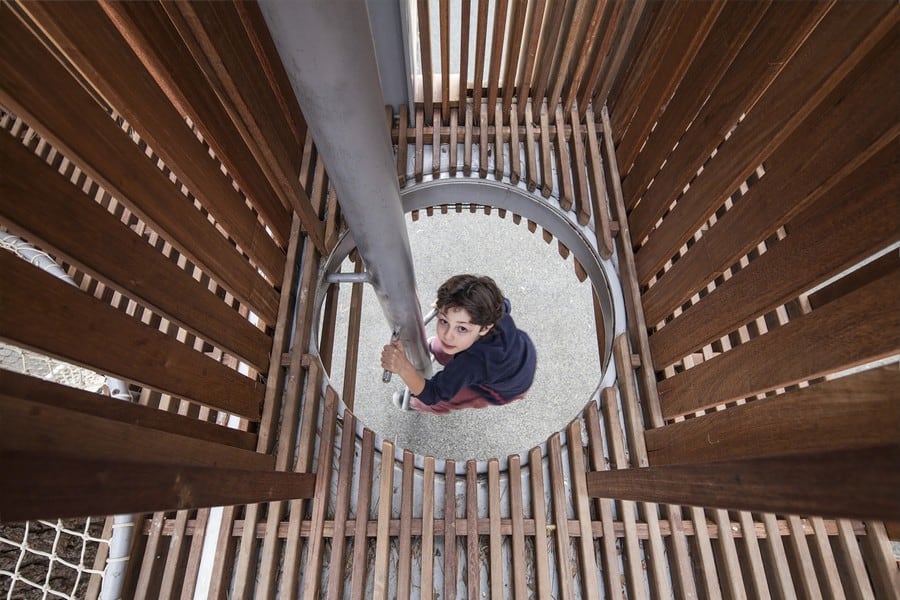
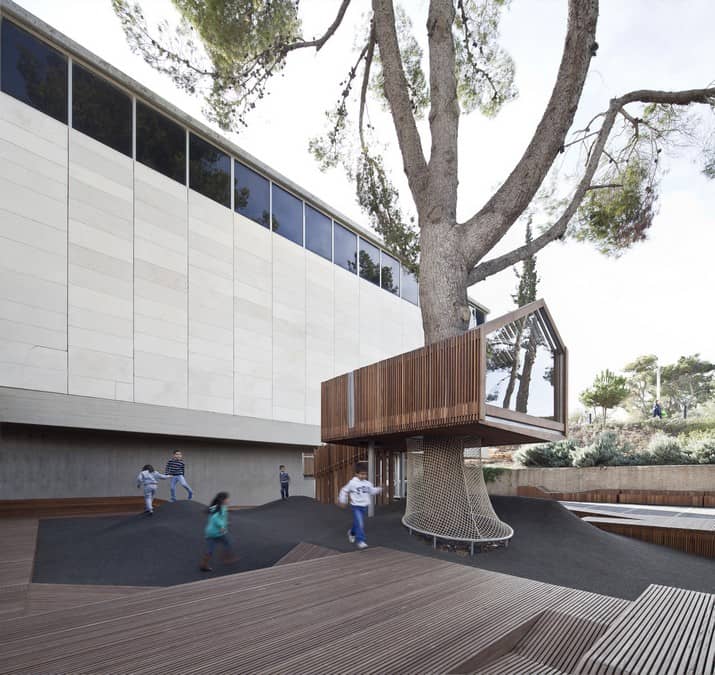
The materials are simple but deliberate. Thin ipe wood boards, only a couple of centimetres thick, are bound to a lightweight steel skeleton. The slats are arranged so that light filters through gradually—dense and private at the top, open and airy below. As the form winds downward, it changes character entirely, slipping seamlessly from structure to landscape. What begins as architecture ends as playground.
At ground level, seating steps rise from a surface of soft EPDM rubber, a gentle cushion for both children and the tree’s roots. The architects managed to turn a practical necessity—protecting the pine’s subterranean network—into something playful and welcoming. It’s the kind of thoughtful detail that disappears into experience; you don’t notice the problem it solved, only the ease it created.
By day, the courtyard hums with motion: kids running circuits, parents lingering in patches of shade, art students sketching from the benches. But at dusk, the tone shifts. Subtle lighting beneath the timber panels makes the structure glow from within, the treehouse suddenly floating like a lantern. The effect is quiet magic—a suspended invitation at the museum’s threshold.
What’s remarkable is how naturally it all fits. The design balances freedom with formality, imagination with context. It invites play without feeling childish, restraint without stiffness. It’s architecture that remembers what it’s like to wonder, and then finds a way to build that memory at full scale.
You leave with a simple thought: the best public spaces aren’t loud—they whisper. They ask you to look twice. This one just happens to do it through a tree.









Add a review