
China
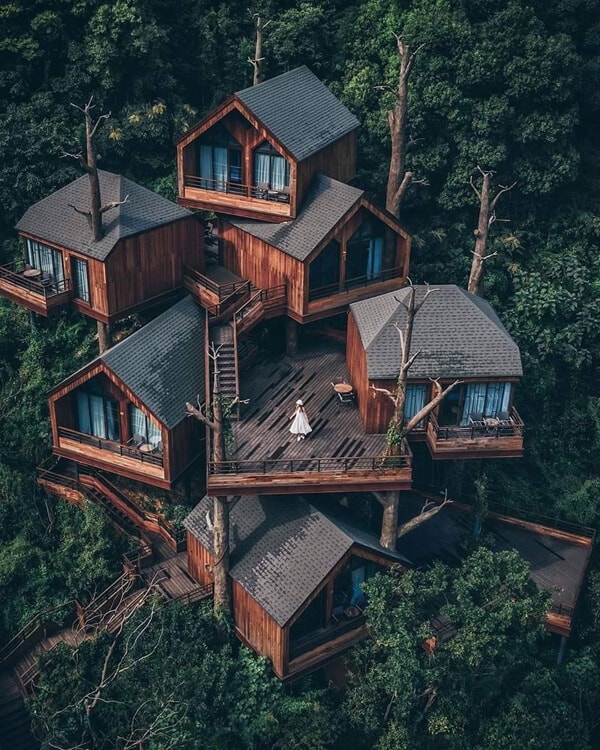
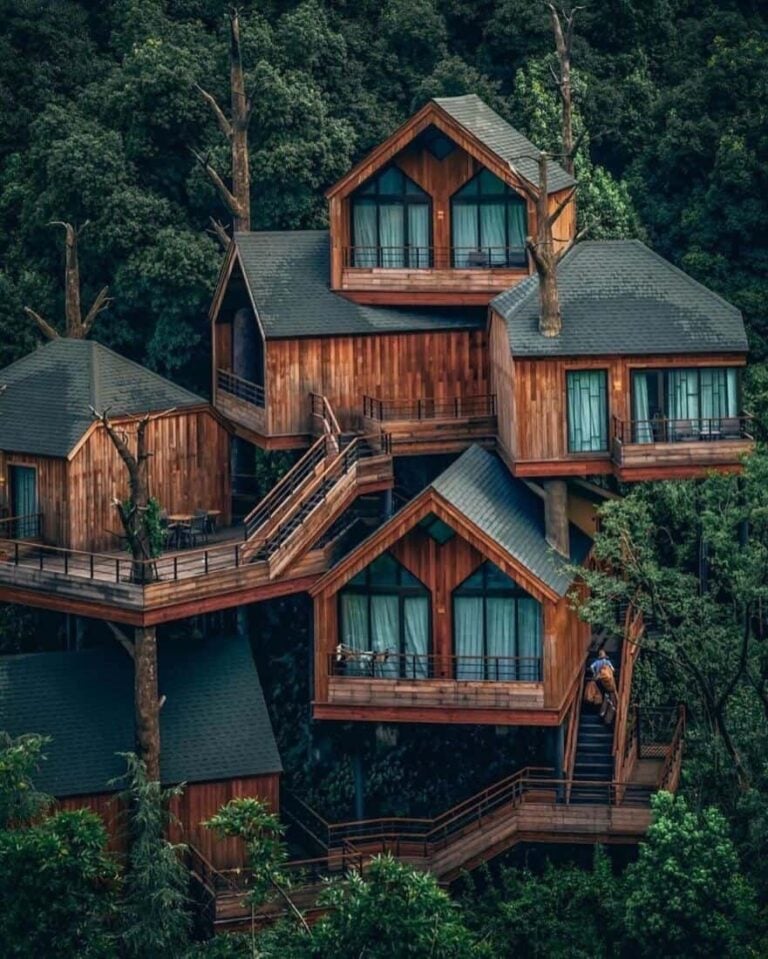
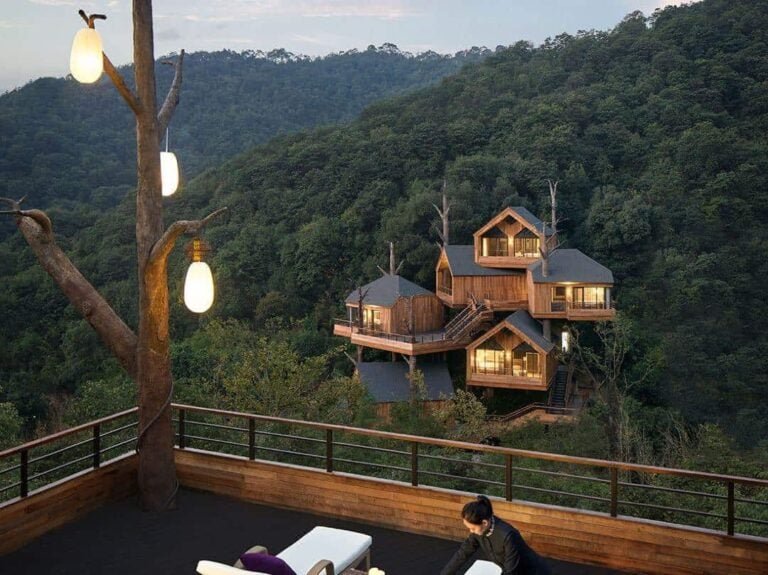
China's treehouse hotels borrow from centuries of pavilion-building and scholar retreats, pairing mortise-and-tenon joinery with underfloor heating and modern eco-systems. Bamboo groves rise east of Hangzhou, limestone karst towers frame southern valleys, and high-altitude larch forests open toward Tibetan plateau edges where prayer flags mark the tree line. These elevated stays sit where old design instincts meet new sustainability, offering height for perspective rather than spectacle across landscapes that shift from tea-plantation mist to alpine meadow cold.
{{locationDetails}}
Browse sub-categories

About China
China's treehouse hotels sit where old design instincts meet new eco-luxury, and the combination feels less like novelty than rediscovery. A bamboo-and-larch structure perched above a forested valley, sliding screens instead of walls, a veranda angled to catch first light over mist—these places borrow from centuries of pavilion-building and scholar retreats, then add underfloor heating and proper plumbing. The country's geographic range makes for very different views: sea-green bamboo groves in the east, limestone karst towers in the south, high-altitude larch forests out west where prayer flags snap in thin air.
Moganshan, a couple hours north of Hangzhou, anchors the eastern cluster. The hills here roll with bamboo and tea plantations, and morning mist settles thick enough that a hot cup of oolong on a treehouse deck feels like the only sensible response. The architecture tends toward restraint—mortise-and-tenon joinery, local cedar, interiors that nod to feng shui without turning it into theatre. Lanterns at night make the whole structure glow warm against the dark hillside. Push further south and the landscape shifts to drama. Zhangjiajie's sandstone pillars rise like ink-brush strokes, some treehouse perches sitting level with swifts and low cloud. Yangshuo softens the lines again with its river bends and karst domes, cormorants working the shallows at dusk while you watch from a balcony above the canopy.
In Yunnan and Sichuan, the forest type changes. Xishuangbanna offers broadleaf rainforest shade, the air heavy with spice and the slow hum of insects, treehouses tucked above banana and rubber groves. Higher up near Shangri-La, larch opens to alpine meadows, nights turn cold, and the faint scent of yak-butter smoke drifts from distant herder stoves. The rooms stay simple—low benches, linen that breathes, a scroll or two on the wall—but the infrastructure is modern where it counts. Solar panels tuck into eaves, greywater systems handle waste sensibly, and warmth rises from the floor when the temperature drops.
These elevated stays make the wider landscape legible at walking speed. A steep trail to a Longji rice-terrace lookout. A temple bell carrying across Fujian tea hills. A quiet stretch of Great Wall at dawn when the bricks are still cold and the valleys blue. Or just the act of sitting still with another pot of tea, watching a white heron lift off a paddy, and admitting the pause matters more than the checklist. China's treehouse hotels promise height for perspective rather than spectacle, and the view they frame—whether bamboo, karst or highland meadow—tends to hold your attention longer than expected.
Frequently asked questions about China
Where are most treehouse hotels located in China?
The eastern provinces hold the highest concentration, particularly around Moganshan in Zhejiang—a couple hours north of Hangzhou—where bamboo-covered hills and tea plantations create the classic misty backdrop. Southern regions like Yangshuo in Guangxi and Zhangjiajie in Hunan offer treehouse stays among karst limestone peaks and river valleys. Western provinces including Yunnan and Sichuan feature properties in larch forests and highland meadows, with Xishuangbanna in the far south providing rainforest settings. Most properties sit within a few hours' travel of major cities or well-connected tourist hubs, making them accessible as weekend retreats or stopover points on longer itineraries.
What's the best time of year to book a treehouse stay in China?
Spring and autumn deliver the most comfortable conditions across most regions. April through May brings blossom and fresh green growth in the eastern bamboo forests, while September through November offers clear skies, autumn colour, and the year's best visibility for mountain views. Summer brings heavy rains to southern provinces like Guangxi and Yunnan, though higher-altitude properties stay cooler. Winter can be beautiful in Moganshan and similar eastern locations when mist and occasional snow create dramatic scenery, but western highland properties near Shangri-La turn very cold and some close seasonally. Book several months ahead for October and Chinese national holidays when domestic travel peaks.
Do I need to speak Mandarin to stay at a Chinese treehouse hotel?
Most boutique treehouse properties catering to international guests offer basic English-language support for booking and check-in, though fluency varies. Properties in established tourist areas like Yangshuo and Moganshan tend to have better English communication than remote Yunnan or Sichuan locations. Expect to use translation apps for deeper conversations and local logistics. WeChat is the dominant booking and communication platform in China, and many smaller properties handle reservations primarily through that app rather than international booking sites. Having key phrases written in Chinese characters helps with taxi directions and restaurant orders in rural areas where treehouse hotels are typically situated.
What should I expect to pay per night?
Boutique treehouse hotels typically range from roughly 800 to 3,000 yuan per night depending on location, season and amenities. Properties near Hangzhou and other eastern hubs trend toward the higher end, especially during peak autumn weekends. Remote Yunnan and Sichuan locations can cost less but may require longer transfers. Rates generally include breakfast, and some properties offer half-board packages that make sense given limited nearby dining options. Prices rise significantly during Chinese national holidays in early October and May, and midweek off-season rates can drop by a third. Most properties require deposit payment through WeChat Pay or Alipay, though some accept international cards for foreign guests.
How do treehouse stays in China differ from those in Thailand or Bali?
Chinese treehouse design leans contemplative rather than tropical-resort exuberant. Expect sliding screens instead of open-air pavilions, muted interiors with low furniture and natural materials, and architecture that borrows from traditional scholar retreats rather than beachside glamping. The landscapes skew temperate—bamboo groves, misty tea hills, pine forests—where morning tea on a veranda feels more appropriate than a plunge pool. Locations tend toward mountain and forest rather than beach or rice paddy. The aesthetic is quieter, more reserved, with underfloor heating for cool nights instead of ceiling fans. Thailand and Bali treehouse stays often centre social spaces and outdoor living; China's turn inward, framing a single excellent view and inviting you to sit with it.