
Nicaragua
Nicaragua's treehouses sit quietly between Pacific surf and volcanic lakes, built into hardwood canopy by people who knew the forest first. Most cluster around Granada and Ometepe's twin cones or down the dry coastal slope near San Juan del Sur, using local timber and solar power without pretending to be resorts. Expect elevated platforms where howler monkeys set the schedule, trails into reserves like Mombacho, and enough breeze to make the absence of air conditioning feel deliberate rather than cheap.
{{locationDetails}}
Browse sub-categories


About Nicaragua
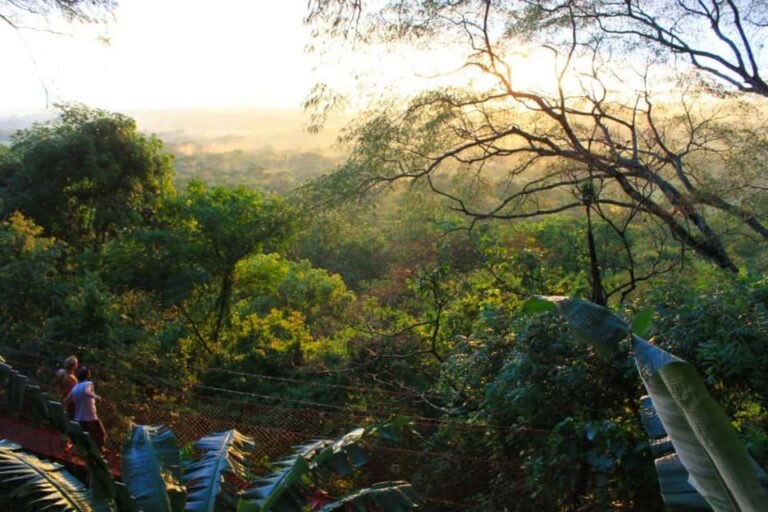
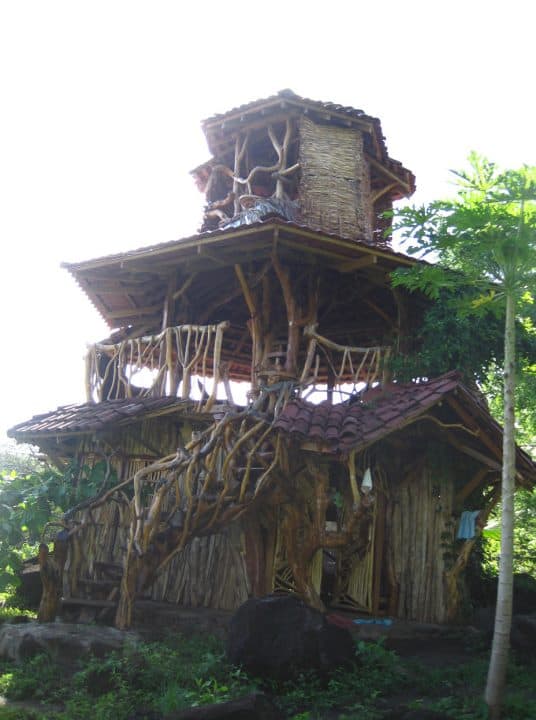
Nicaragua holds treehouses the way it holds volcanoes—casually, as if they'd always been part of the canopy. You'll find a handful of properties scattered between the Pacific coast and the volcanic lakes of the interior, built by people who knew the trees before they built into them. Most use local hardwoods and bamboo, joinery that clicks into place without argument, and enough solar to keep a fan turning and a phone charging. No glass towers pretending to be rustic. Just elevated platforms where the forest gets the last word on your schedule.
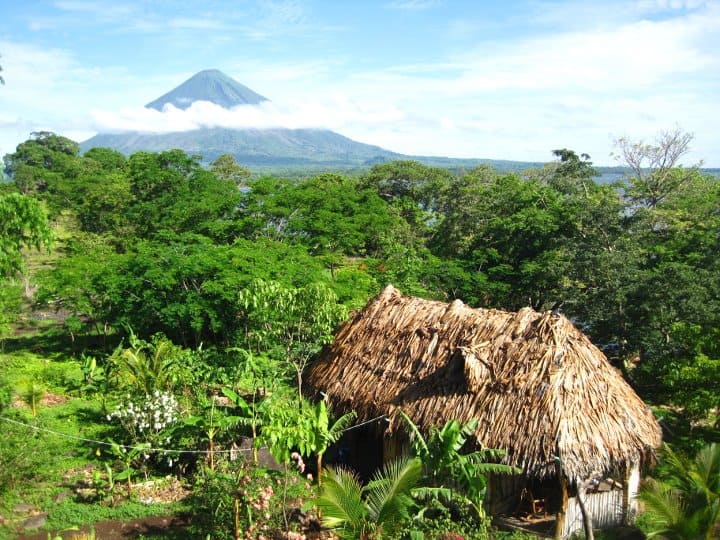
The two main zones work differently. Around Granada and Lake Nicaragua, the air is thick with moisture and birdcall, coffee and cacao growing in the same volcanic soil that feeds Mombacho's cloud forest. Treehouses here sit in the shade canopy, close enough to the lake to catch its shifting light, high enough that howler monkeys become your morning alarm whether you set one or not. Ometepe's twin volcanic cones rise from the water like something out of a myth that forgot to explain itself, and the view from a balcony at dawn makes forgetting your itinerary feel like good sense. Farther north, in the cooler highlands, the forest thickens into moss and orchids, trails that stay quiet, and air that moves slower.
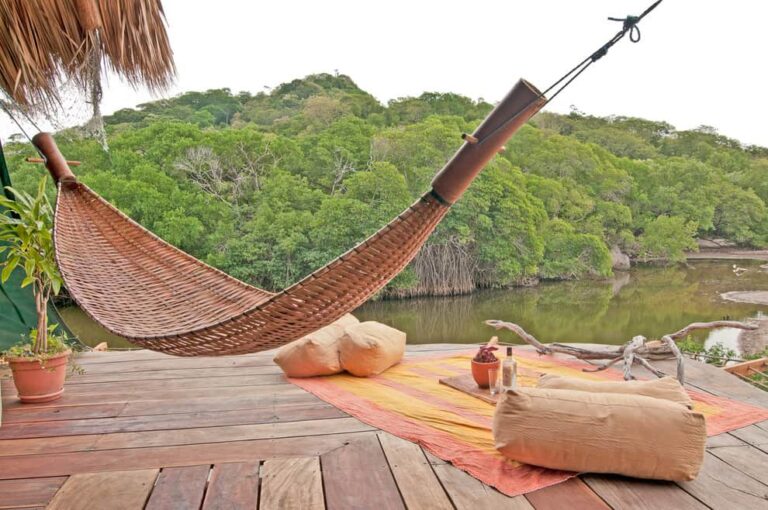
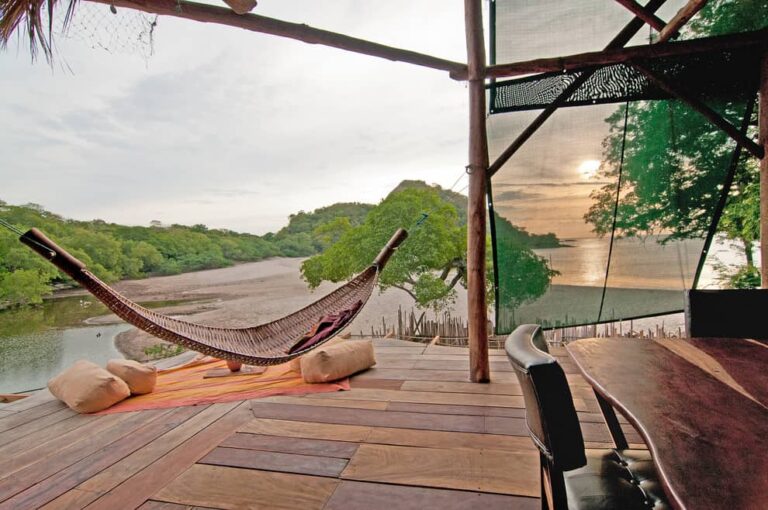
Down the Pacific slope near San Juan del Sur, the mood shifts. Treehouses face the ocean instead of the lake, catching salt and swell from elevated decks where hammock time becomes the day's only real commitment. The dry season runs November through April, hot and clear along the coast, while the rainy season from May into October turns the highlands lush and the lowlands muddier. Afternoon storms are common then, but they pass quickly and leave the forest smelling scrubbed. Most properties lie within a few hours of Managua by road, and some will arrange a pickup from Granada or the coast if you ask ahead.
What you actually do depends less on activity menus and more on what the property backs onto. Some have private reserves with trails that lead somewhere worth walking—a waterfall doing its small hydraulic work, a viewpoint where the lake spreads flat and reflective, a creek that only appears after rain. Others connect to larger protected areas like Mombacho or Charco Verde, where guides lead night walks and read eyeshine like punctuation. Birdwatchers do well here; the turquoise-browed motmot is the national bird and common enough that you'll probably see one without trying. Kayaking the isletas near Granada, watching egrets edit the shoreline, or simply sitting still while the canopy runs its own program—all of it works because the treehouses themselves don't demand much from you.
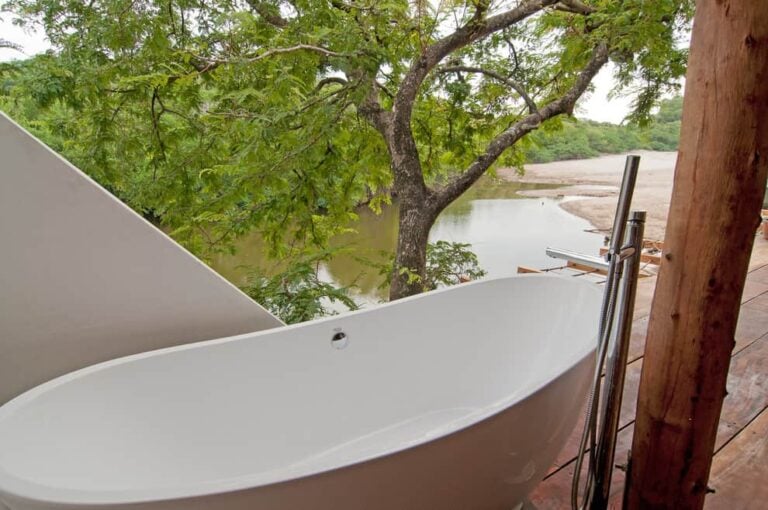
These aren't luxury resorts with spas and concierge desks. Expect rainwater showers, solar-powered lighting, linen that breathes, and construction that respects the root systems underneath. Railings are sturdy, mosquito nets come standard, and the absence of air conditioning feels intentional rather than cheap once you're up in the canopy where the breeze does the job. Nicaragua remains quieter and less expensive than Costa Rica, more accessible than Honduras, and the people building these places tend to live nearby and know the names of the trees they didn't cut down. You arrive for the altitude and leave with something steadier—a slower pulse, maybe a pocketed seedpod, and the sense that the view was never the whole point.
Frequently asked questions about Nicaragua
What's the best time of year to visit a treehouse in Nicaragua?
November through April is the dry season, bringing clear skies and comfortable temperatures especially along the Pacific coast and around Granada. May through October is the rainy season—the highlands turn lush and green, but expect afternoon storms and muddier roads. The forest smells fresher after rain, and you'll see fewer tourists, though some properties may have limited access during the wettest months. Coastal areas stay hot year-round; the cloud forests near Mombacho offer cooler relief any season.
How do I get to treehouses in Nicaragua?
Most treehouses sit within a few hours' drive of Managua, the main international airport. You can rent a car or arrange a shuttle—some properties offer pickup from Granada or San Juan del Sur if you book ahead. Roads are generally paved to the main towns, but the final approach to a treehouse may involve rougher tracks, especially during the rainy season. Public buses run between major hubs, though having your own transport gives you more flexibility.
Do Nicaragua treehouses have electricity and hot water?
Most run on solar power, providing enough electricity for lights, fans and charging devices. Hot water depends on the property—some use solar heating or on-demand systems, while simpler setups may offer ambient-temperature rainwater showers that feel fine in the warm lowlands. Air conditioning is rare, but unnecessary once you're up in the canopy where the breeze moves freely. Check with your specific lodge if hot showers or consistent power matter to your comfort.
What wildlife will I see from a Nicaragua treehouse?
Howler monkeys are the most reliable alarm clock, their calls carrying through the canopy at dawn. You'll likely spot the turquoise-browed motmot, Nicaragua's national bird, along with toucans, parrots and a parade of smaller species if you sit quietly. Sloths appear in some areas, especially around Ometepe and the northern cloud forests. Night walks with a guide reveal different eyeshine—possums, kinkajous, sometimes a boa draped in a low branch. Bring binoculars; the forest rewards patience more than effort.
Are Nicaragua's treehouses safe and well-built?
The treehouses here use local hardwoods and bamboo, built by people who know the trees and the weather. Joinery is solid, railings are sturdy, and platforms are designed to flex slightly with the trunk rather than fight it. Mosquito nets come standard, and most properties have on-site staff. The construction feels intentional—nothing flimsy or improvised. If you're booking a night walk or canopy access, guides handle the technical bits and know the trails in the dark.