
Czechia
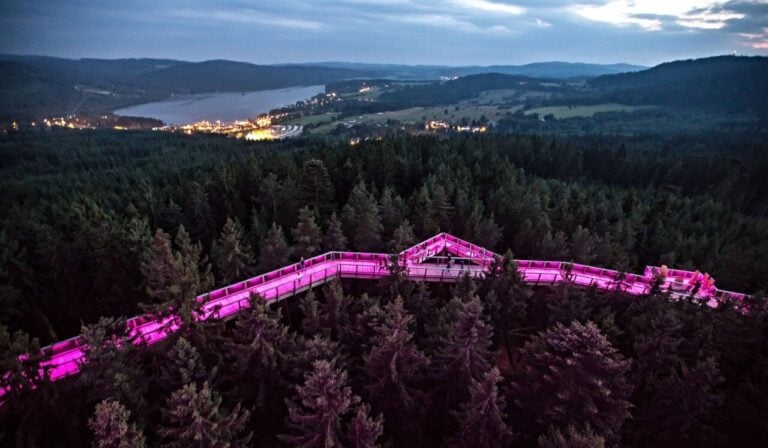
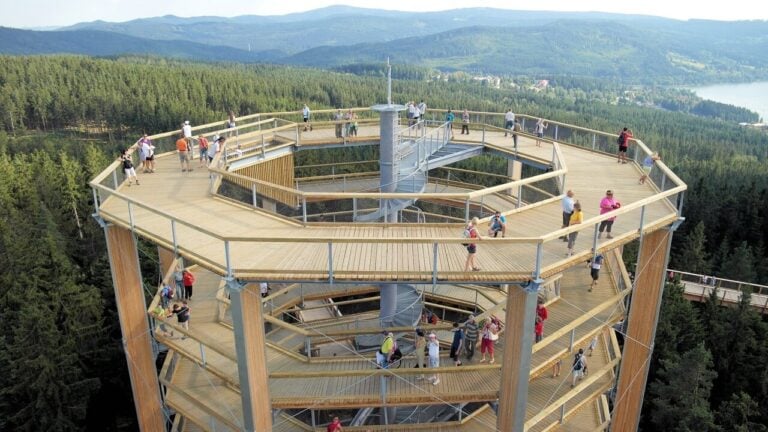
Czechia's treehouses perch in beech and spruce forests across Bohemia and Moravia, offering stays where thick woodland meets careful carpentry and the rhythm slows ten metres off the ground. Most cluster around Šumava's dark conifers, Vysočina's rolling pasture, and the sandstone gorges of České Švýcarsko, with platforms framed in local timber, wood stoves that work without fuss, and views that favour fog threading between trunks over distant landmarks. Days unfold around short walks, cold Kofola, and the kind of silence that makes hurry feel optional.
{{locationDetails}}
Browse sub-categories



About Czechia
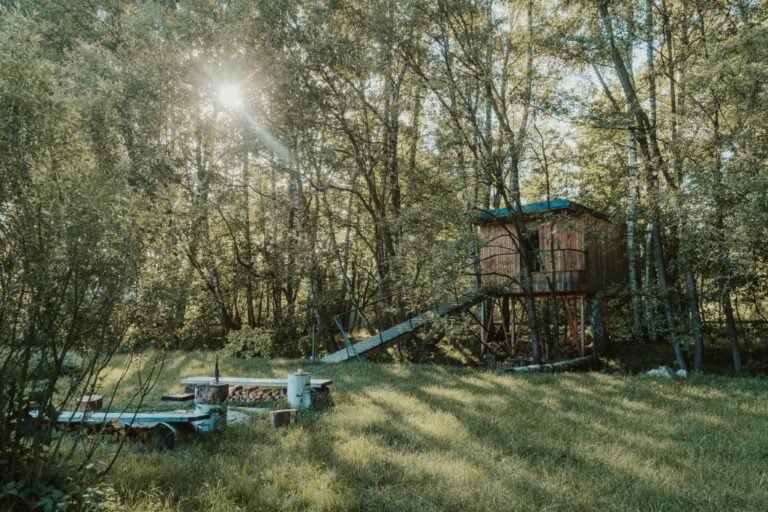
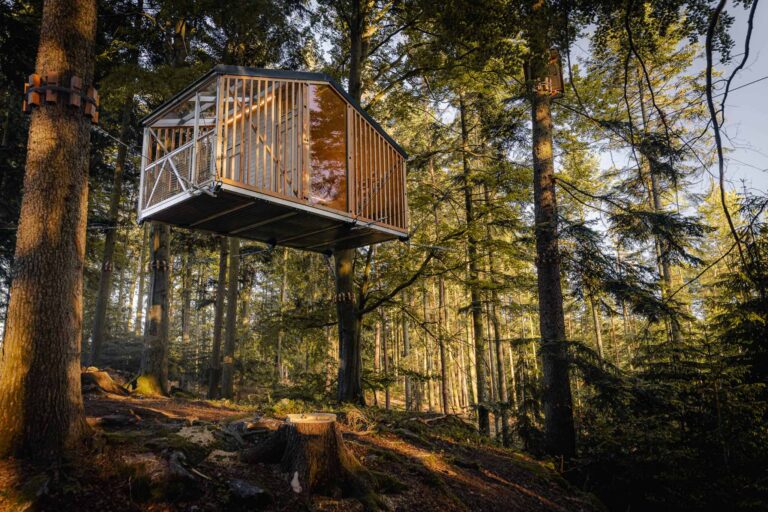
Czechia's treehouses sit where thick forest meets careful carpentry, offering stays that feel less like a novelty and more like a quiet agreement with the woods. Most perch in beech and spruce forests across Bohemia and Moravia, regions where clearings are rare and footpaths outnumber roads. You arrive by car, park beside a meadow or logging track, and follow a path that climbs gently—sometimes stairs nailed to the trunk, sometimes a proper wooden stair spiraling up. The forest smells like resin and damp bark, and once you're ten metres off the ground, the usual hum of daily life drops away.
South Bohemia draws the most attention, particularly around Šumava where dark conifers frame views of peat bogs and distant hills. From a treehouse balcony here you might catch the spires of Český Krumlov on a clear morning, though most of the time the view is closer—a woodpecker working methodically, fog threading between trunks, the slow arc of daylight across moss. Further east in Vysočina the landscape opens slightly into rolling pasture and stone walls, the kind of countryside where mist settles in low folds and breakfast arrives in a basket lowered by rope. North toward České Švýcarsko the mood shifts: sandstone pillars rise abruptly, gorges breathe cool air even in summer, and your platform might face a cliff edge that catches late sun like a theatre curtain.
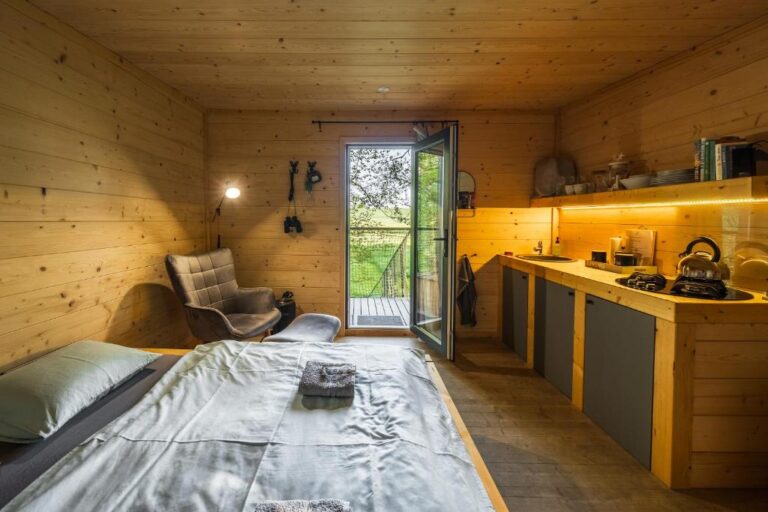
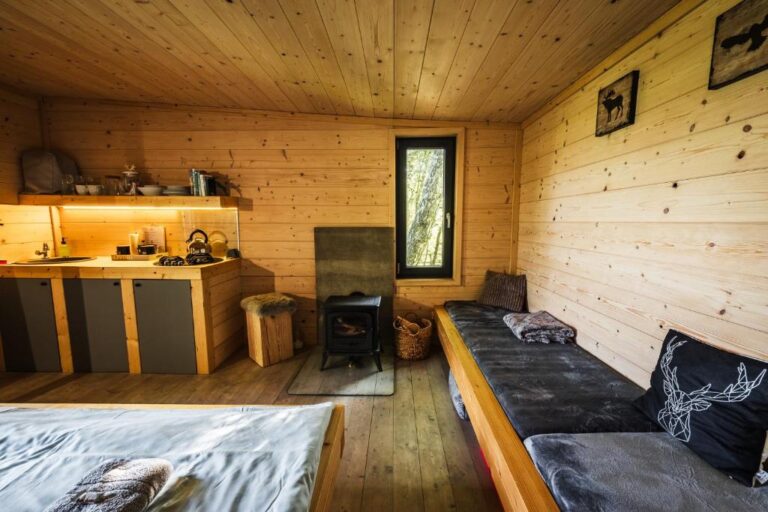
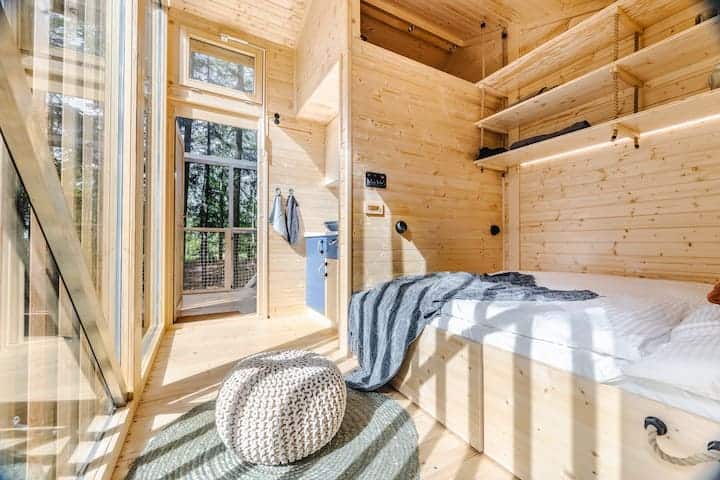
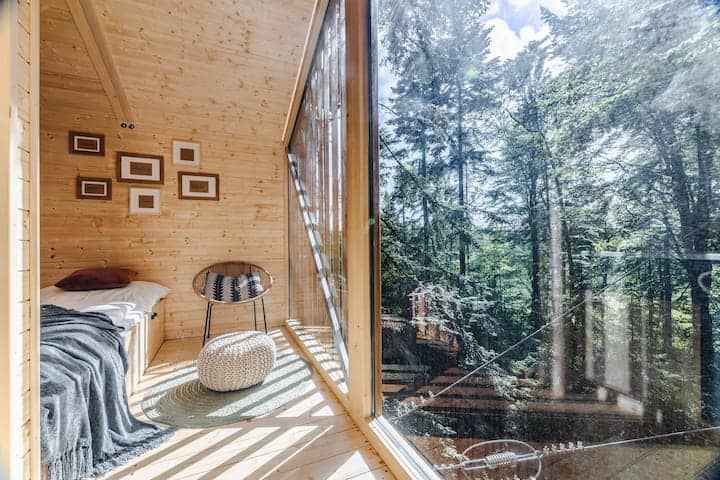
Design tends toward restraint. Local timber—spruce or larch—forms the frame, with large windows doing most of the decorative work. Interiors stay warm without fuss: a small wood stove, wool blankets with weight to them, sometimes a wooden soaking tub tucked under the canopy and fed by a fire you tend yourself. Solar panels hide in the roofline, paths curve around root systems, and the overall impression is one of landing lightly. Amenities exist—hot showers, decent bedding, a functional kitchen—but they don't announce themselves.
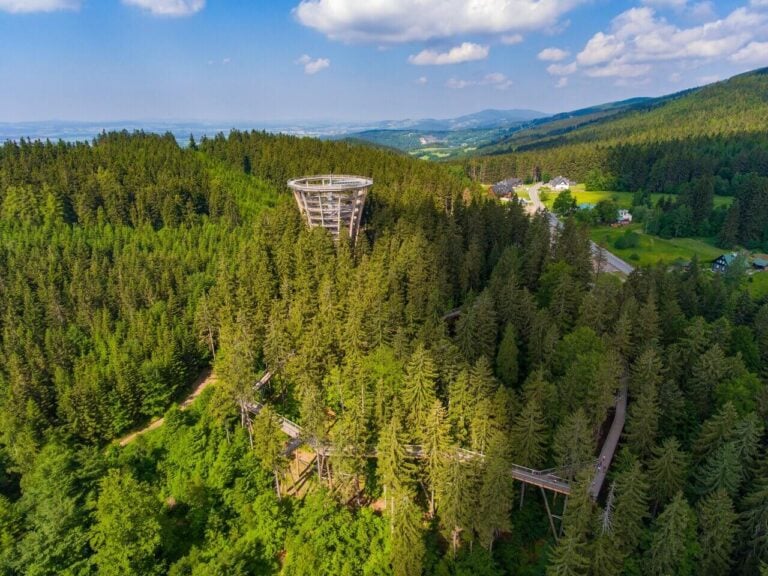
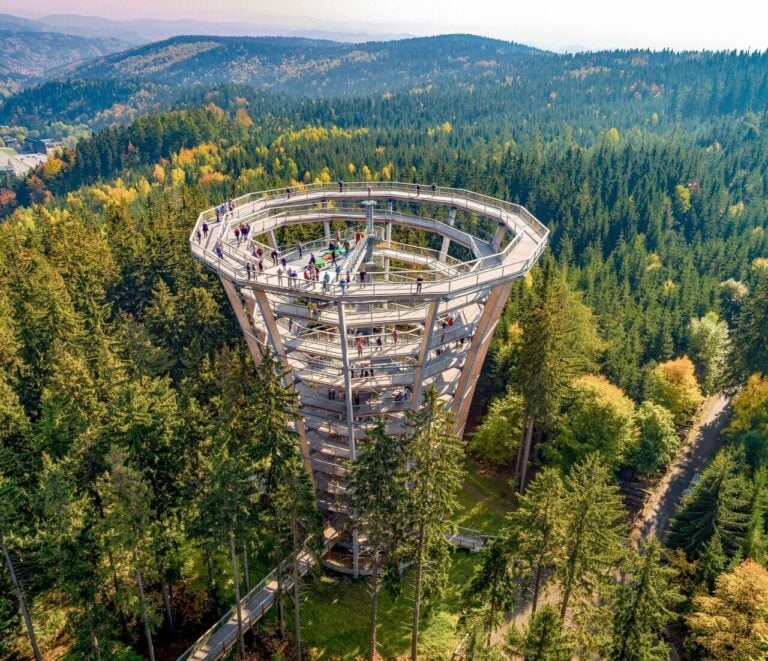
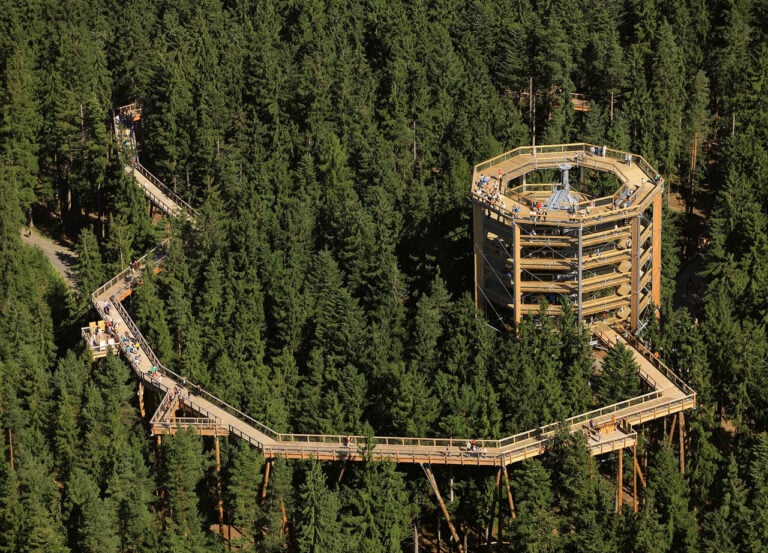
Days unfold without much agenda. You walk to a lookout tower visible through the trees, collect a handful of blueberries and lose interest halfway through, return to your perch and realise the afternoon has vanished into reading or simply watching branches move. If the evening cools, there's svařák; if it stays warm, cold Kofola does the job. In the Jizera Mountains, where light pollution drops to nearly nothing, staying up past midnight to watch stars becomes the day's main event. The appeal is consistent across regions: small elevation, deep silence, and a rhythm that makes hurry feel optional.
Czechia's treehouse stays work best for travellers willing to let the forest set the schedule. Whether you're driving from Prague for a long weekend or extending a hike through one of the national parks, the format is the same—climb a few rungs, settle in, and let the canopy do the rest.
Frequently asked questions about Czechia
Do I need a car to reach treehouses in Czechia?
A car is strongly recommended for most Czech treehouse stays. Properties typically sit in rural forest areas well beyond public transport routes, often reached by gravel tracks or logging roads that require your own vehicle. While Czechia has excellent train and bus networks connecting major towns, the final stretch to a treehouse—sometimes several kilometres from the nearest village—makes driving the practical choice. If you're planning to explore multiple regions or combine your stay with visits to national parks, having a car turns necessary into convenient.
What's the best time of year to stay in a Czech treehouse?
Late spring through early autumn offers the most accessible conditions, with May to September bringing warm days, long evening light, and full forest canopy. Autumn—particularly October—rewards with dramatic foliage and cooler, crisp air ideal for wood-stove evenings. Many treehouses stay open year-round and winter visits have their own appeal, especially after fresh snow, though November through March means shorter days, potential road challenges in mountain areas, and the need to embrace cold-weather routines. Summer weekends book fastest; if flexibility allows, midweek stays in shoulder seasons often deliver better availability and quieter forest surroundings.
Are Czech treehouses suitable for families with children?
It depends on the specific property. Some treehouses feature solid wooden staircases, enclosed platforms, and railings designed with families in mind, making them workable for older children who are comfortable with heights. Others lean toward romantic seclusion with steeper access, open balconies, or layouts better suited to couples seeking quiet. Check individual property details for age recommendations, stair design, and whether the platform is fully enclosed. The forest setting itself—deep woods, limited mobile signal, minimal nearby amenities—tends to favor slower-paced, nature-focused families rather than those expecting playground-style entertainment.
How far are Czech treehouses from Prague or other major cities?
Most treehouse locations sit roughly two to three hours' drive from Prague, placing them within comfortable range for a long weekend. South Bohemia properties near Šumava lie around 170 kilometres south of the capital, while České Švýcarsko to the north is closer to 130 kilometres and often reachable in under two hours. Brno offers a shorter starting point for Vysočina stays, and visitors coming from Vienna, Dresden, or southern Poland may find certain regions even more accessible. The distances make Czechia's treehouses particularly appealing for Central European travellers seeking a forest escape without committing to a full travel day.
What activities work well from a treehouse base in Czechia?
The forest itself provides the main activity—walking marked trails that wind through beech and spruce, spotting woodpeckers and red deer, or simply sitting still long enough to notice how the canopy changes light through the day. In Šumava you're near peat bogs and lookout towers; České Švýcarsko offers sandstone gorges and the famous Pravčická brána arch within striking distance; Jizera Mountains suit stargazing when skies clear. Many stays involve short drives to trailheads, small towns with traditional hospody, or cultural anchors like Český Krumlov. The rhythm leans toward quiet movement rather than packed itineraries—collecting mushrooms in autumn, soaking in a wood-fired tub at dusk, or letting a planned hike turn into an afternoon of reading on the platform.