
Jamaica
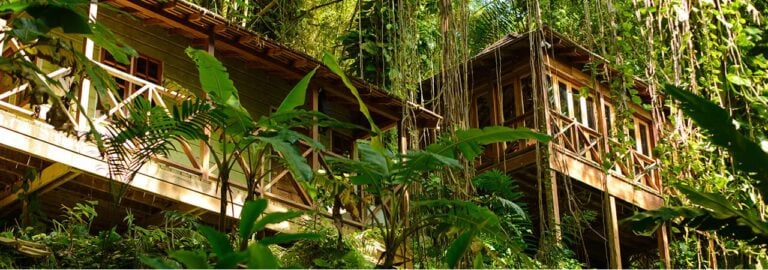
Jamaica treehouses lift you into a different rhythm, from Blue Mountain coffee estates wrapped in cloud to north-coast platforms catching Caribbean breeze through wide shutters. The island's stays follow the landscape—Portland river valleys thick with breadfruit and bamboo, Negril's open sky above long sand stretches, mountain ridges where trails lead to waterfalls and the air cools as you climb. Most properties use what grows nearby—cedar, bamboo, limewash—and require four-wheel drive to reach, practical remote builds that settle you into mornings unhurried by anything but light shifting across banana leaves.
{{locationDetails}}
Browse sub-categories


About Jamaica
Jamaica treehouses lift you into a different rhythm. Coffee estates tucked into the Blue Mountains, river valleys thick with breadfruit and bamboo, north-coast hills catching the breeze off the Caribbean—each region offers something distinct, and the best stays understand the difference between hiding from Jamaica and living inside it for a few days.
The Blue Mountains deliver mornings wrapped in cloud and quiet. Treehouses here sit high enough that the air changes, cooler and sharper, and the coffee grown on surrounding slopes tastes clean with a faint citrus edge if you pay attention. Kingston lies below, but distance mutes the city into scattered light. Trails run through the ridges; some lead to waterfalls, others just to better views. Portland Parish, farther east, threads treehouses above rivers and fruit groves where the jungle feels denser and wetter. Reach Falls and the Blue Lagoon—that improbable shade of turquoise—sit close enough for an easy afternoon, and the roads narrow under canopy until you're certain you've missed the turn, then the stairs appear.
The north coast near Ocho Rios balances accessibility with seclusion. Dunn's River Falls draws crowds, especially when cruise ships dock, but early mornings or late afternoons leave the area calmer. Treehouses here catch sea breeze through wide shutters and offer quicker access to snorkeling coves and beach towns. Negril, at the western tip, trades jungle density for open sky and that long stretch of sand shimmering through palm trunks. Sunsets from a treehouse deck there feel unhurried, backed by a low reggae pulse drifting from somewhere down the hill, easy and rhythmic like the island itself.
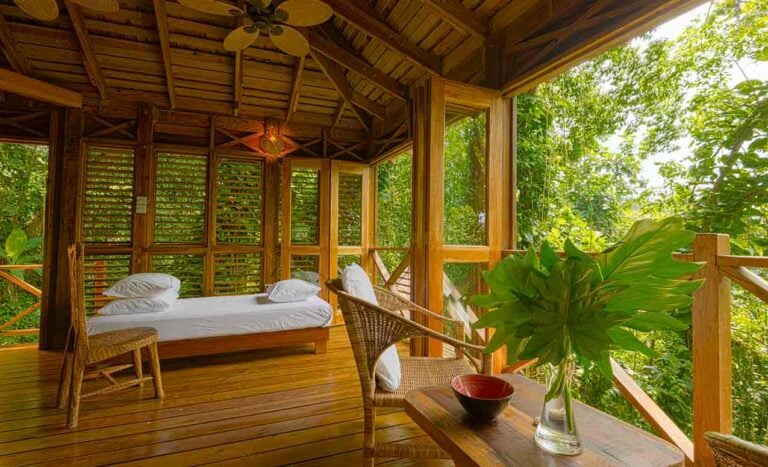
Most properties lean into what grows nearby—cedar frames, bamboo rails, limewash that breathes with the humidity. Solar panels and rainwater catchment show up often, practical choices that suit remote locations without turning sustainability into a selling point. Hammocks, rain showers scented faintly with lime, big wooden tables for lingering over breakfast. Comfort arrives without fuss. Many treehouses require four-wheel drive or pre-arranged transfers; mountain roads narrow and twist, and cell service fades in higher elevations. Book a few months ahead for dry season between December and April, though the Blue Mountains stay cooler year-round and Portland keeps its green intensity even in summer heat.
Days here follow their own logic. Hike to a hidden waterfall, paddle a quiet cove, eat jerk chicken straight from the grill with your fingers sticky and the smoke still clinging to the paper. Or stay on the deck and watch light shift across banana leaves, noticing how the afternoon slows when you stop measuring it. Jamaica's treehouses don't try to separate you from the island—they just lift you high enough to see it differently, and that shift in perspective tends to stick long after you've climbed back down.
Frequently asked questions about Jamaica
Where are Jamaica's treehouse hotels located?
Most cluster in four regions: the Blue Mountains near Kingston offer cool-climate coffee estates and hiking trails; Portland Parish in the east provides jungle river access near Reach Falls and the Blue Lagoon; the north coast around Ocho Rios balances beach proximity with hillside seclusion; and Negril on the western tip delivers open-sky sunset views above seven-mile beach. Many properties require four-wheel drive or pre-arranged transfers, particularly in the mountains where roads narrow and twist.
When is the best time to book a treehouse in Jamaica?
The dry season from December through April sees the highest demand, so book two to three months ahead for those dates. The Blue Mountains stay cooler year-round and Portland keeps its green intensity even during summer heat, making them appealing outside peak season when availability improves and the island feels less crowded.
What activities are near Jamaican treehouses?
Waterfall hikes, river swimming, and coffee estate tours dominate the Blue Mountains and Portland areas. The north coast offers snorkeling coves and Dunn's River Falls, best visited early before cruise-ship crowds arrive mid-morning. Negril treehouses sit close to long beaches for swimming and sunset watching. Jerk food—smoky chicken or pork straight from roadside grills—turns up everywhere and tastes better eaten with your fingers.
Are Jamaica's treehouses eco-friendly?
Many properties use solar power and rainwater catchment systems, practical choices for remote locations where infrastructure is sparse. You'll often find local materials like cedar frames, bamboo rails, and limewash finishes that suit the humid climate. These features show up as design elements rather than explicit sustainability messaging, woven into how the treehouses are built and operate.
How do I get to a treehouse in Jamaica's mountains?
Most mountain properties require four-wheel drive or pre-arranged transfers from your host. Roads narrow under jungle canopy, particularly in the Blue Mountains and Portland Parish, and cell service fades at higher elevations. Montego Bay and Kingston airports serve as main entry points; expect one to three hours of travel depending on your treehouse location, with the final stretch often on unpaved or steep terrain.