

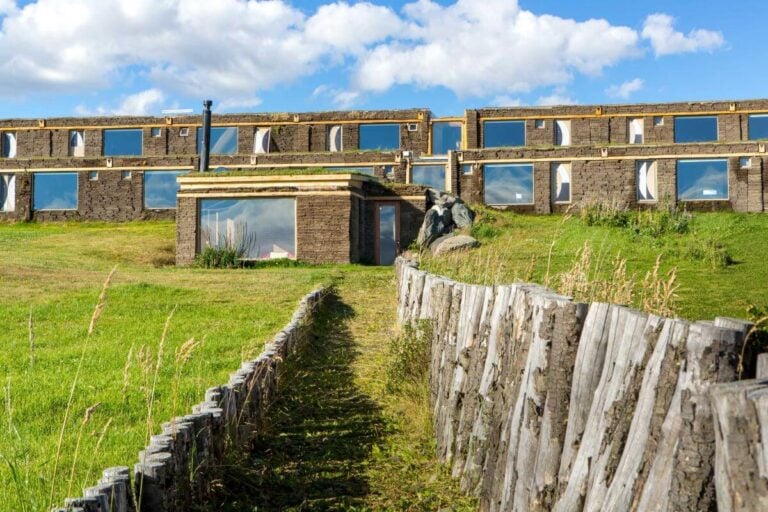
Chilean architect Pablo Larroulet made a deliberate choice at AKA Patagonia: lift the building off the ground. Six prefabricated modules sit on stilts above a sloping hillside outside Puerto Natales, each one clad in lenga — a native hardwood that weathers Patagonia's extremes without complaint and slowly takes on the texture of the landscape around it. The result is a small property that occupies its site lightly, letting vegetation breathe beneath the floors and keeping the horizon intact above the roofline.
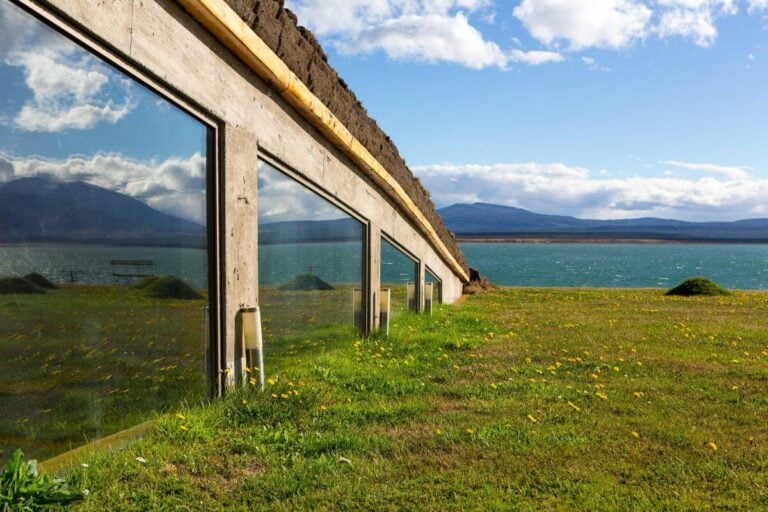
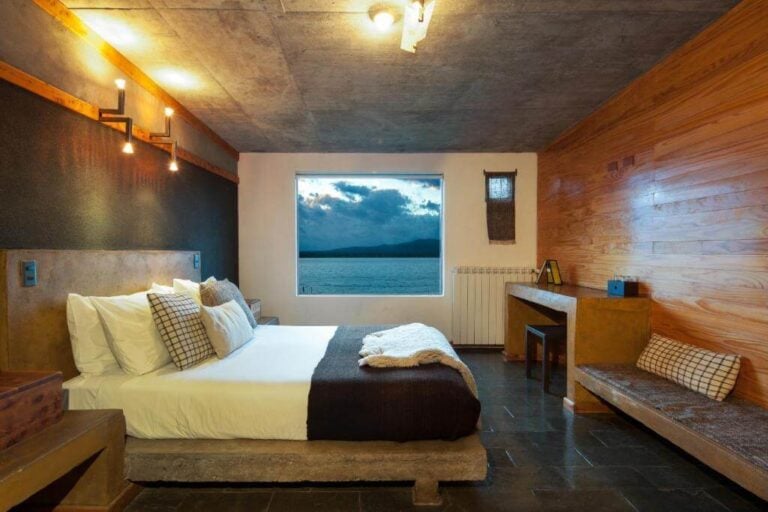
Each module is a private double room with an en-suite bathroom and windows oriented toward glacial ridges and snow-capped peaks. Waking up here means meeting the mountains before breakfast. The glass is well-insulated, so light arrives in quantity without the cold following it. Six rooms is a deliberate limit — small enough that you never feel processed, large enough to give the place a quiet social life.
That social life centres on the communal building: a shared lounge and dining space where guests tend to gather naturally rather than by obligation. The communal kitchen lets you cook your own meals when the mood takes you, and the intimacy of the scale means those shared moments rarely feel forced. Free bicycle hire gives you an independent way into the surrounding terrain — no guides required, no schedule to honour.
The design philosophy runs through every material decision. Raising the modules on stilts protects the ground cover beneath them. Using lenga connects the structure to the regional ecosystem rather than importing something foreign. Prefabricating off-site and assembling on location reduced disturbance during construction. Summer — roughly December through February — brings the longest days and mildest temperatures for exploring this corner of Patagonia, while the shoulder months of October to November and March to April offer dramatic, photogenic light and noticeably fewer visitors. Nightly rates start from around $100, varying by season and availability, which places AKA Patagonia in accessible territory for a considered design stay.
This is not a spa resort, and it does not pretend to be one. There are no indulgent extras layered on to justify a premium. What it offers instead is restraint: quiet materials, considered views, enough comfort to rest properly after a day near Torres del Paine or along the fjords, and a room that still feels like it belongs to the landscape when you return to it.
Puerto Natales itself sits roughly five kilometres from the property — close enough for supplies and connections, far enough that the hillside keeps its quiet. For travellers arriving by sea, the Ferry Terminal Puerto Natales is approximately 3.7 kilometres from the property. It serves Navimag ferry routes in both directions between Puerto Natales, Puerto Edén and Puerto Montt — a scenic approach to Patagonia for those travelling from the Lake District or central Chile. Road and bus connections into Puerto Natales provide the more common overland option for most guests.
AKA Patagonia suits travellers who measure a stay by what they notice rather than what they consume. If you want design that earns its place in the landscape, glacier views from your pillow and a basecamp that feels genuinely considered, this small hillside property delivers something harder to find than comfort alone.
Frequently Asked Questions
Q: How many guest rooms does AKA Patagonia have, and what can I expect from the accommodation?
A: The property has six private double rooms, each housed in a separate prefabricated module raised on stilts above the hillside. Every unit includes an en-suite bathroom and large windows oriented toward glacial ridges and snow-capped peaks.
Q: What shared facilities and activities does the property offer?
A: A communal building serves as the social heart of the property, with a shared lounge, dining area, and kitchen where guests can cook their own meals. Free bicycle hire is available, giving you an independent way to explore the surrounding terrain at your own pace.
Q: When is the best time to visit AKA Patagonia?
A: Summer in Patagonia — December through February — brings the longest days and mildest temperatures, ideal for exploring the region. The shoulder months of October to November and March to April tend to be cooler and windier, but offer dramatic light and noticeably fewer visitors. Winter months from June through September are cold and snowy, better suited to adventurous travellers comfortable with harsh conditions.
Q: What do nightly rates look like at AKA Patagonia?
A: Rates generally fall in the approximately $100–$200 per night range, placing the property in accessible territory for a considered design stay in Patagonia. Prices vary by season and availability, so it's worth checking current rates before you book.
Q: How far is AKA Patagonia from Puerto Natales, and is it easy to reach?
A: The property sits around five kilometres from the Puerto Natales town centre — close enough for supplies and onward connections, but far enough that the hillside feels genuinely removed from town. Travellers arriving by sea via the Navimag ferry will find the Puerto Natales Ferry Terminal approximately 3.7 kilometres from the property.




Add a review