
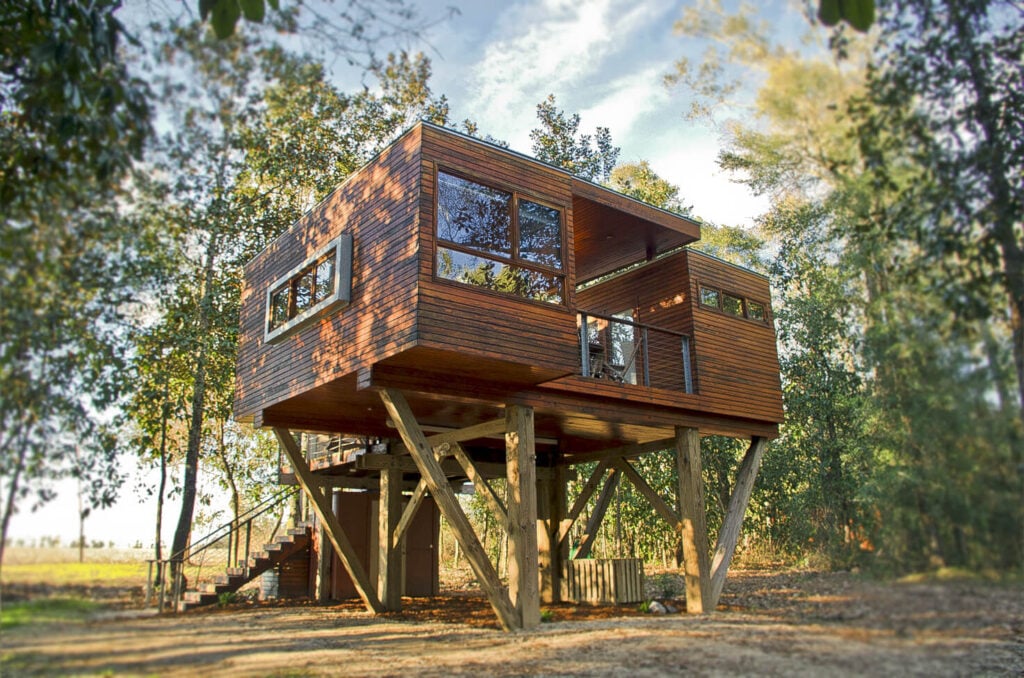
The first thing you notice is the sound. Before full light, Coldwater Creek is already at work — a low, unhurried movement beneath the stilts, closer than expected, intimate in the way that only water beneath a floor can be. Waking inside the sleeping cabin to that sound is the clearest argument for why this place exists.
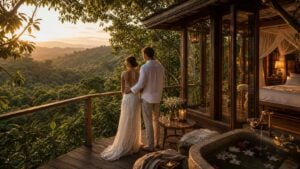
Coldwater Treehouse sits on a wooded parcel at 7009 Creek Stone Road in Milton, in Florida's Panhandle. The core stay divides across two small elevated timber cabins positioned a few steps apart under cypress and magnolia. One holds the sleeping space, hushed and uncluttered. The other houses the bathroom, a compact kitchen with enough equipment to produce a real breakfast, and everything the first cabin deliberately leaves out. Between them, a breezy covered terrace becomes the shared heart — part dining room, part bird blind, part evening lookout. The design carries a quiet intelligence; the elevated footprint keeps ground disturbance low and gives both cabins a sense of floating above the understorey rather than sitting on it.
Across the path, the Bridge House earns its name. It spans a ditch and turns the crossing itself into habitable space — an architectural move that is both practical and quietly remarkable. The larger side integrates a living room, bathroom and sleeping area in a layout that feels considered rather than compressed. A smaller unit adds a kitchen and extra sleeping space for additional guests. Stand at the midpoint and you feel water shifting beneath your feet. It is oddly grounding, and oddly right.
The land around both structures is distinctly Panhandle. Cypress trees stand on their knobbly knees at the water's edge. Lean cedars and glossy magnolias fill the gaps. The terrain shifts from swamp margin to a seam of open cultivated fields and back into deep forest — a patchwork that the region pulls off like nowhere else. Dragonflies work the air in the heat. Tree frogs start early in the evening. Sit still long enough and you'll hear the soft plop of a turtle before you catch the ripple spreading.
Coldwater Creek is the headline. It runs clear and cool along the southeastern edge of the property, with the kind of transparency that lets you read the sandy bottom in summer. That clarity is not common enough to take for granted. Day paddlers come through in canoes; locals wade in with children as a matter of routine. Linger at the bank and you may see a heron working the shallows, a bass turning silver in a shaft of light, or a beaver tracing a quiet line at dusk.
Timing matters here. The stretch from October through April brings the most comfortable conditions for paddling, wetland walks and time on the terrace — mild days with temperatures often sitting between ten and twenty-five degrees Celsius. Spring adds wildflowers and active birdlife before summer humidity peaks. Summer visitors get lush vegetation and warm nights, but afternoon thunderstorms and intense heat come with the package. August and September fall inside Gulf hurricane season, so flexible bookings and forecast awareness are sensible.
Nights settle in a particular way. Humidity softens. Magnolia scent lingers past dark. The creek is more audible than visible, and the forest — not the amenities — runs the programme. Screens and a real shower are present, but the structure is set up for people who want the trees and water to have the first claim on their attention.
This retreat suits couples after genuine quietude, birders drawn to the Panhandle's specific ecology, and anyone curious about low-impact elevated design in a working natural setting. It is not a themed resort or glamping complex. It is a considered piece of architecture beside a remarkable creek, in one of the least-crowded corners of Florida. What you leave with is harder to name than what you arrive expecting — and that, mostly, is the point.
Frequently Asked Questions
Q: What is the setup at Coldwater Treehouse — is it one structure or several?
A: The stay divides across two small elevated timber cabins a few steps apart: one for sleeping, one housing the bathroom and kitchen. A covered terrace between them serves as the shared gathering space. Across the path, the Bridge House is a separate structure that literally spans a ditch — with a living room, bathroom and sleeping area on the larger side, and a kitchen with extra sleeping space in a smaller attached unit.
Q: What is Coldwater Creek actually like, and can guests get on the water?
A: The creek runs along the southeastern edge of the property and is notably clear — sandy-bottomed and readable even in summer, which is genuinely uncommon for the region. Day paddlers come through by canoe, and wading is a routine local activity. Wildlife on the water includes herons, bass, turtles and the occasional beaver at dusk.
Q: When is a good time to visit?
A: October through April tends to be the most comfortable stretch — mild days are well suited to paddling the creek, walking the cypress wetlands and spending time on the terrace without heavy heat. Spring in particular is good for birdlife and wildflowers. Summer brings lush vegetation and warm nights but also real humidity, afternoon thunderstorms and, in August and September, the peak of Gulf hurricane season — flexible booking is worth considering for those months.
Q: Is this a good fit for guests who want genuine nature immersion rather than a resort-style experience?
A: Yes. The design keeps the footprint light and the setting deliberately unmanicured — cypress trees, magnolias, swamp edges and open fields rather than curated grounds. Tree frogs, dragonflies and creek sounds are part of the stay. Guests who want structured amenities or a polished resort atmosphere will find it a different kind of place.




Add a review