
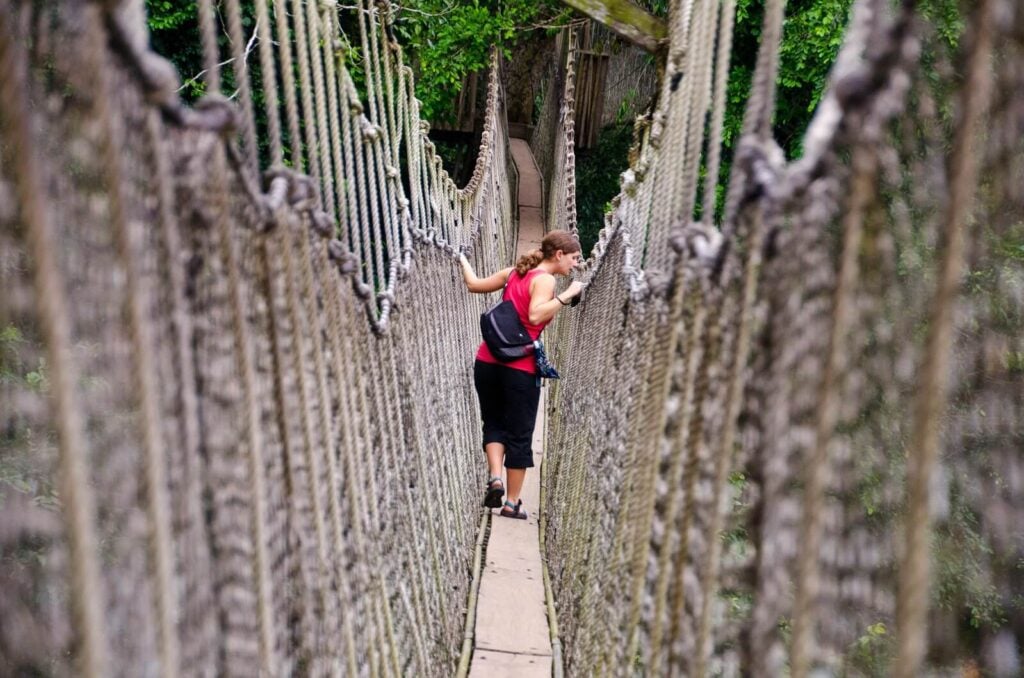
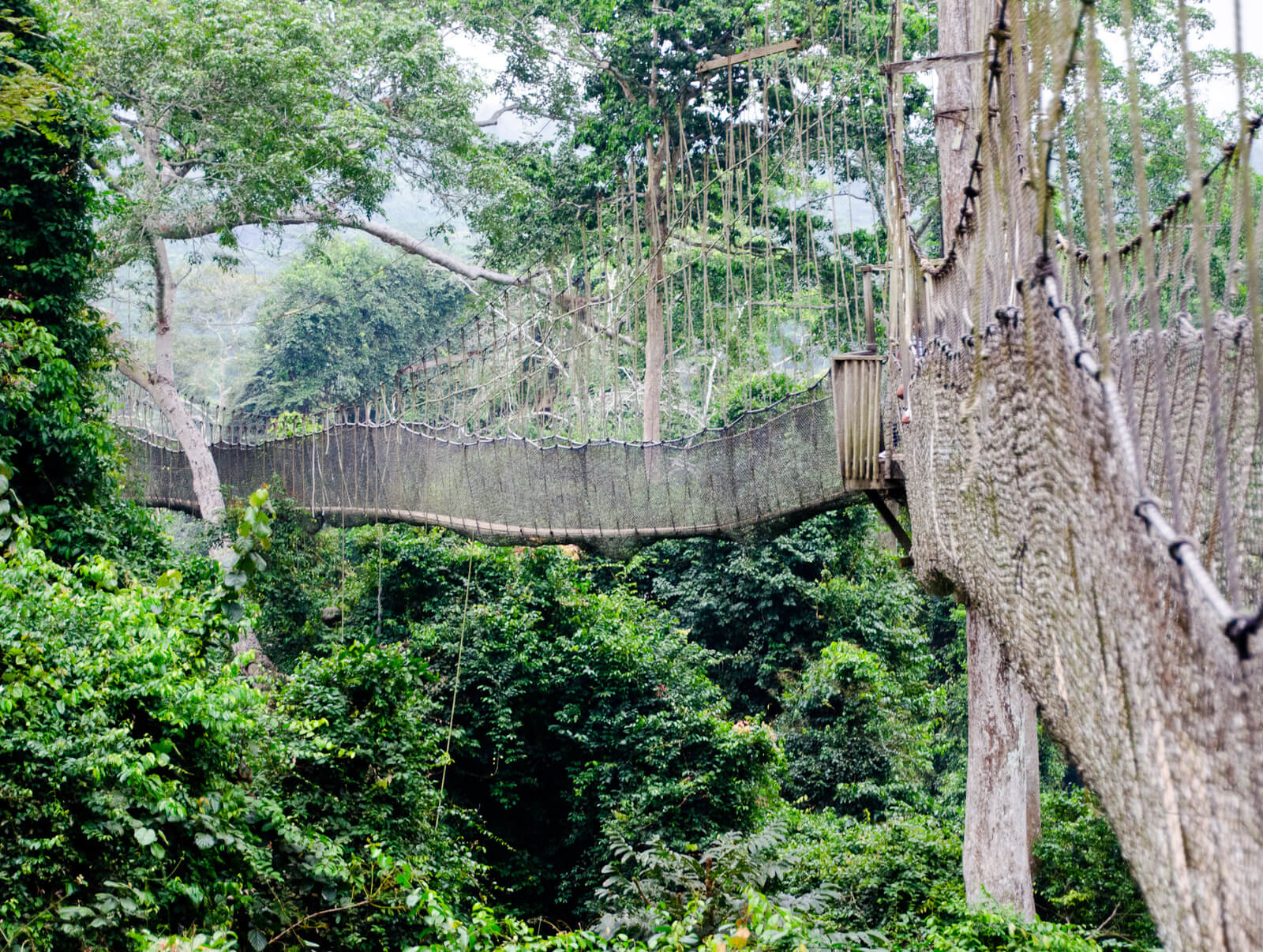
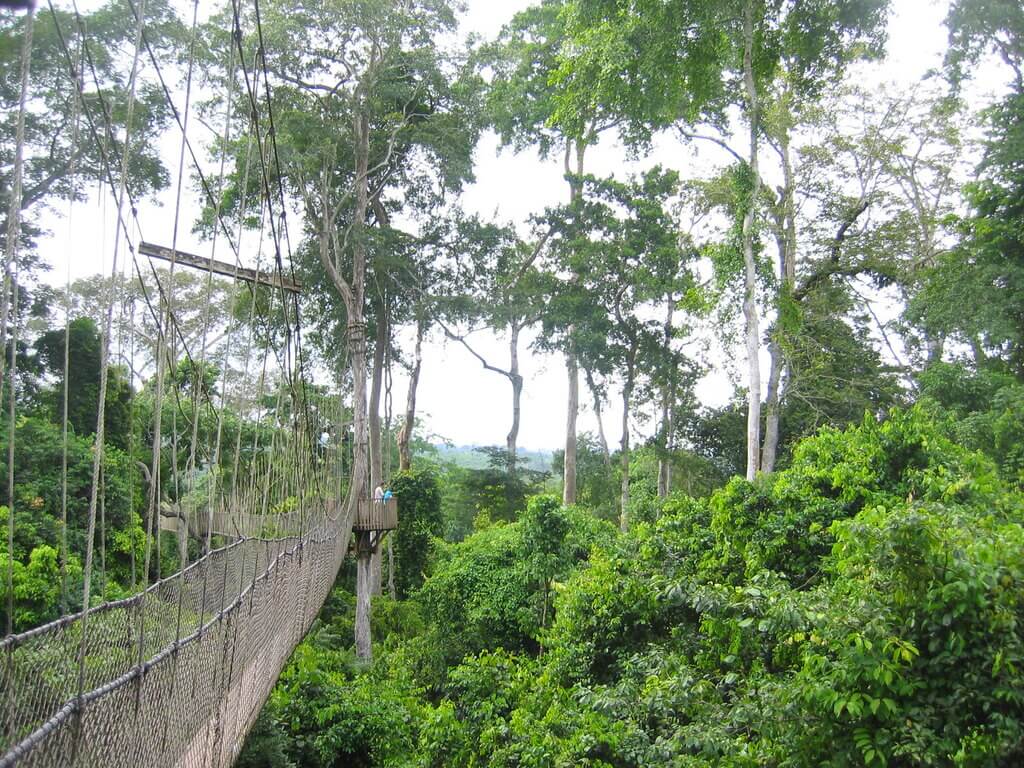
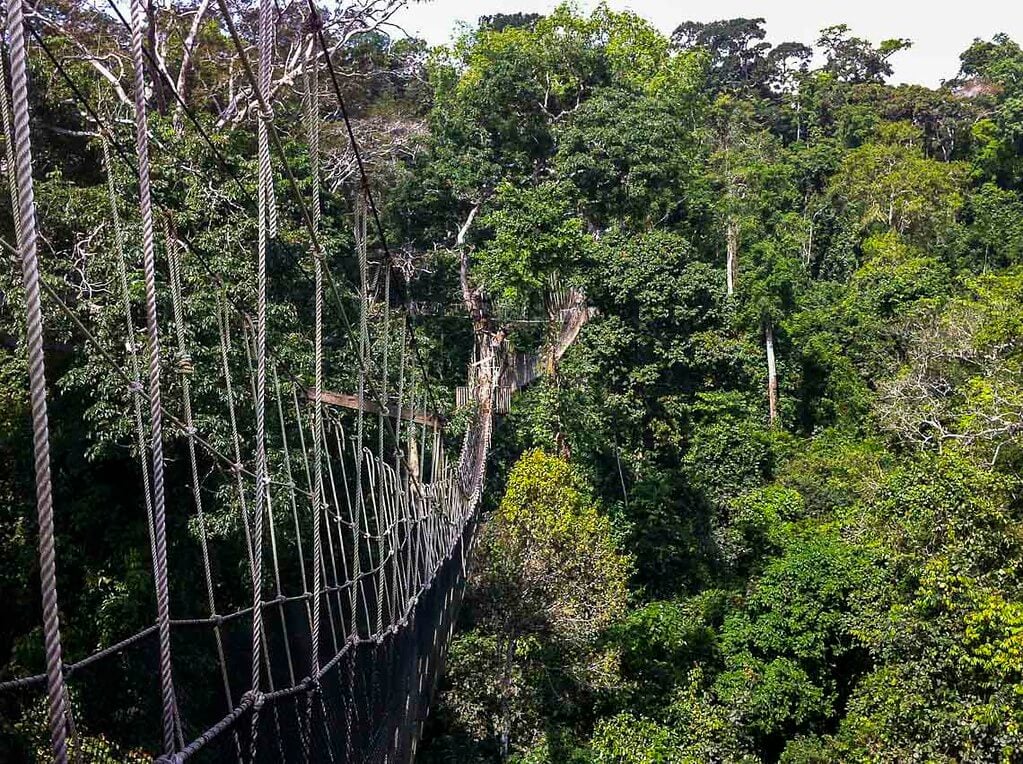
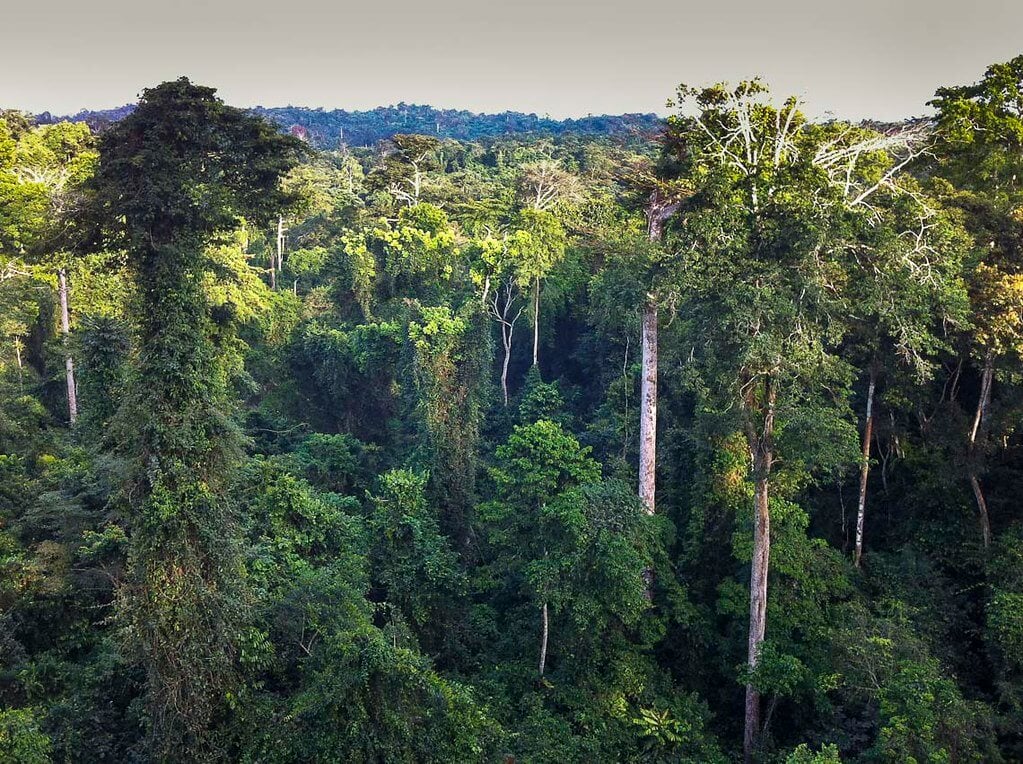
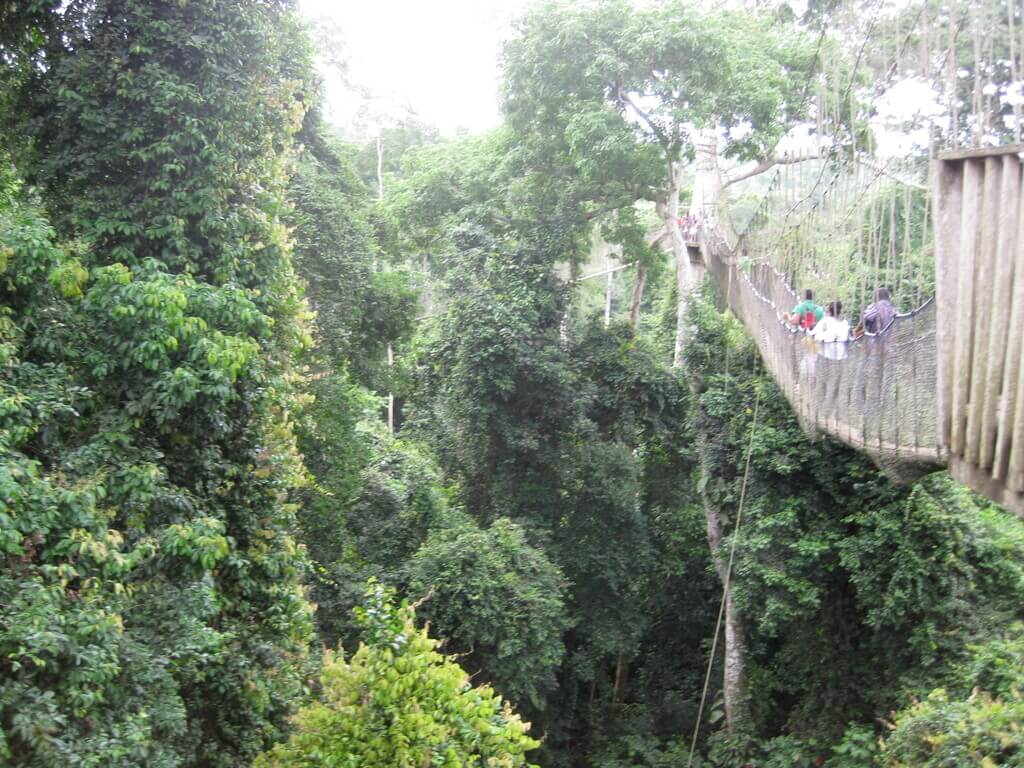
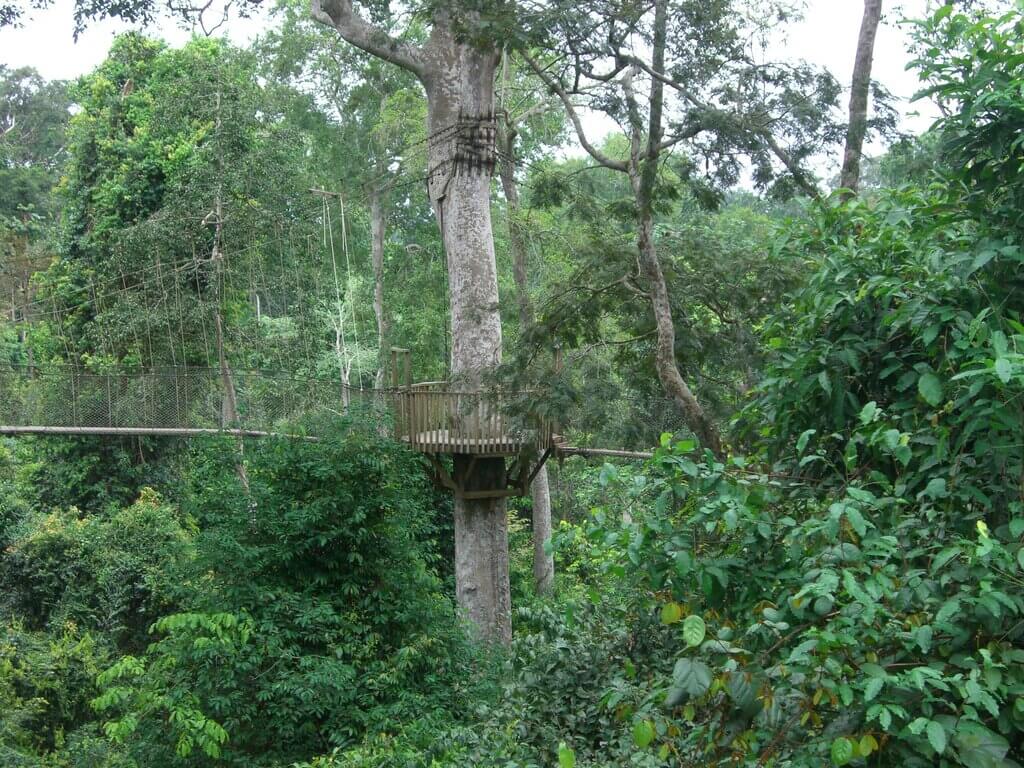
Kakum Canopy Walkway threads seven rope-and-plank bridges through the upper air of Ghana's Central Region rainforest, each span suspended more than 40 metres above the forest floor. It is one of the few places in West Africa where you can stand level with the canopy and genuinely feel the forest breathing around you. The walkway sits inside Kakum National Park, a sprawling protected area of roughly 375 square kilometres, where towering hardwoods, strangler figs and fan palms build a world that has very little interest in human schedules.
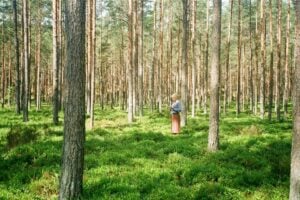
Most visits begin with a guided forest walk along the understory trails. Guides pause at medicinal plants, trace ant highways across tree roots, and decode bird calls that drift down from somewhere invisible overhead. This unhurried prelude does something useful: it slows your eyes and sharpens your ears before the canopy demands both. By the time you reach the first platform and ladders, you're already tuned to the forest's frequency.
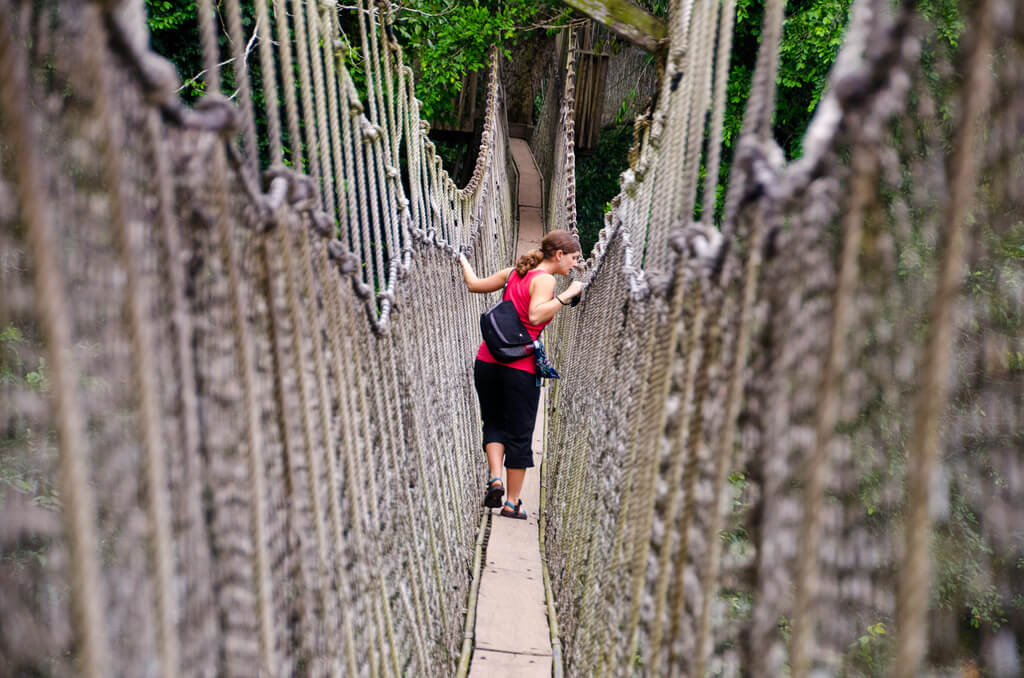
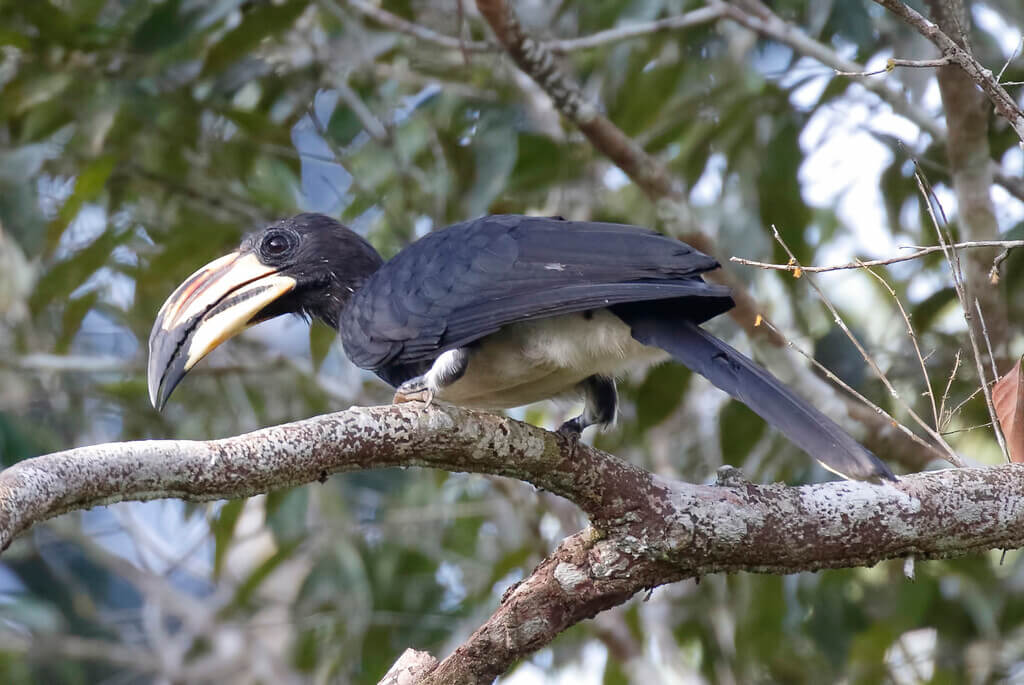
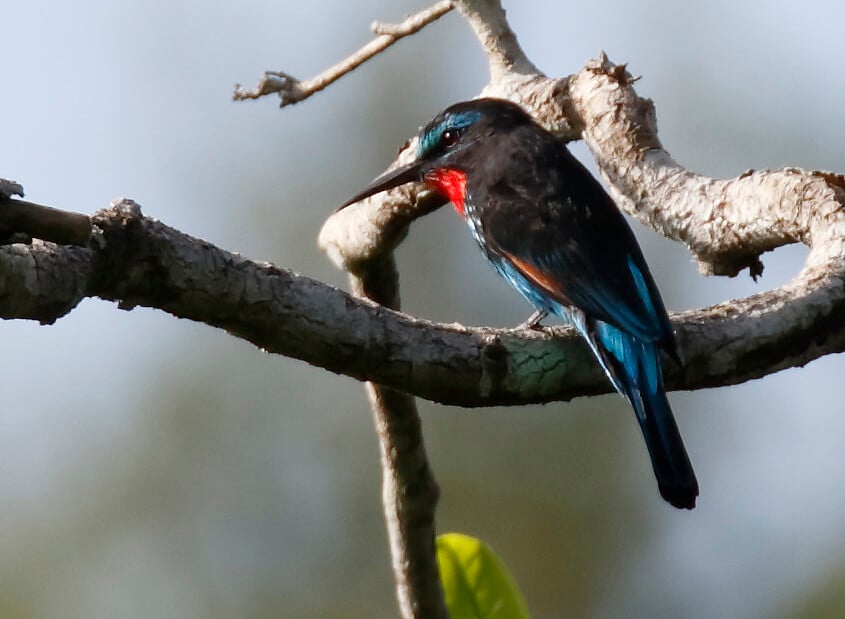
Then the walkway opens. The bridges are narrow — single file — and they move. Not dramatically, but enough. A small bounce on the first step, a sway mid-span, and a sudden awareness of the ten storeys of green air below. People find different registers for this: some stride, some shuffle, some narrate their own bravery aloud. Most land somewhere in between: half thrilled, half negotiating, entirely present. From the middle of a span, the view is layered and boundless — hornbills cutting the light, monkeys shifting along branch lines, sound rising in tiers from insect hum to distant calls to wind through the highest leaves.
The walkway opens daily from 06:00 to 16:00, and earlier arrivals earn the best light and the most active wildlife. The dry season, running roughly from November through March, brings clear skies and the strongest chances of spotting hornbills and monkeys in the canopy. The green season turns the forest an impossible shade of deep and delivers atmospheric mist at no extra charge. Wear proper shoes rather than sandals — the platforms can be damp, and grip matters. Carry water; the humidity is real. Heights are manageable with a hand on the guide rope and a measured breath, and younger visitors often lead the group without a second thought.
The park sits within easy reach of Cape Coast, making the walkway a natural morning excursion. Many travellers combine forest time before midday with the coast's seafood and sea breeze in the afternoon, a contrast that is difficult to improve on.
The walkway itself carries no theme-park gloss. The ropes are functional, the platforms are weathered, and the forest behind it all is simply enormous and real. That lack of polish is the draw. Kakum suits curious travellers, families with older children, and anyone who wants wildlife and mild adventure without manufactured edges. When your feet find solid ground again and your legs fizz with that particular mix of relief and adrenaline, the urge to look back up at those bridges is almost universal — and so is the thought that one more span would not have hurt at all.
Frequently Asked Questions
Q: When is the best time to visit Kakum Canopy Walkway?
A: The dry season, running roughly November through March, offers the clearest skies and the best conditions for spotting hornbills and monkeys in the canopy. The green season brings lush colour and atmospheric mist — rewarding for travellers who enjoy deep forest moods, though trails can be slippery during the heaviest rains between July and September.
Q: How high are the canopy bridges, and is the walkway suitable for nervous visitors?
A: The bridges hang more than 40 metres above the forest floor — roughly the height of a ten-storey building. The spans do move underfoot, but the guide rope gives you something solid to hold, and a measured pace helps. Younger visitors often stride ahead without hesitation, and most nervous travellers find they settle into it quickly once they're moving.
Q: What should I wear and bring?
A: Proper closed shoes rather than sandals are strongly recommended — the platforms can be damp and grip matters on the walkway. Carry water; the humidity inside the rainforest is genuine. Light, breathable clothing suits the conditions well.
Q: What happens before you reach the walkway itself?
A: Visits typically begin with a guided forest walk through Kakum National Park's understory. Guides point out medicinal plants, ant highways, and bird calls drifting down through the canopy. It is an unhurried prelude that slows your pace and sharpens your senses — useful preparation before the walkway demands both.
Q: Is Kakum Canopy Walkway practical as a day trip from Cape Coast?
A: The park sits a short drive from Cape Coast, making a morning visit straightforward to combine with an afternoon on the coast. Many travellers do exactly that: forest and canopy in the morning, seafood and sea breeze by early afternoon.





Add a review