
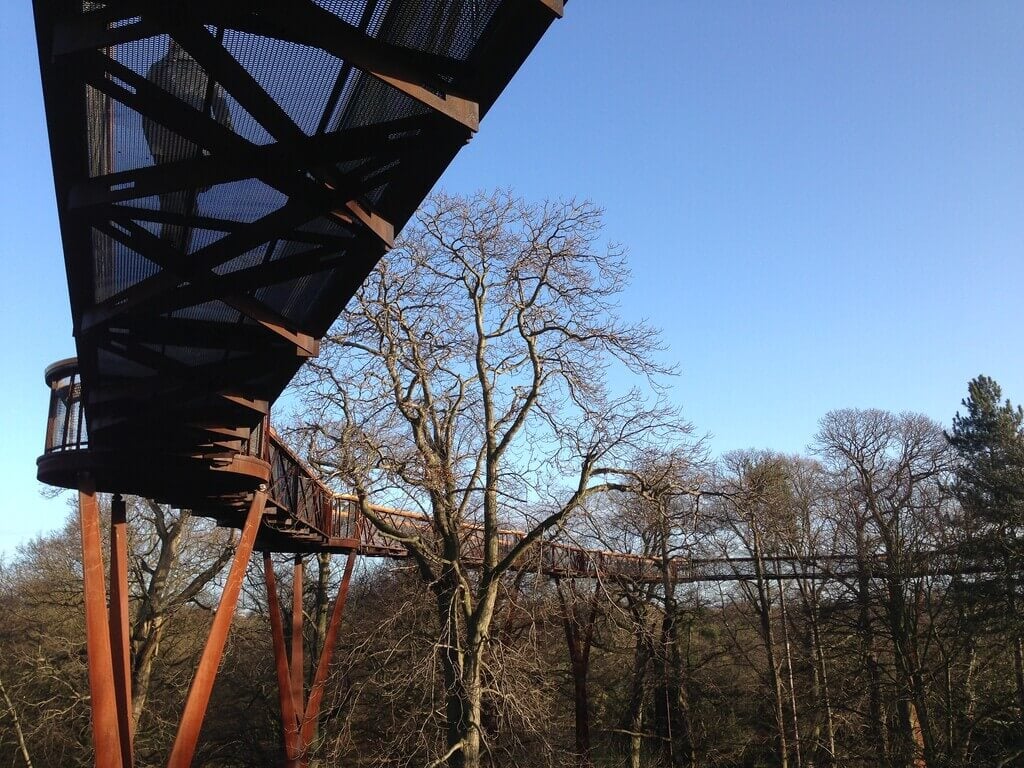
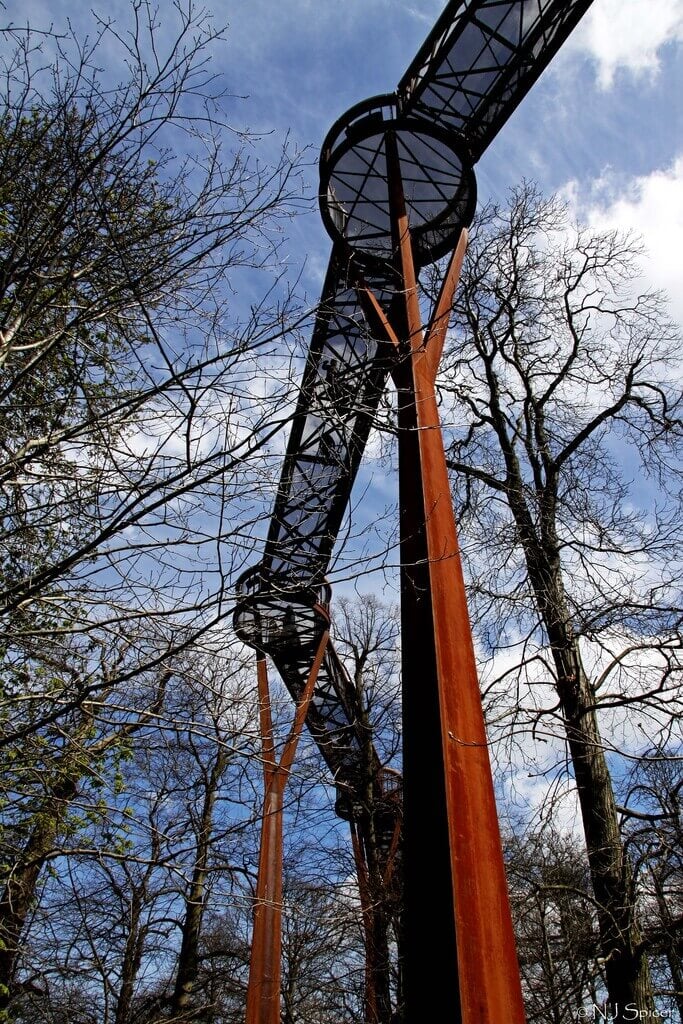
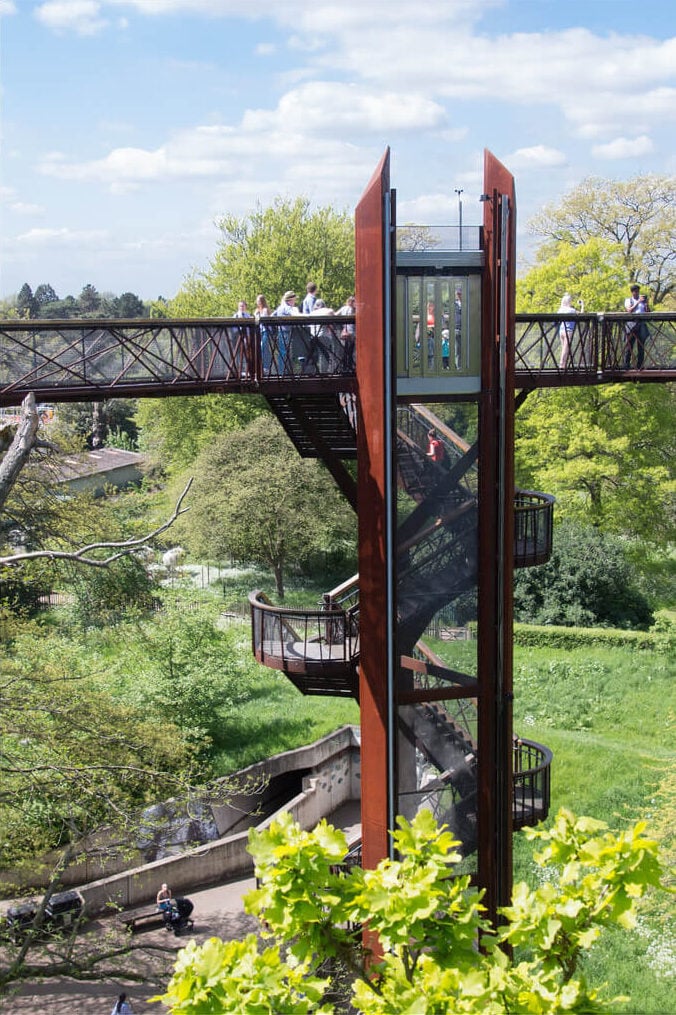
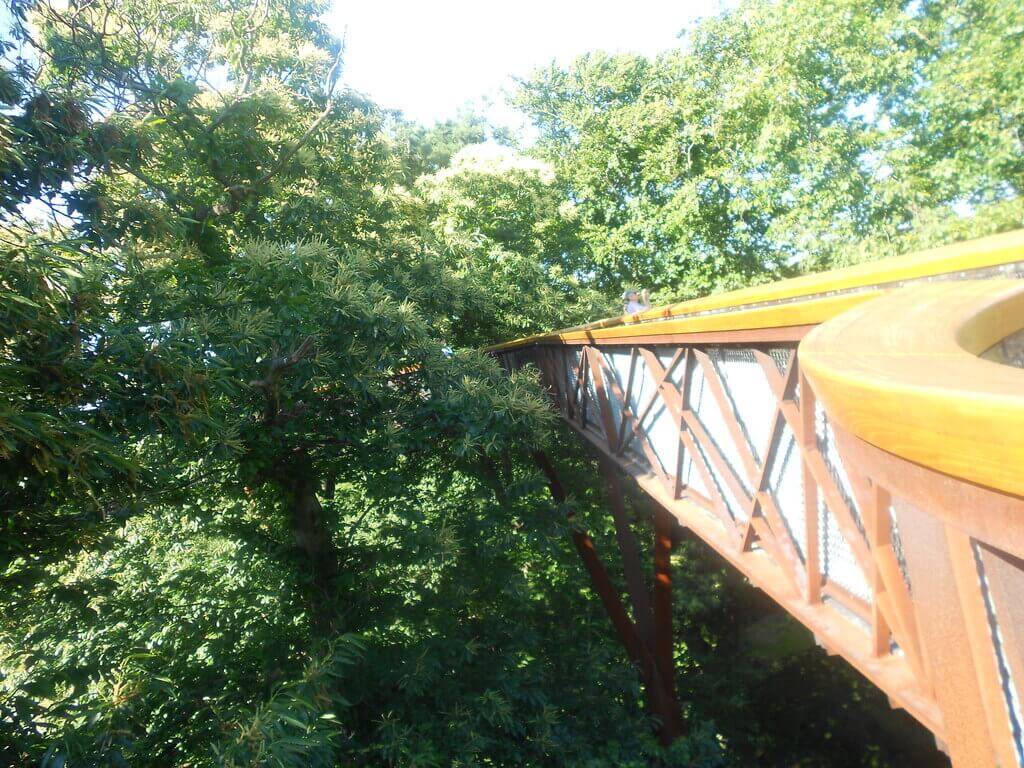
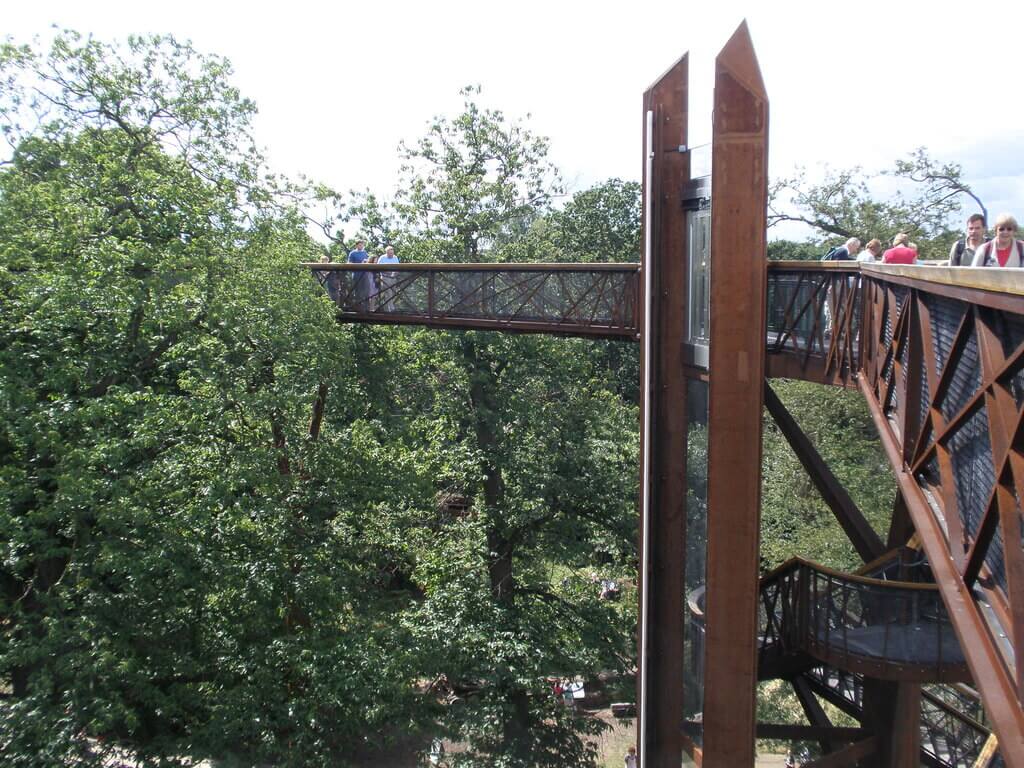
Most elevated experiences in London ask you to look at the city. The Treetop Walkway at the Royal Botanic Gardens, Kew asks you to look into it — into the bark, the canopy, the slow-motion architecture of things that grow. Eighteen metres above the ground, with oak boughs at shoulder height and a deck that breathes gently underfoot, the perspective shifts completely.
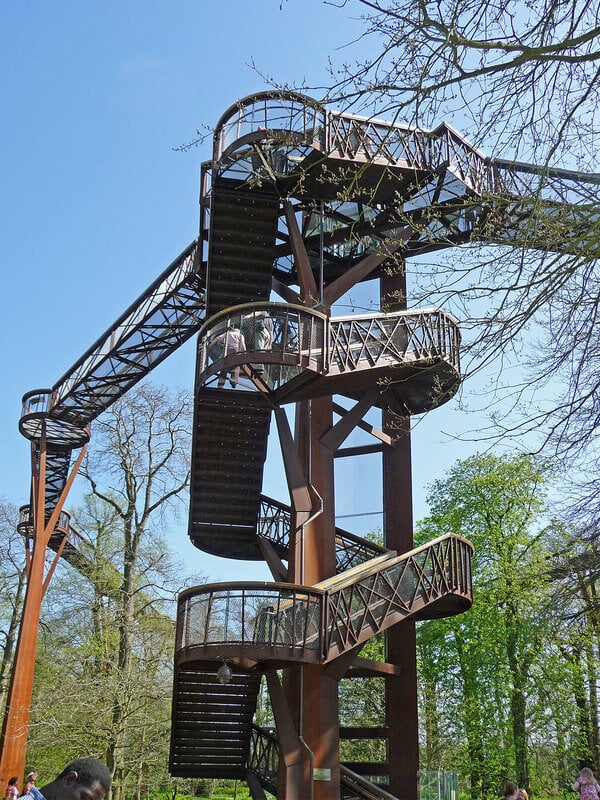
The journey starts somewhere unexpected: underground. The Rhizotron, a low-lit burrow beneath the arboretum, exposes the hidden world beneath every lawn — root systems, fungal threads, the quiet commerce of soil. It rewards the curious. Then a helical stair coils upward, the light changes, and suddenly you are in the trees.
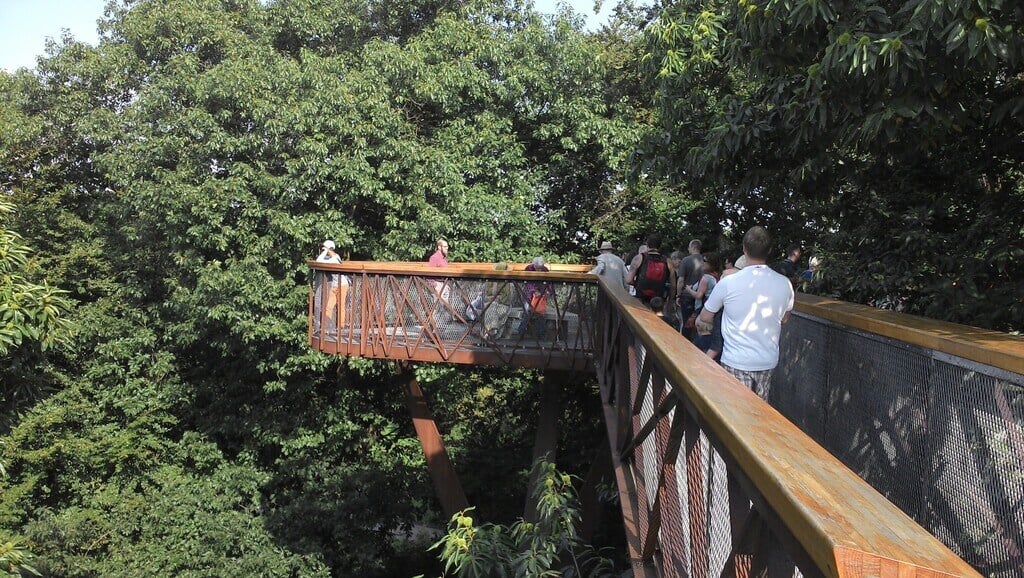
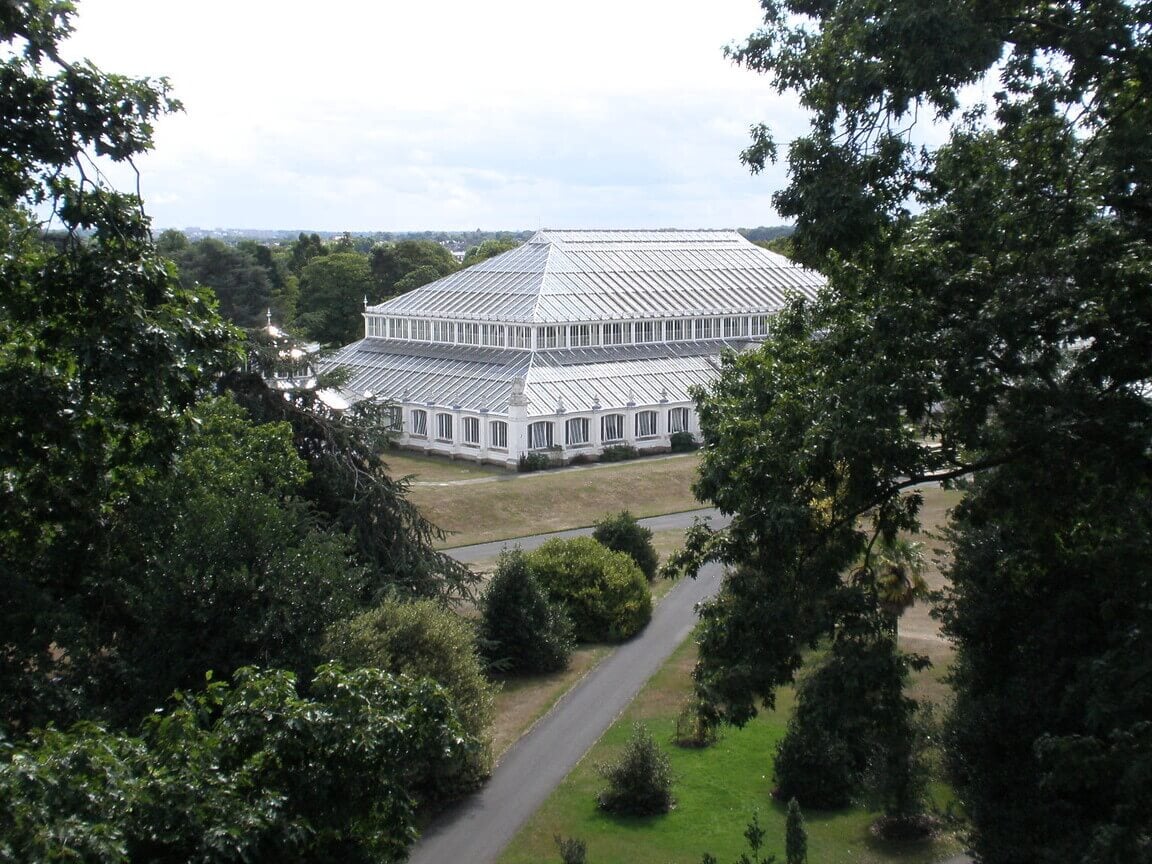
The walkway spans roughly 200 metres through the canopy. It sways, but only just — less vertigo, more boat. Information panels along the route cover lignin chemistry and leaf function; read them or let the views pull your attention instead. Across the gardens, the Temperate House sits framed between chestnuts. The Thames glints through gaps in the tree line. On a clear day, the city's skyline sharpens in the distance. A ring-necked parakeet — the kind of fluorescent green that still startles — cuts across the path and vanishes into the beeches.
Back at ground level, the arboretum reads differently. Having met its upper floors, you notice things: the wave-like travel of wind through canopy, the way a beech trunk catches afternoon light. Autumn sharpens all of this considerably; copper and amber in the canopy make October visits particularly striking. Winter has its own reward — bare branches reveal the walkway's structural lines and open long views across the gardens that leafy months conceal. Kew holds more than 14,000 trees from across the globe, and an unhurried circuit of the arboretum after the walkway turns a single attraction into an afternoon.
Plan around 60 to 90 minutes to combine the Rhizotron, walkway and a wander beneath the trees. The walkway opens daily from 10:00, closing at 18:00 Monday through Friday and at 20:00 on Saturdays and Sundays — the extended evening hours suit a slower summer visit well. Note that the structure closes in high winds, so check conditions on blustery days. Shoes with grip are a practical choice over smooth-soled footwear. Kew's cafés provide a good reason to linger afterward.
Getting here is straightforward. Kew Gardens station sits approximately 800 metres away and serves both the District line and the Mildmay train service, making it the most convenient approach for most visitors. The Avenue bus stop is closer still — roughly 360 metres away — with bus routes 65 and N65 stopping there. North Sheen train station is around 1.4 kilometres distant if those services suit your route better.
The Shard offers London from above. The Treetop Walkway offers London from within it — birdsong, canopy movement, roots underground and sky overhead. The city, it turns out, isn't only built. A great deal of it simply grows.
Frequently Asked Questions
Q: Do you need to go underground before reaching the walkway?
A: Yes — the experience starts with the Rhizotron, a low-lit underground chamber that exposes root systems and fungal networks beneath the arboretum. It leads naturally upward via a helical stair to the canopy walkway 18 metres above ground. The two sections are designed as a single journey rather than separate attractions.
Q: Is the walkway suitable if heights make me anxious?
A: The structure has a gentle sway by design, but it's closer to standing on a slow boat than to any vertiginous feeling. The movement is deliberate and controlled. If heights are a concern, the sway is the main thing to be aware of rather than any dramatic exposure.
Q: Can the walkway close without warning?
A: It can close in high winds, so checking conditions before you travel on a blustery day is worthwhile. Saturday and Sunday hours extend to 20:00, while weekday closing is 18:00, with the walkway opening at 10:00 daily — confirm current hours and status on the official Kew Gardens site before visiting.
Q: When is a particularly good time to visit?
A: Autumn (September–October) is especially striking — amber and copper leaves make the canopy views some of the most scenic of the year. Winter has a quieter reward: bare branches open up long sightlines across the gardens that the leafy months conceal, and the walkway's structural lines read more clearly. Summer evenings suit the extended weekend hours well.
Q: How long should I allow for the visit?
A: Plan around 60 to 90 minutes to combine the Rhizotron, the walkway and a wander through the arboretum beneath the trees. Shoes with grip are a practical choice over smooth-soled footwear. Kew's cafés make a natural endpoint if you want to extend the afternoon.








Add a review