

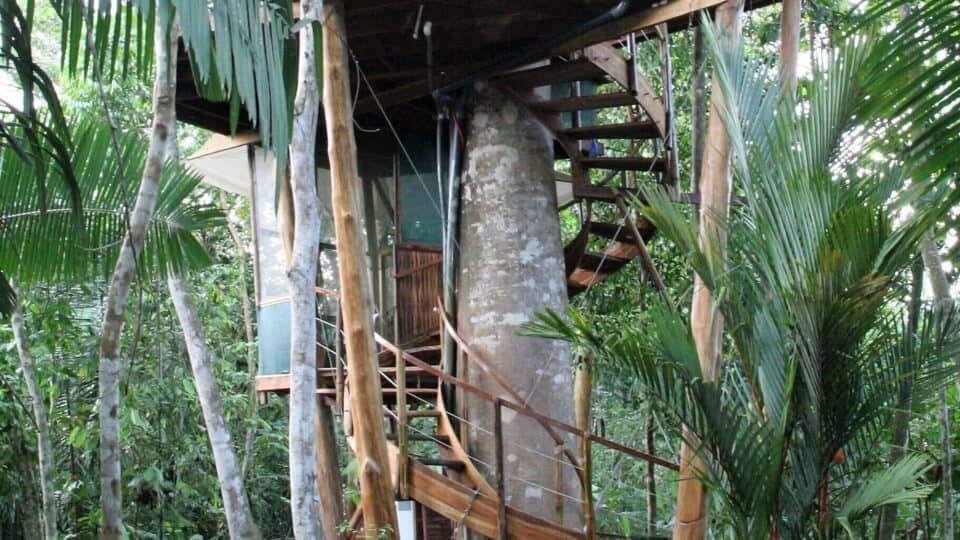
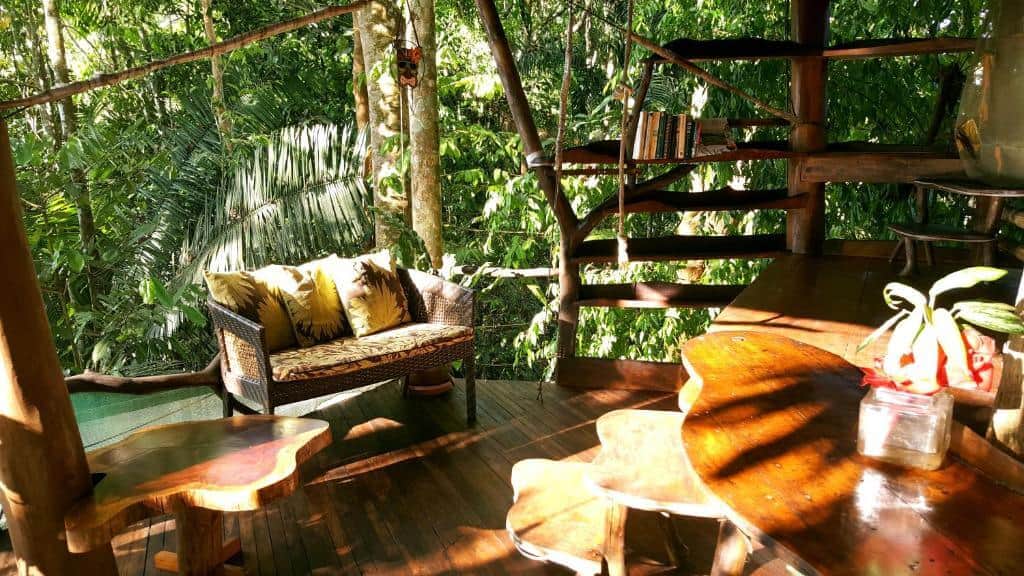
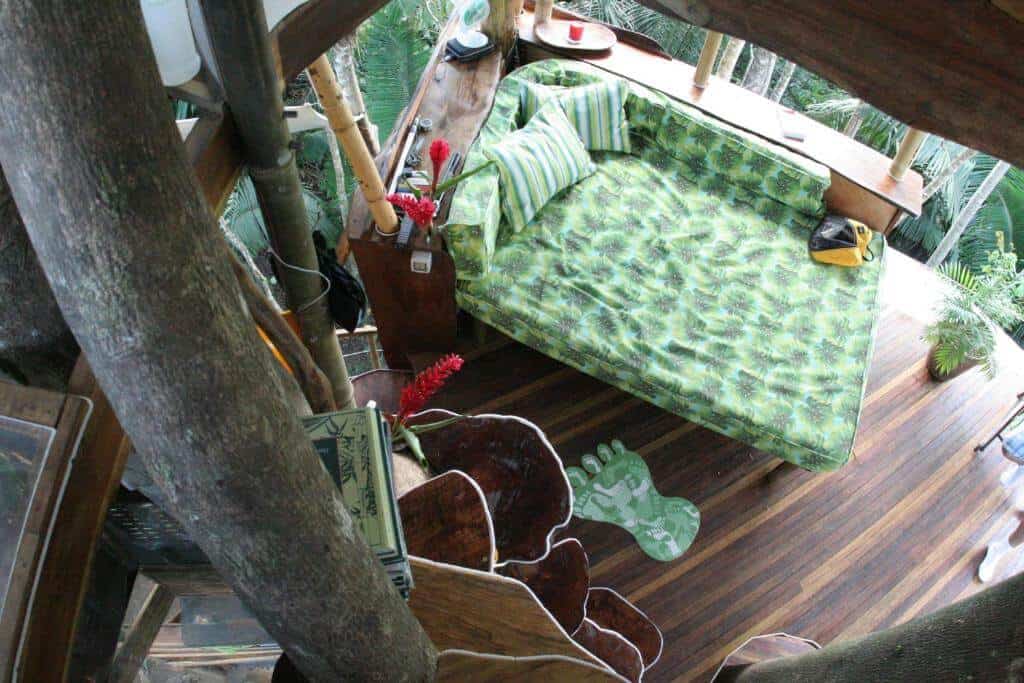
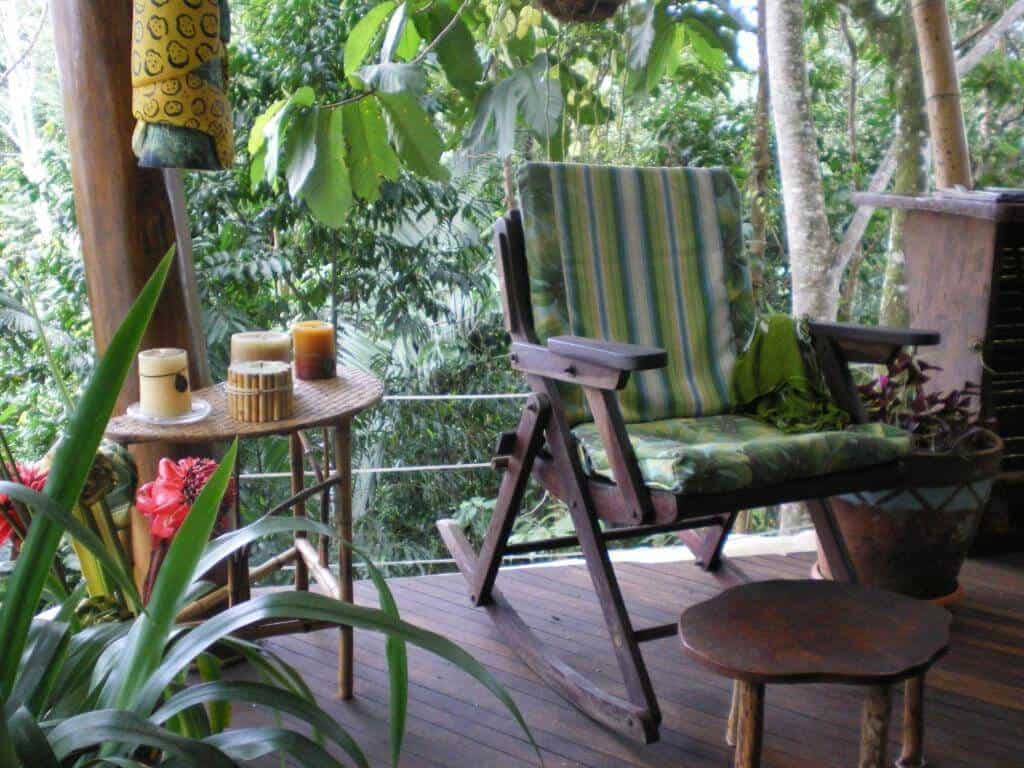
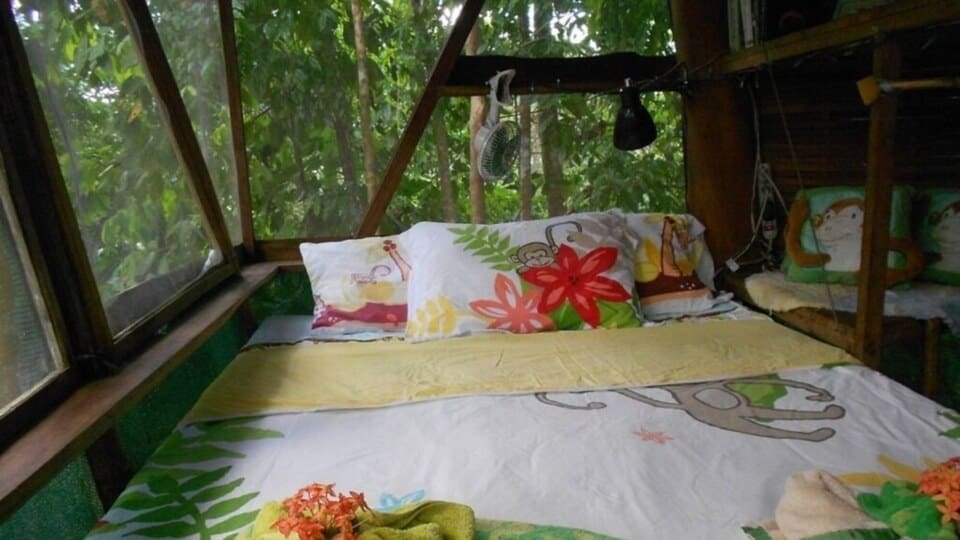
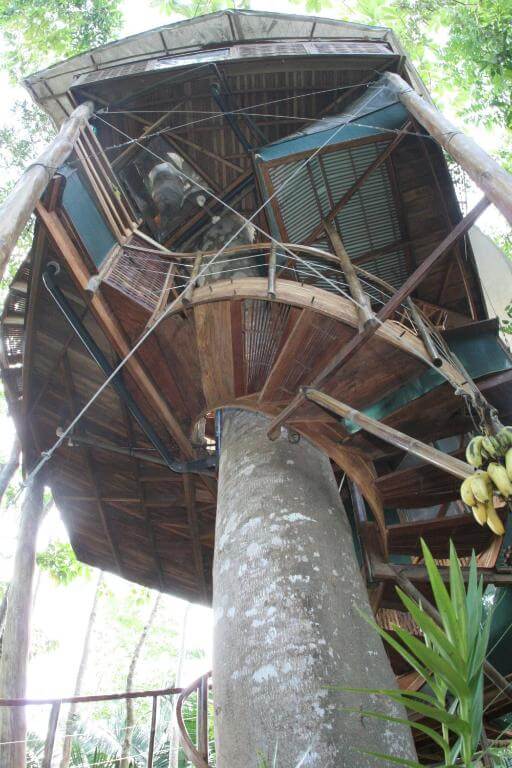
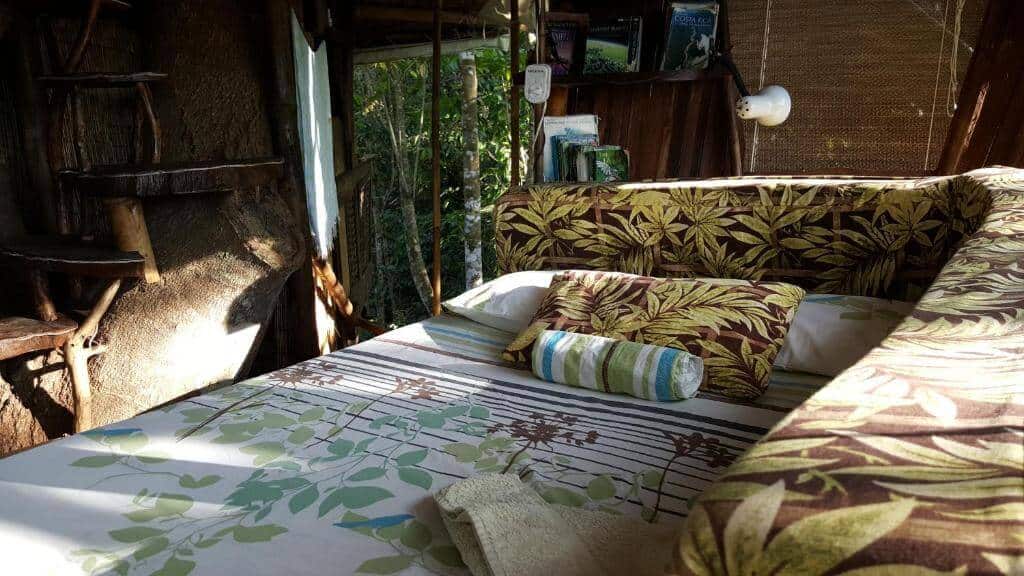
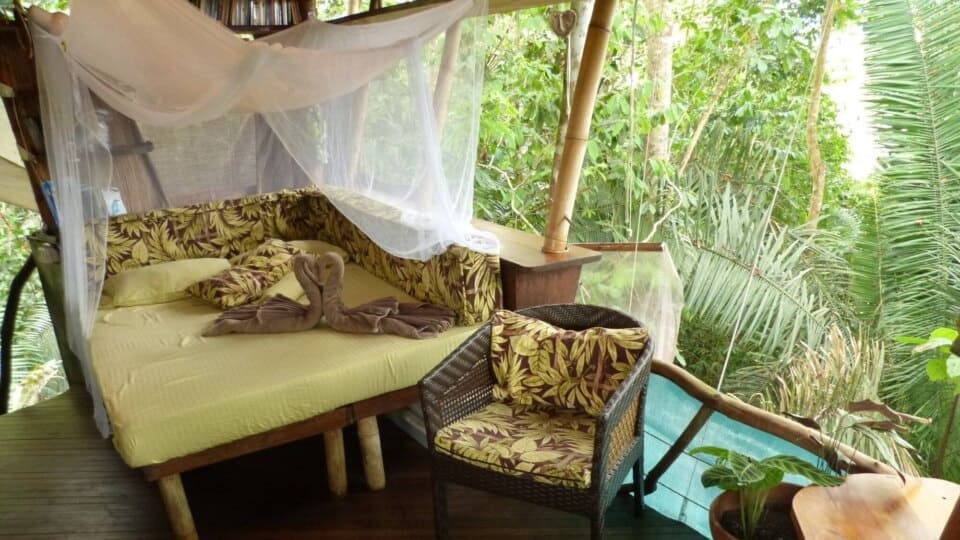
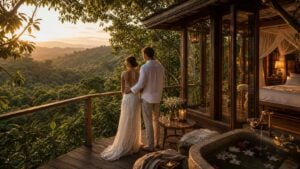
Lapa's Nest Treehouse spirals upward through the crown of a towering Guanacaste — one of Costa Rica's great national trees — rising across multiple open levels until the rainforest canopy becomes your ceiling. Tropical hardwoods and bamboo give the structure warmth and texture. Screens and slatted walls keep the air moving freely, so you sleep inside the forest rather than sealed away from it. A circular staircase winds between the levels like a vine finding its way upward, and every turn frames something worth stopping for.
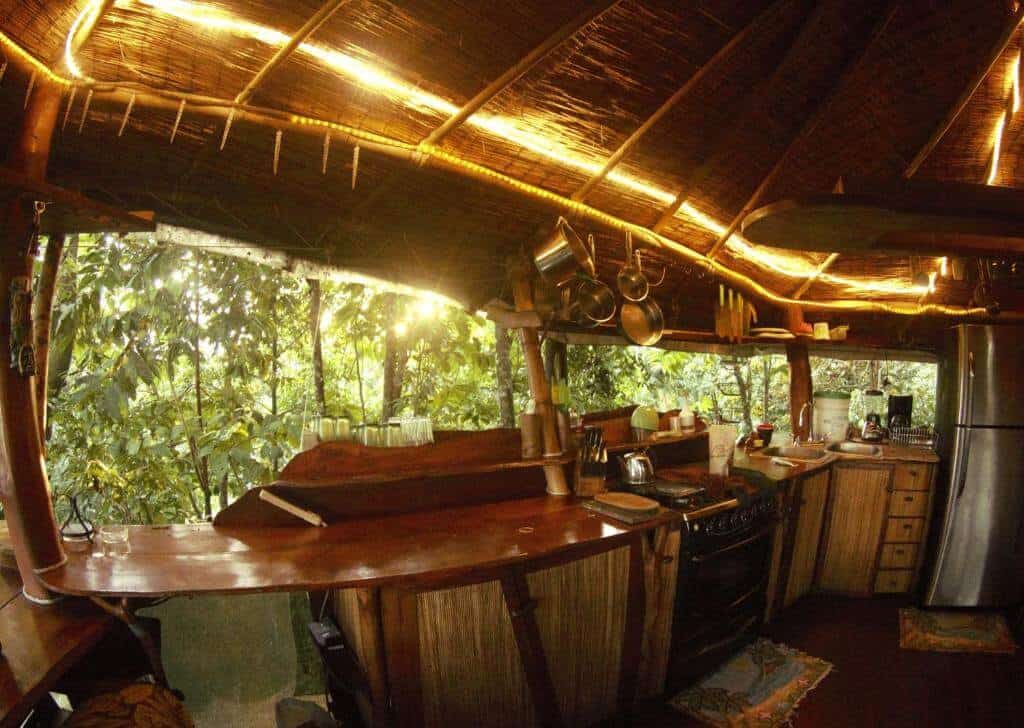
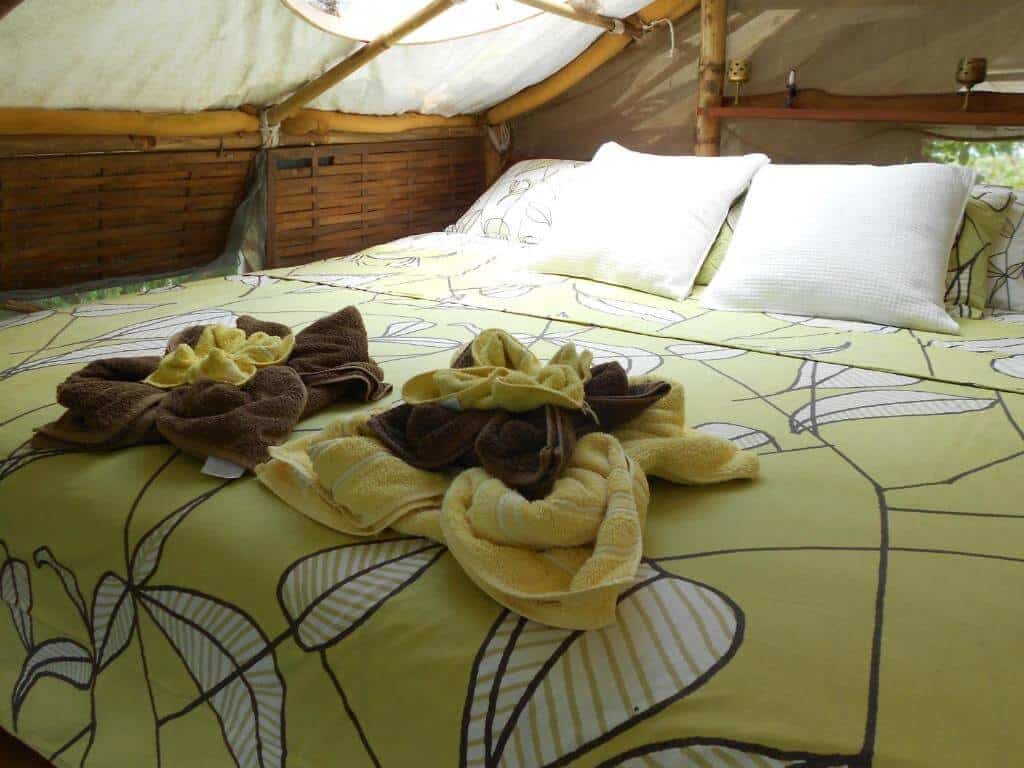
The treehouse comfortably hosts up to eight guests, with separate floors giving couples or families their own pockets of quiet. A well-equipped kitchen handles everything from big communal breakfasts to late-night tea. The bathrooms feel genuinely plush for a property this deep in the wilderness — a detail that surprises most first-time visitors. This is not roughing it. It is a premium stay in a singular setting, and nightly rates reflect that — starting at around $300–$400, varying by season and availability.
The name points to the resident celebrities. Lapa is the local word for the scarlet macaw, and these brilliant, noisy birds are a near-daily presence above the 120 private acres surrounding the property. Howler monkeys start up at dawn without fail. Capuchins and spider monkeys move through the mid-canopy on their own agendas. Squirrel monkeys appear if you are patient. Toucans have a habit of watching you from a branch while you drink your coffee, completely unannounced. The Osa Peninsula carries one of the highest wildlife densities on the planet, and the treehouse puts you at the heart of it.
Days here tend to find their own shape. Guests hike the private trails, cool off under nearby waterfalls, or arrange guided access to Corcovado National Park's legendary trailheads. Others simply settle into the canopy and let the wildlife come to them. After dusk the forest shifts register entirely — tree frogs tune in, night smells greener, and stars appear hard and bright when cloud allows.
Timing shapes what you experience. The drier season from December through April brings cleaner trails and excellent wildlife viewing, with temperatures hovering between around 23°C and 31°C. The green season from May through November turns the landscape brilliantly lush and intensely alive, though heavy showers arrive on their own schedule — ideal for adventurous travellers who don't mind the drama. Pack a light rain jacket regardless of when you visit, and bring a headlamp; you will use it more than you expect.
Most guests book for a week or longer, which gives the place time to work on you properly. This is a treehouse that has appeared on camera, but it feels better off-screen — quieter, more elemental, and genuinely private.
Getting to Puerto Jiménez, the nearest town, is itself part of the Osa experience. Most visitors fly in by small aircraft or make the long scenic drive down the Costanera Sur. Once in the area, local bus connections run toward San José, San Isidoro and the Carate direction, with stops approximately 1.2 km from the property. A ferry service connecting to Golfito and the Sirena sector of Corcovado operates roughly 1.7 km away — a useful link for guests planning deeper jungle excursions. The remoteness is not a drawback here. It is, quietly, the whole point.
Frequently Asked Questions
Q: How many guests can Lapa's Nest Treehouse accommodate?
A: The treehouse sleeps up to eight guests, spread across multiple levels. Separate floors give couples or smaller groups their own space within the larger party.
Q: What does it cost to stay at Lapa's Nest Treehouse?
A: Nightly rates are generally in the $300–$400 range, placing it firmly in the premium tier. Rates vary by season and availability, so check current pricing when you book.
Q: When is the best time to visit the Osa Peninsula for this kind of stay?
A: The drier season from December through April offers cleaner jungle trails and reliable wildlife viewing. The green season from May through November brings dramatically lush scenery and equally active wildlife, but expect heavy tropical showers — it suits adventurous travellers who enjoy the drama of a rainforest in full swing.
Q: What wildlife can guests realistically expect to see?
A: Scarlet macaws and howler monkeys are near-daily presences. Capuchin and spider monkeys move through the canopy regularly, toucans appear with little warning, and patient guests sometimes spot the shyer squirrel monkey. The Osa Peninsula has one of the highest wildlife densities on the planet, and the treehouse's 120 private acres sit at the heart of it.
Q: Is Lapa's Nest suitable for guests who aren't experienced jungle travellers?
A: The treehouse is built for comfort — plush bathrooms, a well-equipped kitchen, and screened, open-air levels rather than a tent in the mud. That said, it is genuinely remote. A headlamp and a light rain jacket are practical essentials regardless of when you visit, and embracing an unplanned rhythm tends to make the stay.








Add a review