
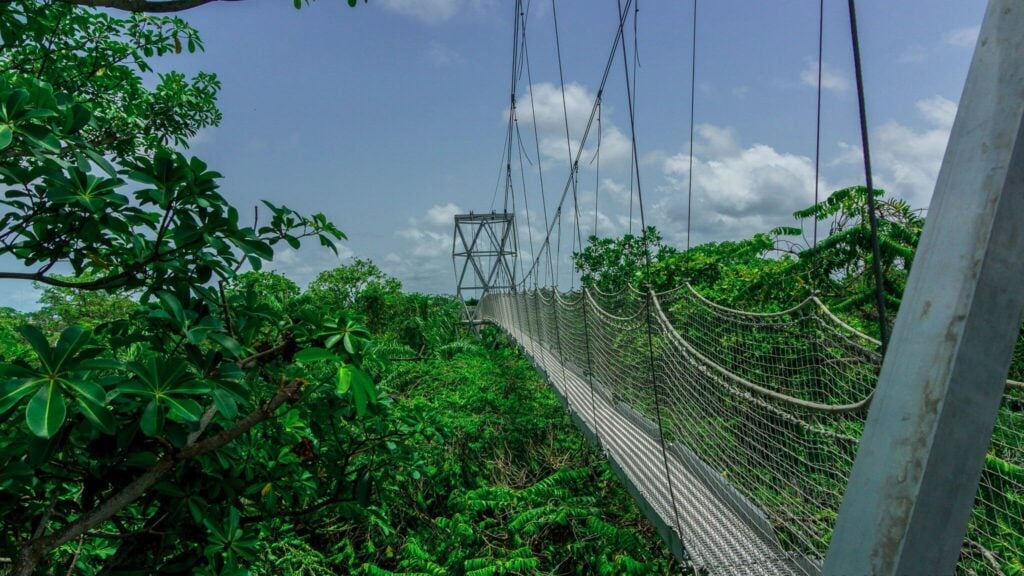
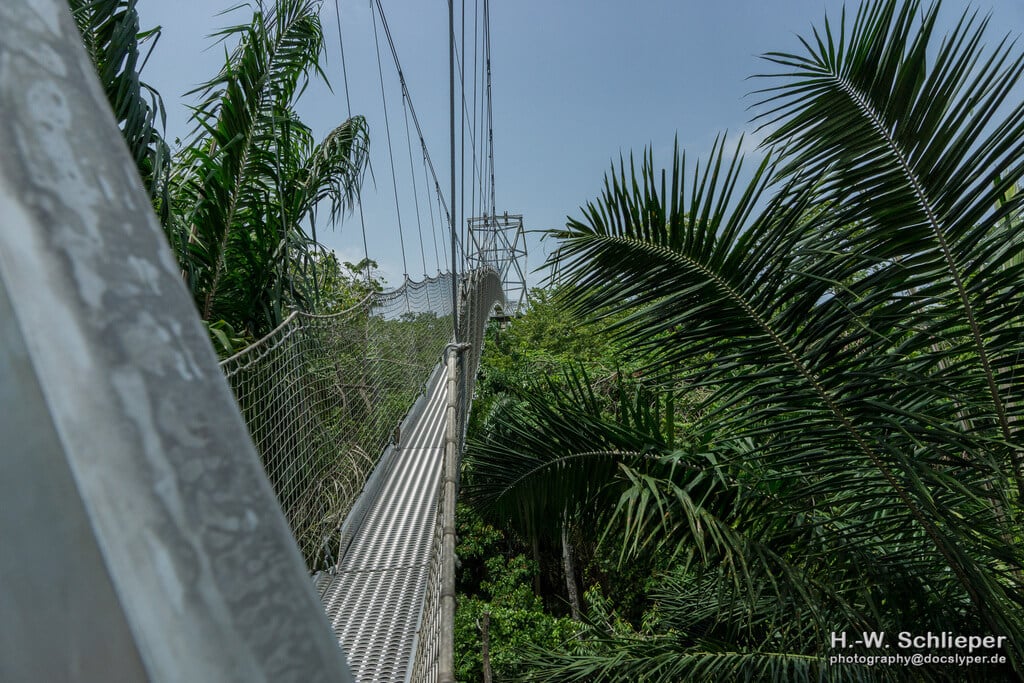
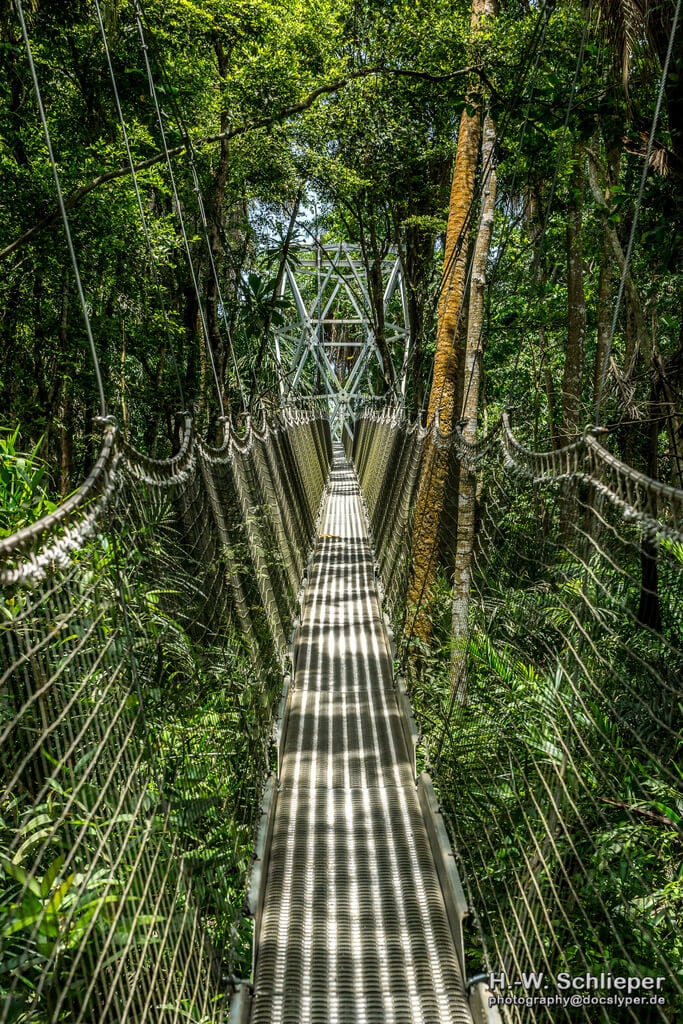
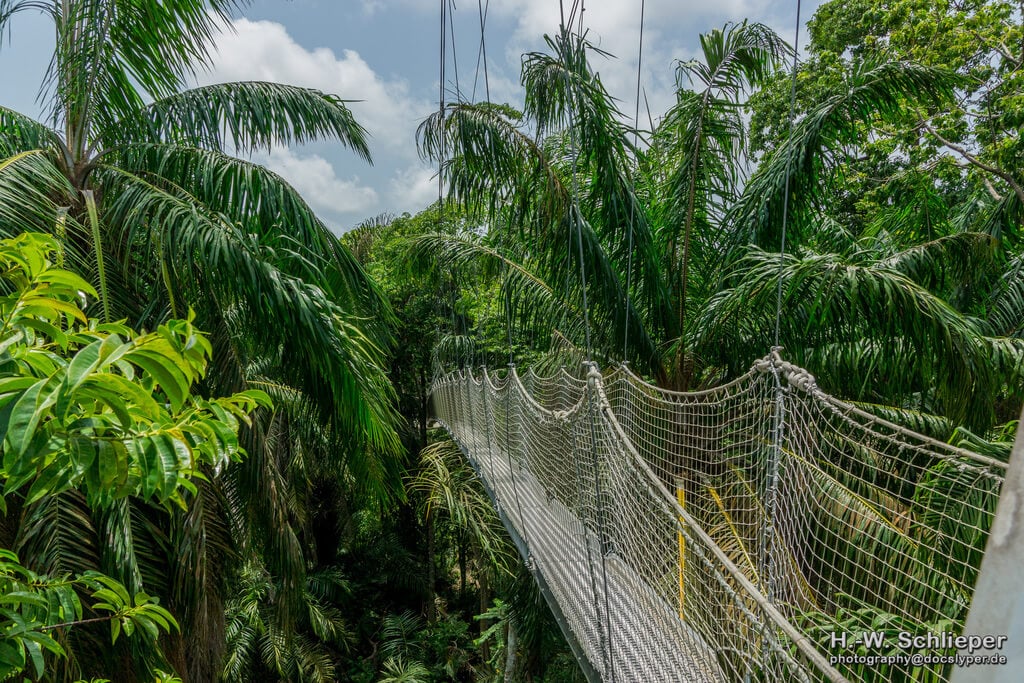
At the eastern edge of Lagos, where the city's density finally gives way to wetland, the Lekki Conservation Centre holds something genuinely rare: 78 hectares of mangrove, swamp, and rainforest canopy, and strung above it all, Africa's longest suspended walkway. At 401 metres and up to 22 metres above the forest floor, this canopy walkway is the centre's defining feature. It draws visitors from across Lagos and beyond, and it earns the reputation.
The walkway itself is sturdy and well-maintained, but that doesn't stop it swaying. Narrow plank sections bounce lightly underfoot, and the rope rails remind you, without any drama, that you are high up. Most people grip tighter than they planned. The views justify every cautious step: palm crowns at eye level, open sky above, and the ponds and mangrove channels of the reserve spread out far below. Birds cut across gaps in the canopy. Lagos, for once, goes quiet.
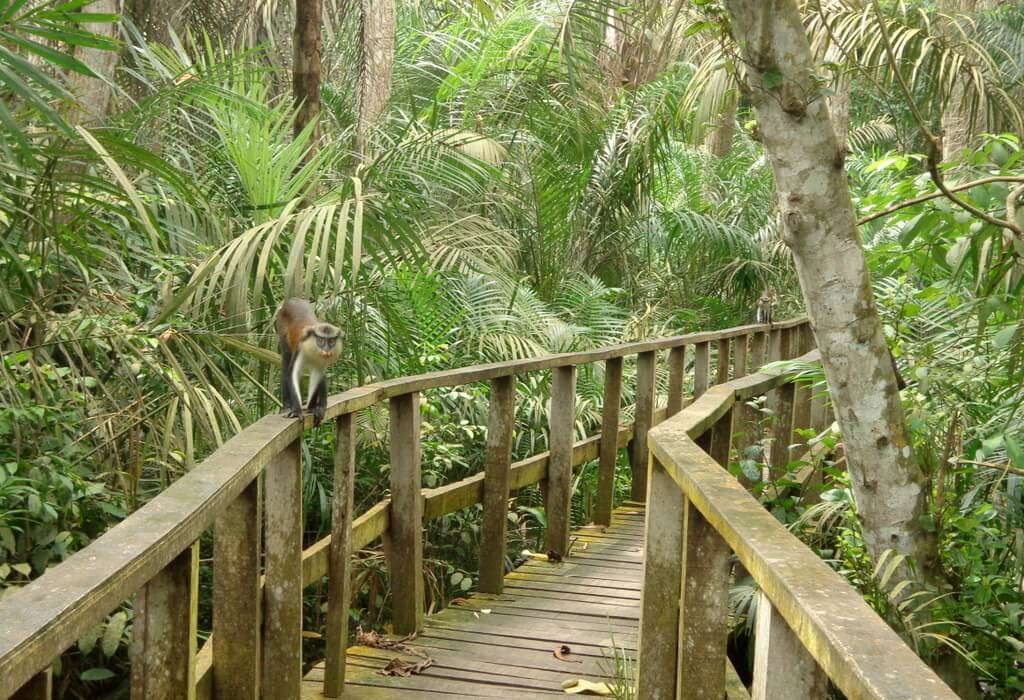
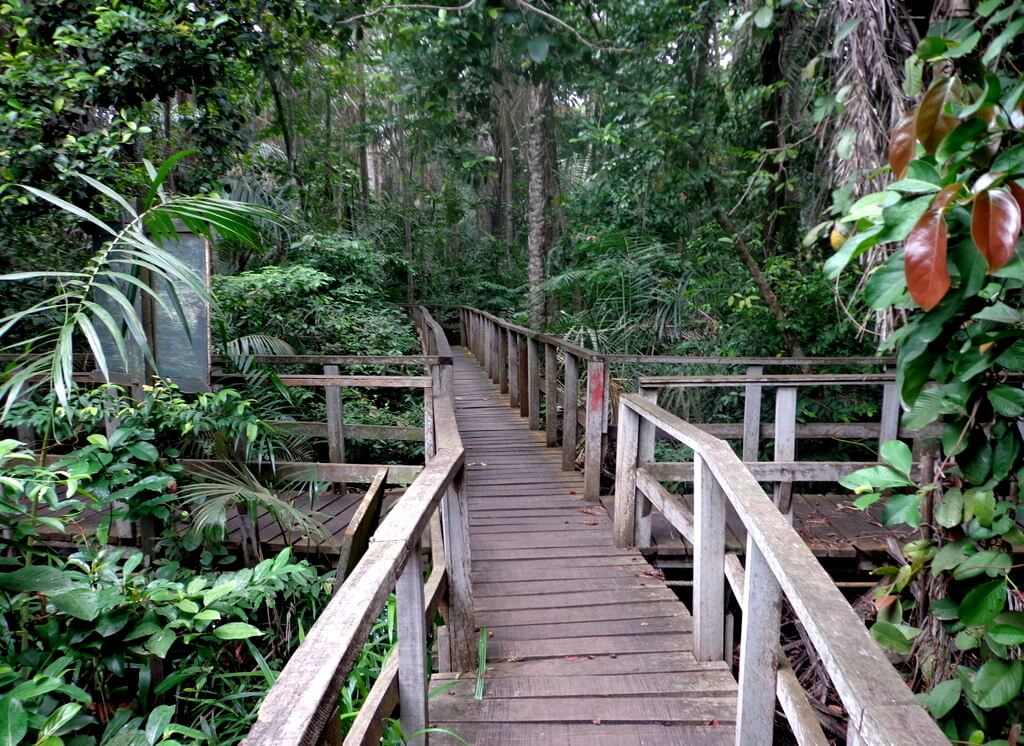
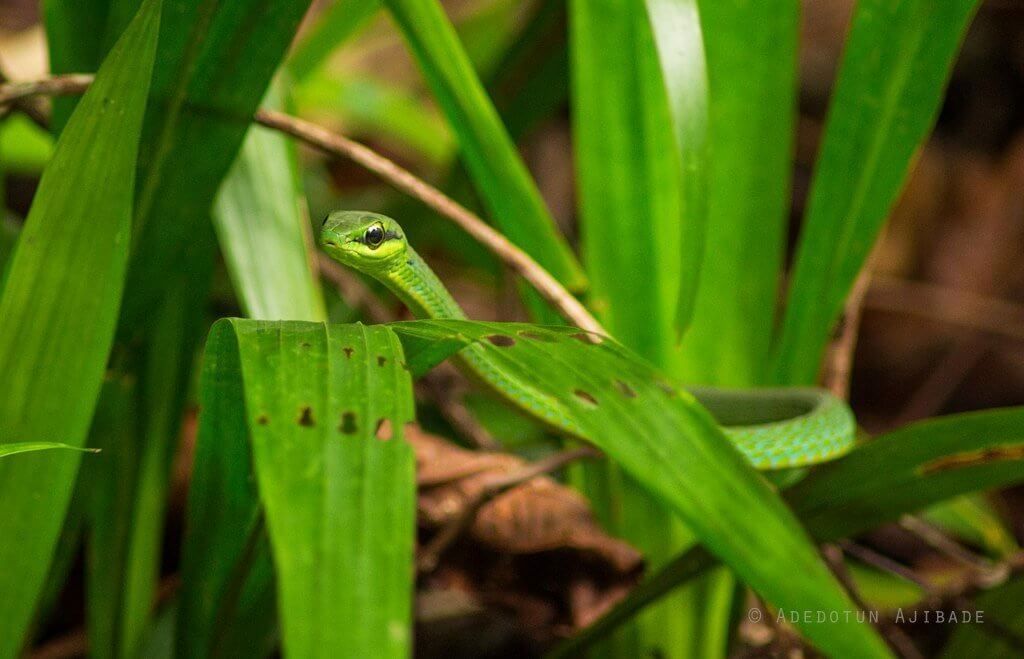
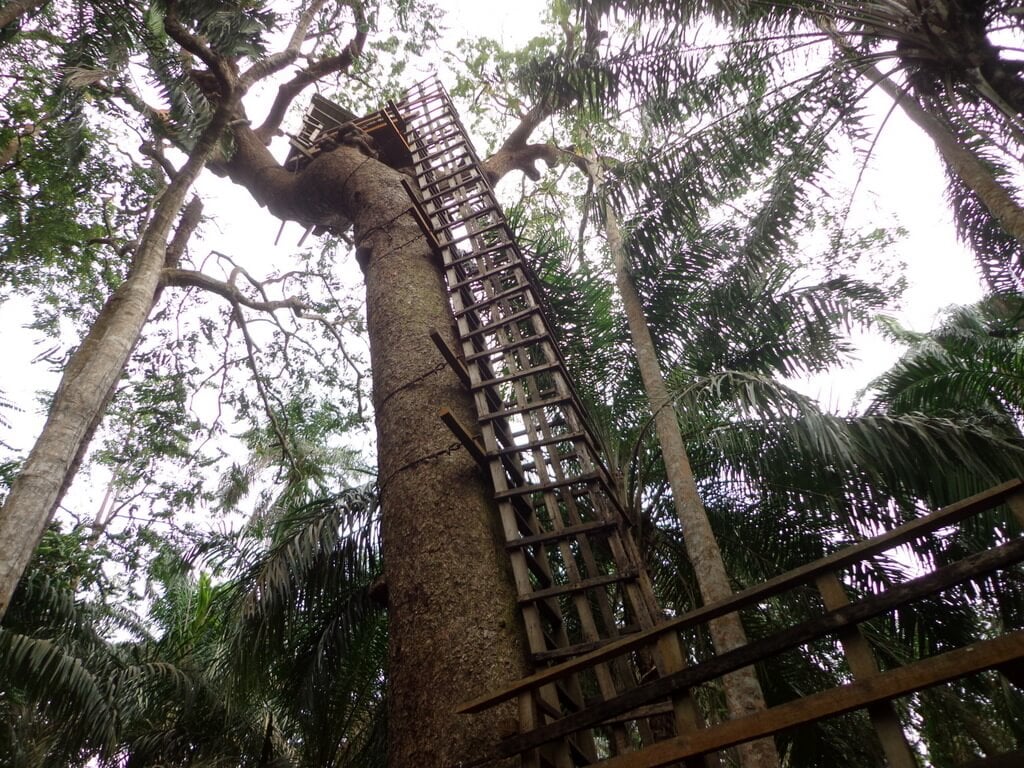
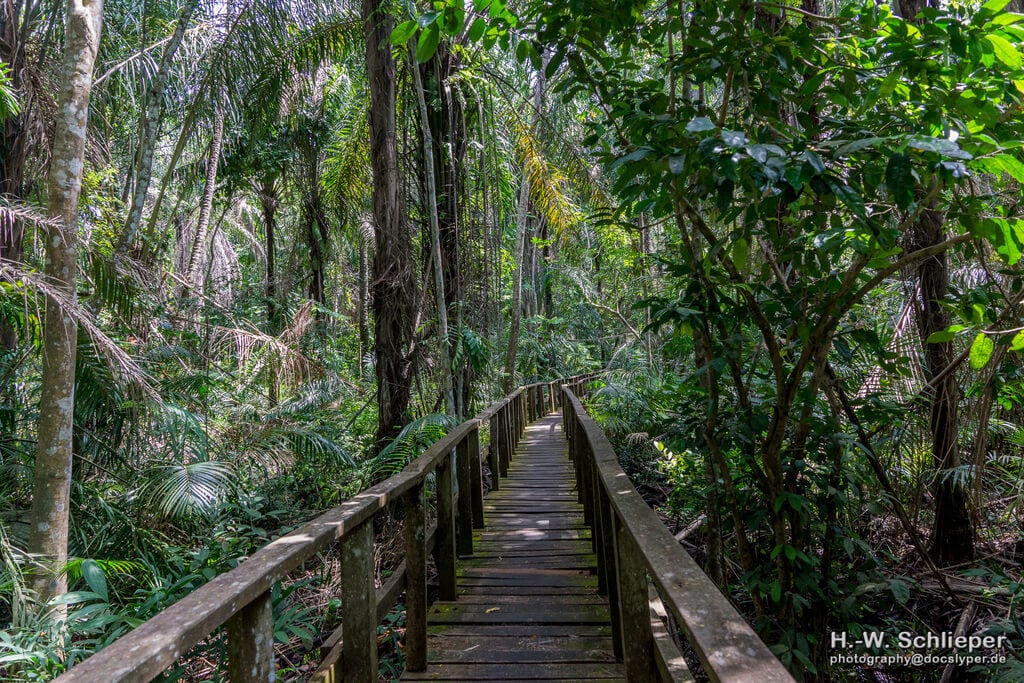
The centre rewards visitors who look beyond the canopy too. Ground-level trails wind through shaded sections where Mona monkeys move through the trees and monitor lizards warm themselves on exposed roots. The centre's famously ancient tortoise still makes occasional, unhurried appearances along the paths. Children's treehouses and play areas sit within the reserve, and raised platforms offer quiet spots to sit and let the forest come to you. The experience works at two levels — literally and as a way of spending time. The walkway is the draw, but the forest floor rewards patience.
Timing your visit makes a genuine difference here. The dry season, roughly November through March, gives the clearest conditions: firm paths, good visibility from the walkway, and warm temperatures that stay manageable. April and May turn lush and vivid — excellent for birdwatching and photography — though humidity rises and showers arrive without much warning. The heavy rainy season, June through September, brings atmospheric mist and thundering rain on the canopy but also muddy trails and a walkway that feels noticeably more alive in all the wrong ways. October sits in between, with skies beginning to clear and conditions improving steadily.
The centre opens daily from 10:00 to 16:00, and arriving closer to opening makes good sense. Lagos traffic is unpredictable at any hour, and the mid-afternoon heat inside a closed rainforest canopy is something most visitors prefer to miss. Those using public transport will find the Chevron bus stop approximately 400 metres from the site — a reasonable short walk along the Lekki-Epe Expressway. Ride-hail services reach the entrance directly and remain a practical option for most visitors coming from central Lagos or the island.
The Lekki Conservation Centre canopy walkway suits anyone who wants a genuine encounter with Nigerian rainforest without travelling far from the city. It works for families, nature photographers, and anyone curious about what Lagos looks like from 22 metres above the tree line. The contrast — between the city just outside the reserve boundary and the green, layered quiet inside — is the whole point. This is a specific, credible nature experience, not a managed theme park, and that distinction is exactly what makes it worth the trip.
Frequently Asked Questions
Q: What exactly is the canopy walkway, and how high does it go?
A: The suspended walkway stretches 401 metres through the forest canopy — the longest in Africa — reaching up to 22 metres above the ground at its highest point. It sways underfoot on the narrower plank sections, so expect to grip the rope rails. The walkway is well-maintained and sturdy, but the height is very real.
Q: Is there anything worth seeing if heights aren't for you?
A: Plenty. Ground-level trails wind through shaded forest where Mona monkeys move through the trees, monitor lizards bask on exposed roots, and the centre's famously ancient tortoise makes occasional unhurried appearances. Children's treehouses and raised platforms are also within the reserve, and patient visitors are often rewarded by birds at close range.
Q: When is the best time to visit for comfort on the walkway?
A: November through March is the clearest recommendation — dry, sunny, and warm without excessive humidity, giving the best visibility from the walkway and firm trails below. April and May turn lush and vivid, ideal for birdwatching and photography, though showers arrive unpredictably. June through September brings atmospheric mist and dramatic rain on the canopy, but also muddy paths and a noticeably wobblier walkway experience.
Q: What are the opening hours, and how do you get there?
A: The centre opens daily from 10:00 to 16:00. Arriving near opening is wise — Lagos traffic is unpredictable, and the mid-afternoon heat inside a closed rainforest canopy builds quickly. The Chevron bus stop on the Lekki-Epe Expressway is approximately 400 metres from the entrance for those using public transport. Ride-hail services reach the entrance directly and are a practical option from central Lagos or the island.





Add a review