
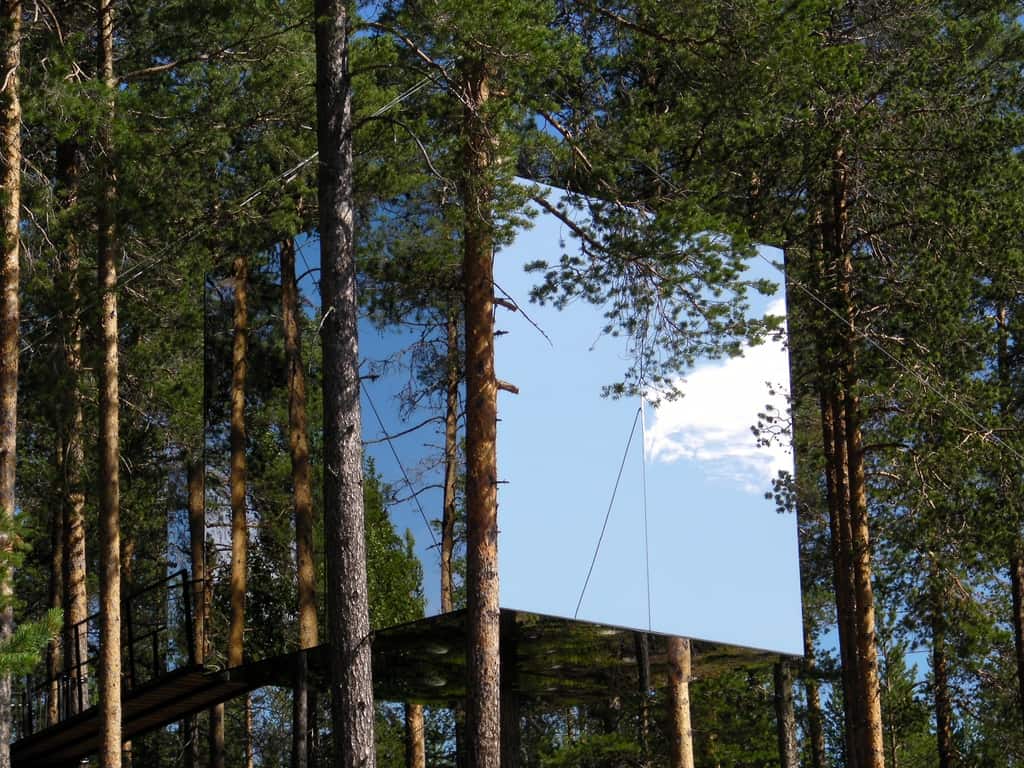
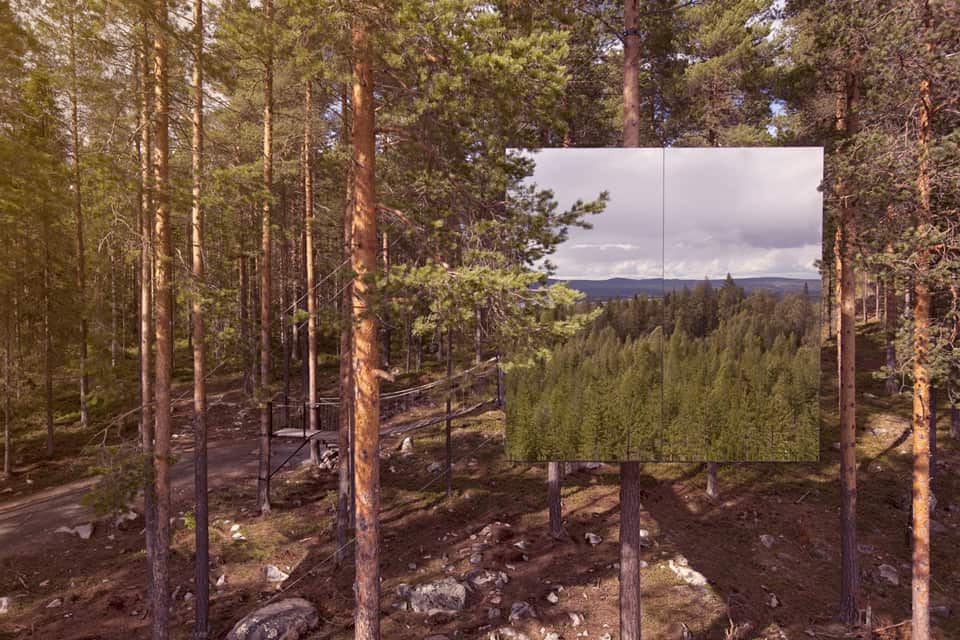
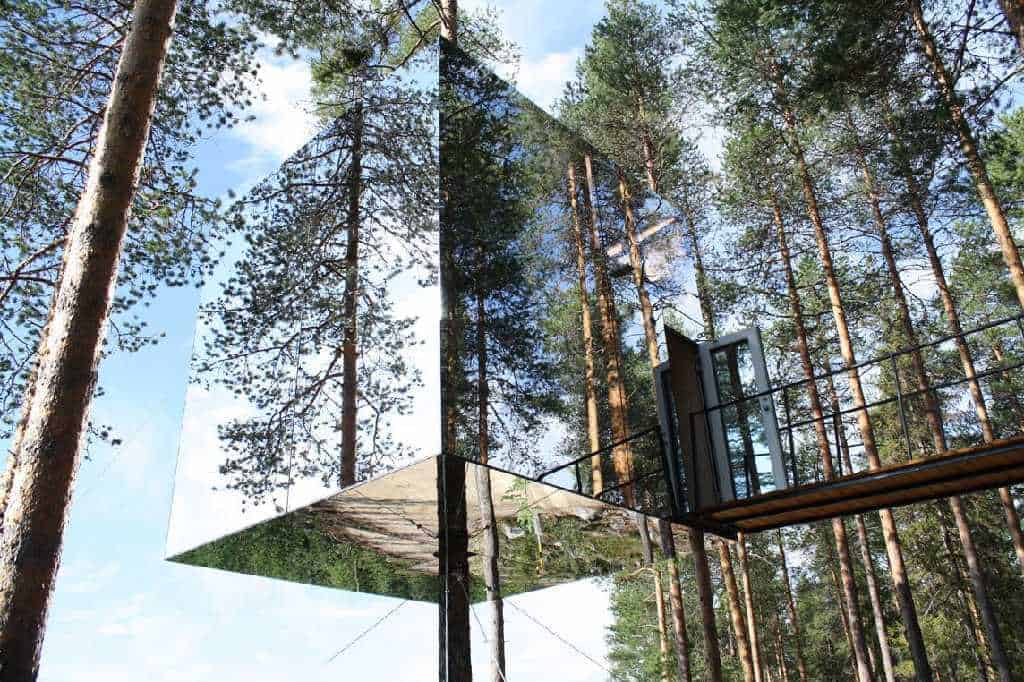
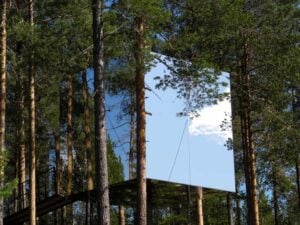
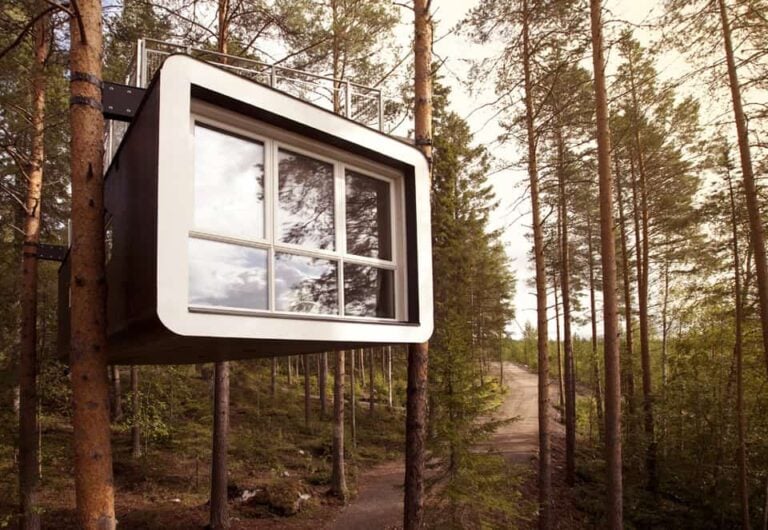
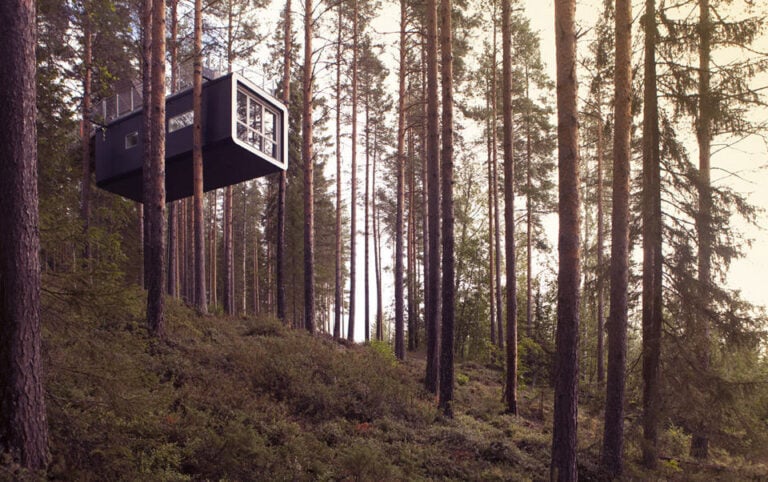
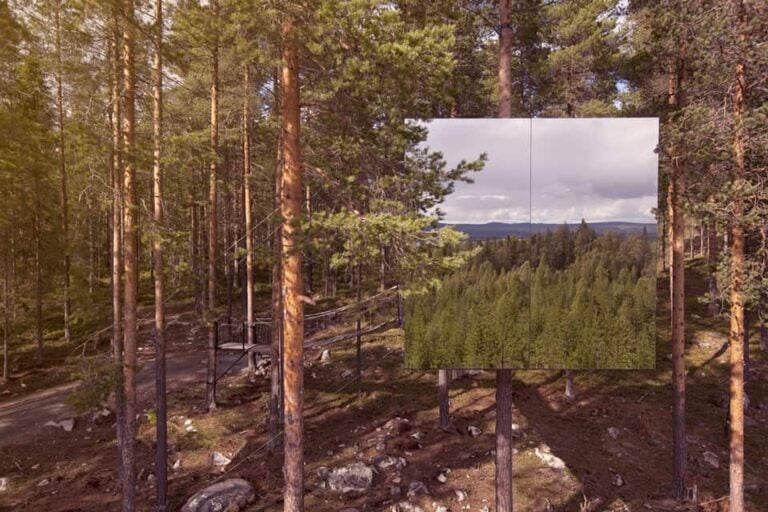
Some architecture announces itself. The Mirrorcube does the opposite. Clad entirely in reflective glass, this small cabin at Treehotel in Harads, northern Sweden, folds itself into the pines until it nearly disappears. You can be standing a few metres away and still struggle to locate it. That vanishing act is the point.
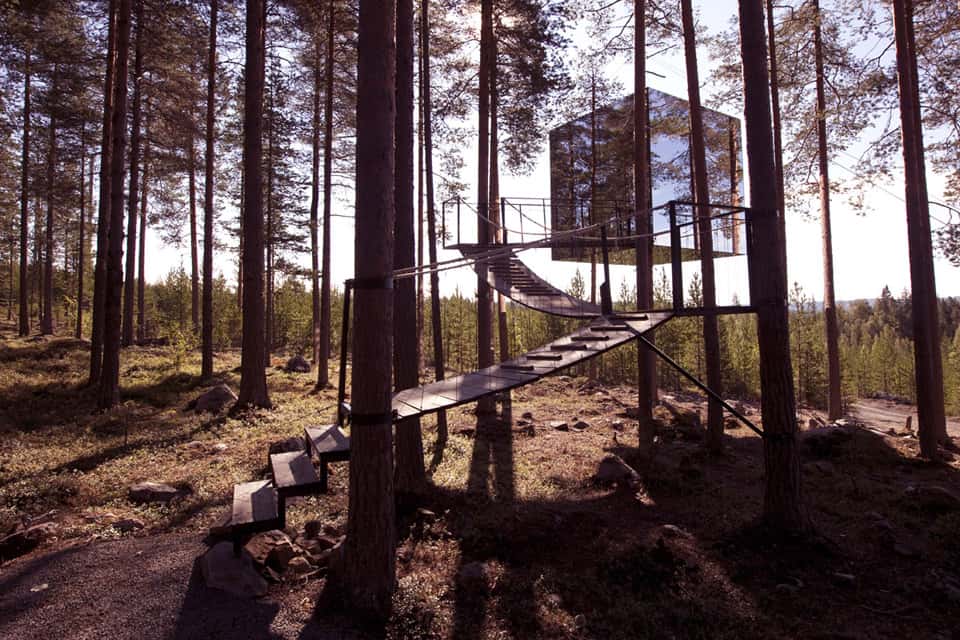
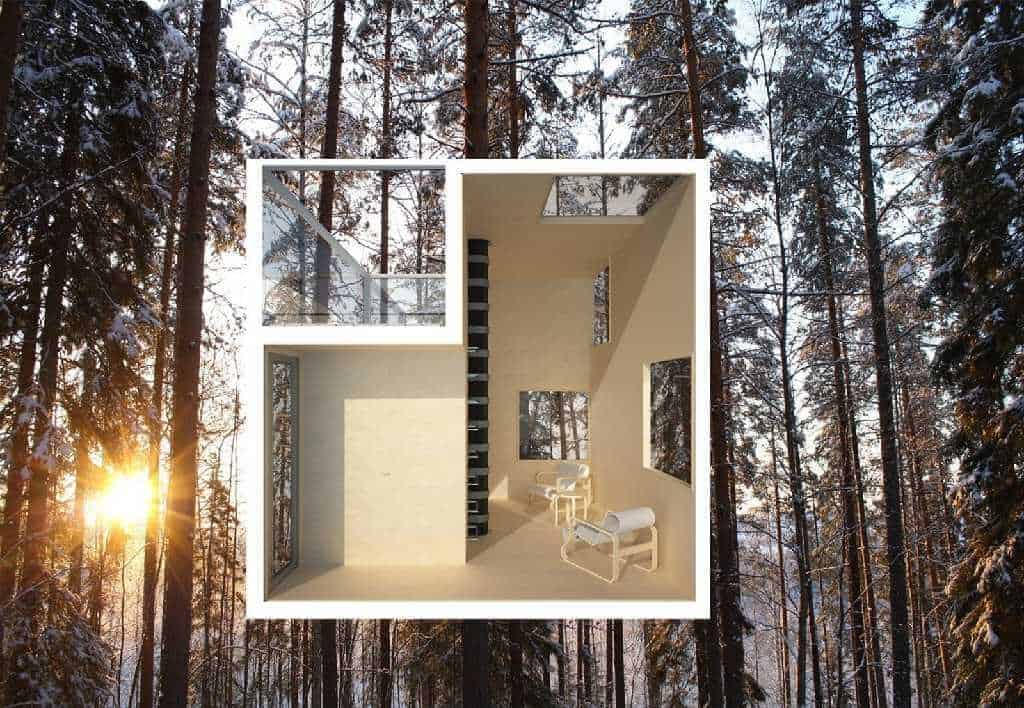
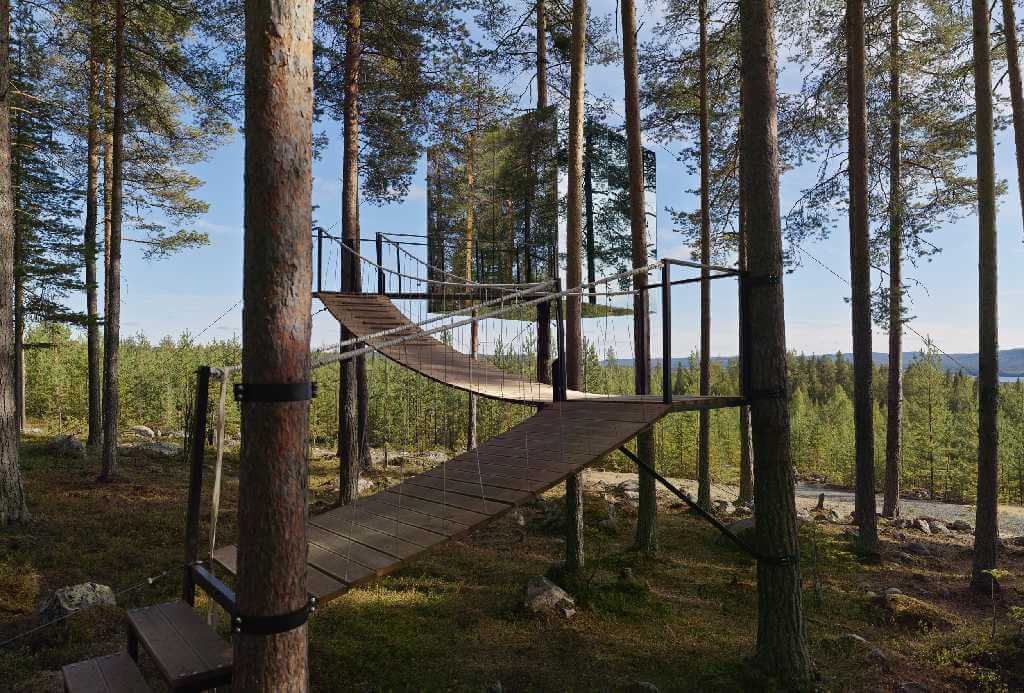
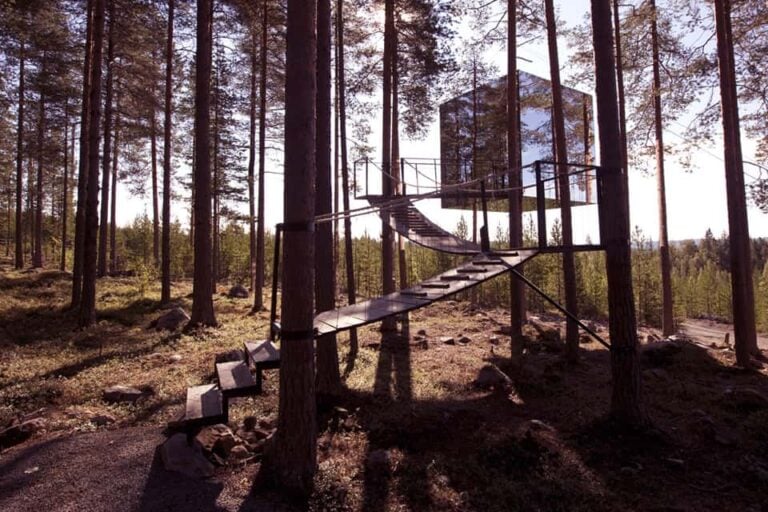
Designed by Bolle Tham and Martin Videgård, the cube measures four metres in every direction. It hovers roughly four to six metres above the forest floor, reached by a suspended bridge of around twelve metres. The crossing feels deliberate — footsteps echoing, the trees shifting around you — before you arrive at a cabin that feels less like accommodation and more like a decision.
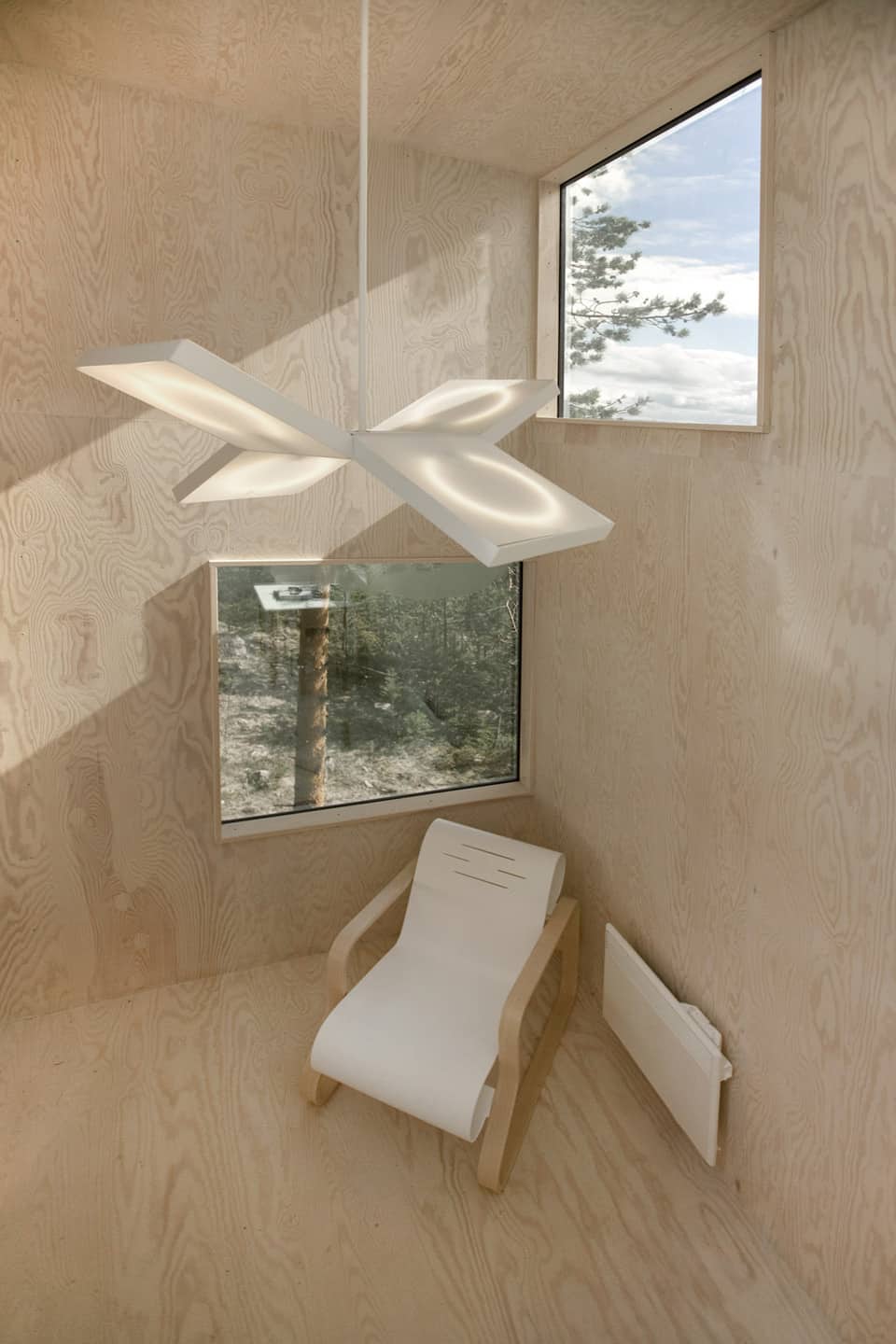
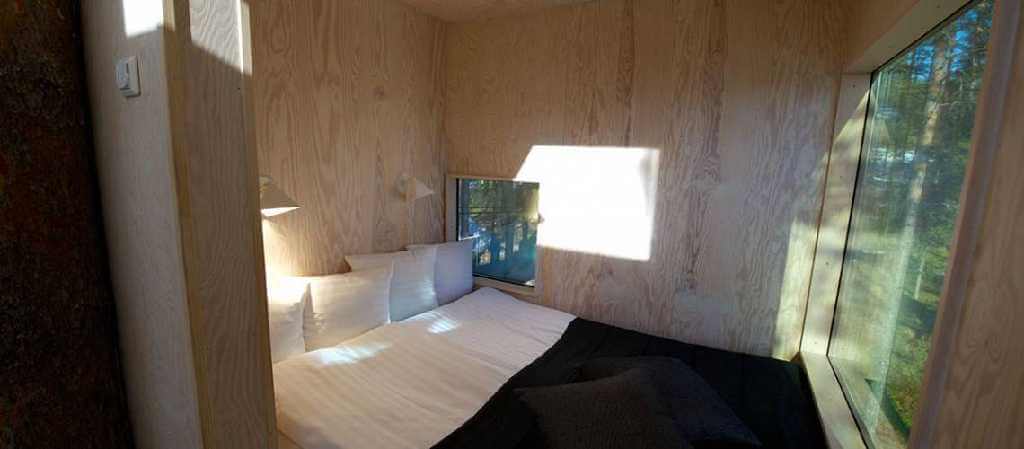
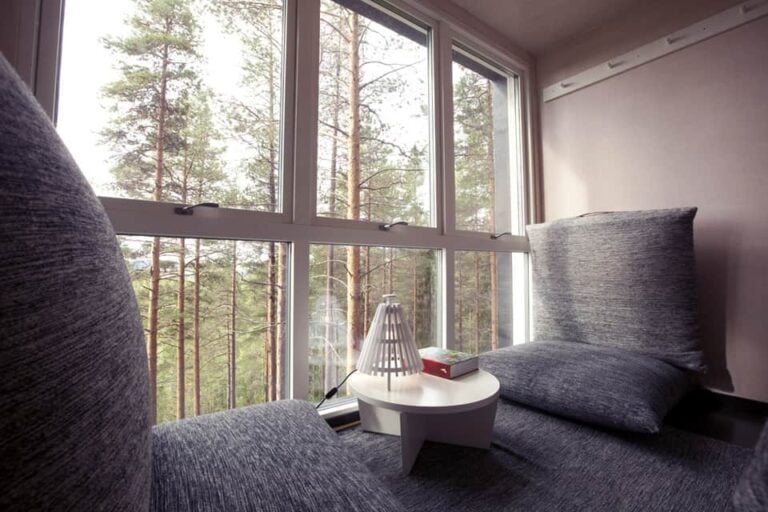
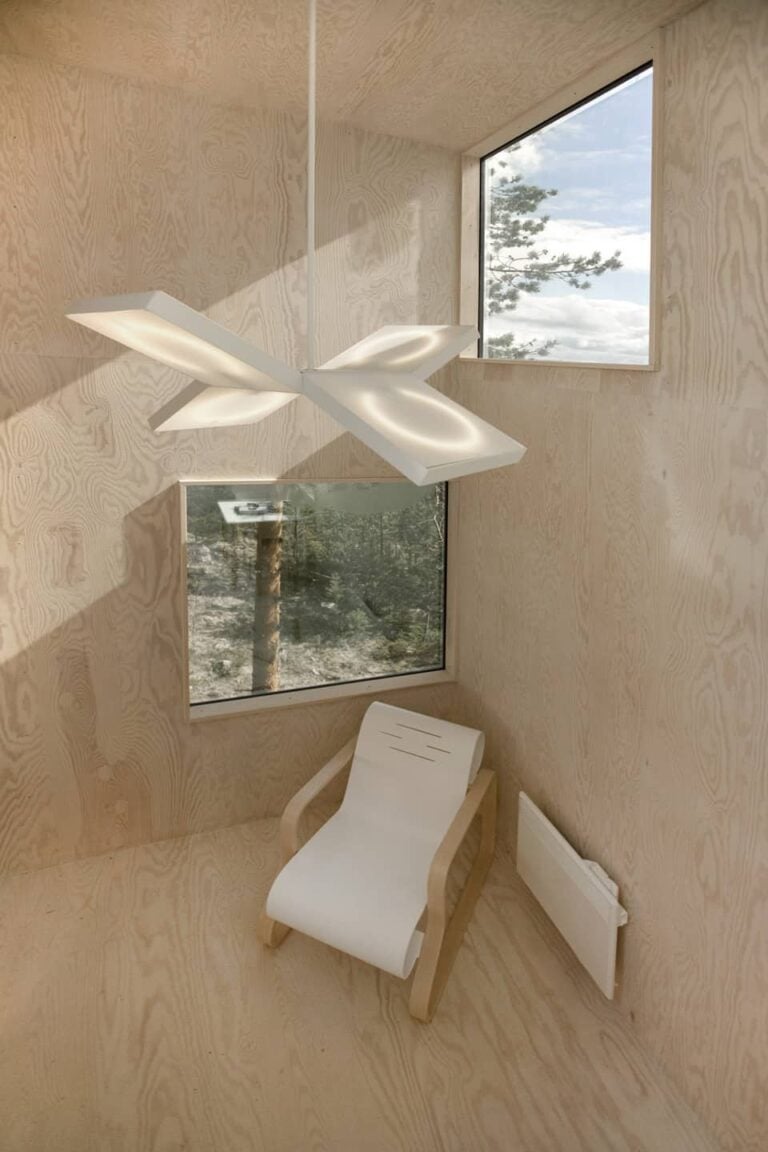
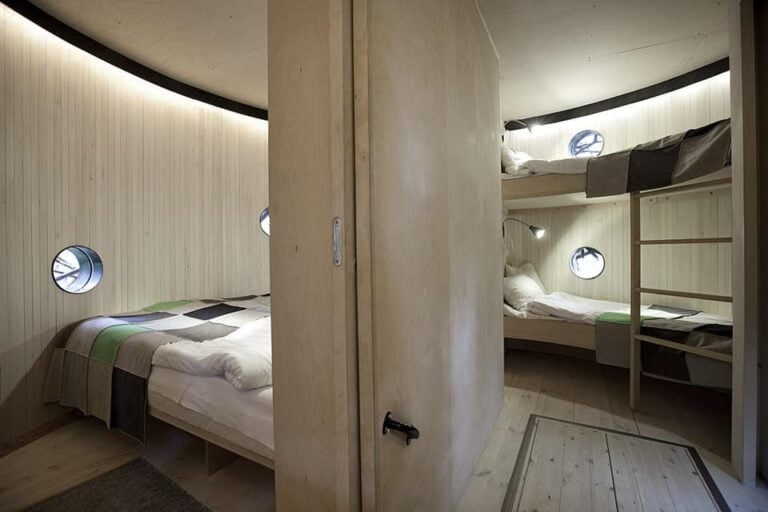
Inside, the space is warm and considered. Birch plywood lines the walls and floor, cutting against the cool geometry of the exterior. Heated floors carry guests through cold Swedish nights. A double bed sits at the centre of the room, a small seating nook beside it, and panoramic windows open onto the forest from every angle. A compact bathroom and a discreet balcony complete the picture. The bathroom includes an incineration or composting toilet — a detail that fits the cabin's off-grid character without compromising comfort.
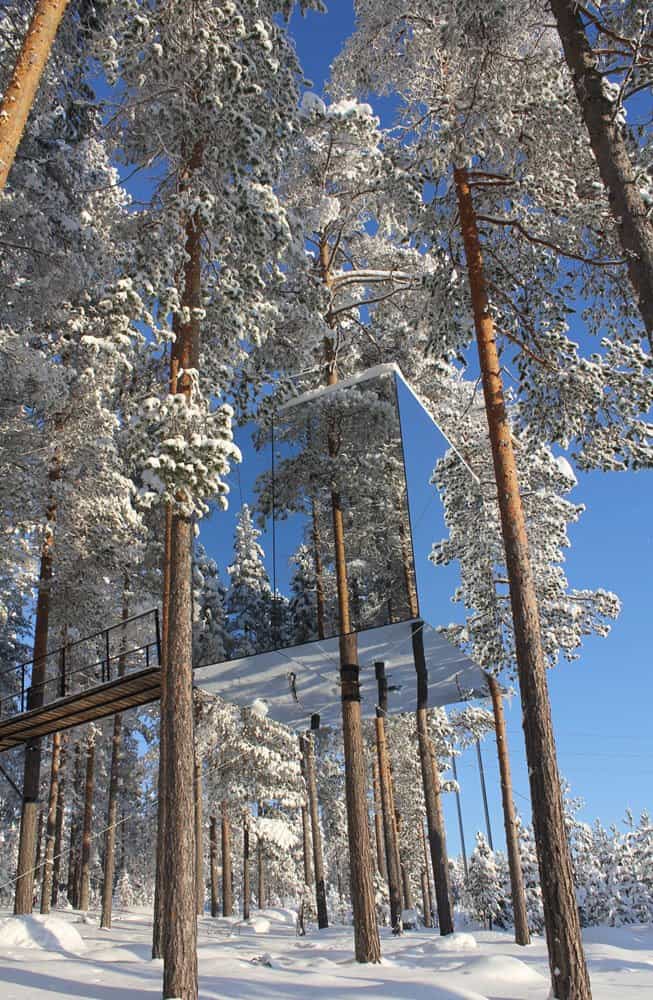
What makes the Mirrorcube distinct is not its size but its orientation. The forest doesn't sit outside the window as scenery; it surrounds you entirely. Light shifts across birch trunks. Branches move. Snow settles on the glass in winter and reflects back in the summer midnight sun. The cube is compact by design, and that compactness serves the experience. Guests who want a sprawling retreat will find better options elsewhere. Guests who want depth — the feeling of sleeping suspended inside a forest — will find few places like this one.
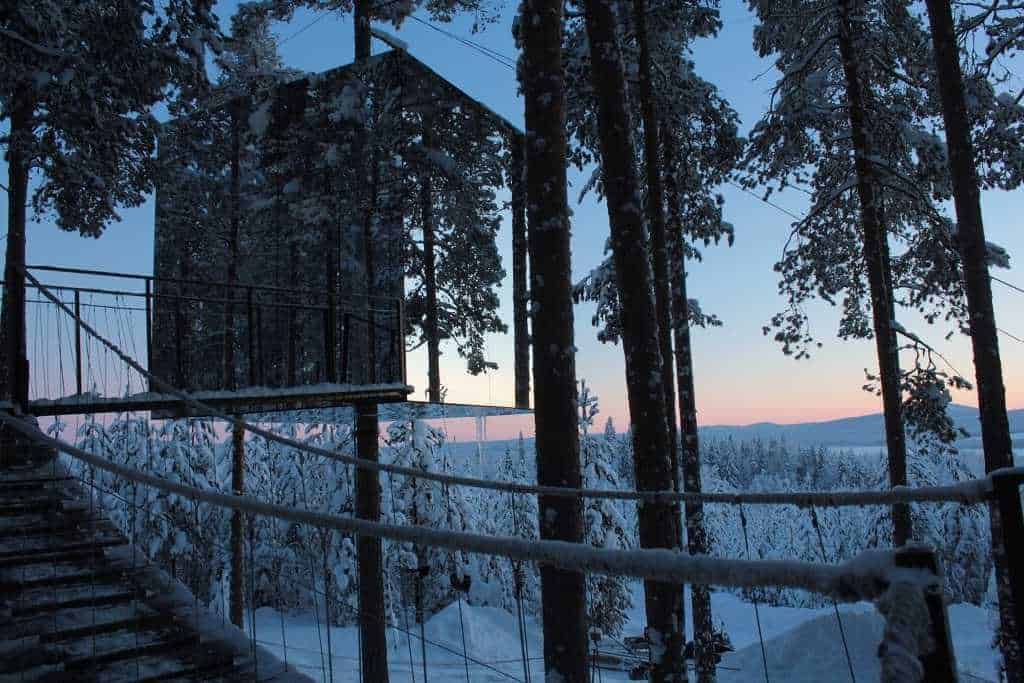
The best time to arrive depends on what you're chasing. Winter brings sub-zero cold, deep snow and the possibility of aurora above the treeline. Summer delivers the Midnight Sun and long golden evenings that blur into dawn. Autumn turns the surrounding birches brilliant yellow. Spring offers quieter days and the slow return of light after months of darkness. Each season reshapes the cabin without changing it.
Nightly rates run approximately 6,750 SEK to 7,250 SEK, placing the Mirrorcube firmly in the luxury tier. Rates vary by season and availability, so it is worth planning ahead, particularly for winter and summer peak periods.
Getting to Harads is straightforward by car from Luleå, roughly 100 kilometres to the south. For those arriving by public transport, bus line 44 stops at the Harads Tree Hotel stop, approximately 50 metres from the property — the closest and most practical bus option. An alternative stop, Harads Hälsocentral Väg 97, serves both bus line 44 and bus line 266 and sits around 1.4 kilometres away. Most guests drive or arrange transfers from the nearest rail connections further south; Harads itself has no train station.
The Mirrorcube suits pairs who travel for architecture, for landscape, for the specific atmosphere of northern Sweden in a particular season. It rewards those who slow down. Wake here on a clear winter morning and the forest outside is indistinguishable from the forest reflected in the glass. That ambiguity — what is real, what is mirror — is something you carry home.
Frequently Asked Questions
Q: What is the Mirrorcube's nightly rate?
A: Rates run approximately 6,750 SEK to 7,250 SEK per night, placing the Mirrorcube in the luxury tier. Expect variation by season and availability, with winter aurora season and summer Midnight Sun periods typically in highest demand.
Q: What is it actually like inside — is it comfortable despite the small size?
A: The cube measures four metres in every direction, so the space is deliberately compact. Birch plywood walls and heated floors give the interior a warm, considered feel, and the double bed, seating nook, and panoramic windows on all sides mean the forest fills every sightline. Guests who want expansive square footage will find better-suited options; those after deep immersion in the forest will find the scale works in their favour.
Q: When is the best time of year to stay?
A: Winter (December–March) is the most dramatic: the mirrored cube nearly disappears into snow-covered pines and the northern lights can appear overhead. Summer brings the Midnight Sun — long golden evenings that barely darken — while autumn turns the surrounding birches brilliant yellow, reflected on every surface. Each season offers a genuinely different experience.
Q: How do you reach the cabin, and is it accessible without a car?
A: Treehotel sits in Harads in northern Sweden, around 100 kilometres from Luleå. Bus line 44 stops at the Harads Tree Hotel stop, approximately 50 metres from the property, making it one of the more accessible remote treehouse stays by public transport. Confirm current schedules with the regional operator before travel.







Add a review