
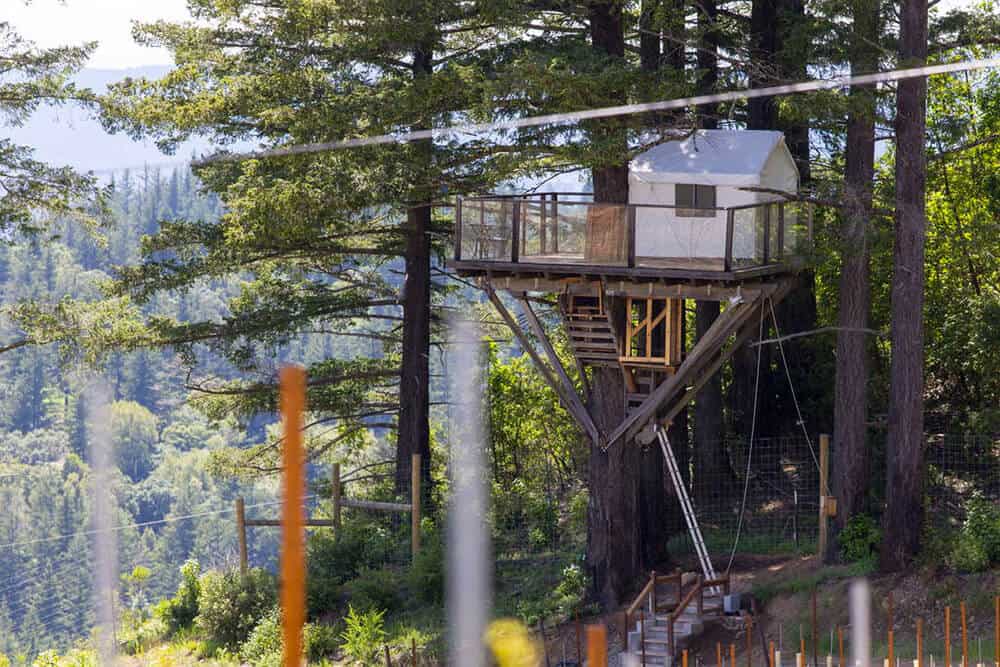
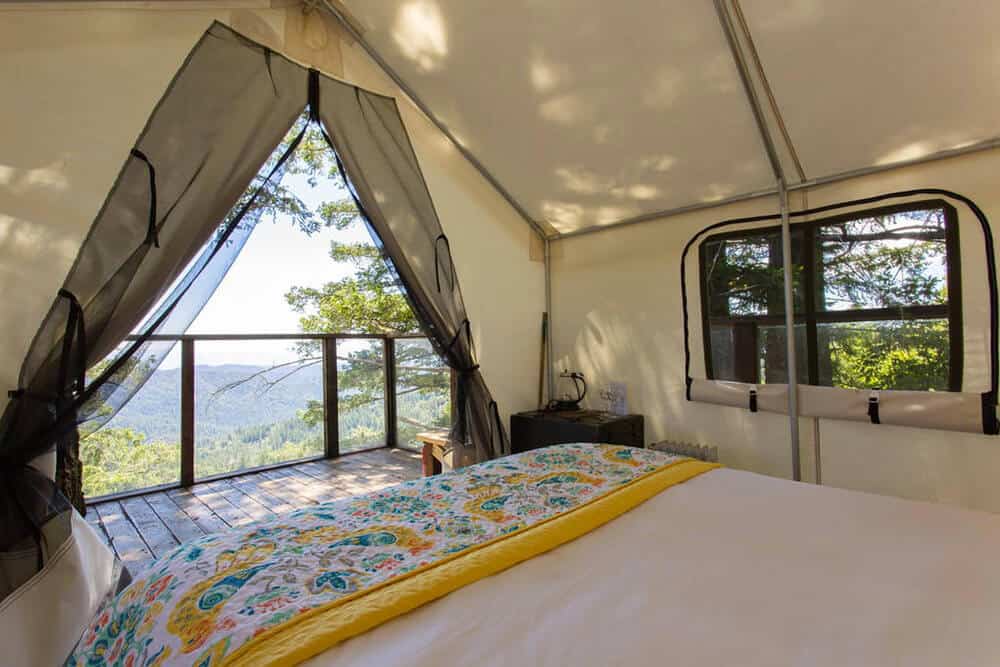
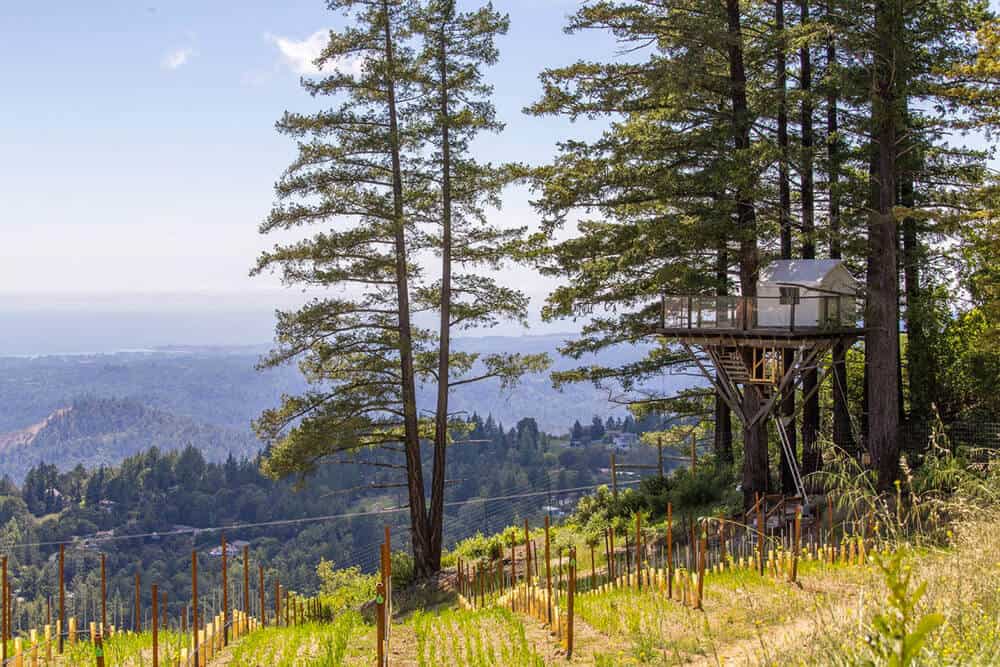
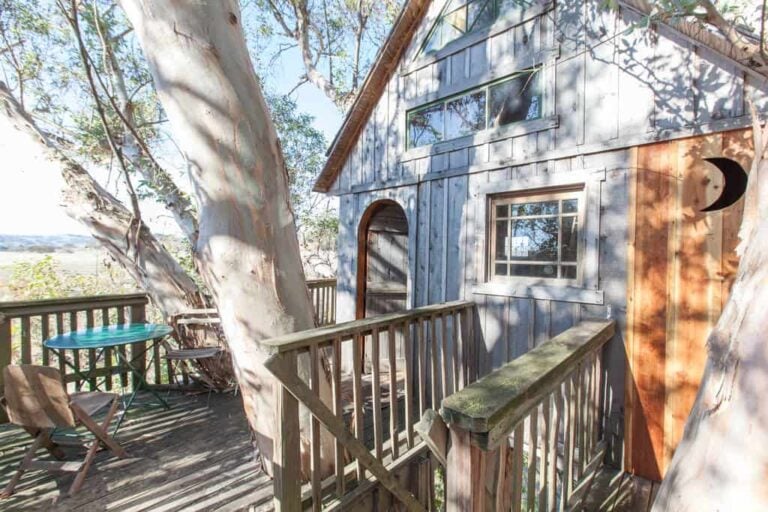
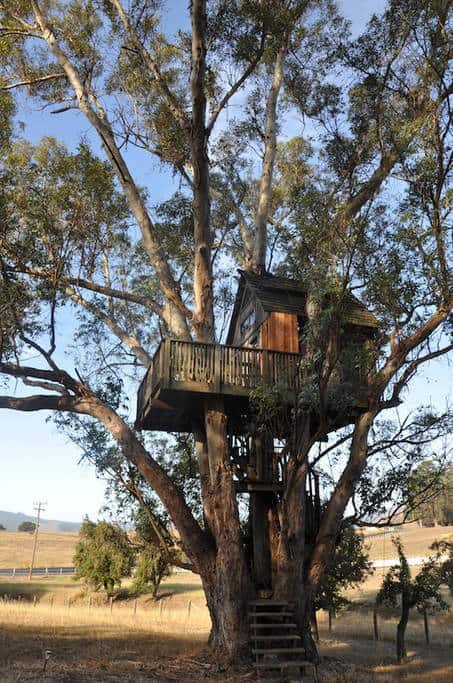
Tucked into the Santa Cruz Mountains above Los Gatos, the Monterey Bay Treehouse sits on a wide wooden platform in the arms of towering Douglas firs. It is not a children's treehouse with rope ladders and a trapdoor. It is a generously proportioned canvas-tent structure that manages to feel both genuinely wild and quietly luxurious at the same time.
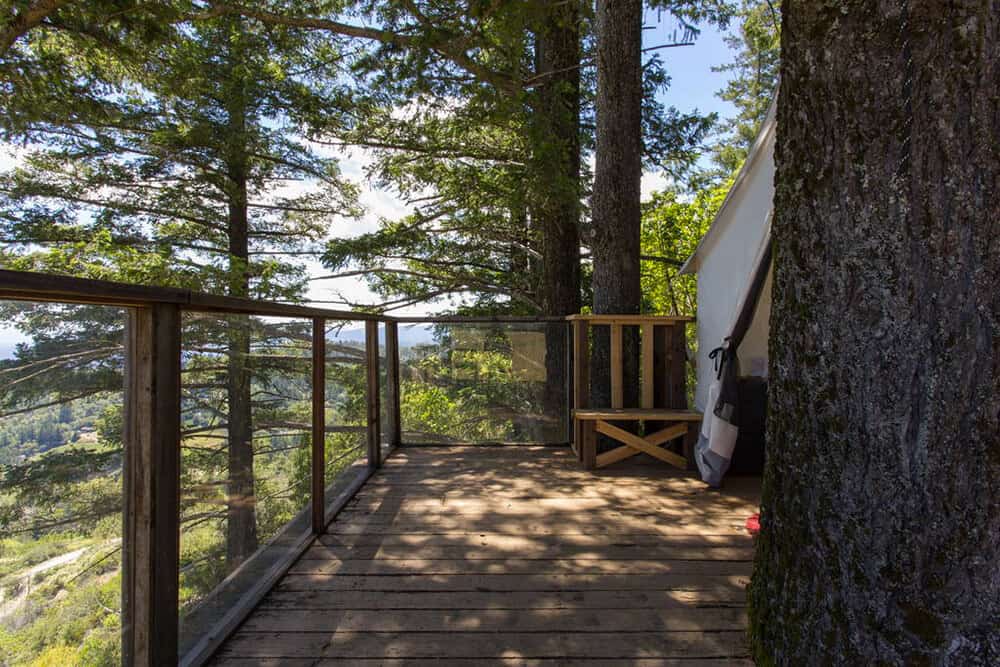
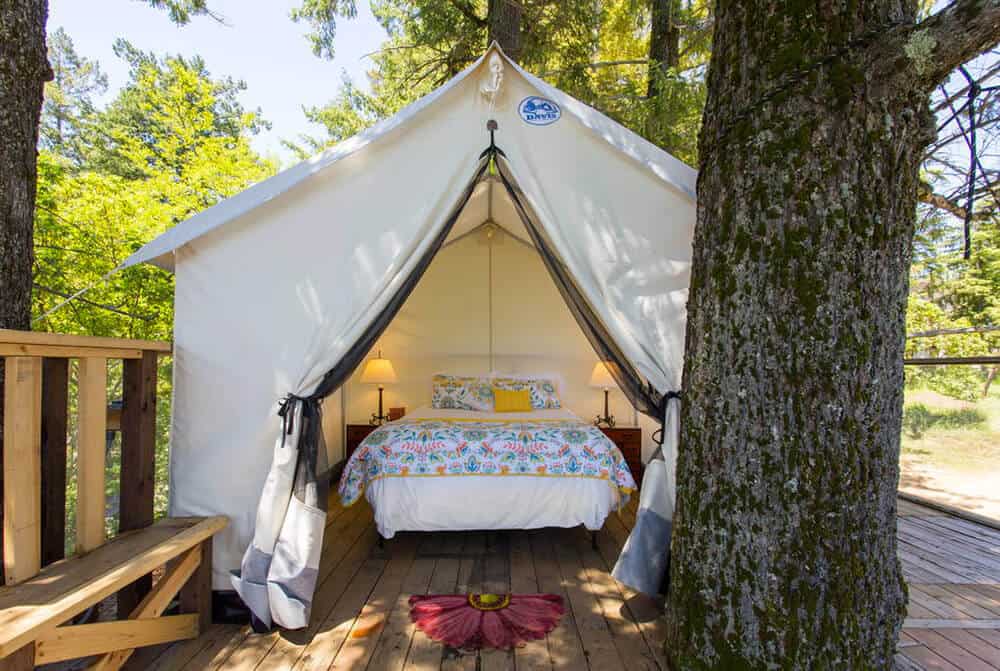
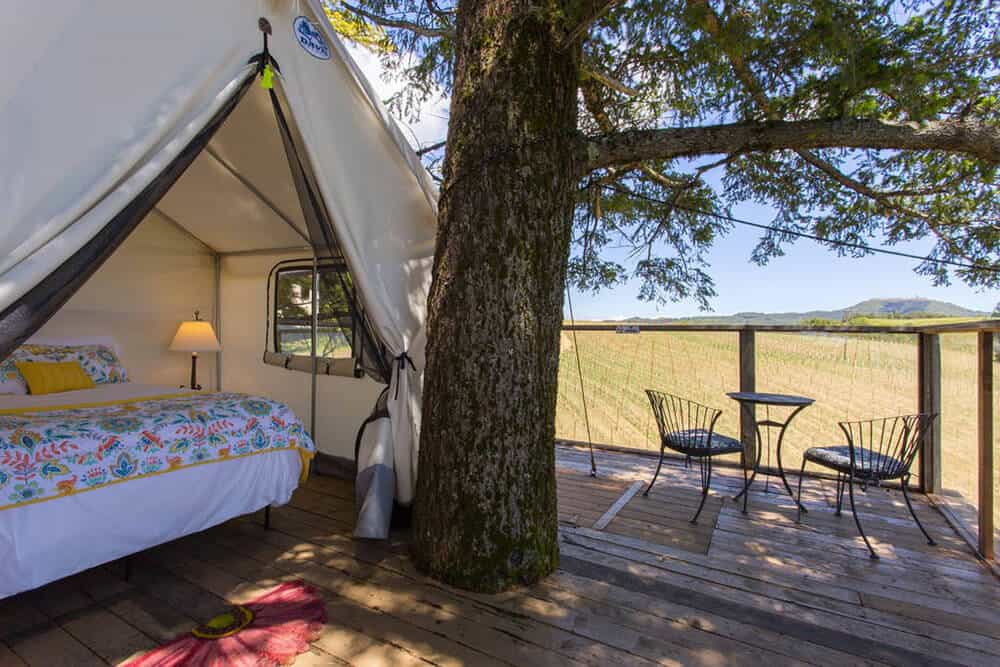
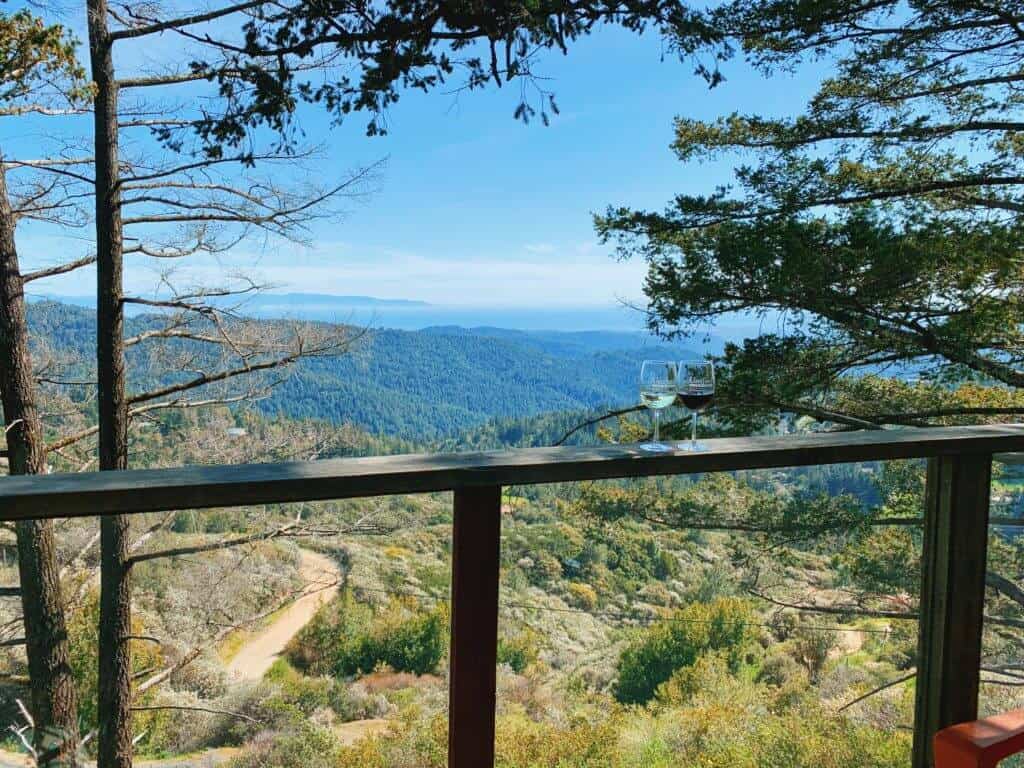
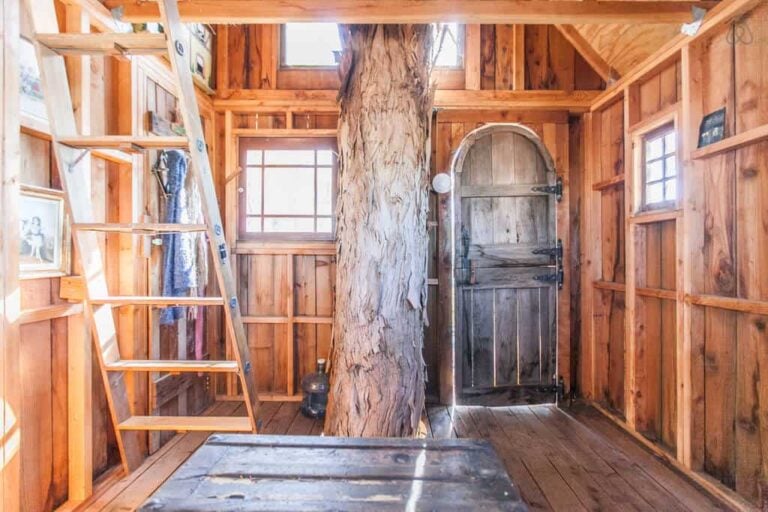
Inside, a queen bed with soft linens anchors the space, and lights are strung just right to make the whole tent glow at dusk. Deck chairs sit ready at the railing, positioned directly for the view. That view stretches across vineyard slopes, and on clear days Monterey Bay shimmers on the horizon. The quiet here is the deep, earth-hum kind — not the silence of an empty room, but something more alive.
One honest detail worth knowing: the bathroom is not in the tent. A short path leads down to the main house, and the arrangement is more rustic than boutique-hotel. Most guests adapt quickly, especially once they notice the stars visible overhead on the walk back. At this elevation and distance from city light, the night sky is genuinely startling. The minor inconvenience becomes part of what makes the stay feel real.
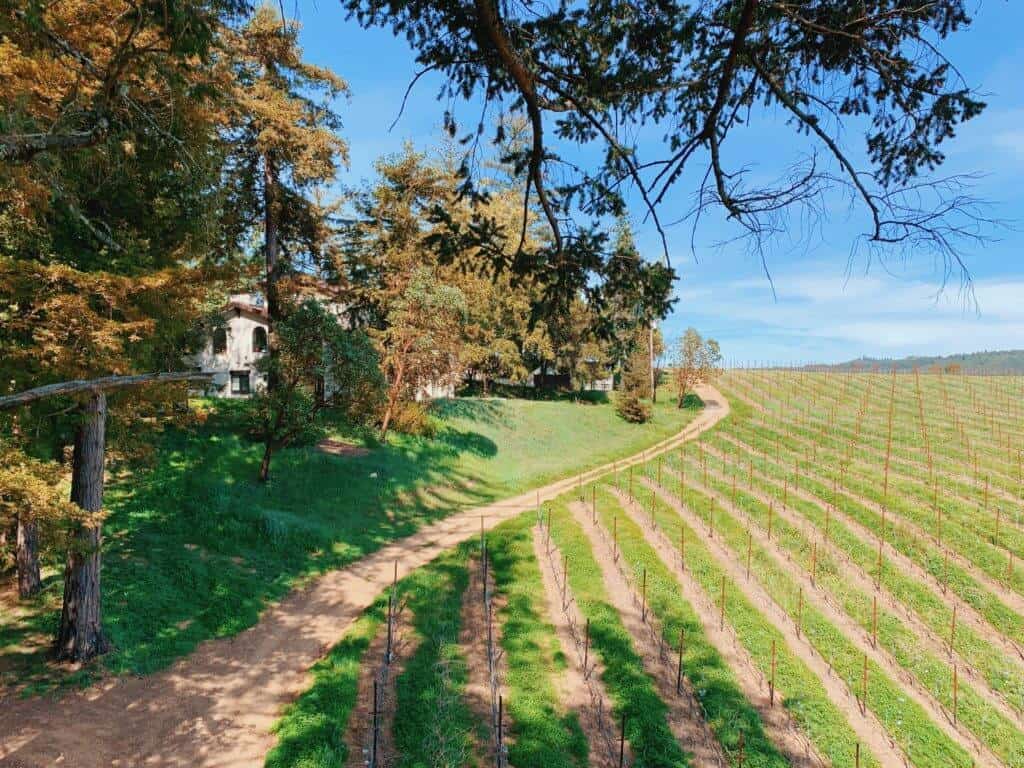
The vineyard landscape sets the larger scene. Fog drifts in from the bay on many evenings, wrapping the platform in a particular kind of coastal stillness. A corkscrew waits for a bottle of local wine, and the host relationship feels more like being trusted with a well-kept secret than checking into a property. Spring and autumn tend to offer the clearest conditions along this stretch of the Central Coast — mild temperatures and sharp views — though summer mornings bring their own soft, marine-fog atmosphere that suits the canvas-tent character well.
Getting here is part of the experience. The address, 25200 Loma Prieta Ave, Los Gatos, places the property well inland from Highway 1, up into vineyard country where GPS can lose confidence on the final approach. The host's directions are the reliable guide, and following them is genuinely useful advice rather than a polite suggestion. A personal vehicle or arranged ride from Santa Cruz or San Jose makes the most practical sense. The nearest public transport is Cavallaro Transit Center in Scotts Valley, served by bus lines 17, 35 and 35A, approximately 14 km away as the crow flies — a distance that makes the car-dependent reality clear.
Nightly rates run approximately $100–$200, with variation by season and availability, placing this firmly in accessible territory for what the experience delivers. It books quickly, especially for weekend getaways and longer midweek retreats when the mountains are quieter. The Monterey Bay Treehouse suits couples seeking genuine remoteness, solo travellers willing to trade convenience for atmosphere, and anyone who wants to sleep inside the canopy of a California forest with a vineyard rolling away below them.
Frequently Asked Questions
Q: What are the nightly rates at the Monterey Bay Treehouse?
A: Rates run approximately $100–$200 per night, placing it in accessible territory for this type of experience. Prices vary by season and availability, so check current availability when planning your stay.
Q: Is the bathroom inside the treehouse?
A: No — the bathroom is in the main house, reached by a short path from the platform. It is a genuine rustic quirk rather than a flaw, and most guests adjust quickly. Worth knowing before you book, especially if that detail matters to you.
Q: When is the best time to visit?
A: Spring and autumn tend to offer the clearest skies and sharpest views across the vineyard slopes toward Monterey Bay, with mild temperatures and fewer crowds. Summer mornings bring coastal fog from the bay, which suits the canvas-tent atmosphere well in its own way.
Q: Do I need a car to reach the Monterey Bay Treehouse?
A: Yes, practically speaking. The property sits in the Santa Cruz Mountains above Los Gatos, well inland from the coast and up into vineyard country. The nearest bus connections are around 14 km away, so a personal vehicle or arranged ride from Santa Cruz or San Jose is the realistic approach. The host's directions are essential for the final stretch, where GPS can become unreliable.












Add a review