

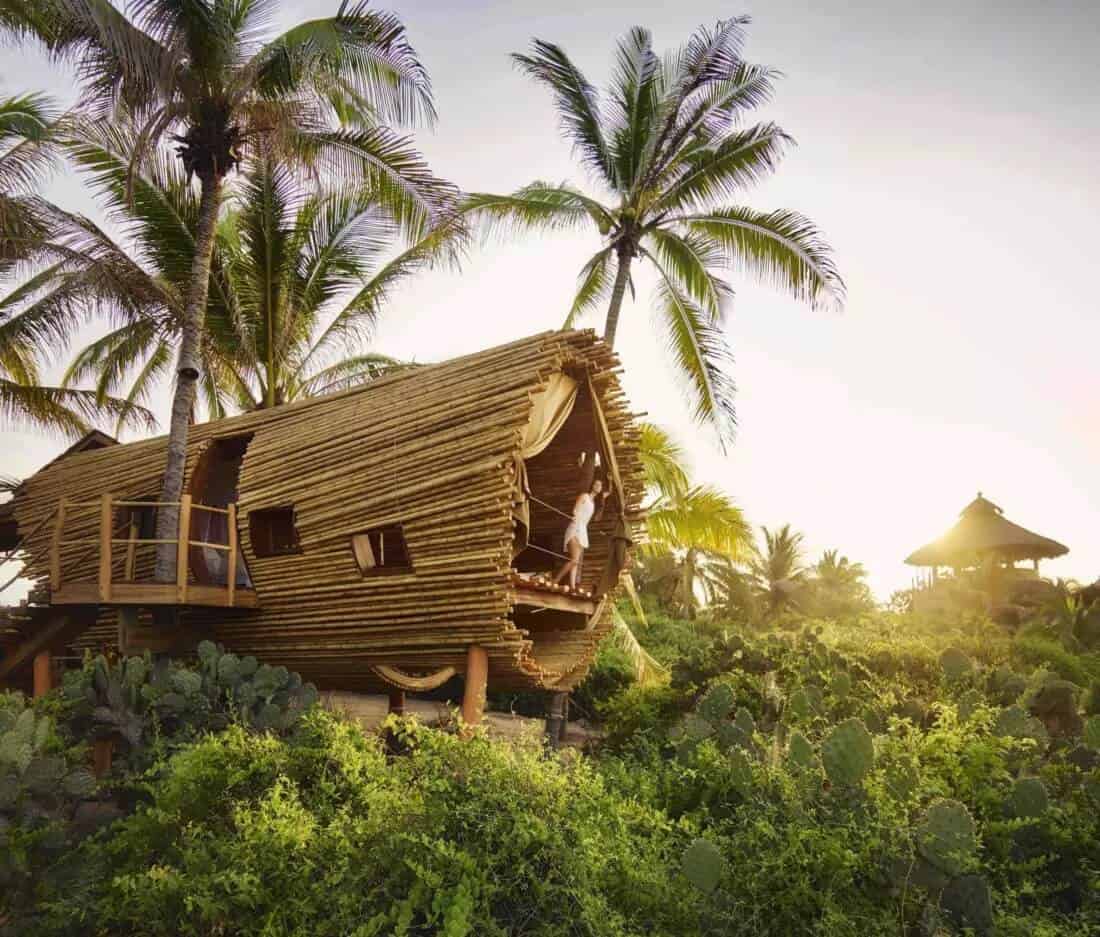
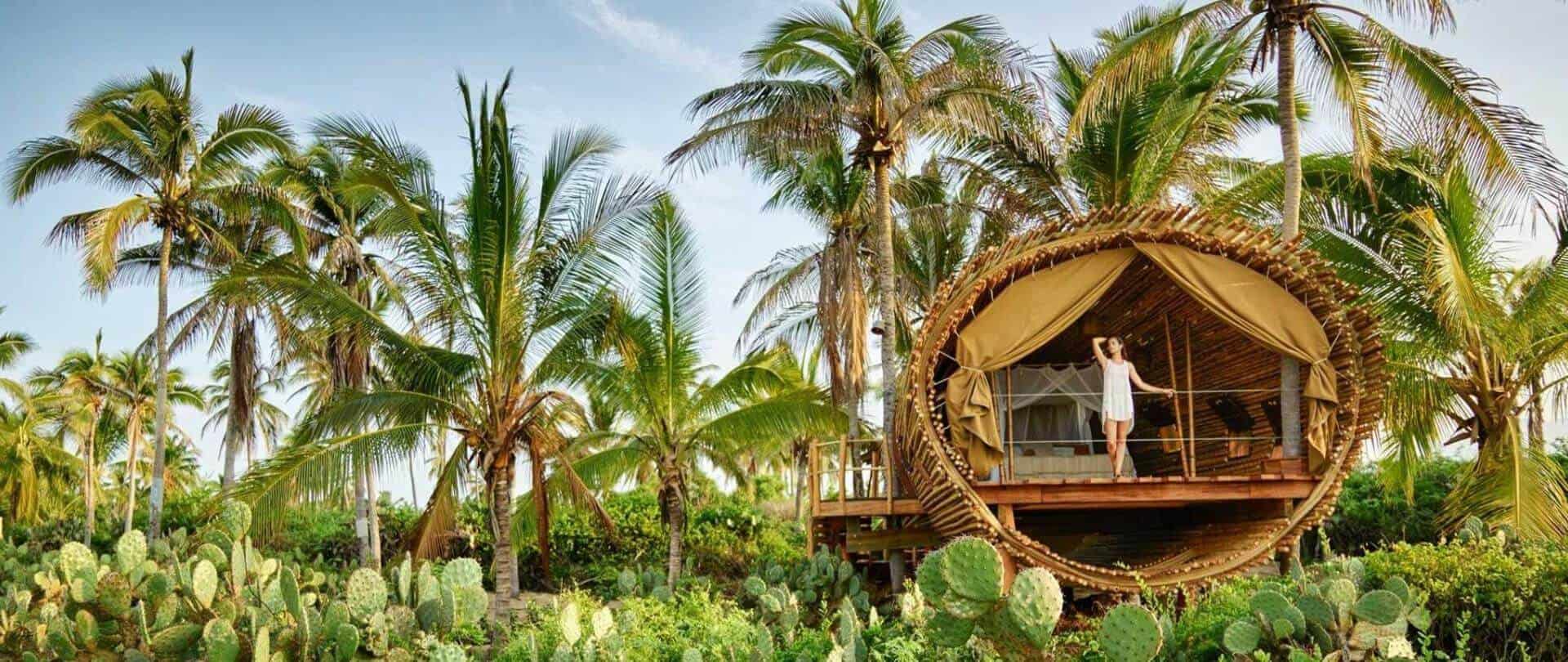
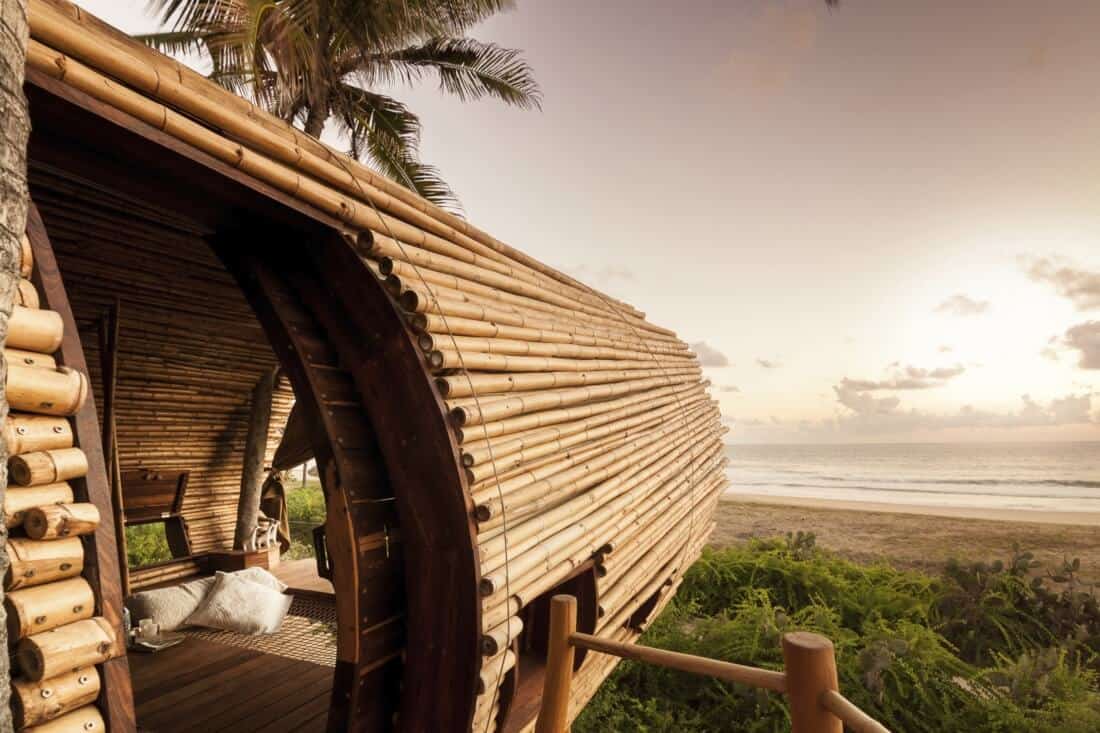
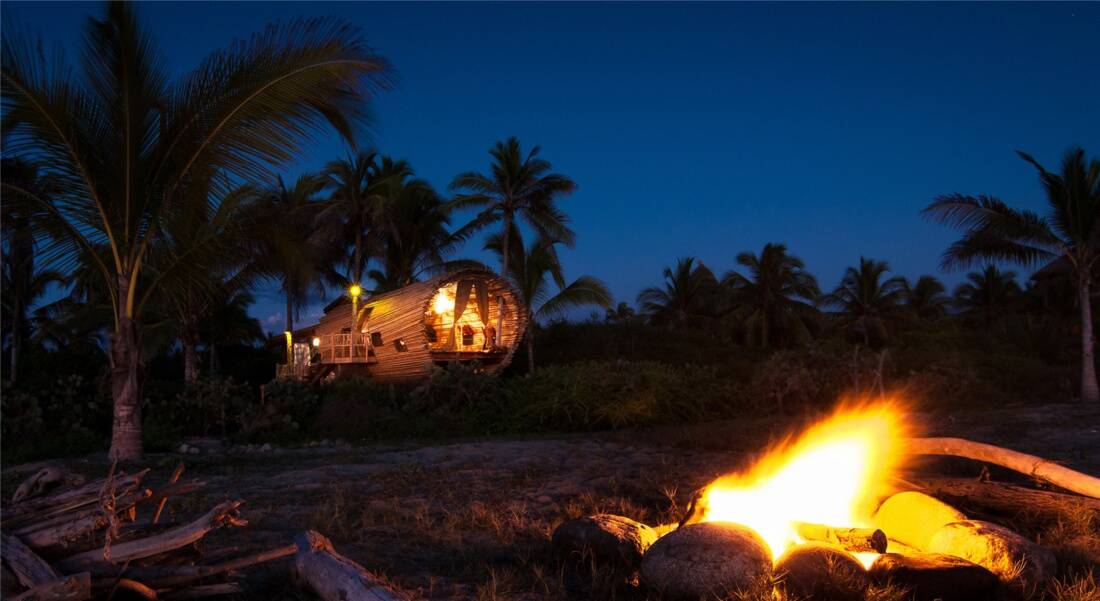
On Mexico's Pacific coast, roughly halfway between Zihuatanejo and Acapulco, Playa Viva occupies a stretch of coastline where jungle presses almost to the surf. The resort spreads across some 200 acres of beach, forest and permaculture gardens. Within that landscape, one structure draws particular attention: a cylindrical, stilted treehouse that floats a few feet above the ground on a wooded bluff facing the Pacific.
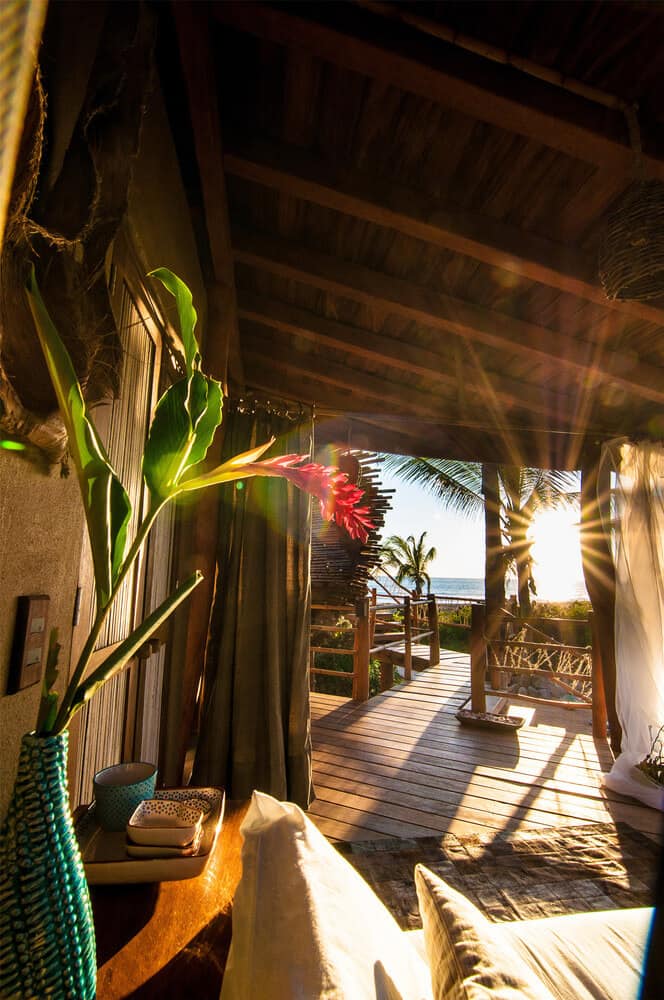
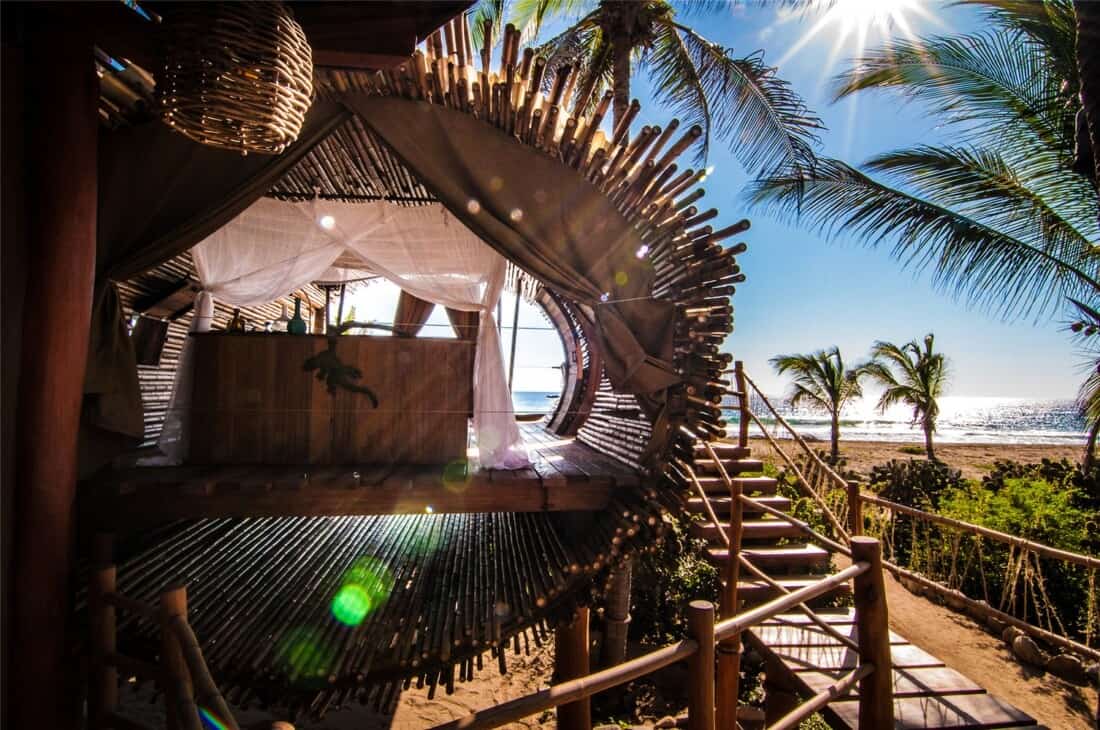
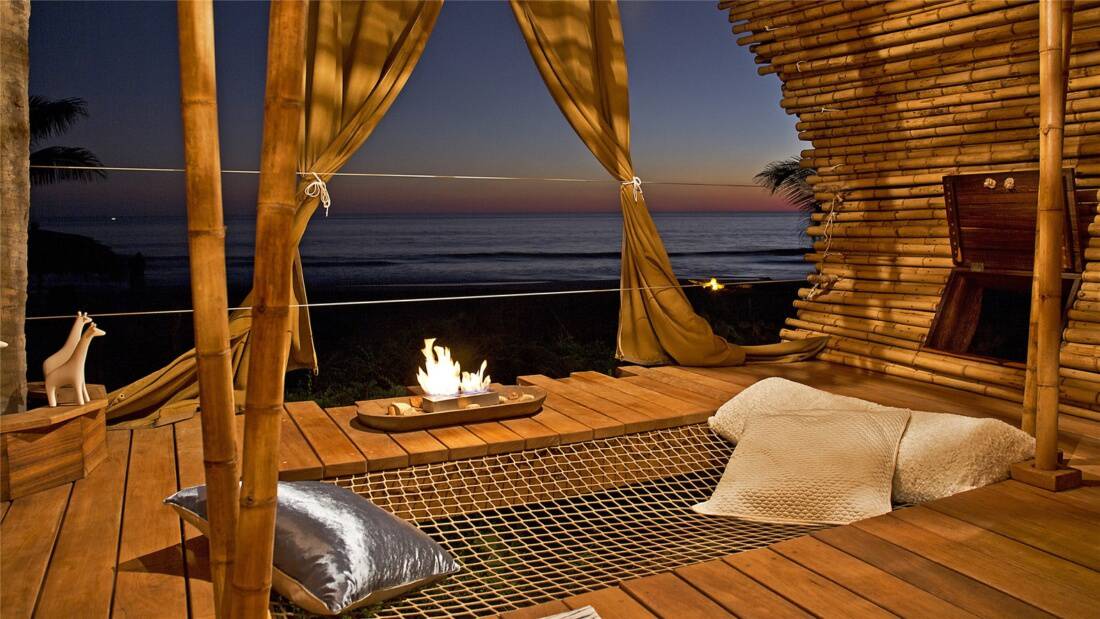
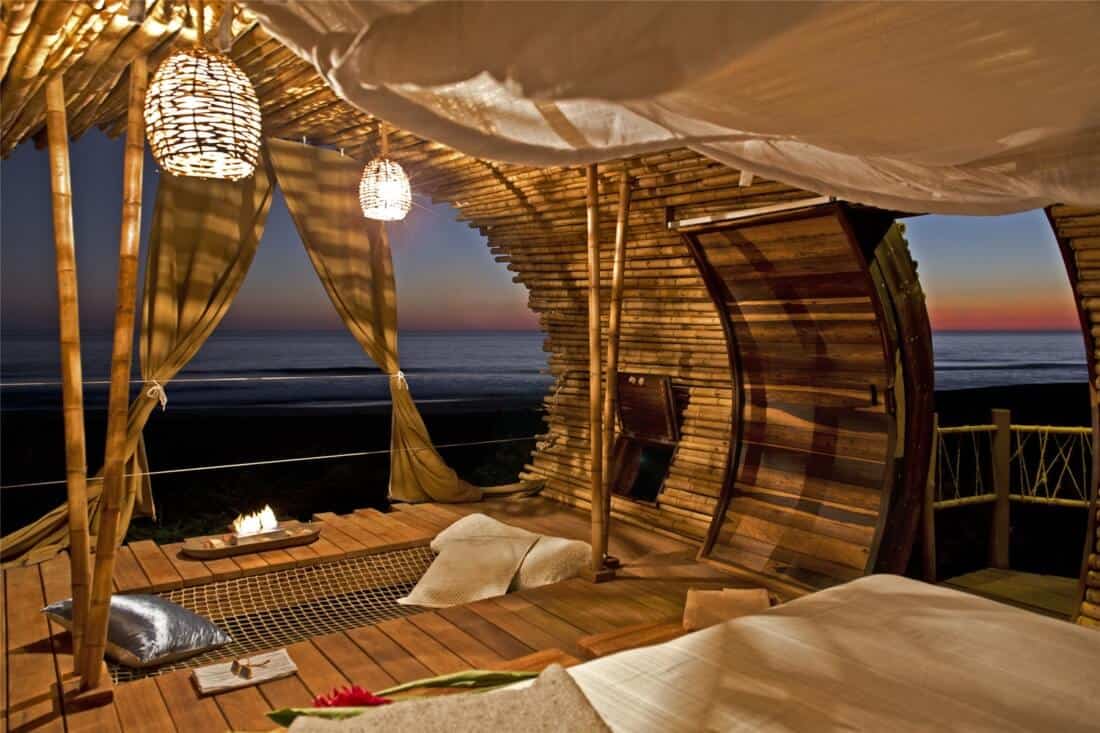
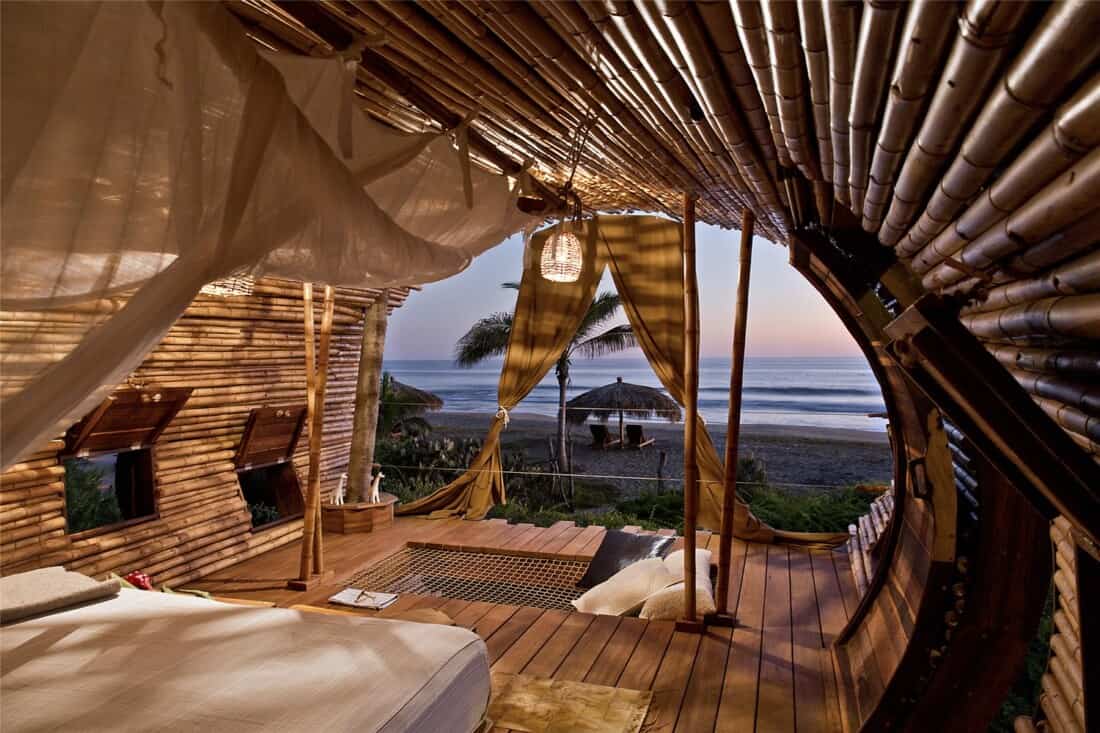
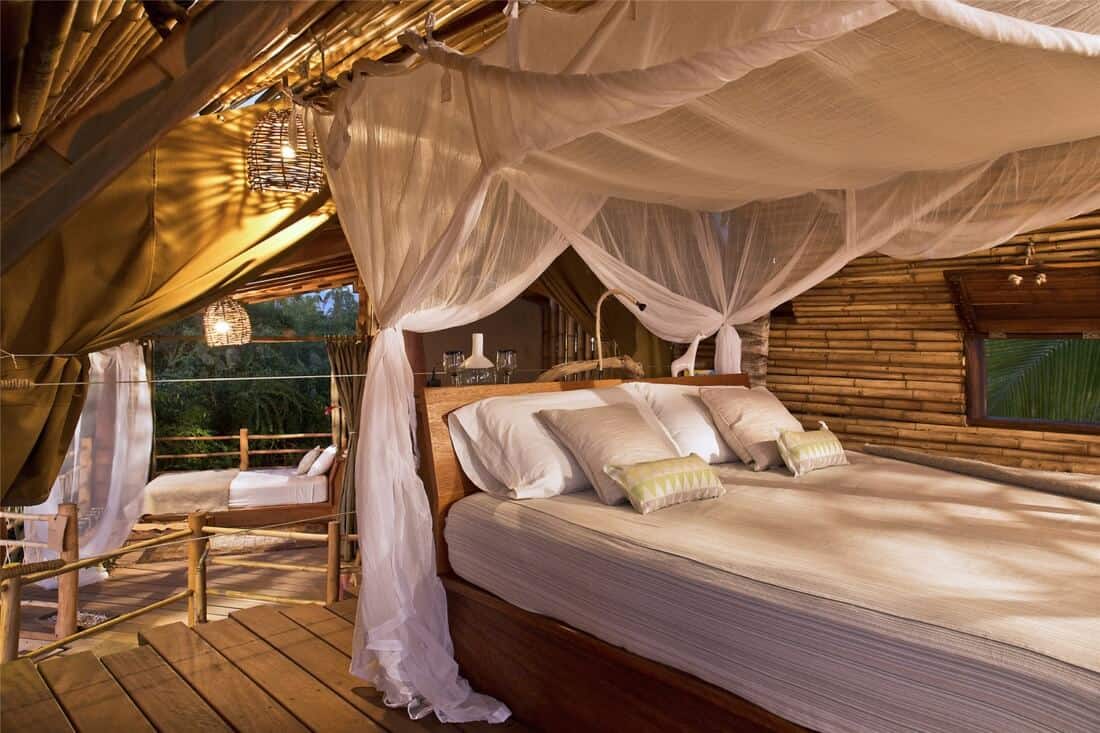
The building itself is the first thing to understand. Crafted from responsibly harvested timber, its circular form follows the natural clearing rather than imposing on it. Bi-fold doors open fully around most of the perimeter, dissolving the boundary between room and canopy. Passive ventilation does the work that air conditioning would elsewhere. The bed faces the ocean, and at night the sound of waves replaces anything a playlist could offer.
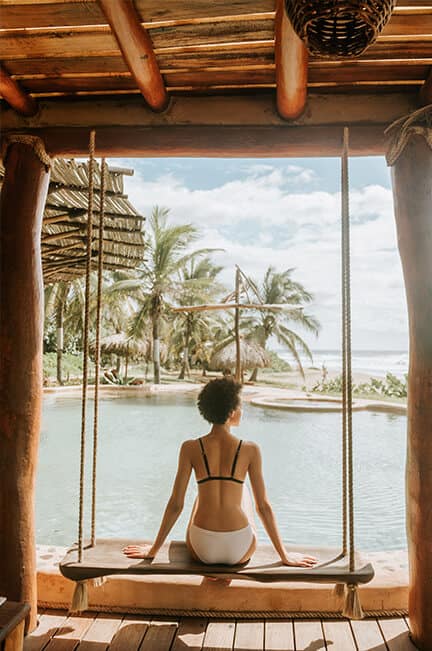
That careful attention to material and form extends through the whole resort. Solar panels and thermal energy systems power the property. Organic and permaculture gardens supply much of the kitchen. Every booking contributes directly to ongoing reforestation work on the surrounding land. Sustainability here is a structural commitment, not a marketing layer — it is built into the architecture, the food system and the finances simultaneously.
Days at Playa Viva tend to organise themselves around the land. Morning yoga sessions happen close to the shore. Guests can join turtle conservation programmes, walking directly into fieldwork on the beach they have been sleeping beside. Farm tours reveal how much of each meal travels only a short distance from soil to table. The rhythm is unhurried, but it rarely feels empty — there is always something grounded and purposeful to join if you want it.
The treehouse suits guests who want ecological credentials backed by genuine design quality. It is not a classic high-canopy structure. Its appeal is horizontal rather than vertical — the way it opens to the ocean, the way the trees frame rather than support it, the way stillness here feels earned rather than imposed. For families, couples or solo travellers drawn to regenerative travel with a strong sense of place, this is a rare combination.
Rates run approximately €400–€600 per night, varying by season and availability, placing the treehouse firmly in the premium tier. The dry season — broadly November through April — brings the most reliably warm and sunny conditions along this stretch of the Pacific coast. Shoulder months either side remain enjoyable for guests comfortable with greater heat and humidity.
Playa Viva sits on Carretera Zihuatanejo-Acapulco near Juluchuca. Zihuatanejo, the nearest city of scale, provides the closest regional transport hub and airport connections for international arrivals planning a stay.
Frequently Asked Questions
Q: What kind of treehouse experience does Playa Viva offer — is it high in the canopy?
A: The Playa Viva Treehouse is not a classic high-canopy structure. It sits on stilts roughly six feet above the ground on a wooded bluff, with a cylindrical timber frame and bi-fold doors that open almost fully around the perimeter. The appeal is horizontal — the way ocean views, sea breezes and the surrounding jungle edge fill the space — rather than dramatic vertical elevation.
Q: What is the nightly rate for the treehouse?
A: Rates run approximately €400–€600 per night, placing the treehouse firmly in the premium tier. Prices vary by season and availability, so check directly with the resort for current figures.
Q: When is the best time of year to stay?
A: The dry season, broadly November through April, brings the most reliably warm and sunny conditions on this stretch of Mexico's Pacific coast — lower humidity, calmer seas and ideal conditions for beach time and the resort's yoga programme. Shoulder months either side remain enjoyable for guests comfortable with greater heat and humidity.
Q: Is Playa Viva's sustainability commitment reflected in the treehouse itself?
A: Yes, and it goes beyond the building. The treehouse is crafted from responsibly harvested timber with passive ventilation in place of air conditioning. Across the wider 200-acre estate, solar and thermal energy systems power the property, permaculture gardens supply much of the kitchen, and every booking contributes directly to ongoing reforestation work on the surrounding land.
Q: What activities are available during a stay?
A: Daily life at Playa Viva tends to centre on the land and coast. Guests can join morning yoga sessions near the shore, participate in the resort's turtle conservation programme on the beach, take farm tours of the on-site growing gardens, and eat meals drawn largely from the permaculture grounds. The pace is unhurried, but purposeful activity is easy to find.












Add a review