
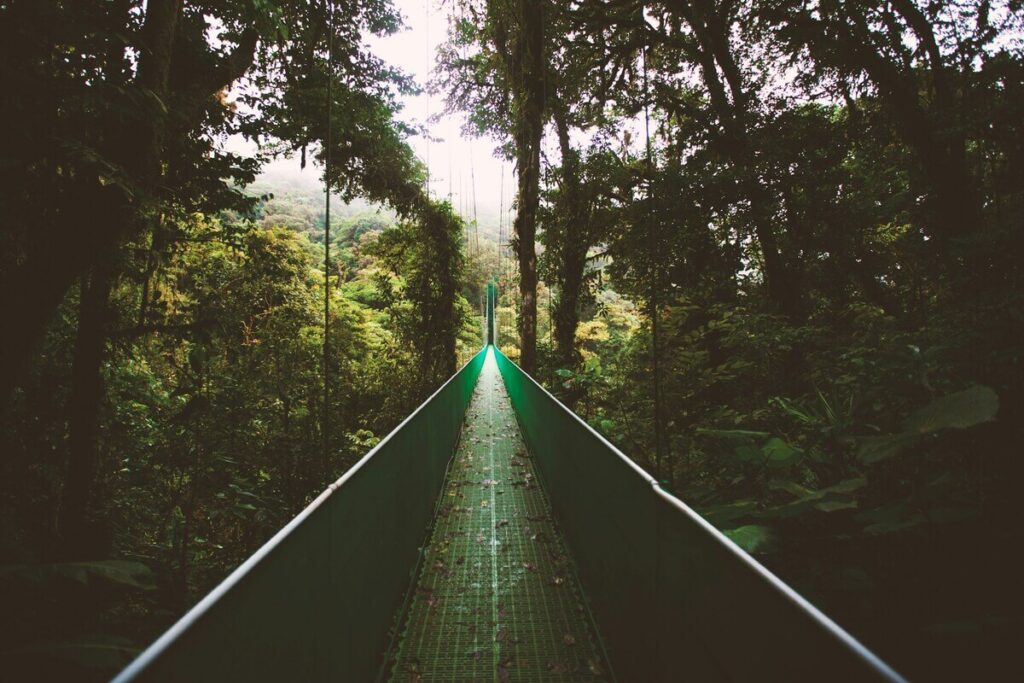
Sky Walk Monteverde is a network of six hanging bridges strung through Costa Rica's cloud forest, high above the Tilarán mountain range. It isn't a thrill ride or a zipline course. It's a slow, deliberate walk through one of the most biodiverse ecosystems on the planet, and it earns every superlative quietly.
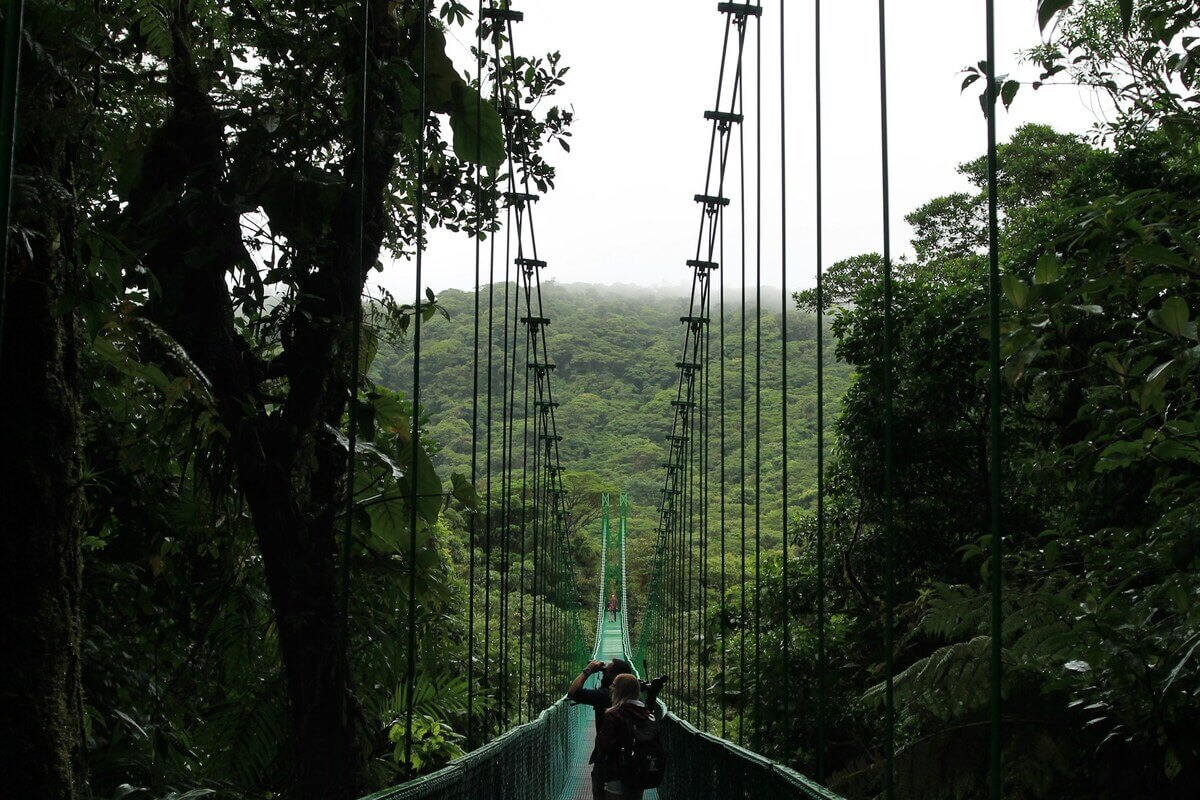
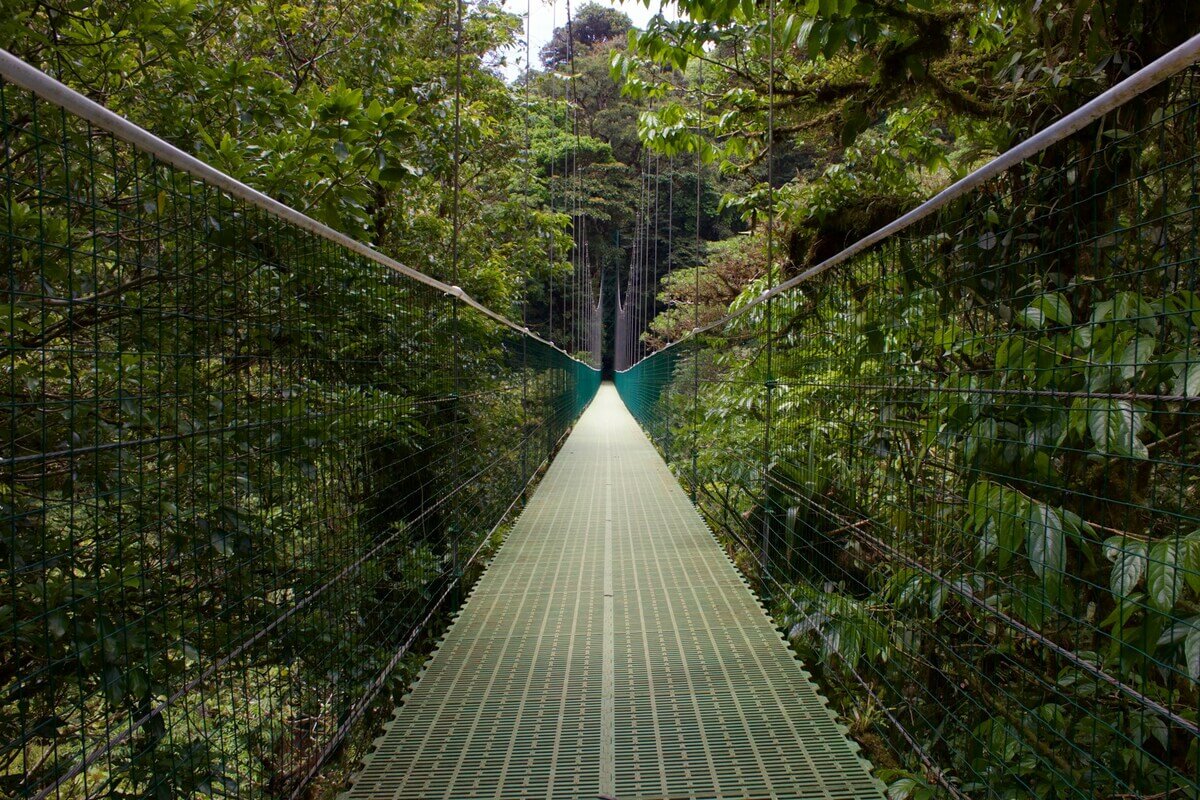
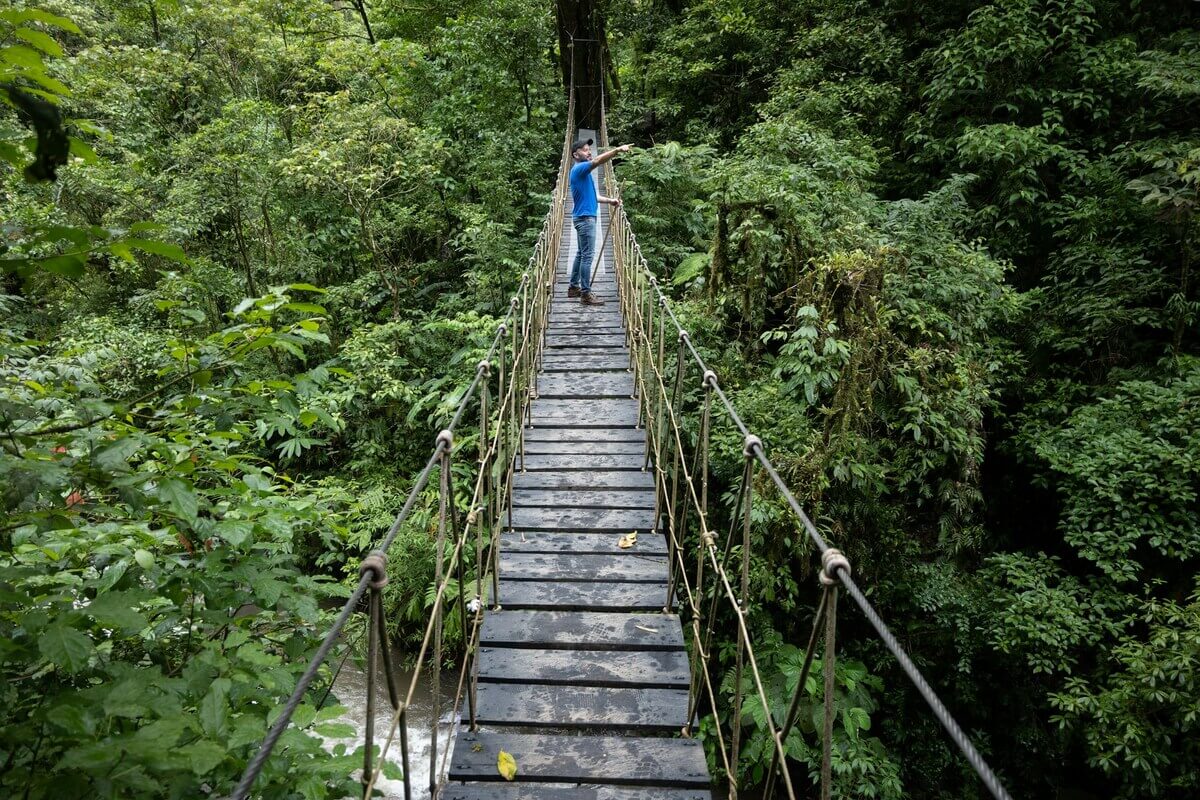
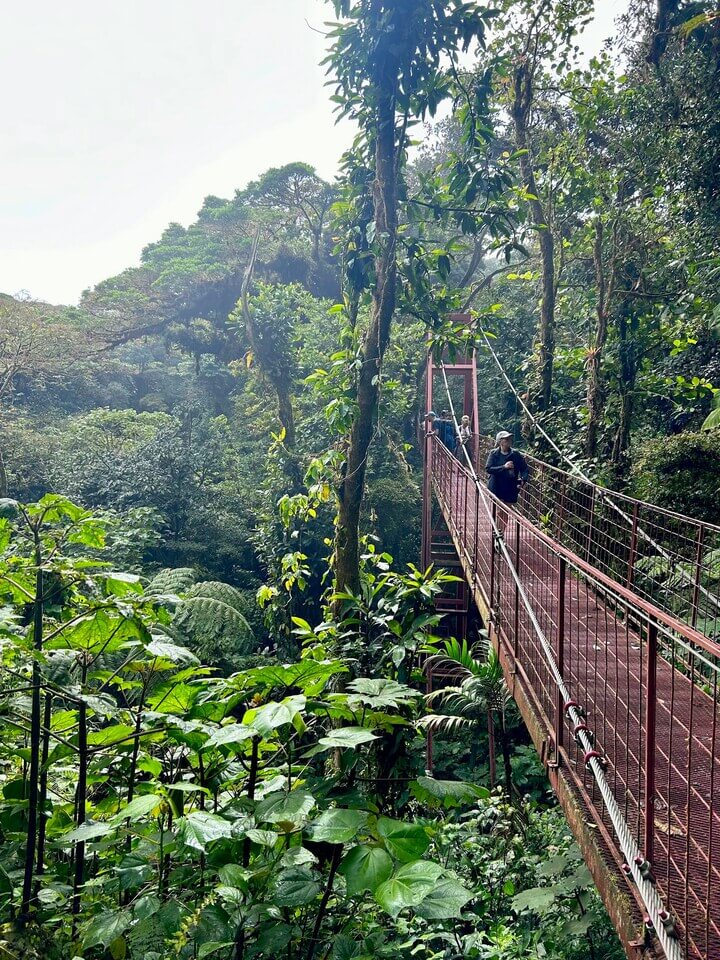
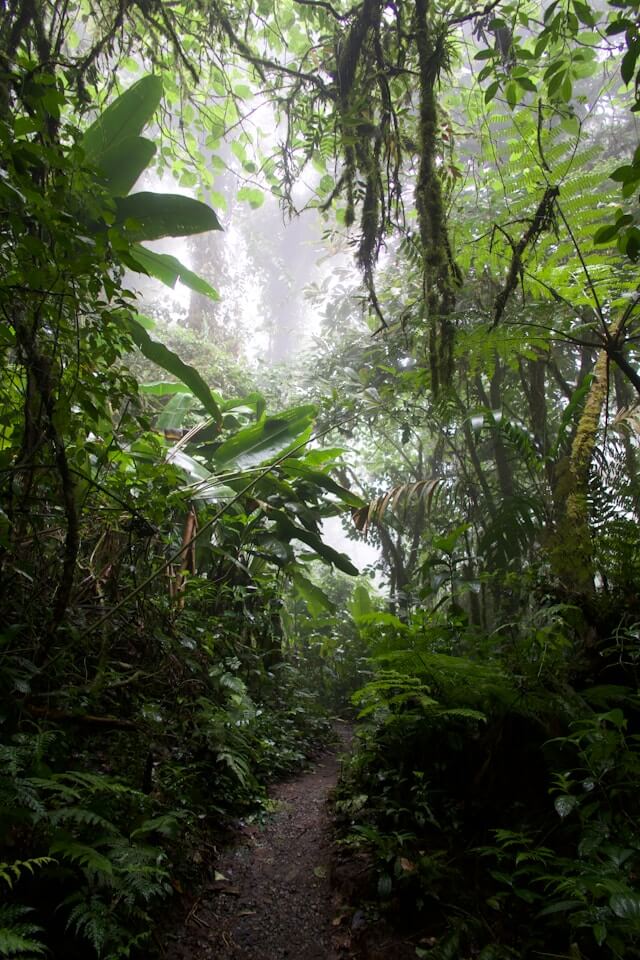
The route begins on the forest floor, where ferns crowd the path and the air smells of wet earth and something older you can't name. Then the trail lifts you upward, onto the first bridge, and the forest opens up entirely. The bridges are steel-built and solid — not the rope-and-plank contraptions of adventure-film mythology — though they do sway just enough to remind you how far above the ravines and streams you actually are. Some crossings are short. Others stretch longer than you expect, long enough for your brain to catch up with your feet. Allow roughly two hours, more if you're the kind of person who stops to look.
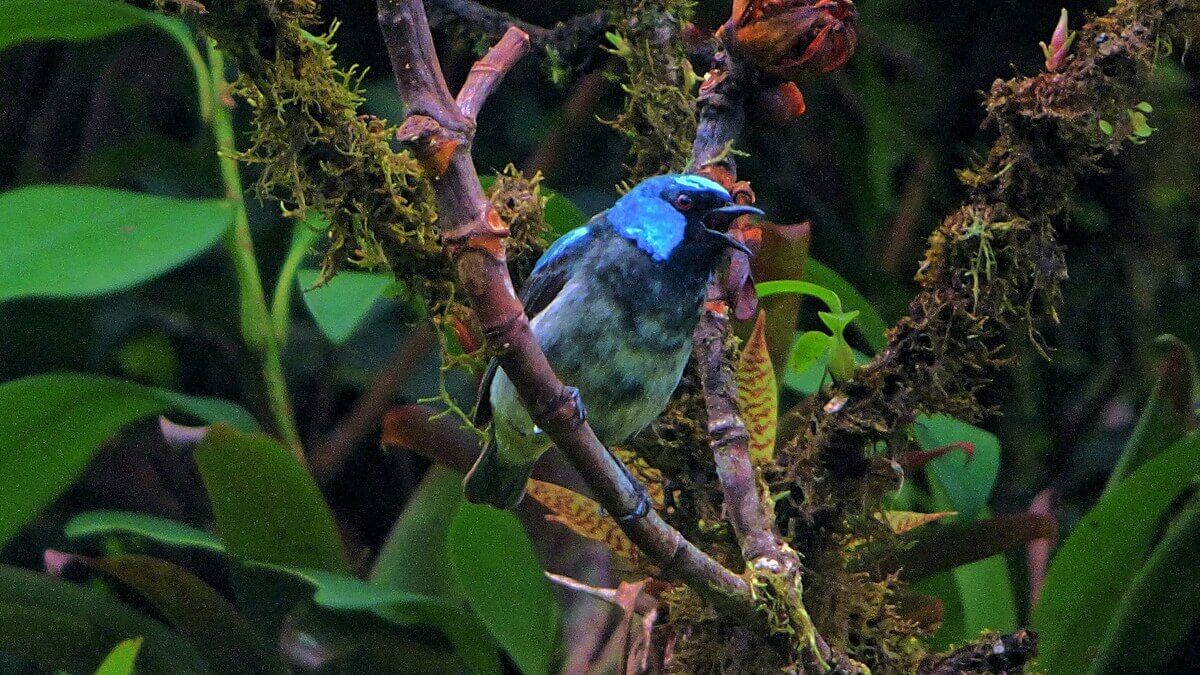
At canopy height, the forest offers things you simply can't see from below. Orchids grow from branches at eye level. Toucans drift past with an almost casual improbability. Somewhere in the mid-storey, a howler monkey rattles a branch and moves on. The clouds — actual clouds — drift through the trees at the same height as your face, and the air feels filtered, textured, faintly sweet.
A guided visit unlocks a different register of detail: which mosses cling to a single trunk, how poison-dart frogs absorb water through their skin, how the forest intercepts cloud moisture and recycles it downward. Going solo, you trade information for silence, and the forest fills it generously with creaks, drips and bird calls you can't identify but won't forget.
The dry season, roughly December through April, brings clear skies, warm days and ideal conditions for photography and wildlife spotting on the bridges. The green season from May through August softens everything with mist and moderate rain that intensify the forest atmosphere without shutting it down. Even the heavier rains of September through November have their own reward: bridges glistening, spiderwebs beaded with water, the whole forest slowing down. Bring a rain jacket regardless of forecast. Monteverde's weather changes quickly, and rain here tends to improve the experience rather than ruin it. Arriving early — the gates open at 07:00 daily and close at 16:00 — gives you the quietest trails and the best chance of wildlife movement before midday.
There is a small café at the end of the walk, the kind where coffee tastes better because your legs have earned it. It makes a natural place to sit, re-enter the world, and decide whether you want to go back in.
For Treehouse Map visitors, the logic of staying overnight in Monteverde is straightforward. Wake up inside the cloud forest, step outside into hummingbird air, and arrive at the bridges before anyone else. That combination — a forest treehouse or lodge with windows that fog up by morning and the Sky Walk a short ride away — is exactly what the overnight context is built for.
Getting to Sky Walk without a car requires some planning. Three bus stops — serving routes toward San José, Las Juntas and Puntarenas — sit approximately 2.7 km from the site as the crow flies. Most visitors travelling from San José or the Lake Arenal area use a shared shuttle or taxi rather than local bus connections, which are limited in frequency. Alternatively, a ferry crossing at Aventuras El Lago on Lake Arenal sits approximately 12 km away and serves travellers arriving from the Arenal side of the mountains — a scenic route worth considering if you're combining this region with a visit to the volcano area.
Frequently Asked Questions
Q: What is Sky Walk Monteverde, and how long does the experience take?
A: Sky Walk Monteverde is a network of six hanging bridges routed through Costa Rica's Monteverde Cloud Forest, taking you from the forest floor up into the canopy. The walk covers the full route in roughly two hours, though most visitors linger longer at lookout points along the way.
Q: When is the best time to visit for wildlife spotting and photography?
A: The dry season, December through April, offers the clearest skies and warmest days — ideal conditions for photography and wildlife movement on the bridges. May through August brings lush mist and moderate showers that deepen the forest atmosphere without closing it down. Even September through November has its rewards, with glistening bridges and a quieter, moodier forest. A rain jacket is worth carrying in any season; Monteverde's weather shifts quickly.
Q: Is the walk suitable for people who are nervous about heights?
A: The bridges are steel-built and solid underfoot, not the rope-and-plank structures of adventure films. They do sway noticeably, and some crossings are longer than visitors expect, so anyone with significant height anxiety should factor that in. The pace is entirely self-directed — there is no rush and no minimum speed.
Q: Is it better to visit with a guide or go solo?
A: Both work well but offer different experiences. A guide identifies mosses, explains how the forest intercepts cloud moisture, and points out creatures you would otherwise walk past. Going solo trades that layer of information for genuine quiet — the forest fills the silence with birdsong, drips and creaks that are difficult to absorb in a group. Arriving early gives solo visitors the calmest trails and the best chance of wildlife activity before midday.
Q: Is there anywhere to eat or rest at the end of the walk?
A: There is a small café at the end of the route — a natural place to sit, have a coffee and ease back into the world before deciding whether to head straight out or return to the forest.







Add a review