
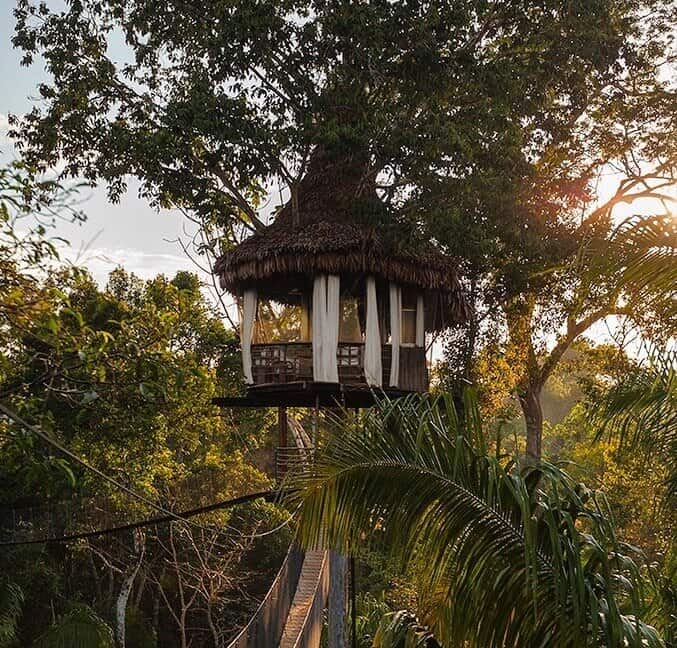
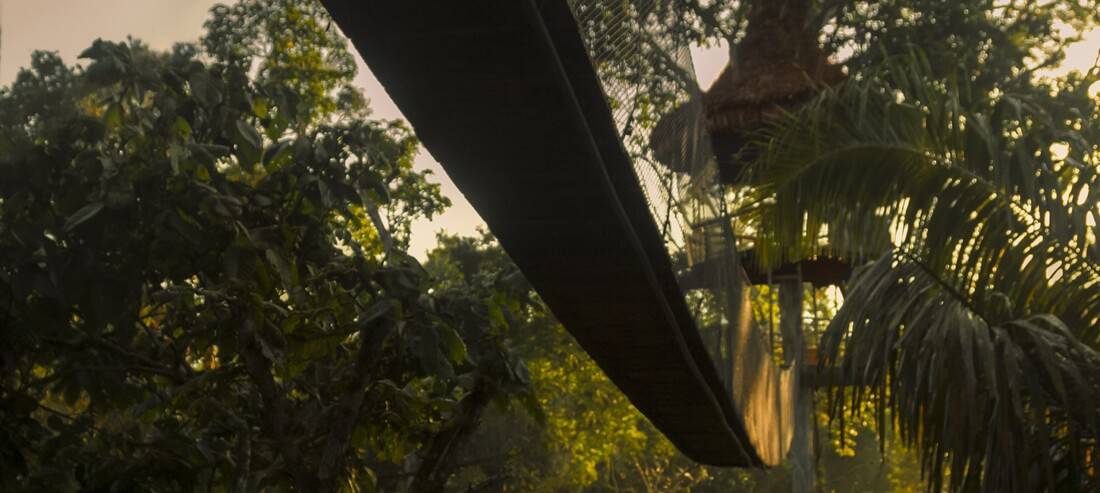
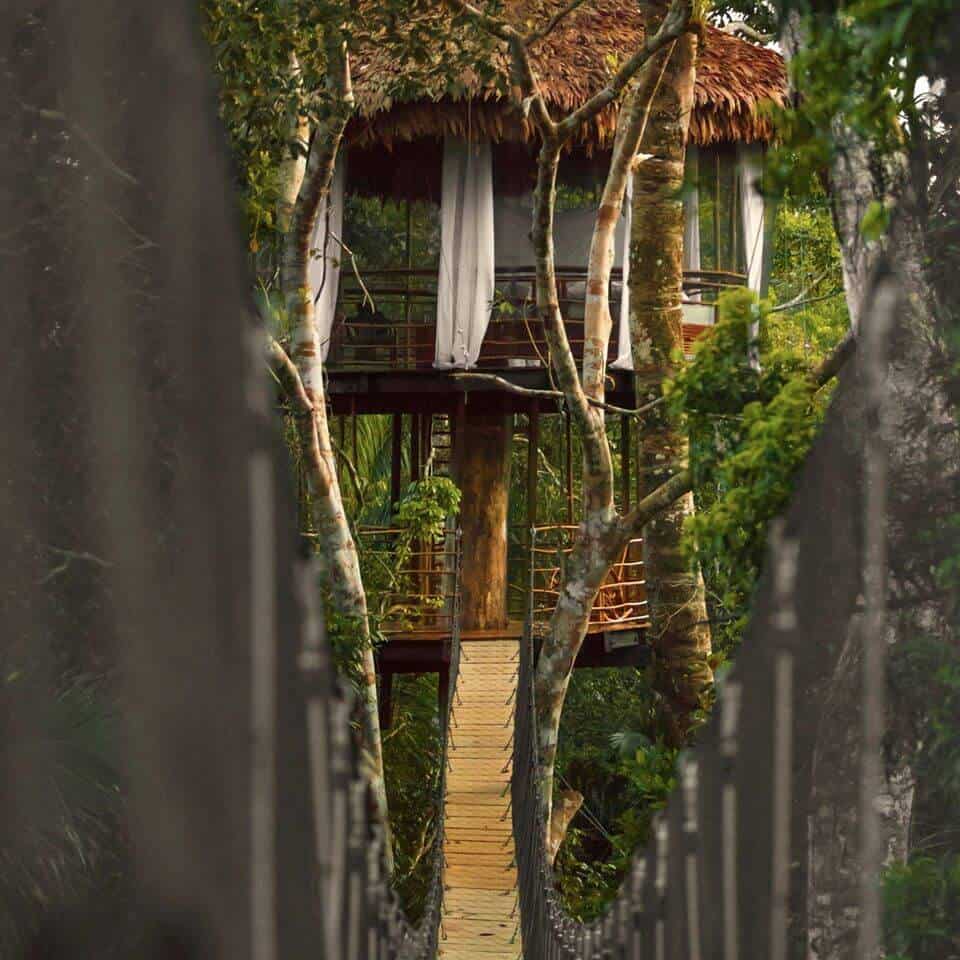
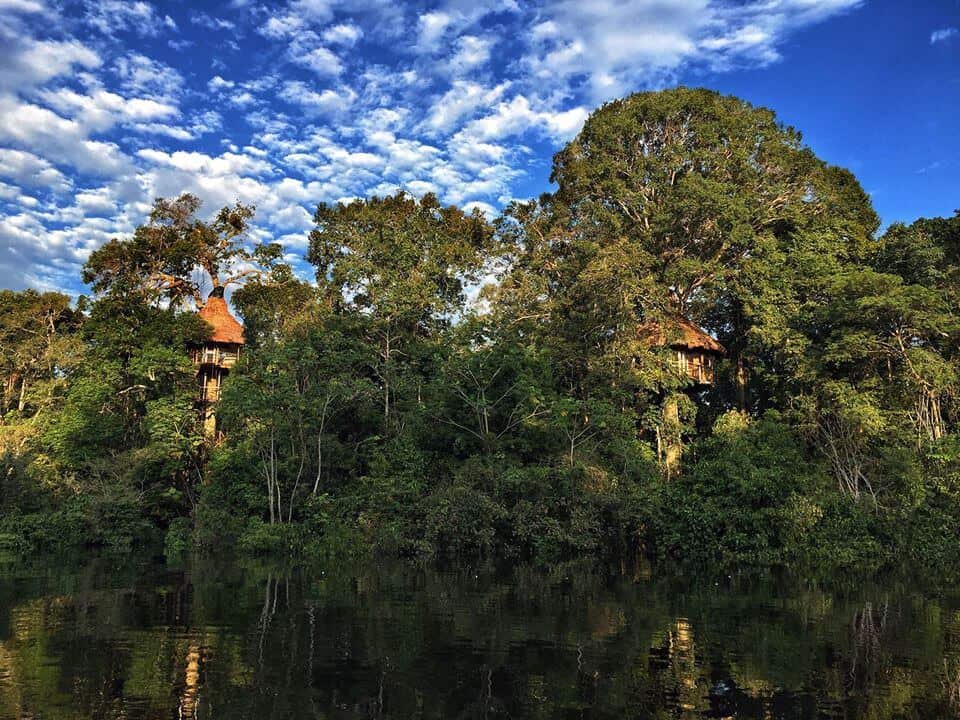
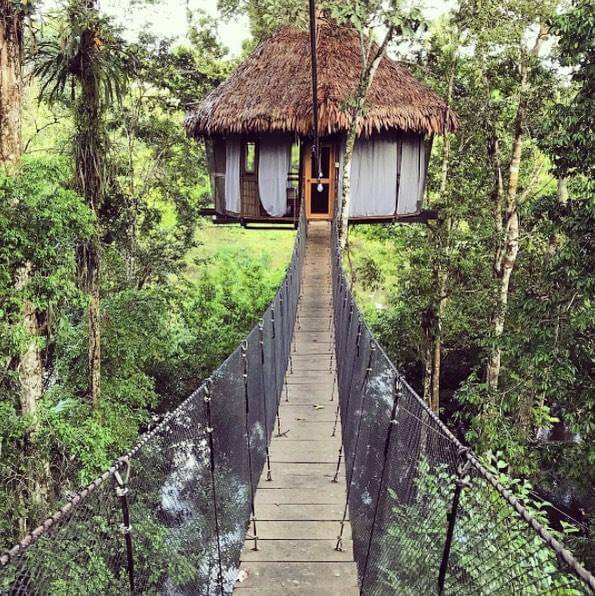
The approach tells you everything. A boat cuts upriver through brown water, the treeline closing in on both sides, and then the Yarapa and Cumaceba rivers meet and the lodge appears through the canopy — a cluster of wooden platforms and thatched rooftops stitched together by cable-braced bridges. You cut the engine. The forest fills the silence immediately.
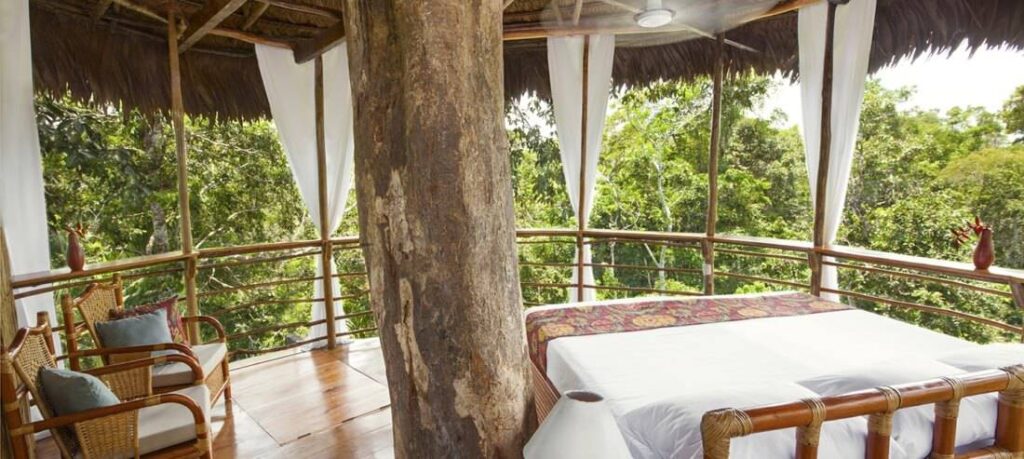
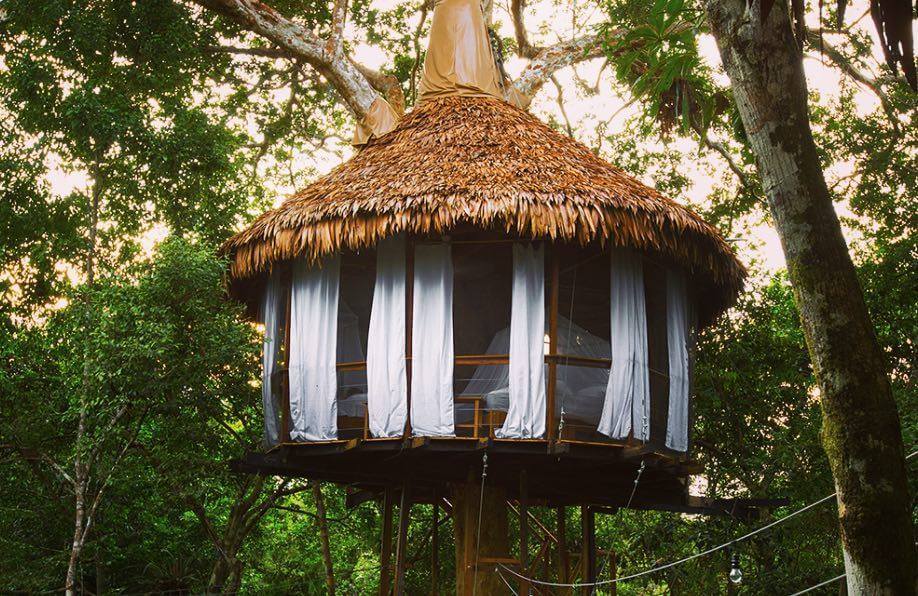
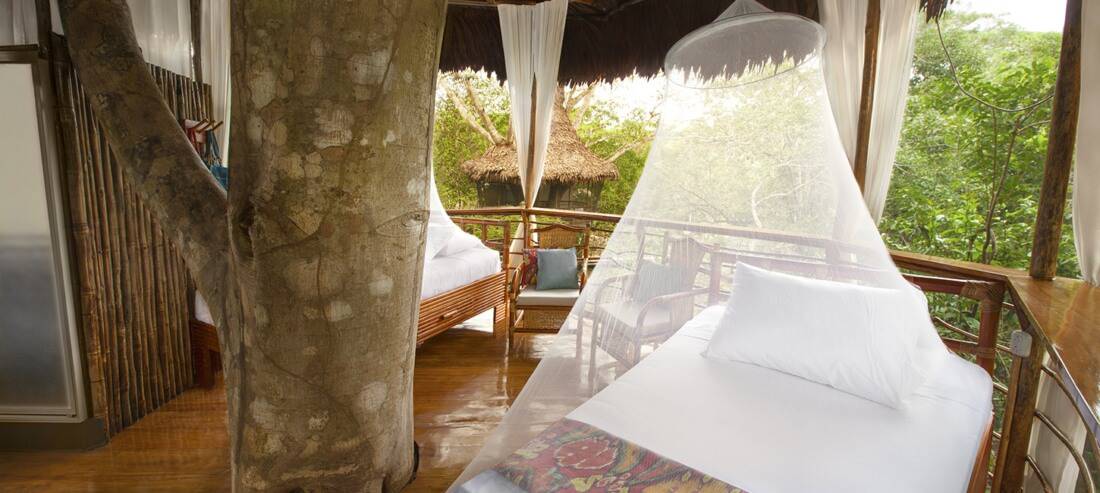
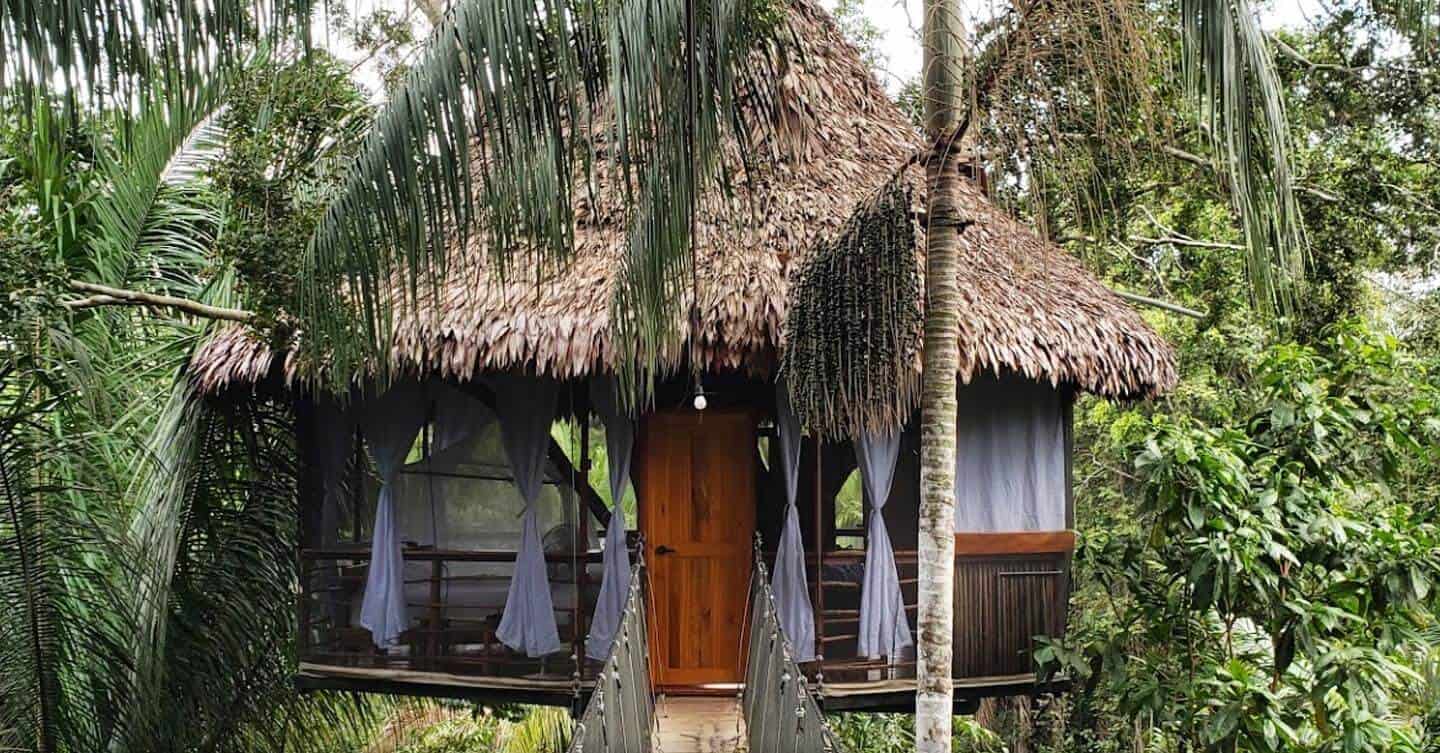
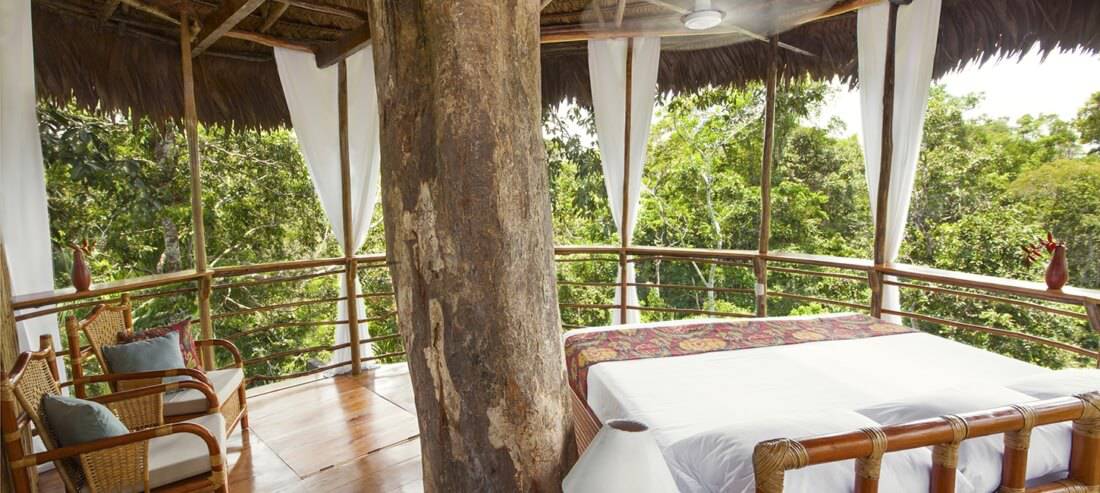
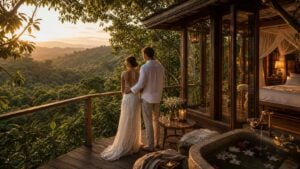
Treehouse Lodge sits near the Pacaya Samiria Reserve in the Peruvian Amazon, roughly a half-day's journey from Iquitos by river. Twelve treehouses occupy their own separate perches, each slightly different from its neighbours. Some rise above seasonal flood zones where the Amazon's high-water pulse turns the forest floor into a shallow lake beneath your feet. Others reveal a small trapdoor entrance that still feels like a discovery on day three. Inside, the comforts are genuinely good: proper beds under mosquito mesh, en-suite bathrooms with hot showers, fans keeping the air moving. Balconies face directly into the canopy, and the elevation takes the edge off both humidity and insects in ways that ground-level rooms simply cannot.
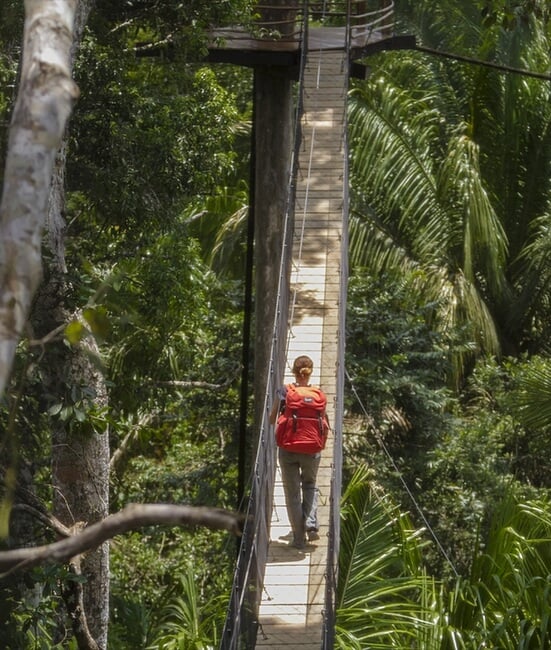
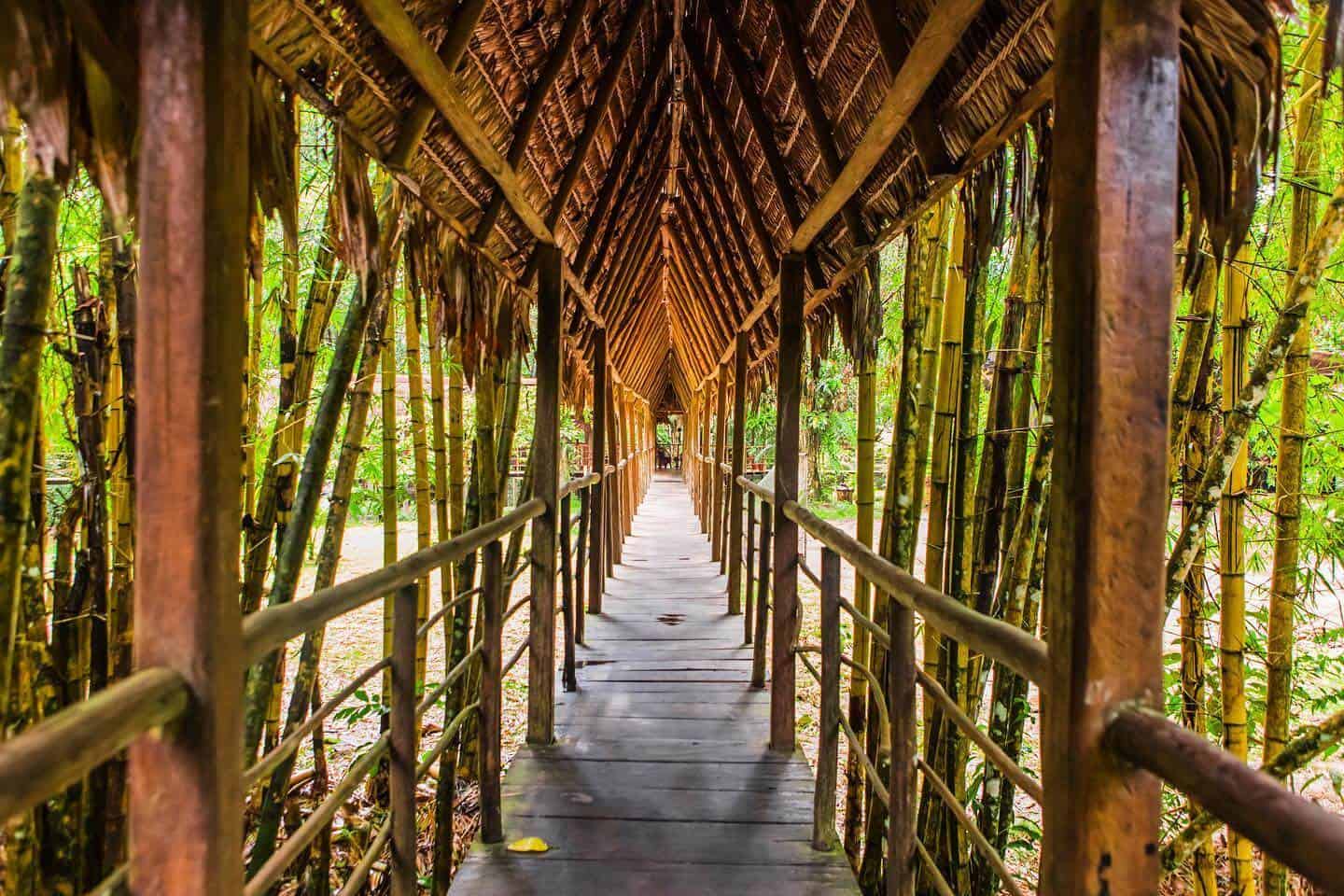
The bridges between platforms have a faint give as you cross them — enough flex to remind you that the forest moves. Look down into bromeliads and leaf litter. Look up and a macaw crosses the gap like a stray thought. The whole property works this way: designed for looking, for pausing, for adjusting to a slower pace.
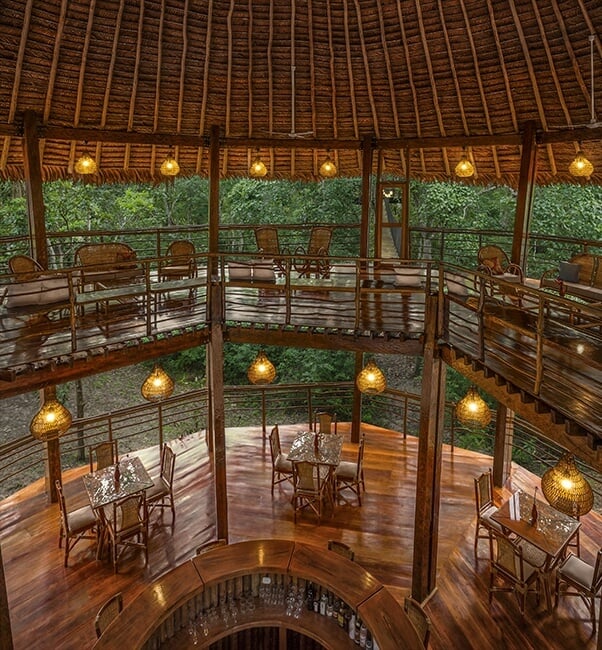
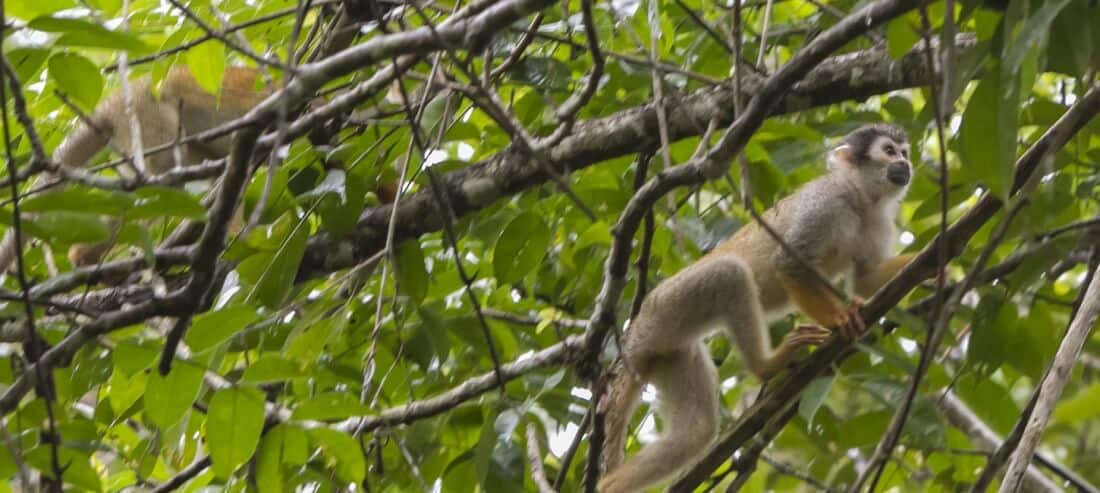
Days here follow the river rather than a clock. Guides take small groups out at dawn for birdwatching, deeper into black-water creeks for medicinal plant walks, and onto the main channels in hope of pink river dolphins. Night safaris reverse the equation entirely, with headlamps picking out eye-shine from the dark understorey. Meals at the main lodge are straightforward and fresh — Amazon fish, seasonal fruit, bright juices — and the all-inclusive format means the days stay genuinely unhurried.
The dry season from June through October brings lower rainfall, more accessible trails and excellent wildlife visibility, with warm breezy nights in the canopy. High-water months from January through April flip the experience: river levels peak, flooded forest becomes navigable by canoe, and the waterways turn mirror-flat at dawn. Both seasons have their advocates among return guests.
Solar power handles the lodge's energy needs, Wi-Fi is absent by design, and the point of being here does not require either. Nightly rates run approximately $600–$800, varying by season and availability — a luxury positioning the property earns through its setting and all-inclusive structure rather than through decoration.
Access to Treehouse Lodge is by river from Iquitos, the nearest significant city, which connects to Lima and international destinations by air. The closest recorded ferry infrastructure is at Puerto Principal de Nauta, approximately 14 km away by straight line. The practical route to the lodge itself is handled by river transfer arranged through the property, so prospective guests should confirm transfer logistics directly when booking.
Treehouse Lodge suits couples and small groups who want immersion without roughing it — people happy to trade a phone signal for a balcony above the canopy and a night's rain on thatch. It is specific, quietly extraordinary, and entirely itself.
Frequently Asked Questions
Q: How do you get to Treehouse Lodge?
A: The lodge is reached by river from Iquitos, the nearest city with air connections to Lima and international destinations. Access is by boat — part of what makes the arrival feel genuinely remote — and most guests travel as part of an organised transfer. Check directly with the lodge for current transfer arrangements before you book.
Q: What is the general nightly rate at Treehouse Lodge?
A: Rates run approximately $600–$800 per night on a luxury, all-inclusive basis, covering guided excursions and meals. Exact pricing varies by season and availability.
Q: When is the best time to visit?
A: June through October tends to offer the most comfortable canopy experience — lower rainfall, accessible jungle trails and good wildlife visibility, with warm breezy nights in the treetops. January through April brings peak river levels and flooded forest navigable by canoe, with mirror-flat waterways at dawn — a very different but equally rewarding stay. Both seasons have loyal return guests.
Q: What is the experience like for couples or small groups?
A: The lodge suits couples and small groups particularly well. The twelve treehouses are individually positioned, the guided outings go out in small parties, and the unhurried all-inclusive pace — no Wi-Fi, solar power, meals eaten at the main lodge — is designed for genuine immersion rather than a packed itinerary.
Q: What should guests pack for a stay in the Amazon canopy?
A: Light, quick-dry clothing layers are the practical foundation. The elevated position of the treehouses reduces insect pressure compared to ground level, but standard jungle precautions apply. The lodge handles energy needs via solar power and is intentionally off-grid, so leave gadget-heavy expectations behind.






Add a review