
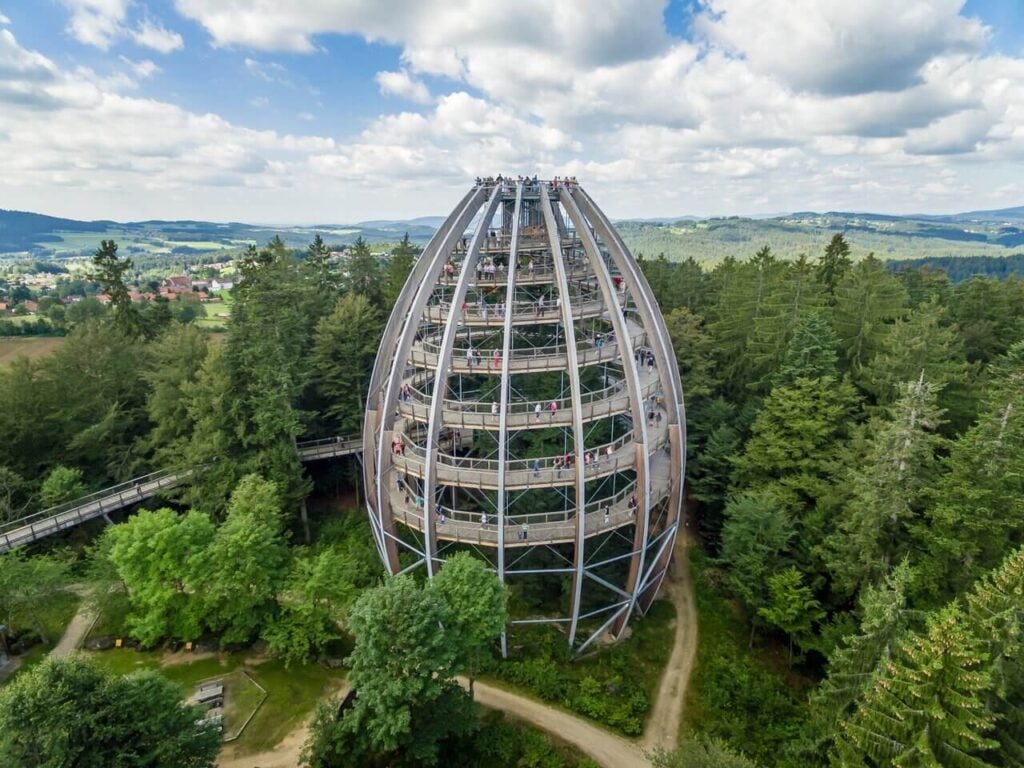
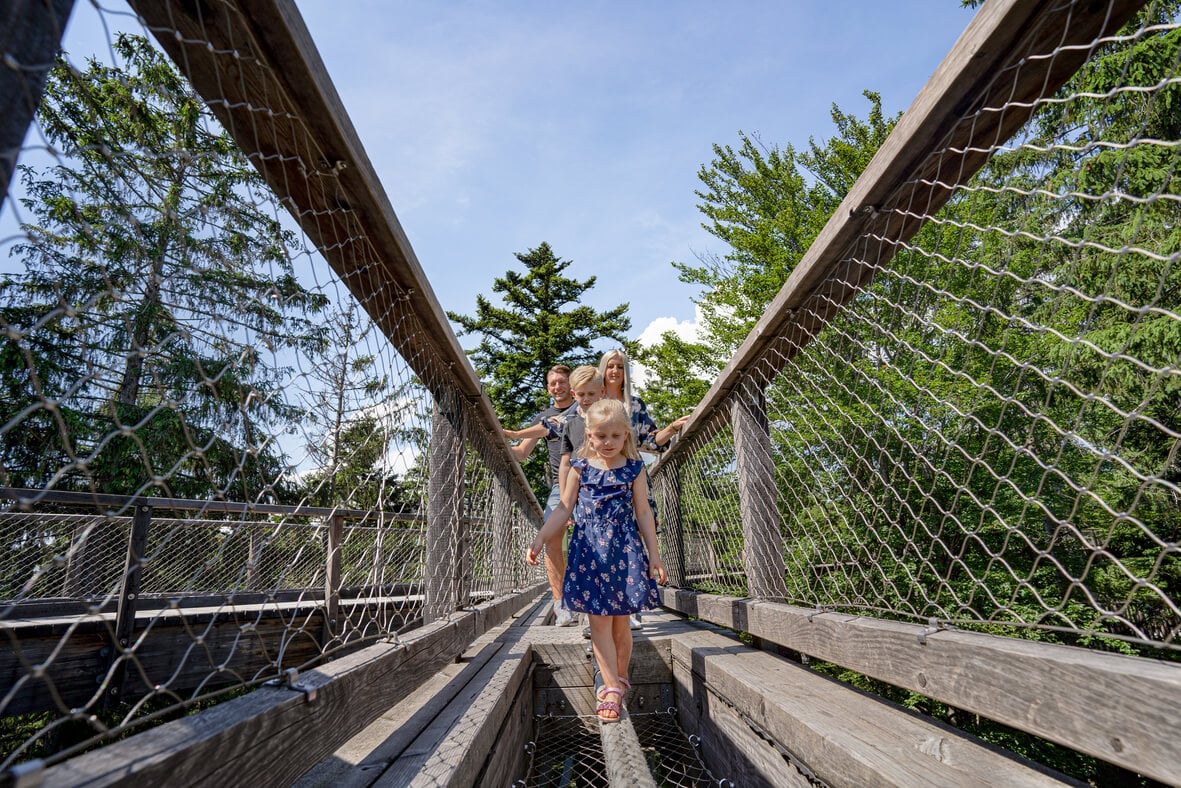
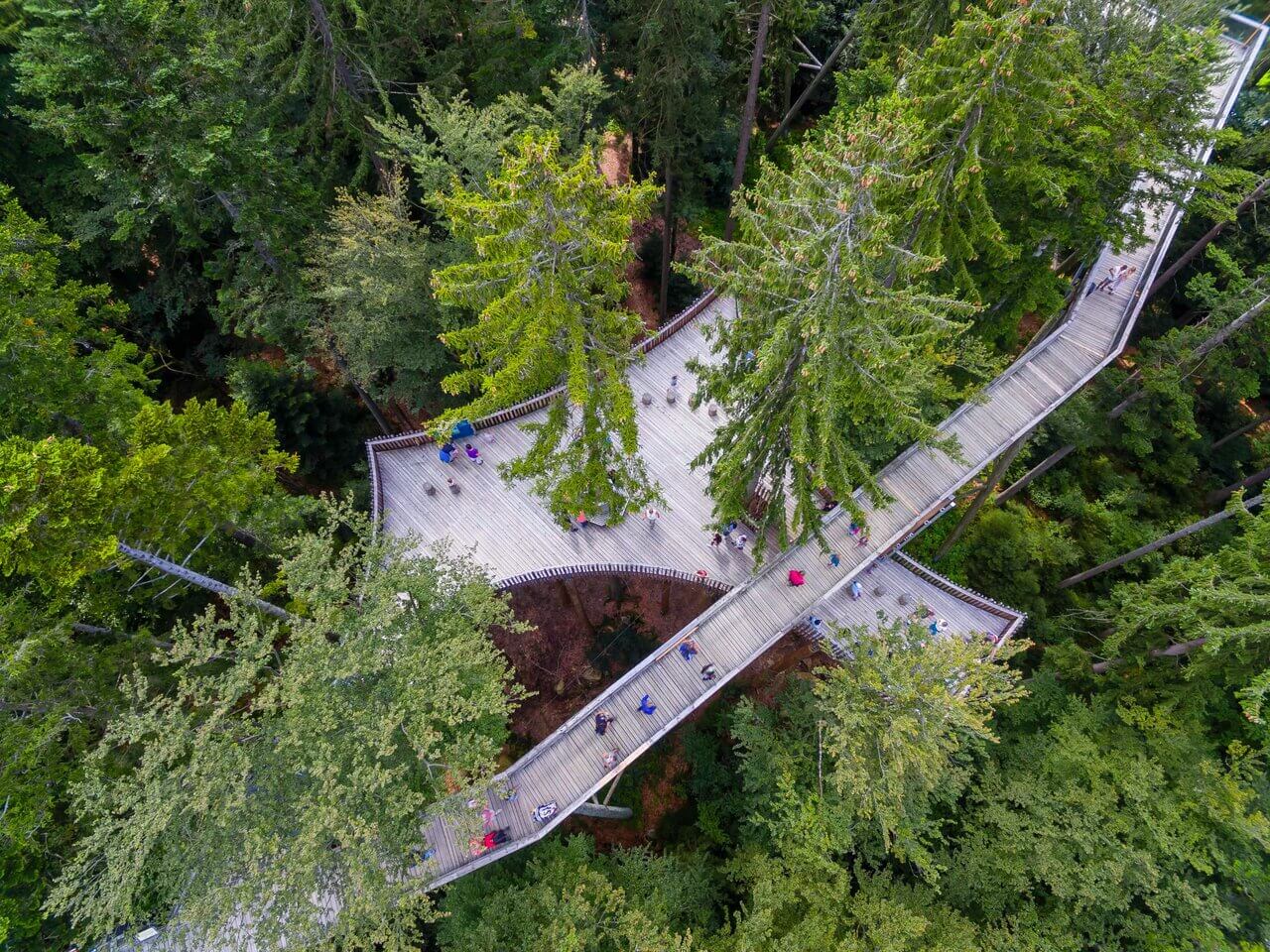
What looks like a gentle forest boardwalk turns out to be something quietly astonishing. The Baumwipfelpfad Bayerischer Wald carries you 1.3 kilometres through the canopy of the Bavarian Forest National Park, threading between beech, fir and spruce at heights of 8 to 25 metres above the forest floor. Larch planks underfoot, a smooth incline that never strains — the path does the work while you simply look.
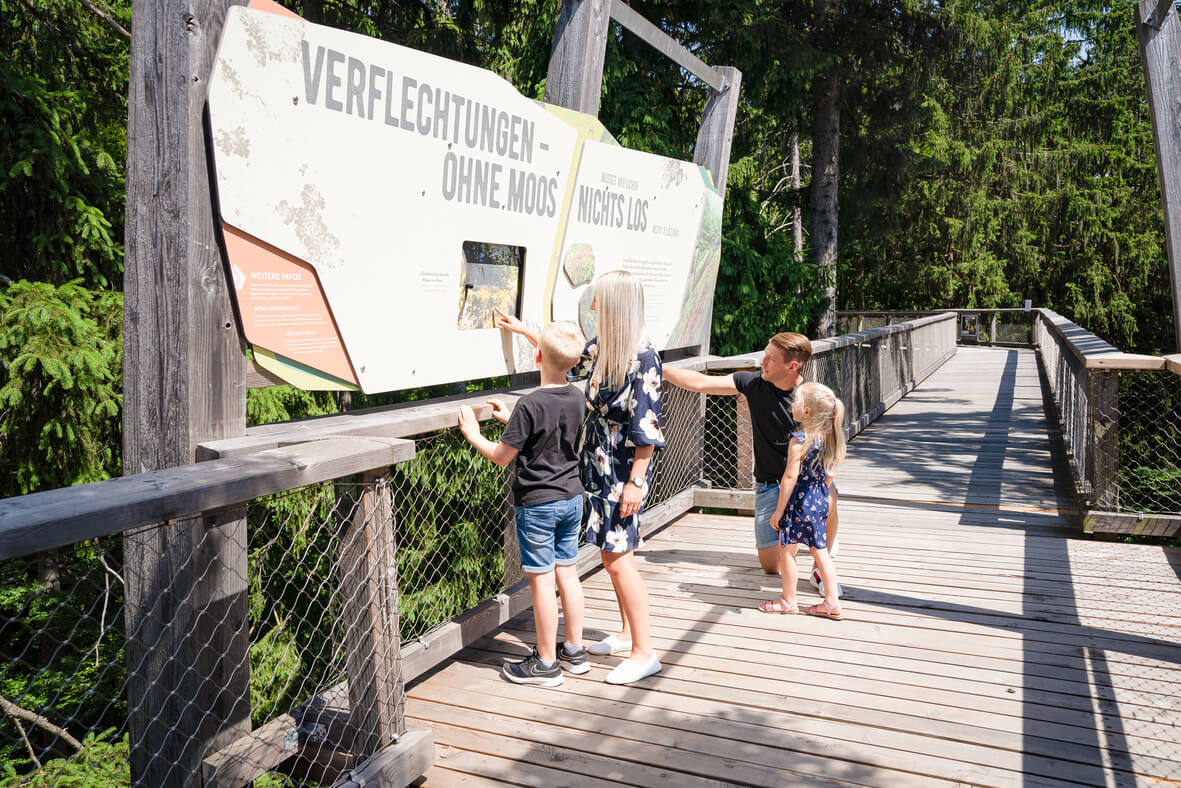
The walk earns its pace at a series of interactive stops midway along the route. Visitors can examine bark textures, peer into moss and water microhabitats, and follow displays that frame the forest as a living system — nutrients cycling, species depending on species, the whole loop turning quietly above and below you. The Forest Island platform opens into a wider stillness. For those willing, a suspended grid lounger invites you to lie back twenty metres up. It sways. That is entirely the point.
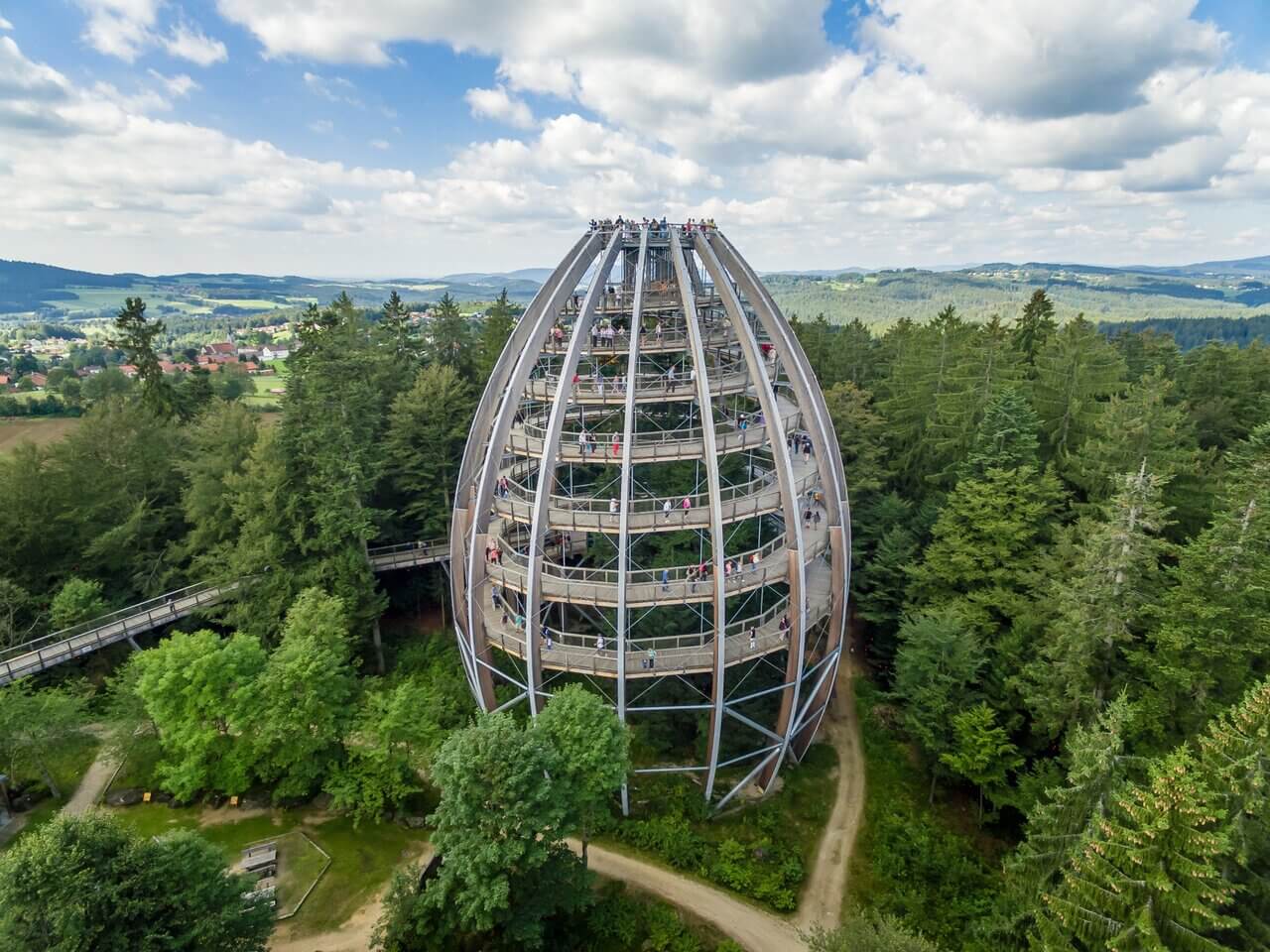
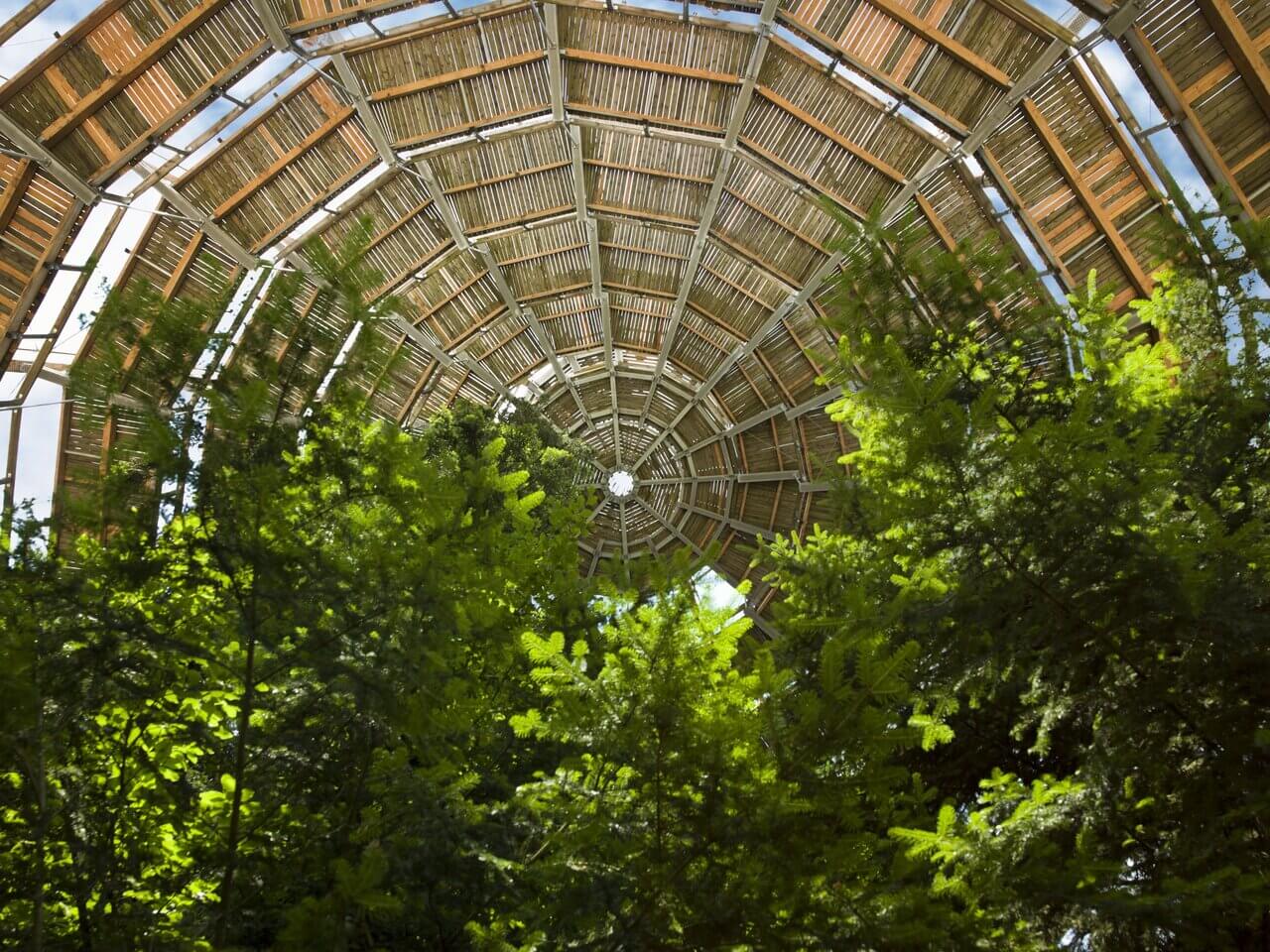
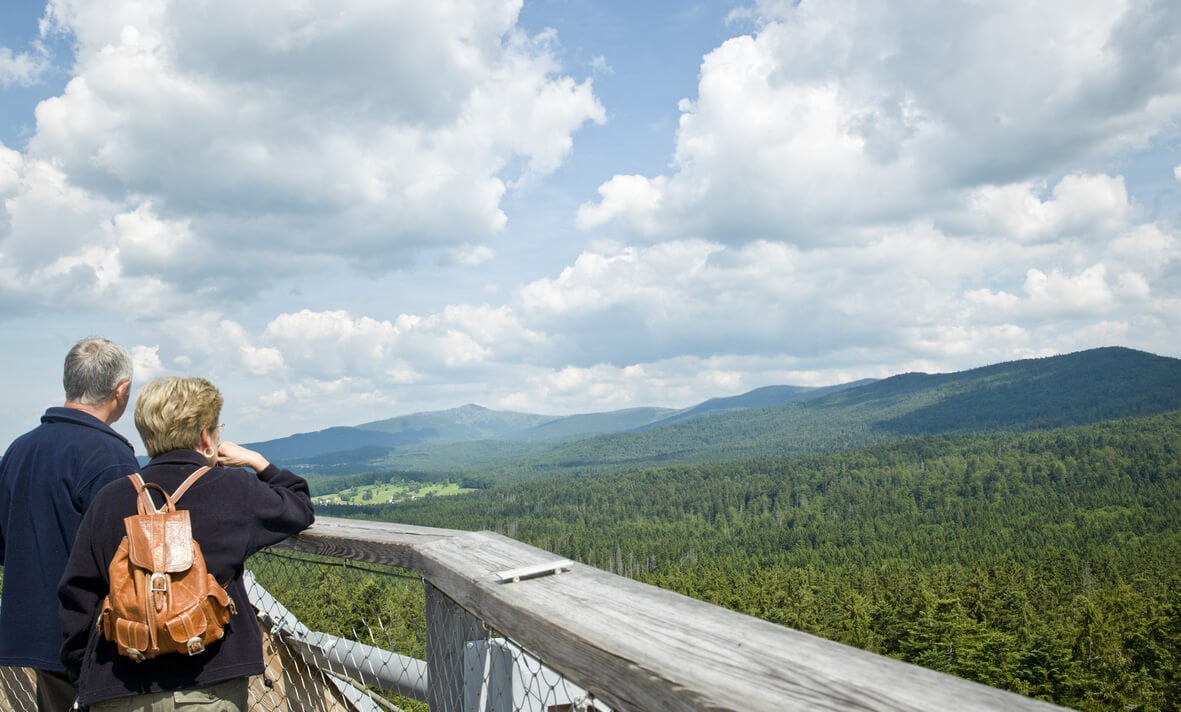
The 44-metre observation tower anchors the far end of the route. Egg-shaped and elegantly proportioned, it rises on a continuous spiral ramp pitched at under 6 percent — no stairs anywhere. Wheelchairs, pushchairs, hiking-stick grandparents and small children all move together without routing around each other. The view from the top stretches across rolling Bavarian hills to the dark ridge of the Bohemian forest, and on a clear day the Alps appear at the far edge of everything, improbably close.
Ground level holds its own rewards. The Hans-Eisenmann-Haus visitor centre offers forest exhibits, a cinema and hands-on displays well suited to younger visitors. Just outside, an animal reserve houses lynx, deer, owls and bears in habitats that read as genuine forest rather than enclosure. A wooden playground sits nearby for children ready to burn off the last of their energy, and the Waldwirtschaft beer garden and Café Eisenmann provide regional food and drink in pine-scented surroundings that make the appetite sharper than it deserves to be.
The path opens daily from 09:30 to 18:00 and stays accessible year-round. Autumn brings fiery canopy colour and crisp air at its finest. Winter transforms the walkway into something quieter and more private — snow on the spruce crowns, near silence on the boards. Spring offers clear sightlines before the summer crowds arrive. Severe weather occasionally closes the path; otherwise the seasons simply change what you see. Allow 90 minutes at a minimum, though two hours passes more honestly.
Accessibility runs through the design rather than being appended to it. The ramp gradient is consistently gentle, and the infrastructure supports visitors with mobility needs in a way that feels considered rather than tokenistic.
Bus stop Nationalparkzentrum Lusen sits approximately 50 metres from the site entrance, making it the most practical public-transport option for visitors. Bus lines 602, 603 and 605 serve the stop directly. The nearest rail point is Riedlhütte (Feldbahn) train station, approximately 7.7 kilometres away; visitors arriving by regional train will need onward transport from there. The nearby village of Neuschönau and the town of Grafenau both work as overnight bases for those making a longer stay of the national park.
The Baumwipfelpfad suits families, accessible-travel seekers, solo walkers and day-trippers from Munich or Passau equally well. It is not a theme attraction dressed in forest clothing — it is a fully accessible canopy experience inside a functioning national park, designed to make the forest itself the main event. The tower view is the obvious headline, but the walk earns its place just as much. Come for the altitude; stay for what grows at 20 metres.
Frequently Asked Questions
Q: Is the Baumwipfelpfad fully accessible for wheelchair users and visitors with pushchairs?
A: Accessibility is central to the design rather than an afterthought. The entire 1.3-kilometre canopy walkway and the 44-metre observation tower both use a continuous ramp pitched at under 6 percent — there are no stairs anywhere on the route. Wheelchairs, pushchairs and walking-frame users move through the same path as everyone else. Check the official site for current details on wheelchair hire and carer admission policies before your visit.
Q: When is the best time of year to visit?
A: Each season offers something distinct. Summer (June–August) brings warm, clear days ideal for panoramic tower views and hiking in the surrounding national park. Autumn (September–October) is arguably the most visually striking, with fiery beech canopy colour and crisp air. Winter delivers a quieter, more private experience — snow-covered spruce crowns and near-silence on the boards. Spring offers clear sightlines and fewer crowds before the summer peak arrives.
Q: How long should I allow for a visit?
A: Plan for at least 90 minutes on the walkway and tower alone. Two hours is more realistic if you engage with the interactive stops along the route. Add extra time for the Hans-Eisenmann-Haus visitor centre, the animal reserve with lynx, bears, deer and owls, and the beer garden or café at ground level.
Q: Can I reach the site by public transport?
A: Yes — the bus stop Nationalparkzentrum Lusen is approximately 50 metres from the entrance and is the most practical public-transport option. Confirm current timetables and routes with local transport operators before travelling, as services can vary seasonally.
Q: Does the path close in bad weather or winter?
A: The walkway is open year-round and remains accessible through snow and rain. Closure is reserved for severe weather events rather than routine conditions. It is worth checking the operator's official page on the day if a significant storm is forecast.






Add a review