

The only road into Ulu Temburong National Park is the river. A longboat idles at the jetty, low-slung and narrow, and within minutes you are ducking under branches as Brunei's jungle closes in on both sides. This is the approach to the Ulu Temburong Canopy Walk — and the journey itself is already doing something to your pulse.
The park has been protected since 1991, and the policy is strict by design. No private vehicles reach the interior. Entry requires a licensed guide, and that rule is what keeps the walkway blissfully uncrowded. No snack stalls, no ambient traffic noise, no crowds queuing for a photo. The park opens every day of the week, but the stillness always feels earned.
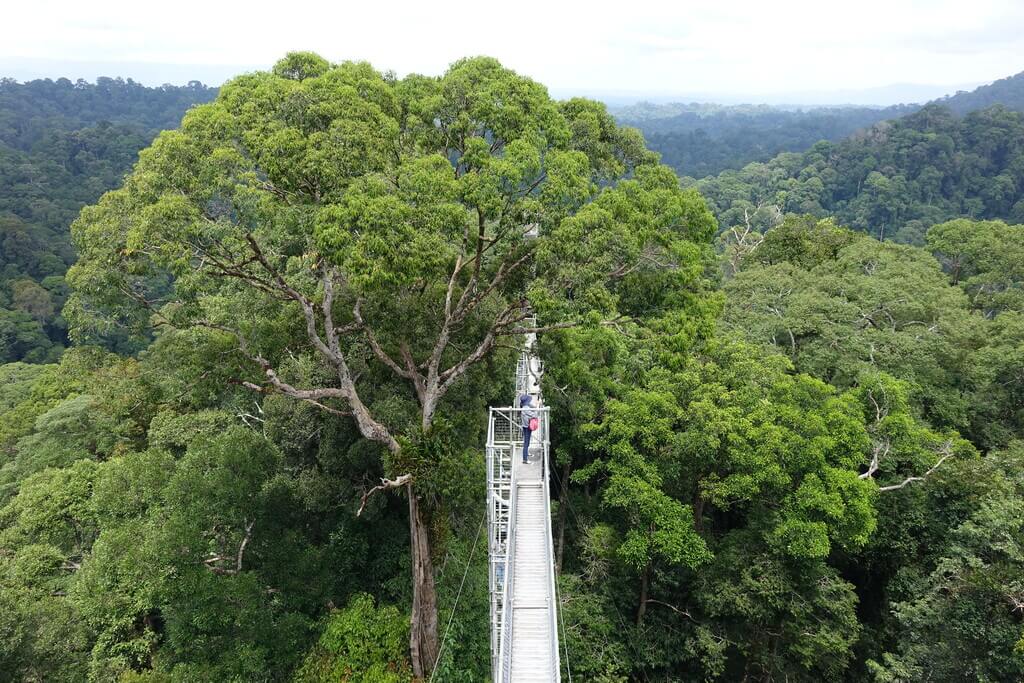
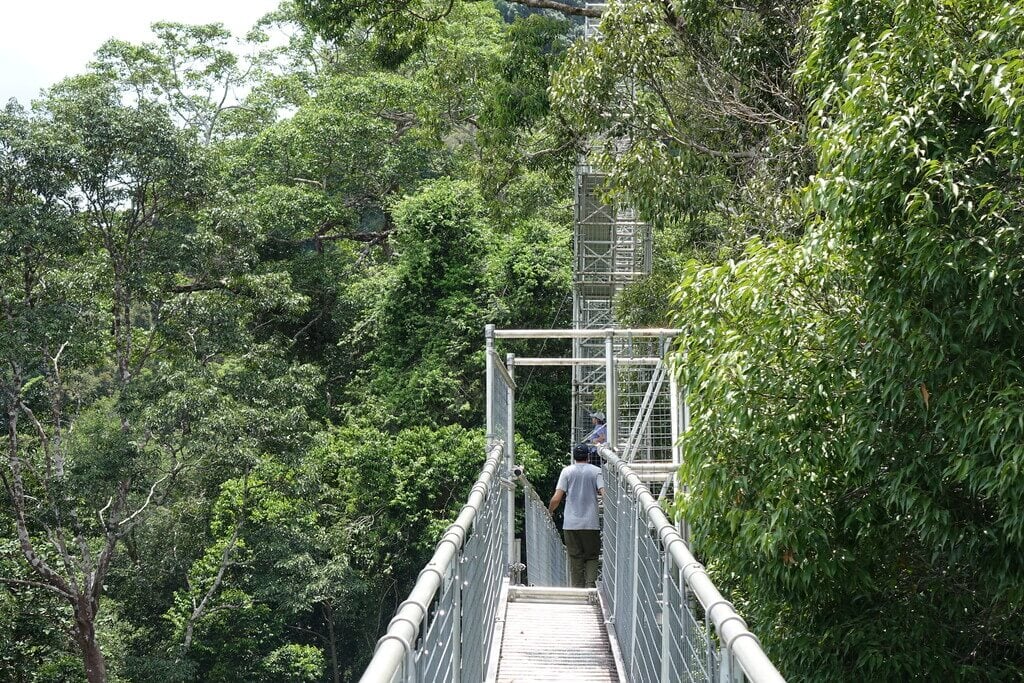
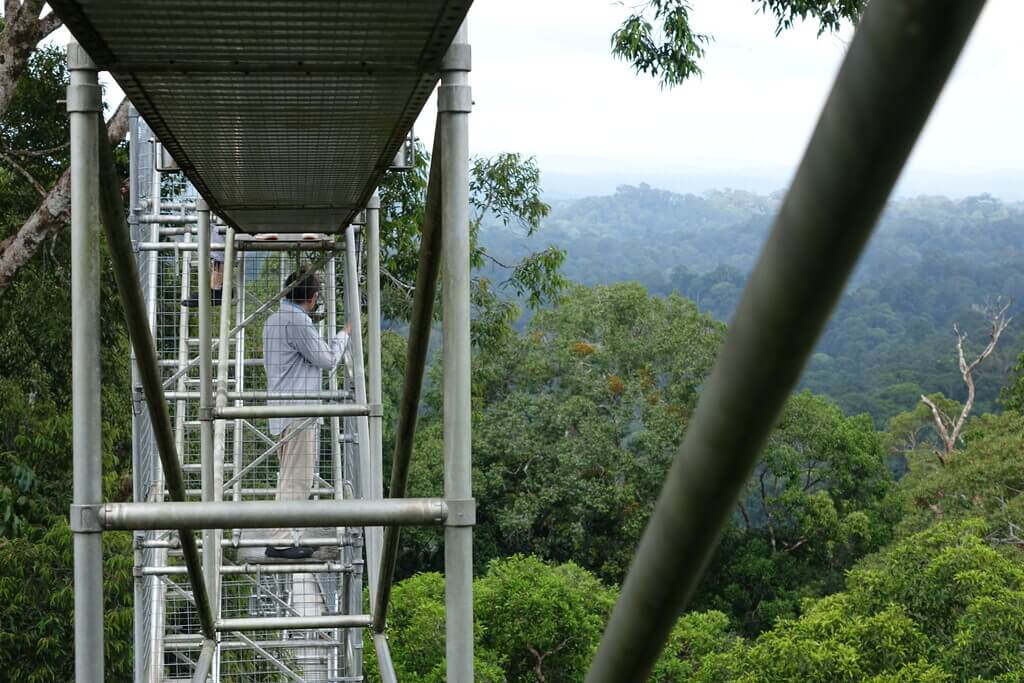
The canopy towers appear through the mist before you expect them. Silver ladder-frames rise above the tree line, angular and improbable against all that green. The climb begins on metal steps still wet from the last rain. Railings are cool to the touch. At each landing the forest offers something — ferns rippling, a warm drift of wild ginger, a rustle that is probably monkeys and probably not anything else. You stop often, ostensibly for photographs, but mostly just to breathe.
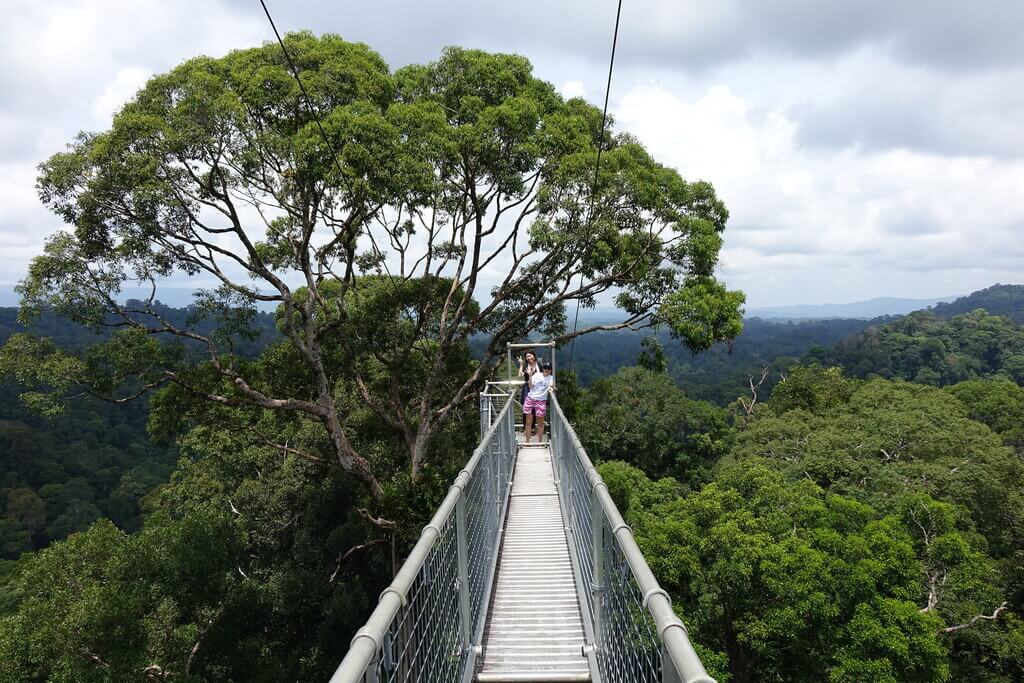
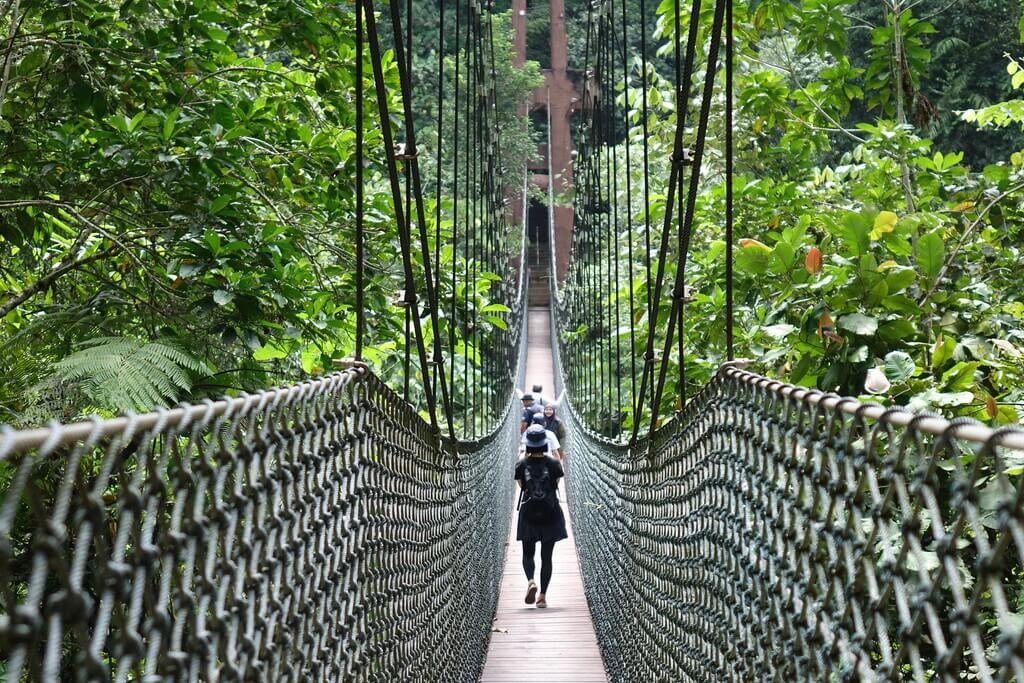
A narrow suspension bridge connects the upper platforms, and it moves more than you'd like. Most people laugh; some grip tighter; everyone crosses. At the highest tower, the talking tends to stop. The canopy spreads in every direction — branching, layered, alive — and the scale of it resets something in the mind. One bright bird cuts across the gap below you. You notice that you forgot to take the photo.
Timing sharpens the whole experience. The dry season running from roughly February through September brings clear sightlines, warm temperatures in the low thirties and the best chances for wildlife at dawn. Shoulder months in October and November trade visibility for atmosphere: morning mist clings to the treetops at chest height and makes the forest feel lit from inside. December and January bring heavier rains and occasionally reduced access, depending on river conditions, though the jungle turns a deeper, more saturated green.
Most tour operators combine the canopy walk with a waterfall swim and lunch at Ulu Ulu Resort, the primary lodge in the area. Evenings there follow a simple rhythm: rain on a tin roof, cicadas, river sounds, wooden floors that creak just enough to remind you they're real. One night rarely feels sufficient. The walk suits anyone willing to trade convenience for something genuinely rare — a treetop view over one of Borneo's last intact jungle interiors, reached only on the river's terms.
Frequently Asked Questions
Q: How do you get to the Ulu Temburong Canopy Walk?
A: The only way in is by longboat along the Temburong River. There is no road access to the park interior, and entry requires a licensed guide — an arrangement that keeps the walkway genuinely uncrowded and the experience quiet.
Q: When is the best time to visit for the canopy walk?
A: February through September offers the clearest conditions for the climb, with warm temperatures and the best chances of wildlife sightings at dawn. October and November bring occasional rain but dramatic morning mist that drifts through the treetops — worth considering if atmospheric photography matters to you. December and January are the wettest months and river conditions can limit access.
Q: Is the canopy walk suitable for people uncomfortable with heights?
A: The route involves metal ladder towers and a narrow suspension bridge that moves underfoot. Most visitors cross it fine, but if exposure to height at significant elevation causes real anxiety, it is worth knowing the bridge sway is noticeable rather than purely symbolic.
Q: Is there somewhere to stay overnight near the park?
A: Ulu Ulu Resort is the primary lodge in the area and the natural base for anyone wanting more than a day trip. Most tour operators combine the canopy walk with a waterfall swim and lunch there; an overnight stay lets you attempt the dawn climb when the mist and wildlife sightings are at their best.








Add a review