

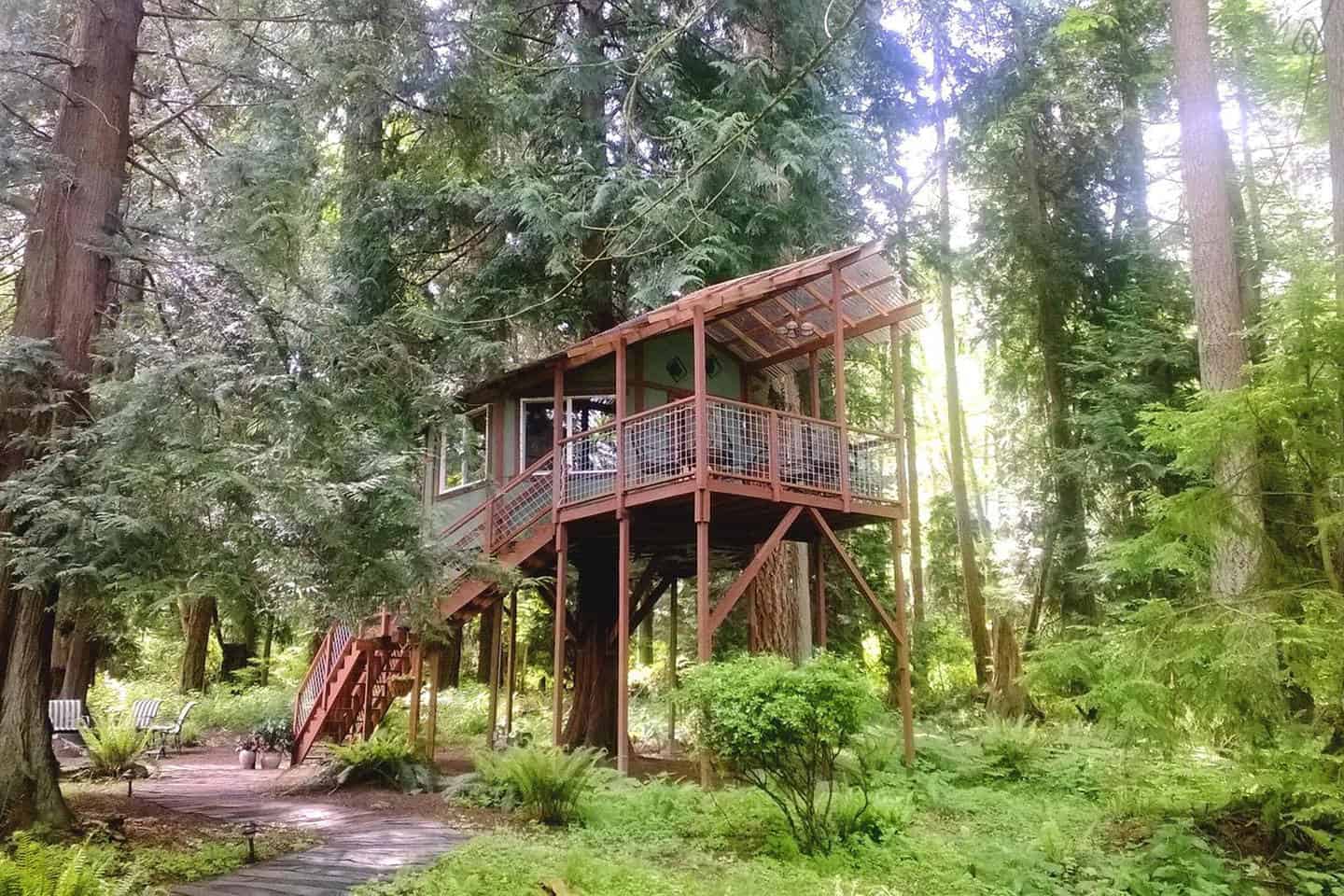
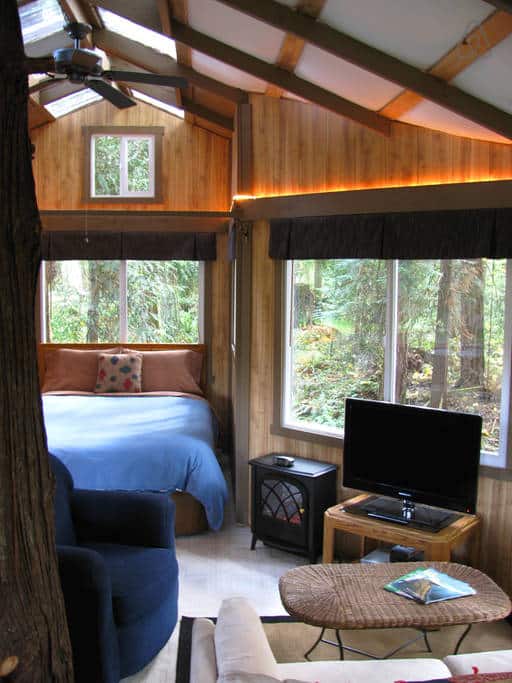
The Whidbey Island Tree House Suite sits thirteen feet off the ground in a Pacific Northwest forest near Freeland, Washington. It is an octagonal cabin built around a living cedar tree — the trunk rises straight through the centre of the room, bark and all. That single detail sets the tone for everything that follows.
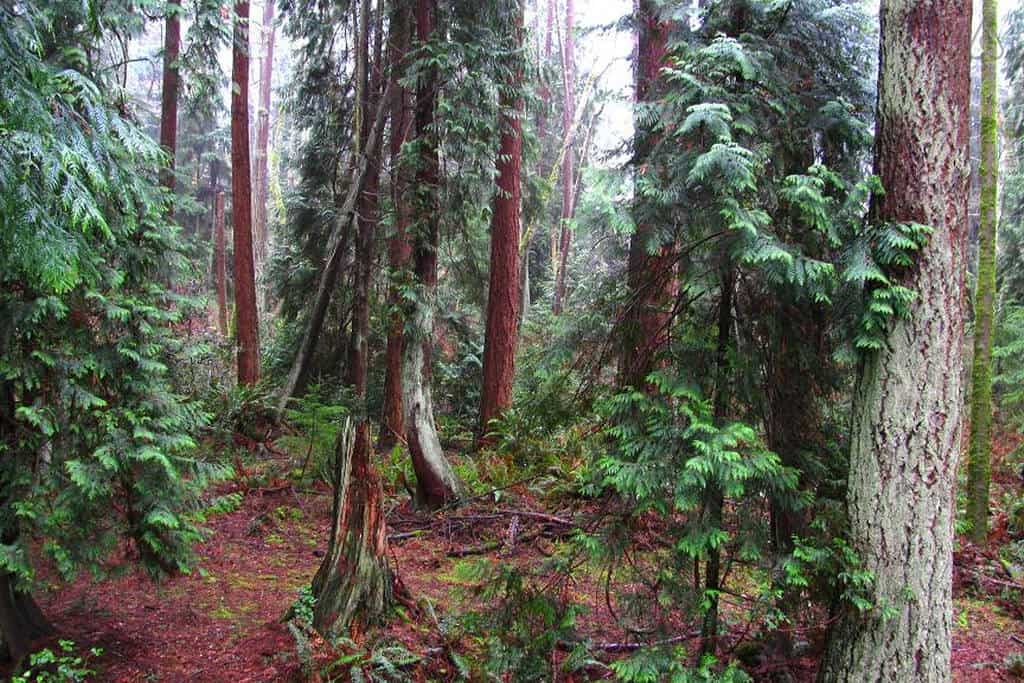
The structure is small by design, not by accident. Wraparound windows dissolve the boundary between interior and canopy, and skylights overhead let in whatever the sky is offering — blue in summer, slow-moving cloud cover the rest of the year. A covered deck off the main space gives you somewhere to sit quietly above the forest floor, surrounded by cedar, Douglas fir, maple and hemlock. The air carries that particular Northwest green smell that is hard to describe and easy to remember.
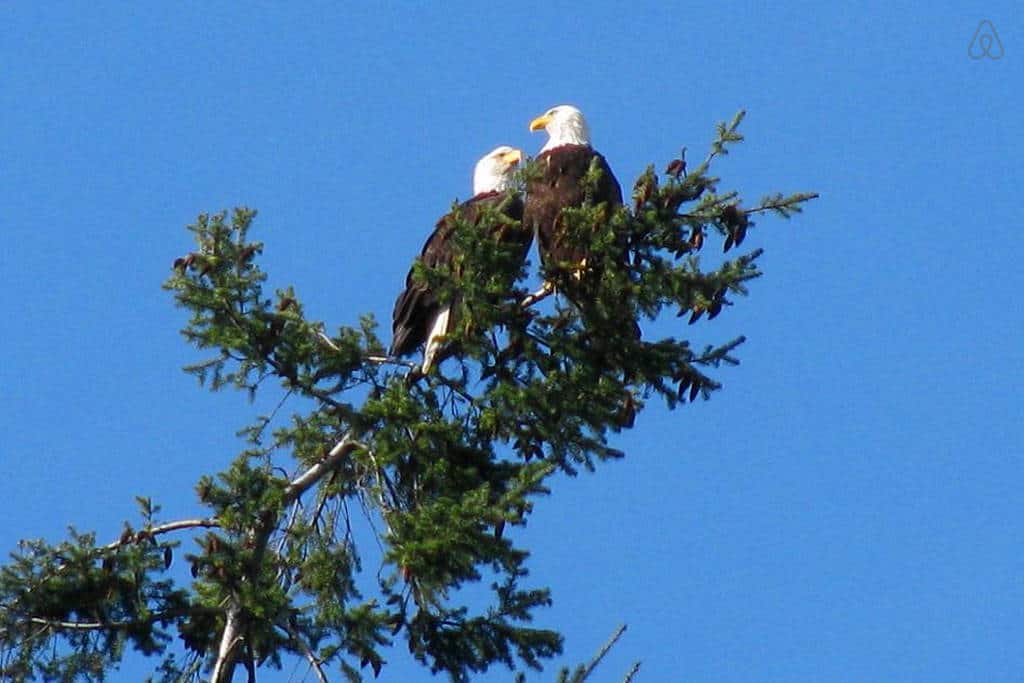
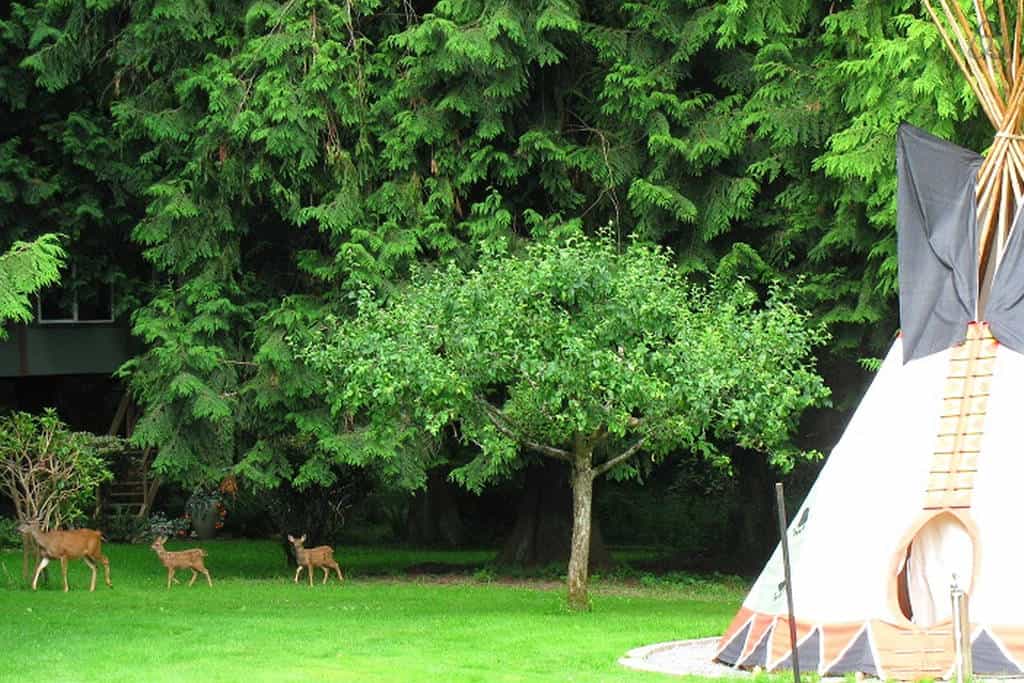
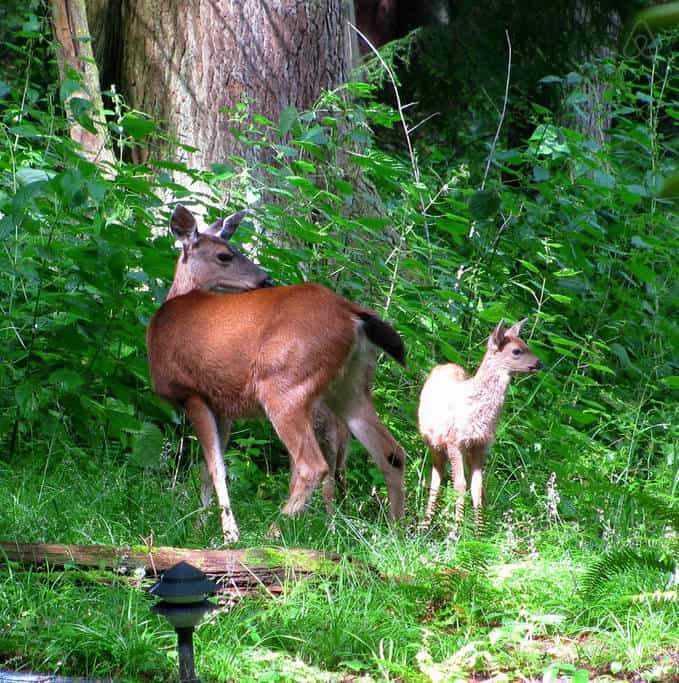
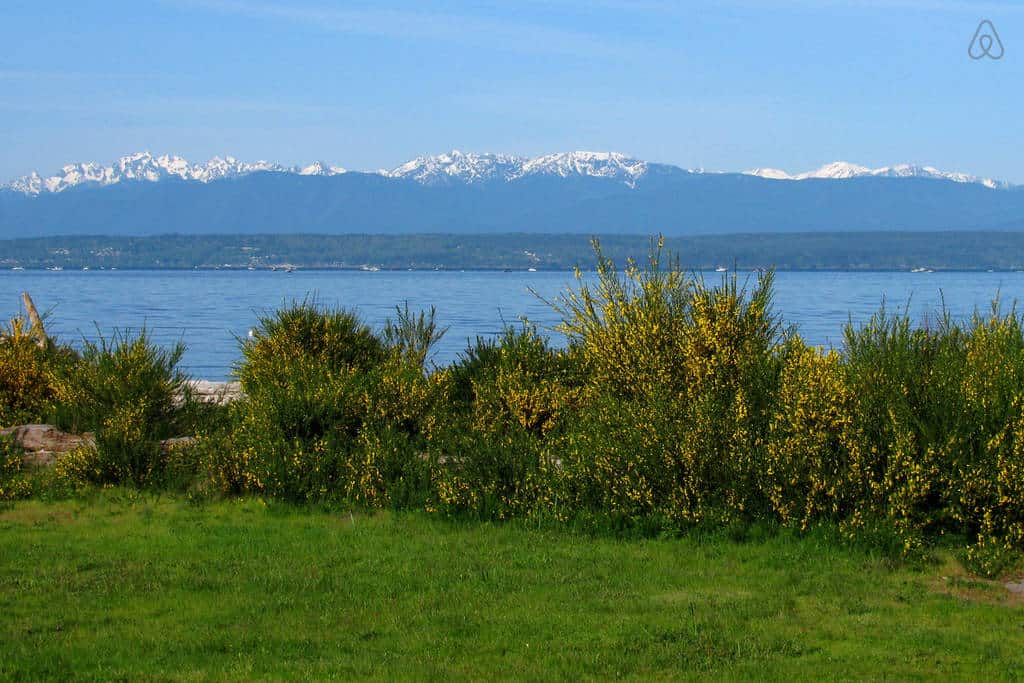
Wildlife shows up without invitation. Deer move through the understorey with reliable frequency, owls call after dark, and bald eagles occasionally drift overhead on long, unhurried thermals. When you want something beyond the treeline, a beach is less than half a mile away — driftwood, smooth stones and an unobstructed view toward the Olympic Mountains. On clear evenings the peaks catch the last light in a way that tends to stop conversation.
Evenings back at the property often centre on the fire pit, where guests can grill their own food and settle into the particular rhythm that only comes from being genuinely off-grid. There is no Wi-Fi and no television. The treehouse's hosts provide a homemade organic breakfast, and by all accounts they have found the right balance — present and genuinely warm, but not hovering. That calibration matters more than most listings admit.
Timing a visit here rewards some thought. Late spring through early autumn — roughly May to September — brings the most reliable weather, with relatively dry days, forest trails in full green and clear sightlines across Puget Sound. July and August are the warmest months, well suited to beach walks and long evenings on the deck. The shoulder months of March, April and October shift the atmosphere toward something quieter and more atmospheric, with mist in the trees and fewer other visitors. Winter arrivals get short daylight hours and persistent rain, but the sense of being cocooned in the canopy above a wet, still forest has its own appeal.
Most guests reach Whidbey Island by car, typically via the Mukilteo–Clinton ferry from the Seattle side or the Port Townsend–Coupeville ferry from the Olympic Peninsula. For those arriving without a vehicle, bus lines 1S and 1N serve stops along SR 525 near Freeland — SR 525 at Freeland P&R and SR 525 at Freeland Ave are both approximately 2.1 km straight-line from the property. The island is rural, and a car simplifies most logistics once you arrive. This treehouse suits anyone trading screens and schedules for forest quiet, birdsong and a cedar trunk standing in the middle of the room like it was always meant to be there.
Frequently Asked Questions
Q: What makes this treehouse different from a typical cabin rental?
A: A living cedar tree grows straight through the centre of the octagonal room — trunk, bark and all — at thirteen feet off the ground. The wraparound windows and skylights mean the forest is essentially inside with you. There is no Wi-Fi and no television; the experience is deliberately minimal and grounded in the setting.
Q: When is the best time to visit for good weather and outdoor activities?
A: Late spring through early autumn (May–September) is the most reliable window, with relatively dry days and clear views across Puget Sound. July and August are the warmest months, well suited to kayaking, beachcombing and long evenings on the deck. The shoulder months of March–April and October are cooler and often misty — atmospheric and quiet, but a different mood entirely.
Q: Is a car necessary to reach the treehouse?
A: Whidbey Island is rural and a car makes things significantly easier. Most visitors arrive by ferry — either the Mukilteo–Clinton crossing from the Seattle side or the Port Townsend–Coupeville ferry from the Olympic Peninsula. Bus lines 1S and 1N do serve SR 525 stops near Freeland, though the property is approximately 2.1 km from those stops, so car-free travel requires extra planning.
Q: Is breakfast included, and what are the hosts like?
A: The hosts provide a homemade organic breakfast and are noted for being genuinely warm without being intrusive — present when useful, otherwise giving guests their space. Confirm current breakfast arrangements directly with the hosts when booking, as details can change.
Q: Is the treehouse suitable for storm-watching or off-season visits?
A: Winter and shoulder-season stays have a distinct appeal here. The sense of being cocooned in the canopy above a wet Pacific Northwest forest — owls calling, rain on the roof, evergreens all around — suits guests who want quiet and atmosphere over sunshine. Daylight is short from November through February, so it suits people who genuinely enjoy that kind of retreat.









Deborah Hodges
October 22, 2024 at 00:00A beautiful experience, highly reccomend