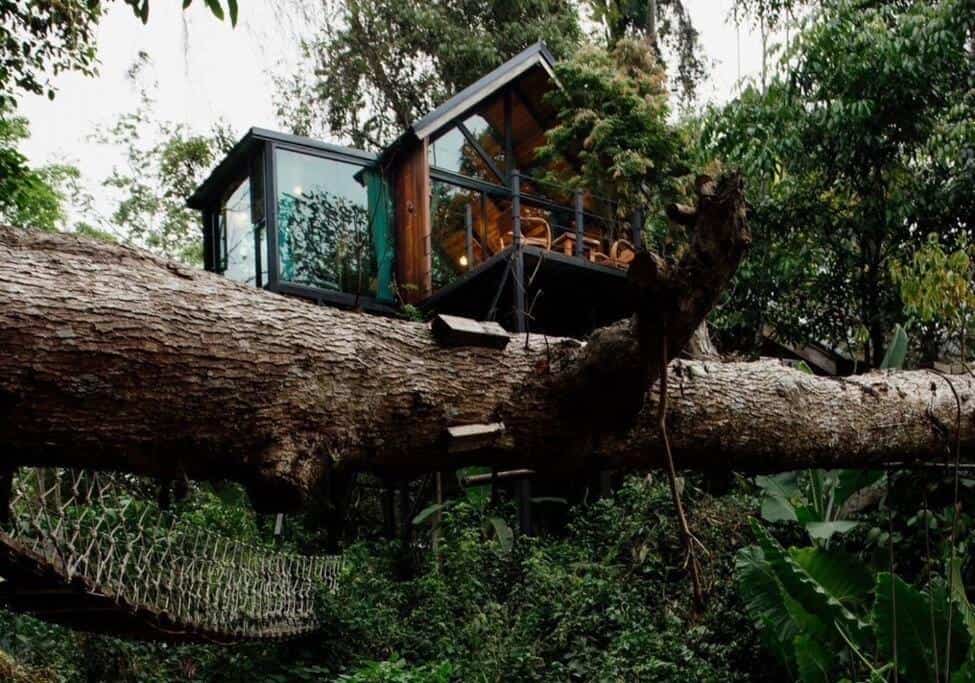
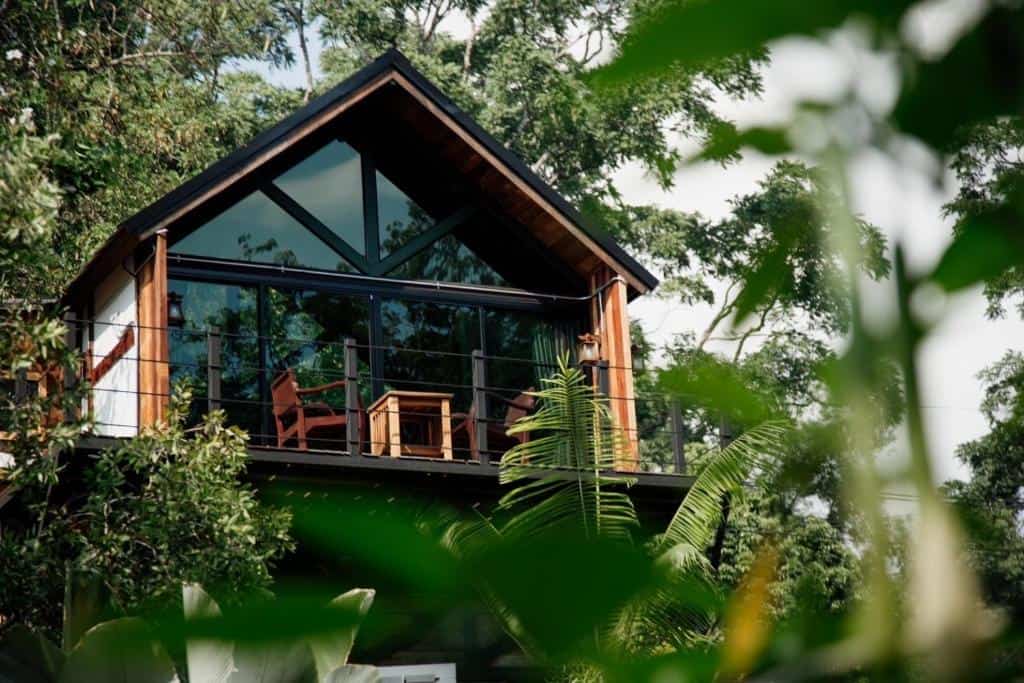
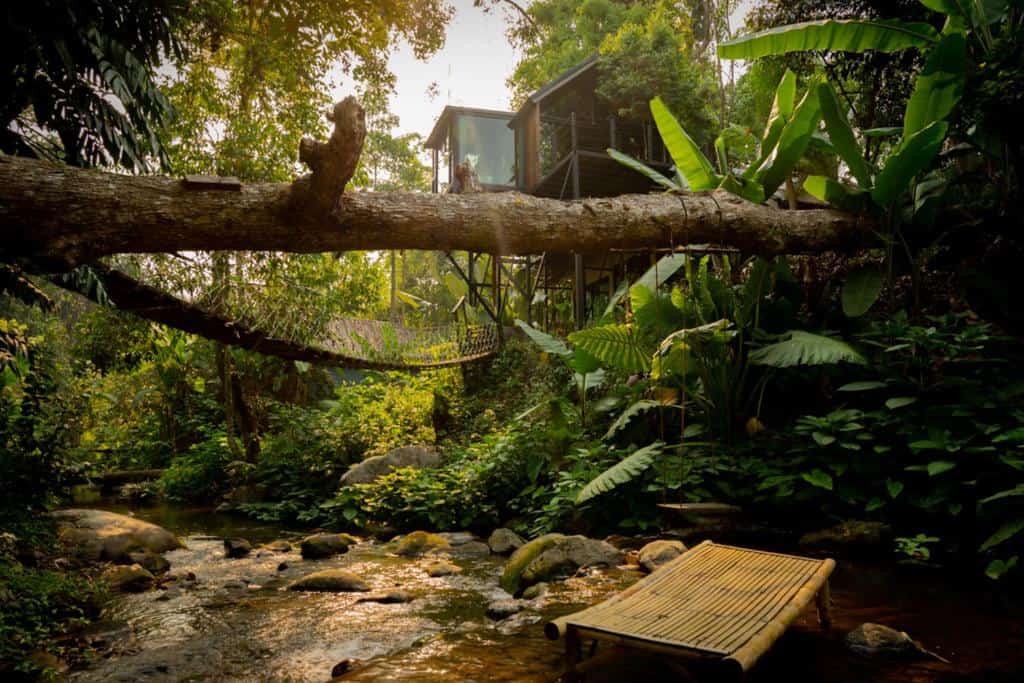
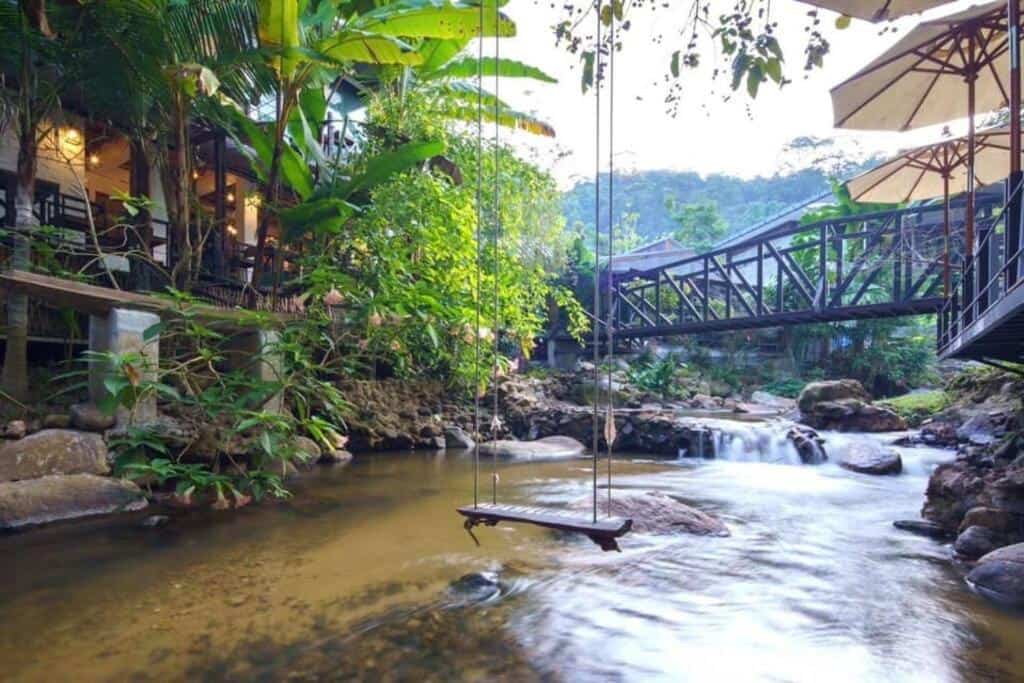
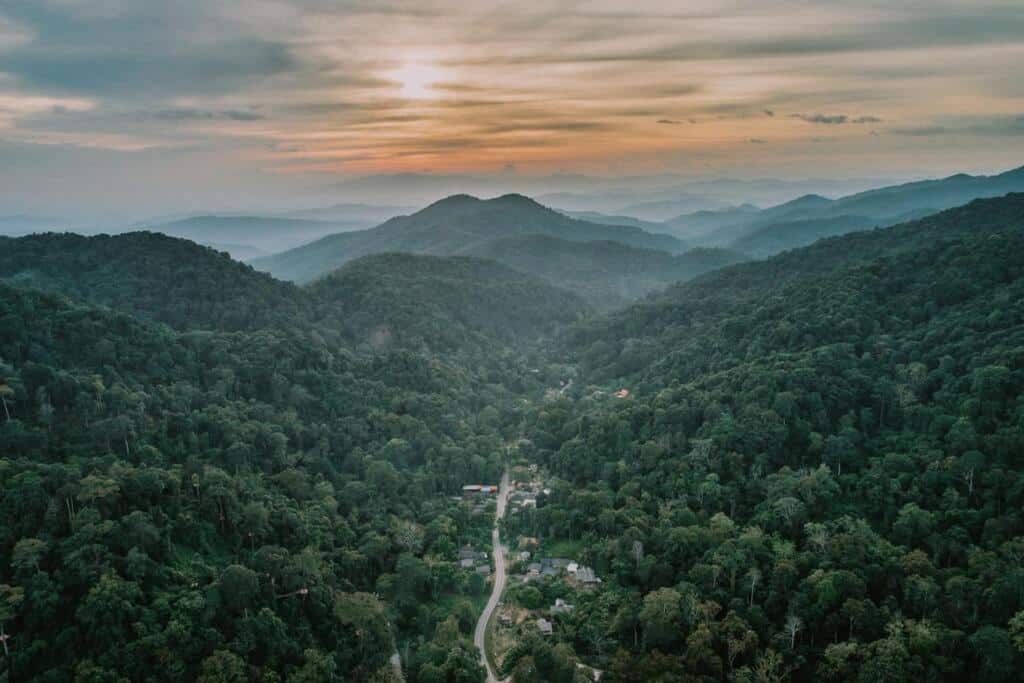
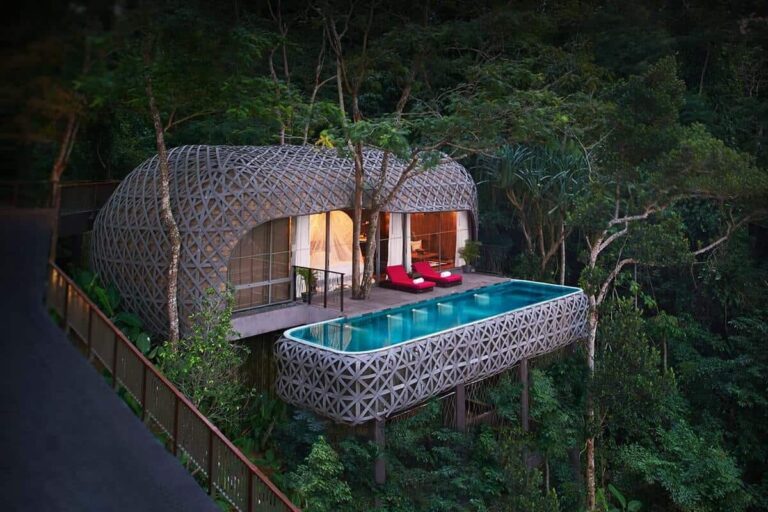
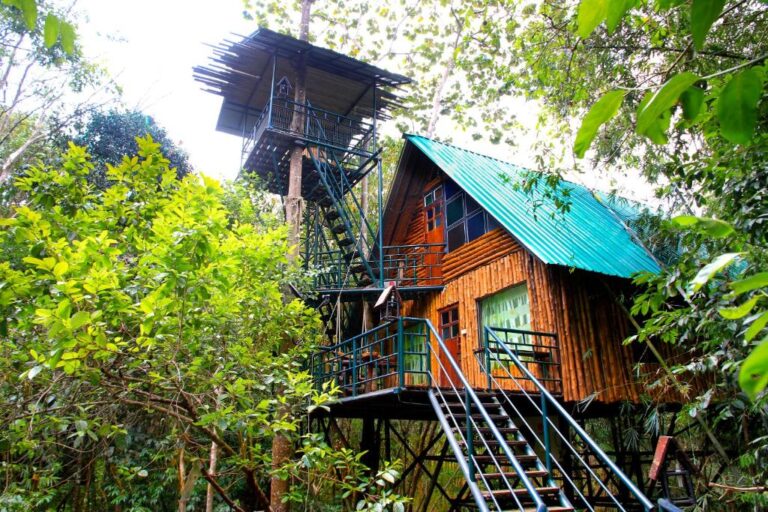
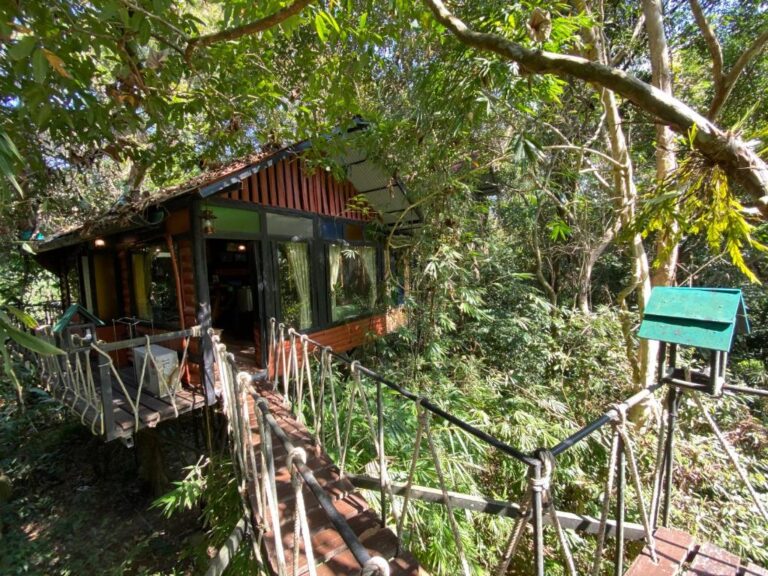
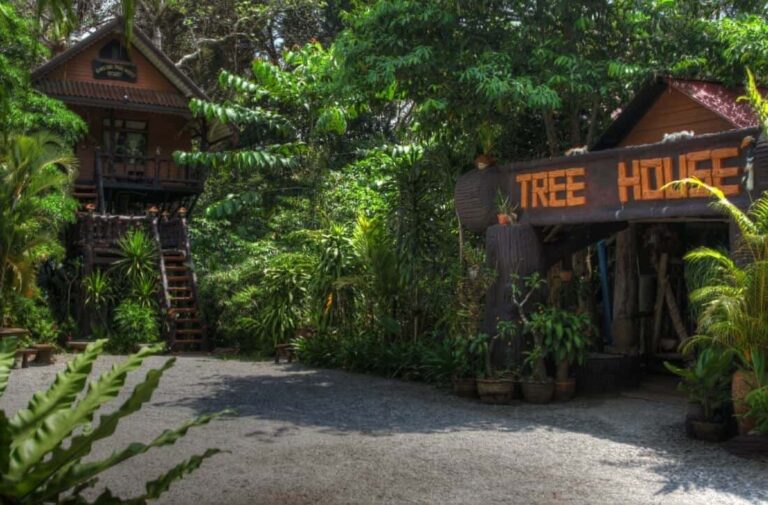
Wilderness Treehouse sits in the forested hills of Thep Sadet, in Doi Saket district, roughly 42 kilometres from central Chiang Mai. The approach alone signals that something unusual waits ahead: narrow lanes wind past rice paddies and tree lines before the property reveals itself, perched above a cascading waterfall. That position is not a design flourish — it is the defining experience of the place.
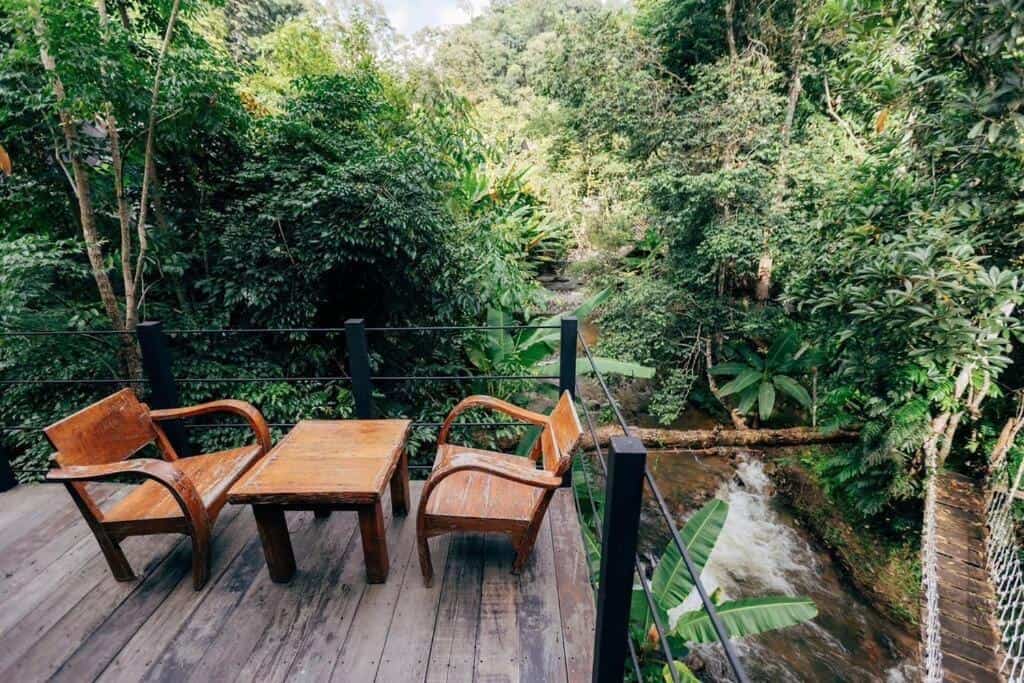
The waterfall runs constantly beneath the cabin floors. Guests describe the sound as a low, steady presence rather than a dramatic roar — more companion than spectacle. Mossy stone, filtered jungle light and the cool mist rising from moving water give the surroundings a particular quality that the photos only partly capture. The structure feels genuinely suspended between canopy and stream, and the quiet that wraps around it at night is the closest thing to real forest silence most travellers find without camping gear.
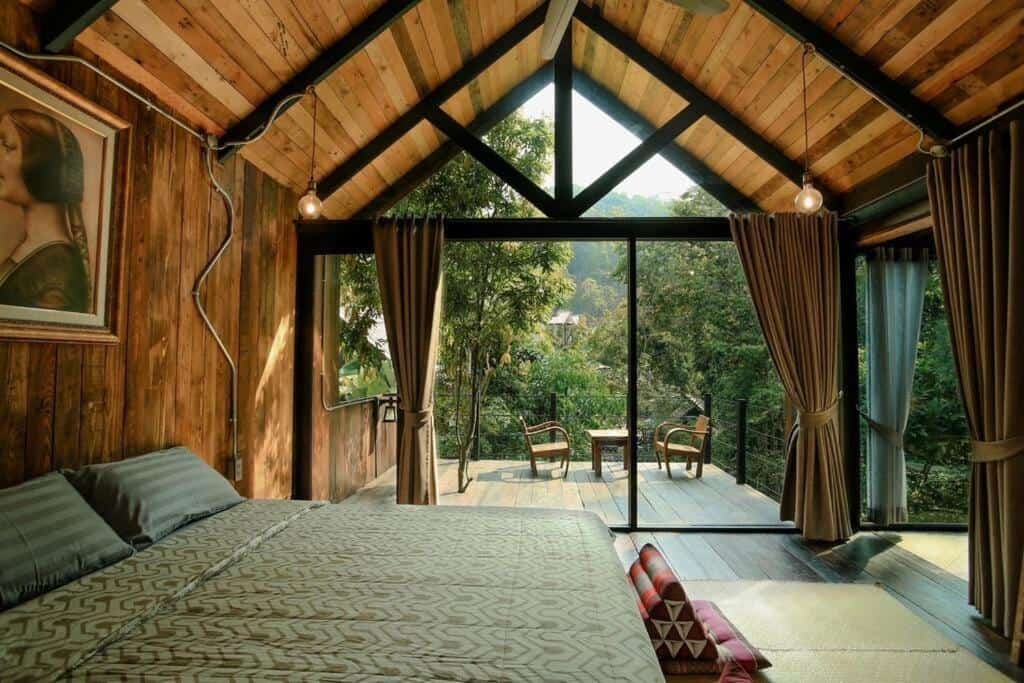
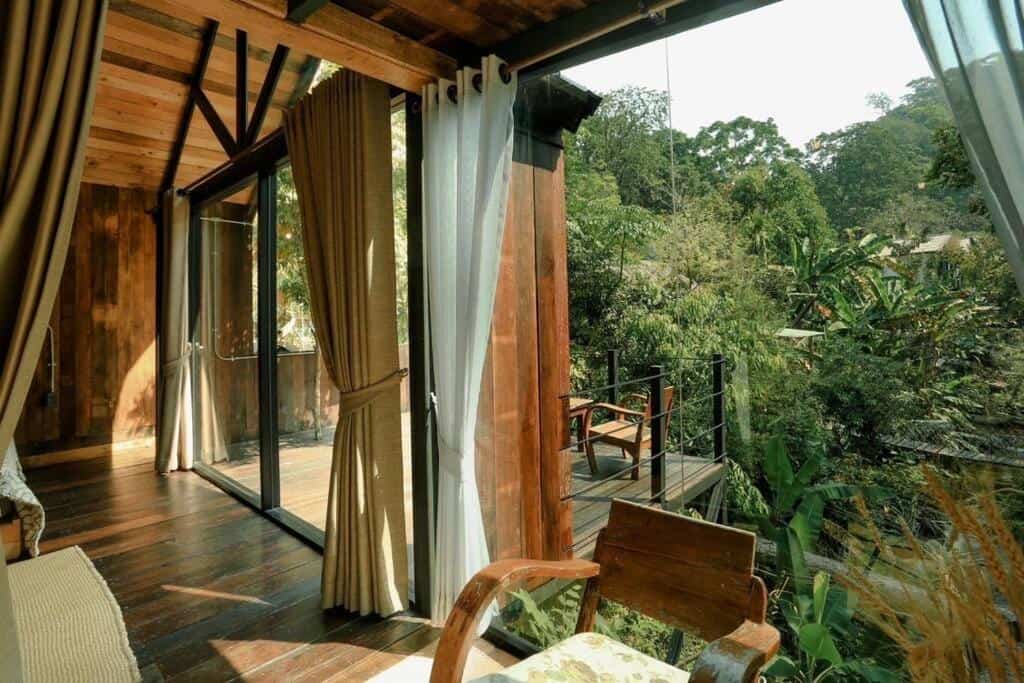
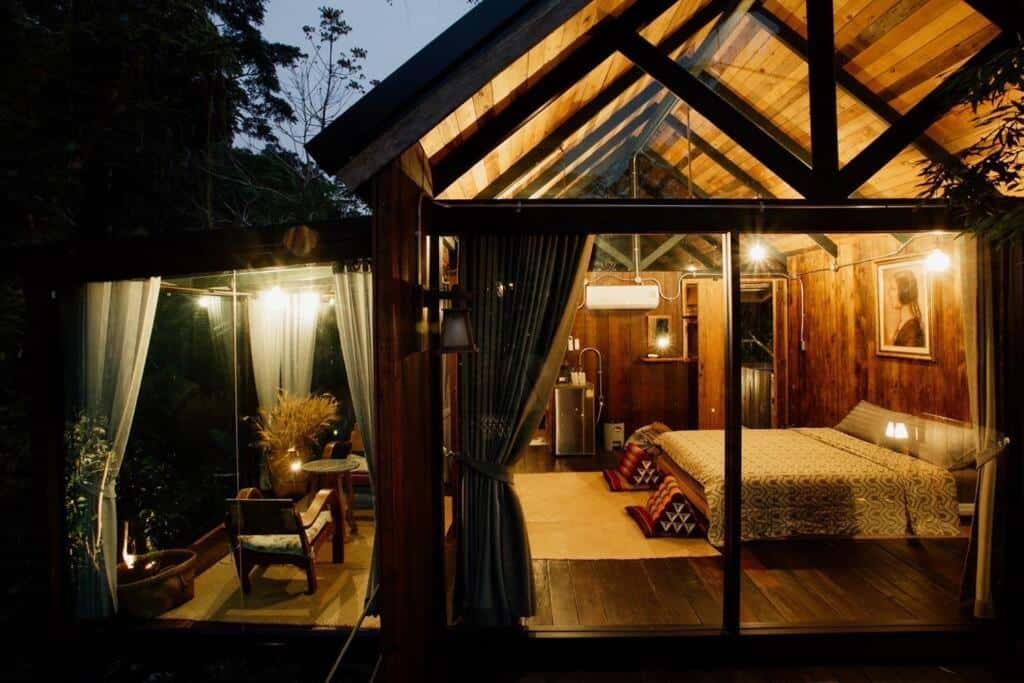
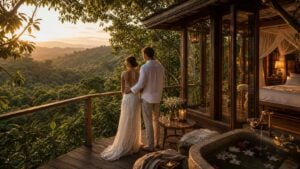
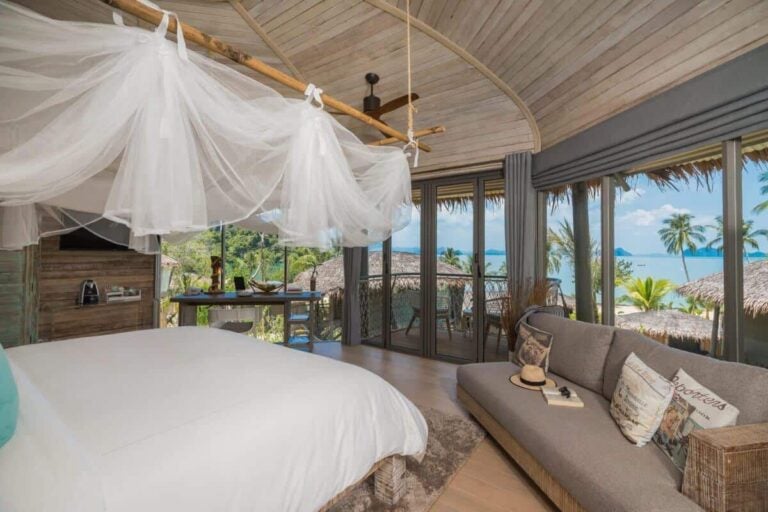
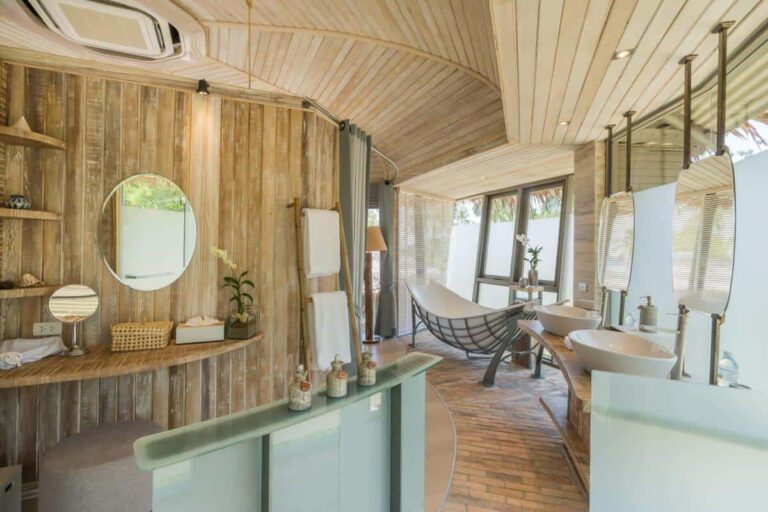
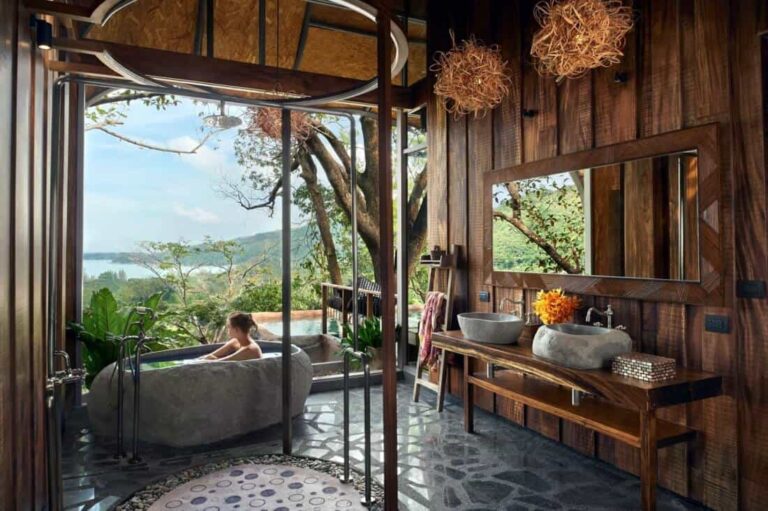
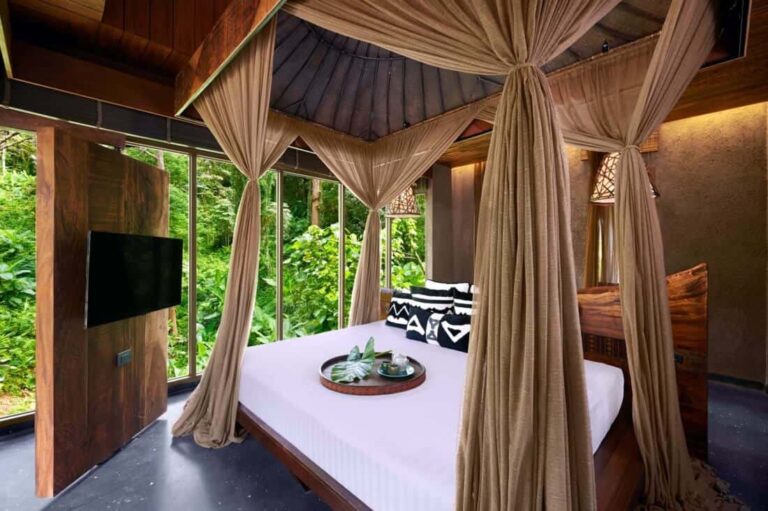
Inside, the balance between rustic setting and practical comfort is handled well. Each unit is air-conditioned — a real consideration in Thailand's climate — and opens onto a private balcony facing the trees and mountain views beyond. Large windows draw the garden and forest into the room without the insects. A flat-screen TV, private bathroom with shower, and fresh linen and towels round out the essentials. The accommodation asks nothing of guests in terms of roughing it; the treehouse does all the atmospheric work.
The property's approach to sustainability is woven into the guest experience rather than bolted on as a label. Caretakers actively minimise environmental impact, and guests sensitive to carbon footprint often find that intention changes how they move through the space — noticing energy use, appreciating what is deliberately absent. An on-site restaurant serves Thai dishes, which means leaving the forest bubble for dinner is optional rather than necessary. Free parking and Wi-Fi (signal quality varies, as expected in a rural setting) add quiet practical value.
Timing a visit rewards some thought. The cool dry season from November through February brings clear skies, fresh mountain air and temperatures ranging roughly between 12 and 26 degrees Celsius — ideal for sunrise views from the balcony and hiking the surrounding hills. March to May is warmer and vivid, with blooming teak forests and long daylight hours suiting travellers who enjoy the heat. The green monsoon season from June through October brings lush, misty mornings and dramatic cloud movement through the peaks — excellent for photographers and nature lovers happy to work around short afternoon showers.
Most guests arrive by private car or arranged transfer from Chiang Mai, and the rural Doi Saket location suits those who want genuine distance from the city without losing access to it. Chiang Mai's old city walls, temple gates, night markets and river are all within reasonable reach for a day trip. Wilderness Treehouse works best for couples or solo travellers seeking a proper nature reset — somewhere the waterfall beneath the floor, not a curated experience above it, is the actual point.
Frequently Asked Questions
Q: Where exactly is Wilderness Treehouse, and how do guests typically get there?
A: The property sits in the forested hills of Thep Sadet, Doi Saket district, roughly 42 kilometres from central Chiang Mai. Most guests arrive by private car or arranged transfer, following narrow lanes past rice paddies and tree lines to reach it. There is free on-site parking.
Q: What makes the setting genuinely different from a standard jungle lodge?
A: The cabins are built directly over a working waterfall. Guests hear the water constantly beneath the floorboards — a steady, low presence rather than a dramatic roar — and the surrounding mossy stone and forest mist give the place a particular atmosphere that persists indoors and out.
Q: Does the treehouse experience mean roughing it?
A: Not particularly. Each unit is air-conditioned, has a private balcony facing trees and mountain views, large windows, a flat-screen TV, and a private bathroom with shower. Linen and towels are provided. The rustic setting does most of the atmospheric work; the interior comfort level is higher than the surroundings might suggest.
Q: When is the best time of year to stay?
A: November through February is generally the most comfortable season — clear skies, cool nights and fresh mountain air make it ideal for sunrise views from the balcony and hiking the surrounding hills. The monsoon months (June–October) bring lush, misty mornings and dramatic cloud movement through the peaks, which suits photographers and nature lovers happy to work around short afternoon showers. March to May is warmer but vivid, with long daylight hours and blooming teak forests.
Q: Is food available on-site, or do guests need to drive out for meals?
A: An on-site restaurant serves Thai dishes, so leaving the property for dinner is optional. Wi-Fi is available, though signal quality can vary in this rural jungle setting — worth keeping in mind for anyone relying on a strong connection.