

Wilpattu National Park draws serious wildlife watchers to Sri Lanka's northwest coast, and the Wilpattu Treehouse Hotel sits right at its edge — not beside it, but genuinely against it. The approach alone signals that this is somewhere different. A quiet road threads through tree canopy past wide, glassy lakes where pelicans stand in shallow water and crocodiles rest along the banks with patient indifference. Deer move through the grass near the verge. By the time you arrive, the pace has already changed.
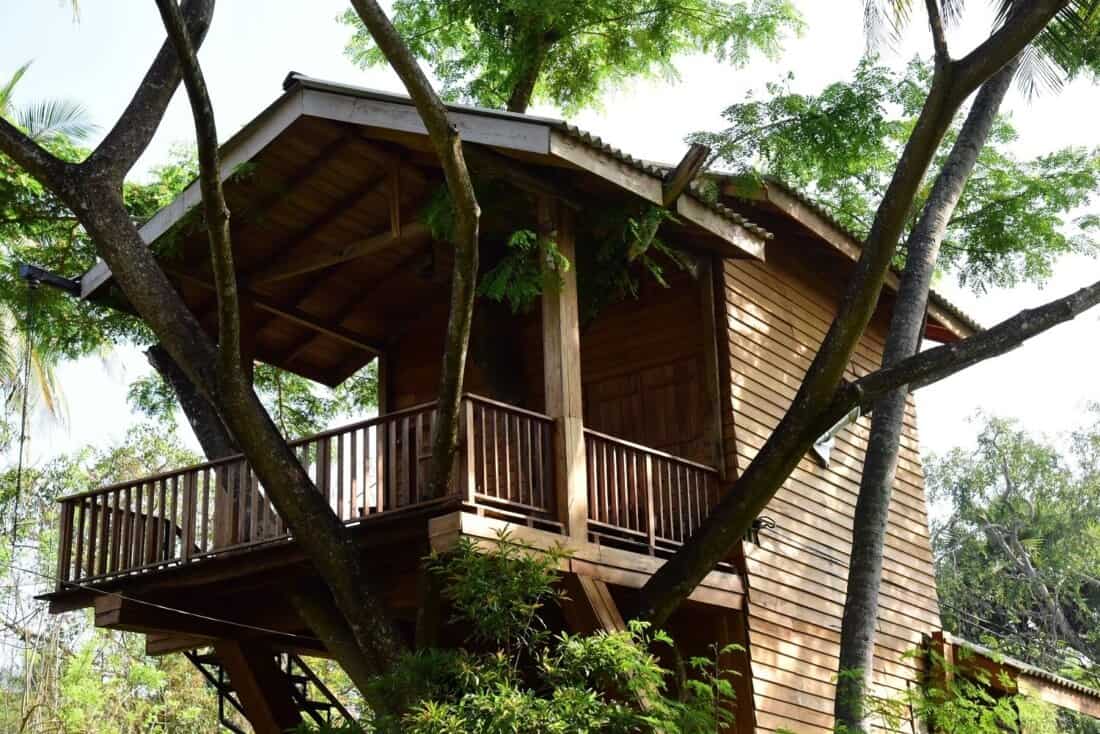
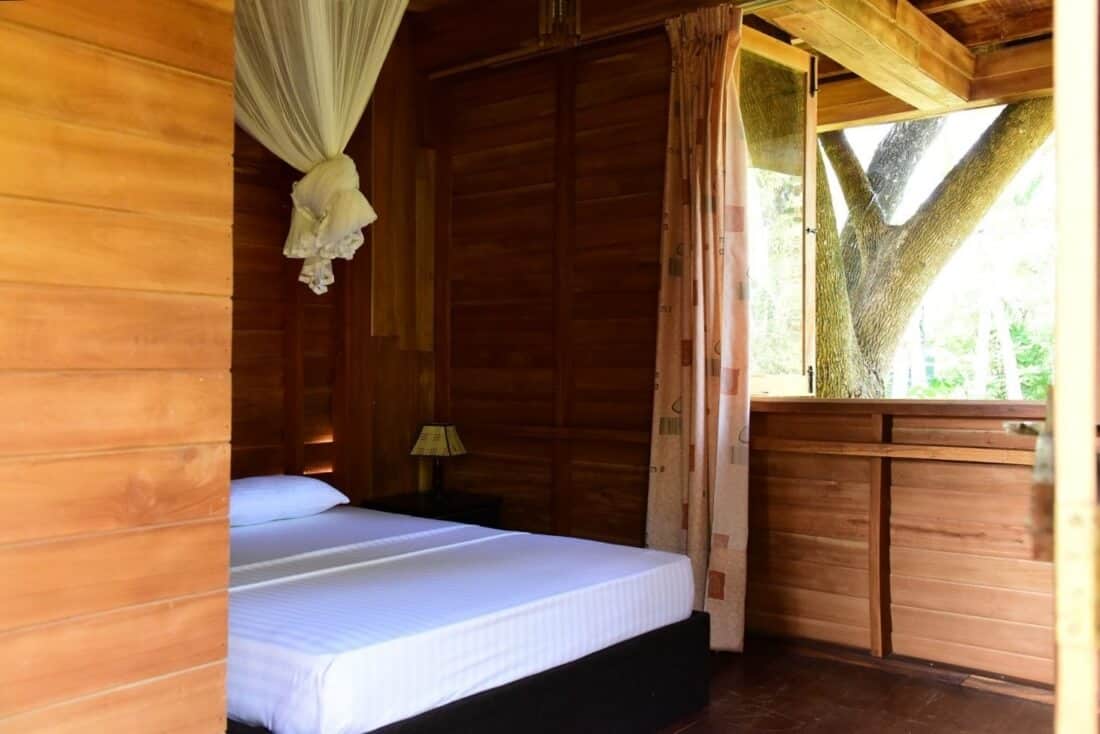
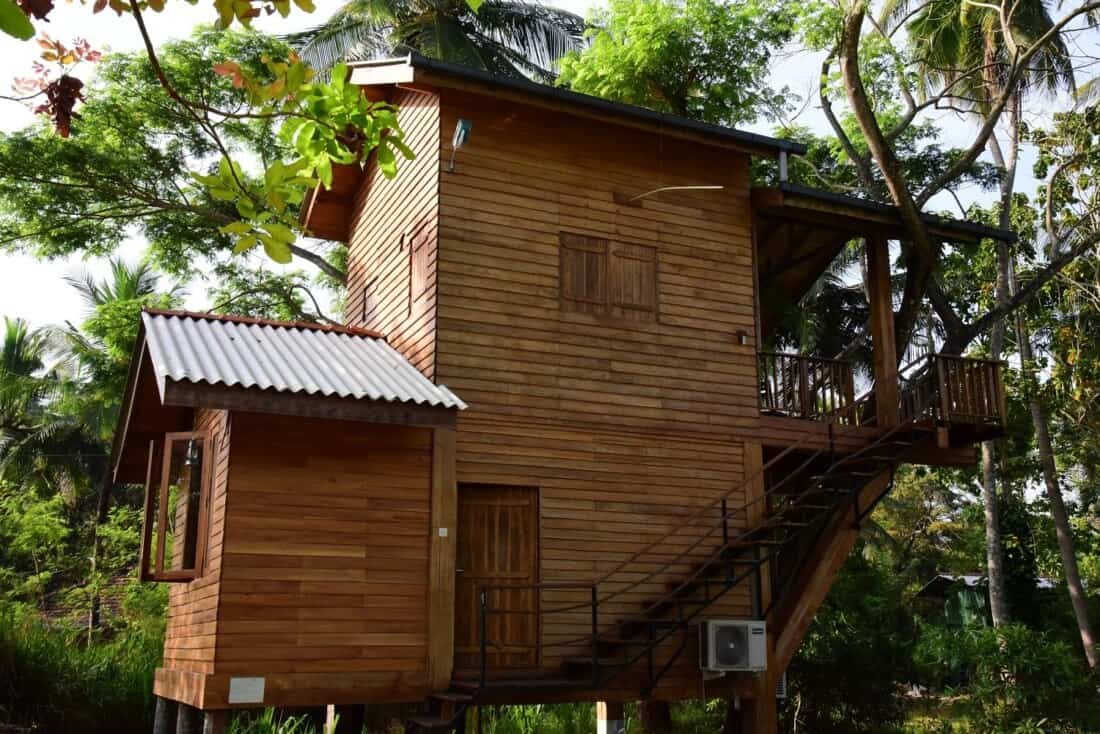
Four treehouses rise about fourteen feet above the jungle floor, and that limited number shapes the whole character of the place. It never tips into a resort. It stays small, quiet, and unhurried. Each structure draws on traditional Sri Lankan craftsmanship — timber framing, woven textures, thatched details — but the interiors are comfortable rather than austere. Ceiling fans turn overhead, beds are proper, and bathrooms are functional. The word "rustic" applies to the setting, not to the level of care.
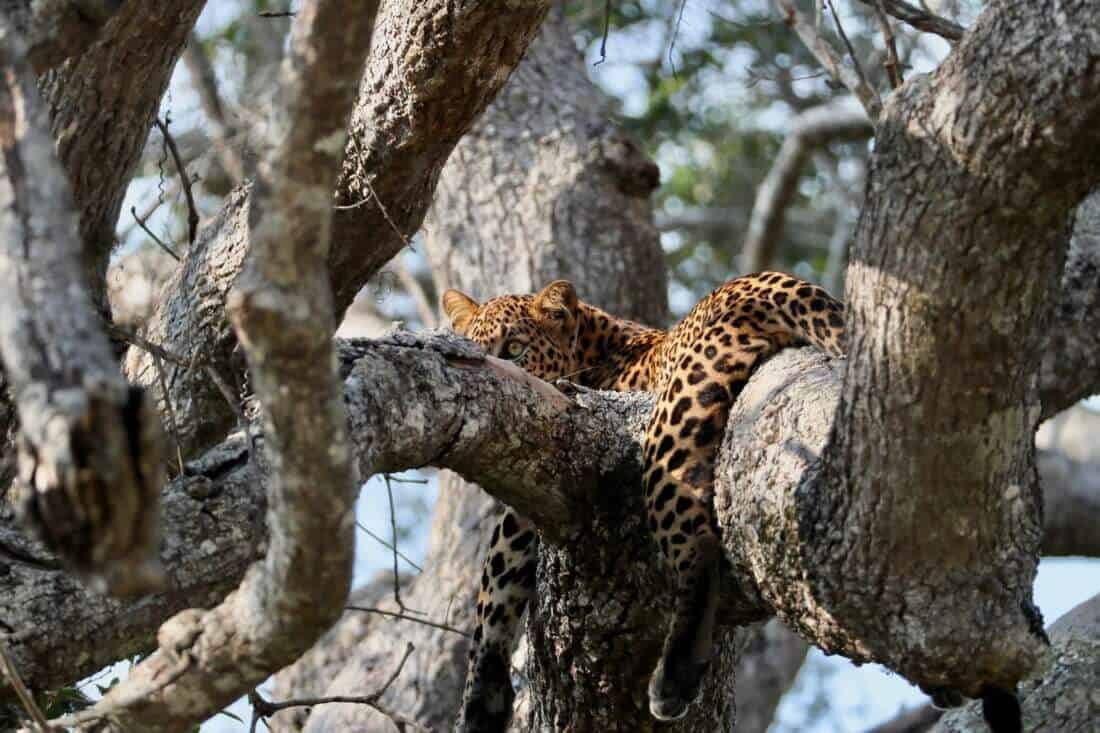
The wildlife is the real draw, and it arrives uninvited. Elephants move through the surrounding forest and occasionally into open view. Wild boar cross the grounds at their own pace. At night, the canopy comes alive with movement and sound — creatures shifting across branches and sometimes across the roof itself, enough to jolt a light sleeper before the context returns. This is a working jungle boundary, not a manicured wildlife park, and that rawness is exactly what guests come for.
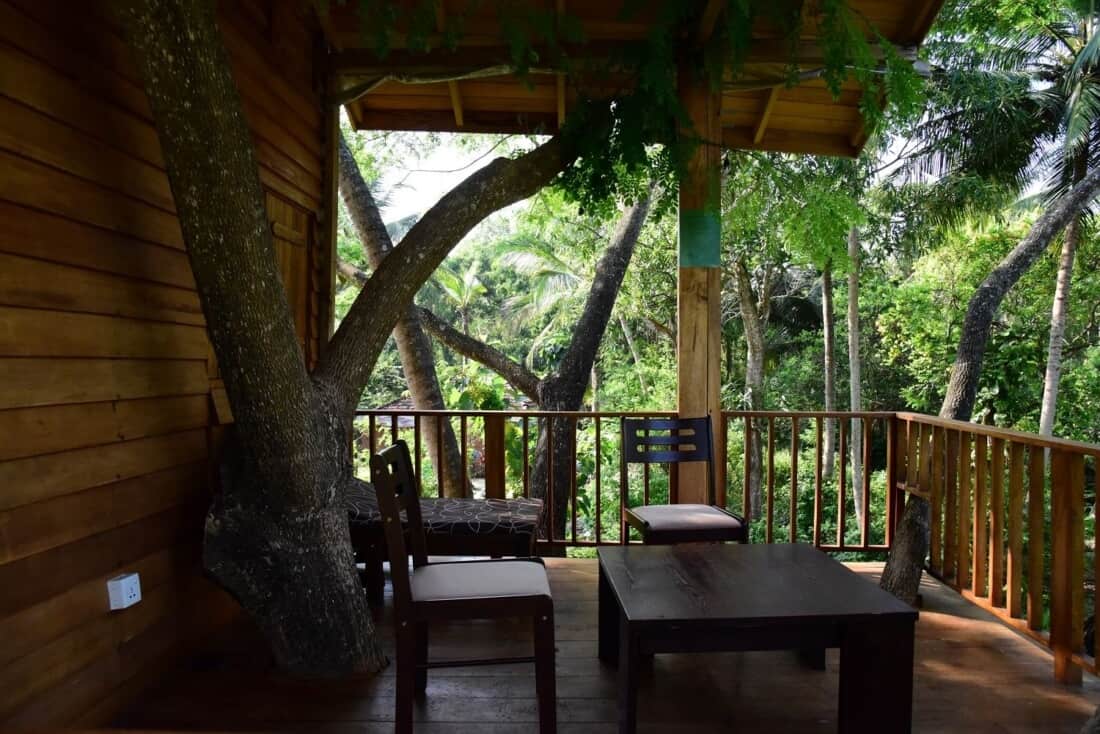
Each treehouse opens onto a private terrace, and this becomes the natural anchor for the day. Morning coffee with the tree line, an afternoon book while birds move through the mid-canopy, late light stretching across the park. The hotel's restaurant is elevated too, giving it an unobstructed view toward the horizon at sunset — food with a backdrop that earns attention in its own right.
Seasonally, the dry months from May through September offer the most reliable safari conditions, with clearer visibility and lower rainfall making game drives more productive. The shoulder period from February through April brings heat and building humidity but still delivers strong wildlife activity. The wet season from October through January means heavier rain and lush, green atmosphere — harder conditions for game viewing, but compelling for birders and those who prefer the park at its most elemental.
This is a stay that suits a specific kind of traveller. Not someone looking for a pool and evening cocktails, but someone who wants the real texture of Wilpattu — the dust, the early mornings, the unplanned encounters. For that guest, the Wilpattu Treehouse Hotel delivers something most accommodations in Sri Lanka cannot: genuine wildness at close range, and a place to sleep right inside it.
Frequently Asked Questions
Q: Which season gives the best chance of wildlife sightings in Wilpattu?
A: The dry season from May through September generally offers the most reliable conditions — clearer visibility, drier tracks, and more concentrated wildlife activity. The shoulder months of February to April are still strong for game viewing, though hotter. The wet season from October to January brings lush jungle and good birding, but heavier rain can make game drives less productive.
Q: How many treehouses are there, and does the property feel crowded?
A: There are just four treehouses, elevated around fourteen feet above the jungle floor. That small scale is central to the character of the place — it stays quiet, unhurried, and nothing like a resort. Getting a booking here genuinely matters.
Q: Is this a comfortable stay or true roughing it?
A: Comfortable rather than austere. The treehouses use traditional Sri Lankan timber and thatched construction, but inside you'll find ceiling fans, proper beds, and functional bathrooms. The wildness is in the setting — elephants, wild boar, and night sounds from the canopy — not in the level of care.
Q: What wildlife might guests actually encounter during a stay?
A: Wilpattu is known for elephants, leopards, deer, wild boar, and crocodiles. Along the approach road, pelicans and deer are common sights. The park boundary is the hotel's immediate neighbour, so wildlife encounters on the grounds are unscripted and genuinely possible rather than staged.
Q: How is the Wilpattu Treehouse Hotel typically reached?
A: Wilpattu National Park is most commonly reached by private vehicle or organised transfer from Colombo or Anuradhapura. Check current transfer options directly with the property when booking, as road conditions and timings can vary.










Add a review