
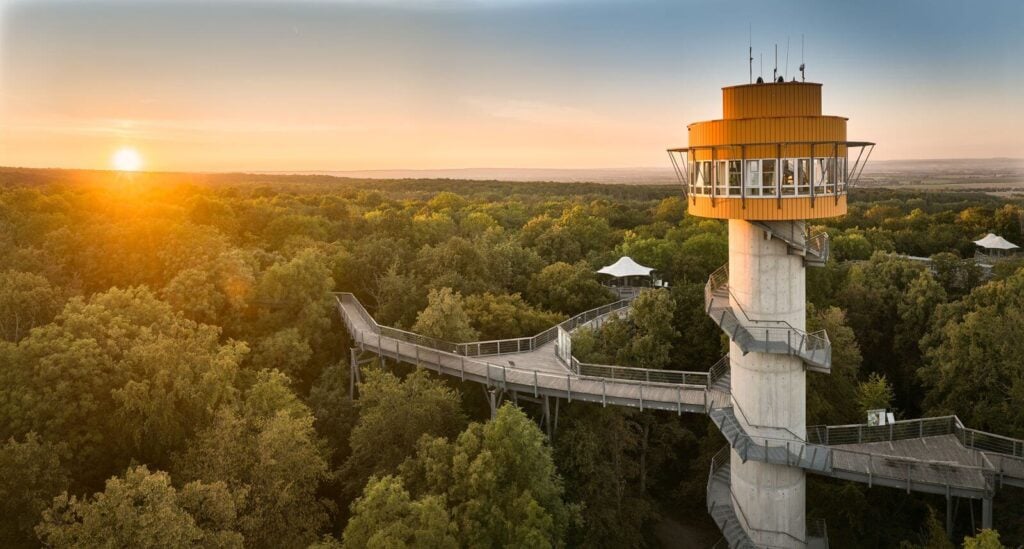
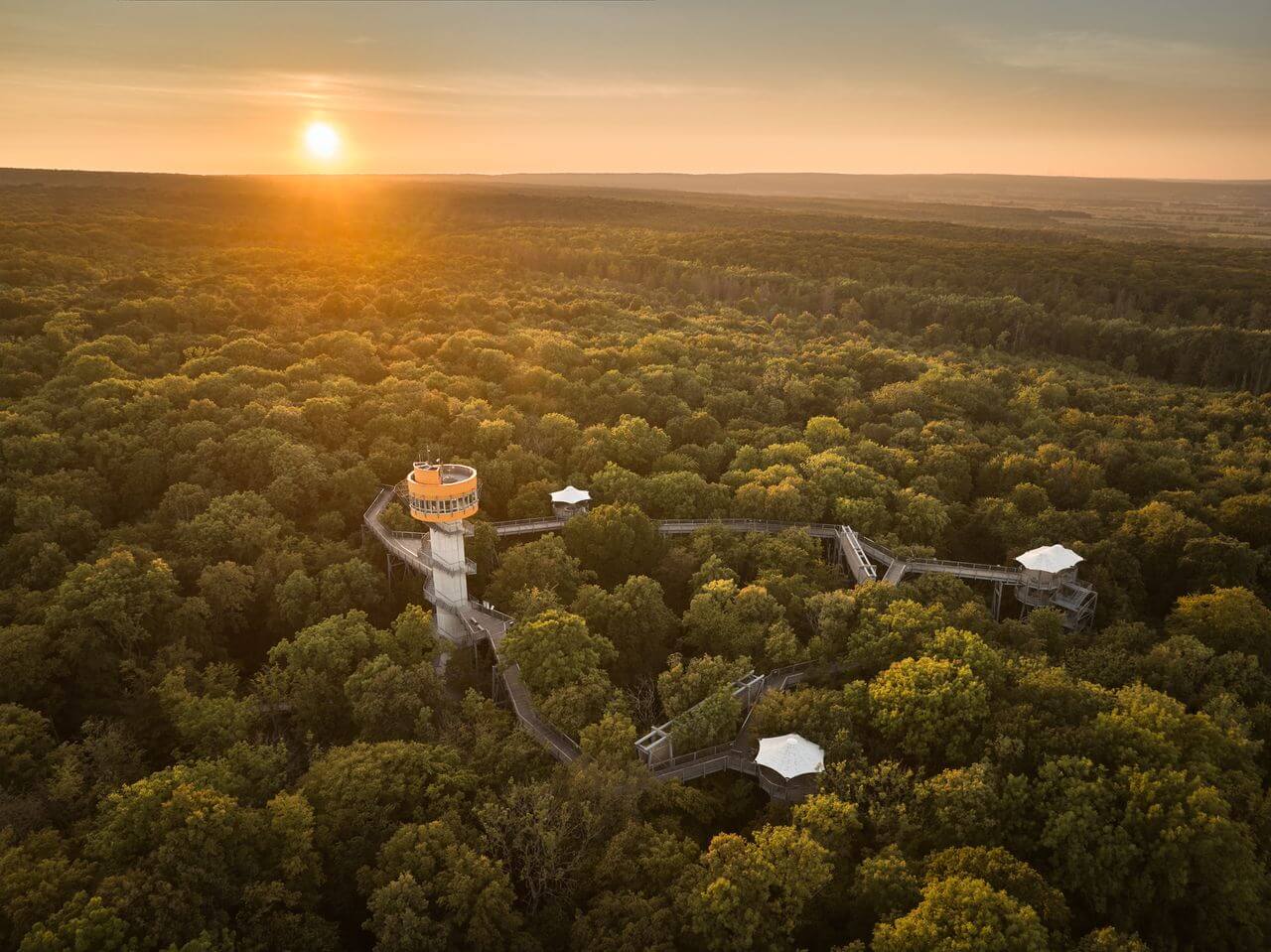
Somewhere above the ferns and foxgloves, roughly eight metres off the forest floor, the Baumkronenpfad stops feeling like a path and starts feeling like a discovery. The boardwalk carries you through the crowns of ancient beech trees in Nationalpark Hainich, Thuringia — and the air genuinely changes as you climb. It is cooler, quieter, filtered through a ceiling of leaves that has been growing undisturbed for centuries.
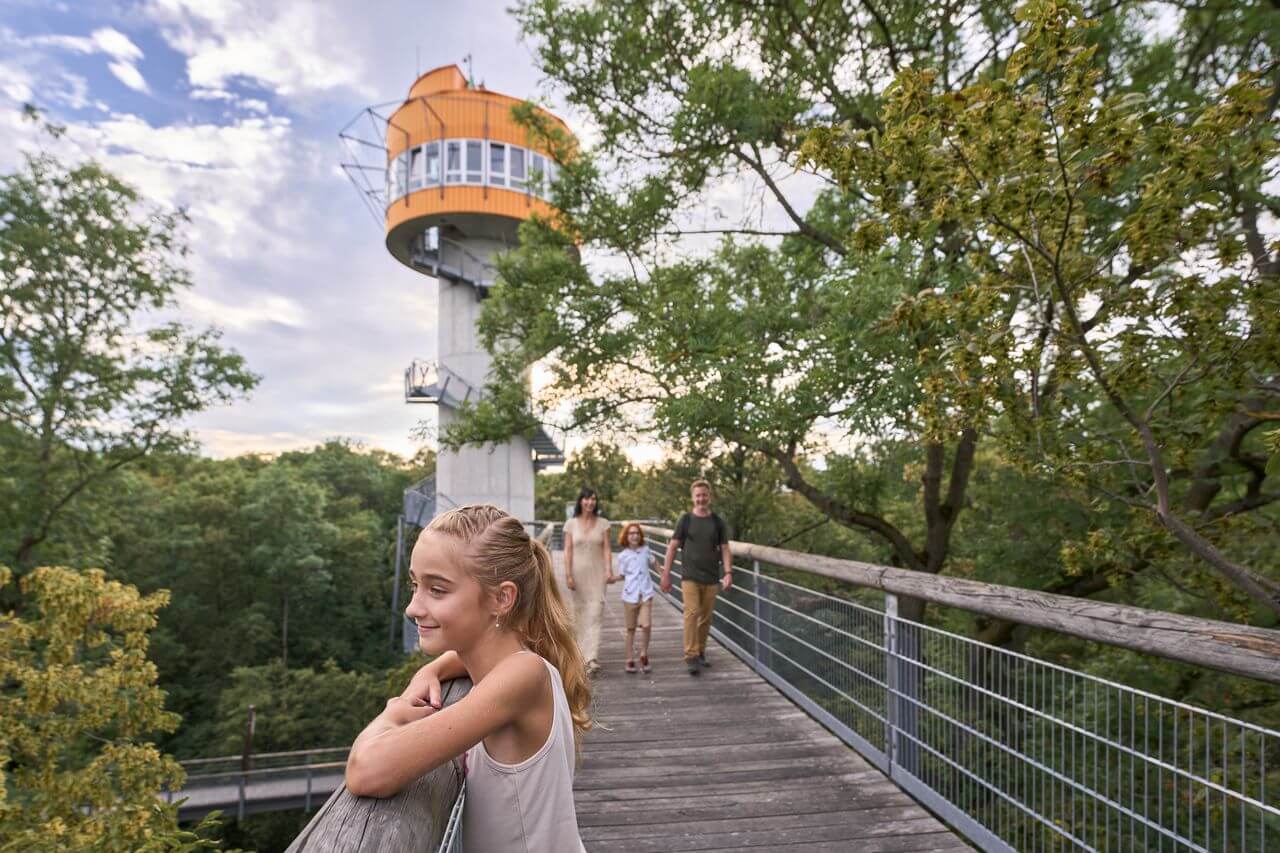
The walkway runs just over 500 metres and rises gently on accessible ramps the whole way. No steps, no barriers — families with pushchairs, visitors in wheelchairs, and small children exploring at their own pace all move comfortably along the same route. Educational stops name the residents of this forest in German and draw your attention to creatures you might otherwise walk straight past: bats roosting in bark folds, woodpeckers at work overhead, wildcat territories marked by nothing visible at all.
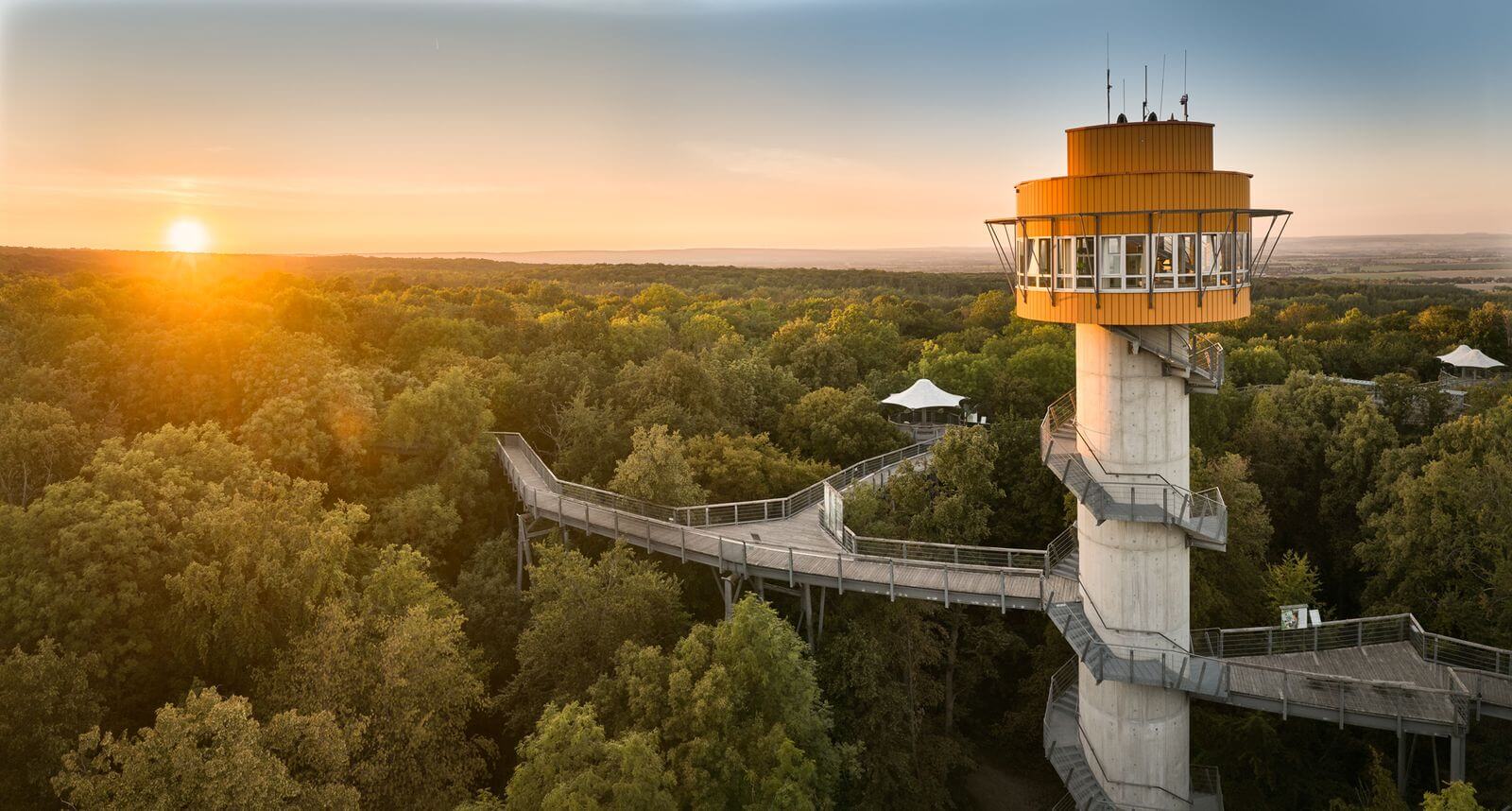
The Baumturm is the centrepiece. This spiral tower climbs to 44 metres — well above the canopy — and the view at the top rewards every step of the ascent. Forest rolls in every direction, unbroken, a living map of beech and hornbeam stretching toward the horizon. On clear days the landscape feels impossibly wide. The wind carries a faint metallic edge, the kind that arrives just before rain. Most visitors go quiet up here without quite deciding to.
What lifts this above a scenic viewpoint is the science happening around you. Sensor stations and monitoring equipment sit discreetly along the walkway, collecting data on beetles, spiders, birds and the invisible chemistry of a forest canopy. Researchers use the Baumkronenpfad as a live laboratory. Every visitor passes through an active study without realising it — which makes the walk feel less like tourism and more like participation.
The path opens daily from 10:00 to 19:00, and the experience shifts dramatically across the year. Summer brings dense green shade and birdsong through July and August, with daytime temperatures reaching the mid-twenties. Autumn turns the beeches copper and gold from September into October, and the cooler air sharpens the canopy views considerably. Winter strips the branches bare and quietens everything — frosts and occasional ice can cause temporary closures, but the skeletal forest has its own stark appeal.
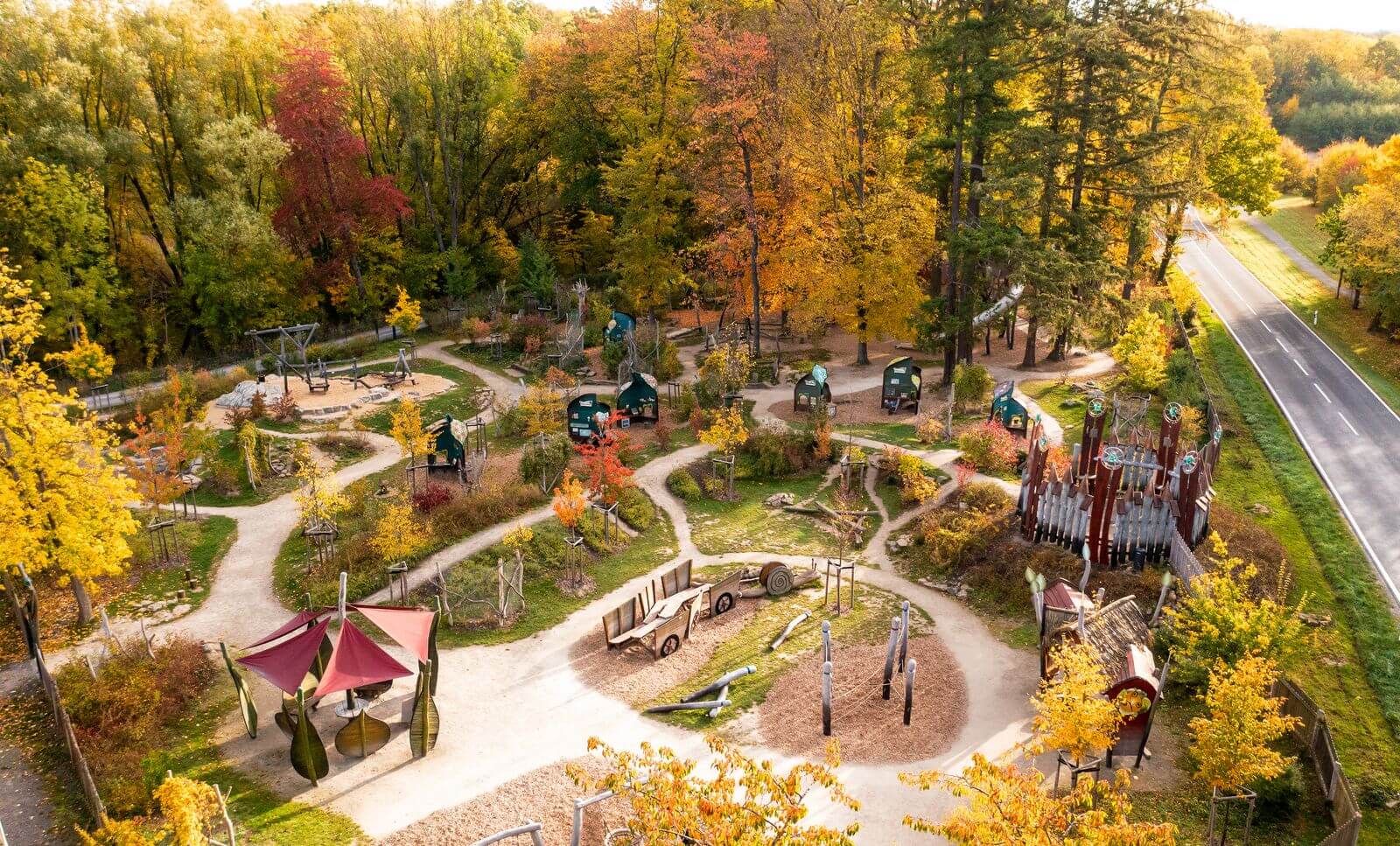
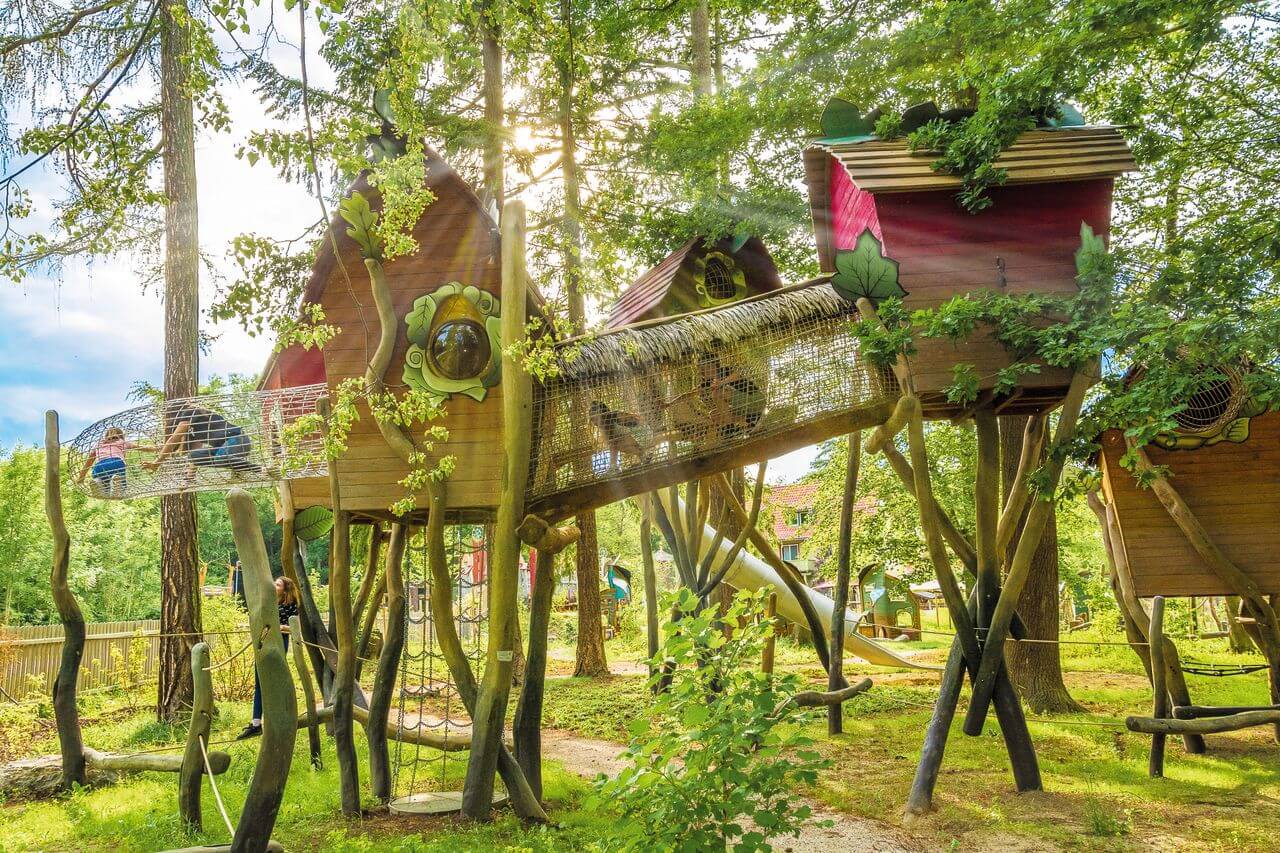
Plan roughly 90 minutes, more if you linger at the tower. A café sits near the entrance, and an adventure playground nearby keeps younger visitors occupied after the walk. For those who want to stay close to the forest, Forsthaus Thiemsburg offers old-world charm at the gate, while WaldResort Weberstedt and the cabin accommodation at Ferienhäuser Hainichhöhe both place guests within reach of early morning mist and genuine quiet.
Getting here by public transport is straightforward. The Thiemsburg/Baumkronenpfad bus stop sits approximately 250 metres from the site and is served by bus lines 150 and R154. Visitors arriving by train can alight at Schönstedt station, served by train line RB 52, roughly 6.6 kilometres away. Großengottern station, approximately 7.5 kilometres distant, connects via train lines RB 52 and RE11 and offers an alternative regional rail approach.
The Baumkronenpfad suits nature lovers, photographers, families and anyone curious about how a forest actually functions at height. It is short enough to feel manageable and rich enough to stay with you. The research dimension makes it genuinely interesting rather than simply pretty — and that combination is harder to find than you might expect.
Frequently Asked Questions
Q: How long does a visit to the Baumkronenpfad typically take?
A: Allow around 90 minutes for a relaxed visit, though many people spend longer — especially at the Baumturm tower, where the view above the canopy tends to slow everyone down. A café at the entrance and an adventure playground nearby mean families can easily extend the outing.
Q: Is the walkway accessible for pushchairs and wheelchair users?
A: Yes. The entire 500-metre route uses gentle ramps throughout with no steps, so families with pushchairs, wheelchair users, and young children can all move along the same path at their own pace.
Q: What is the Baumturm, and is the climb worth it?
A: The Baumturm is the spiral tower at the end of the walkway, rising 44 metres — well above the beech canopy. The climb is steady rather than steep, and the reward is an unbroken panoramic view of forest stretching in every direction. Most visitors rate it the highlight of the experience.
Q: When is the best time of year to visit?
A: Each season offers something distinct. Summer (June–August) brings dense green shade and birdsong with warm temperatures around 14–26 °C. Autumn (September–October) is spectacular for foliage — the beeches turn copper and gold and the cooler air sharpens the canopy views. Spring offers fresh greens and good photography light, while winter reveals the bare skeletal forest in quiet, minimalist beauty, though frost can occasionally cause temporary closures.
Q: How do you get there without a car?
A: Bus lines 150 and R154 stop at Thiemsburg/Baumkronenpfad, roughly 250 metres from the entrance. Visitors arriving by train can use Schönstedt station on the RB 52 line, approximately 6.6 km away. Check current timetables before travelling.







Add a review