
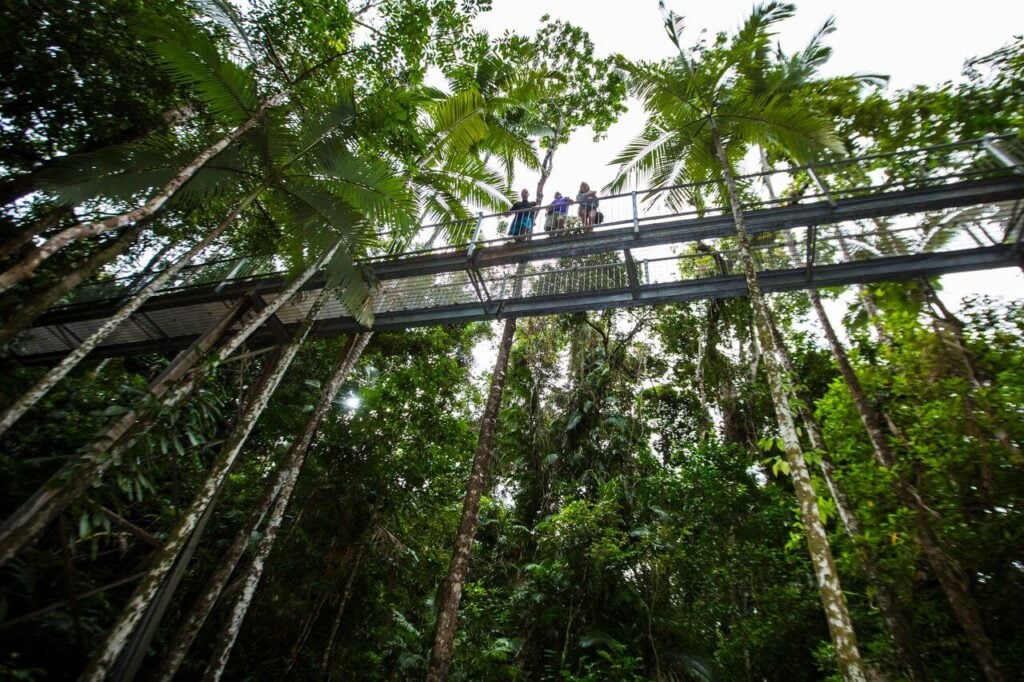
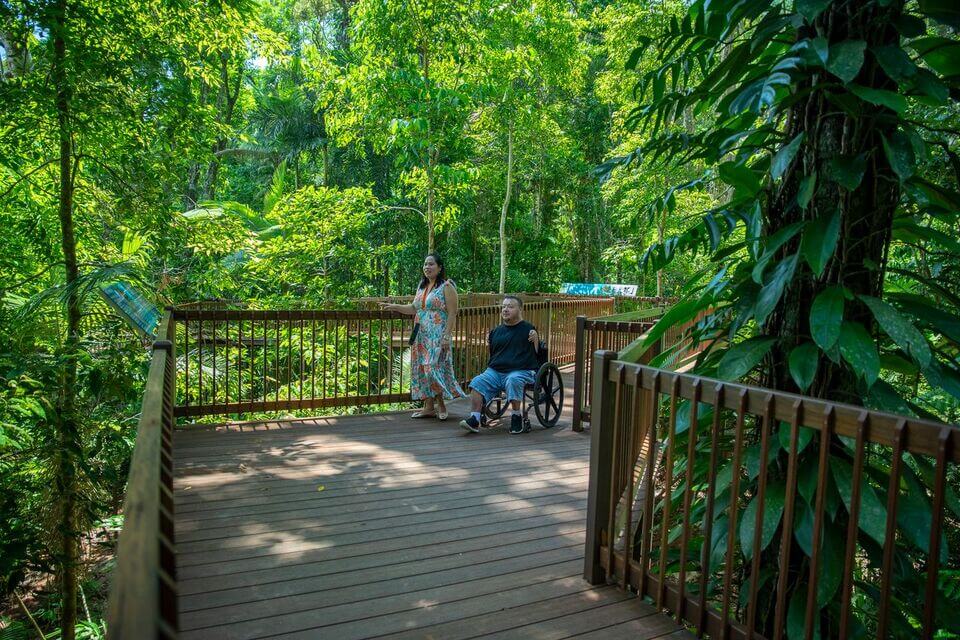
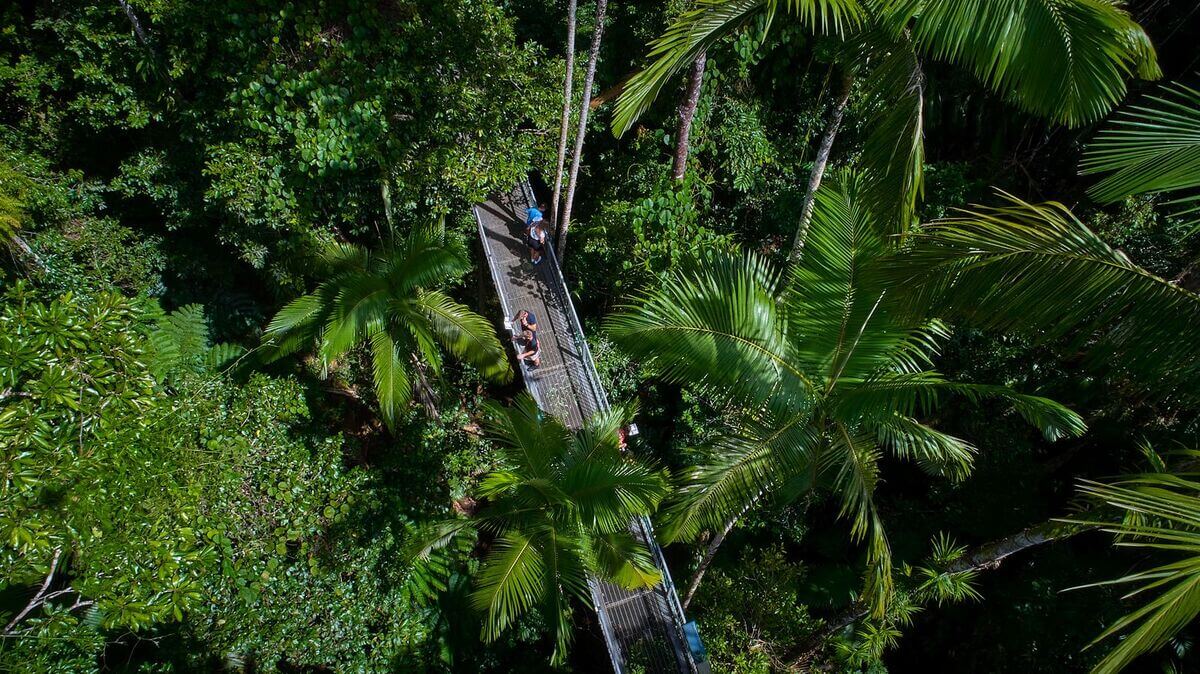
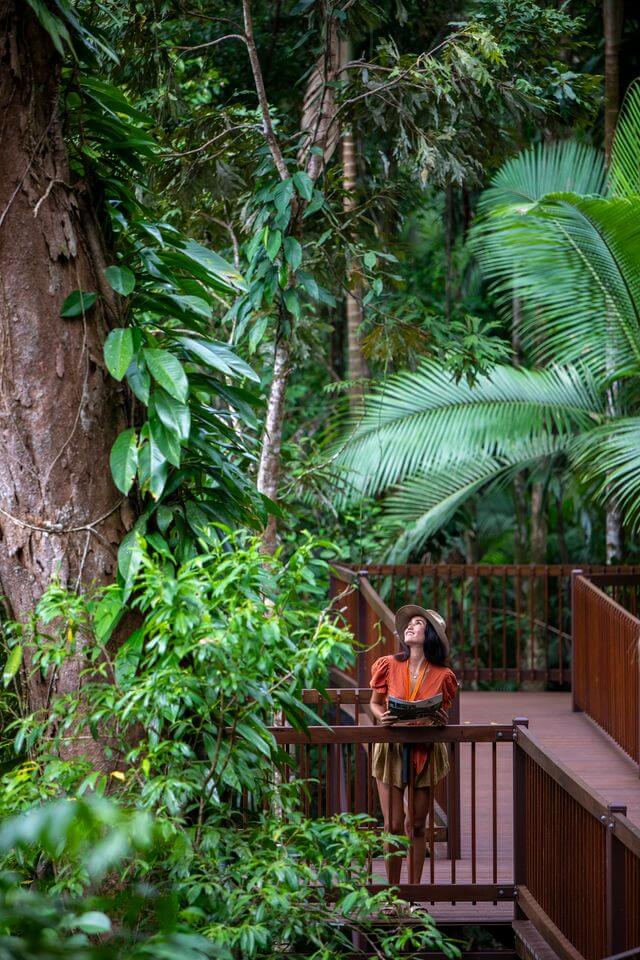
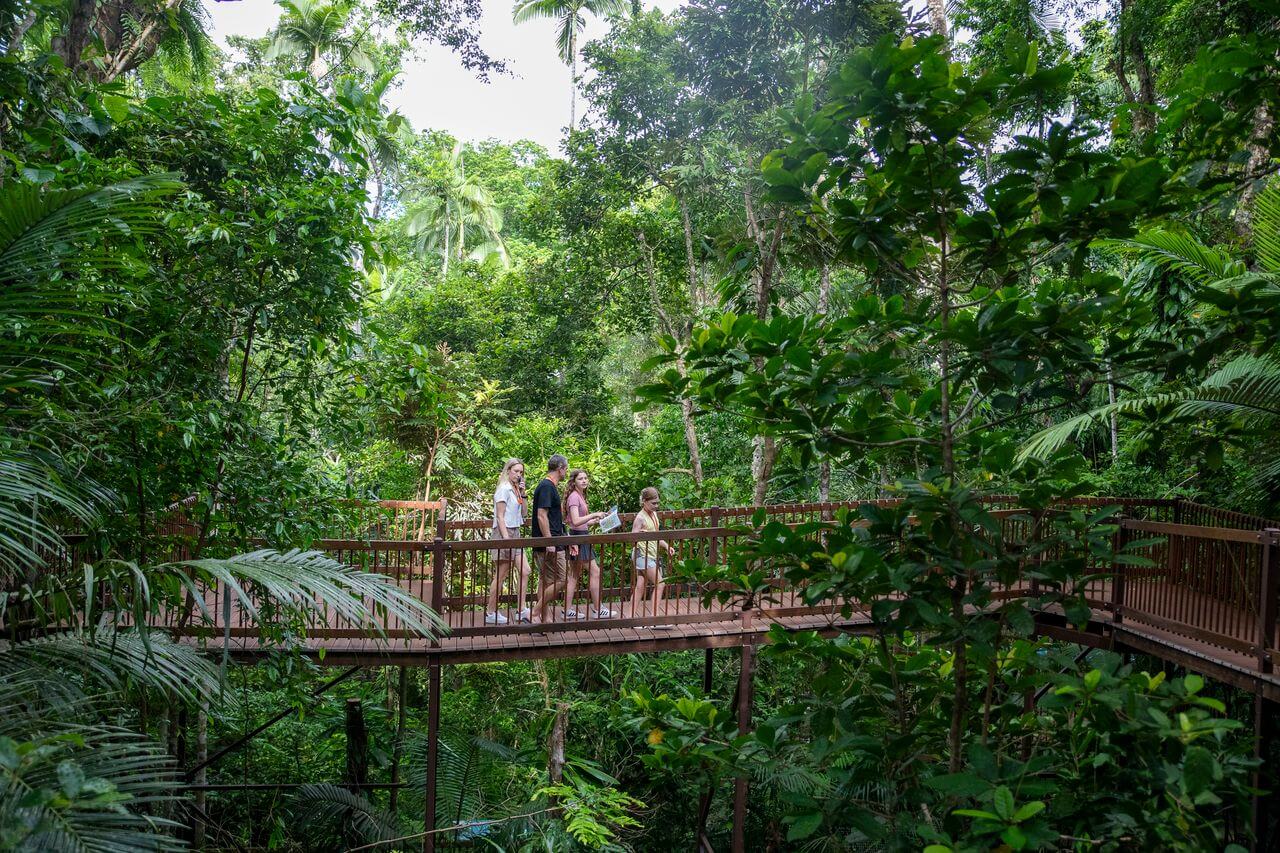
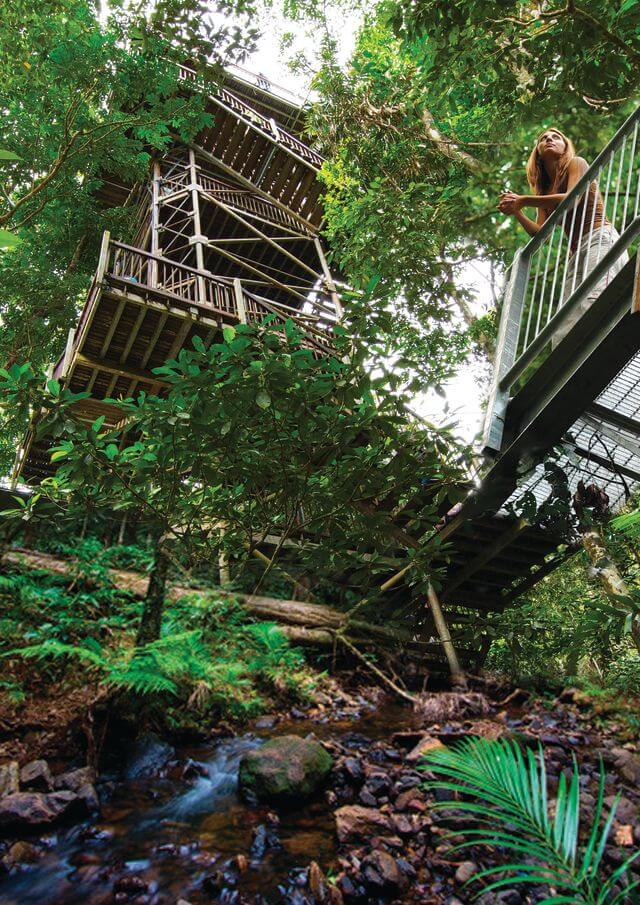
The Daintree Discovery Centre Aerial Walkway offers something rare: a calibrated, unhurried passage through the world's oldest tropical rainforest at the precise height where the canopy becomes readable. Sitting above the forest floor at around 11 metres, the walkway stretches approximately 125 metres through the understory, placing visitors eye-level with strangler figs in mid-conquest, orchids tucked into the crooks of ancient trunks, and the sudden peripheral blue of a Ulysses butterfly crossing the path. Steel underfoot keeps the experience stable and accessible; this is not rope-and-wobble adventure, but something more considered.
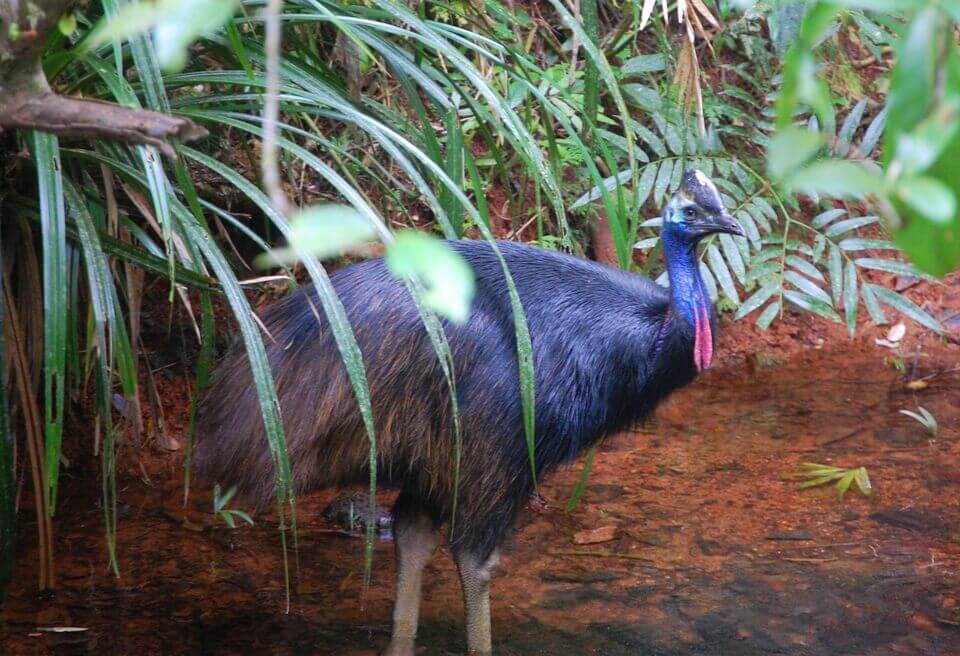
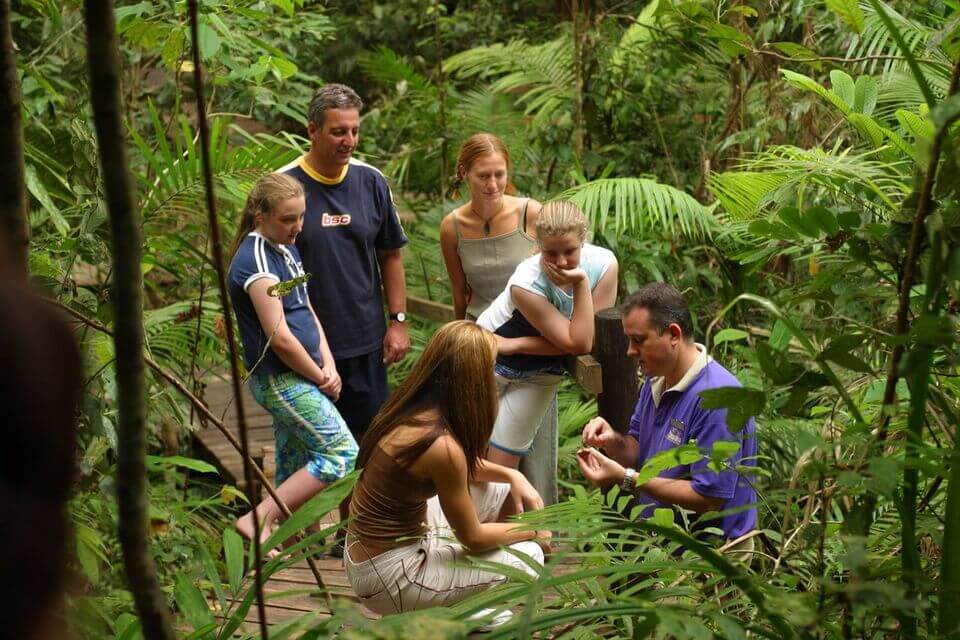
The audio guide transforms the walk from pleasant to genuinely illuminating. It unpacks cassowary ecology with the kind of patient authority that interpretive signs rarely manage, traces plant lineages back beyond the breakup of Gondwana, and explains how the forest regulates its own water and light. Families benefit from the discovery trails, which reframe the same science as an active hunt rather than a passive read. Both suit first-time visitors who want substance alongside atmosphere.
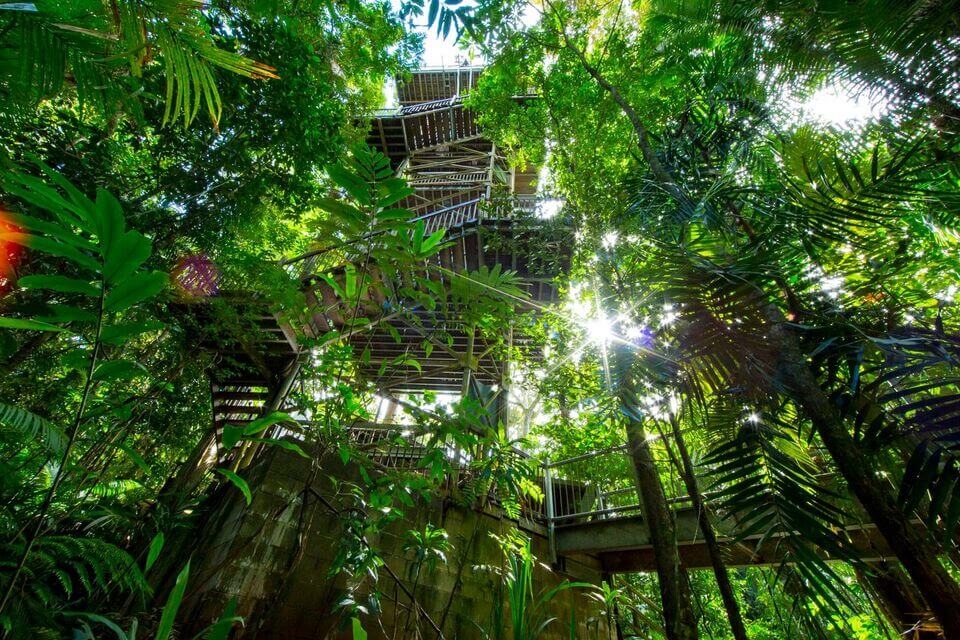
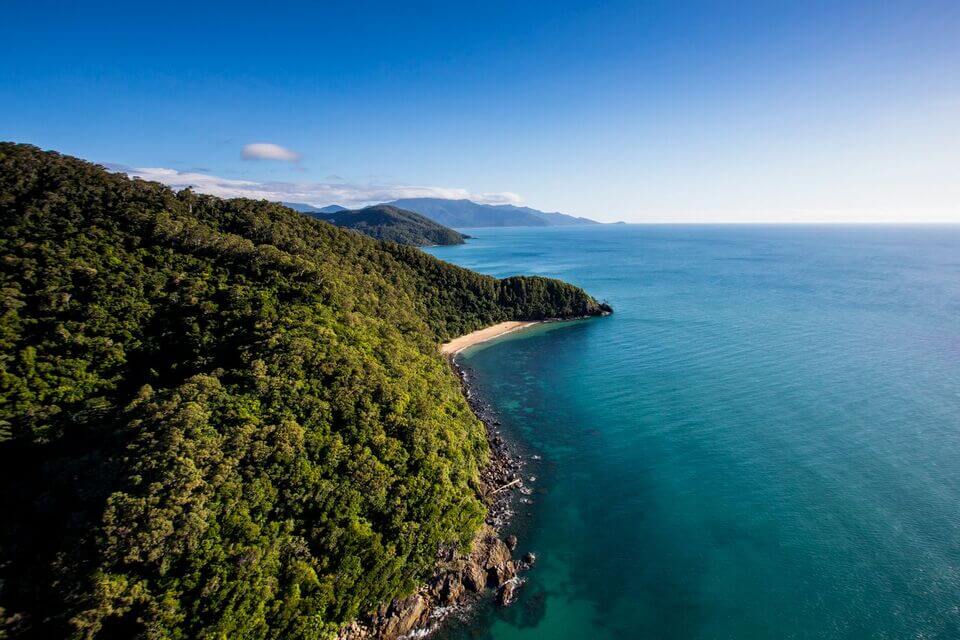
From the walkway, a five-platform canopy tower climbs to 23 metres. Each level shifts the visual grammar of the forest. The lower platforms are a world of trunks, epiphytes and filtered shadow; the upper platforms open onto full canopy, where breezes carry unnamed tropical scents and, on clear days, the Coral Sea glints through gaps in the green. Most visitors instinctively slow down here. The combination of exposure and quiet tends to produce that effect.
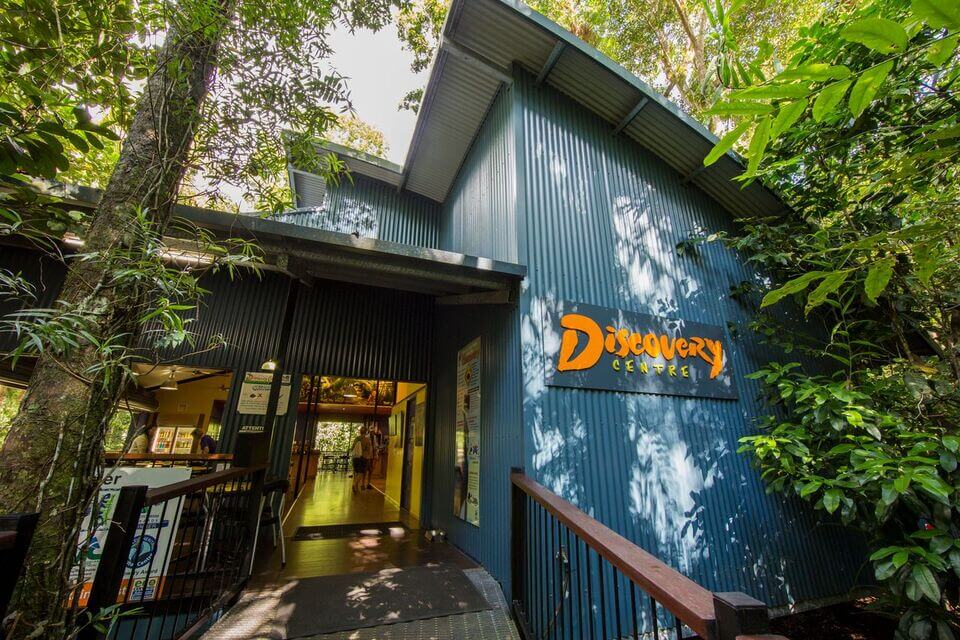
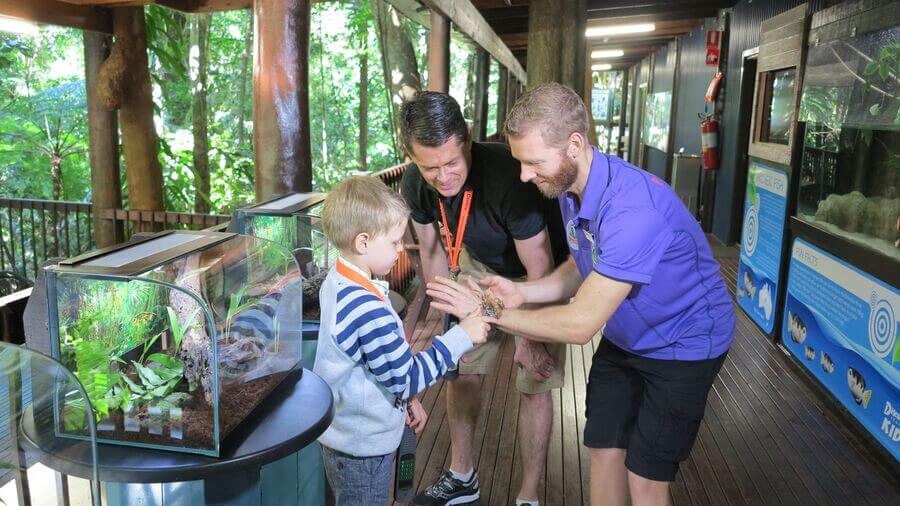
The Daintree Discovery Centre opens daily, generally from 9 am to 5 pm. A brisk circuit of the walkway and tower takes around an hour. Visitors who linger — and many do — often spend closer to two, particularly once the interpretive centre pulls them in. The Rhizotron, a dedicated exhibit on root systems and soil ecology, earns its reputation as a quietly captivating detour. Benches along the walkway are positioned where the forest soundscape peaks: whipbirds trading calls across the canopy, the occasional kookaburra carrying on at some private punchline.
The design philosophy here is accessible without being sanitised. Decent footwear is the only real requirement. The experience suits solo visitors, couples, families with children, and anyone with an interest in tropical ecology — including those who might not ordinarily consider themselves outdoors enthusiasts.
Timing a visit rewards a little thought. The dry season, roughly June through October, brings comfortable temperatures, clear light and reliable wildlife movement through the canopy. The shoulder period around April and May is lush and quieter, well suited to photography. The wet season, from November through March, delivers dramatic tropical intensity — deep greens, heavy rain, charged air — but humidity rises sharply and occasional access changes can apply. Any season produces a forest worth meeting; conditions simply change the terms.
The Daintree Discovery Centre Aerial Walkway earns its place by making an otherwise opaque ecosystem genuinely legible. For anyone travelling through Far North Queensland who wants to move through the Daintree rather than simply observe it from a distance, this is the clearest entry point available.
Frequently Asked Questions
Q: How high is the aerial walkway and tower, and do you need any special fitness or equipment?
A: The boardwalk sits at around 11 metres above the forest floor and stretches approximately 125 metres through the understory. The canopy tower rises to 23 metres across five platforms. The path is solid steel with handrails — no rope bridges or scrambling involved — and decent footwear is the only real requirement. The experience suits a wide range of visitors, including families with children and those who wouldn't ordinarily call themselves outdoors people.
Q: How long should you allow for a visit?
A: A brisk circuit of the walkway and tower takes around an hour. Allow closer to two if you plan to spend time in the interpretive centre, which includes the Rhizotron — a dedicated exhibit on root systems and soil ecology that regularly holds visitors longer than expected.
Q: When is a good time to visit the Daintree Discovery Centre?
A: The dry season (June–October) offers comfortable temperatures, clear light, and reliable wildlife movement through the canopy. April and May are lush and quieter — well suited to photography. The wet season (November–March) brings dramatic tropical atmosphere and intensely green forest, though expect high humidity and occasional closures; check the centre's official page before you go.
Q: Is the audio guide worth using?
A: Yes — it substantially deepens the experience. The guide covers cassowary ecology, plant lineages traced back to the breakup of Gondwana, and how the forest manages its own water and light systems. Families also have access to discovery trails that reframe the same content as an active hunt rather than passive reading.










Add a review