
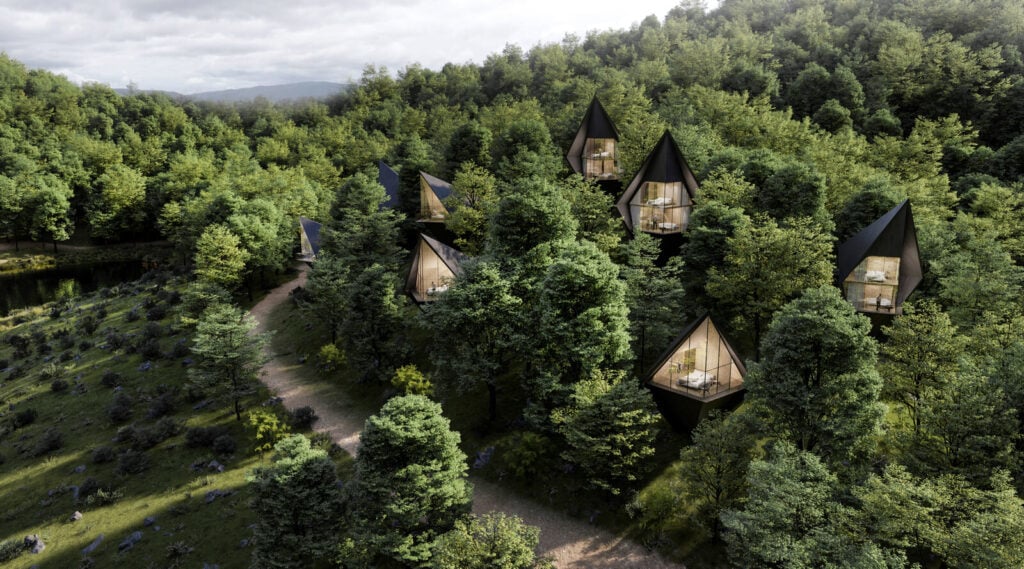
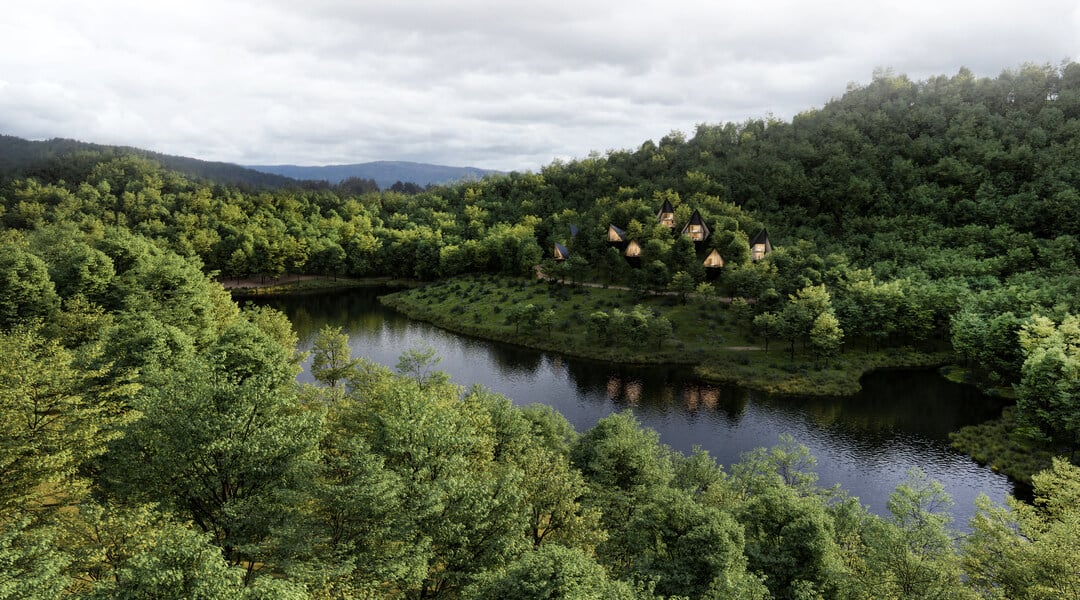
Eight vertical timber cabins are planned for a forested hillside above Dawson Lake in Alderson, West Virginia. The project comes from Peter Pichler Architecture, a studio known for sculptural, nature-first thinking. As of current information, the Dawson Lake Tree Houses remain a pre-opening concept and are not yet bookable.
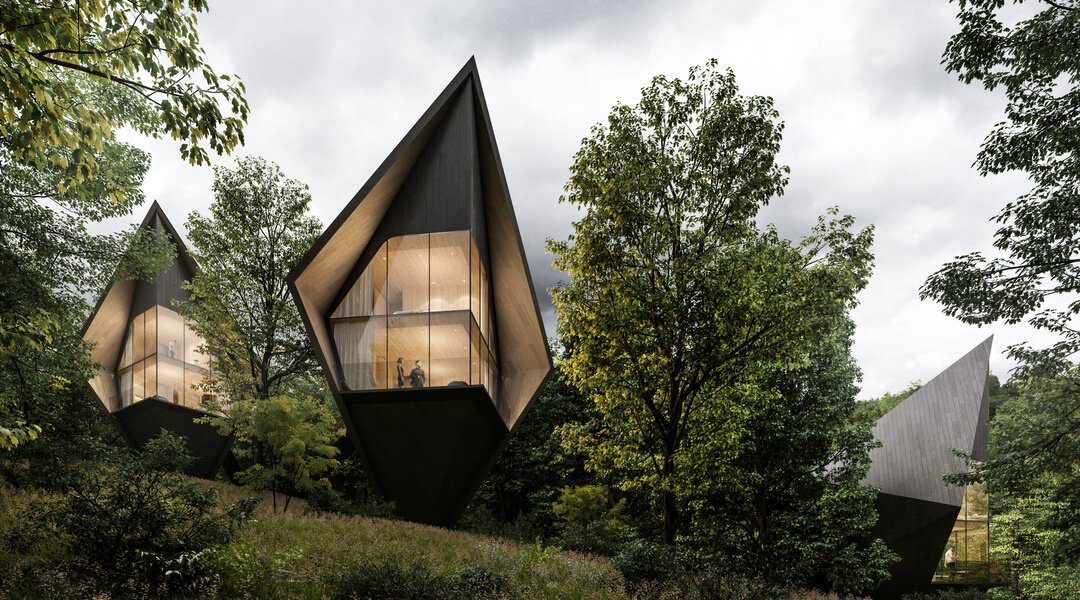
Each cabin is compact — between 36 and 55 square metres — but the design moves upward rather than outward. Two narrow floors connected by a tight interior staircase give these spaces a distinctly vertical character. The lower level is conceived as a calm retreat: warm timber surfaces, a reading corner, the kind of unhurried atmosphere that makes an hour disappear. Local wood clads the exterior, sitting quietly against the surrounding maple, poplar and oak. The geometry is sharp, but the material is honest, carrying that faint resin scent only raw timber delivers.
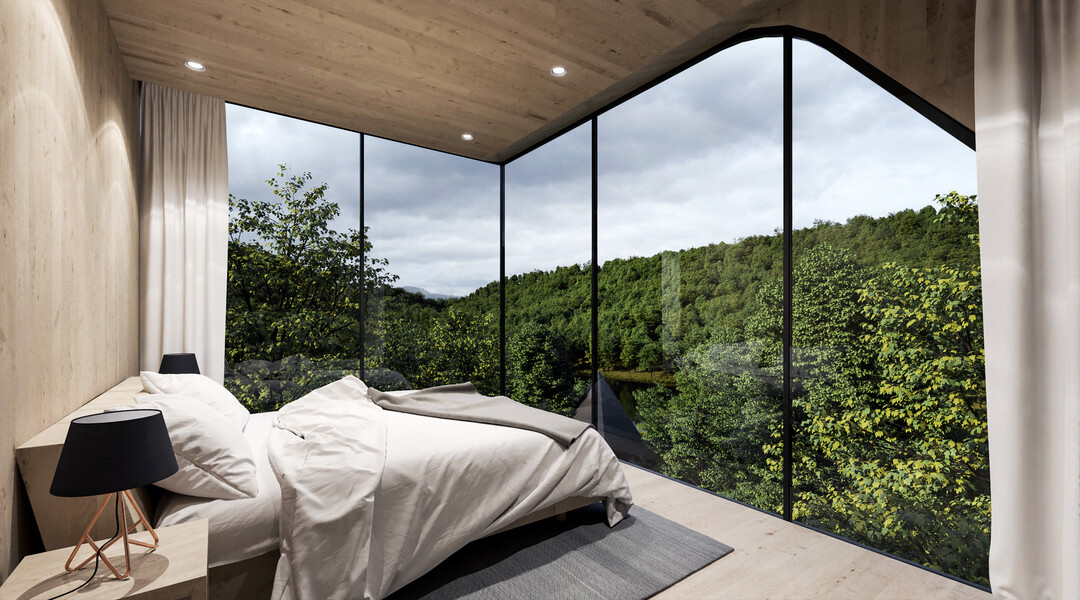
The sleeping loft sits close to the canopy. At that height, the forest stops being scenery and becomes something closer to company. You don't move through a Dawson Lake cabin so much as climb it, and that shift changes how the forest registers around you entirely. A narrow window frames a strip of sky at night. Branches move. The quiet is the kind you notice rather than take for granted. Mornings would arrive cool, with the sounds of the forest below and the slow light filtering through tall windows at angles that shift across the day.
The project offers deliberate simplicity. There is no landscaped ground-level amenity, no pool terrace, nothing designed to pull attention away from the immediate surroundings. These are spaces built for stillness — for guests who want to pay attention to what is directly around them rather than reaching past it.
Seasonally, the setting shifts character in ways worth knowing. Summer brings warm, green days well suited to lake swimming and long forest evenings, with temperatures roughly between 16 and 29 degrees Celsius. Autumn is arguably the most striking window: crisp air, spectacular Appalachian foliage and temperatures from around 8 to 20 degrees make September and October ideal for hiking and photography. Winter draws a quieter crowd, with frosty mornings, occasional snow and a stillness that suits the cabin concept well. Spring reawakens the forest with wildflowers and rushing streams, mild and fresh from April into May.
The site sits in a rural corner of West Virginia, and a personal vehicle is the most practical way to arrive. The nearest rail access is Alderson Amtrak station, served by the Cardinal train line, approximately 16 km away in straight-line distance. The Sam Black Church bus stop, served by bus line 14, lies roughly 6.6 km away. Neither option removes the need for onward road travel to reach the lakeside site.
Dawson Lake Tree Houses will suit architecture-curious travellers, those drawn to slow stays and anyone who finds genuine forest immersion more appealing than resort comfort. No confirmed opening date has been announced. Readers with a serious interest in staying or following development should contact Peter Pichler Architecture directly for the most current information.
Frequently Asked Questions
Q: Are the Dawson Lake Tree Houses open and available to book?
A: Not yet. As of current information, Dawson Lake Tree Houses remain a pre-opening concept and are not bookable. Check the project's official channels for updates on an opening date before making any travel plans.
Q: What is the sleeping experience like inside the cabins?
A: Each cabin has two narrow levels connected by an interior staircase. The sleeping loft sits close to the canopy, where branches, shifting light and forest sounds become immediate rather than distant. It is a deliberately compact, vertical space — rewarding for guests who want stillness over comfort-resort amenity.
Q: When is the best time to visit Dawson Lake for this kind of stay?
A: Autumn (September–October) is particularly striking, with Appalachian foliage and crisp air well suited to hiking and photography. Summer (June–August) offers warm days ideal for lake swimming and long forest evenings. Winter draws quieter guests who appreciate frosty mornings and genuine stillness; spring brings wildflowers and a freshly awakened forest from April into May.
Q: Do I need a car to reach the property?
A: A personal vehicle is the most practical way to arrive. The nearest rail access is Alderson Amtrak station (Cardinal line, roughly 16 km away), and the closest bus stop is Sam Black Church on line 14 (approximately 6.6 km away), but neither removes the need for onward road travel to reach the lakeside site.





Add a review