

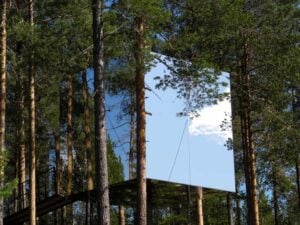
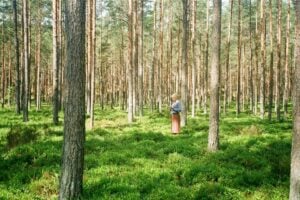
About an hour northeast of Oslo, the wooded hills around Feiring hold a particular quality of quiet. LAUV Tretopphytter sits inside that quiet — two small cabins perched a few metres above the forest floor, framed by pine and birch, with Lake Mjøsa glittering through the trees on clear days. The name means foliage in Norwegian, which sounds poetic until you're standing level with frost-beaded needles at dawn. Then it feels exactly right.
The two cabins, Knausen and Ospero, share the same considered aesthetic: minimalist timber forms, black-framed glass panels that turn the surrounding forest into a living picture, and interiors that feel warm without trying too hard. Underfloor heating keeps the boards comfortable underfoot, and a wood stove goes from cold to cheerful in minutes. The lofted double bed sits overhead, with a snug alcove sleeping two more below — a sensible layout for couples or small groups. The kitchenette covers the essentials: a hob, a sink, and a proper coffee maker. The bathroom earns its keep with a rain shower, underfloor heating, and a modern composting loo. Nothing here is an afterthought.
Ospero carries a specific distinction. Its private patio cantilevers slightly outward, aimed directly at the pines and the long stretch of Lake Mjøsa beyond. On clear winter evenings, stars scatter across the sky in a way that feels almost theatrical, and on still nights you can hear the ice on the lake shifting in tiny, unhurried whispers. It is the kind of detail you don't expect and don't forget.
Summer brings its own rewards: long Scandinavian days, warm treetop decks, and lake light that lasts well into the evening. June through August sees temperatures reaching the low twenties, ideal for forest walks and slow mornings outdoors. Autumn arrives with vivid foliage and cool, quiet trails — the forest earns its name most fully in October. Winter, from November through March, turns the scene into deep snow and woodstove evenings, with snowshoes available for gentle forest loops and ice-fishing outings on nearby waters. Those after a longer walk can head up to Skreikampen for a lake panorama that tends to produce an involuntary moment of sincerity. The historic Carsten Ankers Lysthus sits close enough to add cultural texture to a morning.
Nightly rates run approximately 3,250 NOK to 3,750 NOK, with variation by season and availability. For a property of this quality and specificity, that positions it firmly in considered-splurge territory — the kind of stay you plan around rather than stumble into.
LAUV Tretopphytter sits at Øverbygdvegen 161 in Feiring. Self-drive remains the most practical approach from Oslo. For those using public transport, Tangen station — served by train line R20 — lies approximately 9.3 km away and connects to the broader rail network. The Stubberud bus stop sits closer, roughly 2.1 km as the crow flies, though route details are worth confirming locally before travel.
This is not a rugged retreat and not a luxury showpiece. It sits in the quieter middle ground — good materials, honest design, and windows that keep the lake in view. It suits anyone who wants the forest to do the talking while they drink decent coffee and remember what stillness feels like.
Frequently Asked Questions
Q: How much does a night at LAUV Tretopphytter cost?
A: Nightly rates run approximately 3,250 NOK–3,750 NOK, with variation by season and availability.
Q: What is the best time of year to stay at LAUV Tretopphytter?
A: Each season has a genuine case. Winter (November–March) is the most atmospheric — snow-covered pines, deep quiet, and woodstove evenings. Summer (June–August) offers long Nordic daylight, warm treetop decks, and lake light that lingers well into the evening. Autumn brings vivid foliage and cool, peaceful trails. Check current availability directly with the property for your preferred season.
Q: Which cabin should I choose — Knausen or Ospero?
A: Both cabins share the same minimalist timber aesthetic, underfloor heating, wood stove, lofted double bed, and alcove sleeping. Ospero's distinction is its cantilevered private patio aimed directly at the pines and Lake Mjøsa — a meaningful difference if the lake view and stargazing are priorities for your stay.
Q: How do I get to LAUV Tretopphytter from Oslo?
A: The property is around an hour northeast of Oslo near Feiring, and self-drive is the most practical approach given the forest setting. If you're travelling by public transport, Tangen station (regional train R20) is approximately 9 km away, so you'll need a car or taxi transfer for the final stretch.
Q: Is LAUV Tretopphytter suitable for small groups or just couples?
A: The cabins sleep up to four — a lofted double bed above and a snug alcove sleeping two more below — making them a workable fit for couples or small groups of four. The compact, considered layout suits those after an intimate escape rather than a large-group gathering.






Add a review