
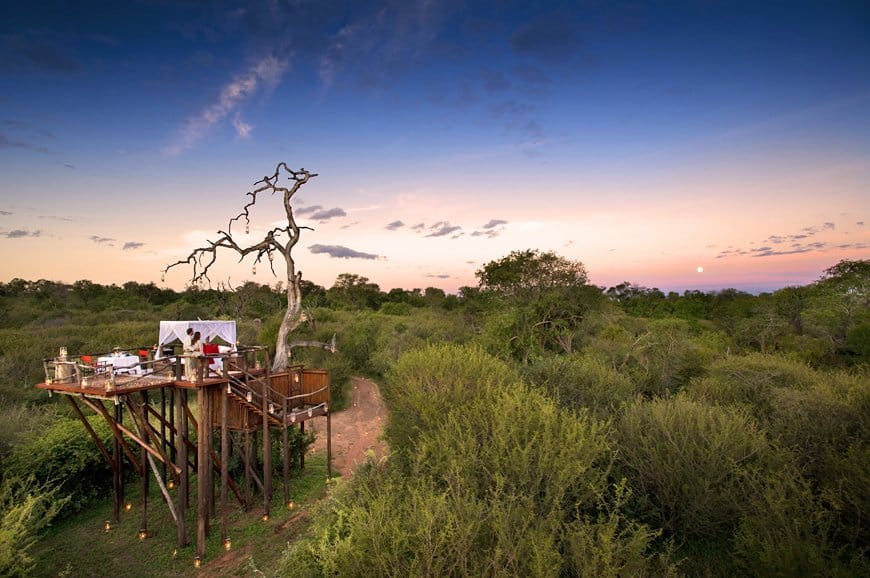
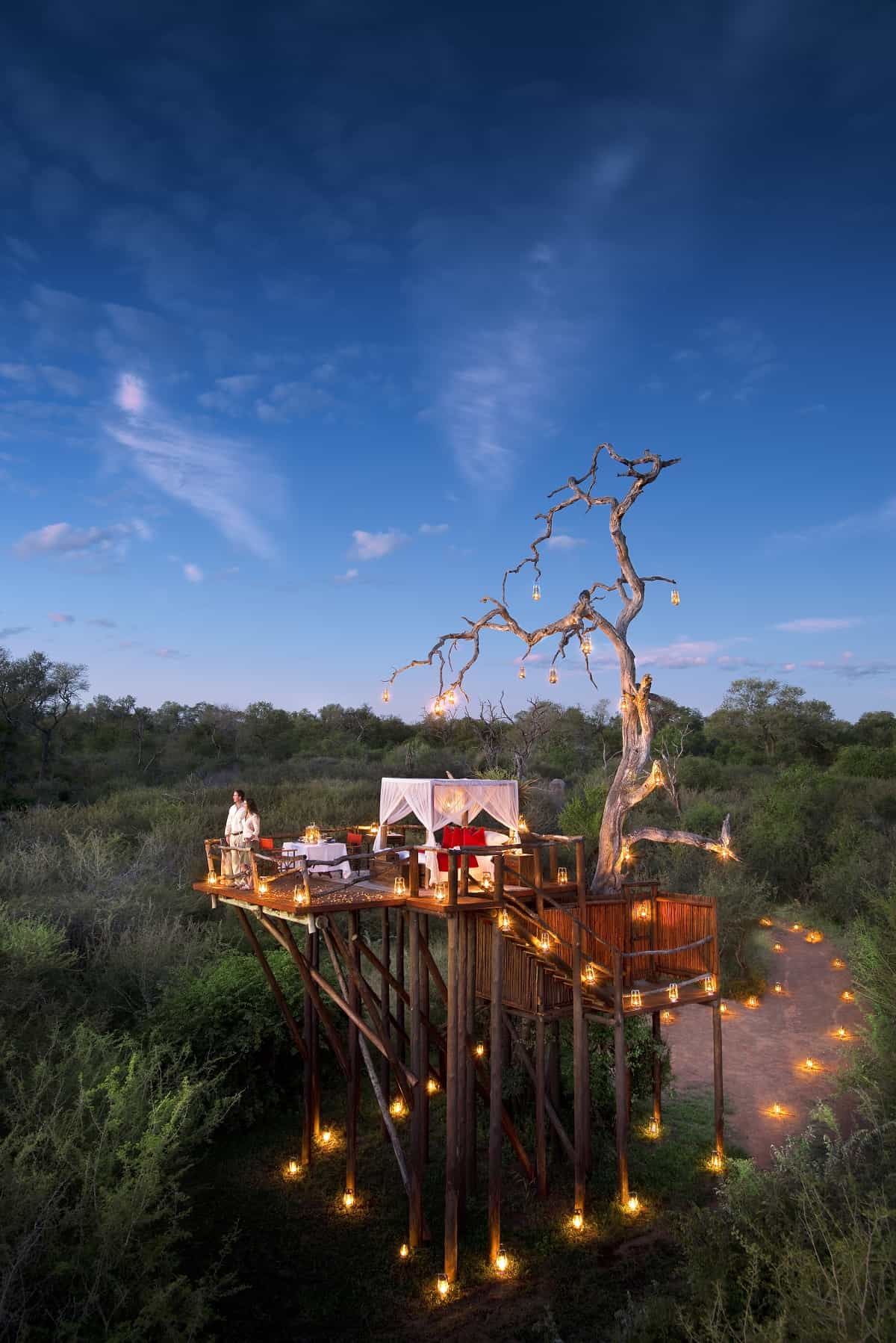
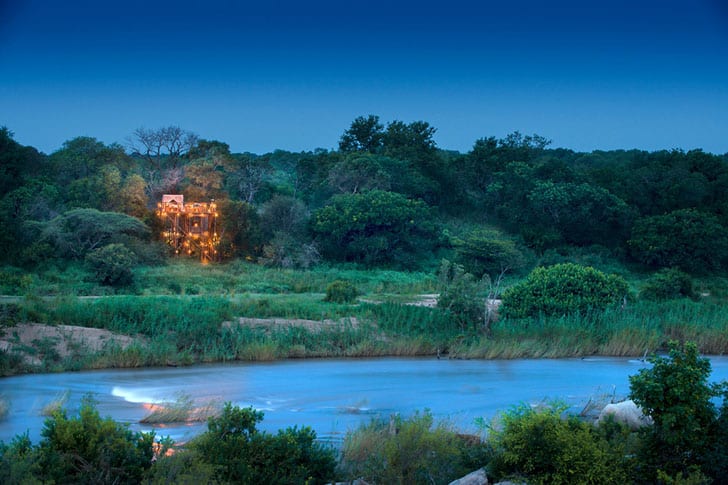
The game vehicle cuts its engine and the bush settles around you. A guide leads you up into the canopy of a grand old Leadwood, its pale bark cool under your hands, its limbs wide enough to hold a bed, a lantern, and the particular quiet that arrives when the savannah decides it owns the dark. This is the Chalkley Treehouse at Lion Sands Game Reserve, a platform sleep-out in the Sabi Sand that traces its name back to Guy Aubrey Chalkley, who reportedly climbed this very species of tree to escape a predator and found, somewhere in that undignified scramble, a place worth returning to.
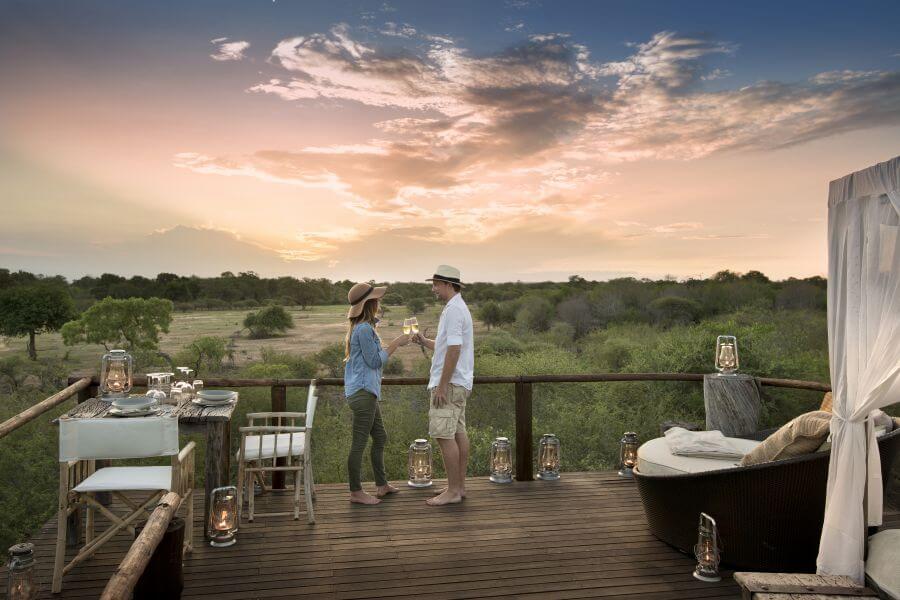
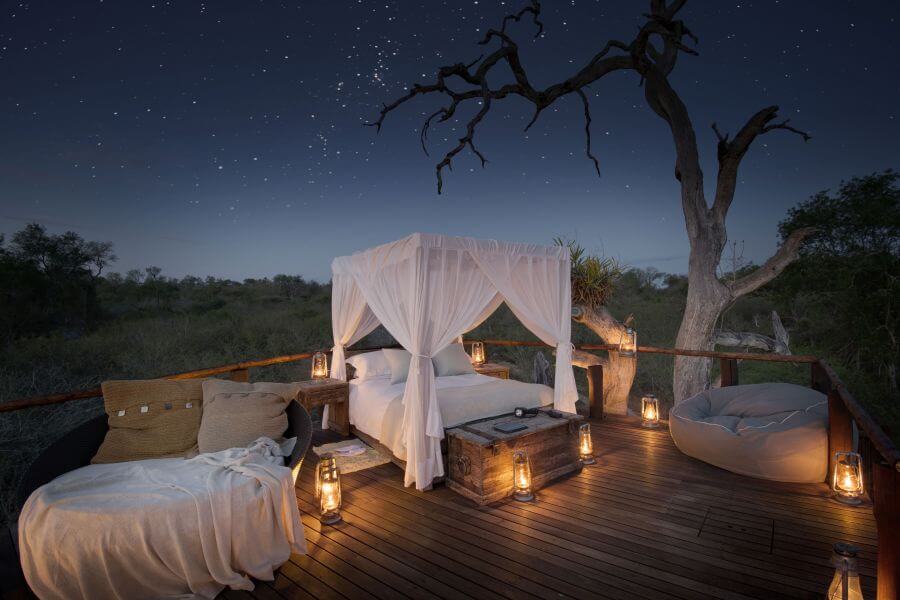
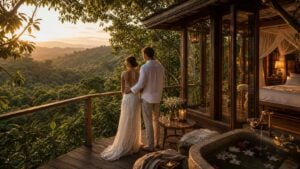
The evening unfolds in a particular order and that order matters. Before you reach the platform, a sunset game drive unspools across the reserve. By the time you climb to the deck, a gourmet hamper is already waiting — proper food, not trail mix — along with your preferred drinks, which your guide asked about earlier and quietly arranged. The Leadwood holds a generous bed under a gauze canopy with soft throws for when the night temperature drops. There are no walls. The bush is the room. A discreet two-way radio connects you to your guide, so the wildness carries a safety net stitched invisibly beneath it. You never notice it unless you need it, which is exactly the point.
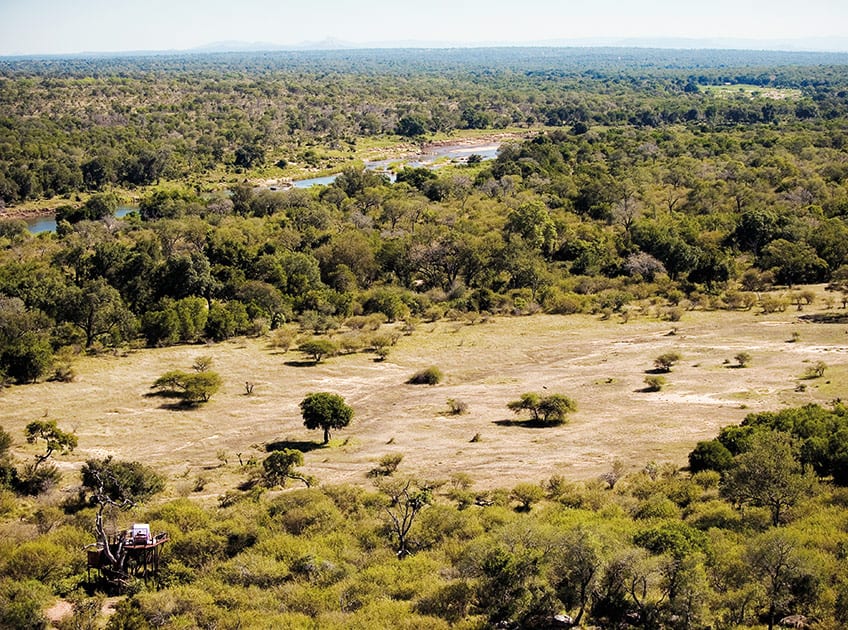
Below the platform, the wildlife corridor does what it does regardless of your presence. Elephants move through the dark with an unlikely silence. Giraffes resolve out of the treeline at first light like slow punctuation. Nightjars and hyenas trade shifts on the soundscape, and somewhere across the riverbed something grunts once and the whole bush listens. Lion Sands wraps this single tree inside a larger ecosystem: five lodges, two further treehouses, and guides who let the animal encounters breathe rather than narrate over them.
Morning comes with coffee and steam rising off the grass, and the birdsong that begins before the light catches up. You realise you slept outside — voluntarily, happily — and that the sleep was better than expected.
Timing shapes the experience considerably. The dry winter months from May through September bring cool, clear nights, lower insect activity, and exceptional wildlife visibility, making them the strongest choice for a sleep-out under open skies. Shoulder months in April and October offer warmth without oppressive heat and still reward patience on the platform. The wet summer season from November through March turns the bush lush and dramatic, with thunderstorm skies and prolific birding; the canopy thickens around the platform, but the atmosphere shifts into something greener and more theatrical.
Nightly rates start from approximately 5,500 ZAR to 6,000 ZAR, placing the Chalkley Treehouse firmly in the premium tier; rates vary by season and availability.
This is not a stay for everyone, and it knows it. The Chalkley Treehouse suits the traveller who genuinely wants the night sky unfiltered, who finds more meaning in a hyena's whoop than in a minibar, and who is willing to trade interior walls for the specific education of sleeping in a tree above one of Africa's most storied wildlife corridors. In that particular Leadwood, in that particular reserve, on a night when the stars are indecently bright and something large moves quietly through the grass below, the case for it makes itself.
Frequently Asked Questions
Q: What does a night at the Chalkley Treehouse actually involve — is it fully open-air?
A: Yes. The platform sits high in a grand old Leadwood tree with no walls — the bush is the room. You sleep in a proper bed under a gauze canopy with soft throws, a lantern for light, and a gourmet hamper and pre-arranged drinks waiting when you arrive. A two-way radio connects you to your guide throughout the night, so the experience is genuinely wild without being unsupported.
Q: What is the general nightly rate for the Chalkley Treehouse?
A: Nightly rates sit in the premium tier, running approximately 5,500 ZAR–6,000 ZAR per night. Rates vary by season and availability, so check directly with Lion Sands for current pricing.
Q: When is the best time of year to book a sleep-out here?
A: The dry winter months from May through September are the strongest choice — nights are cool and clear, insect activity is low, and wildlife visibility across the corridor is at its best. The wet summer season (November–March) brings lush scenery and exceptional birding, though the canopy thickens and temperatures are higher. Shoulder months in April and October offer a solid middle ground.
Q: Is the Chalkley Treehouse suitable for solo travellers, or is it aimed at couples?
A: The setting — a private platform, candlelit hamper, and uninterrupted night sky — lends itself naturally to couples, but it suits any traveller who wants genuine immersion over conventional lodge comfort. The experience is intimate by design rather than by policy.
Q: Does the night at the treehouse include a game drive?
A: The evening typically begins with a sunset game drive before your guide escorts you to the platform. Check with Lion Sands when booking to confirm exactly what is included with your stay, as arrangements may vary.





Add a review