

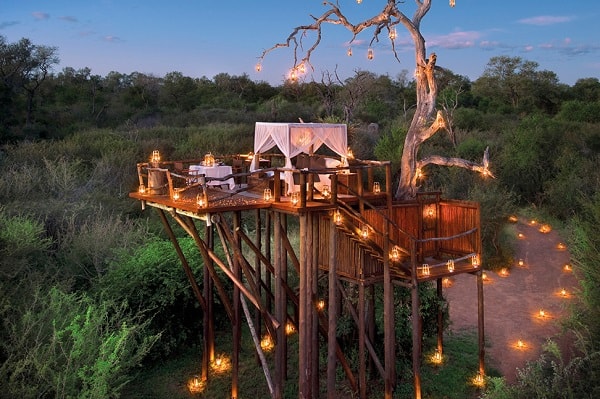
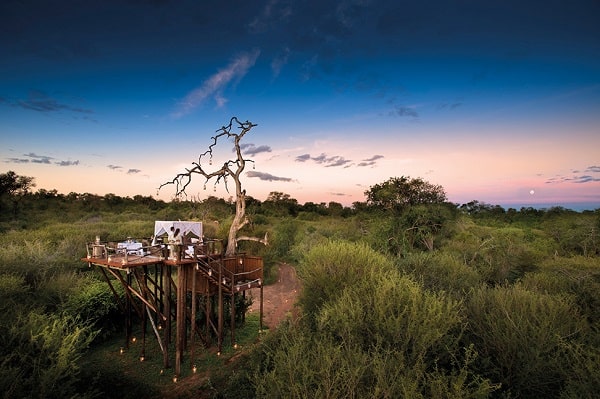
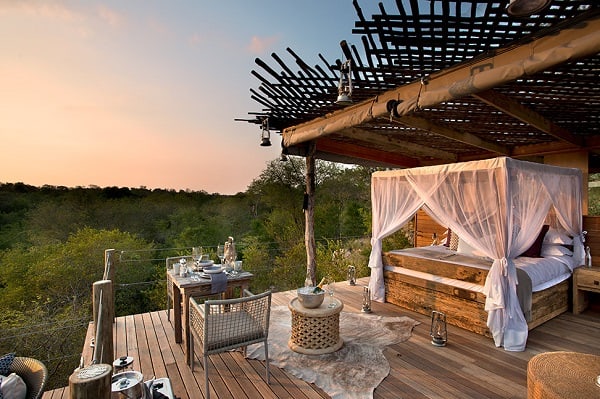
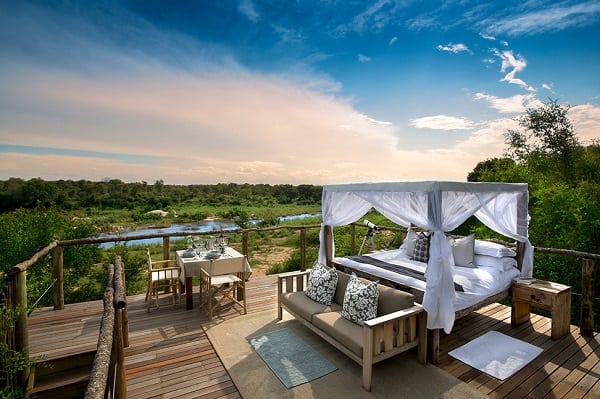
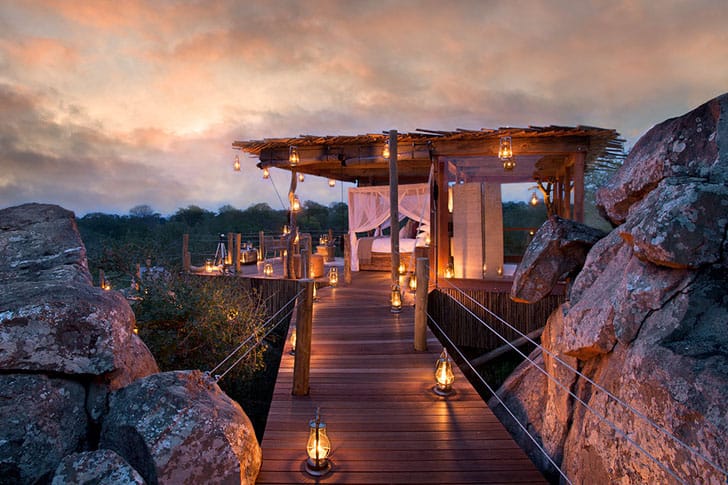
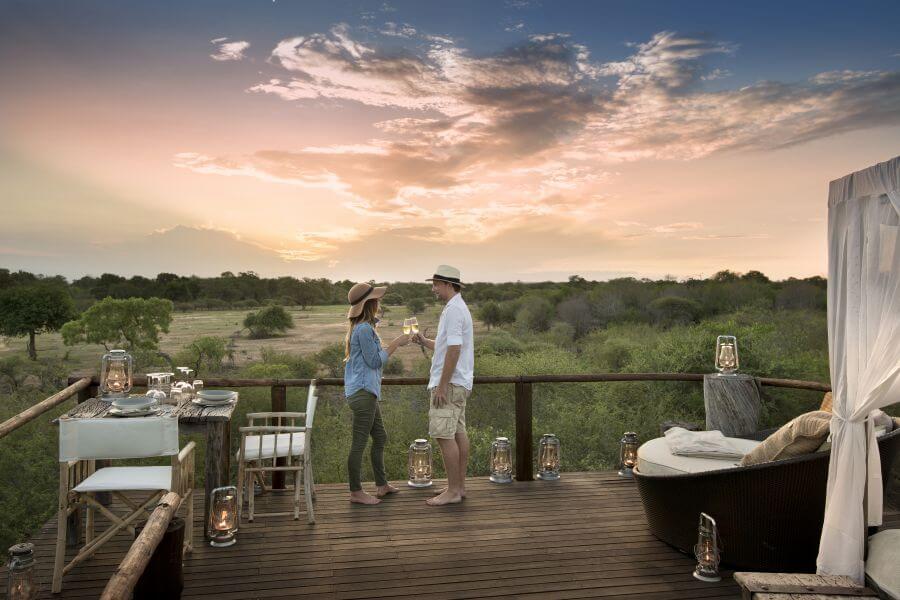
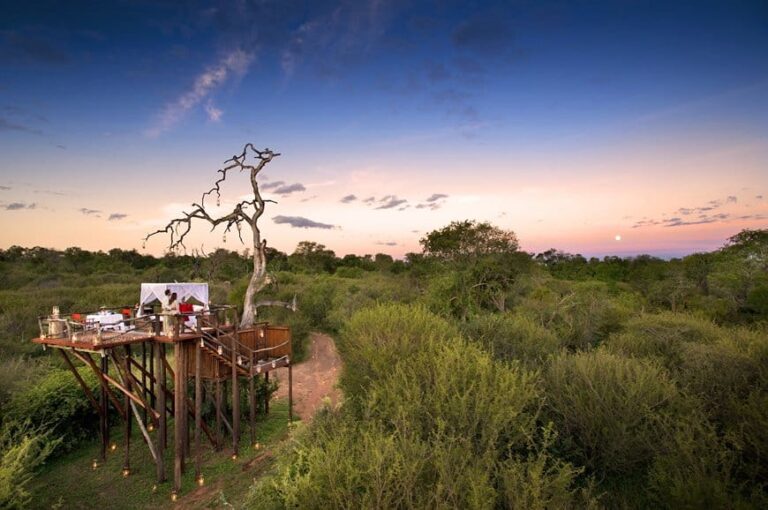
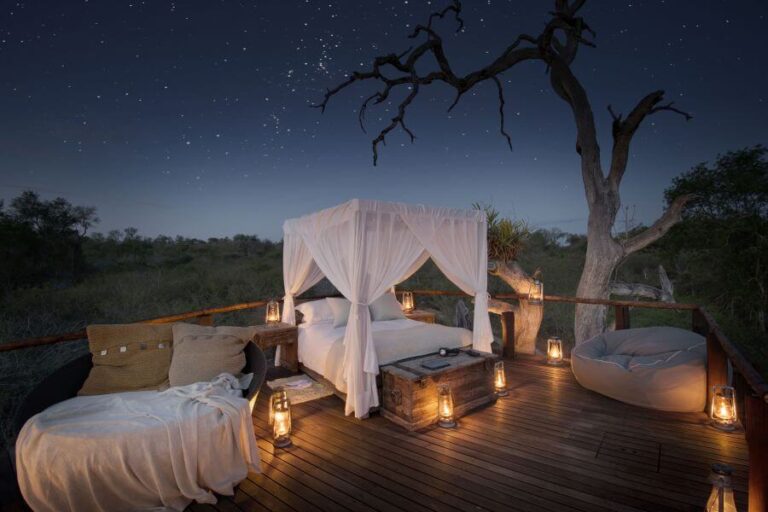
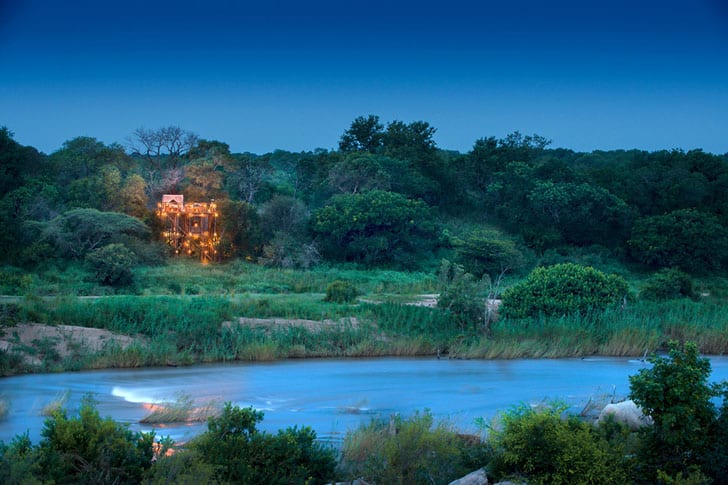
At the Chalkley Treehouse, lanterns cast a warm glow beneath an ancient jackalberry tree. Open plains stretch to the horizon, and the silence is absolute — until a lion breaks it. This is Lion Sands Game Reserve, deep inside the Sabi Sand Game Reserve on Kruger's western boundary, where three open-air treehouses offer something no conventional safari lodge can: a night spent genuinely inside the wild.
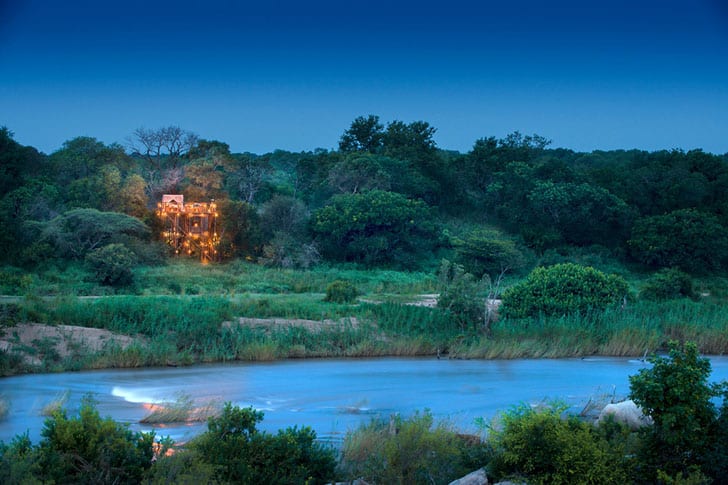
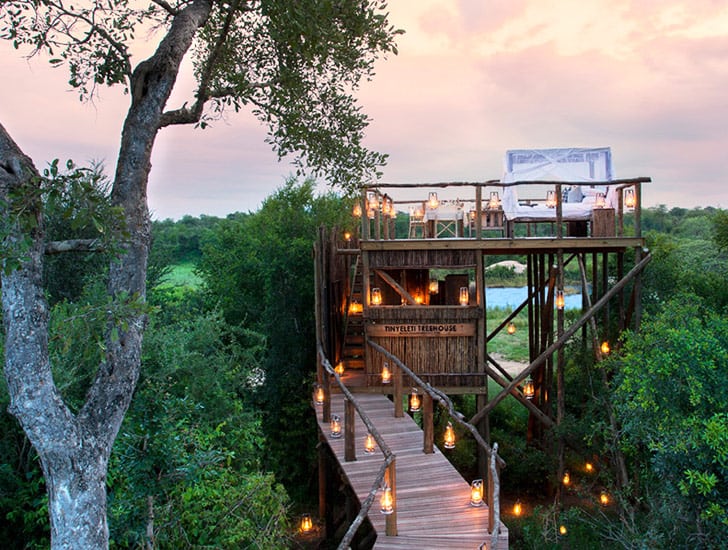
Chalkley and Tinyeleti each have a distinct character. Chalkley feels expansive and poetic — a lantern-lit platform commanding wide, unbroken views across the bush. Tinyeleti is more intimate, nestled into thick riverine greenery above a stream, reached by a raised boardwalk that adds a small, thrilling edge to the walk in. Both are completely open to the air and completely electricity-free.
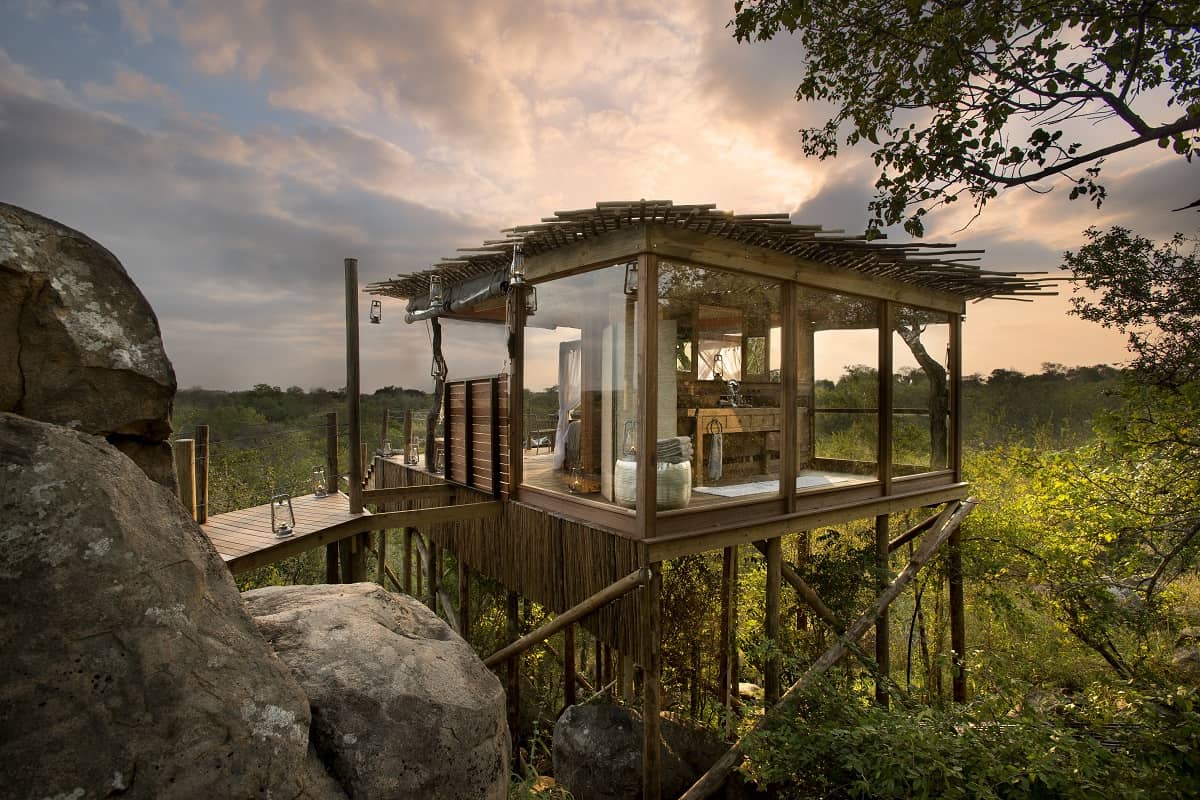
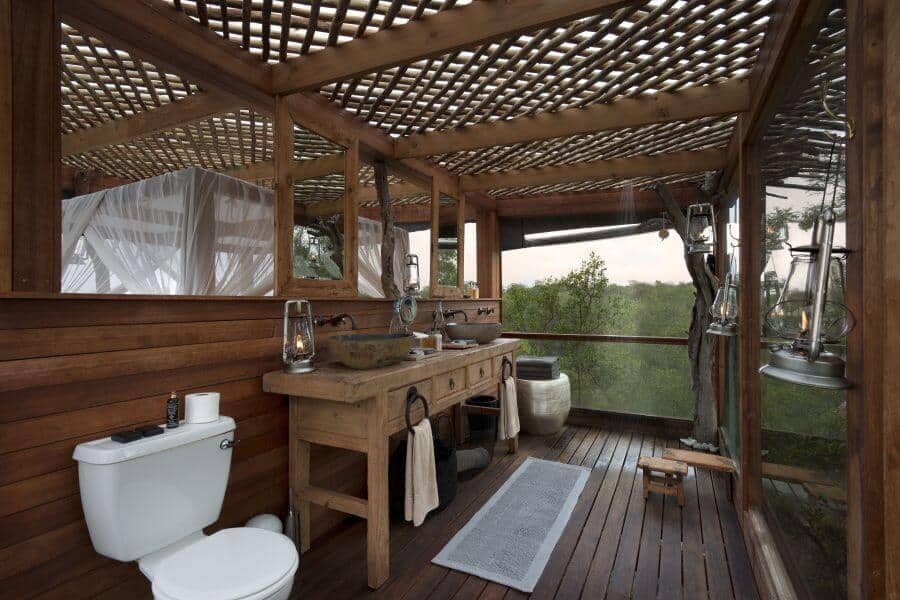
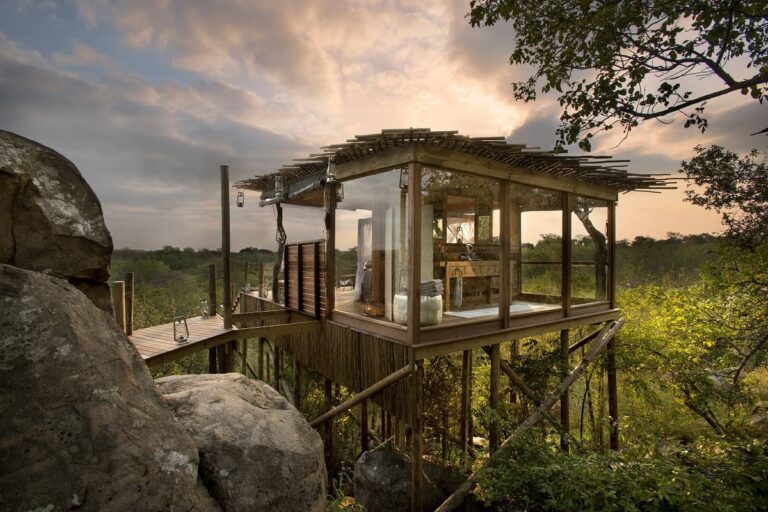
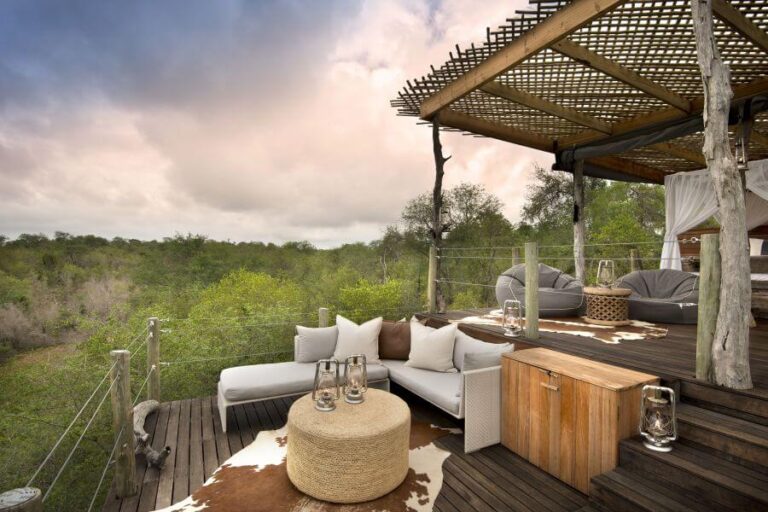
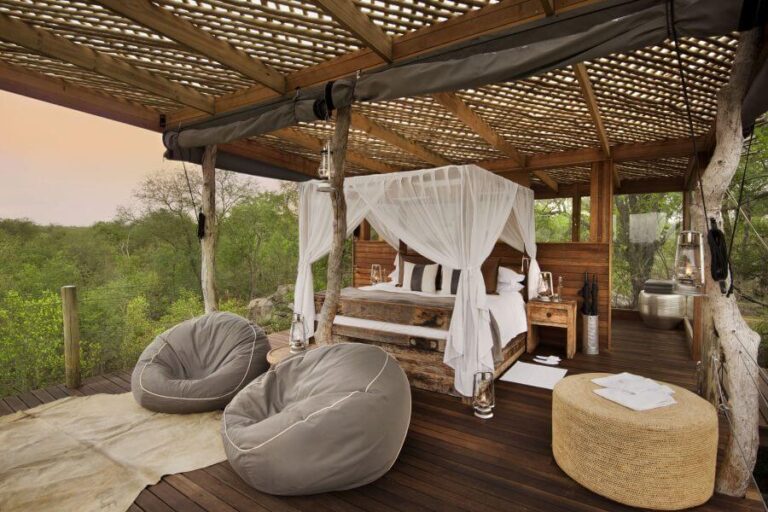
The Kingston Treehouse takes a different approach. Natural boulders anchor its structure, woven branches form the roof, and a glass-sided bathroom opens directly to the bush — a design detail that makes the distinction between inside and outside feel deliberately thin. All three platforms share the same essential premise: remove the walls, remove the power, and let the African night do its work.
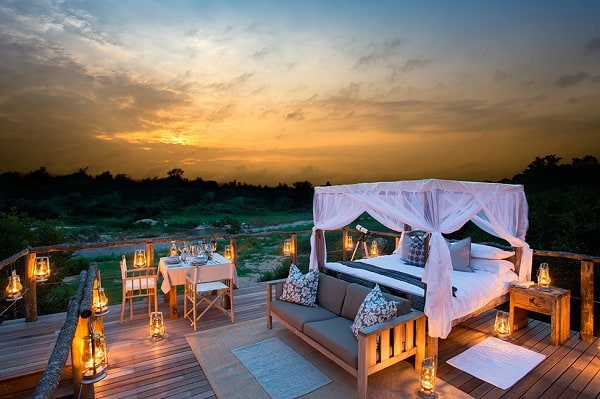
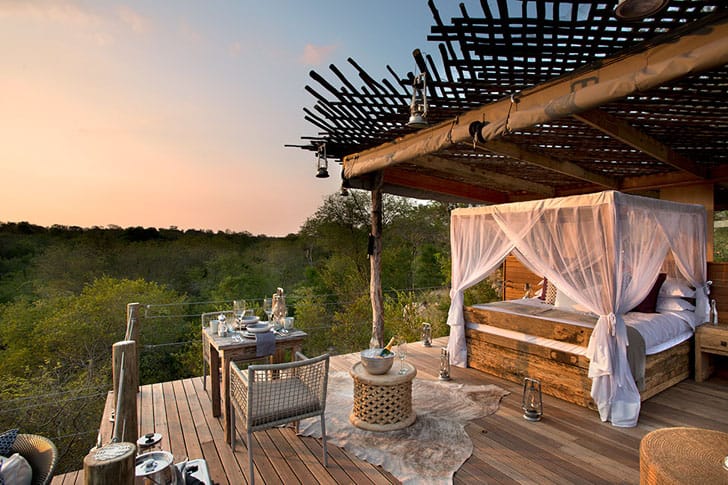
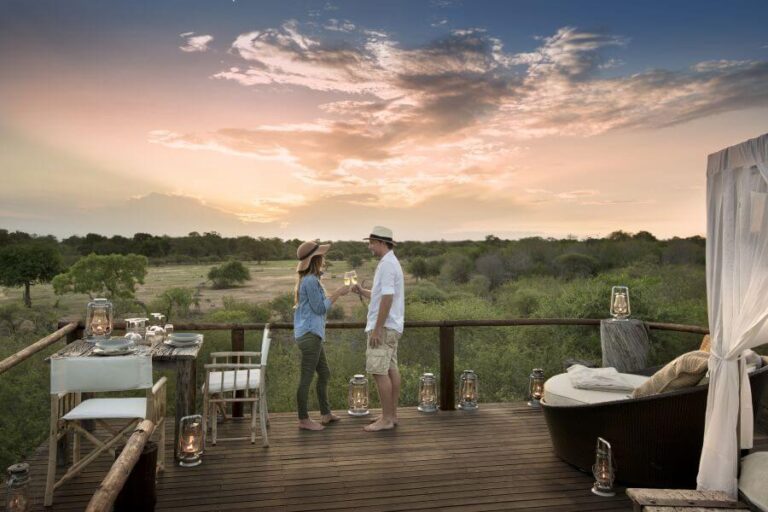
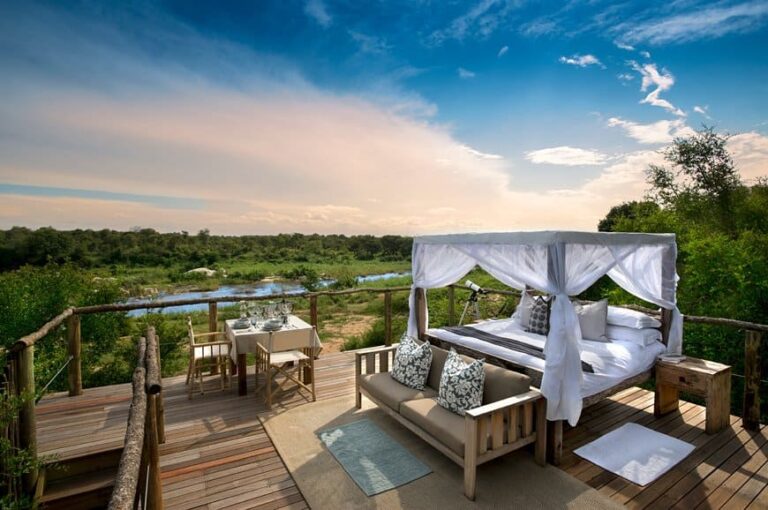
What that night actually delivers is hard to replicate. Beds are dressed in soft linens and wrapped in mosquito netting. Dinner arrives picnic-style — gourmet food served under a sky moving from burnt orange to deep black, stars appearing one by one. Then comes the acoustic world of the Sabi Sand after dark: insects, distant hyenas, the low reverberation of a lion's contact call. Most guests report lying awake — not from discomfort, but from the pull of it all.
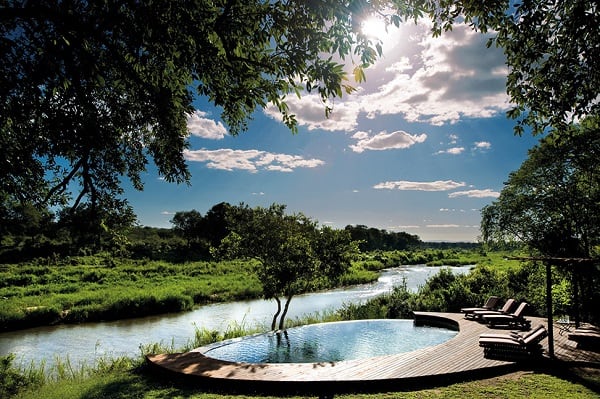
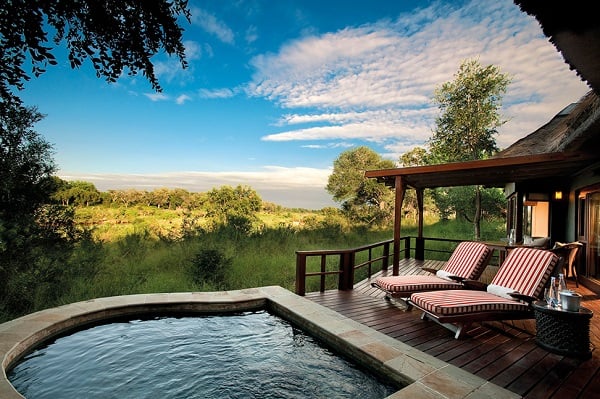
The treehouses sit within a reserve that also runs full-service luxury lodges overlooking the Sabie River, with hot tubs, saunas and guiding teams covering the wider Sabi Sand ecosystem. The treehouse experience draws from the same infrastructure — professional rangers, quality food and attentive service — while stripping the physical stay back to its essentials. That contrast is the point. Nightly rates start from around 5,500–6,000 ZAR, with rates varying by season and availability, placing Lion Sands firmly in the premium safari tier.
For timing, the dry winter months from May through September offer the clearest conditions and the best game visibility, with sparse vegetation and reliable sightings from the open platforms. The shoulder months of April and October bring warmth and strong wildlife activity with slightly thinner crowds. Summer — November through March — is hot and humid, green and full of birdlife, though afternoon storms can roll through quickly.
Lion Sands suits travellers who have already done the standard lodge circuit and want a step further into the experience. Milestone trips, romantic escapes and serious wildlife enthusiasts all find their reason here. The three treehouses book quickly, particularly across the winter safari season, so planning ahead matters.
Frequently Asked Questions
Q: What are the three treehouses at Lion Sands, and how do they differ?
A: Chalkley is the most expansive — a lantern-lit open platform beneath an ancient jackalberry tree with wide plains views. Tinyeleti is more intimate, nestled in riverine greenery above a stream and reached by a raised boardwalk. Kingston is the most architecturally distinctive, built around natural boulders with a branch-woven roof and a glass-sided bathroom that opens directly to the bush.
Q: What is the general nightly rate for the Lion Sands treehouses?
A: Rates fall in the premium tier, starting from approximately 5,500–6,000 ZAR per night, with prices varying by season and availability.
Q: When is the best time to stay in one of the open-air treehouses?
A: The dry winter months from May through September are the prime window — clear skies, sparse vegetation and excellent game visibility from the open platforms. April and October are strong shoulder months with good wildlife activity and fewer visitors. November through March brings heat, lush greenery and abundant birdlife, though afternoon storms are common.
Q: How off-grid is the treehouse experience — is there electricity or running water?
A: The treehouses are electricity-free; lighting comes from lanterns and the night sky. Beds are made up with soft linens and mosquito netting, and a private bathroom is provided. Dinner is served gourmet picnic-style on the platform. Check directly with Lion Sands for the precise facilities at each treehouse before booking.
Q: Is this experience suitable for first-time safari guests?
A: The treehouses are best appreciated by travellers who are comfortable with an open, unenclosed night in the bush — there are no walls and no artificial light. The reserve's professional rangers and full lodge infrastructure provide support, but the stay itself is intentionally raw. First-time visitors who prefer a more sheltered introduction may find the reserve's luxury lodges a better starting point.








Add a review