
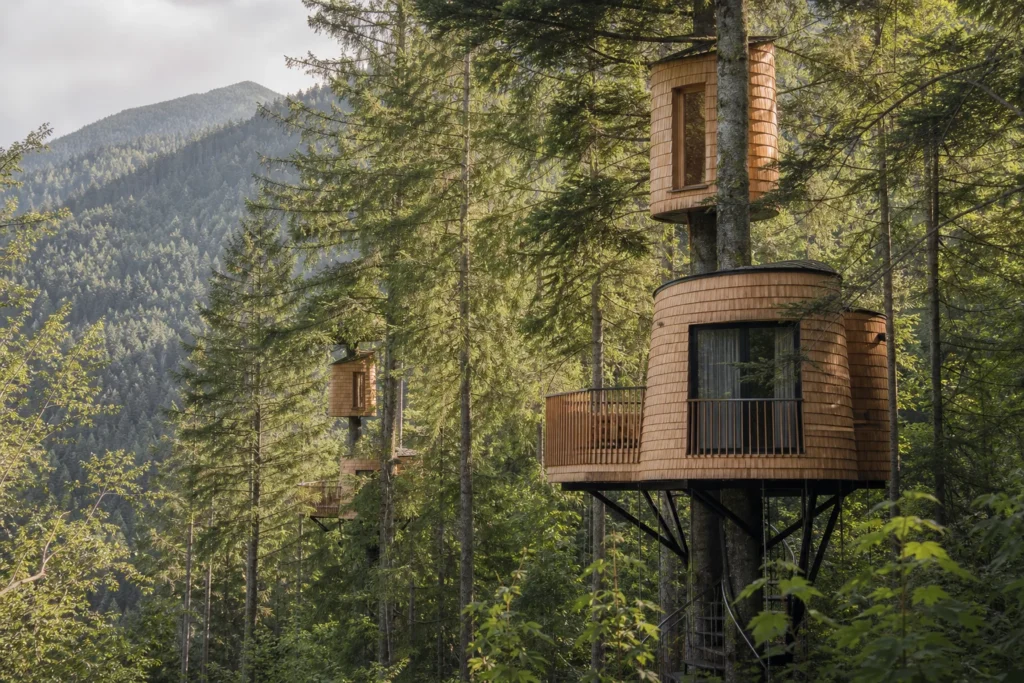
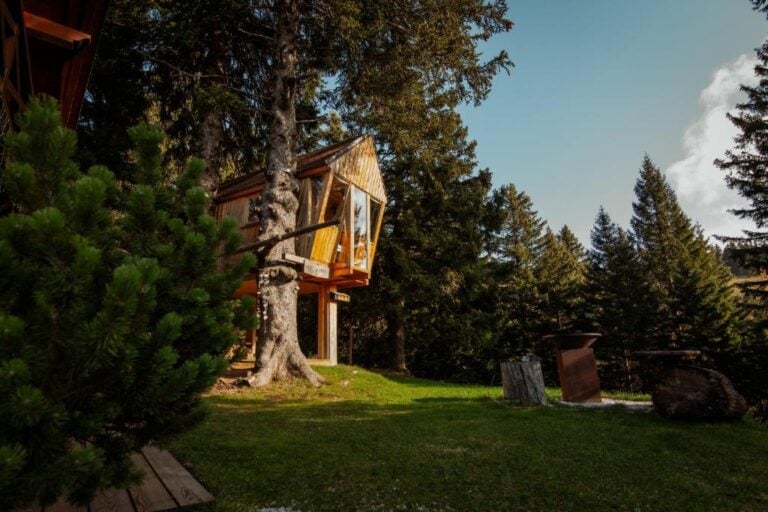
Pigna is a pair of three-level timber treehouses perched ten metres above a spruce forest near Malborghetto, in Italy's Julian Alps. They sit on the grounds of Malga Priu, a family-run alpine farm and hut in the province of Udine. Designed in collaboration with Beltrame Breuil Studio, each cabin rises through the canopy in a tapering, curved silhouette that gives the project its name — pigna, the Italian word for pine cone.
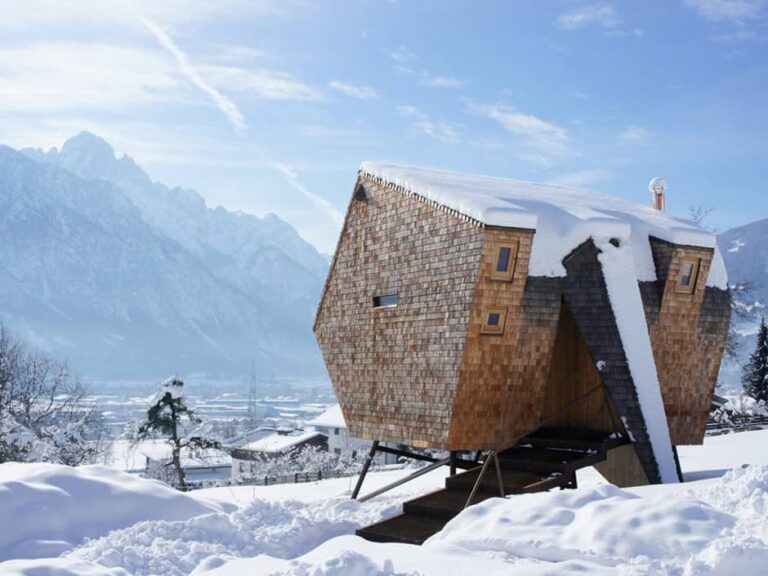
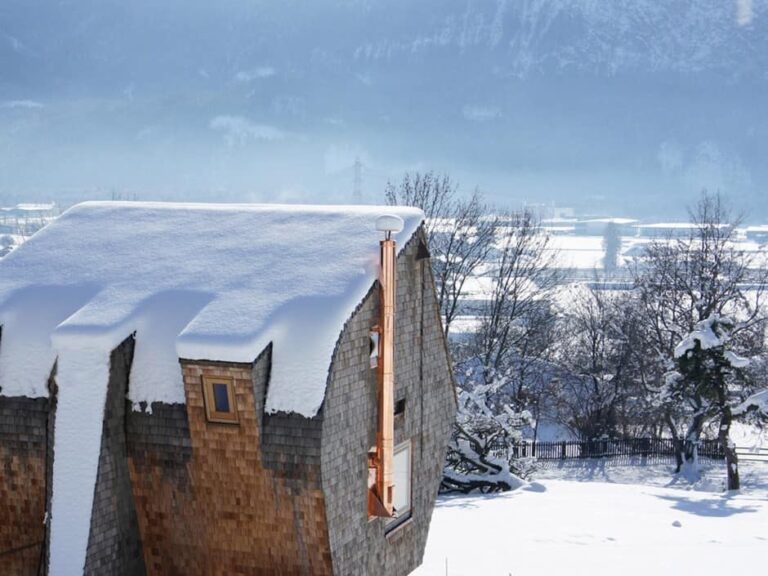
Each unit covers around 35 square metres of interior space and wraps around the tree it grows from. Cross-laminated timber forms the structural shell, insulated with wood fibre and clad outside in small larch shingles that follow the building's curves. The shingles feel deliberate — sized to echo the forest's own texture, echoing bark more than cladding. The result is a structure that reads as foreign from a distance and entirely natural up close.
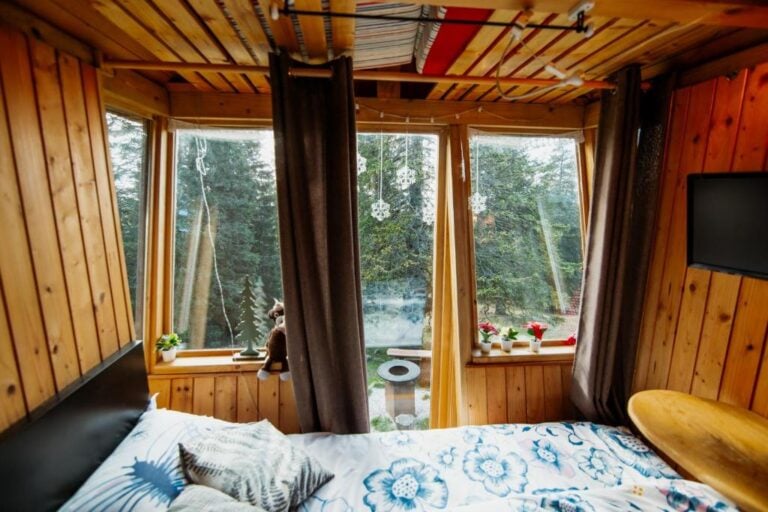
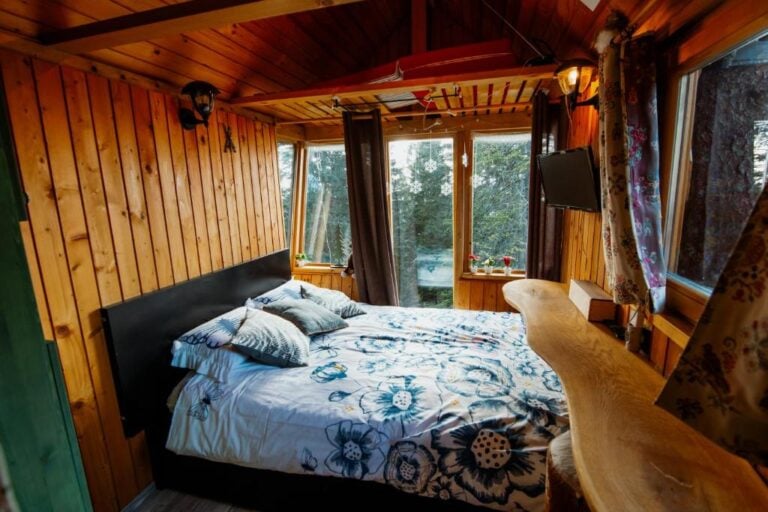
The layout unfolds across three levels. A panoramic terrace sits four metres above the forest floor — open, wide, the first real encounter with height. Above that, the living room, kitchen and bathroom occupy the middle level, compact but well-considered. The kitchen handles the basics efficiently. The living space opens onto the terrace and the trees beyond. The uppermost level holds the bed, positioned beneath a circular skylight that frames the sky directly above. A spiral internal stair connects all three floors; it winds, which is part of the character and worth knowing before you arrive.
The site holds just two units, which keeps the atmosphere genuinely private. No resort noise, no shared pool corridor, no breakfast queue. The Malga Priu farm surrounds the treehouses with working alpine land — meadows, woodland, the rhythms of a family hut. At night the forest is quiet enough to notice. In the morning, light enters from above before the valley fully wakes.
Pigna rewards guests who value architecture and solitude over amenities and scale. The footprint is modest by design. The bathrooms are minimal. Alpine air finds its way in at night even through good insulation, so packing for warmth matters. The winding stair suits most guests but deserves consideration for anyone with mobility limitations. This is a trade in the best sense: you give up space and ease, and the forest gives back height and silence.
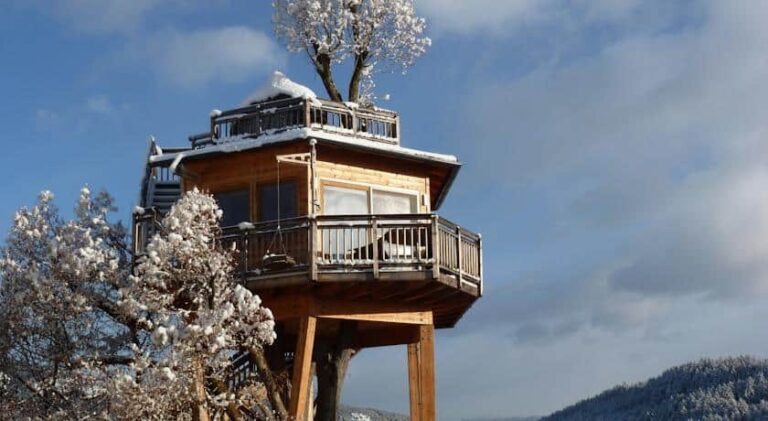
Timing shapes the experience noticeably. Summer — June through August — brings mild, clear days ideal for long mornings on the terrace and evening light that lingers over the Julian Alps. Autumn adds larch-gold colour to the forest from September into October, with crisp air that makes the skylit bedroom feel genuinely cocooning. Winter visitors find frosted silence and easy proximity to nearby ski areas, though temperatures regularly dip well below zero.
For access by public transport, the closest train station is Ugovizza Valbruna, approximately 3.4 kilometres away, which serves as the primary rail arrival point for the area. The Ugovizza bus stop sits roughly 1.7 kilometres from the site and offers a closer alternative for those arriving by regional coach. Travellers coming from further afield can pick up train line S4 at St. Stefan-Vorderberg, around ten kilometres away. A car or pre-arranged transfer will cover the final stretch from any of these stops to the Malga Priu site. The approach along forest road is part of the arrival — unhurried and properly alpine.
Frequently Asked Questions
Q: How is the treehouse structured, and is it suitable for guests with mobility limitations?
A: Each Pigna unit rises across three levels connected by an internal spiral staircase. The panoramic terrace sits at four metres, the living room, kitchen and bathroom occupy the middle level, and the bedroom is at the top beneath a circular skylight. The winding stair is central to the experience but worth considering carefully if you have any difficulty with stairs or confined vertical spaces.
Q: How private is the site?
A: Only two treehouses occupy the grounds of Malga Priu, a family-run alpine farm near Malborghetto. There is no resort infrastructure, shared facilities or neighbouring units beyond the pair, so the atmosphere is genuinely quiet and removed from tourist crowds.
Q: When is a good time to visit?
A: Summer (June–August) offers mild, clear days well suited to long mornings on the terrace and evening light over the Julian Alps. Autumn brings golden larch forests and crisp air that make the skylit bedroom feel particularly cocooning. Winter is cold — temperatures can drop well below zero — but guests looking for frosted alpine silence and proximity to nearby ski areas will find it rewarding. Check current conditions before travelling in any shoulder season.
Q: How do guests reach Pigna?
A: The treehouses are located near Malborghetto in the province of Udine. Access involves a woodland track, either on foot or via forest road. Ugovizza Valbruna train station is the closest rail option at roughly 3.4 kilometres. Confirm exact access arrangements directly with the property before arrival.
Q: What should guests pack or prepare for?
A: The interior footprint is around 35 square metres, so expectations should be set accordingly — the kitchen and bathroom are efficient rather than generous. Alpine air finds its way in at night even with good insulation, so warm layers are genuinely useful regardless of season. The experience prioritises height, solitude and architecture over hotel-style amenities.




Add a review