

Papaya Playa Project sits where the jungle meets the Caribbean on Tulum's coast — a property that earns its reputation not through excess but through intention. Treehouses and casitas rise among the palms, each one built with local materials that feel rooted in the landscape. Zapote wood frames the structures, while chukum — a traditional Mayan wall finish — keeps interiors naturally cool and grounded in regional craft.
Inside, the rooms take an unexpected shape. Rounded, cave-like walls curve inward and create an atmosphere that is calming without being contrived. Woven textiles, handpicked artworks and natural tones give each space a genuinely curated feel. A dedicated meditation room sits within every unit — compact, quiet and designed to encourage stillness at the end of an active day in the tropics.
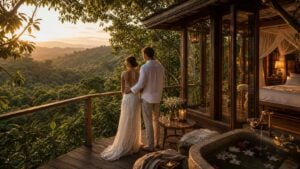
The headline amenity earns its place: some casitas come with rooftop plunge pools suspended above the tree canopy. From the water, guests look directly out over the sea. It is the kind of detail that sounds indulgent on paper and feels entirely natural once you are in it. The design treats luxury and restraint as companions rather than opposites.
Beach access is immediate and unguarded. Soft Caribbean sand stretches directly from the property, warm and wind-swept in the characteristic Tulum way. Yoga sessions and holistic workshops run regularly on site, and the events calendar rotates with live music and bonfires that create a social atmosphere without tipping into a party property. Evenings feel communal and unhurried — the kind of place where conversations start easily and the night moves slowly.
What gives Papaya Playa Project genuine credibility as an eco-property is the commitment to its site. Ninety percent of the surrounding jungle remains untouched. Construction methods draw on Mayan traditions, and the food offering — fresh, regional and simply prepared — follows the same principle. Nothing here feels imported or grafted on.
Nightly rates run approximately $350–$450, varying by season and availability, which places Papaya Playa Project firmly in the premium tier for Tulum. The dry season — roughly December through April — brings warm, bright Caribbean weather ideal for beach days and jungle walks. Shoulder months in May and November stay lush and tropical with occasional rain. The rainy season from June through October runs hotter and more atmospheric, though storm activity is possible.
This property suits travellers who want luxury with a genuine sense of place — people drawn to handcrafted design, open-air living and a wellness philosophy that does not feel performative. It is not the right fit for those seeking high-rise amenities or nightlife access. For everyone else, Tulum's jungle-meets-Caribbean energy finds one of its most considered expressions here.
Frequently Asked Questions
Q: What makes the treehouses and casitas at Papaya Playa Project distinctive?
A: The structures are built with local materials — zapote wood and chukum, a traditional Mayan wall finish that keeps interiors naturally cool. Inside, the rounded cave-like walls and curated natural tones give each unit a calm, handcrafted character. Every unit also includes a dedicated meditation room, and select casitas have rooftop plunge pools with open views over the jungle canopy to the Caribbean Sea.
Q: What is the general nightly rate at Papaya Playa Project?
A: Nightly rates run approximately $350–$450, placing Papaya Playa Project in the premium tier for Tulum. Rates vary by season and availability, so check closer to your travel dates for current pricing.
Q: When is the best time of year to stay here?
A: The dry season from December through April brings warm, bright Caribbean weather — the most popular window for beach days, jungle walks and outdoor activities. May and November are lush and partly rainy but less crowded. June through October is hot and atmospheric with the greenest scenery, though tropical storms are possible during those months.
Q: Is Papaya Playa Project suitable for guests who prefer a quieter stay over a party atmosphere?
A: It sits between the two. The property hosts live music, bonfires and a rotating events calendar, creating a genuinely social feel — but it is not a nightlife venue. Evenings tend to be communal and unhurried rather than loud, and the wellness programming including yoga and holistic workshops sets the overall tone.
Q: How close is the property to the beach?
A: The Caribbean beach is directly accessible from the property — no transfer or walk required. The stretch of sand in front is soft and wind-swept, in keeping with Tulum's characteristic coastal character.





Add a review