
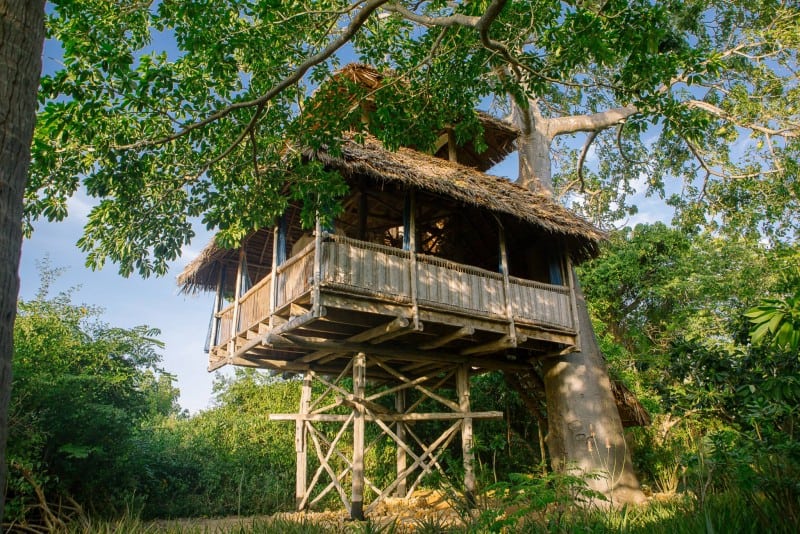
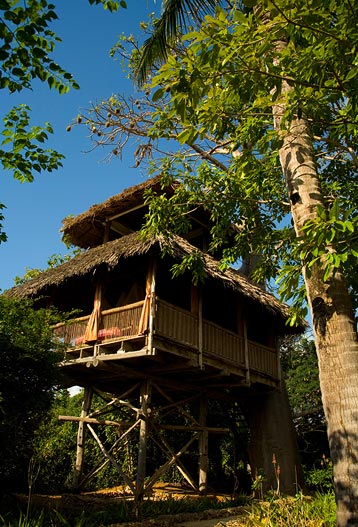
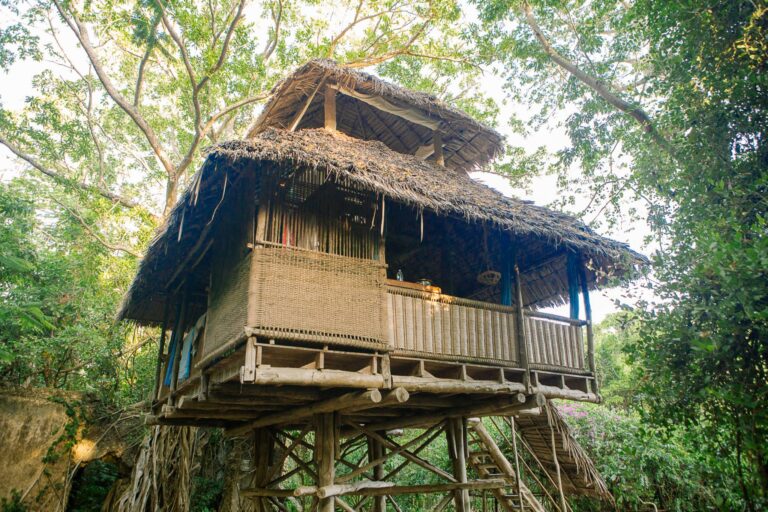
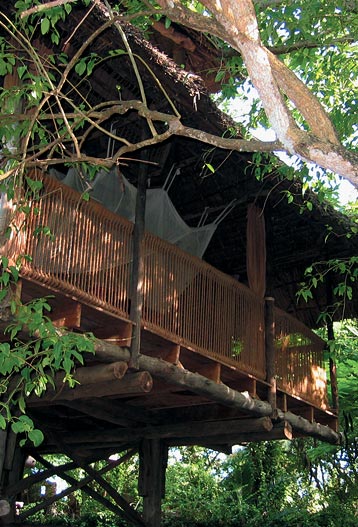
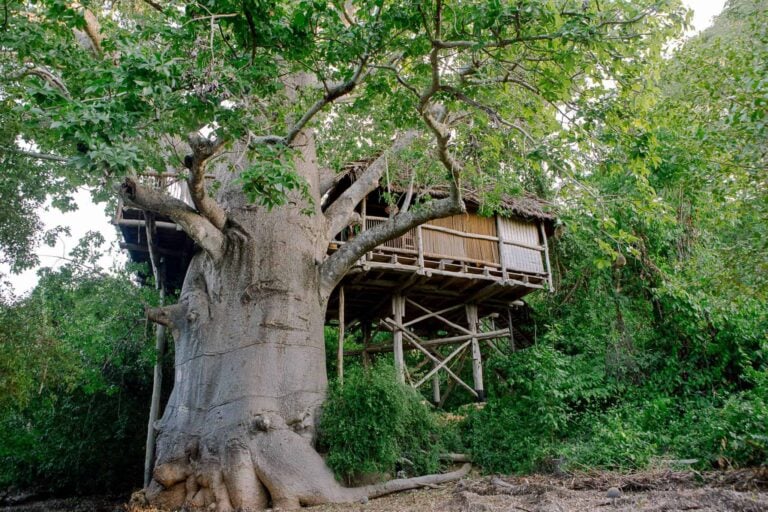
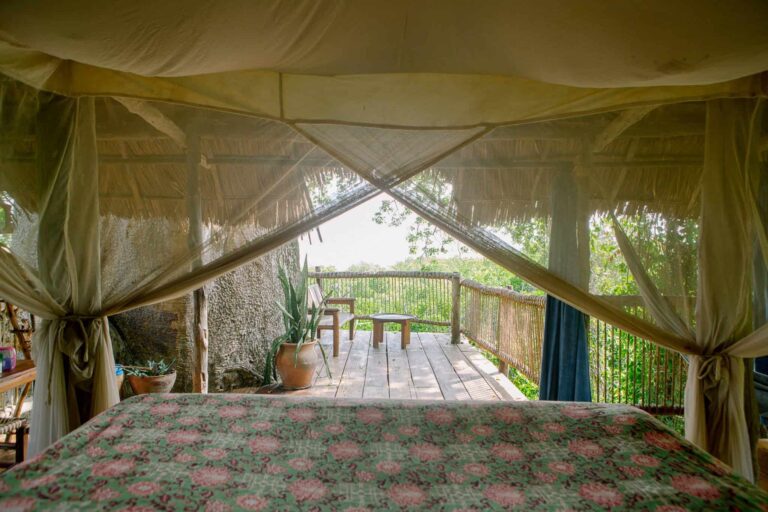
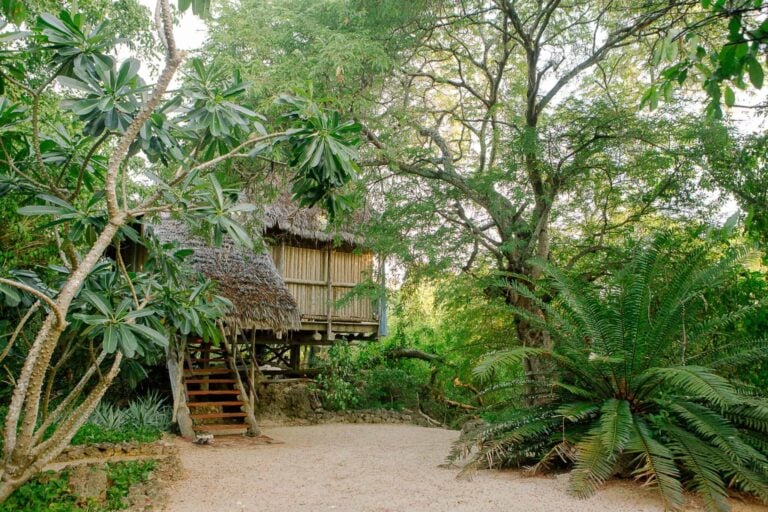
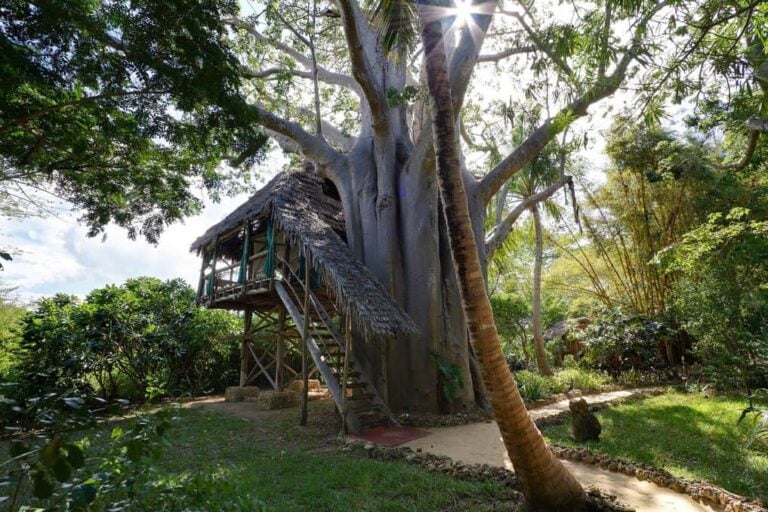
From the ground, NNE looks like it might float. Three open levels stack upward with no glass, no walls, no apology for the sky. It is the fourth of eight hand-built structures at Chole Mjini, the remarkable lodge scattered across Chole Island on Tanzania's Mafia Archipelago. Each treehouse is distinct, but NNE is the one guests tend to remember longest — partly for its height, partly for the quality of its stillness.
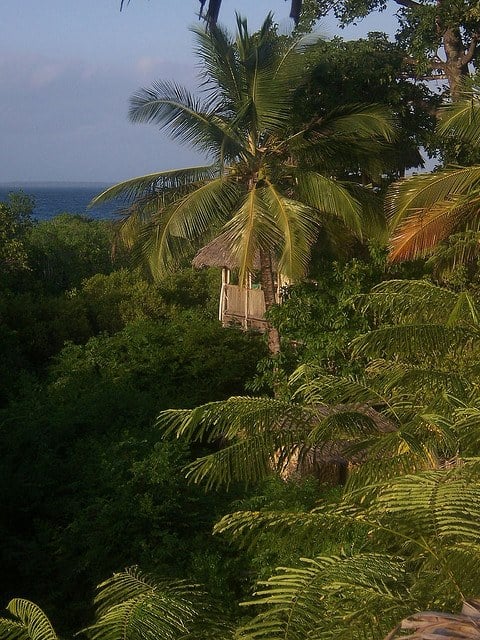
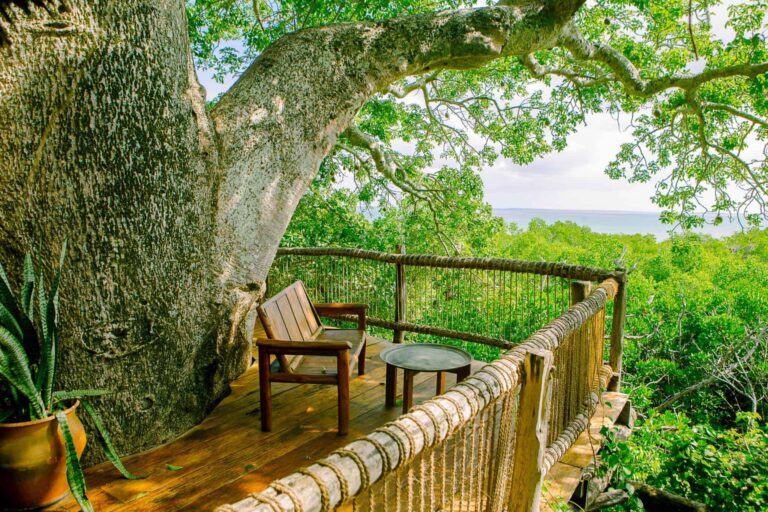
The design draws loosely from the layered, light-hungry tea houses of 19th-century Stone Town — architecture built for air circulation and generous shade rather than enclosure. That lineage shows in every level of NNE. As you climb, the canopy opens, and then the Indian Ocean opens beyond it. The light shifts from pale turquoise in the morning to something close to copper by dusk. It reads less like a view than a sustained mood.
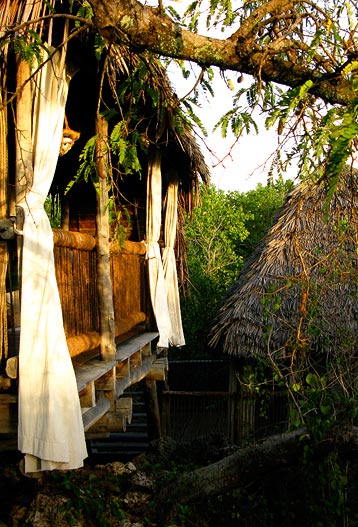
Construction is its own story. Local craftsmen built NNE by hand with basic tools, cutting poles from island timber, curing them slowly, and ferrying them over by dhow. No architect's blueprints shaped the result — just accumulated craft knowledge and the kind of patient labour that heat-heavy days demand. The outcome is a structure that feels genuinely earned: slightly imperfect, entirely honest, and more alive than most things built with machines.
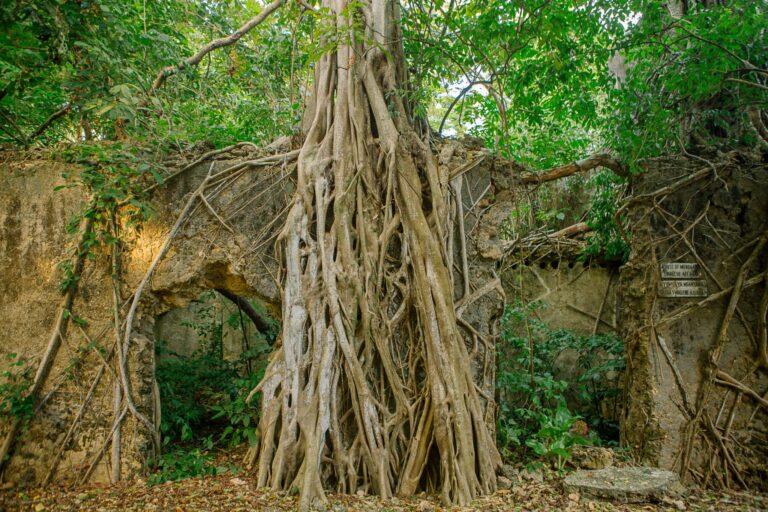
The bathroom deserves specific attention. It sits within the old coral ruins at the tree's base, open to the sky, with sunlight cutting through the leaf canopy above. Lizards move between the stones, appearing and vanishing on their own schedule. A window cut directly toward the treetops frames the toilet with absurd and perfect calm. It sounds eccentric; it feels entirely right.
At night, Chole Island hums. Fruit bats cross overhead, waves work the reef, and the tree itself sways just enough to remind you it is alive. Chole Mjini offers no air-conditioning or room service. What it offers instead is a different kind of comfort — the kind that arrives when you stop managing your surroundings and start noticing them.
Timing matters here. The dry season from May through September brings clear skies, cooler nights, and the easiest conditions for sleeping open to the air. The shoulder months of April and October stay warm with strong wildlife activity. The wet season from November through March runs hotter and stickier, though the island turns vivid green and the bush feels full. NNE suits travellers who travel light in every sense — those who find more in less, and who sleep well when the branches move.
Frequently Asked Questions
Q: What is it like sleeping open to the air at NNE?
A: NNE has no glass and no walls across its three levels, so the experience is genuinely immersive — fruit bats crossing overhead, waves working the reef, and the tree itself shifting just enough to remind you it's alive. Chole Mjini provides no air-conditioning, which is part of the design rather than an oversight.
Q: When is the best time to stay in NNE?
A: The dry season from May through September generally brings the clearest skies and coolest nights, making open-air sleeping at height most comfortable. April and October offer warm evenings with strong wildlife activity. The wet months from November through March are hotter and more humid, though the island turns lush and green — rewarding if you don't mind sticky nights in the canopy.
Q: How was NNE built, and does that affect the feel of the stay?
A: Local craftsmen built NNE entirely by hand with basic tools, using island timber cured slowly and ferried to the site by dhow. There were no architect's blueprints — just accumulated craft knowledge. The result is a structure that feels intentional and slightly imperfect in the best sense, distinct from anything assembled by machine.
Q: What is the bathroom situation at NNE?
A: The bathroom sits within old coral ruins at the base of the tree, open to the sky, with sunlight filtering through the leaf canopy above. Lizards move between the stones, and a window framed directly toward the treetops gives the space an unexpectedly calm quality. It is unconventional, but guests consistently find it one of NNE's most memorable details.







Add a review