
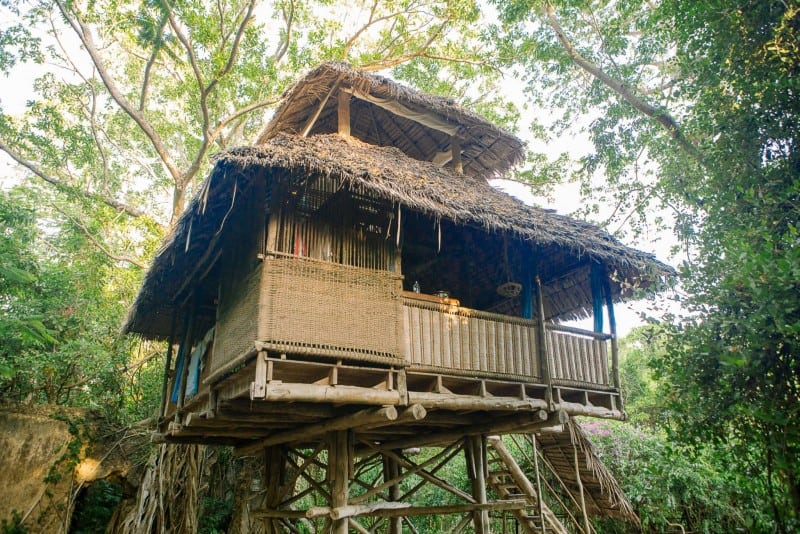
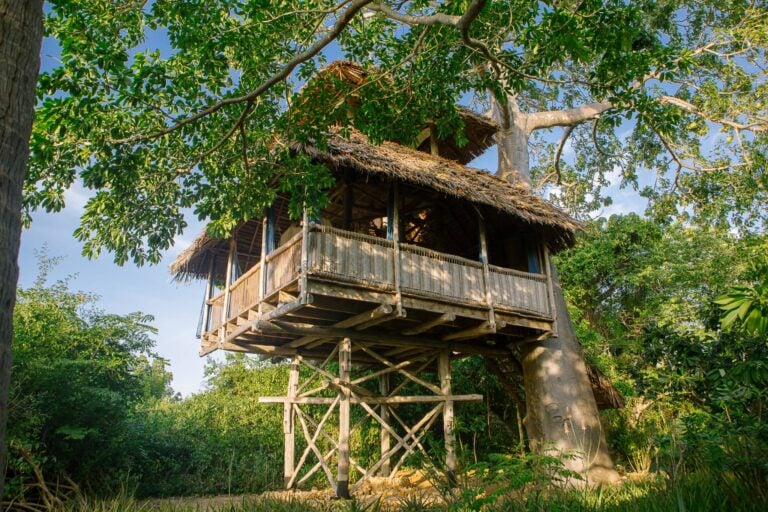
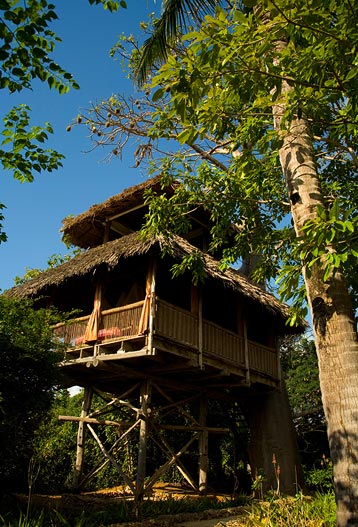
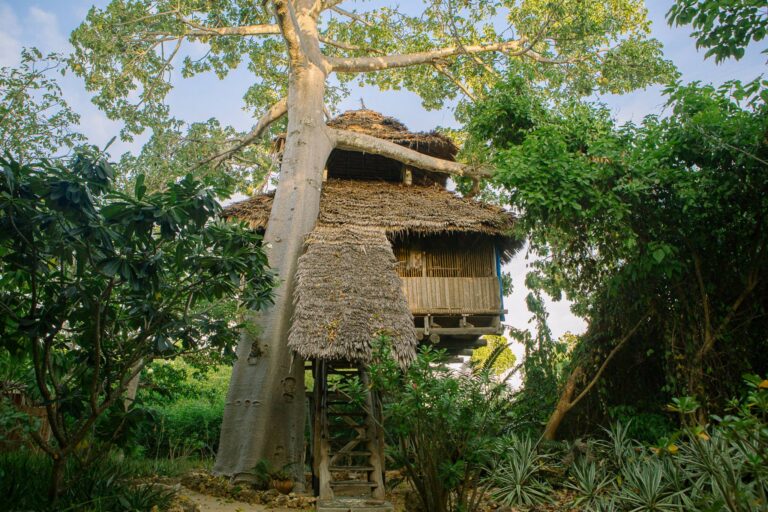
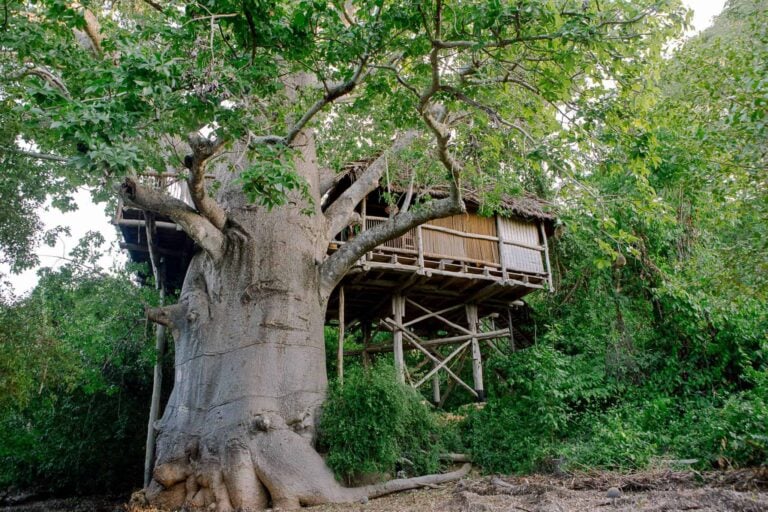
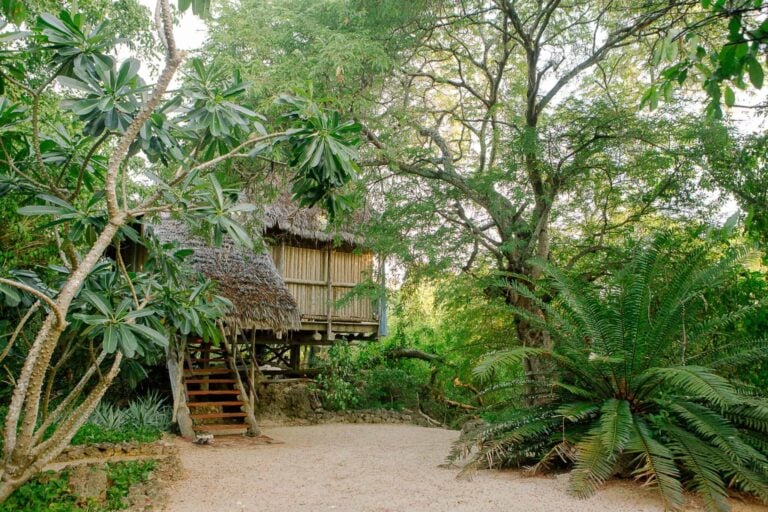
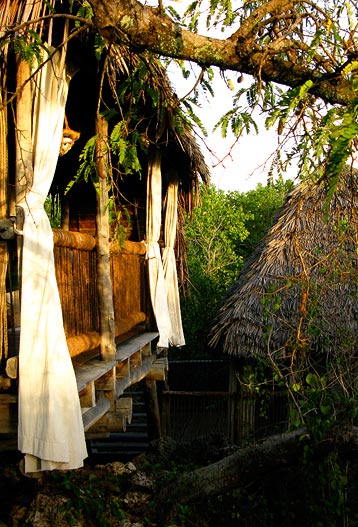
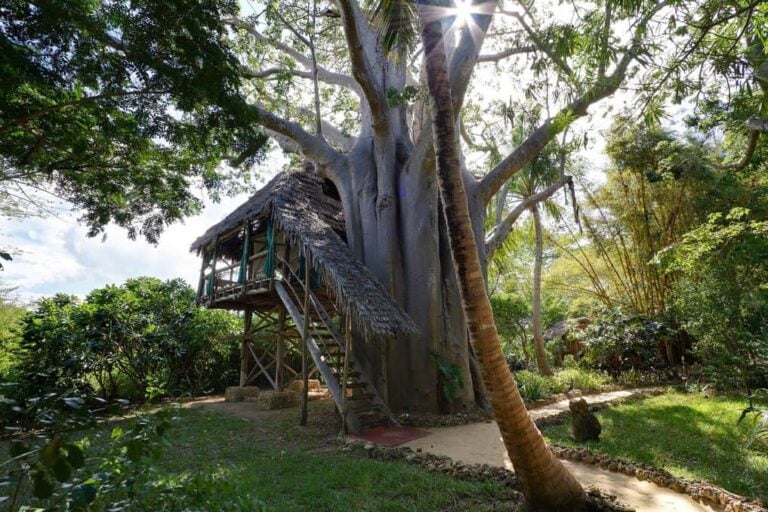
A fig tree growing through a 19th-century coral ruin is not the most obvious place to build a bedroom. On Chole Island, a small jungle-covered patch off Tanzania's Mafia Island, that is exactly what Anne and Jean de Villiers did. Their property, Chole Mjini, holds seven hand-built dwellings — six suspended in the tree canopy, one on the ground — each shaped by island artisans working with hand-cut timber and coral-lime mortar. Nothing here was imported for effect. The place grew out of the island itself.
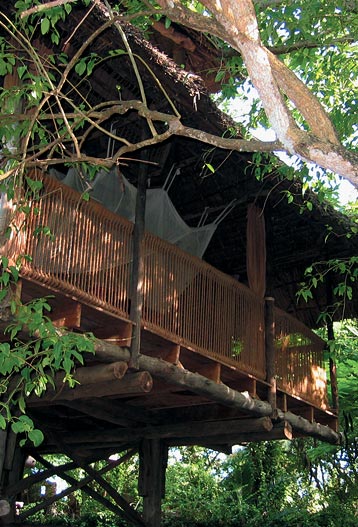
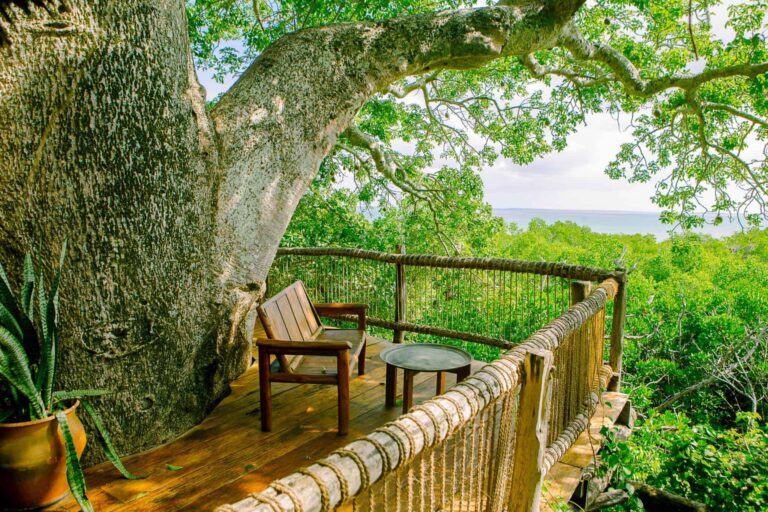
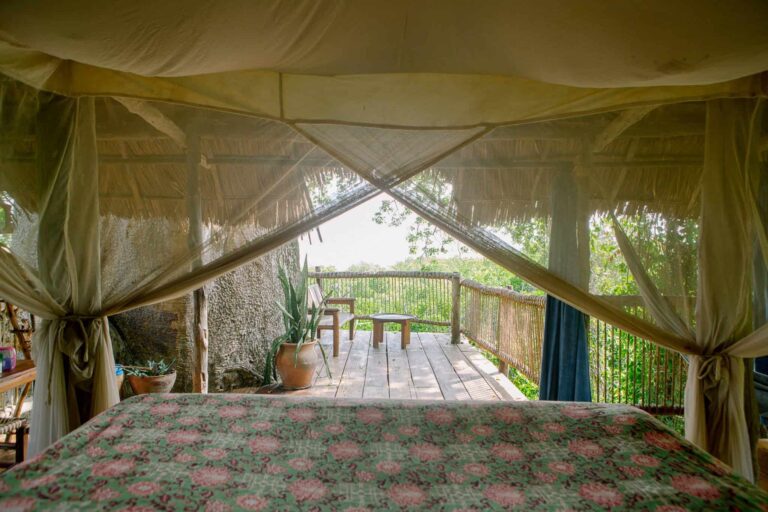
Tano is the name given to the most distinctive of those seven dwellings. In Bantu, tano means five — a small, grounded detail in a place full of them. The structure sits within the mossy skeleton of a ruin, a fig tree threading its roots through the old stone walls and broken window frames as if slowly reclaiming the building for the forest. Inside that living embrace, the treehouse opens onto layered decks designed in the spirit of a tea house: open, unhurried, stripped of anything unnecessary.
From the upper platform, Chole Bay spreads out below. Wooden ngalawas drift past with the tide. Breezes carry salt, mango leaves, and sometimes a trace of woodsmoke from the village. At dawn, light filters through branches and falls in shifting patterns across the old walls. By dusk, fruit bats — locals call them flying foxes — pour from the canopy in dark, fluttering clouds against a rose-coloured sky. Tano does not manufacture atmosphere. It simply sits inside the island's own rhythms and lets guests notice them.
The bathroom earns its own mention. The shower occupies the ruins themselves: vast, theatrical, open to the sky, with sunlight arriving through a canopy of vines. It manages to feel both exposed and entirely private — one of those travel details that sounds improbable until you are standing in it.
Chole Mjini runs on a deliberately barefoot philosophy. There is no Wi-Fi, no air-conditioning, no minibar. These are not oversights. The property's founders built something that asks guests to arrive and slow down, and the absence of screens makes that easier. Tano suits travellers who find that kind of trade genuinely appealing, not just aspirationally so.
The dry season from May through September brings the clearest conditions for Tano's open platform — crisp evenings, open bay views, and active wildlife in the surrounding jungle. The shoulder months of April and October offer warmth and excellent game viewing with fewer people around. Nightly rates run approximately $450–$550, placing Chole Mjini firmly in the premium tier; rates vary by season and availability.
Reaching Chole Island takes commitment. Mafia Island is accessible by light aircraft from Dar es Salaam, and Chole itself sits a short boat crossing from Mafia's main settlement. The journey is part of the experience — and by the time a guest arrives at Tano, the distance from everything else feels entirely intentional.
Frequently Asked Questions
Q: What kind of traveller is Tano best suited to?
A: Tano suits guests who genuinely want to disconnect — there is no Wi-Fi, no air-conditioning, and no minibar. The open-platform design, the ruined walls, and the surrounding jungle set the tone. If screen-free immersion in a remote island setting sounds like a trade-off rather than a reward, a different property is probably the better fit.
Q: What are nightly rates at Chole Mjini generally like?
A: Rates run approximately $450–$550 per night, placing Chole Mjini in the premium tier. Rates vary by season and availability, so check directly with the property for current pricing.
Q: When is the best time to stay in Tano?
A: The dry season from May through September is the prime window — crisp nights, clear bay views from the upper platform, and active wildlife in the surrounding jungle. The shoulder months of April and October are also rewarding, with warm temperatures and fewer visitors. The wet season from November through March brings lush, atmospheric conditions but expect heat and humidity.
Q: What is the shower at Tano actually like?
A: The shower occupies the ruins themselves — open to the sky, threaded with vines, and far larger and more theatrical than the description suggests. It feels private despite being open-air. It is one of the details guests consistently remark on, and it earns the attention.
Q: How do you reach Chole Island?
A: Mafia Island is accessible by light aircraft from Dar es Salaam, and Chole Island sits a short boat crossing from Mafia's main settlement. Getting there takes planning and commitment — confirm current transfer logistics directly with Chole Mjini before you travel.











Add a review